About Innovation Hub
 Global Content Pulse (Webinars)


 Global Production Financing
(Webinars)
Global Production Financing
(Webinars)  LeaderSpeak Podcast
  Global Entertainment Digest (Newsletter)
  About Vitrina
 About VIQI
 Our Story
 Our Solutions 🔥
 Film+TV Projects Tracker 🚀
 Case Studies
 Our Profile
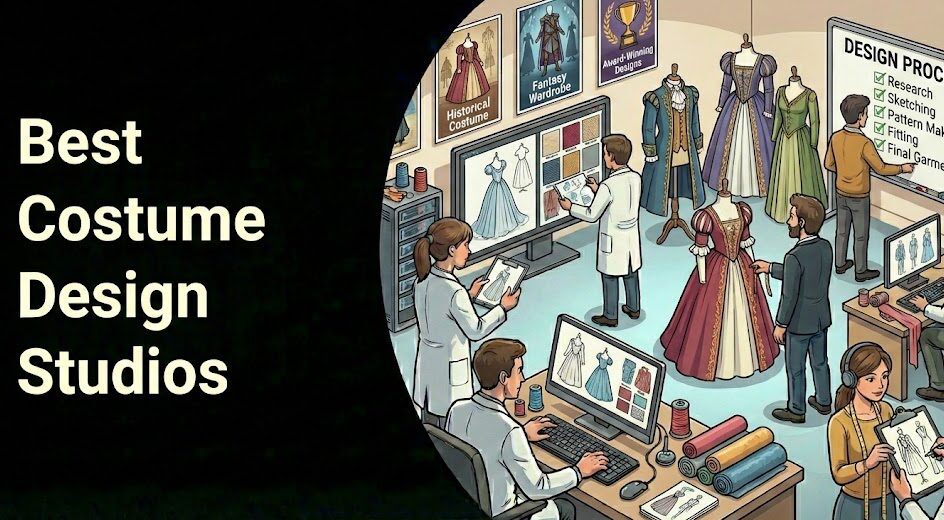
Finding the right costume design studio is one of those production decisions that looks tactical on paper but plays out strategically on screen. A costume department shapes character identity, signals period and class, builds world-consistency across an entire season—and, for period productions, can consume 8–15% of the total production budget. Pick the wrong vendor and you’re reshooting. Pick the right one and your characters feel lived-in from frame one.
The problem? Costume design studios are one of the most fragmented vendor categories in the global supply chain. You’ve got major in-house departments at the studio-level, specialist boutique houses, regional ateliers with deep period expertise, and a long tail of costume rental houses that will claim design capability they don’t actually have. If you don’t know where to look—or what to verify—you’ll spend weeks chasing referrals and still end up with the wrong fit.
This guide covers how to identify, evaluate, and connect with the best costume design studios for your specific production type—whether you’re working on a prestige period drama, a contemporary streaming series, or a high-budget feature with complex world-building requirements.
In This Guide
- What Costume Design Studios Actually Do (Beyond the Wardrobe)
- 4 Types of Costume Design Studios and When to Use Each
- How to Evaluate a Costume Design Studio Before You Hire
- Budget Realities: What Costume Design Actually Costs
- Where to Find the Best Costume Design Studios Globally
- 5 Mistakes Producers Make When Hiring Costume Design Studios
- Frequently Asked Questions
- Key Takeaways
Find Verified Costume Design Studios for Your Production—Fast
Ask VIQI, Vitrina’s AI intelligence layer, to surface verified costume design studios filtered by genre expertise, territory, and production scale. Netflix, Warner Bros, and 140,000+ companies across the global supply chain use Vitrina to source the right production partners.
No credit card required. Instant access.
What Costume Design Studios Actually Do (Beyond the Wardrobe)
The word “wardrobe” undersells what serious costume design studios deliver. A wardrobe department coordinates costume logistics. A costume design studio does something harder: it builds visual character language from scratch—and then manufactures, sources, or rents the physical garments that make it real.
Full-service studios handle the complete pipeline. That means concept development with the director and production designer, costume bible creation for continuity tracking, pattern making and bespoke fabrication for hero pieces, period-accurate sourcing from specialist suppliers, breakdown and aging for distress effects, and on-set continuity support throughout principal photography. For episodic productions running multiple simultaneous units, this gets complex fast.
What the trades don’t report: the best costume design studios also function as creative problem-solvers in the production’s financial structure. They know which hero pieces justify fabrication budgets and which supporting character looks can be sourced efficiently from rental houses. That judgment—knowing where to spend and where to economize without breaking visual coherence—is worth more than the raw talent catalog.
Studios with strong period drama credits will typically maintain archive relationships with textile houses, specialty dyers, and armourers built over decades. You can’t rent those relationships—you hire the studio that has them.

Your AI Assistant, Agent, and Analyst for the Business of Entertainment
VIQI AI helps you plan content acquisitions, raise production financing, and find and connect with the right partners worldwide.
- Find active co-producers and financiers for scripted projects
- Find equity and gap financing companies in North America
- Find top film financiers in Europe
- Find production houses that can co-produce or finance unscripted series
- I am looking for production partners for a YA drama set in Brazil
- I am looking for producers with proven track record in mid-budget features
- I am looking for Turkish distributors with successful international sales
- I am looking for OTT platforms actively acquiring finished series for the LATAM region
- I am seeking localization companies offer subtitling services in multiple Asian languages
- I am seeking partners in animation production for children's content
- I am seeking USA based post-production companies with sound facilities
- I am seeking VFX partners to composite background images and AI generated content
- Show me recent drama projects available for pre-buy
- Show me Japanese Anime Distributors
- Show me true-crime buyers from Asia
- Show me documentary pre-buyers
- List the top commissioners at the BBC
- List the post-production and VFX decision-makers at Netflix
- List the development leaders at Sony Pictures
- List the scripted programming heads at HBO
- Who is backing animation projects in Europe right now
- Who is Netflix’s top production partners for Sports Docs
- Who is Commissioning factual content in the NORDICS
- Who is acquiring unscripted formats for the North American market
4 Types of Costume Design Studios and When to Use Each
Not every costume design studio serves the same function. Matching the studio type to your production need is the first sourcing decision worth getting right.
1. Full-Service Bespoke Ateliers
These studios handle design, fabrication, and on-set support end to end. They maintain in-house pattern makers, cutters, and specialist craftspeople. Think of the studios attached to productions like The Crown (Netflix), Bridgerton, or major theatrical releases requiring distinctive period or fantastical looks. Cost is highest, quality ceiling is highest. Required for prestige period productions and any project where costume is integral to the commercial and creative identity of the title.
2. Design-Led Sourcing Studios
These studios lead on design direction but source and procure rather than fabricate. They work with rental houses, commercial suppliers, and sometimes commission bespoke pieces from external makers. This model suits contemporary drama, reality formats, and productions with tighter budgets that still need a strong design vision. The ROI is strong: you get the creative direction of a professional designer without the full fabrication overhead.
3. Specialist Period and Genre Houses
Some studios have built a competitive moat in a specific period or genre—19th-century British aristocracy, mid-century American, medieval European, specific regional cultures. Their archive, supplier relationships, and craft expertise within that niche are genuinely difficult to replicate. If your project lives in their specialty, you’ll get better output for the same money than a generalist studio. But lock them in early—these houses book out months ahead on major productions.
4. Costume Rental Houses with Design Capacity
Major rental operations like Angels Costumes (London), Western Costume (Los Angeles), and comparable houses in Rome and Prague maintain design staff alongside their inventory. For productions that need substantial rental volume anyway, working through a rental house with design capability can simplify logistics and reduce coordination overhead. The design depth isn’t at the level of a specialist atelier, but the practical advantages—scale, inventory access, established production relationships—are real.
As we’ve covered in our buyers guide to film and TV production services, the vendor type decision should always precede the vendor shortlist—knowing what category of capability you need narrows the market before you start outreach.
How to Evaluate a Costume Design Studio Before You Hire
Credits are necessary but not sufficient. Here’s what strategic players actually check before committing a costume design budget.
Verify the credit attribution specifically. A studio’s portfolio might list Peaky Blinders or Game of Thrones—but were they the lead design house, or did they provide supplementary fabrication for two supporting characters in one episode? There’s a meaningful difference. Ask for the specific role on each credit, the number of costumes handled, and whether the lead designer is still with the studio. Staff continuity matters enormously in craft-intensive businesses.
Assess the production scale match. A boutique atelier with deep expertise in period fabrication may not have the capacity or logistics infrastructure to support a 12-episode streaming series with 300+ costume changes per episode. Conversely, a large commercial studio built for high-volume production may not have the creative depth for a prestige film where 3 hero costumes carry the visual weight of the entire production. The capacity fit matters as much as the creative fit.
Ask about the supplier and archive network. For period productions, the quality of a studio’s textile and specialty supplier relationships directly determines output quality. Where do they source historical fabrics? Do they have dye house relationships for accurate period colorways? Which specialist armourers or milliners do they work with? A studio that answers this with specificity has earned those relationships. One that answers vaguely hasn’t.
Check continuity and on-set support structure. A costume design studio’s work doesn’t end when shooting starts. On-set continuity supervision is critical—missed continuity errors cost reshoots. Ask about the studio’s on-set staffing model and how they handle continuity documentation, particularly on productions shooting out of sequence across multiple locations.
Request a breakdown of deliverables and timeline. Costume design timelines are tighter than most production departments realize. Bespoke fabrication for lead characters typically requires 10–16 weeks from concept to camera-ready fitting. If your production calendar doesn’t accommodate this, you’re either compromising the work or compromising the schedule. The conversation about timeline should happen before you discuss rate.
Track Which Productions Are Sourcing Costume Design Partners Right Now
Vitrina tracks 400,000+ active projects globally—including productions in pre-production and principal photography that are actively sourcing production service vendors. Know which titles need costume design partners before they go to the wider market. Join 140,000+ companies already using the platform.
Start Tracking — 200 Free Credits
No credit card required. Cancel anytime.
Budget Realities: What Costume Design Actually Costs
The capital reality of costume design budgets varies enormously by genre, period, and scale—but here are the ranges worth building into your production planning.
For a contemporary drama feature with a cast of 20 speaking roles and an indie budget, you’re looking at $50,000–$150,000 for a full costume design and fabrication package. That covers design, sourcing, hero fabrication for leads, rental for supporting cast, and on-set supervision. A mid-budget contemporary TV series adds complexity: per-episode costume costs on streaming drama run $30,000–$100,000 depending on cast size and how many new looks are required per episode versus pulls from existing stock.
Period productions are a different conversation. A prestige period feature—the kind going after BAFTA or Oscar costume design consideration—typically allocates $500,000–$2M+ to costume design and fabrication. For reference, productions like Downton Abbey and major Netflix period originals have allocated comparable figures for their lead costume departments, with additional spend on specialty items. The ROI justification is commercial: period productions with distinctive costume work generate press value, award consideration, and content longevity that straight-to-streaming contemporary titles typically don’t.
Fantasy and sci-fi productions have their own cost structure—heavy on bespoke fabrication, armour, and specialty materials that don’t have a rental market. Budgets here vary by the scale of world-building required, but major fantasy series have reported costume budgets exceeding $1M per episode for hero-level work at the top of the market.
One number that surprises producers: the breakdown and aging budget. Distressing garments to reflect character history and use—making a working-class character’s coat look worn, making battlefield costumes look battle-worn—is labor-intensive craft that costs real money. Build it in. Productions that try to cut this line item produce visually flat costumes that the audience reads as “fresh from the rack.”
Where to Find the Best Costume Design Studios Globally
The Fragmentation Paradox™ is real here. Hundreds of costume design studios operate globally, but the information about them is opaque—credit data is buried in end-roll text, rate information is entirely negotiated, and the best boutique houses often don’t have a meaningful web presence. Here’s where to focus your search.
The UK is the global center of gravity for period production costume design. London—particularly the Pinewood and Shepperton studio ecosystems—concentrates the deepest pool of period costume talent anywhere in the world. Studios and independent designers with credits across BBC, Netflix UK, Amazon Studios UK, and theatrical productions cluster here. If you’re producing a period title anywhere in the English-speaking world, the costume design talent sourcing conversation starts in London.
Rome and Prague have built strong positions for continental European period and historical production. Tirelli Costumi in Rome has credits spanning decades of Italian and international co-production. Prague’s production infrastructure—built partly on the strength of its incentive program—has attracted significant English-language production that has in turn developed local costume capacity.
Los Angeles remains the anchor for US contemporary drama and film. Western Costume’s scale and archive depth are unmatched for American-set productions. The independent design community around the LA studio system is extensive, and the union structure (IATSE Local 705) provides a directory of qualified costume supervisors and designers with verifiable credits.
Mumbai has developed significant costume capacity for Indian productions—including work supporting Netflix India, Amazon Prime India, and the major Bollywood studios. The design aesthetic and craft traditions differ from Western equivalents; for Indian co-productions or South Asian-set content, sourcing locally rather than importing Western design sensibility almost always produces better results and stronger creative-cultural authenticity.
As reported by Variety, the streaming boom has created measurable shortfalls in experienced costume design talent in certain markets—particularly the UK and Australia, where production volume has outrun available senior talent. This means booking timelines for top-tier studios have extended: what used to be a 6-week lead time for design engagement on a prestige title is now realistically 4–6 months at the top of the market.
Vitrina’s platform tracks the best costume design studios worldwide, with searchable credits, territory coverage, and direct contact information—cutting the sourcing timeline from weeks to hours.
5 Mistakes Producers Make When Hiring Costume Design Studios
These aren’t theoretical—they’re patterns that show up repeatedly in productions that end up with costume departments that don’t perform.
1. Engaging too late. Costume design has to start in pre-production—not the week before principal photography. The design phase, the fitting process, the fabrication timeline, and the sourcing of specialty materials all have irreducible lead times. Productions that engage their costume department late end up with compromised work or rushed fabrication that shows on screen. Budget for early engagement. It’s cheaper than reshoots.
2. Confusing rental with design. A rental house can provide period garments. A design studio creates visual character language. If you hire a rental operation to do design work, you get a production that looks like it raided a costume hire shop—which is exactly how it’ll read to your audience. Know what you’re buying and buy the right thing.
3. Under-briefing on script requirements. Costume departments build off the script—but not just the costume descriptions in the script. They need to understand character arc, social context, period-specific class markers, and how the look should evolve across the production. A costume supervisor who’s only received a shooting script and a budget has half the information they need. The design conversation should include the director’s visual language discussion, not just the line producer’s budget call.
4. Skipping the portfolio reference check. As reported by Screen International, production disputes involving supplier performance are most common in departments where initial vetting relied on portfolio presentation rather than direct reference checks with previous productions. Call the production company on the credit. Ask the production designer and director. That ten-minute call protects a significant line item.
5. Not building in continuity budget. Continuity management across a multi-episode production with location changes, time jumps, and overlapping shooting schedules is a real job that requires dedicated staffing and digital documentation systems. Productions that cut this budget discover continuity errors in post—when fixing them costs far more than the supervision would have.
For a broader framework on de-risking production vendor decisions across all service categories, our guide to production services vendor selection covers the vetting methodology worth applying to any craft department hire.
Need a Curated Costume Design Studio Shortlist for Your Production?
Vitrina’s concierge team builds verified shortlists of costume design studios matched to your production type, territory, genre, and timeline. Used by production executives and independent producers at Netflix, Paramount, and across 60+ countries.
No commitment. Typical turnaround: 48 hours.
Frequently Asked Questions About Costume Design Studios
The Bottom Line: Finding the Right Costume Design Studio
Sourcing a costume design studio isn’t a procurement exercise—it’s a creative and operational decision that shapes how your production looks, how your characters read, and how your budget performs across the production calendar. The variables that matter are specialist expertise, production scale fit, timeline capacity, and supplier network depth. A studio with the right credits and the wrong availability doesn’t help you. Neither does the right availability with the wrong skills for your genre.
Strategic players understand that the sourcing conversation starts earlier than most producers realize—particularly in markets like London and Los Angeles where streaming demand has tightened top-tier availability significantly. Surface your options early, verify credits specifically, and build continuity staffing into your budget rather than treating it as a discretionary line item.
Key Takeaways
- Know the category before you shortlist: Bespoke ateliers, design-led sourcing studios, specialist period houses, and rental houses with design capacity serve different production needs. Match the type to your requirements first.
- Engage early: Period and fantasy productions need 4–6 months of lead time for bespoke fabrication. Top UK studios book out fast—plan ahead or accept compromised options.
- Verify credits specifically: Confirm the actual scope of work on each credit, not just the title association. Call the production directly. A reference check is worth more than any portfolio review.
- Build continuity staffing into the budget: Under-staffing continuity supervision is one of the most common and costly costume department budget errors in episodic production.
- Territory matters: Match sourcing geography to your content’s cultural setting and shoot territory. London leads for English-language period drama; Rome and Prague for European historical; Mumbai for Indian content.
Find Your Costume Design Studio Partner in 48 Hours
Vitrina surfaces verified costume design studios worldwide—filtered by genre, territory, production scale, and credit depth. Netflix, Warner Bros, and production executives across 60+ countries use Vitrina to source production partners before they go to the wider market.
No credit card required. 14-day free trial available.
Find Film+TV Projects, Partners, and Deals – Fast.
VIQI matches you with the right financiers, producers, streamers, and buyers – globally.
Join Industry Briefings Trusted by Leaders
Unreleased Film+TV Projects: Opportunities & Showcase
A curated view of unreleased Film and TV projects open for financing and collaboration
The Mid-Budget Comeback: Why Mid-Budget Films Is the Smartest Bet in the Room
Mid-budget films are attracting new capital. See why this segment is becoming one of the strongest bets in Film today.
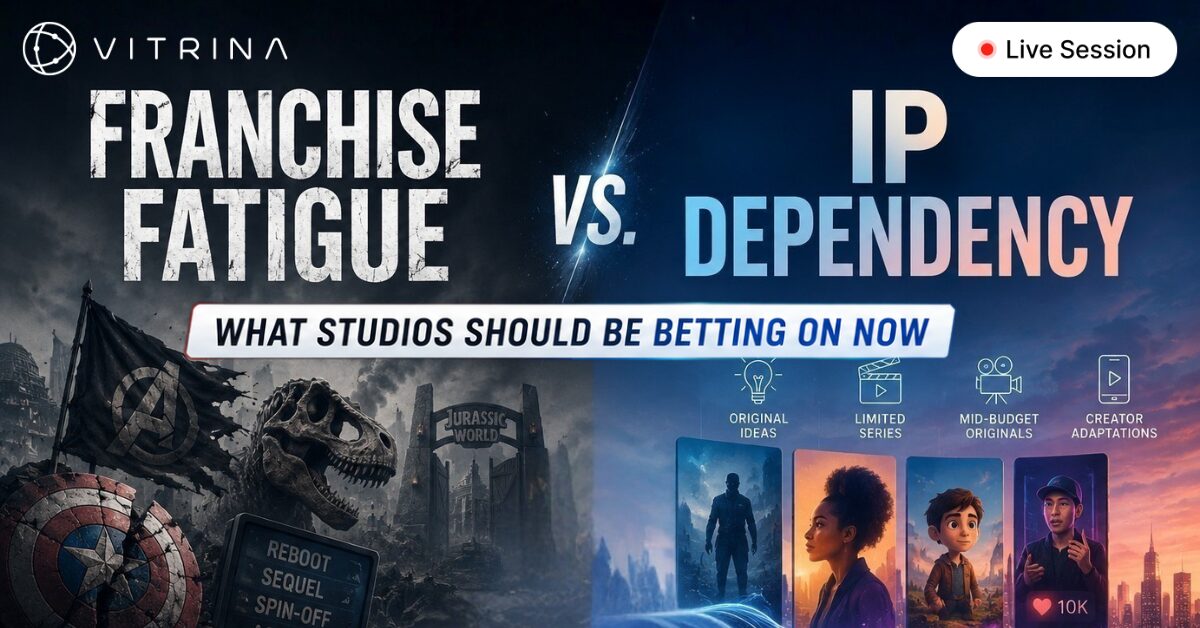
Franchise Fatigue vs. IP Dependency: What Studios Should Be Betting On Now
s franchise performance softens, where will the next generation of valuable IP come from? Join the briefing.

Unscripted Is Eating the World: The Multi-Billion Reality and Format Boom
Unscripted is the new prestige — inside the $19.8B global format boom reshaping how streaming platforms compete.