About Innovation Hub
 Global Content Pulse (Webinars)


 Global Production Financing
(Webinars)
Global Production Financing
(Webinars)  LeaderSpeak Podcast
  Global Entertainment Digest (Newsletter)
  About Vitrina
 About VIQI
 Our Story
 Our Solutions 🔥
 Film+TV Projects Tracker 🚀
 Case Studies
 Our Profile
The capital that greenlights your next project doesn’t come from one source anymore. Entertainment finance companies now span at least four distinct models—equity funds, structured lenders, gap financiers, and co-production specialists—and picking the wrong partner early is one of the most expensive mistakes you can make in this business. Ask any producer who’s closed a real deal: the money matters, but so does the structure, the timing, and the relationships behind it.
Here’s the thing—the landscape shifted dramatically after 2022. Post-COVID production excess drove a financing crunch that’s still squeezing the independent market. Commercial banks like City National retreated from Hollywood. Private capital rushed in. And suddenly, the question isn’t just “how do I raise money?” It’s “which type of entertainment finance company actually fits my project, my timeline, and my risk profile?” That distinction matters more now than ever before.
This guide breaks down the key players, the models they use, and what you need to know before you walk into a single pitch meeting. We’ll draw on direct insights from Phil Hunt (Founder & CEO, Head Gear Films), Joshua Harris (President & Managing Partner, Peachtree Media Partners), and Andrea Scarso (Managing Partner, IPR VC)—three executives who between them represent well over $500M in entertainment capital deployed.
Table of Contents
- What Makes Entertainment Finance Companies Different?
- The 4 Core Financing Models Explained
- Head Gear Films: 550 Films and Counting
- IPR VC: European Equity That Actually Gets the Creative Industry
- Peachtree Media Partners: Lending Where Banks Won’t Go
- How the Capital Stack Actually Closes in 2025
- How to Evaluate an Entertainment Finance Partner
- FAQ
- Conclusion
Ask VIQI: Which Entertainment Finance Companies Are Actively Funding Your Genre Right Now?
VIQI is Vitrina’s AI assistant—trained on 1.6 million titles, 360,000 companies, and 5 million entertainment professionals. Get instant answers on who’s investing, what they’re funding, and how to approach them.
✓ Included with 200 free credits | ✓ No credit card needed
What Makes Entertainment Finance Companies Different From Regular Lenders?
Entertainment finance is not corporate finance with a Hollywood veneer. It’s a specialized discipline built around one uncomfortable truth: the underlying asset—a film or TV series—doesn’t exist when you’re raising money to make it. You’re financing a promise, a package, and a set of projected revenues. That’s why most commercial banks have pulled back.
Traditional lenders want collateral they can touch. Entertainment finance companies lend—or invest—against things like pre-sales agreements, unsold territorial distribution rights, tax incentive receivables, and the speculative future value of IP. As Joshua Harris of Peachtree Media Partners puts it plainly on the Vitrina LeaderSpeak podcast: “We’re not investing in film and TV. We lend in film and TV. We take a collateral position against the film IP.” That’s a fundamentally different risk calculus than a SBA loan.
And it’s why relationship capital—the kind you can’t buy in a cold outreach email—matters so much in this sector. Entertainment finance companies want to understand not just your balance sheet, but your sales agent, your completion bond, your distribution strategy, and frankly, whether your package is the kind the market actually wants right now. Phil Hunt of Head Gear Films, who’s financed over 550 movies since 2002, frames it this way: his team isn’t looking at scripts for passion. They’re looking at deals for structure.
But it’s not all debt. There’s a whole ecosystem of equity investors who take a different view—betting on upside rather than lending against collateral. Understanding which type you need, and when, is step one. And it’s where most producers waste their most precious resource: time.

Your AI Assistant, Agent, and Analyst for the Business of Entertainment
VIQI AI helps you plan content acquisitions, raise production financing, and find and connect with the right partners worldwide.
- Find active co-producers and financiers for scripted projects
- Find equity and gap financing companies in North America
- Find top film financiers in Europe
- Find production houses that can co-produce or finance unscripted series
- I am looking for production partners for a YA drama set in Brazil
- I am looking for producers with proven track record in mid-budget features
- I am looking for Turkish distributors with successful international sales
- I am looking for OTT platforms actively acquiring finished series for the LATAM region
- I am seeking localization companies offer subtitling services in multiple Asian languages
- I am seeking partners in animation production for children's content
- I am seeking USA based post-production companies with sound facilities
- I am seeking VFX partners to composite background images and AI generated content
- Show me recent drama projects available for pre-buy
- Show me Japanese Anime Distributors
- Show me true-crime buyers from Asia
- Show me documentary pre-buyers
- List the top commissioners at the BBC
- List the post-production and VFX decision-makers at Netflix
- List the development leaders at Sony Pictures
- List the scripted programming heads at HBO
- Who is backing animation projects in Europe right now
- Who is Netflix’s top production partners for Sports Docs
- Who is Commissioning factual content in the NORDICS
- Who is acquiring unscripted formats for the North American market
The 4 Core Financing Models: What Every Producer Needs to Know
Before you approach a single entertainment finance company, you need to know which model—or which combination of models—you’re actually targeting. The capital stack for most projects layers several of these together. Here’s how each one works:
1. Equity Investment (High Risk, High Upside)
Equity investors buy a percentage of your project in exchange for profit participation. They sit last in the recoupment waterfall—behind distribution fees, P&A recoupment, senior debt, and gap financing. That makes equity the highest-risk capital in any deal. But if you hit? The upside is unlimited. This is what funds like IPR VC deploy—typically 20-40% of a film’s budget in exchange for ownership stake and backend.
2. Structured Debt (Lower Risk, Fixed Return)
Production loans and senior debt facilities are secured against confirmed revenues: distribution advances, tax credit receivables, and pre-sales contracts. Lenders like Head Gear Films and Peachtree Media structure these deals carefully. Repayment comes first in the waterfall—before any equity sees a dollar. The tradeoff for the producer? You keep more upside, but you’re on the hook for repayment regardless of box office.
3. Gap Financing (The Bridge Most Indies Need)
Gap financing is the mezzanine layer between senior debt and equity—a loan secured against a film’s unsold territorial distribution rights. It typically covers 10-30% of your total production budget after you’ve locked pre-sales, tax incentives, and equity. Without it, a $10M film with $7M confirmed still can’t greenlight. With it, you’re shooting by Q3. But gap is the most selective capital in the stack—lenders want to see a reputable sales agent, a completion bond, and sales estimates that are at least 1.5x-2x the gap amount.
4. Co-Production & Treaty Financing (Stacking Incentives Across Borders)
Official co-production treaties—there are 60+ bilateral agreements through Canada alone—allow producers to access incentives in multiple territories simultaneously. A UK-Canada co-production can stack the UK Audio-Visual Expenditure Credit with Canadian federal and provincial tax credits, potentially covering 35-50% of qualifying spend before any private capital enters the room. Canada administers its treaties through Telefilm Canada. The UK runs through the BFI Certification Unit. And you need to apply at least 4 weeks before principal photography starts—not after you’ve wrapped.
Track Which Finance Companies Are Actively Greenlighting Projects Right Now
Trusted by Netflix, Warner Bros, and Paramount. Join 140,000+ entertainment companies tracking deal flow, financiers, and production activity globally.
✓ 200 free credits | ✓ No credit card required | ✓ Full platform access
Head Gear Films: 550 Films and How High-Volume Lending Actually Works
Head Gear Films is a case study in what a serious entertainment finance company looks like at scale. Founded in 2002 by Phil Hunt and co-founder Compton Ross, it’s now approaching its quarter-century mark with over 550 movies financed. Hunt and Ross hold the distinction of being the most highly credited producers in the UK since records began in 1906. But here’s what most people don’t know: Head Gear didn’t start as a powerhouse—it pivoted.
Hunt tried producing first. His assessment of that phase is refreshingly blunt: “I had jumped in straight as a producer and failed miserably.” So he did what good dealmakers do—he looked at where in the capital stack he had the most edge. Structured lending. “Let’s start cutting deals, let’s put money into people who really know what they’re doing.” That pivot built the firm into a high-volume lender running 35-40 films per year—more than most major studios.
Hunt’s framing of their current model is worth understanding precisely. Head Gear runs three lines of business simultaneously:
- Structured lending: Deal-driven, not passion-driven. The package must be financeable, not just interesting.
- Production packaging: Business affairs support for independent producers who have great creative but lack the infrastructure to greenlight.
- Gap and senior equity: Hybrid positions where Head Gear takes on more risk—and more involvement—in the deal structure.
And the current market? Hunt doesn’t sugarcoat it. After the post-COVID “revenge production” excess of 2021-22, capital dried up fast. “The whole industry has become much, much harder in terms of getting movies off the ground and getting movies sold,” he noted in a recent Vitrina LeaderSpeak episode. But Head Gear’s volume model means they can stay active through downturns that would sideline smaller players.
Phil Hunt (Founder & CEO, Head Gear Films) on why high-volume structured lending creates durable competitive advantage—even in a financing crunch:

IPR VC: European Equity That Actually Gets the Creative Industry
IPR VC is something genuinely unusual in the entertainment finance space: a fund management company that’s been doing this for 12 years with a mandate specifically to bridge institutional capital markets with the content industry. Founded in Helsinki in 2014, the firm raised its most recent fund close in 2025 and deploys equity—not debt—across film and television projects primarily in North America and Europe.
Andrea Scarso, Managing Partner at IPR VC, frames the firm’s philosophy around partnership rather than transaction: “We want to become strategic partners, like real partners to the companies we work with.” That’s not marketing speak—it has structural implications. IPR VC invests at the project level, not the company level. They take equity positions in individual films and TV series, building a library of IP assets over time that collectively generates long-tail revenues. When you hit a successful IP—think theatrical, then home entertainment, then licensing—the upside compounds far beyond what any debt position could return.
Their investor base tells you a lot: institutional investors, family offices, and insurance companies—traditional capital that doesn’t usually play in entertainment. IPR VC exists precisely to de-risk that access point. Scarso is direct about the real challenge the industry faces: “The challenge in the industry right now is not on deal flow. It’s on the quality of investing, it’s on how you structure the investment.”
“When you hit a successful IP, the upside can be greater than the overall risk you’re taking on a portfolio.
— Andrea Scarso, Managing Partner, IPR VC
But here’s what makes IPR VC’s model strategically interesting for producers: they’re not competing for deals—they’re collaborating alongside studios, sales agents, and other financiers. Scarso explicitly positions them as complementary to existing capital structures. In 2026, they’re also expanding into what they call the “future content” economy—creator content, experiential, live and immersive—alongside their core Film & TV mandate. That’s a smart hedge against the Fragmentation Paradox reshaping streaming economics.
Peachtree Media Partners: Lending Into the Gap Commercial Banks Left Behind
When City National Bank—long considered the “bank of Hollywood”—retreated from film and TV lending, it didn’t just create a problem. It created an opportunity. Peachtree Media Partners, led by Joshua Harris (who brings 26 years of financial services experience, the majority in entertainment), stepped directly into that void.
But Peachtree isn’t doing what City National did. They’ve built something more nuanced. Their core position is as a lender—not an investor—against film IP, pre-sales, distribution agreements, and tax incentives. The key distinction Harris hammers home on Vitrina LeaderSpeak: “We lend in film and TV. We take a collateral position against the film IP.” That means Peachtree’s risk calculus is fundamentally different from an equity fund. They want to get repaid, not necessarily to participate in backend.
Their truly distinctive play? They’ll advance against future territory value before a distribution agreement is even executed. As Harris explains: “We will take the value of certain territories before a distribution agreement is executed and advance that to production.” That’s a collateral call most commercial banks won’t make. And it’s why private capital like Peachtree has become essential infrastructure in the post-bank Hollywood financing ecosystem.
Peachtree also has a strategic structural advantage: a sister production company, Gramercy Park Media. For a lender, that’s a significant intelligence edge—they understand production realities, cash flow timing, and completion risk from the inside. As reported by Deadline, the retreat of institutional players from entertainment lending has accelerated the rise of exactly this type of private capital lender—better structured for the volatility of the content business than a commercial bank ever was.
Harris’s macro thesis is also worth noting. He’s not pessimistic about the market—quite the opposite. “We are living in the content creation heyday. These devices are never going away. How we demand content is not going to regress.” That demand thesis is what justifies Peachtree’s calculated risk-taking in a space where most institutional capital is still gun-shy.
Need Warm Introductions to Entertainment Finance Companies? We’ll Connect You Directly.
Vitrina Concierge doesn’t give you a list. We make warm introductions directly to decision-makers who are actively seeking your type of content—right now.
- LA producer → Netflix UK, Fifth Season, Fox Entertainment (48 hours)
- Korean animation studio → Netflix Adult Animation (week one)
- Middle Eastern studio → Legendary Pictures (direct access)
How the Capital Stack Actually Closes in 2025
Understanding individual entertainment finance companies is useful. But understanding how they fit together is where deals actually get made. Most productions—outside the studio system—close their capital stacks by layering multiple financing sources. And the order you secure them in matters enormously.
Here’s a realistic example for a $10M independent feature:
The gap financing closes last—and only after the other 85% is confirmed. That’s the sequence. But there’s a subtlety most producers miss: your gap lender’s appetite depends entirely on your sales agent’s reputation and sales estimates. A lender like Head Gear won’t gap-finance a project with a B-tier sales agent, no matter how good the script is. The ecosystem is interconnected—and every element has to qualify.
For producers navigating co-production, the independent film financing guide on Vitrina goes deeper on how to stack incentives across jurisdictions before you even touch private capital. Countries like Canada (60+ bilateral treaties), France (61 treaties), and Australia have entire treaty frameworks designed to let you access multiple national funds simultaneously. Belgium co-produces 72% of its films through treaty—that’s not an accident; it’s a financing strategy baked into the production.
According to Variety, the current market is seeing a selective but active gap lending environment post-2024, with lenders demanding stronger project packages—name talent, completion bonds, and more robust pre-sales percentages—before committing. That’s a tighter market than 2021-22, but not a dead one.
How to Evaluate an Entertainment Finance Company Before You Sign
Not all entertainment finance companies are created equal—and the wrong partner can cost you more than money. It can cost you control, timeline, and creative integrity. Here’s how to de-risk your selection process:
Look at Their Track Record in Your Budget Range
A lender who specializes in $20M+ English-language features isn’t your gap financing solution for a $3M documentary. Ask specifically: how many films in your genre and budget range have they closed in the last 18 months? Head Gear’s sweet spot is clear—market-driven, English-language, commercial genre. That clarity is a feature, not a limitation. Misalignment on this front wastes everyone’s time.
Understand Their Position in the Waterfall
Where a finance company sits in the recoupment waterfall tells you everything about their incentives. A senior lender wants repayment before you see a dollar. An equity investor wants the film to be a hit. A gap lender wants your territories to sell. These aren’t just financial positions—they’re motivations that shape how partners behave when things get complicated on set or in post.
Evaluate the Relationship, Not Just the Term Sheet
Both Hunt and Scarso emphasize this—entertainment finance is relationship capital. You’re not just borrowing money; you’re entering a partnership that will likely span 18-24 months from first investment to revenue. IPR VC’s Scarso notes explicitly that their model is built on “working with great companies, working with great teams over a period of time.” The companies they back have access to that network—and that matters when you need to solve a distribution problem at 2AM before a festival deadline.
Check Their Sales Agent & Bond Company Relationships
The entertainment finance ecosystem runs on relationships between lenders, sales agents, and completion bond companies. A lender with established relationships at your target sales agent can streamline the entire deal process by weeks—sometimes months. Ask directly: which completion guarantors do you work with most frequently? Which sales agents have co-closed deals with you in the last year? Those answers tell you far more than a pitch deck.
Frequently Asked Questions
What are entertainment finance companies and what do they do?
Entertainment finance companies are specialized financial institutions—funds, lenders, or hybrid organizations—that provide capital to film and TV productions. Unlike commercial banks, they understand how to lend or invest against intangible assets like unsold distribution rights, pre-sales agreements, and tax incentive receivables. They include equity investors (like IPR VC), structured lenders (like Head Gear Films), gap financiers (like Peachtree Media Partners), and co-production specialists. Most projects layer multiple types to close their total budget.
What is the difference between equity and debt financing for film and TV?
Equity financing means an investor buys a percentage ownership in your project in exchange for backend profit participation—high risk, but potentially unlimited upside. Debt financing means borrowing capital that must be repaid with interest, secured against confirmed revenues like pre-sales or tax credits. Debt is lower risk for investors and sits earlier in the recoupment waterfall; equity sits last but participates in any profits. Most film budgets combine both. Our equity vs. debt guide breaks down when to use each.
How does gap financing work for independent film producers?
Gap financing is a loan secured against a film’s unsold territorial distribution rights. It bridges the funding gap—typically 10-30% of your production budget—after you’ve confirmed your pre-sales, tax incentives, and equity. To qualify, you generally need 60-80% of your budget already secured, a reputable sales agent providing sales estimates of 1.5-2x the gap amount, and a completion bond in place. Gap sits in the mezzanine position: behind senior debt but ahead of equity in the recoupment waterfall.
Why did commercial banks pull back from entertainment finance?
The retreat of commercial banks like City National—long the primary institutional lender to Hollywood—from entertainment financing created an enormous gap in the market. Banks require tangible collateral and regulatory certainty that film assets can’t always provide. Post-COVID production volatility, strikes, and shifting streaming economics made banks even more conservative. As Joshua Harris of Peachtree Media Partners notes, City National “lost their strategic focus,” creating a void that private capital and specialized entertainment lenders have moved to fill.
What do entertainment finance companies look for in a project?
Across lenders and equity investors, the core criteria are consistent: commercial genre with international appeal (action, thriller, horror translate globally), name talent attached, a reputable sales agent with proven track record, 60%+ of budget confirmed from other sources, a completion bond in place, and a realistic distribution strategy. For equity investors like IPR VC, the quality of the production company’s track record and the potential for IP longevity also matter significantly. The deal structure must work before the script gets read.
How do co-production treaties help close the financing gap?
Co-production treaties allow producers to access tax incentives and national film fund support in multiple countries simultaneously. Canada alone has 60+ bilateral treaties, while France maintains 61. By qualifying as a national production in two or more countries, you can stack incentives that might collectively cover 35-50% of qualifying spend—before a single private investor enters the room. Belgium co-produces 72% of its films under treaty. You must apply at least 4 weeks before principal photography and meet minimum contribution thresholds (typically 10-20% per co-producer).
How does Vitrina help producers find entertainment finance companies?
Vitrina’s platform tracks 140,000+ entertainment companies globally, including active financiers, funds, lenders, and co-production partners. You can filter by budget range, genre focus, and territory to identify which entertainment finance companies are actively funding projects like yours right now. Vitrina’s VIQI AI assistant can answer specific questions about financing structures, and the Concierge service makes warm introductions directly to decision-makers—getting LA producers in front of Netflix UK and Fifth Season within 48 hours. Start with 200 free credits, no credit card required.
What is the recoupment waterfall and why does it matter for entertainment finance?
The recoupment waterfall is the contractually defined order in which revenues are distributed to project stakeholders. Typically: distribution/sales agent fees (20-35%) come first, then P&A recoupment, then senior debt, then gap financing, then tax incentive recoupment, then equity investors, then profit participants. This order determines every investor’s risk profile. Senior lenders want to be first—so they lend at lower rates. Equity investors sit last and demand higher return potential. Understanding this structure is fundamental to negotiating terms with any entertainment finance company.
Conclusion: The Right Finance Company Is a Strategic Decision, Not Just a Capital Decision
The entertainment finance landscape isn’t just more complex than it was five years ago—it’s more sophisticated. And that’s actually good news if you know how to navigate it. Commercial banks left. Private capital, venture equity, and specialized lenders moved in. The deals still get done. But who you choose to partner with shapes everything—your timeline, your deal structure, your waterfall position, and ultimately your creative control.
Key Takeaways:
- Four core models drive deals: Equity, senior debt, gap financing, and co-production treaties each serve a different role in the capital stack—and most projects layer at least three of them.
- High-volume lenders set the market pace: Head Gear Films finances 35-40 films per year—more than most studios—by prioritizing deal structure over creative passion. That’s what durability looks like.
- Private capital filled the bank gap: City National’s retreat created a void that firms like Peachtree Media Partners now occupy, lending against future territory value before distribution deals are even executed.
- European equity is thinking long: IPR VC’s 12-year track record demonstrates that patient, institutional equity capital—building IP libraries over time—can generate returns that justify the entertainment risk profile.
- Treaty stacking is an underused weapon: Canada’s 60+ bilateral co-production treaties alone can cover 35-50% of qualifying production spend before private capital enters the room—if you apply before principal photography begins.
The producers who close deals in 2025 aren’t necessarily the ones with the best scripts—they’re the ones who’ve done the work to understand which entertainment finance company belongs at which layer of their capital stack, and why. That intelligence gap is real. And it’s closeable.
Find the Right Entertainment Finance Partners—Before Your Competition Does
Trusted by Netflix, Warner Bros, Paramount, and Google TV. Track 400,000+ projects. Access 3 million verified executives. Ask VIQI strategic questions about your financing options right now.
✓ 200 free credits | ✓ No credit card required | ✓ Cancel anytime
Need warm introductions to active financiers? Explore Concierge Service →
Find Film+TV Projects, Partners, and Deals – Fast.
VIQI matches you with the right financiers, producers, streamers, and buyers – globally.
Join Industry Briefings Trusted by Leaders
Unreleased Film+TV Projects: Opportunities & Showcase
A curated view of unreleased Film and TV projects open for financing and collaboration
The Mid-Budget Comeback: Why Mid-Budget Films Is the Smartest Bet in the Room
Mid-budget films are attracting new capital. See why this segment is becoming one of the strongest bets in Film today.
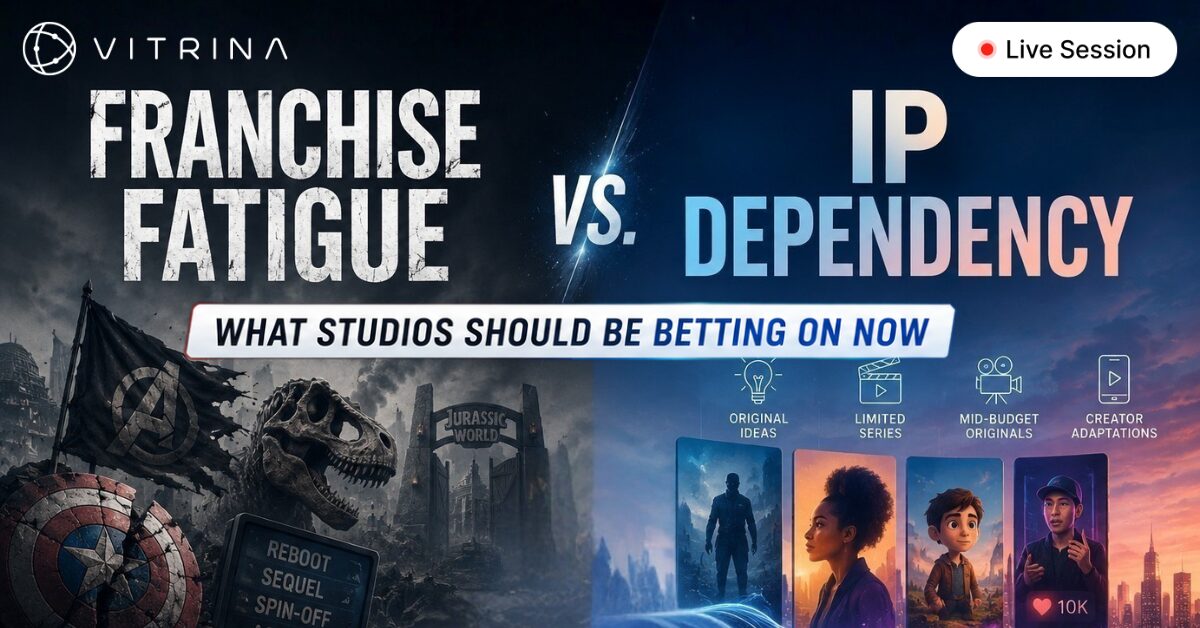
Franchise Fatigue vs. IP Dependency: What Studios Should Be Betting On Now
s franchise performance softens, where will the next generation of valuable IP come from? Join the briefing.

Unscripted Is Eating the World: The Multi-Billion Reality and Format Boom
Unscripted is the new prestige — inside the $19.8B global format boom reshaping how streaming platforms compete.