About Innovation Hub
 Global Content Pulse (Webinars)


 Global Production Financing
(Webinars)
Global Production Financing
(Webinars)  LeaderSpeak Podcast
  Global Entertainment Digest (Newsletter)
  About Vitrina
 About VIQI
 Our Story
 Our Solutions 🔥
 Film+TV Projects Tracker 🚀
 Case Studies
 Our Profile

If you’re packaging a project for the German market—or actively scouting talent from it—the agency question isn’t simple. Germany’s talent management agencies don’t operate on one model. You’ve got global full-service players with dedicated European desks, deep-rooted German boutiques operating across four distinct production hubs, and a government-administered placement structure that sits behind a lot more casting activity than most international executives realize. Understanding who does what—and where—is the difference between a 6-week attach process and a 6-month one.
Germany’s audiovisual sector runs at over €10 billion in annual production and broadcast value. The DFFF (Deutscher Filmförderfonds) now offers a 30% cash rebate on qualifying German spend—up from 25% in 2024—making the market significantly more attractive for international co-productions that need German talent on the call sheet to access those funds.
Netflix has already committed to German originals at scale. Amazon Studios Germany is active. RTL Deutschland, after absorbing Sky Deutschland, now commands a programming slate that makes it one of Europe’s five largest linear-plus-streaming operators. That level of production activity creates genuine talent demand—and the agencies positioned to capture it are worth knowing by name.
In This Guide
- Germany’s Talent Market in 2026: What You’re Actually Dealing With
- Top Talent Management Agencies in Germany for 2026
- Berlin vs. Munich vs. Cologne vs. Hamburg: Hub-by-Hub
- How the DFFF 30% Rebate Shapes Talent Demand
- Vetting Framework: What to Demand From Any German Talent Agency
- FAQ: German Talent Agencies
Find Verified German Talent Agencies in Minutes—Not Months
Netflix, Warner Bros, and Paramount use Vitrina to track active talent partners across 140,000+ companies in the global entertainment supply chain. Ask VIQI which talent agencies are actively placing actors, directors, and writers into German productions right now.
200 free credits. No credit card required.
Germany’s Talent Market in 2026: What You’re Actually Dealing With
Germany doesn’t operate as a single entertainment market. It operates as four distinct production cities that happen to share a language and a film fund. Miss that structural reality and you’ll spend months approaching the wrong agencies for the wrong projects in the wrong cities.
Berlin is where streaming originals, prestige drama, and international co-productions cluster. Netflix’s German originals—Dark, Barbarians, The Defeated—were all anchored here. The city’s talent pool skews toward literary adaptations, European drama sensibilities, and directors who’ve come through the Berlin film school system. Agencies in Berlin tend to represent talent with international festival profiles and streaming platform experience.
Munich is Germany’s studio city. Bavaria Film—the country’s largest studio complex with 30+ sound stages and full post-production infrastructure—sits just outside the city. Constantin Film, Germany’s premier theatrical distributor and producer, operates here. Munich talent agencies are often attached to producers who work in theatrical features and broad-audience TV, with stronger connections to German-language theatrical releases than their Berlin counterparts.
Cologne is Germany’s TV factory. RTL Deutschland’s production hub, Fremantle Germany, and a dense cluster of format and unscripted producers call Cologne home. If you’re casting German presenters, game show hosts, factual talent, or daytime series leads, the Cologne agencies are your first call—not the Berlin ones.
Hamburg runs a mix: commercial production, documentary, corporate entertainment, and increasingly, a growing scripted TV sector. The city’s talent agencies tend toward broader commercial representation—hosts, commercial actors, voice-over talent—alongside a boutique drama contingent.
One structural element that distinguishes the German talent market from the UK or US: ZAV Künstlervermittlung—the official artist placement service of Germany’s Federal Employment Agency (Bundesagentur für Arbeit). ZAV isn’t a talent agency in the commercial sense. But it’s the regulatory backbone that many German talent representation arrangements sit on top of, and it administers placement services for performers across theater, film, TV, and music. Any international executive structuring talent deals for German productions needs to understand ZAV’s role in how contracts get registered and how residuals flow. It’s not optional knowledge.

Your AI Assistant, Agent, and Analyst for the Business of Entertainment
VIQI AI helps you plan content acquisitions, raise production financing, and find and connect with the right partners worldwide.
- Find active co-producers and financiers for scripted projects
- Find equity and gap financing companies in North America
- Find top film financiers in Europe
- Find production houses that can co-produce or finance unscripted series
- I am looking for production partners for a YA drama set in Brazil
- I am looking for producers with proven track record in mid-budget features
- I am looking for Turkish distributors with successful international sales
- I am looking for OTT platforms actively acquiring finished series for the LATAM region
- I am seeking localization companies offer subtitling services in multiple Asian languages
- I am seeking partners in animation production for children's content
- I am seeking USA based post-production companies with sound facilities
- I am seeking VFX partners to composite background images and AI generated content
- Show me recent drama projects available for pre-buy
- Show me Japanese Anime Distributors
- Show me true-crime buyers from Asia
- Show me documentary pre-buyers
- List the top commissioners at the BBC
- List the post-production and VFX decision-makers at Netflix
- List the development leaders at Sony Pictures
- List the scripted programming heads at HBO
- Who is backing animation projects in Europe right now
- Who is Netflix’s top production partners for Sports Docs
- Who is Commissioning factual content in the NORDICS
- Who is acquiring unscripted formats for the North American market
Top Talent Management Agencies in Germany for 2026
Germany’s talent representation operates on a two-tier structure that most international executives don’t map clearly enough before they start making calls. Here’s how it actually breaks down.
Global Full-Service Agencies with German Market Presence
United Talent Agency (UTA) operates across European markets with a client list that includes German-speaking talent working on international productions. UTA’s European operations cover premium scripted, film, literary, and digital talent—and their cross-border packaging capability is the specific advantage for international producers who need German talent attached to projects that will sell into non-German markets. If you’re building a Netflix or Amazon package that requires European co-production credentials, UTA’s cross-territory packaging team is relevant early in the process.
Creative Artists Agency (CAA) maintains European operations covering German-market talent at the premium end. CAA’s strength in the German market sits at the intersection of theatrical film and high-budget streaming originals—specifically for German directors, writers, and lead actors who are crossing over into English-language productions. The agency’s global sales infrastructure makes them particularly valuable when German talent needs to be packaged alongside American or UK talent for international co-productions structured around the DFFF rebate.
Endeavor (WME)—the combined William Morris Endeavor operation—covers Germany through its European talent desks. Endeavor’s particular relevance in 2026 is their strength in non-scripted and format talent: German presenters, competition show hosts, and reality format leads crossing into international productions. The agency’s sports entertainment crossover capabilities also matter as German sports talent increasingly looks for branded content and entertainment IP opportunities.
German Market Agencies: The Specialist Tier
Below the global full-service players sits a dense field of German-specific boutique agencies—and this is where the Fragmentation Paradox hits hardest. With 600,000+ companies operating across the global entertainment supply chain in opaque silos, the German boutique talent space is genuinely hard to navigate without real-time intelligence. Relationships dominate here. Capability verification is mostly word-of-mouth. And the gap between an agency’s self-presentation and their actual active client roster can be enormous.
KBFM (Künstlerbüro & Filmproduktions-Management) operates in Munich’s production orbit, representing actors and talent in the Bavaria Film ecosystem. Munich-based agencies like KBFM tend to have strong broadcaster relationships with ARD and ZDF—Germany’s two public broadcasters, whose combined annual content spend exceeds €6.5 billion. If your production needs German public broadcaster pre-sales as part of its financing structure, Munich agencies with direct ZDF and ARD relationships are doing meaningful work that London or LA agencies simply can’t replicate.
Zeitgeist Management (Hamburg) represents a sector of the German talent market that sits at the intersection of commercial entertainment and long-form scripted work. Hamburg-based talent agencies tend to have particularly strong relationships with production companies in the documentary and factual space—a content category that German public broadcasters consume at scale—alongside representation of talent working in commercial drama.
MMC Artists in the Cologne/Düsseldorf corridor sits at the heart of Germany’s commercial TV production belt. Cologne produces more German TV content per square kilometer than anywhere else in the country. An agency with deep MMC-level relationships in that market is an irreplaceable resource for any producer building German reality, entertainment, or daytime formats. But—and this is the point that gets missed—their utility for prestige drama or theatrical film is limited. Niche expertise is a feature in the boutique agency world, not a bug.
Track Which German Agencies Are Placing Talent Into Active Productions
Vitrina maps live production activity across 400,000+ projects globally—including which German talent agencies have active placements in productions entering development and pre-production right now.
200 free credits · No credit card required
Berlin vs. Munich vs. Cologne vs. Hamburg: Hub-by-Hub Breakdown
Here’s the practical breakdown most international executives don’t have before they start making calls.
The practical implication: if you ask a Munich theatrical film agency to attach a presenter for a Cologne-commissioned game show format, you’re going to get a polite referral and a 3-month detour. Right hub, right category, right agency. That’s the framework.
How the DFFF 30% Rebate Shapes Talent Demand in 2026
The DFFF (Deutscher Filmförderfonds) isn’t just a tax incentive. It’s a talent demand driver—and international executives who understand this have a structural advantage in co-production negotiations. Here’s how it works in practice.
To access the DFFF’s 30% rebate on German-qualifying spend, productions must meet a German cultural contribution test and demonstrate meaningful German creative and technical participation. That means German directors, writers, or lead actors aren’t just desirable for creative reasons—they’re often necessary for the financing model to work. German talent attach becomes a capital stack decision, not just a casting one.
For international co-productions entering the German market through the DFFF pathway, this creates a specific talent sourcing dynamic: you need agencies that understand the cultural test requirements, can confirm that specific talent will qualify the production, and have track records of working on DFFF-funded projects where the incentive audit went smoothly. An agency that primarily handles commercial brand work in Hamburg isn’t going to navigate that process reliably for you. An agency embedded in Munich’s or Berlin’s DFFF production network will.
The FFA (Filmförderungsanstalt)—Germany’s national film fund authority—administers the DFFF and maintains published lists of supported projects. Cross-referencing which German talent agencies have consistent representation on FFA-supported productions gives you a data-driven shortlist that’s far more reliable than word-of-mouth alone. That’s exactly the kind of signal Vitrina’s platform surfaces—which agencies are actively placed on productions with active funding, rather than agencies that simply claim to operate in the DFFF space.
For a broader view of how European co-production financing intersects with talent strategy, the international co-production guide covers the structural mechanics in detail. And if you’re specifically comparing talent agency networks across Europe, the European talent agencies guide maps the full competitive picture.
Need Verified German Talent Agency Contacts for a Live Production?
Vitrina’s Concierge team identifies active talent agency relationships matched to your production’s genre, hub, and financing structure—including DFFF-eligible German talent for co-production builds. Producers have identified the right German partners within 48 hours.
No commitment. Get your matched agency shortlist this week.
Vetting Framework: What to Demand From Any German Talent Agency
The boutique agency market in Germany has the same opacity problem as everywhere else. An agency can have an impressive website, a client list featuring recognizable names, and a complete inability to actually execute a production attach in your timeline. Here’s the vetting checklist that cuts through it.
Active client verification, not roster claims. Ask for specific clients currently in active production—not talent they’ve represented in the past. The difference between an agency with 40 active clients and one with 40 names on a website is enormous and non-obvious from the outside. An agency that can’t quickly confirm which of their clients are available for production start within your timeframe isn’t operating with real inventory.
Broadcaster relationship specificity. “We work with ARD” means nothing. “We placed three clients into Das Erste primetime drama in the last 18 months” means everything. Germany’s public broadcaster system—ARD, ZDF, Arte—operates on relationship networks that are real and durable. Any agency claiming strong broadcaster relationships should be able to name the commissioning editors they work with directly. Can’t name them? The relationship isn’t what they’re representing it to be.
DFFF track record, not just awareness. Does the agency have clients on DFFF-funded productions in the last 24 months? The FFA publishes supported project lists. Cross-reference the agency’s claimed clients against those lists. An agency that talks fluently about the DFFF but can’t point to recent funded projects where their talent appears is telling you something important about the actual depth of their access.
Contract structure transparency. German talent contracts have specific structural requirements under German labor law that international productions sometimes run into sideways. A German agency that can’t explain how their standard representation agreements intersect with ZAV requirements, union agreements (ver.di), and the standard broadcaster MTVDFF contract framework isn’t going to be a reliable partner when the legal details matter—and they always matter.
Cross-border packaging capability. For international co-productions, you need agencies that can work alongside UTA, CAA, or WME when packaging requires mixing German and international talent. A German boutique that’s never navigated a split attach with a US agency will slow your timeline and create negotiation friction. Ask directly: “What’s your experience working on co-productions where German talent needed to be packaged alongside international talent with representation from a global agency?” The answer tells you everything. For more on evaluating German talent across entertainment sectors, the Berlin talent agencies guide covers the capital’s specific agency landscape in more detail.
FAQ: German Talent Agencies
The Bottom Line: Germany Rewards Specificity
The executives who move fastest in Germany’s talent market are the ones who’ve already done the hub analysis before they make the first call. They know whether they need a Berlin streaming drama agency or a Munich theatrical film agency. They know whether their financing model requires DFFF-qualified German talent—and they’ve cross-referenced FFA project lists to confirm which agencies have actually delivered that. And they’re using real-time production intelligence rather than six-month-old relationship networks to identify who’s active right now.
Germany’s talent infrastructure is genuinely strong. The boutique fragmentation that makes it hard to navigate from the outside is the same fragmentation that creates information advantages for those who invest in the right intelligence. The 15-20% margin leakage that the Fragmentation Paradox creates across the global supply chain is very much alive in the German talent market—and it’s entirely preventable with the right data.
Key Takeaways:
- Germany operates as four distinct production hubs—Berlin (streaming/drama), Munich (theatrical/studio), Cologne (commercial TV), Hamburg (factual/commercial). Approach the wrong hub and you’re starting 3 months behind.
- The DFFF 30% rebate makes talent attach a financing decision: German talent on the call sheet can unlock a cash rebate that restructures your entire capital stack—agencies embedded in FFA-funded productions understand this; others don’t.
- Global agencies (UTA, CAA, WME/Endeavor) cover international crossover profiles; German boutiques own the domestic broadcaster and format relationships. You likely need both for a production that wants to play in both markets.
- ZAV is not a talent agency—it’s the compliance infrastructure underlying German talent representation. Every international producer working with German talent should understand how it operates.
- Active placement verification beats roster claims every time: Cross-reference claimed agency clients against FFA-supported project lists before committing time to any relationship.
Find Verified German Talent Agencies for Your 2026 Production
Join 140,000+ companies using Vitrina to track the global entertainment supply chain. VIQI maps German talent agency activity—by hub, content type, and DFFF eligibility—matched to your production requirements.
200 free credits · No credit card required · Results in minutes
Find Film+TV Projects, Partners, and Deals – Fast.
VIQI matches you with the right financiers, producers, streamers, and buyers – globally.
Producers Seeking Financing & Partnerships?
Book Your Free Concierge Outreach Consultation
(To know more about Vitrina Concierge Outreach Solutions click here)
Join Industry Briefings Trusted by Leaders
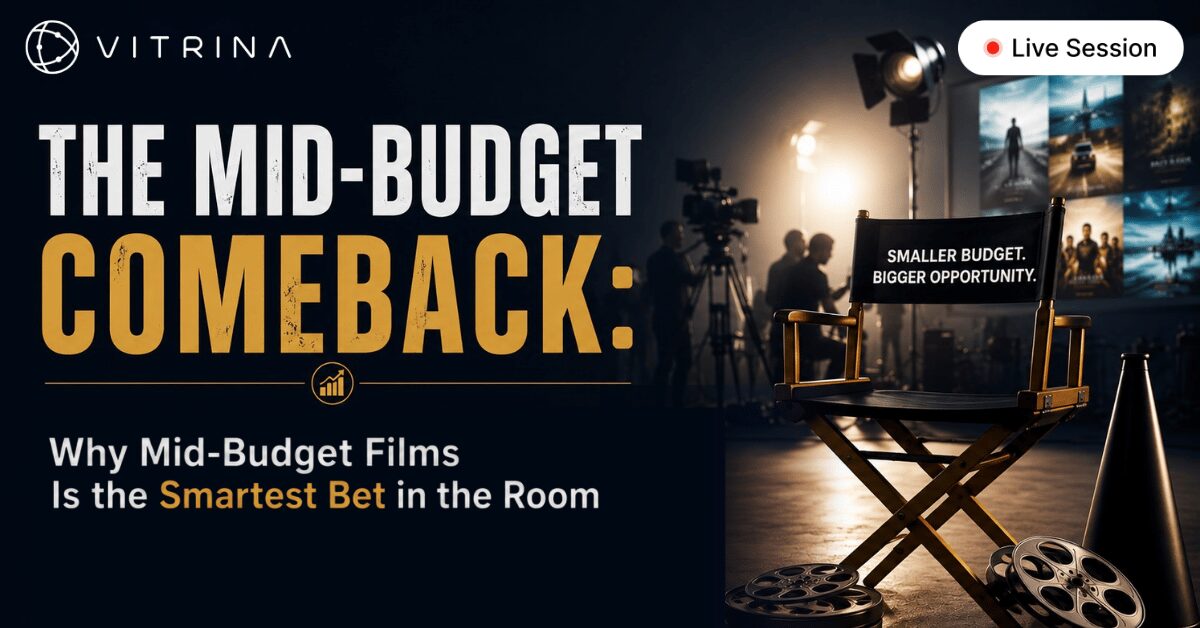
The Mid-Budget Comeback: Why Mid-Budget Films Is the Smartest Bet in the Room
Mid-budget films are attracting new capital. See why this segment is becoming one of the strongest bets in Film today.
Franchise Fatigue vs. IP Dependency: What Studios Should Be Betting On Now
s franchise performance softens, where will the next generation of valuable IP come from? Join the briefing.
Unscripted Is Eating the World: The Multi-Billion Reality and Format Boom
Unscripted is the new prestige — inside the $19.8B global format boom reshaping how streaming platforms compete.
How Co-Productions and Regional IP Are Reshaping Global Drama
As global drama evolves, which stories travel, which stay local, and how are they getting financed?