About Innovation Hub
 Global Content Pulse (Webinars)


 Global Production Financing
(Webinars)
Global Production Financing
(Webinars)  LeaderSpeak Podcast
  Global Entertainment Digest (Newsletter)
  About Vitrina
 About VIQI
 Our Story
 Our Solutions 🔥
 Film+TV Projects Tracker 🚀
 Case Studies
 Our Profile
By Sandeep Nikanke, Distribution & Finance Intelligence Analyst, Vitrina AI | Last Updated: May 2026 | Reviewed against Vitrina’s live database of 400,000+ active projects and deal flow from 140,000+ verified companies across 100+ countries.
Quick Answer
The top 10 movie distribution companies in 2026 are: Walt Disney Studios, Warner Bros. Pictures, Universal Pictures, Sony Pictures, Paramount Pictures, Netflix, Amazon MGM Studios, Lionsgate Films, A24, and Radial Entertainment. Ranked by global theatrical reach, acquisition volume, streaming scale, and access for independent producers — these are the distributors actively shaping what gets made, released, and seen in 2026.
You’ve got a finished film. Or you’re in development and you’re already thinking about who’s going to take it to market. Either way, the question is the same: which movie distribution companies actually matter right now — and how do you get in front of them before it’s too late?
Here’s the thing most producers figure out too late. Distribution isn’t just about finding someone to release your film. It’s the single decision that determines your P&A spend, your MG structure, your recoupment timeline, and whether your capital stack ever makes investors whole. Pick the wrong distributor — or approach the right one at the wrong time — and you’re looking at 18 months of pain with nothing to show for it.
The global theatrical market topped an estimated $33 billion in 2024, according to industry tracking reported by Deadline. But that number masks a fragmented reality. There are thousands of distribution companies operating across theatrical, streaming, AVOD, FAST, and home video — and most of them aren’t the right fit for your project. This guide cuts through the noise. We’ve mapped the ten movie distribution companies that hold the most leverage in 2026, what they actually acquire, and how smart producers are getting their attention faster than ever before.
IN THIS ARTICLE
- Why Your Distributor Choice Defines Your Film’s Fate
- How We Ranked These Movie Distribution Companies
- The Big Studio Distributors
- The Streaming Giant Distributors
- The Specialist & Independent Distributors
- What These Distributors Actually Want
- How to Connect with Movie Distribution Companies Faster
- FAQ
- Key Takeaways
Find the Right Distribution Partner in 48 Hours
Trusted by teams at Netflix, Warner Bros, and Paramount. Ask VIQI — Vitrina’s AI — to surface film distributors matched to your genre, budget, and territory.
No credit card required. 200 free credits to start.
Why Your Movie Distribution Company Choice Defines Your Film’s Fate
Let’s be direct about something most pitch decks gloss over. Distribution isn’t a phase that happens after production — it’s a variable that shapes every decision before you call “action” on day one. Your P&A budget, your equity waterfall, your territory splits, whether you’ve got a completion bond lined up — all of it flows backward from who you’re planning to release through.
Phil Hunt, Founder & CEO of Head Gear Films — a company that has financed 550+ movies and runs 35–40 productions per year — put it plainly in his Vitrina LeaderSpeak interview: “The whole industry has become much, much harder in terms of getting movies off the ground and getting movies sold.” That’s from a man who’s been doing this since 2002 and is the most highly credited film producer in UK history since records began in 1906. When someone with that track record signals caution, you listen.

Your AI Assistant, Agent, and Analyst for the Business of Entertainment
VIQI AI helps you plan content acquisitions, raise production financing, and find and connect with the right partners worldwide.
- Find active co-producers and financiers for scripted projects
- Find equity and gap financing companies in North America
- Find top film financiers in Europe
- Find production houses that can co-produce or finance unscripted series
- I am looking for production partners for a YA drama set in Brazil
- I am looking for producers with proven track record in mid-budget features
- I am looking for Turkish distributors with successful international sales
- I am looking for OTT platforms actively acquiring finished series for the LATAM region
- I am seeking localization companies offer subtitling services in multiple Asian languages
- I am seeking partners in animation production for children's content
- I am seeking USA based post-production companies with sound facilities
- I am seeking VFX partners to composite background images and AI generated content
- Show me recent drama projects available for pre-buy
- Show me Japanese Anime Distributors
- Show me true-crime buyers from Asia
- Show me documentary pre-buyers
- List the top commissioners at the BBC
- List the post-production and VFX decision-makers at Netflix
- List the development leaders at Sony Pictures
- List the scripted programming heads at HBO
- Who is backing animation projects in Europe right now
- Who is Netflix’s top production partners for Sports Docs
- Who is Commissioning factual content in the NORDICS
- Who is acquiring unscripted formats for the North American market
How We Ranked These Top 10 Movie Distribution Companies
This isn’t a list based on brand recognition alone. We ranked these movie distribution companies across five criteria: global theatrical reach, digital/streaming distribution capability, acquisition volume (active slate size), access for independent producers, and total deal value in recent fiscal years. We drew on Vitrina’s proprietary intelligence platform — which tracks 400,000+ active projects in real time — cross-referenced against deal data reported by Variety and Deadline.
We also weighted for what matters to working producers: who’s actually buying right now, not just who has the biggest logo. And we included specialist and independent distributors — because for most projects, the Big Five aren’t your first call. They’re your eventual goal. Getting there requires building relationships with mid-tier buyers who can validate your project commercially before you pitch up the chain.
KEY MARKET STATISTICS — 2026
- $33 billion — global theatrical box office in 2024 (Deadline industry tracking)
- 140,000+ active film & TV suppliers tracked in Vitrina’s global database
- 400,000+ active projects monitored across theatrical, streaming, FAST & AVOD channels
- Top 5 studios control roughly 80% of North American theatrical market share
- Netflix spent ~$17 billion on content in 2024, making it the world’s largest single buyer
- A24 has won 40+ Academy Awards since 2012 — the most of any independent distributor this decade
The Big Studio Distributors: Through
These are the distributors that command the largest theatrical releasing infrastructures on the planet — the companies with the studio logos you’ve seen in front of films your entire life. Their acquisition pipelines are more selective than ever, but they’re not closed. What’s changed is how they evaluate risk. Each of them now demands clearer data on audience demand before they’ll greenlight a wide theatrical commitment.
#1: Walt Disney Studios Motion Pictures
Walt Disney Studios Motion Pictures consistently ranks as the top domestic box office force — and in recent years has dominated the global theatrical chart with franchises like the Marvel Cinematic Universe, Pixar, and live-action Disney titles. Films like Inside Out 2, Deadpool & Wolverine, and Moana 2 demonstrated in 2024 that Disney’s IP engine still converts to box office in ways no competitor can reliably replicate.
But here’s what producers outside the Disney ecosystem often miss: Disney also releases through Searchlight Pictures for specialty content. If your film is positioned as awards-adjacent or adult-skewing, Searchlight is a real conversation — one that bypasses the IP franchise machine entirely. Their recent track record includes multiple Best Picture nominees and winners.
Distribution footprint: 170+ countries with owned theatrical and Disney+ streaming integration. For independent producers, the practical access point is Searchlight or through agency packages at CAA, WME, or UTA, which maintain direct pipeline relationships with Disney acquisition executives.
2: Warner Bros. Pictures
Warner Bros. Pictures has over 100 years of distribution history — and in 2026, it sits at an inflection point following the Warner Bros. Discovery restructuring narrative that’s dominated trade headlines since 2022. What matters to you as a producer: Warner’s theatrical output is robust, their DC franchise is rebuilding under James Gunn’s creative direction, and the Max streaming platform has created new day-and-date acquisition windows that didn’t exist three years ago.
Warner has historically been one of the more accessible major studios for independently financed projects structured around their distribution label, particularly in the action, thriller, and horror space. If your film has a completed negative pickup structure with foreign pre-sales behind it, Warner’s business affairs team is a legitimate call — provided your talent attachments support the ask.
3: Universal Pictures
Don’t overlook Universal Pictures as the most commercially consistent major studio over the past five years. Oppenheimer — a $100M+ theatrical bet on a three-hour, R-rated historical drama — grossed over $952 million worldwide. That’s what happens when a distributor commits fully to a director’s vision. Universal also has Focus Features for specialty acquisitions and a strong international releasing infrastructure through UPI.
Their acquisition posture for independently developed projects tends to favor genre films with proven international pre-sale markets: action, horror, thriller, broad comedy. The Blumhouse partnership remains one of the most productive distributor-producer relationships in Hollywood — a model worth studying if you’re building a genre slate.
4: Sony Pictures Releasing
Sony Pictures Releasing is the major studio with arguably the most distinctive distribution model: they don’t own a direct streaming platform. That’s not a weakness — it’s leverage. Sony licenses finished films to Netflix, Disney+, Amazon, and others at premium rates. The Spider-Man franchise deal with Marvel/Disney, for instance, generated significant licensing revenue while Sony retained distribution rights globally.
For producers, Sony also offers Screen Gems (genre), Stage 6 Films (international), and Sony Pictures Classics (awards/specialty). That’s four distinct acquisition channels under one corporate umbrella — which means there are actually four conversations you could have with Sony, depending on your project’s positioning and budget level.
5: Paramount Pictures
Paramount Pictures — the oldest active major studio, founded in 1912 — has had a turbulent few years navigating the streaming transition and corporate restructuring. But their theatrical operation remains one of the five essential global distributors. Top Gun: Maverick’s $1.49 billion global gross and the continued performance of the Mission: Impossible and Transformers franchises proved the theatrical muscle is still there.
What’s changed: Paramount+ has created new commissioning windows for content that wouldn’t have been greenlit theatrically five years ago. Their acquisition team has gotten more aggressive on mid-budget commercial content in the $20M–$60M production range — particularly for films that can anchor an opening weekend before transitioning to Paramount+.
Track Every Active Distributor Deal in Real Time
Join 140,000+ companies on Vitrina’s platform — including teams from Netflix, Warner Bros, and Google TV — who use Vitrina to discover distribution partners, track acquisition deals, and connect with the right buyers before their window closes.
200 free credits to start. No commitment, no credit card.
The Streaming Giant Distributors: #6 and #7
Calling Netflix and Amazon “distributors” still feels unfamiliar to some industry veterans. But that’s exactly what they are — and in many cases, they’re the first call rather than the last, particularly for content with global appeal and a cast profile that translates across territories without requiring P&A infrastructure you’d need for wide theatrical release.
6: Netflix
Netflix crossed 300 million paid subscribers globally in early 2025. That’s a distribution footprint no theatrical chain can match — and the company has used that scale to build one of the most aggressive film acquisition operations in the industry. Netflix originals, including Extraction, The Gray Man, and Red Notice (which became the platform’s most-watched film ever), demonstrate the appetite for high-concept, commercially driven feature films.
But Netflix distribution is different from traditional theatrical. You’re not selling P&A exposure to the world — you’re accepting a platform MG in exchange for global rights. That’s a clean capital structure for some projects and a value-destroying one for others, depending on your recoupment math. If your film has legs across multiple independent territory pre-sales, a Netflix global deal may actually undervalue your capital stack. If you’re a first-time producer who needs one check to close financing, Netflix may be your fastest path to greenlight.
Access: Netflix works primarily through established agencies and production companies. Their film acquisition team also attends Sundance, Cannes, AFM, and Berlin with dedicated acquisition budgets. Building a relationship with a Netflix acquisitions executive 6 weeks ahead of your festival premiere — not the week of your Sundance screening — is the actual play.
7: Amazon MGM Studios
Amazon MGM Studios was formally created after Amazon completed its $8.45 billion acquisition of MGM in 2022. What that merger gave Amazon is profound: the MGM library — 4,000+ films, 17,000+ TV episodes, franchises including James Bond, Rocky, and the Legally Blonde catalog — plus an integrated content production and acquisition operation with global Prime Video distribution built in.
Amazon also has Orion Classics for specialty theatrical, and they’ve demonstrated willingness to do limited theatrical releases for prestige titles before moving them to Prime Video. The Amazon model is evolving toward a hybrid — theatrical where it builds IP value, streaming-first where it builds subscriber engagement. For producers with the right project, this is one of the most financially capable buyers in the market right now.
The Specialist & Independent Movie Distribution Companies: 8 Through 10
This is where most working producers actually live — and where smart dealmaking happens. Don’t dismiss these companies because they’re not household names to audiences. Among acquisitions executives, sales agents, and film financiers, these three distributors punch well above their marketing profiles. And critically, they’re actively buying in 2026 in ways that the Big Five often are not for independent submissions.
8: Lionsgate Films
Lionsgate has built one of the most commercially efficient distribution operations outside the Big Five. The John Wick franchise — which grew from a $20M production budget to a global action phenomenon grossing over $1 billion combined across four films — is the textbook case study in what a specialist distributor can do when they fully commit to an IP. Same with The Hunger Games franchise, which Lionsgate turned into a multi-billion-dollar theatrical and licensing machine.
What makes Lionsgate relevant for independent producers: they acquire more independently-financed genre films than any other major-adjacent distributor. Their Lionsgate Premiere label handles VOD-first acquisitions at lower budget points. Their willingness to structure negative pickup deals and work with foreign pre-sale packages makes them one of the most producer-friendly distributors on this list. If your film fits the action, horror, thriller, or YA genre profile, Lionsgate is a realistic first-call target.
9: A24
A24 is arguably the most culturally influential distributor founded in the past 15 years — and one of the clearest examples that film distribution is as much about brand identity as it is about financial scale. Founded in 2012, A24 has produced or distributed Moonlight (Best Picture, 2017), Lady Bird, Midsommar, The Witch, Hereditary, Everything Everywhere All at Once (Best Picture, 2023), and dozens of films that have defined indie cinema’s mainstream resurgence.
Their acquisition model is genuinely taste-driven. A24 doesn’t fit projects into commercial formulas — they find the projects that feel singular, back filmmakers with unusual creative voices, and market them in ways the majors wouldn’t attempt. If you’re developing something formally distinctive, narratively bold, or creatively unclassifiable, A24 is the right conversation. But understand: they see hundreds of submissions for every project they acquire. A warm introduction through a talent agency or production company relationship moves faster than cold outreach.
10: Radial Entertainment
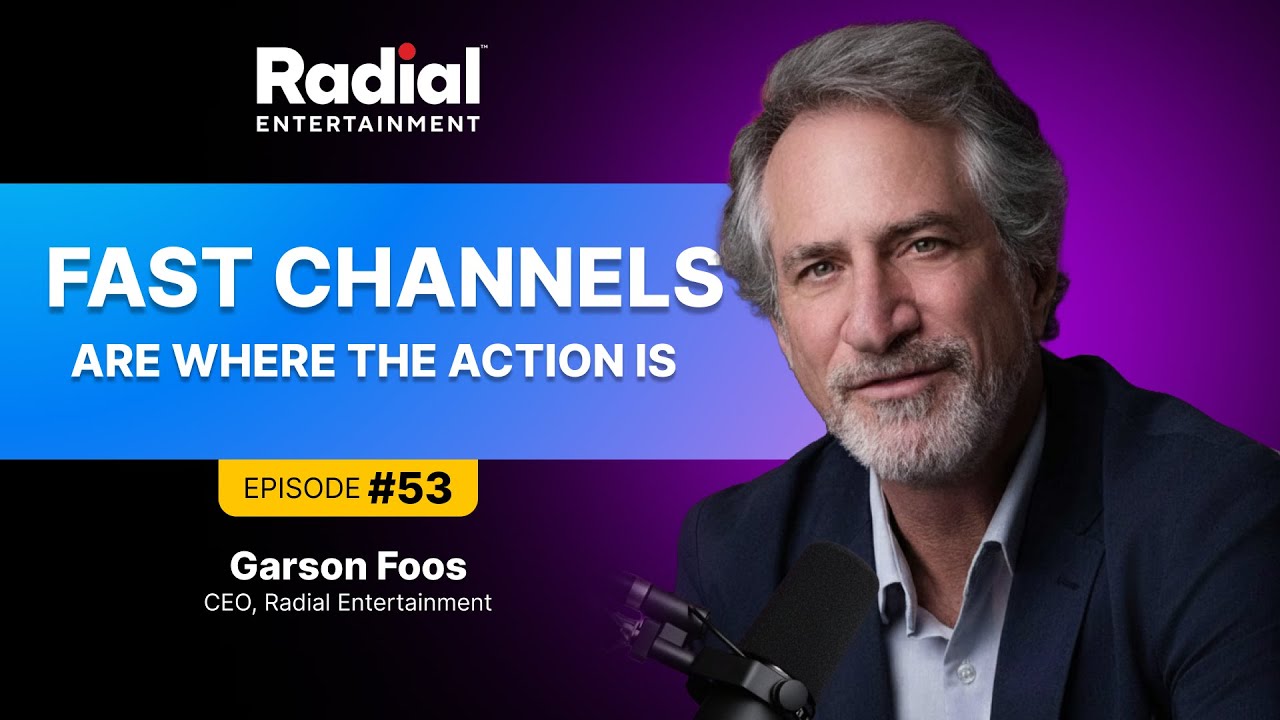
Radial Entertainment — formed by the merger of Shout! Studios and FilmRise — has quietly become one of the most significant independent film and TV distribution powerhouses operating today. Garson Foos, CEO of Radial Entertainment, discussed the merger in his Vitrina LeaderSpeak episode, explaining that the deal combines the best of both companies’ content libraries and distribution infrastructure.
Radial’s model is particularly relevant for producers with library content, catalog titles, or completed features that need robust AVOD, FAST channel, and digital distribution. They’ve built one of the most comprehensive independent library distribution operations in the US — and their combined reach across streaming platforms, FAST channels, and home video gives independent producers distribution access that rivals much larger operations.
Garson Foos (CEO, Radial Entertainment) discusses the formation of a new independent distribution giant — how the Shout! Studios / FilmRise merger creates new opportunities for independent film and TV content:
What These Movie Distribution Companies Actually Want in 2026
Here’s the insider candor most distribution guides won’t give you. Every movie distribution company on this list — from Disney to Radial — is asking the same fundamental question: “Does this project have a clear, monetizable audience that we can reach efficiently?” The language changes depending on whether you’re talking to a theatrical acquisition exec or a streaming VP, but the underlying logic doesn’t. They’re underwriting audience risk. Your job is to de-risk that underwriting.
What that means practically in 2026:
- Talent packaging matters more than ever. A distribution conversation without bankable cast or a director with proven commercial results is a development conversation, not an acquisition conversation. Close your talent first.
- Genre clarity is a prerequisite. Films that fall into clear acquisition categories — horror, action-thriller, romantic comedy, prestige drama — get routed faster than “elevated genre” projects without comps. Give your acquisition exec the comps they’ll put in the internal memo.
- International pre-sales validate domestic value. A territory map with 3–5 confirmed pre-sales across key European and Asian territories tells a theatrical distributor that global buyers believe in the project — and gives a platform distributor something to benchmark against.
- Completion bond status signals professionalism. Walking into an acquisition conversation with your completion bond already arranged compresses the due diligence timeline. It signals you understand what distributors actually need before they can commit.
- Timing relative to festivals is everything. For theatrical distributors, the hottest acquisition window is often 6 weeks before a major festival premiere — not during or after. After a screening, your leverage decreases if the buzz isn’t immediate. Before, you’re selling potential at peak demand.
The Fragmentation Paradox in distribution cuts against most independent producers who rely on festival circuits and festival-to-acquisition pipelines. But it creates a genuine advantage for those who use data — tracking deal flow, understanding acquisition volumes by genre and distributor, and building relationships systematically rather than reactively. That’s where platforms like Vitrina change the equation entirely.
For a deeper breakdown of film distribution channels and how they work, Vitrina’s channel guide breaks down theatrical, streaming, AVOD, FAST, and home video models side by side.
Need Direct Introductions to Distribution Executives?
Vitrina’s Concierge Service connects producers with verified acquisitions executives at the right distributors — based on your project’s genre, budget, and territory profile. The same service used by independent producers who’ve closed deals with Netflix, Paramount, and leading international distributors.
How to Connect with Movie Distribution Companies Faster
The traditional model — wait for a festival, hope an acquisition exec attends your screening, follow up through an agent — is still valid. It’s just slow. And in a market where 140,000+ active film and TV companies are competing for acquisition attention, slow is the same as invisible. Here’s how producers who are closing distribution deals in 2026 are approaching it differently.
First: Map the right distributor before you’re ready to sell. Most producers wait until the film is finished to identify distribution targets. By then, the window has often passed. Acquisitions executives are making programming decisions before they’ve seen your film — based on what their slate needs for Q3, what genres their platform is over-indexed on, and what territory gaps they’re trying to fill. You need to be in conversation at the planning stage, not the shopping stage.
Second: Use intelligence to target, not just directories. A distributor’s website tells you nothing about whether they’re actively acquiring in your genre, what their current deal volume looks like, or whether the right executive is even in that role anymore. Platforms like Vitrina track this in real time — deal flow, project slate, executive movement, acquisition priorities. That’s the difference between calling cold and calling informed.
If you’re specifically looking for top film distributors in the US market, Vitrina’s US distributor database covers domestic acquisition companies from the majors down to regional specialists — filterable by genre, deal size, and acquisition history. And if you need a global perspective, our guide to finding international film distributors walks through territory-by-territory strategy.
Third: Weaponize your territory map. Don’t approach a US distributor cold. Approach them with 3 confirmed European pre-sales, a North American rights package structure, and a comp set showing the box office trajectory of similar films. That’s a deal, not a pitch. And it gets returned faster than anything else in their inbox.
FAQ: Movie Distribution Companies
What do movie distribution companies actually do?
Movie distribution companies are responsible for getting a finished film in front of paying audiences — through theatrical exhibition, streaming platform licensing, home video, broadcast TV, AVOD, and FAST channels. They handle P&A spend, release scheduling, territory-by-territory licensing, and often provide MG (minimum guarantee) financing that helps close a film’s capital stack before production begins. Think of them as the bridge between the production and the audience — and between the producer’s budget and their recoupment waterfall.
Which movie distribution company is best for independent films?
It depends entirely on your genre, budget level, and territory strategy. For prestige/awards-adjacent content, A24, Focus Features, and Searchlight Pictures are the top targets. For commercial genre films (horror, action, thriller), Lionsgate is often the most accessible major-adjacent distributor. For library and completed content seeking broad digital distribution, Radial Entertainment is increasingly the smart call. And for any project with international appeal, Netflix and Amazon MGM’s acquisition teams are worth building a relationship with well before your festival premiere date.
How do movie distribution companies make money?
Movie distribution companies generate revenue through distributor’s fees (typically 15–35% of gross receipts), P&A recoupment, sublicensing margins from territory deals, and home video/digital backend. For studio distributors, theatrical box office drives the headline number — but ancillary revenue (streaming, broadcast, merchandise licensing) is where the long-tail EBITDA actually comes from. Understanding this revenue model is critical for structuring your distribution deal correctly, particularly around recoupment waterfall positioning.
What’s the difference between a distributor and a sales agent?
A sales agent represents your film in the market — attending AFM, Cannes Marché, Berlin EFM — and sells distribution rights territory by territory to local distributors. They don’t distribute the film themselves; they license the rights. A distributor actually releases the film in their territory through theatrical bookings, streaming deals, or home video. Many companies function as both — handling their own territory and selling international rights through agents. For independent producers, working with a strong sales agent is often the fastest path to securing distribution deals across multiple territories simultaneously.
How has streaming changed movie distribution companies?
Streaming has fundamentally restructured the movie distribution business in three ways. First, it compressed the theatrical window from 90 days to 45 days (or eliminated it entirely for some content). Second, it created new acquisition channels — Netflix, Amazon, Apple TV+, and Disney+ are now competing for the same films that would have gone to theatrical distributors five years ago. Third, it changed how MGs are structured — streaming platform deals typically offer global rights in exchange for one check, rather than territory-by-territory pre-sales. For some producers that’s efficient; for others it’s value-destructive. The right answer depends on your capital stack and recoupment requirements.
How do I get my film in front of a movie distribution company?
The most reliable paths in 2026 are: (1) festival premiere with a strong acquisition buzz campaign in the weeks before — not after — your screening; (2) sales agent representation, where a credentialed agent with existing distributor relationships handles submissions on your behalf; (3) industry market attendance at AFM, Cannes, or EFM with a proper screener and deal memo ready; and (4) data-driven direct outreach through platforms like Vitrina, where you can identify the right acquisitions executive, understand their current buying priorities, and reach out with a targeted pitch rather than a cold email. The days of blindly submitting via a distributor’s website and expecting a response are over.
What do movie distribution companies look for in 2026?
In 2026, every major movie distribution company is prioritizing three things above all else: bankable talent (cast or director with proven commercial or critical track record), genre clarity with clear comps, and evidence of international market validation — either through confirmed pre-sales or festival pedigree that signals cross-territory appeal. They’re also increasingly looking at data: social listening metrics, audience demand data from services like Parrot Analytics, and any pre-release tracking that suggests audience awareness. The soft pitch is dead. You need to arrive with data, comps, and a deal structure outline — not just creative materials.
Key Takeaways: Movie Distribution Companies in 2026
The distribution landscape has never been more complex — or more full of opportunity. But the producers who are closing deals right now aren’t the ones with the best films. They’re the ones who understand the landscape, move early, and approach the right movie distribution companies with the right package at the right moment in the acquisition cycle. Here’s what to take from this guide:
- The Big Five aren’t always the right first call. Disney, Warner Bros., Universal, Sony, and Paramount have the largest theatrical footprints — but they’re selective, slow, and structurally difficult for independently financed projects. Build toward them; don’t default to them.
- Netflix and Amazon have changed the acquisition math. With 300M+ Netflix subscribers and Amazon’s global Prime Video reach, platform distribution now competes directly with theatrical. Model both scenarios before you commit to a release strategy.
- Lionsgate, A24, and Radial Entertainment are where independent producers actually close deals. These specialist distributors are actively acquiring, relationship-accessible, and built to work with independently financed content across genre and prestige segments.
- Timing is leverage. The acquisition window peaks 6 weeks before a festival premiere. Move your distributor conversations earlier than you think you should — and never arrive without a deal memo outline.
- Data-driven outreach accelerates everything. Vitrina’s platform — used by 140,000+ companies including Netflix, Warner Bros., and Google TV — lets you track distributor deal flow, identify acquisition executives by genre, and approach the right buyer with intelligence that makes your pitch land.
Find Your Film’s Distribution Partner on Vitrina
Search 140,000+ verified companies — including the movie distribution companies on this list and thousands more globally — filtered by genre, territory, deal type, and acquisition history.
Trusted by teams from Netflix, Warner Bros, Paramount, and Google TV. Start with 200 free credits — no credit card required.
Find Film+TV Projects, Partners, and Deals – Fast.
VIQI matches you with the right financiers, producers, streamers, and buyers – globally.
Producers Seeking Financing & Partnerships?
Book Your Free Concierge Outreach Consultation
(To know more about Vitrina Concierge Outreach Solutions click here)
Join Industry Briefings Trusted by Leaders
Film & TV Production Financing: 2026 Trends
Production financing conditions are changing quickly. Understanding where money is moving and what buyers are backing is key to getting projects approved and funded in 2026.
Unreleased Film+TV Projects: Opportunities & Showcase
A curated view of unreleased Film and TV projects open for financing and collaboration
The Mid-Budget Comeback: Why Mid-Budget Films Is the Smartest Bet in the Room
Mid-budget films are attracting new capital. See why this segment is becoming one of the strongest bets in Film today.
Franchise Fatigue vs. IP Dependency: What Studios Should Be Betting On Now
s franchise performance softens, where will the next generation of valuable IP come from? Join the briefing.