IHUB
IHUB
 Private Briefings (Webinars)


 LeaderSpeak Podcast
  Global Entertainment Digest (Newsletter)
  Premium Lists
 Membership Benefits
 About Vitrina
 Our Story
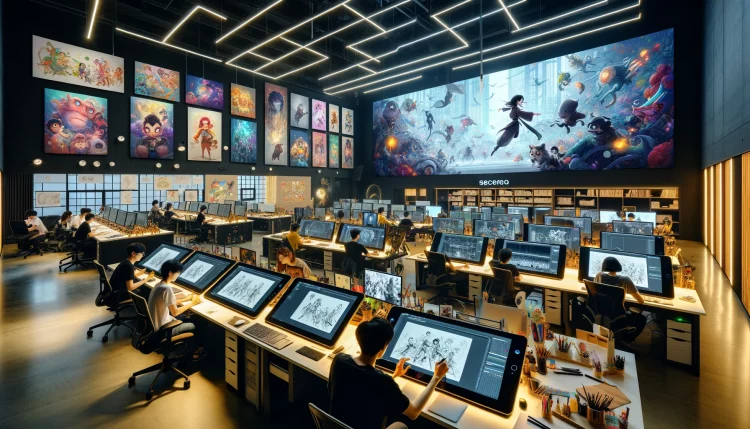
Here’s what most content buyers and animation producers get wrong: they treat 2D anime style and 3D anime style as interchangeable production choices. They’re not. Each unlocks a fundamentally different commercial strategy — different co-production partners, different streaming platform targets, different budget structures, and wildly different audience expectations. Pick the wrong one for your IP, and you’ve priced yourself out of the market before a single frame renders.
The global anime market hit $25.7 billion in 2022 and is projected to surpass $42 billion by 2030, according to data tracked across Vitrina’s platform. Netflix, Crunchyroll, and Amazon Prime Video are all deepening their anime slates — and they’re looking for producers who understand the technical and commercial differences, not just the aesthetics. This 5-step guide walks you through exactly that.
💡 Vitrina Analyst Note
From our study on Vitrina, producers consistently undervalue what the 2D versus 3D choice actually unlocks commercially. 3D anime-style assets reuse across seasons, cutting Season 2 costs by 30 to 40 percent. Japan’s incentive now reaches a 50% cash rebate capped at $6.7M. Crunchyroll and Netflix are not looking for the same thing. Most producers discover these distinctions too late to restructure their deal.
In This Guide
- Step 1: Understand the Core Differences Between 2D & 3D Anime
- Step 2: Match Your Anime Style to Your IP and Budget
- Step 3: Find the Right Studio Partner for Each Style
- Step 4: Navigate the Production Pipeline Without Burning Budget
- Step 5: Align Your Style Choice With Platform Acquisition Strategy
- FAQ: 2D & 3D Anime Style Questions Answered
- Conclusion & Key Takeaways
Find Anime Studios That Match Your Style in 48 Hours
Ask VIQI — Vitrina’s vertical AI — to surface vetted 2D and 3D anime studios from our network of 300,000+ companies. No sourcing rabbit holes. No cold LinkedIn messages. Just verified matches.
Trusted by acquisition teams at Netflix, Warner Bros, and Paramount.
200 free credits · No credit card required
Step 1: Understand the Core Differences Between 2D & 3D Anime Style
Let’s start with what actually separates these two production paradigms — because the difference isn’t just visual. It’s structural, commercial, and deeply tied to how studios price, deliver, and scale content.
Traditional 2D anime style — the kind that defined Studio Ghibli, Toei Animation, and the early MAPPA catalogue — relies on hand-drawn or digitally painted frames. Artists work scene-by-scene in software like TVPaint or Clip Studio. The aesthetic hallmarks are expressive linework, limited animation techniques (holding frames to save cost), and the emotional depth that comes from visible human craft. You get texture. You get weight. You get the particular kind of intimacy that made Jujutsu Kaisen and Attack on Titan cultural phenomena.
But here’s the thing — 2D anime production is notoriously labor-intensive. A single episode from a top-tier Japanese studio runs between $150,000 and $350,000, and that’s before you factor in key animation supervision, overseas subcontracting (often to South Korean or Vietnamese studios), and sound post. The Fragmentation Paradox is real here: the best 2D talent pools are concentrated in Tokyo, Osaka, and Seoul, which means your production geography is constrained unless you plan carefully.
3D anime style — pioneered in the West by companies like Polygon Pictures (Japan) and now adopted globally — uses cel-shaded CG rendering to approximate the look of hand-drawn animation. Think Netflix’s Castlevania: Nocturne or Crunchyroll‘s growing CG originals slate. The production pipeline runs through Maya, Blender, or proprietary renderers, and the output — when done well — is almost indistinguishable from 2D to casual viewers. But the underlying economics are completely different.
3D anime-style production offers reusability of assets. Once you’ve rigged a character model, you can put them in a hundred scenes without redrawing a single frame. That’s a major capital efficiency advantage for series content. And the talent pool is genuinely global — studios in India, Singapore, Eastern Europe, and the Philippines can deliver 3D anime-style work at competitive rates. As we explored in our deep dive on the evolution of 2D and 3D anime styles, this geographic flexibility is reshaping the entire production supply chain.
The Numbers That Actually Matter
When you’re making a production decision at the deal stage — before it hits the trades, before talent is attached — you need to think in terms of cost-per-minute. A rough industry benchmark: high-end 2D anime runs $5,000–$12,000 per minute of finished content. Comparable 3D anime-style, produced efficiently with a studio that has established pipelines, can come in at $3,000–$8,000 per minute. That delta widens significantly at scale — 12-episode series versus a 26-episode run.
But cost alone doesn’t determine your choice. Style choice determines what markets are open to you, what co-production treaties you can access, and — critically — what streaming platforms will bid on your content.
Step 2: Match Your Anime Style to Your IP and Budget
Not every IP is right for every style. This is where a lot of producers burn budget chasing aesthetic preferences instead of following the commercial logic of their source material.
Here’s how to think about the match:
Choose 2D anime style when: your IP is emotionally intimate, character-driven, or rooted in an aesthetic tradition that fans expect. A manga adaptation with a dedicated fandom? They’ll clock the difference between authentic 2D and cel-shaded CG instantly — and they won’t forgive a perceived downgrade. Slice-of-life, romance, psychological thriller — these genres live in the expressive linework that 2D delivers. If your budget supports it and your presale territory is Japan or South Korea, 2D is almost always the right call.
Choose 3D anime style when: your IP involves large action set-pieces, mechanical designs (mecha, vehicles, complex environments), or when you’re producing for Western streaming audiences who’ve grown up on CGI content. The camera flexibility you get in 3D — dynamic angles, smooth tracking shots, crowd simulations — is simply impossible to replicate cost-effectively in 2D. An action-adventure IP targeting Netflix or Amazon Prime Video globally? 3D anime-style production opens the door to studios across 3,000+ animation companies in Vitrina’s database rather than a handful of elite Tokyo houses.
And then there’s the hybrid approach — which is becoming increasingly standard. Toonz Media Group, one of India’s most internationally active animation studios, has pioneered blended workflows where 2D character animation sits atop 3D-rendered environments. This approach de-risks the budget (you’re not paying 2D rates for every pixel) while preserving the hand-drawn aesthetic that audiences respond to. It’s Smart Pairing at the production level.
Budget Tier Mapping
Think of it in three tiers. Under $1M total series budget: 3D anime-style with an efficient pipeline studio is your only viable route. Between $1M–$4M: hybrid approaches become viable, and you can attract mid-tier 2D studios if you’re flexible on episodic count. Above $4M: you’re in the territory where top-tier 2D houses like Kyoto Animation or Ufotable become a conversation — though securing slots requires relationships that go well beyond a cold pitch.
Track 159,223 Animation Projects Globally
Know which studios have open capacity before you need them. Vitrina’s production tracker surfaces anime-style projects in development — so you can approach partners at exactly the right moment.
Used by production executives at Crunchyroll, Sony Pictures, and Paramount.
Get 200 Free Credits — Track Projects Now
No credit card required · Cancel anytime
Step 3: Find the Right Studio Partner for Each Anime Style
This is where the Fragmentation Paradox bites hardest. The global animation market has 3,000+ studios capable of producing some form of anime-style content. But the ones who can actually deliver broadcast-quality output — on schedule, at competitive rates, with the right style capabilities — represent a much smaller subset. And finding them without a systematic approach is how projects bleed months and momentum.
For 2D anime style, your Tier 1 pool is concentrated in Japan and South Korea. Studios like MAPPA, Wit Studio, and CloverWorks in Japan operate at the premium end but maintain full backlogs — getting a slot requires either an existing relationship or exceptional IP. Conversely, South Korean studios like Sunwoo Entertainment and DR Movie handle significant subcontracting work and have proven themselves on international productions.
For 3D anime style, your sourcing geography expands dramatically. Studios in Singapore, Thailand, the Philippines, and India have developed robust cel-shading pipelines specifically because Western and pan-Asian streaming demand created the commercial incentive. As we covered in our complete guide to Singapore animation studios, Southeast Asia is quietly becoming a Sovereign Hub for 3D anime-style production — competitive on quality, accessible on rate.
Vetting Criteria That Actually Matter
When you’re evaluating a studio for an anime-style project, you need to go beyond the showreel. Here’s what the smart money looks at:
Pipeline documentation — Can they show you their production tracking system? Studios that rely on email chains and spreadsheets are a schedule risk. Style test execution — Ask for a paid style test using a scene from your project, not a generic portfolio piece. This reveals whether their interpretation of your aesthetic direction matches your vision. Subcontracting transparency — Many studios subcontract key animation stages overseas. That’s not automatically a problem, but you need to know who’s in the chain and what quality gates exist. Delivery record — How many of their last 5 projects delivered on time? In the current anime production environment, where top studios are overcommitted by 12–18 months, schedule integrity is as valuable as artistic quality.
According to Variety, the post-pandemic production crunch has pushed premium anime studios in Japan to capacity levels that routinely result in delayed broadcast schedules — a risk that 3D anime-style production with distributed teams can help mitigate.
Step 4: Navigate the Production Pipeline Without Burning Budget
Production pipelines for 2D and 3D anime-style content are structurally different — and if you’re managing both simultaneously (as hybrid productions require), the complexity compounds fast. Let’s walk through what you actually need to know.
The 2D Anime Pipeline
Traditional 2D anime moves through a defined sequence: series composition → script → storyboard → layout → key animation → in-between animation → cleanup → coloring → compositing → post. The critical budget vulnerability is in-between animation — the frames that smooth motion between keyframes. This is typically outsourced to lower-cost markets, and quality control at the handoff point is where most schedule disasters originate.
If you’re producing a 12-episode series with a Japanese studio, build in 6 weeks of buffer per episode beyond the studio’s stated delivery schedule. That’s not pessimism — that’s how producers who’ve done this before protect their broadcast windows. The smart producers we see working through Vitrina’s network consistently weaponize early relationship-building: they’re talking to studios 18–24 months before production start, not 6 months.
The 3D Anime-Style Pipeline
3D anime-style production runs through a CG pipeline: concept → modeling → rigging → animation → shading/rendering → compositing → post. The major production advantage is parallelization — multiple episodes can be in animation simultaneously once the asset library (characters, environments, props) is built out. That initial asset development phase, however, represents a significant front-loaded cost: expect to invest 20–30% of your total budget before a single frame of final content is rendered.
But here’s what makes 3D anime-style production genuinely more scalable: the ROI compounds. Season 2 costs 30–40% less than Season 1 because your asset library already exists. That changes the capital stack conversation completely — it’s the kind of EBITDA efficiency that makes financiers interested in your project as an ongoing enterprise rather than a one-off production.
For producers exploring the full range of animation production company options globally, understanding this asset-reuse economics is fundamental to any serious financing conversation.
Quality Control Across Both Pipelines
One thing that surprises new-to-anime producers: the episodic QC process for anime — both 2D and 3D — is more compressed than Western animation. Weekly broadcast schedules in Japan often mean episodes are delivered days before air. If you’re producing for a streaming platform with a batch delivery requirement, negotiate your delivery schedule explicitly, and don’t assume the studio’s domestic rhythm aligns with your acquisition window.
Need Expert Help Structuring Your Anime Production Deal?
Vitrina’s Concierge Service connects you with a dedicated supply chain specialist who’ll map the right studio partners, financing structures, and platform targets for your specific project — 2D, 3D, or hybrid.
Same service trusted by teams scaling projects from concept to greenlight.
Connect With a Vitrina Specialist
No commitment required · Response within 24 hours
Step 5: Align Your Style Choice With Platform Acquisition Strategy
Your anime style choice is ultimately a distribution decision. Different platforms have different content theses — and their acquisition teams are looking for specific signals when evaluating anime-style projects. Miss these signals, and your pitch lands in the wrong inbox.
Netflix has made aggressive commitments to anime — commissioning projects from Japanese studios and from international co-production partners. But their preference is shifting. They want globally accessible anime, which in practice means production values that travel without cultural knowledge baggage. 3D anime-style projects from non-Japanese studios have gained real traction with Netflix precisely because they deliver visual consistency and can be localized (dubbed, subtitled) without the lip-sync challenges inherent in traditional 2D.
Crunchyroll remains the authenticist’s platform — their acquisition team skews toward traditional 2D anime with strong manga or light novel source material, produced by established Japanese studios with fan-following. If you’re pitching Crunchyroll, your style credentials matter as much as your story. They’re not looking for anime-adjacent; they’re looking for anime.
Amazon Prime Video is an interesting middle ground. Their anime acquisitions span both styles — they’ve carried premium 2D series while also expanding into CG productions. Their acquisition criteria weight international rights heavily: they want titles they can roll out simultaneously across multiple territories. That geographic ambition tends to favor 3D anime-style projects produced at studios with international delivery experience.
And then there’s the MENA and APAC streaming landscape — platforms like OSN in the Middle East, Viu across Southeast Asia, and regional SVOD players who are actively building anime catalogs to serve young digital-native audiences. As Rolla Karam, SVP of Content Acquisition at OSN, has noted in discussing their platform strategy, Turkish and anime content perform exceptionally well in the GCC market — which opens acquisition pathways that Western producers often overlook.
According to Deadline Hollywood, the anime licensing market saw over $5 billion in streaming platform commitments in 2023 alone — a figure that underscores how aggressively platforms are competing for anime supply at every style tier.

Your AI Assistant, Agent, and Analyst for the Business of Entertainment
VIQI AI helps you plan content acquisitions, raise production financing, and find and connect with the right partners worldwide.
- List the top commissioners at the BBC
- List the post-production and VFX decision-makers at Netflix
- List the development leaders at Sony Pictures
- List the scripted programming heads at HBO
- Find active co-producers and financiers for scripted projects
- Find equity and gap financing companies in North America
- Find top film financiers in Europe
- Find production houses that can co-produce or finance unscripted series
- Who is backing animation projects in Europe right now
- Who is Netflix’s top production partners for Sports Docs
- Who is Commissioning factual content in the NORDICS
- Who is acquiring unscripted formats for the North American market
- Show me recent drama projects available for pre-buy
- Show me Japanese Anime Distributors
- Show me true-crime buyers from Asia
- Show me documentary pre-buyers
- I am looking for production partners for a YA drama set in Brazil
- I am looking for producers with proven track record in mid-budget features
- I am looking for Turkish distributors with successful international sales
- I am looking for OTT platforms actively acquiring finished series for the LATAM region
- I am seeking localization companies offer subtitling services in multiple Asian languages
- I am seeking partners in animation production for children's content
- I am seeking USA based post-production companies with sound facilities
- I am seeking VFX partners to composite background images and AI generated content
The Acquisition Meeting: What to Lead With
When you’re in the room — or on the call — with an acquisition executive, don’t lead with style. Lead with audience. Tell them exactly who is watching this project, where they’re watching it, and why this specific style serves those viewers better than the alternative. Style is a production decision; acquisition is an audience decision. The executives who greenlight are thinking about subscribers, not frame rates.
That said, have your style documentation ready: design bibles, style guides, pre-production stills, and ideally a 1–3 minute proof-of-concept reel that demonstrates both the aesthetic and the technical execution. For 3D anime-style projects, a turntable render of your key character model — showing the cel-shading quality — can close a lot of credibility gaps in a single minute of screen time.
FAQ: 2D & 3D Anime Style Questions Answered
What is the main difference between 2D anime style and 3D anime style?
2D anime style uses hand-drawn or digitally painted frames — each image is created individually, giving the art a distinctive texture and emotional expressiveness. 3D anime style uses cel-shaded computer-generated imagery designed to mimic the aesthetic of hand-drawn animation, but produced through a 3D rendering pipeline. The core production difference is economic: 3D assets are reusable across scenes and episodes, while 2D requires original work for most frames.
Which anime style is cheaper to produce — 2D or 3D?
3D anime style is generally more cost-efficient for series content, particularly across multiple seasons. High-end 2D anime production can cost between $5,000–$12,000 per finished minute, while 3D anime-style production typically runs $3,000–$8,000 per minute — and costs drop significantly for Season 2 onwards because the asset library already exists. That said, low-budget 2D productions using limited animation techniques can be highly cost-effective for specific genres.
How do I find 2D or 3D anime-style studios outside Japan?
Strong 2D anime studios outside Japan exist in South Korea, with studios like Sunwoo Entertainment and DR Movie handling significant international production. For 3D anime style, Southeast Asia has emerged as a key production hub — Singapore, Thailand, and the Philippines all have studios with established cel-shading pipelines. India’s animation sector, led by companies like Toonz Media Group, also delivers competitive 3D anime-style work for international clients. Vitrina’s platform connects producers directly with 300,000+ companies across all these markets.
Which streaming platforms prefer 2D anime vs. 3D anime style?
Crunchyroll consistently prioritizes traditional 2D anime with established Japanese studio provenance. Netflix acquires both styles but has shown growing appetite for 3D anime-style projects from non-Japanese studios with international production credentials. Amazon Prime Video occupies a middle ground, acquiring across styles but with heavy weight on multi-territory rights availability. Regional platforms in MENA and Southeast Asia are increasingly active buyers of both styles.
What is a hybrid 2D/3D anime style, and when should I use it?
Hybrid anime style combines 2D character animation with 3D-rendered backgrounds or environments. Studios like Toonz Media Group in India have developed efficient hybrid pipelines that preserve the hand-drawn aesthetic where audiences expect it (characters, expressive acting) while using 3D environments to reduce costs on non-critical frames. Hybrid production is particularly effective for action-adventure IP targeting mid-budget streaming deals — typically in the $1M–$4M series budget range.
How long does a 2D vs. 3D anime-style episode take to produce?
Production timelines vary significantly by studio capacity and episode complexity. A standard 23-minute 2D anime episode typically requires 8–12 months in production when accounting for pre-production, key animation, in-between animation, and post. 3D anime-style episodes, once the asset library is established, can be delivered in 4–8 months per episode with efficient pipeline management — though the initial asset build phase adds 3–6 months to the project’s front end.
Can Western studios produce authentic 2D anime style?
Yes — and several do it credibly. Productions like Castlevania and The Owl House demonstrate that Western studios can achieve anime aesthetics that satisfy international audiences. The distinction to manage is authenticity for core anime fandoms versus accessibility for broader Western anime-adjacent audiences. If your IP has a Japanese manga source and existing fandom, their style expectations will be more demanding than for original Western IP designed to appeal to anime-adjacent viewers.
What co-production opportunities exist for anime-style productions?
Japan’s recently enhanced production incentive — up to 50% cash rebate capped at approximately $6.7M — creates meaningful co-production structures for international producers bringing projects to Japanese studios. South Korea and Singapore both maintain co-production treaty frameworks. For 3D anime-style projects, Australian, Canadian, and French co-production treaties can be accessed when working with studios in those markets — opening up additional financing layers through national broadcaster pre-sales and tax credit structures.
Conclusion: Your Anime Style Choice Is a Business Decision
Here’s the honest summary: there’s no universally correct choice between 2D and 3D anime style. But there is a correct choice for your IP, your budget, your target platform, and your co-production geography. The producers who get this right aren’t guessing — they’re using systematic research and industry intelligence to de-risk the decision before it becomes expensive.
The anime market is growing too fast and attracting too much streaming capital for vague style choices to survive a room full of acquisition executives. Know your number. Know your studio. Know your platform. And know exactly why this style serves this story for this audience.
Key Takeaways
- Style is a commercial decision: 2D anime and 3D anime style unlock different co-production structures, platform targets, and financing options — treat the choice accordingly.
- Budget drives viability: Under $1M, 3D anime style is the most viable production path. Above $4M, premium 2D becomes a genuine conversation — but requires relationship capital you need to build 18–24 months ahead.
- 3D anime style scales economically: Asset reusability means Season 2 costs 30–40% less — a material advantage in any financing discussion with equity investors or streaming platforms seeking franchise-level IP.
- Geography determines your studio pool: 2D anime talent concentrates in Japan and South Korea; 3D anime-style capability spans Southeast Asia, India, and Eastern Europe — giving you dramatically more sourcing optionality.
- Platform alignment matters: Crunchyroll wants authentic 2D; Netflix and Amazon want global accessibility, which increasingly favors 3D anime style from internationally experienced studios.
Find Your Anime Studio Partner in 48 Hours
Stop cold-sourcing. Vitrina’s platform gives you direct access to 140,000+ vetted entertainment companies — including 2D and 3D anime-style studios across Japan, South Korea, Southeast Asia, and beyond. Join the producers, buyers, and financiers already using Vitrina to close deals faster.
Trusted by acquisition executives at Netflix, Crunchyroll, and Sony Pictures.
Get 200 Free Credits
Talk to a Specialist
No credit card required · Start exploring immediately