IHUB
IHUB
 Private Briefings (Webinars)


 LeaderSpeak Podcast
  Global Entertainment Digest (Newsletter)
  Premium Lists
 About Vitrina
 About VIQI
 Our Story
 Our Solutions 🔥
 Film+TV Projects Tracker 🚀
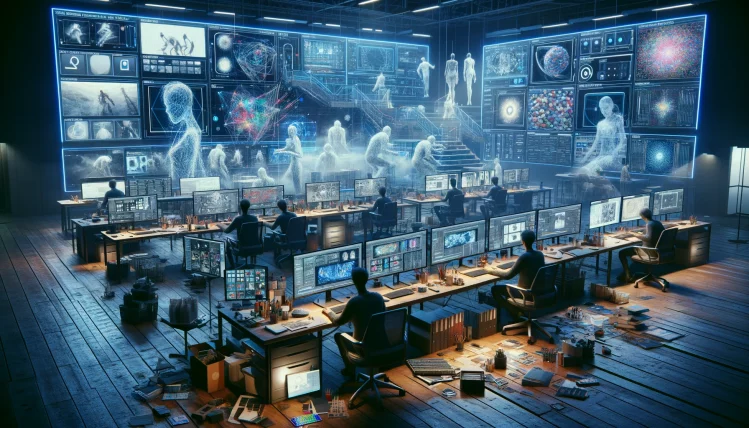
Post-production for gaming and film share the same surface vocabulary—VFX, audio, color, delivery—but underneath, they’re running completely different operating systems. One is linear. One is not. One has a locked picture. The other ships a world you can break. And that distinction cascades through every workflow decision, every vendor contract, every line item in your budget.
If you’re a producer, studio exec, or supply chain operator navigating content that sits at the gaming-film intersection—or you’re sourcing post-production vendors across both verticals—this breakdown will save you from expensive category errors. Here’s what actually differs, where the pipelines converge, and why the Fragmentation Paradox hits gaming post harder than almost any other segment.
Table of Contents
- The Core Structural Divide: Linear vs. Interactive
- VFX Pipeline Differences: Render Farms vs. Real-Time Engines
- Audio Post-Production: Where Gaming Complexity Explodes
- Color Grading and Delivery: Locked vs. Perpetually Live
- Localization and Versioning: A Scale Problem Gaming Owns
- Talent and Vendor Sourcing Across Both Verticals
- Budgeting and ROI Structures: P&A vs. Live Service Economics
- FAQ
- Conclusion
Ask VIQI: Which Post-Production Studios Handle Both Gaming and Film VFX?
VIQI is Vitrina’s AI assistant—trained on 1.6 million titles, 360,000 companies, and 5 million entertainment professionals. Ask it to surface verified vendors across both verticals right now.
✓ Included with 200 free credits | ✓ No credit card needed
The Core Structural Divide: Linear vs. Interactive
Post-production for gaming vs. film starts diverging at a single, foundational question: does the end experience have a fixed sequence? In film—whether it’s a theatrical feature, a Netflix Original, or an episodic series—the answer is yes. You cut a picture, lock it, color it, mix it, and deliver it. The audience experience is identical every time.
Gaming doesn’t work that way. The “picture” is never locked. A player can trigger cutscenes out of intended order. NPCs can die in the wrong sequence. Environmental audio has to respond dynamically to hundreds of possible states. Your post team isn’t finishing a product—they’re finishing a system.
That’s why gaming post sits closer to software QA than to traditional finishing. A film editor assembles a timeline. A game’s cinematic team assembles branching logic trees with conditional asset calls. The former has a DCP to deliver. The latter ships a build that gets patched within 72 hours of launch.
But here’s where it gets interesting for supply chain operators: AAA game cinematics now cost as much as mid-budget film productions to finish. CD Projekt Red‘s cinematic team on Cyberpunk 2077 employed VFX pipelines comparable in complexity to a major theatrical feature—yet the delivery specs, iteration cycles, and version management were fundamentally different from anything a traditional post house would recognize.
The convergence point—where gaming and film post genuinely overlap—is pre-rendered cinematics and promotional content. Studios like Blur Studio and Digital Domain work fluidly across both. But even there, you’ll find different approval chains, different mastering specs, and different contractual structures around revisions.

Your AI Assistant, Agent, and Analyst for the Business of Entertainment
VIQI AI helps you plan content acquisitions, raise production financing, and find and connect with the right partners worldwide.
- List the top commissioners at the BBC
- List the post-production and VFX decision-makers at Netflix
- List the development leaders at Sony Pictures
- List the scripted programming heads at HBO
- Find active co-producers and financiers for scripted projects
- Find equity and gap financing companies in North America
- Find top film financiers in Europe
- Find production houses that can co-produce or finance unscripted series
- Who is backing animation projects in Europe right now
- Who is Netflix’s top production partners for Sports Docs
- Who is Commissioning factual content in the NORDICS
- Who is acquiring unscripted formats for the North American market
- Show me recent drama projects available for pre-buy
- Show me Japanese Anime Distributors
- Show me true-crime buyers from Asia
- Show me documentary pre-buyers
- I am looking for production partners for a YA drama set in Brazil
- I am looking for producers with proven track record in mid-budget features
- I am looking for Turkish distributors with successful international sales
- I am looking for OTT platforms actively acquiring finished series for the LATAM region
- I am seeking localization companies offer subtitling services in multiple Asian languages
- I am seeking partners in animation production for children's content
- I am seeking USA based post-production companies with sound facilities
- I am seeking VFX partners to composite background images and AI generated content
VFX Pipeline Differences: Render Farms vs. Real-Time Engines
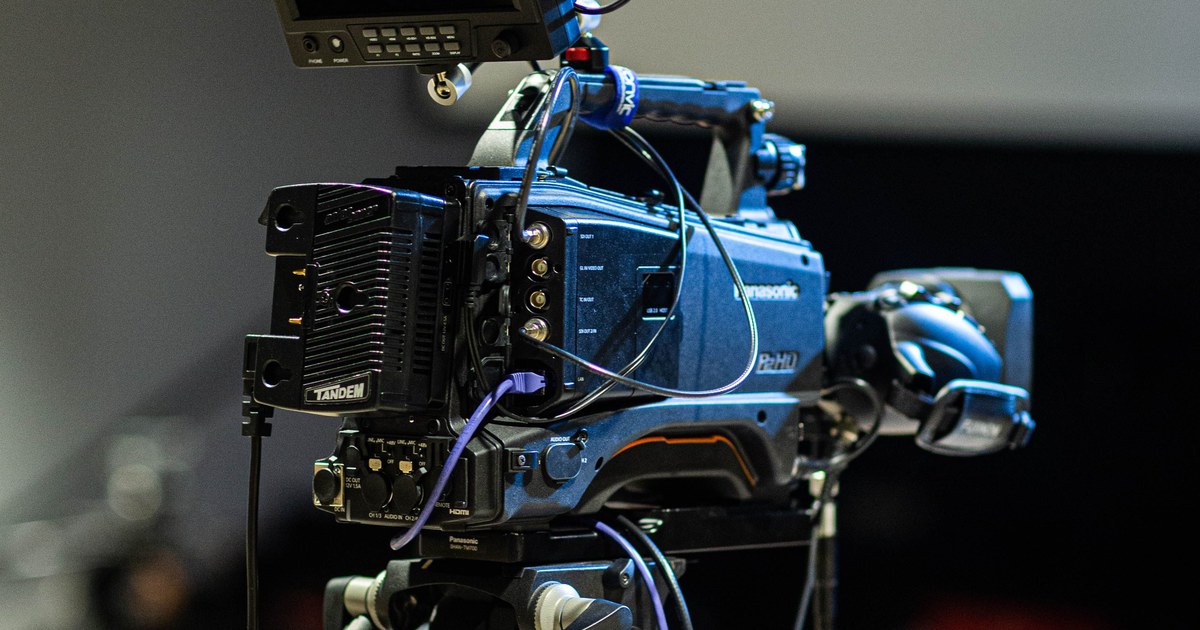
This is where the technical gap is widest—and where vendor mismatches are most expensive. Film VFX runs on offline render pipelines: Houdini for FX, Arnold or RenderMan for rendering, Nuke for compositing. Render times can be hours per frame. Nobody cares, because the audience sees it once, finished.
Game VFX runs on real-time engines: Unreal Engine 5, Unity, or proprietary tech. Everything has to hit 60fps on target hardware. Every particle system, every shader, every shadow cascade is budgeted by GPU milliseconds. Your VFX artist isn’t just making it look good—they’re making it look good within a frame time budget that might be 8.3 milliseconds.
The vendor landscape reflects this split. According to research on the global VFX and post-production industry, there are over 10,000 VFX companies globally—but fewer than 15% have genuine real-time production capability for AAA gaming. Most traditional film VFX houses don’t own an Unreal pipeline. They don’t need one. Until a game studio hires them for a cinematic trailer and discovers the gap mid-project.
The convergence happening right now is virtual production—LED volume stages using Unreal Engine in real-time for film and TV shoots. Companies like Framestore (whose Creative Director John Kilshaw has led episodic VFX for Netflix’s One Piece and Avatar: The Last Airbender) are building real-time pipelines for film that borrow directly from gaming’s infrastructure. So the gap is narrowing—but it’s narrowing from the film side toward gaming, not the reverse.
The Vitrina Pipeline Crossover Matrix™
Here’s a practical framework for assessing vendor capability across both verticals:
Motion capture is where you’ll find the most genuinely dual-capable vendors. Facilities like Centroid in the UK or Xsens serve both film and AAA gaming without meaningful pipeline friction—because mocap output feeds downstream into whichever rendering system the project demands.
Joseph Bell (VFX Industry Veteran, formerly of Industrial Light & Magic) shares his perspective on how VFX supply chains are evolving across entertainment verticals:
Audio Post-Production: Where Gaming Complexity Explodes
If VFX is where film has the advantage in raw pipeline maturity, audio post-production is where gaming’s complexity makes film look straightforward. And most producers don’t see it coming.
A film’s final audio mix—even a complex one—might involve 2,000 to 5,000 individual audio elements. A major open-world game ships with upwards of 40,000 to 60,000 discrete audio assets. Not mixed together. Individually tagged, parameterized, and loaded conditionally based on game state. Walk into a cave—reverb increases. Equip a different weapon—the reload sound changes. Health drops below 20%—the music shifts dynamically.
That’s not audio post. That’s audio systems design. And most traditional film sound facilities—even excellent ones—simply don’t have it.
The specialized tools here are Wwise and FMOD—audio middleware platforms that integrate with game engines and manage dynamic audio states. A film dubbing mixer doesn’t need to know these. A game audio director can’t function without them. According to conversations captured across the entertainment supply chain, this technical gap is one of the primary reasons gaming post-production stays siloed from film post even at large studios with combined media operations.
But here’s where the two converge: ADR and voiceover. Both industries need voice recording for characters, both require casting, and both increasingly need multilingual dubbing at scale. The Fragmentation Paradox—where 600,000+ companies in the global entertainment supply chain create opacity rather than choice—hits dubbing for games particularly hard. You need studios with game engine delivery specs, not just broadcast specs. You need talent experienced with non-linear performance (recording lines that might play in any sequence). And you need to find them across territories where localization matters most.
As we’ve documented in our analysis of AI localization in entertainment, the dubbing sector is being reshaped by AI tools—but games require additional layers of technical compliance that film dubbing workflows weren’t designed to address.
Find Verified Post-Production Vendors for Gaming and Film in One Search
Trusted by Netflix, Warner Bros, and Paramount. Join 140,000+ companies tracking the global entertainment supply chain—including game studios sourcing post-production partners.
✓ 200 free credits | ✓ No credit card required | ✓ Full platform access
Color Grading and Delivery: Locked vs. Perpetually Live
In film, color grading is a creative finishing step with a definitive end state. You grade, approve, output masters in DCI-P3, HDR, SDR, and whatever streaming platform specs apply—then you’re done. The DCP goes to theaters. The file goes to Netflix. No one touches the grade again unless there’s a 4K remaster a decade later.
In gaming, there’s no such thing as a locked look. Game engines handle color in real-time via post-processing stacks—tone mappers, bloom, ambient occlusion, color lookup tables (LUTs). These are parameters, not locked frames. And critically, they respond to the player’s hardware. A game that looks one way on a calibrated PC monitor running HDR10 looks fundamentally different on a console in SDR on a budget TV. Your “grade” is really a set of rules that produce different outputs across thousands of display configurations.
That said, game cinematics and trailers do require traditional color grading—and this is where film-experienced colorists genuinely add value to gaming projects. But the skill set for grading a 90-second cinematic is different from managing an in-engine color pipeline for a live-service game that patches every two weeks.
Delivery specs compound the difference. Film delivers to SMPTE ST 428 for theatrical, or platform-specific profiles for streaming. Games deliver builds to console certification pipelines—Sony’s PlayStation 5 Technical Requirements, Microsoft’s Xbox Certification—with their own compliance checklists that have nothing to do with broadcast mastering. A post supervisor fluent in both is exceptionally rare.
Localization and Versioning: A Scale Problem Gaming Owns
A major studio film might localize into 25 to 40 territories, with dubbing for 8 to 12 languages. That’s significant work—but it’s bounded, sequential, and finishes at a defined point.
A global AAA game might localize into 30+ languages simultaneously, ship with day-one patches, add DLC content requiring re-localization within weeks of launch, and then support a live-service model where new story content arrives monthly. The localization pipeline never closes. It just changes scope.
The supply chain implications of this are significant. As Screen International has noted in coverage of post-production market growth, the localization services sector is expanding faster than any other post segment—driven partly by gaming’s insatiable demand. But gaming’s localization needs differ structurally: game text is extracted from databases, not scripts. Voice lines record non-sequentially. Cultural adaptation requirements (especially for Japanese and Korean markets) go deeper than subtitle timing.
And versioning. Film versioning is manageable: theatrical cut, director’s cut, streaming edit, TV edit, airline edit. Each version is a discrete project. But a live-service game like Fortnite or Destiny 2 ships dozens of content updates per year, each requiring asset versioning, QA, and localization review. The version control systems—and the vendor relationships managing them—have to operate on a continuous basis, not project by project.
For supply chain operators, this means you need a very different contractual model with localization vendors for gaming clients. Retainer structures, SLA-based turnarounds, and embedded localization capacity—rather than the milestone-based project contracts that work fine for film.
Talent and Vendor Sourcing Across Both Verticals
Here’s where the Fragmentation Paradox hits with full force. The global post-production supply chain has over 10,000 VFX and post companies, but Vitrina’s intelligence mapping shows that vendors with verified capability across both film and gaming post number in the hundreds—not thousands. And finding them without intelligence infrastructure means relying on referrals, LinkedIn searches, and relationships that can take months to develop and verify.
The talent gap mirrors the vendor gap. A pipeline TD (technical director) who understands both Houdini and Unreal Engine 5 at production depth is one of the most in-demand—and undersupplied—technical roles in the industry. Studios like Blur Studio, which produced the Love, Death + Robots series for Netflix while simultaneously working on game cinematics for Respawn Entertainment, have built deliberately dual-track teams. But they’re an exception, not a model.
“The VFX industry has never had more suppliers globally—but finding the right one for a cross-vertical project still takes months of manual relationship-building. The opacity hasn’t shrunk; it’s just redistributed.
— Joseph Bell, VFX Industry Veteran (formerly Industrial Light & Magic)
What makes this particularly costly for producers bridging both verticals is that the opacity causes 15–20% margin leakage through legacy intermediary markups. You don’t know the market rate for a game cinematic pipeline supervisor. You don’t have benchmarks. So you accept a quote that’s inflated because you have no reference point.
Vitrina’s Smart Pairing intelligence addresses this directly—surfacing verified post-production vendors with real project credits across both entertainment segments, so your sourcing decision is made with data rather than hearsay. You can read more about how post-production vendor sourcing is evolving in emerging markets specifically—a major piece of the gaming post puzzle given where development talent is concentrating.
As reported by Variety, the global post-production services market is projected to grow significantly through 2028, with gaming-adjacent post—cinematic trailers, in-engine capture, and hybrid VFX—accounting for an accelerating share of that growth. But the vendor infrastructure to serve that demand is still catching up.
Budgeting and ROI Structures: P&A vs. Live Service Economics
Film budgeting for post is relatively structured. You’ve got a line item for editorial, VFX, audio, color, and delivery—each with defined scope and completion milestones. Your P&A spend is separate but known. Recoupment comes from a theatrical window, then home video, then streaming, then licensing. It’s a waterfall. Complicated, but linear.
Gaming’s ROI model is fundamentally different—and it’s getting more complex, not less. A live-service game might spend $50M to $100M in initial development post-production costs, then layer ongoing content production costs of $5M to $20M per quarter for a game in active live service. The “post-production budget” never ends. It becomes an operational line on the P&L, not a project cost.
EBITDA implications are significant. A film producer knows their post costs will recede once delivery is complete. A game publisher’s post costs are ongoing obligations, with the EBITDA protection play being operational efficiency—finding vendors who can scale with live-service content cadences without proportional cost escalation.
The capital stack also differs. Film post is typically financed within production budgets that have defined financing structures—equity, presales, gap, tax incentives. Game development financing increasingly involves publisher advances, venture capital, or platform exclusivity deals—but the post costs are generally baked into milestone-based development agreements, not separately financed. As game development budgets approach film-scale (several AAA titles now exceed $200M in development cost), separate financing structures for post may emerge—but that infrastructure doesn’t really exist yet.
For executives managing budgets across both verticals, the practical implication is: don’t apply film post budgeting assumptions to gaming post engagements. The scope doesn’t close. The revisions don’t end. And the versioning costs compound in ways that a film post budget structure isn’t built to absorb. Our guide to post-production best practices covers general workflow optimization—but the live-service multiplier for gaming requires dedicated budget modeling.
Need Verified Post-Production Partners for a Cross-Vertical Project? We’ll Find Them.
Vitrina Concierge is your Virtual Agent. We don’t give you a list—we make warm introductions directly to decision-makers actively seeking your type of project.
- Game studio → Verified cinematic VFX partners (week one)
- Film producer → Real-time pipeline vendors with gaming credits (48 hours)
- Publisher → Scalable localization vendors for live-service content (direct access)
Frequently Asked Questions
What is the main difference between post-production for gaming vs. film?
The core distinction is linearity vs. interactivity. Film post-production works toward a locked picture with a defined end state—you finish, deliver, and it’s done. Game post-production builds systems that respond dynamically to player input. Audio, visuals, and narrative all branch conditionally. This means game post never truly “finishes” for live-service titles, while film post has a defined completion milestone. The technical pipelines—offline rendering vs. real-time engines, linear mix vs. dynamic audio middleware—reflect this fundamental structural difference.
Can film VFX studios work on game post-production projects?
Yes—but with important caveats. Film VFX studios can absolutely work on pre-rendered game cinematics and trailers, where the pipeline is closer to traditional offline rendering. Studios like Framestore and Digital Domain do this regularly. But in-engine VFX, dynamic game effects, and real-time pipeline work require expertise in Unreal Engine 5, Unity, or proprietary game engines that most film-focused houses don’t maintain. The crossover capability exists for specific deliverable types, not across the full scope of game post-production.
How does audio post-production differ between gaming and film?
Dramatically. A major film might involve 2,000 to 5,000 audio elements in its final mix. A AAA open-world game ships with 40,000 to 60,000 discrete audio assets, each parameterized and triggered conditionally by game state. Game audio also requires specialized middleware tools—Wwise and FMOD—that integrate with game engines and manage dynamic audio systems. Traditional film sound facilities don’t typically have this infrastructure or expertise. The exception is ADR and voiceover recording, where both industries share more common ground.
What does localization look like for game post-production vs. film?
Film localization has a defined scope: 25 to 40 territories, 8 to 12 dub languages, finished at delivery. Game localization is continuous—a live-service title may localize into 30+ languages simultaneously with new content arriving monthly. Game text is extracted from databases, not scripts. Voice recording is non-sequential. Live-service models require retainer-based vendor relationships and SLA-driven turnarounds rather than the milestone-based project contracts that work for film. The scale and cadence demands are fundamentally different.
How does post-production budgeting differ for gaming vs. film?
Film post budgets are bounded—you have line items for editorial, VFX, audio, color, and delivery, all closing at defined milestones. Game post budgets for live-service titles become ongoing operational costs, with content production costs of $5M to $20M per quarter layered on top of initial development spend. EBITDA management is therefore an operational efficiency question, not a project-completion question. Don’t apply film post budget assumptions to gaming post—the scope doesn’t close and the versioning costs compound continuously.
Where does post-production for gaming and film genuinely converge?
Convergence points include: motion capture (both industries use it extensively with overlapping vendor pools), pre-rendered cinematics (game studios commission these using traditional film VFX pipelines), promotional trailers (shot and finished like commercial film production), and ADR/voice recording (shared facilities and talent pools, though game performance requirements differ). The fastest-growing convergence area is virtual production—LED volume stages using Unreal Engine—which game studios pioneered and film is now adopting at scale.
How do I find post-production vendors who work across both gaming and film?
This is genuinely difficult due to the Fragmentation Paradox—10,000+ VFX and post companies globally, but fewer than 15% with verified real-time production capability. Traditional sourcing via referrals and LinkedIn searches can take 3 to 6 months and produces biased results. Vitrina’s platform maps verified capabilities, real project credits, and capacity status across the global supply chain—including which vendors have documented cross-vertical credits in both gaming and film post. You can start with 200 free credits at app.vitrina.ai.
What is virtual production and why does it matter for gaming vs. film post-production?
Virtual production uses real-time game engines (primarily Unreal Engine 5) to render digital environments on LED volume stages during physical shooting. This originated in gaming’s real-time rendering infrastructure and is now being adopted rapidly by film and TV productions. Disney’s The Mandalorian pioneered its use at scale for episodic television. For post-production specifically, virtual production shifts some VFX work from post to production—reducing post timelines and costs while requiring real-time pipeline expertise that traditionally lived in the gaming world. It’s the clearest example of gaming post-production technology reshaping how film and TV are made.
Conclusion: Two Pipelines, One Supply Chain Problem
Post-production for gaming and film look similar on the surface—VFX, audio, color, localization, delivery—but operate on fundamentally different technical and commercial models. The most expensive mistakes happen when producers apply film post logic to gaming post scope, or when they try to source cross-vertical vendors through relationship networks that only cover one side of the divide.
Key Takeaways:
- Pipeline Architecture: Film post works toward a locked deliverable; game post builds dynamic systems—never truly “done” in live-service models.
- VFX Technology Gap: Fewer than 15% of global VFX vendors have real-time Unreal Engine capability; motion capture is the strongest crossover point.
- Audio Complexity: Game audio involves 40,000 to 60,000 discrete assets vs. a film’s 2,000 to 5,000—requiring specialized middleware (Wwise/FMOD) most film sound facilities don’t support.
- Localization Scale: Live-service games require continuous, retainer-based localization relationships—not the milestone contracts that work for film.
- Budget Structure: Gaming post becomes an operational cost line (up to $20M per quarter for live-service titles), not a project cost—requiring entirely different budget modeling and EBITDA protection strategies.
The good news: the Fragmentation Paradox that makes cross-vertical vendor sourcing painful is solvable. But you need verified intelligence—not referral networks—to find the handful of studios genuinely capable of delivering across both worlds. That’s the insider advantage. And it’s available right now.
De-Risk Your Next Post-Production Vendor Search—In Both Worlds
Trusted by Netflix, Warner Bros, Paramount, and Google TV. Track 159,223 projects. Access 3 million verified executives. Ask VIQI strategic questions about your post-production supply chain—gaming, film, or both.
✓ 200 free credits | ✓ No credit card required | ✓ Cancel anytime