About Innovation Hub
 Global Content Pulse (Webinars)


 Global Production Financing
(Webinars)
Global Production Financing
(Webinars)  LeaderSpeak Podcast
  Global Entertainment Digest (Newsletter)
  About Vitrina
 About VIQI
 Our Story
 Our Solutions 🔥
 Film+TV Projects Tracker 🚀
 Case Studies
 Our Profile

Finding movie buyers is the part of filmmaking nobody glamorizes—but it’s the part that determines whether your project recoups, breaks even, or quietly dies on a hard drive. The process has never been more complicated.
You’ve got 600,000+ companies operating across the global film and TV ecosystem, streaming platforms rewriting the acquisition playbook quarterly, and—as Phil Hunt, Founder & CEO of Head Gear Films, put it plainly—”the whole industry has become much, much harder in terms of getting movies off the ground and getting movies sold.” That’s not pessimism. It’s a briefing. And knowing where to find buyers, when to approach them, and what they actually want in 2026 is the difference between a deal and a dead end.
This guide doesn’t pad word counts with obvious advice. What you’ll get here is a working strategy—who the buyer categories are, which channels genuinely produce deals, what packaging and timing moves the needle, and how to use intelligence tools to find buyers who are actively acquisitive right now rather than cold-calling last year’s list.
What You’ll Learn
- The 6 Real Categories of Movie Buyers in 2026
- Why Your First Move Is a Sales Agent, Not a Buyer
- Film Markets: Where Deals Actually Happen
- The Festival-to-Buyer Pipeline
- Approaching Streamers Directly: What Actually Works
- How to Package Your Film So Buyers Say Yes
- Using Real-Time Intelligence to Find Active Buyers
- FAQ
Find Which Buyers Are Actively Acquisitive—Before You Pitch
Ask VIQI which streaming platforms, distributors, and broadcasters are currently acquiring content in your genre and territory. Get real-time acquisition intelligence instead of cold-calling last year’s contacts.
✓ 200 free credits | ✓ No credit card required | Trusted by 140,000+ companies
The 6 Real Categories of Movie Buyers in 2026
Before you pitch anyone, you need to understand who actually buys movies—and what they’re actually buying. Not all buyers are equal. Not all buyers are even open. Here’s how the buyer landscape breaks down in the current market.
1. Global SVOD Platforms
Netflix, Amazon Prime Video, Apple TV+, Disney+—the big four. They acquire in two ways: worldwide rights deals (they take everything) or territory-specific. If Netflix makes a worldwide offer, you get more money upfront but surrender all territorial backend. They now own the largest theatrical-to-streaming production pipeline in history, with a content spend that hit $17 billion in 2024. Getting in front of Netflix acquisitions isn’t impossible—but it almost always runs through either a recognized sales agent relationship or comes post-festival premiere. They don’t cold-respond to unsolicited submissions.
2. Regional and Niche Streamers
This is where the Fragmentation Paradox works in your favor if you understand it. Platforms like Shudder (horror), MUBI (arthouse), Crunchyroll (anime), Viki (Asian drama), and hundreds of regional OTTs are all actively buying—and they’re far more accessible than the global giants. Genre-specific streamers have defined acquisition mandates and relatively small teams, which means the right content lands on the right desk quickly. Your thriller doesn’t belong at Hallmark Movies Now. But it might be exactly what Shudder‘s acquisition VP has been waiting for.
3. Free Ad-Supported TV (FAST) Channels
This buyer category has exploded. Tubi, Pluto TV, The Roku Channel, Peacock’s FAST tier—these platforms are aggressively acquiring library content and mid-budget features on license deals rather than MG purchases. The good news: barriers to entry are lower. The tradeoff: you’re licensing, not selling, and exclusivity windows are shorter. If you’ve got a completed film with no existing SVOD deal, FAST buyers are a channel worth pursuing simultaneously rather than sequentially.
4. Theatrical Distributors
Traditional theatrical distribution—A24, Neon, Bleecker Street, Vertical Entertainment, Roadside Attractions in the US; Pathé, StudioCanal, Entertainment One internationally—remains alive for the right films. They’re not buying everything. But they’re actively acquisitive for genre films with festival heat, prestige dramas with awards potential, and broad-appeal commercial features. Theatrical distributors typically close their deals at major festivals: Sundance, Berlin, Cannes, Toronto, Venice. Miss those windows and your theatrical distribution conversation gets materially harder.
5. Pay TV and Broadcast Buyers
HBO, Sky, Canal+, ARD, ZDF, BBC, Channel 4—linear and pay TV buyers aren’t dead. They remain significant buyers of prestige feature film packages for premiere windows, particularly in European territories where pay TV windows precede SVOD in the rights waterfall. These buyers have defined acquisition calendars and specific genre mandates that change seasonally. Getting in front of them requires understanding those mandates before you show up with a package that doesn’t fit their current slot.
6. International Territorial Distributors
The territory-by-territory buyer network—Constantin Film in Germany, Universal Pictures International in multiple markets, Kadokawa in Japan, local distributors across Latin America, Southeast Asia, and MENA—forms the backbone of traditional international film sales. These buyers commit Minimum Guarantees (MGs) for the right to distribute in their territory, typically for 15-20 year license periods. Their MG commitments can be used as loan collateral, which is why understanding this buyer category matters for your financing structure, not just your distribution strategy.

Your AI Assistant, Agent, and Analyst for the Business of Entertainment
VIQI AI helps you plan content acquisitions, raise production financing, and find and connect with the right partners worldwide.
- Find active co-producers and financiers for scripted projects
- Find equity and gap financing companies in North America
- Find top film financiers in Europe
- Find production houses that can co-produce or finance unscripted series
- I am looking for production partners for a YA drama set in Brazil
- I am looking for producers with proven track record in mid-budget features
- I am looking for Turkish distributors with successful international sales
- I am looking for OTT platforms actively acquiring finished series for the LATAM region
- I am seeking localization companies offer subtitling services in multiple Asian languages
- I am seeking partners in animation production for children's content
- I am seeking USA based post-production companies with sound facilities
- I am seeking VFX partners to composite background images and AI generated content
- Show me recent drama projects available for pre-buy
- Show me Japanese Anime Distributors
- Show me true-crime buyers from Asia
- Show me documentary pre-buyers
- List the top commissioners at the BBC
- List the post-production and VFX decision-makers at Netflix
- List the development leaders at Sony Pictures
- List the scripted programming heads at HBO
- Who is backing animation projects in Europe right now
- Who is Netflix’s top production partners for Sports Docs
- Who is Commissioning factual content in the NORDICS
- Who is acquiring unscripted formats for the North American market
Why Your First Move Is a Sales Agent—Not a Buyer
Here’s the thing most producers get wrong: they approach buyers directly before securing a sales agent. That’s backwards. Buyers—especially major distributors and streamers—don’t have the bandwidth to take unsolicited submissions from producers they’ve never met. But they will take calls from established sales agents. Every time.
A sales agent (also called an international sales company) is your professional intermediary. They have existing relationships with buyers in every major territory. They create the sales estimates your bank needs to lend against your presale contracts. They pitch your project at film markets. They negotiate the MGs. And they typically charge 10-15% commission on sales, with a recoupable expense cap around $50,000-$75,000 for marketing materials and market attendance.
But—and this is the insight that separates informed producers from everyone else—not all sales agents are right for your film. A prestige drama agent won’t effectively sell a genre horror film. An agent focused on the European art house circuit won’t have the Asian buyer relationships your action film needs. You need a sales agent whose existing buyer network aligns with your content’s commercial profile.
As Phil Hunt of Head Gear Films—which has financed 550+ movies and operates at 35-40 films per year—notes, the projects that succeed are ones “that the market really wants.” That market signal comes from sales agents who know which buyers have appetite, bandwidth, and budget right now. Their read on buyer appetite is more current than any published report you’ll find. As we covered in our full guide to selling a feature film to OTT platforms, the agent relationship isn’t optional—it’s the mechanism.
Phil Hunt (Founder & CEO, Head Gear Films) discusses the realities of the current sales market and what it actually takes to get a film sold in 2025-2026:
https://www.youtube.com/watch?v=headgear-ep62
Track 400,000+ Active Film Projects—and the Buyers Behind Them
Vitrina’s Smart Pairing technology maps active buyer acquisition mandates to your film’s genre, territory, and budget range—so you’re pitching buyers who are currently in the market, not the ones who closed their slate six months ago.
✓ 200 free credits | ✓ No credit card required | Trusted by Netflix, Warner Bros, and Paramount teams
Film Markets: Where Movie Deals Actually Happen
Film markets are not conferences. They’re deal rooms. If you’ve never been, understand this: the real business happens in hotel suites, market screening rooms, and restaurant tables—not panels. And the buyers who show up are there specifically to make acquisition decisions. They’ve blocked their calendars. Their company has paid for their flights and hotel. Their boss expects them to return with signed deal memos.
The five major markets where movie buyers concentrate:
- Cannes Marché du Film (May) — The largest film market in the world. Every significant international buyer has a presence. The window where European presales close before summer production slates lock. If your film’s world sales agent is taking it to Cannes, you’re in the right room.
- American Film Market / AFM (November, Santa Monica) — The second-largest. North American buyers show up in force. A-list and mid-market genre distributors dominate. Horror, action, and thriller genres move fast here. Pre-market packages go out 2-3 weeks before opening day—your sales agent’s preparation before the market is as important as market attendance itself.
- European Film Market / EFM (February, Berlin) — Runs parallel to the Berlin International Film Festival. European pay TV buyers and arthouse theatrical distributors concentrate here. If you’re targeting the German, French, or Scandinavian markets, EFM is your primary window.
- Toronto International Film Festival / TIFF (September) — More acquisition-focused than most festivals. US theatrical distributors shop aggressively here, with Sundance and TIFF splits often creating bidding wars for the same titles in the same calendar year.
- MIPCOM (October, Cannes) — Primarily a TV content market, but features and film packages appear. Particularly useful if your film has TV presale potential alongside theatrical rights.
Don’t walk into any of these markets without a sales agent already attached. The buyers you need are not attending open panels hoping to meet producers. They’re in scheduled meetings from 8am to 8pm, back-to-back. Getting into those meetings requires existing relationships—which is your sales agent’s job, not yours to cold-build at the market itself.
The Festival-to-Buyer Pipeline That Actually Produces Deals
Festival strategy and buyer strategy aren’t separate things. They’re the same playbook, sequenced correctly. Here’s how the pipeline runs for films that actually get bought:
World premiere at a tier-one festival creates acquisition heat. Sundance, Berlin, Cannes, Venice, Toronto—a world premiere slot at any of these changes your buyer conversation overnight. Why? Because buyers understand that a festival selection is a quality signal from programmers who’ve watched thousands of submissions. That validation reduces their evaluation cost. And it triggers the FOMO dynamic: once buyers hear another buyer is interested, decisions accelerate.
According to Deadline‘s Sundance acquisition coverage, the top-tier deals at the 2024 festival closed within 48-72 hours of world premiere screenings. That’s not coincidence—buyers attend premieres with deal authority already approved. The decision cycle compresses because the festival creates a competitive environment that motivates speed.
But festival strategy requires sequencing decisions made before you submit. You can’t take a world premiere at Sundance and then try to get into Berlin. You’ve used that card. So: identify your film’s natural buyer type, work backwards from which festival creates the right buyer conversation, and plan your submission strategy around that commercial endpoint—not just around prestige.
Genre films often perform better at Fantasia, Sitges, or Tribeca than at the prestige festivals where arthouse buyers dominate. Your festival shortlist should match your buyer shortlist. Our breakdown of festival strategy for filmmaker-executives goes deeper on this targeting framework.
Approaching Streamers Directly: What Actually Works in 2026
Let’s be direct here: cold-pitching Netflix or Amazon Prime Video without existing connections or a repped sales agent relationship doesn’t produce results. Their acquisition teams receive thousands of unsolicited submissions. They don’t have the capacity to evaluate them, and their platform liability exposure makes unsolicited content a legal risk they avoid structurally.
But regional and mid-tier streamers? Different story entirely. Platforms like Shudder, MUBI, Fandor, Screambox, Ovid, and dozens of country-specific streamers run leaner acquisition operations. Their heads of content are findable on LinkedIn. They attend the same film markets. They respond to warm introductions from producers with credible credits. And they have smaller slates to fill, which means your film matters more proportionally to them than it does to Netflix.
Here’s the strategic approach that works for streamer outreach: don’t pitch your film in your first contact. Lead with intelligence about their recent acquisitions. Show that you understand what they’ve been buying. Position your film as a natural extension of their genre and audience, not a cold ask. Buyers—even at smaller platforms—respond to producers who’ve done the homework.
The Fragmentation Paradox bites hardest right here. There are over 600,000 companies in the global film and TV ecosystem. Identifying which regional streamer is actively acquisitive in your genre, in the territories you haven’t already pre-sold, with the budget range that fits your MG expectations—that’s not something you can do with static databases. You need real-time intelligence on acquisition activity. That’s exactly what platforms like Vitrina surface through live deal-flow tracking.
Need Direct Introductions to Active Movie Buyers?
Vitrina’s concierge service connects producers and rights holders with verified, active acquisition executives at streaming platforms, theatrical distributors, and broadcast buyers—no cold emails, no dead inboxes.
Trusted by teams at Netflix, Warner Bros, and Google TV. Curated introductions delivered within 48 hours.
How to Package Your Film So Buyers Say Yes
Packaging is not a creative exercise. It’s a risk-reduction exercise—from the buyer’s perspective. Every element of your package either de-risks the acquisition or introduces uncertainty. Buyers—whether they’re theatrical distributors, regional streamers, or territory buyers committing MGs—are making a financial bet. Your job is to reduce the perceived risk of that bet.
Cast matters—a lot. A-list talent with proven international appeal can move territory MGs in the $500K–$2M range per major market. But here’s what most producers miss: it’s not just about the name. It’s about name-plus-genre fit. An action star attached to a drama gets you less than a drama actor with festival awards attached to a character-driven thriller. Buyers evaluate cast against genre context, not in isolation.
Director track record signals two things to buyers: execution capability and market positioning. A director with festival awards attached signals art house buyers. A director with a commercial genre track record signals genre buyers. Misaligning director pedigree with target buyer type is one of the most common packaging errors—and one of the most expensive.
Genre alignment determines which buyer pool you can even approach. Action and thriller travel internationally—these genres historically generate the most robust presale MGs. Horror has a dedicated global genre audience that supports a reliable buyer ecosystem. Drama is cast-dependent. Comedy is notoriously weak internationally because humor rarely translates. If you’ve made an intimate comedy with an unknown cast, be realistic: your buyer universe is primarily domestic, and your packaging conversation should focus on domestic acquisition rather than building a territorial presales stack.
From the presales mechanics documented across the international market: pre-selling 50-70% of your budget via MG commitments—before completion—is the benchmark that de-risks production while retaining meaningful backend upside in unsold territories. Cover that threshold, and you’ve got a fundable package. Fall below 30% presales and you’re gap-financing your entire production, which is both expensive and a signal that the market hasn’t validated your project yet.
Using Real-Time Intelligence to Find Active Buyers—Not Last Year’s List
Here’s the data problem you’re actually facing: the film buyer landscape shifts constantly. A platform that was aggressively acquiring six months ago may have paused its slate to manage cash flow. A regional streamer that wasn’t on your radar may have just greenlit an acquisition campaign specifically for your genre. A theatrical distributor who passed at Sundance may have lost a title and needs to fill a release slot.
Static industry databases—the kind that get updated quarterly or annually—can’t capture that. And the Fragmentation Paradox makes the problem worse: with 140,000+ active content companies globally, the signal-to-noise ratio in any directory or contact list is enormous. What you actually need is intelligence on which buyers are currently buying.
This is what real-time deal-flow intelligence tools solve. Platforms like Vitrina track production activity, acquisition signals, and buyer mandates across the global supply chain—updated continuously rather than periodically. Instead of starting your outreach with a cold contact list, you start with a filtered view of buyers who have demonstrated active acquisition behavior in your content category in the last 30-60 days. That changes your hit rate. Dramatically.
As reported by Variety, independent filmmakers and producers who leverage market intelligence platforms are accelerating their sales cycles by identifying acquisitive buyers before markets—rather than arriving at Cannes or AFM cold. Getting in front of buyers before the market creates negotiating leverage that arriving with everyone else destroys.
The most practical workflow: before you finalize your shortlist of sales agent targets, before you submit to festivals, before you attend any market—run your film’s genre, budget, and territory profile against live acquisition data. Know which five buyers are actively in the market for your content type right now. Build your entire outreach strategy around those five rather than spray-pitching fifty names from a stale database. That precision is what gets your film sold.
Frequently Asked Questions: How to Find Movie Buyers
Conclusion: The Film Sales Playbook That Actually Works in 2026
The movie buyer landscape hasn’t gotten simpler—Phil Hunt’s read that it’s “much harder to get movies sold” reflects a reality that every independent producer feels. But harder doesn’t mean impossible. It means the producers who sell their films are the ones who approach the process strategically: attaching the right sales agent for their film’s commercial profile, targeting festivals whose buyer universe matches their distribution goal, packaging with cast and genre signals that buyers decode instantly, and using real-time intelligence to find buyers who are currently buying.
Don’t cold-pitch the wrong buyers. Don’t wait for the market to find you. And don’t use last year’s contact list when this year’s acquisition mandates have already shifted. The producers who close deals are the ones who’ve done the homework before the pitch room—and the tools now exist to do that homework faster and more accurately than at any point in the industry’s history.
Key Takeaways
- Sales agent first: Secure a sales agent whose buyer network matches your content type before approaching buyers directly—major buyers don’t take unsolicited producer pitches.
- Know your buyer category: Global streamers, regional OTTs, FAST channels, theatrical distributors, pay TV, and territory buyers each have distinct acquisition mandates—pitch the right category for your film’s profile.
- Festival strategy is sales strategy: Target festivals whose buyer universe matches your distribution goal—a genre film world premiere belongs at Sundance or Tribeca, not Berlin’s Berlinale Competition.
- Packaging de-risks the acquisition: Cast, director, and genre must align with your target buyer’s market. Pre-selling 50-70% of budget via MGs validates demand and funds production simultaneously.
- Real-time intelligence beats cold lists: Use live deal-flow data to identify buyers who are currently acquisitive in your genre—not static directories that are already months out of date.
Find Active Movie Buyers—Before Your Next Market
Join 140,000+ companies—including teams at Netflix, Warner Bros, and Paramount—using Vitrina to track which buyers are actively acquiring, which territories are open, and which markets to target before your competitors do.
✓ 200 free credits | ✓ No credit card required | ✓ Cancel anytime
Find Film+TV Projects, Partners, and Deals – Fast.
VIQI matches you with the right financiers, producers, streamers, and buyers – globally.
Join Industry Briefings Trusted by Leaders

The New Deal Room: A 2026 Playbook for Global Content Licensing
How global content licensing is shifting beyond flat fees to flexible, deal-driven models.
Film & TV Production Financing: 2026 Trends
Production financing conditions are changing quickly. Understanding where money is moving and what buyers are backing is key to getting projects approved and funded in 2026.
Unreleased Film+TV Projects: Opportunities & Showcase
A curated view of unreleased Film and TV projects open for financing and collaboration
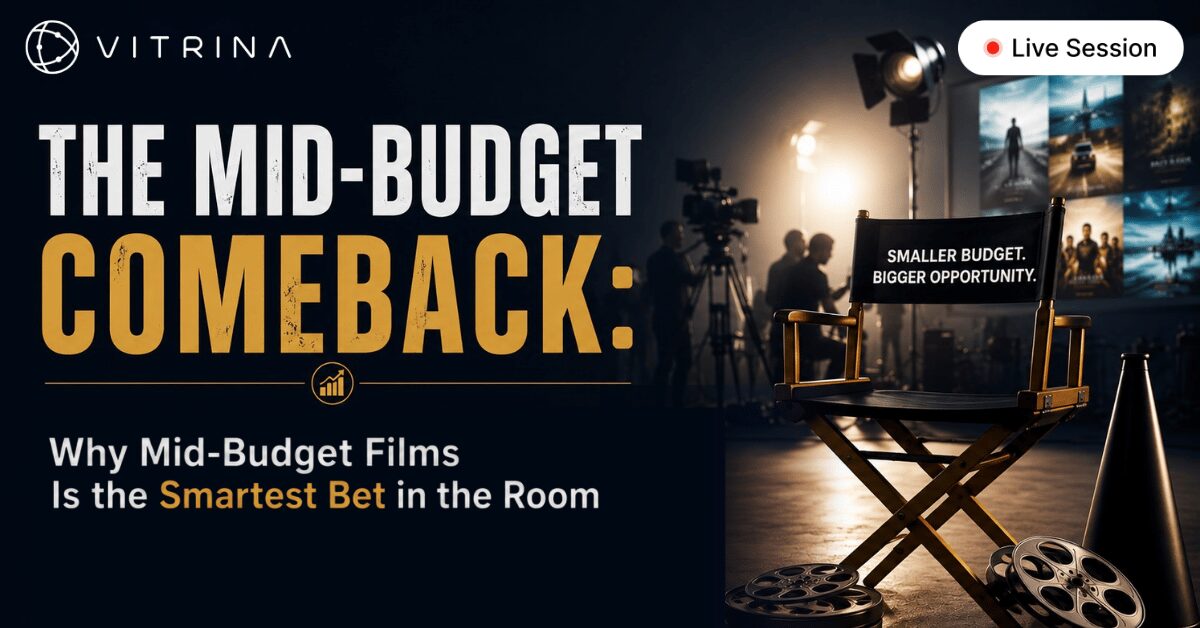
The Mid-Budget Comeback: Why Mid-Budget Films Is the Smartest Bet in the Room
Mid-budget films are attracting new capital. See why this segment is becoming one of the strongest bets in Film today.