IHUB
IHUB
 Private Briefings (Webinars)


 LeaderSpeak Podcast
  Global Entertainment Digest (Newsletter)
  Premium Lists
 Membership Benefits
 About Vitrina
 Our Story
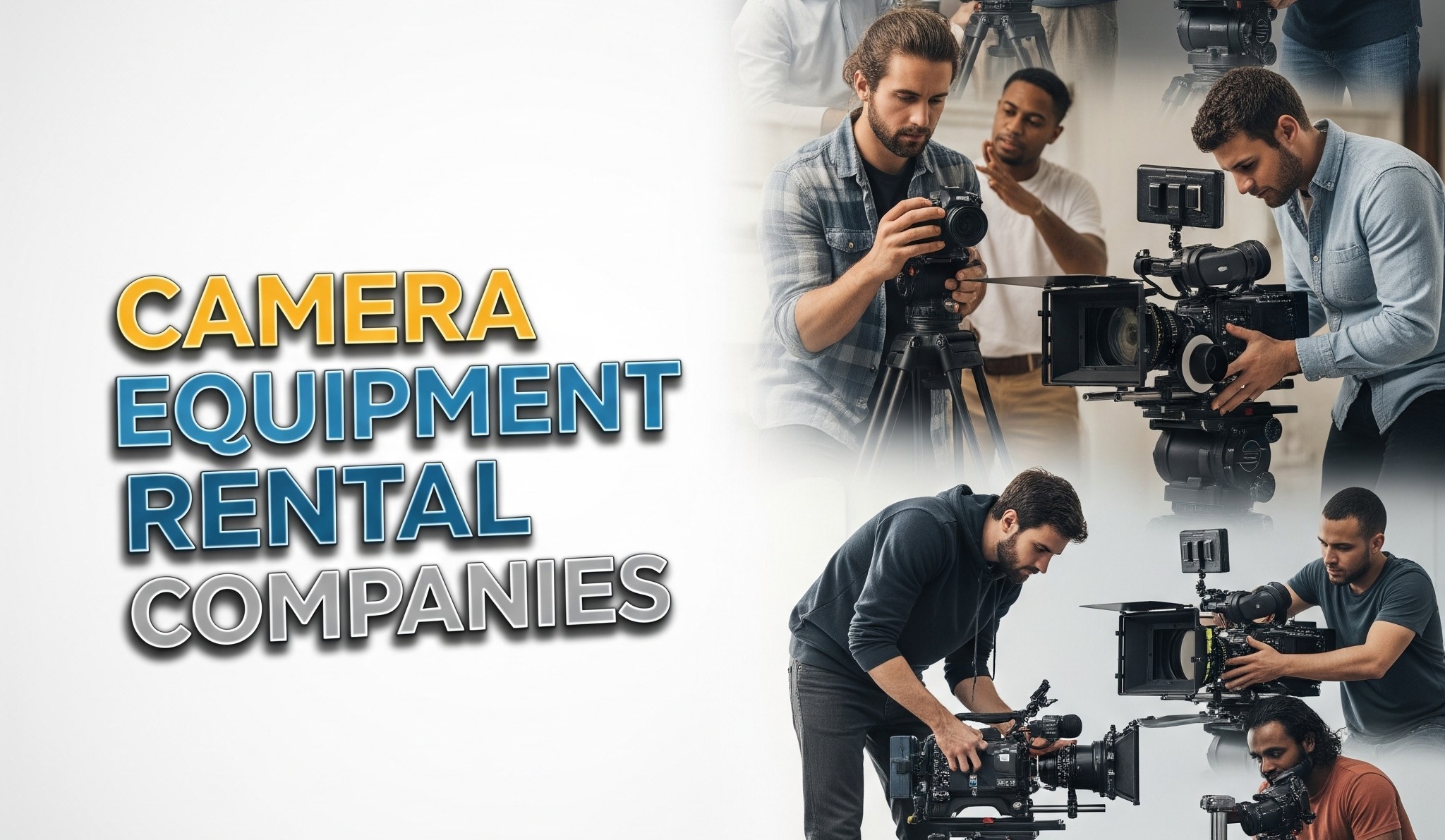
Choosing the wrong film making camera equipment rental partner costs you more than money. It costs you shooting days—and on a tight schedule, a single day lost to equipment failure or a kit that doesn’t show up spec-correct can unravel weeks of pre-production planning. The right rental house isn’t just a gear warehouse. It’s a technical partner that understands your project, your format, and the delivery requirements your distributor will hold you to.
The global camera equipment rental market spans thousands of companies across every major production hub—from Hollywood’s established houses on Cahuenga Boulevard to specialist rental outfits serving Netflix’s APAC original slate. But not all of them can deliver ALEXA 35 systems on 72 hours’ notice, support IMAX-certified shoots, or provide lens packages matched to the colourist’s grade. That’s the distinction that matters when you’re choosing a partner, not just a vendor.
This guide gives you verified intelligence on the top 10 film making camera and equipment rental companies worldwide—drawn from Vitrina’s database of 140,000+ active entertainment supply chain companies and cross-referenced against recent production credits. Whether you’re line producing a studio tentpole or packaging a streaming original in a Sovereign Hub market, here’s who delivers.
In This Guide
Find Verified Camera Rental Partners for Your Next Production
Ask VIQI—Vitrina’s AI intelligence engine—for a ranked shortlist of camera and production equipment rental companies filtered by format, location, and availability. Netflix, Paramount, and Warner Bros teams use Vitrina to source verified vendors globally.
✔ 200 free credits | ✔ No credit card required | ✔ Verified vendor data
What to Look for in a Film Camera Equipment Rental Partner
Before the list—let’s be honest about what separates a rental house that protects your production from one that just rents gear. Most productions get this wrong because they’re focused on kit lists when they should be focused on operational reliability. Here’s what the experienced line producers actually check.
Fleet currency matters more than fleet size. A house with 200 ALEXA Minis that haven’t been updated to the latest firmware is a liability, not an asset. The top camera rental companies cycle stock aggressively—they’re not sitting on systems that your DOP will refuse on prep day. And they’ll tell you exactly what they’ve got, when it was last serviced, and what accessories are confirmed in the package.
Technical support depth is non-negotiable on any shoot above micro-budget. Can they provide a prep tech? Will they have someone reachable on set if the magazine starts dropping frames? Do they hold certified service relationships with the manufacturers? These aren’t nice-to-haves when you’re shooting nights in a remote location. They’re the reason your contingency budget exists—or doesn’t need to.
Global logistics capability is the third axis. For productions operating across multiple countries—which is increasingly the norm as Sovereign Hub markets in Saudi Arabia, the UAE, and APAC attract international shoots—you need a rental partner who can coordinate cross-border shipping, handle carnet documentation, and maintain regional depot relationships. As we covered in our guide to sourcing film production services, the Fragmentation Paradox hits hardest in equipment logistics—there are thousands of rental houses globally, but far fewer that can actually execute on a multi-territory production without adding 15–20% overhead through information deficits and intermediary markups.

Your AI Assistant, Agent, and Analyst for the Business of Entertainment
VIQI AI helps you plan content acquisitions, raise production financing, and find and connect with the right partners worldwide.
- List the top commissioners at the BBC
- List the post-production and VFX decision-makers at Netflix
- List the development leaders at Sony Pictures
- List the scripted programming heads at HBO
- Find active co-producers and financiers for scripted projects
- Find equity and gap financing companies in North America
- Find top film financiers in Europe
- Find production houses that can co-produce or finance unscripted series
- Who is backing animation projects in Europe right now
- Who is Netflix’s top production partners for Sports Docs
- Who is Commissioning factual content in the NORDICS
- Who is acquiring unscripted formats for the North American market
- Show me recent drama projects available for pre-buy
- Show me Japanese Anime Distributors
- Show me true-crime buyers from Asia
- Show me documentary pre-buyers
- I am looking for production partners for a YA drama set in Brazil
- I am looking for producers with proven track record in mid-budget features
- I am looking for Turkish distributors with successful international sales
- I am looking for OTT platforms actively acquiring finished series for the LATAM region
- I am seeking localization companies offer subtitling services in multiple Asian languages
- I am seeking partners in animation production for children's content
- I am seeking USA based post-production companies with sound facilities
- I am seeking VFX partners to composite background images and AI generated content
Top 10 Film Making Camera & Equipment Rental Companies Worldwide
1. Panavision
📍 Los Angeles (HQ) · Worldwide Depots · panavision.com
Specialties: Large-format cinema systems, anamorphic lenses, virtual production, IMAX-certified packages
Panavision is the benchmark against which every other cinema rental house is measured. Their proprietary anamorphic lens lineup—including the T-Series, G-Series, and Ultra Panavision 70 systems—cannot be sourced anywhere else, and their DXL2 large-format camera has appeared on major studio tentpoles from Warner Bros and Paramount to prestige streaming originals. Panavision’s acquisition of Light Iron (digital intermediate) and Sim (post-production services) means they’ve vertically integrated beyond equipment rental into a full production services model. That matters if your capital stack benefits from a single vendor relationship across camera, lens, and DI. Global depots across the USA, UK, Germany, Australia, and Canada support multi-territory shoots—but book early. Their premium systems book 6–12 weeks out on major titles.
2. ARRI Rental
📍 Munich (HQ) · London · Atlanta · New York · Global
Specialties: ALEXA 35, ALEXA Mini LF, LDS lens systems, lighting, grip, virtual production
ARRI Rental is the manufacturer-backed rental division of ARRI Group—meaning they’re running the freshest ALEXA systems, with direct access to firmware updates, factory service, and certified training that no independent rental house can match. The ALEXA 35—released in 2022 and now firmly embedded in streaming platform preferred specs—is available through ARRI Rental as part of fully-spec’d packages including Signature Prime lenses. Their London Pinewood and Atlanta facilities are particularly strong for productions working the UK and US incentive markets simultaneously. And their virtual production division—ARRI Rental VP—provides full LED volume stage packages that integrate directly with ARRI’s camera systems for zero-latency in-camera VFX workflows. This is where Sovereign Hub markets like the UAE are investing in rental infrastructure—the ARRI Rental playbook is the gold standard.
3. Keslow Camera
📍 Los Angeles · Chicago · Atlanta · New York
Specialties: ALEXA, RED, Sony VENICE, commercial production, episodic television, documentary
Keslow Camera is one of the most respected independent rental houses in the US market—known for meticulously maintained stock, a customer service culture that operates in production-time (not banker’s hours), and a fleet that spans camera systems across ARRI, RED, and Sony. Their commercial production relationships are deep—they’re a go-to for branded content and advertising shoots that need high-end cinema packages without the studio-tier lead times of Panavision or ARRI Rental. If you’re packaging an episodic production where the DP wants optionality across formats without committing to a single manufacturer’s ecosystem, Keslow’s multi-system fleet is a genuine advantage. They don’t have the global reach of Panavision, but within the US they execute with a speed and flexibility that larger houses often can’t match.
Virtual production is fundamentally reshaping how camera systems and equipment rental houses operate. This episode dives deep into the technology adoption curve—from LED volumes to real-time in-camera VFX—and what it means for production equipment decisions on modern shoots:
Virtual Production Unveiled: A Hollywood Insider’s Tech Odyssey — Vitrina LeaderSpeak Podcast
4. Otto Nemenz International
📍 Hollywood, Los Angeles
Specialties: Vintage/specialty lenses, anamorphic packages, independent film, music video, commercials
Otto Nemenz International is a Hollywood institution—operating since 1967 and still the go-to for cinematographers who need access to rare vintage glass that can’t be sourced anywhere else in the world. Their lens collection spans Cooke Speed Panchros, Baltar lenses, and a rotating inventory of specialist anamorphics that DOPs fly across the country to access. But they’re not purely a museum piece: their modern camera fleet is current and maintained to a standard that justifies their premium position. For projects where the visual aesthetic is defined by a specific vintage lens choice—independent features, prestige TV, director-driven films where the DP is doing pre-light tests six weeks out—Otto Nemenz is the first call, not the backup option.
5. Camera Corps UK
📍 London, UK · Global location support
Specialties: Remote camera systems, specialist rigs, sports & events, broadcast, robotic camera heads
Camera Corps UK operates in a specialist tier that most general rental houses can’t touch—remote and robotic camera systems for situations where your operator cannot physically be at the camera position. Think motorsport, high-risk action sequences, live events, and broadcast productions where a human body in the frame position is either impossible or unsafe. Their Q-Ball remote head system has credits on Formula 1 broadcasts, major studio action sequences, and international live event productions. For line producers and DOPs planning shots that require unconventional camera placement—and who don’t want to discover mid-prep that the robotic systems are booked out—Camera Corps needs to be in your planning conversation early. They’re not a general rental house. They’re a technical specialist, and that distinction saves productions from expensive improvisation on set.
Track Production Equipment Vendors in Real Time
Vitrina monitors 1.6 million+ active projects and the production equipment vendors attached to them—giving you live capacity signals, rental house availability intel, and verified supply chain data before you commit your prep schedule. Join 300,000+ companies using Vitrina to source smarter.
No credit card required · Cancel anytime
6. CSC (Camera Service Center)
📍 Toronto · Vancouver · Canada-wide
Specialties: Full camera packages, grip, lighting, Canada-wide service support, international co-productions
Canada’s production incentive landscape—with federal and provincial tax credits regularly reaching 40%+ on qualifying expenditure—makes it one of the most active international shooting destinations in the world. Camera Service Center (CSC) is the dominant full-service rental house for productions working the Toronto and Vancouver markets, with a fleet that covers every major cinema system and grip/lighting packages that can outfit a full-scale studio production. Their relationship infrastructure with the Canadian production incentive system is well-established—they know how to document equipment expenditure in ways that satisfy audit requirements, which matters when your tax credit recoupment depends on clean paperwork. For any production routing through Canada to access incentives, CSC is the vendor relationship to lock down early.
7. Charade Equipment Rentals
📍 Sydney · Melbourne · Australia
Specialties: Full-service cinema packages, ARRI systems, grip, lighting, Australia’s incentive-eligible productions
Australia’s 30% Location Offset—increased from 16.5% in July 2024—has supercharged international production activity across Sydney and the Gold Coast. Charade Equipment Rentals is among the most technically capable independent rental houses in the region, maintaining a modern ARRI-centric fleet alongside comprehensive grip and lighting packages that can outfit productions working Australia’s diverse location portfolio. Their Sydney operation is positioned to serve the expanding stage capacity at Fox Studios Australia, and their relationship network with local crew supports productions that need integrated equipment-and-crew packages rather than managing two separate supply chains. As reported by Variety, Australia’s production boom post-2024 incentive increase has created genuine capacity pressure—which means your equipment conversations need to happen during pre-production, not two weeks before principal photography.
8. Take 2 Films
📍 Dubai · Abu Dhabi · MENA Region
Specialties: Full production services, camera rental, MENA location shoots, international co-productions
The MENA region’s emergence as a genuine Sovereign Hub for international production—anchored by Saudi Arabia’s Vision 2030 content investment and the UAE’s up-to-50% incentive structure—has put a premium on rental houses that can genuinely support international productions in the Gulf. Take 2 Films operates as a full production services company with camera and equipment rental capability that understands the logistical realities of shooting in the MENA market: customs requirements, carnet navigation, local crew integration, and the specific technical demands of location shooting in extreme climatic conditions. For productions targeting MENA incentive structures, having a local rental relationship that knows the market is not optional—it’s the difference between a shoot that stays on schedule and one that discovers problems on day one of principal photography.
9. Flash Film Works / Cine Gear India
📍 Mumbai · Hyderabad · India
Specialties: Camera systems, grip, lighting, India incentive-eligible productions, international co-production support
India’s enhanced 40% federal incentive (increased from 30% in 2024) with an additional 5% for significant Indian content has opened a serious conversation about routing international productions through Mumbai and Hyderabad. The rental infrastructure has developed in parallel—production equipment rental houses serving India’s growing international co-production market now maintain ALEXA, RED, and Sony VENICE systems alongside the full grip and lighting packages that international DOPs require. The cost advantage versus shooting equivalent content in the UK or US is material at mid-budget level—and for productions where the capital stack depends on Indian incentive recoupment, equipment spend with India-qualifying rental vendors is part of the spend mix that supports the incentive claim.
10. Cinecitta Rental / Penta Films Italy
📍 Rome · Milan · Italy · European service hub
Specialties: Cinema camera packages, Italy/Europe location shoots, period drama, large-scale action
Italy’s production ecosystem—anchored by Cinecittà Studios in Rome and supported by Italian tax credit structures for qualifying international productions—makes it one of the most active European production destinations for English-language co-productions and service work. The rental infrastructure servicing Cinecittà and the broader Italian market operates at a standard that matches the scale of productions that regularly use the facilities. Period drama, large-scale action, and prestige features have all been shot in Italy in recent years with full-service camera and equipment packages sourced locally—a cost and logistics advantage when you’re also trying to qualify for Italian tax credit on local expenditure. As noted by Screen International, European co-production activity has continued to grow through 2025, with Italy among the most active destinations for major studio service work.
The Camera Systems Dominating Film & Streaming Production in 2026
What you’re renting matters as much as who you’re renting from. The dominant cinema camera systems in 2026 have polarised around a small number of platforms—and the streaming platforms you’re delivering to often have preferred specs that shape the choice before your DP has even drawn up their wish list.
One thing worth flagging here—Netflix’s approved camera list is not just a spec requirement, it’s an ROI protection mechanism. Productions that shoot on unapproved systems have been required to re-deliver or re-grade at their own cost. Verify your rental house has the specific firmware revision and sensor configuration your delivery specification requires before you sign the rental agreement, not after. As we explain in our pre-production planning guide, equipment specification sign-off should happen during technical recce, not during prep week.
Regional Camera Rental Landscape: Where to Source Equipment Globally
The global production equipment rental market isn’t uniform. Regional differences in fleet quality, pricing structure, and vendor reliability are significant—and they map directly to where international production spend is flowing in 2026.
United States (Los Angeles, New York, Atlanta) — The deepest fleet concentration in the world. You can source any system, any lens package, any specialist rig. But capacity pressure on premium systems is real during peak seasons, and pricing reflects the market’s maturity. LA’s Panavision, ARRI Rental, and Keslow represent the global benchmark.
United Kingdom (London, Pinewood, Manchester) — Strong ARRI Rental presence, deep lens inventory (including specialist vintage collections), and a crew culture that integrates tightly with equipment rental packages. The UK’s 34% HETV tax credit continues to drive major streaming productions through Pinewood and the UK generally, keeping rental demand high and fleet investment robust.
Australia — Post the 2024 incentive increase to 30% Location Offset, Australia is experiencing genuine production volume growth. But the rental infrastructure hasn’t scaled at the same pace as the inbound production interest. This means smart productions are locking equipment 3–4 months ahead, not 6 weeks.
MENA (UAE, Saudi Arabia) — The fastest-developing regional rental market globally. New studio infrastructure in Abu Dhabi and Riyadh is being supported by equipment rental capability that didn’t exist at commercial scale three years ago. But verification matters—the gap between claimed fleet capability and actual available inventory can be significant in nascent markets. Vitrina’s real-time vendor intelligence is particularly valuable here.
India (Mumbai, Hyderabad) — Growing fast, with fleet quality for major Bollywood and international co-productions meeting global streaming specs. For productions accessing India’s 40% incentive, local equipment rental spend counts toward the qualifying expenditure total. That’s not a minor consideration—it directly affects recoupment timing.
Need a Custom Camera Equipment Vendor Shortlist for Your Production?
Vitrina’s Concierge team builds hand-curated sourcing packages—matching your format, location, budget, and timeline to verified rental vendors from a database of 300,000+ companies. No relationship guesswork. No outdated directories.
Used by sourcing teams at Netflix, Paramount, and Warner Bros
De-Risking Your Camera Equipment Sourcing Strategy
Here’s the thing most sourcing guides won’t tell you: the film making camera equipment rental sector has the same Fragmentation Paradox problem as every other part of the entertainment supply chain. There are thousands of rental companies globally—and the gap between a vendor’s marketing materials and their actual operational capability on a complex international production is often wide.
Three things go wrong most often. First, fleet availability misrepresentation—a company lists ALEXA 35 systems but has two, both of which are already out. They’ll tell you about availability when you call to book, not before. Second, technical support gaps—some rental houses have excellent kit but minimal prep and support infrastructure. If something goes wrong on day 3, who picks up the phone at midnight? Third, cross-border logistics failure—carnets get held, customs clearance takes longer than planned, and suddenly your principal photography day 1 is missing half the camera package.
The smart move—the one that protects your EBITDA and your schedule—is sourcing with verified intelligence, not relationship-dependent guesswork. Vitrina’s production services intelligence gives you real-time capacity data, vendor project history, and supply chain signals that compress the sourcing process from months to days. That’s not a marginal efficiency gain. On a $5M production where equipment represents 8–12% of the budget, a 15% margin leak from a mismatched rental vendor is $60–90K directly off the bottom line.
Frequently Asked Questions: Film Making Camera Equipment Rental
What is the best film making camera equipment rental company worldwide?
Panavision and ARRI Rental are the two benchmark global cinema rental houses—both offer proprietary camera systems, world-class lens collections, and global depot infrastructure that no independent competitor can fully replicate. But the best camera rental company for your specific production depends on your format, location, schedule, and budget. Keslow Camera, Otto Nemenz, and Camera Corps UK each dominate specific niches where Panavision and ARRI Rental aren’t the right fit.
What camera systems do Netflix and Amazon Prime Video prefer for original productions?
Both Netflix and Amazon maintain approved camera lists for originals and co-productions. ARRI ALEXA systems (ALEXA 35 and ALEXA Mini LF), Sony VENICE 2, RED MONSTRO and RAPTOR, and Panavision DXL2 are all on Netflix’s approved camera list for 4K capture. ARRI ALEXA systems are the most commonly used across high-end streaming originals. Verify your rental vendor has the specific firmware revision required by the delivery spec—this is a contractual requirement on platform-commissioned originals, not a preference.
How much does it cost to rent professional film making cameras?
Professional cinema camera rental rates vary significantly by system, location, and rental house. In the US market, an ARRI ALEXA Mini LF package (camera body, mag, battery, basic accessories) typically runs $1,200–$2,500 per day. A full ARRI ALEXA 35 package with cinema lenses runs $3,000–$6,000+ per day at major rental houses. Panavision systems include proprietary lenses and are typically priced as complete packages rather than individual line items. Regional markets (India, MENA, Southeast Asia) offer lower day rates—often 30–50% below US pricing—but fleet currency and technical support depth must be verified independently.
How do I verify whether a camera rental company can deliver to international production standards?
Request a fleet inventory list with serial numbers, last service dates, and firmware versions. Ask for references from recent productions at a similar budget and format level—not just a client logo list. Verify that their prep facility includes certified technicians, not just equipment handlers. For cross-border shoots, ask specifically about their carnet and customs clearance process, and whether they have established relationships with freight forwarders in your shooting territory. Vitrina’s platform allows you to verify production credits and capacity signals for rental vendors before you commit.
What is the difference between a camera rental house and a production equipment rental company?
Camera rental houses specialise in camera systems, lenses, and camera accessories—they’re optimised for cinematography department supply. Production equipment rental companies offer broader packages that include grip (cranes, dollies, rigging), lighting (HMI, LED panels, practical fixtures), and sometimes sound and electrical. Some companies like Panavision and ARRI Rental now offer integrated packages across camera, lens, lighting, and grip. For most productions, sourcing camera from a specialist camera house and grip/lighting from a separate supplier gives better depth and flexibility than a single-source approach.
Which camera rental companies support virtual production shoots?
ARRI Rental has the most developed virtual production offering among major rental houses, with integrated LED volume packages and ARRI camera systems engineered for in-camera VFX workflows. Panavision supports virtual production through their technology partnerships. In regional markets, virtual production capability at rental house level is developing—but the major studios in UK (Pinewood, Trilith) and UAE (twofour54) have integrated rental partnerships that bundle LED stage access with camera systems. Virtual production is a specialist discipline and requires pre-production technical consultation with your rental house, not just a kit booking.
How early should I book camera equipment rental for a major production?
For major productions using premium systems (ARRI ALEXA 35, Panavision large-format, RED RANGER setups), booking 8–12 weeks before principal photography is standard practice at major rental houses in peak markets. Australia’s capacity constraints post-2024 incentive increase mean 12–16 weeks is now advisable for complex packages in Sydney and Melbourne. MENA and India markets can sometimes accommodate shorter lead times, but verifying stock availability rather than relying on verbal confirmation is essential. For episodic productions with rolling schedules, a series-level deal with a single rental house is almost always more cost-effective and logistically simpler than booking episode-by-episode.
Key Takeaways
Your film making camera equipment rental strategy is a direct input to your production’s EBITDA—not a logistics afterthought. Here’s what to carry into your next vendor conversation:
- Match the rental house to the production tier. Panavision and ARRI Rental for studio and high-end streaming; Keslow and Otto Nemenz for indie and commercial flexibility; Camera Corps for specialist rigging; regional houses for incentive-market shoots that need local qualifying expenditure.
- Verify fleet currency before you sign. The firmware version, last service date, and actual available inventory on your dates matter more than what’s listed on a website. Get it in writing during prep, not as a surprise on load-in day.
- Book 8–12 weeks ahead on premium systems. ALEXA 35, large-format lenses, and specialist rigs are genuine capacity-constrained resources in peak markets. Late bookings mean backup systems—or production delays that cost far more than the rental premium.
- Regional incentives create equipment sourcing strategy. When qualifying local expenditure for Canada, Australia, India, or MENA incentives, camera rental from local vendors counts. Build your equipment sourcing map alongside your tax credit strategy, not separately.
- De-risk with verified intelligence, not relationships alone. The Fragmentation Paradox means there are thousands of rental companies globally with widely variable capability. Vitrina’s real-time supply chain data compresses vendor verification from months to days—protecting schedule and margin simultaneously.
Source Verified Camera Equipment Rental Partners Today
Access real-time intelligence on production equipment rental companies across 140+ countries—verified project credits, capacity signals, and supply chain data before you commit your schedule.
No credit card required · Cancel anytime · Join 300,000+ entertainment companies
Need a Custom Equipment Sourcing Package?
Vitrina’s Concierge team builds verified vendor shortlists matched to your format, territory, and delivery specifications.