About Innovation Hub
 Global Content Pulse (Webinars)


 Global Production Financing
(Webinars)
Global Production Financing
(Webinars)  LeaderSpeak Podcast
  Global Entertainment Digest (Newsletter)
  About Vitrina
 About VIQI
 Our Story
 Our Solutions 🔥
 Film+TV Projects Tracker 🚀
 Case Studies
 Our Profile
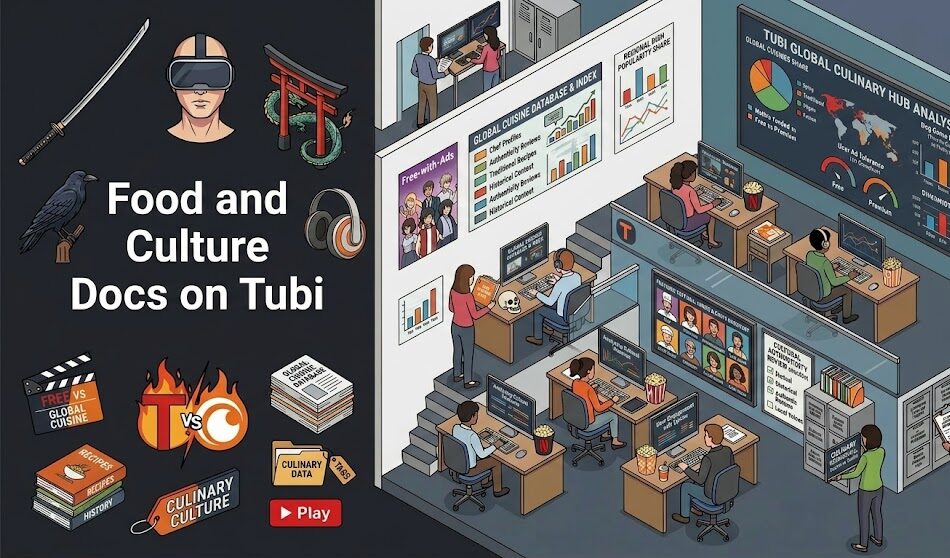
Some documentaries change what you order for lunch. Others change how you vote, how you shop, and which corporations you’re willing to fund with your spending. The free documentaries about the fast food industry and food system on Tubi sit in a rare third category—they do all three, often before the credits roll.
You don’t need a premium subscription. Tubi—Fox Corporation’s free ad-supported streaming platform with over 78 million monthly active users—has quietly built one of the best documentary libraries on any free platform. Films that forced McDonald’s to restructure its menu, pushed food companies into congressional testimony, and drove measurable shifts in plant-based food sales are sitting in that free library right now.
This guide ranks the most impactful ones by three criteria that actually matter: investigative depth, expert credibility, and documented behavioral impact. Not by trailer quality. Not by Netflix buzz. By what they proved—and what changed afterward. Catalog availability shifts on Tubi, so always verify current listings before you queue anything.
In This Guide
- Why Tubi’s Free Library Matters for These Films
- The 3 Criteria Separating Real Docs from Agenda Films
- Food, Inc. (2008)
- Super Size Me (2004)
- Fed Up (2014)
- Forks Over Knives (2011)
- King Corn (2007)
- Fat, Sick & Nearly Dead (2010)
- Which Documentary Should You Watch First?
- FAQ
- Conclusion & Key Takeaways
Track Which Documentary Deals Are Closing Right Now
Content professionals use Vitrina to track documentary licensing deals, AVOD distribution agreements, and acquisition patterns at platforms like Tubi. Join 140,000+ companies—including teams at Netflix, Warner Bros, and Paramount. No credit card required.
Why Tubi’s Free Library Makes These Films More Dangerous Than Netflix’s
The paywall problem is real. Any streaming subscription creates a selection filter—you watch what you pay for, which means millions of people who can’t or won’t spend $15–$20/month on a premium service simply never encounter these films. Tubi removes that barrier entirely.
That access gap matters more than most distributors admit. As Variety has reported on the rapid growth of AVOD platforms, services like Tubi consistently outperform premium streamers in documentary viewing hours precisely because they reach demographics subscription platforms don’t. Food system documentaries, specifically, perform exceptionally well on ad-supported platforms—and here’s why.
They’re agenda-neutral on the surface. They attract conservative viewers concerned about corporate overreach and progressive viewers concerned about environmental impact, often in the same household. That dual-audience appeal is exactly why distributors keep relicensing this content to AVOD platforms long after theatrical windows close. It’s not charity. It’s content economics—and it’s precisely why documentary content remains one of entertainment’s most reliably relicensed verticals.
One important caveat: Tubi’s catalog updates regularly as licensing agreements expire and renew. All titles listed here have been available on Tubi during recent catalog periods—but always verify current availability directly on the platform before streaming.
The 3 Criteria That Separate Real Food Docs from Agenda Films
Let’s be direct about methodology. Most ranking lists use engagement metrics—review aggregator scores, social buzz, streaming popularity. Fine for entertainment guides. But if you want to know which films will actually change how you think about your food supply, you need different filters.
Investigative Depth — Did the filmmakers gain genuine access, or rely on public-domain footage and sympathetic talking heads? The best food docs embedded themselves inside the systems they were critiquing. Harder to execute. Rarer than it looks.
Expert Credibility — Who’s actually on screen, and do they have real skin in the game? Named scientists, former industry insiders, and on-record regulatory officials carry weight that anonymous nutrition consultants don’t. This distinction matters more than production value.
Documented Behavioral Impact — Did viewership correlate with measurable behavior change? Some of these films have verifiable audit trails—corporate menu changes, legislative hearings, shifts in food sales data—that prove they did something beyond winning festival awards. That’s the standard worth tracking.

Your AI Assistant, Agent, and Analyst for the Business of Entertainment
VIQI AI helps you plan content acquisitions, raise production financing, and find and connect with the right partners worldwide.
- Find active co-producers and financiers for scripted projects
- Find equity and gap financing companies in North America
- Find top film financiers in Europe
- Find production houses that can co-produce or finance unscripted series
- I am looking for production partners for a YA drama set in Brazil
- I am looking for producers with proven track record in mid-budget features
- I am looking for Turkish distributors with successful international sales
- I am looking for OTT platforms actively acquiring finished series for the LATAM region
- I am seeking localization companies offer subtitling services in multiple Asian languages
- I am seeking partners in animation production for children's content
- I am seeking USA based post-production companies with sound facilities
- I am seeking VFX partners to composite background images and AI generated content
- Show me recent drama projects available for pre-buy
- Show me Japanese Anime Distributors
- Show me true-crime buyers from Asia
- Show me documentary pre-buyers
- List the top commissioners at the BBC
- List the post-production and VFX decision-makers at Netflix
- List the development leaders at Sony Pictures
- List the scripted programming heads at HBO
- Who is backing animation projects in Europe right now
- Who is Netflix’s top production partners for Sports Docs
- Who is Commissioning factual content in the NORDICS
- Who is acquiring unscripted formats for the North American market
Food, Inc. (2008) — The Documentary That Rewired a Generation’s Grocery Habits
Food, Inc., directed by Robert Kenner, didn’t just expose how industrial food is produced. It documented the contractual control systems that legally prevent farmers from talking about their own operations—and then put those farmers on camera anyway. That decision cost some of them their livelihoods. It also earned the film an Academy Award nomination for Best Documentary Feature and permanently altered consumer trust in factory-farmed protein.
The film’s central revelation isn’t shocking footage of processing plants. It’s the legal architecture—how companies like Tyson Foods and Smithfield Foods structured growing contracts so farmers absorbed all financial risk while maintaining zero operational control. That’s a business story, not just a food story. Which is exactly why Food, Inc. still holds up in 2026 when newer documentaries don’t.
Expert sources: Eric Schlosser (author of Fast Food Nation), Michael Pollan (The Omnivore’s Dilemma), and multiple on-record farming and regulatory insiders. No anonymous sources. No undisclosed conflicts. Distributed by Magnolia Pictures, it grossed over $4.4 million theatrically—extraordinary for a food documentary—before entering a distribution cycle that’s kept it active on free streaming platforms for 15+ years. That longevity is the real signal.
For content professionals, Food, Inc. is a case study in what sustained documentary licensing looks like. Tracking how this kind of title maintains multi-platform value across distribution windows is exactly what Vitrina’s global documentary trends analysis covers in depth—and food content consistently tops the AVOD relicensing data.
Super Size Me (2004) — The 30 Days That Forced McDonald’s to Change Its Menu
Let’s be honest about what Super Size Me accomplished. Morgan Spurlock ate nothing but McDonald’s for 30 days, gained 24.5 pounds, watched his cholesterol spike 65 points, and had his personal physicians comparing his liver function—on camera, with clinical documentation—to someone presenting with alcoholic hepatitis.
But did it actually produce change? That’s the real question. Within 6 weeks of the film’s Sundance premiere, McDonald’s announced it was permanently discontinuing its Supersize option. The company denied any connection. The timing made that denial difficult to sustain—and as The Hollywood Reporter noted in coverage of the corporate response, the Supersize termination coincided precisely with the film’s expanding national press footprint.
Spurlock’s follow-up, Super Size Me 2: Holy Chicken! (2017), extended the investigation into chicken industry marketing practices. Both films have cycled through Tubi’s catalog. The original remains one of the most-cited examples of a documentary producing documented, verifiable corporate behavior change. That alone earns it the #2 position on this list.
Discover Documentary Distribution Partners in 48 Hours
Vitrina tracks 400,000+ projects and 140,000+ companies—including AVOD distributors, licensing partners, and content acquisition teams at platforms like Tubi. Start with 200 free credits. No credit card required.
Fed Up (2014) — The Sugar Industry Conspiracy Katie Couric Exposed
Fed Up arrived produced and narrated by Katie Couric and co-produced by Laurie David—who’d also produced An Inconvenient Truth. That production pedigree attracted institutional access that smaller documentary budgets simply couldn’t reach.
The film’s argument is systemic, not personal: US government dietary guidelines protected the sugar industry’s market position for decades while scapegoating dietary fat for rising obesity rates. It names names—specific lobbying budgets, former FDA commissioners, and the precise mechanism by which industry-funded nutritional science entered public health policy. This isn’t a lifestyle film. It’s a corporate accountability investigation that happens to involve your lunch.
Behavioral impact was documented and unusual. Following the film’s theatrical release, multiple school districts adopted Fed Up as curriculum material for reforming cafeteria nutritional standards—a form of institutional adoption that almost no documentary achieves. That kind of credibility signal matters to the same content acquisition teams now deciding what enters AVOD platforms. And understanding those acquisition decisions is exactly what Vitrina’s Tubi content acquisition analysis was built to illuminate.
Forks Over Knives (2011) — The Science That Launched the Plant-Based Movement
Forks Over Knives, directed by Lee Fulkerson, investigates epidemiological data rather than corporate systems—specifically the independent research of Dr. T. Colin Campbell of Cornell University and Dr. Caldwell Esselstyn of the Cleveland Clinic. Both researchers independently concluded that whole-food, plant-based diets could reverse certain presentations of heart disease and early-stage chronic illness. And both built their careers on that research long before the film found them.
What made it resonate beyond existing plant-based advocates? Fulkerson made the unusual structural choice of making himself a subject—his on-camera health transformation provides the human anchor for what is otherwise a rigorous scientific argument. And it worked. The companion cookbook sold over 1 million copies. The phrase “plant-based” entered mainstream food vocabulary in significant part because of this film’s cultural reach across a decade of continuous streaming presence.
But here’s the honest caveat: Forks Over Knives has drawn legitimate scientific criticism for overstating certain research conclusions. Watch it knowing that. It’s valuable precisely because the counterarguments to its thesis are worth understanding too—and that intellectual friction is more useful than uncritical acceptance of any documentary’s conclusions.
King Corn (2007) — The One Acre That Explains Everything Wrong With American Food
King Corn is the documentary you recommend to someone who isn’t sure they want to watch a food documentary. Filmmakers Ian Cheney and Curt Ellis moved to Iowa, grew a single acre of industrial corn, and followed it through the American food system—tracking it into high-fructose corn syrup production, feedlot cattle operations, and fast food supply chains. Simple premise. Devastating execution.
It’s wry. Often funny in places. And it makes the same systemic arguments as Food, Inc. without the confrontational access journalism that can alienate skeptical viewers. Expert credibility: named agricultural economists, farmers, and food scientists throughout—no anonymous sources, no undisclosed production conflicts. If you’re trying to get a skeptical person engaged with the food system debate, King Corn is the entry point. Start here, then escalate to Food, Inc.
Accelerate Your AVOD Documentary Distribution Strategy
Vitrina’s concierge team helps documentary producers and distributors identify the right AVOD partners, track competitive licensing deals, and connect with acquisition teams at platforms including Tubi, Pluto TV, and Peacock. Trusted by documentary teams at Netflix, Warner Bros, and leading independent distributors.
Fat, Sick & Nearly Dead (2010) — 60 Days, One Juice Machine, One Autoimmune Disease
Joe Cross drove across America in 2010 drinking nothing but fresh-pressed juice for 60 days. He’d managed a rare autoimmune skin condition with corticosteroids for 9 years before the film. By the end of the journey, he was off the medication—documented on camera with physician verification.
Fat, Sick & Nearly Dead is the most personal entry on this list. Less investigative journalism, more personal transformation documentary in the tradition of Michael Moore’s Roger & Me. But its downstream commercial impact was real—juice bar openings surged in the years following its release, and it spawned a sequel, Fat, Sick & Nearly Dead 2 (2014), that extended the methodology across a larger subject group.
It ranks #6 rather than higher because investigative depth is limited—Cross is documenting himself, not a system. But it’s consistently one of Tubi’s more reliably available food documentary catalog entries, and for viewers who find the more confrontational films difficult, it’s a genuinely useful starting point into this genre.
Which Free Food System Documentary on Tubi Should You Watch First?
Here’s the decision framework that cuts through the list:
- You want systemic corporate investigation: Start with Food, Inc.
- You want proof that documentaries create real change: Super Size Me
- You want the science without the advocacy tone: Forks Over Knives
- You want to understand the sugar industry specifically: Fed Up
- You want something accessible for a skeptical person: King Corn
- You want a personal transformation narrative: Fat, Sick & Nearly Dead
For industry professionals tracking what documentary content performs on AVOD platforms—and how Tubi’s content strategy connects to broader distribution patterns—these six films collectively represent one of the most reliably licensed documentary verticals in the business. Food content travels well across borders, appeals to dual demographics, and maintains licensing value long after theatrical windows close. That’s not a coincidence. It’s what Vitrina identifies as the Fragmentation Paradox in action: the most valuable documentary content doesn’t disappear after its first platform window. It fragments across dozens of platforms simultaneously, generating licensing revenue at every stage. Tracking which titles are moving—and where—is what Vitrina’s documentary deals intelligence was built for.
Frequently Asked Questions
Are all these food documentaries free on Tubi right now?
All titles in this guide have been available on Tubi during recent catalog periods—but Tubi’s documentary library updates regularly as licensing agreements expire and renew. Always check Tubi directly to confirm a specific title’s current availability before you sit down to watch. Catalog cycling is a standard feature of AVOD distribution, not an anomaly.
What is the most impactful fast food documentary ever made?
By the criteria used in this ranking—investigative depth, expert credibility, and documented behavioral impact—Food, Inc. (2008) holds the strongest overall case. Its combination of genuine access journalism, named expert sources across multiple disciplines, and 15+ years of continuous multi-platform distribution presence all signal lasting cultural influence. Super Size Me is the tightest single case for direct corporate behavior change, given what happened at McDonald’s within 6 weeks of Sundance.
Is Food, Inc. still relevant in 2026?
Yes—and arguably more relevant than at its 2008 release. The contractual farming structures Kenner exposed haven’t fundamentally changed. Corporate concentration in the food industry has increased since filming, with fewer companies controlling larger shares of protein production, grain processing, and fast food supply chains globally. The legal architecture the film documented is largely still in place. What’s changed is viewer access to the film itself—it’s now free on platforms like Tubi, which means it reaches people who’d never have paid for a theater ticket in 2008.
Did Super Size Me actually force McDonald’s to drop the Supersize option?
McDonald’s officially denied any connection between the film and the Supersize discontinuation, attributing it to ongoing menu simplification. But the announcement came within 6 weeks of Super Size Me’s Sundance premiere and expanding press footprint. Most industry observers—including coverage from The Hollywood Reporter—noted the timeline was difficult to explain away as coincidence. The honest answer is: the company denied it, the timing suggested otherwise, and the Supersize option hasn’t returned in over 20 years.
Are there free food documentaries on Tubi that focus on global food systems?
Tubi’s documentary library includes international food content that cycles through the catalog, though the most consistently available titles tend to focus on the US food system specifically. For international food system coverage—agricultural practices in Asia, Europe, or Latin America—catalog availability varies significantly by licensing period. Checking Tubi’s documentary category directly gives you the most accurate current picture. Pluto TV and Plex also carry rotating international food documentary content worth checking if Tubi’s catalog comes up short.
How does Tubi decide which food documentaries to add to its catalog?
Tubi’s content acquisition team evaluates documentary titles based on viewer engagement data, genre performance, licensing cost relative to projected ad revenue, and overall content mix strategy. Documentary content performs particularly well on AVOD platforms because it attracts engaged, longer-session viewers—a metric that directly drives advertising revenue. Food system content specifically performs well across demographic groups that other documentary sub-genres don’t reach. Vitrina’s analysis of Tubi’s content acquisition strategy covers the platform’s documentary acquisition priorities in detail.
What makes a food documentary credible rather than agenda-driven?
The clearest signal is sourcing transparency. Credible food documentaries use named experts with verifiable institutional affiliations, cite data with traceable origins, and acknowledge counterarguments or limitations in their own research framing. Agenda-driven films typically rely on anonymous sources, selectively presented statistics, and expert panels that share a single predetermined conclusion. The documentaries ranked #1 through #3 in this guide—Food, Inc., Super Size Me, and Fed Up—all use named, verifiable sources throughout. Apply that filter to any food documentary you’re evaluating.
What other free platforms carry food system documentaries besides Tubi?
Several AVOD and free-tier platforms carry overlapping food documentary catalogs. Pluto TV, Peacock’s free tier, Plex, and The Roku Channel all rotate food system documentary content. Specific titles vary by licensing period. If a title isn’t on Tubi right now, those four platforms are the most reliable alternatives to check—particularly Pluto TV and Plex, which have both carried food system content consistently across multiple catalog cycles.
Conclusion: The Food Docs That Changed Corporate Behavior Are Already Free
You don’t need a subscription to watch the free documentaries about the fast food industry and food system on Tubi that forced corporate menu restructuring, influenced federal dietary guidelines, and produced measurable behavior change at scale. They’re in a free library right now. But—catalog availability shifts, titles cycle, and what’s there this month isn’t guaranteed next month. Check Tubi directly. Watch what’s available now.
And if you’re tracking the documentary market professionally—figuring out which titles are being acquired, which platforms are licensing food content, and where distribution deals are landing in this category—that intelligence lives in Vitrina’s platform, updated continuously across 140,000+ companies and 400,000+ projects.
Key Takeaways
- Food, Inc. and Super Size Me remain the gold standard for investigative depth and documented corporate impact—start here if you’re new to the food documentary genre.
- All six films carry verifiable behavioral impact beyond awards—from school district curriculum adoption to documented corporate menu changes within weeks of theatrical release.
- Tubi’s AVOD model democratizes access to content that millions of viewers would never encounter behind a paywall—that’s the real story behind these films’ ongoing cultural influence.
- Catalog availability changes—always verify current listings on Tubi directly; documentary licensing on AVOD platforms is one of the most actively traded verticals in content distribution.
- For industry professionals, food documentary content is a high-value AVOD vertical with strong multi-window licensing economics and proven dual-demographic performance.
See What Documentary Content Is Being Acquired Right Now
Vitrina tracks documentary deals across 140,000+ companies and 400,000+ projects—including AVOD licensing agreements, distribution partnerships, and acquisition activity at platforms like Tubi. Trusted by teams at Netflix, Warner Bros, and Paramount.
✔ 200 free credits | ✔ No credit card required | ✔ Full platform access
Find Film+TV Projects, Partners, and Deals – Fast.
VIQI matches you with the right financiers, producers, streamers, and buyers – globally.
Producers Seeking Financing & Partnerships?
Book Your Free Concierge Outreach Consultation
(To know more about Vitrina Concierge Outreach Solutions click here)
Join Industry Briefings Trusted by Leaders
The Mid-Budget Comeback: Why Mid-Budget Films Is the Smartest Bet in the Room
Mid-budget films are attracting new capital. See why this segment is becoming one of the strongest bets in Film today.
Franchise Fatigue vs. IP Dependency: What Studios Should Be Betting On Now
s franchise performance softens, where will the next generation of valuable IP come from? Join the briefing.
Unscripted Is Eating the World: The Multi-Billion Reality and Format Boom
Unscripted is the new prestige — inside the $19.8B global format boom reshaping how streaming platforms compete.
How Co-Productions and Regional IP Are Reshaping Global Drama
As global drama evolves, which stories travel, which stay local, and how are they getting financed?