IHUB
IHUB
 Private Briefings (Webinars)


 LeaderSpeak Podcast
  Global Entertainment Digest (Newsletter)
  Premium Lists
 Membership Benefits
 About Vitrina
 Our Story
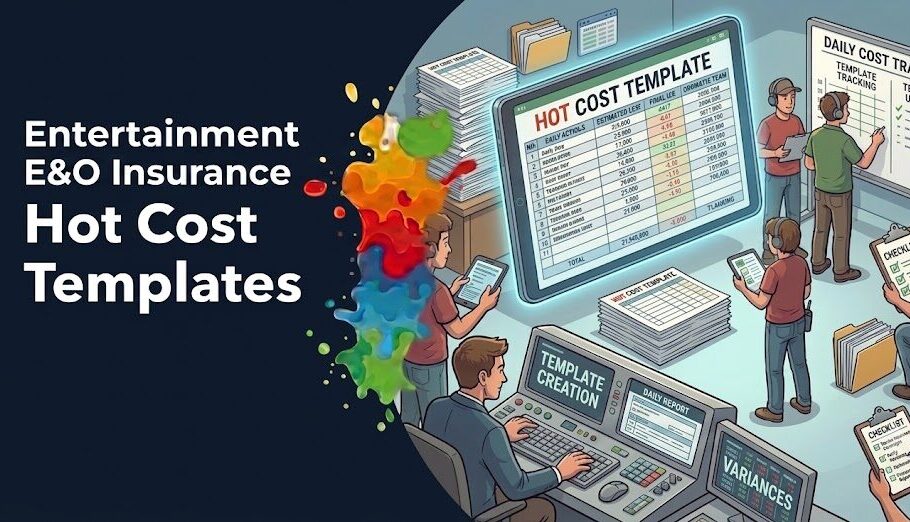
Entertainment E&O insurance has evolved from a routine post-production checklist item into a critical, front-loaded gatekeeper for independent film capitalization. In today’s volatile distribution market, premium streaming networks and completion guarantors will not deploy a single dollar of capital without ironclad liability clearance. For independent producers navigating complex cross-border slates, mastering these clearance protocols early isn’t just about risk mitigation—it’s the absolute baseline required to unlock senior debt and secure global streaming licenses.
What this guide covers: An analytical breakdown of entertainment E&O insurance mechanics, clearance procedures, script annotations, and platform-specific legal delivery parameters. Why it matters now: Global distributors are aggressively tightening corporate compliance policies, shifting defense costs and intellectual property exposures directly onto project-level wrappers. Who needs to read this: Independent producers, line producers, and media financiers structuring content packages for international distribution platforms.
The contemporary independent production landscape is cutthroat, leaving very little room for administrative oversight. You’ve probably spent months attaching talent, balancing tax incentives, and assembling a competitive capital stack. But here’s the thing: your entire project remains a theoretical exercise until you secure an institutional liability policy. In the global content economy, entertainment E&O insurance operates as the foundational bedrock that protects your production company from catastrophic intellectual property claims. Without it, your distribution contracts are completely worthless.
The real dynamic inside packaging discussions isn’t the creative vision—it’s the allocation of project-level liability. Opaque chain-of-title tracking, unvetted background assets, and loose script clearance procedures create massive information deficits that erode investor confidence. Lenders and completion guarantors recognize that a single copyright or defamation claim can instantly freeze a film’s global delivery pipeline. That gap between optioning a property and locking down your insurance binder is where most independent packaging efforts fall completely apart. It costs money, it burns time, and it kills momentum when handled reactively.
This strategic guide resolves that operational friction. By breaking down underlying industry data and primary research across major legal territories, we’re giving you an insider’s view of policy underwriting. You’ll learn how specialized underwriters evaluate your script annotations, how to bypass the fragmentation paradox when hiring legal clearance teams, and how to position your project to meet the precise delivery parameters of global networks. Let’s look at what’s actually happening behind closed doors in the legal marketplace.
Table of Contents
- De-Risking the Capital Stack: What Entertainment E&O Insurance Actually Wraps
- The Vitrina E&O Clearance Risk Matrix™
- Why Lenders and Completion Bonds Demand Front-Loaded Indemnity Policies
- Platform Compliance Profiles: Netflix, Prime Video, and Showmax Legal Parameters
- How to Structure Your Project Clearance Pipeline: A Step-by-Step Production Protocol
- Industry Implications: Three Structural Takeaways for Slate Producers
- Conclusion
- Frequently Asked Questions (FAQ)
- Questions Producers and Executives Are Asking
1. De-Risking the Capital Stack: What Entertainment E&O Insurance Actually Wraps
Entertainment E&O insurance is a specialized professional liability policy that protects content creators from third-party lawsuits alleging copyright infringement, plagiarism, defamation, invasion of privacy, and unauthorized use of titles or ideas. It’s the ultimate legal shield for your project wrapper. According to industry insurance data published by Variety, title and copyright disputes account for over 45% of all third-party legal claims brought against independent film productions during their initial windowing cycle.
Key Stat
Entertainment E&O insurance is a specialized professional liability policy that protects content creators from third-party lawsuits alleging copyright infringement, plagiarism, defamation, invasion of privacy, and unauthorized use of titles or ideas. It’s the ultimate legal s
The financial reality is that this policy doesn’t just cover your ultimate settlement costs—it funds your defense from day one. In our research tracking independent project workflows, a single unvetted music synchronization asset or a poorly cleared character name can trigger an immediate injunction. Insiders recognize that standard general liability policies explicitly exclude media peril exposures. If your project faces a copyright strike in the middle of a festival run, your general insurance package won’t save you from a catastrophic financial hit.
A robust entertainment E&O insurance policy typically carries a standard limit of $1,000,000 per claim and $3,000,000 in the aggregate, though major global networks frequently require limits up to $5,000,000 for premium high-concept slates. Underwriters don’t just hand out binders based on clean scripts; they carefully evaluate your entire legal clearance history. If you’re building a cross-border co-production, ensuring every underlying right is perfectly documented isn’t just best practice—it’s the only way to shield your production company’s operating EBITDA.
2. The Vitrina E&O Clearance Risk Matrix™
Navigating the underwriting process for an entertainment E&O insurance binder requires a systematic approach to identifying project-level vulnerabilities. Opaque clearance procedures frequently lead to severe margin leakage when insurers demand expensive, late-stage legal modifications before binding. To simplify this exposure assessment, we’ve structured a standardized operational framework that ranks project parameters by underwriting complexity.
| Project Parameter | Risk Category | Mandatory Legal Deliverable | Underwriting Impact Note |
|---|---|---|---|
| 1. Original Scripted Feature | Low Risk | Full Script Clearance Report | Requires standard character name and business entity vetting. |
| 2. Underlying Literary Option | Medium Risk | Certified Chain-of-Title Report | Insurers require a clean link from the author to the production SPV. |
| 3. True-Crime Documentary | High Risk | Opinion Letter + Fair Use Audit | Elevated defamation exposure; requires specialized attorney sign-off. |
| 4. Biopic / Living Persons | High Risk | Executed Life Rights Releases | Underwriters mandate signed waivers to mitigate privacy claims. |
The mistake we see most often? Producers assume that buying an insurance policy happens right before you deliver the hard drives to your distributor. Not true. If you’re building a project stack that relies on senior bank debt or international gap financing, you’ll need to present an entertainment E&O insurance application during early pre-production. Lenders don’t close deals on promises—they want to see that your clearance architecture is thoroughly underwritten before they advance production capital.
And that’s where the fragmentation paradox can cost you serious margin. Sourcing unverified local legal counsel who lack specific media experience leads to major documentation defects. Underwriters routinely reject cheap clearance reports that don’t look at multi-jurisdictional trademark databases. By leveraging Vitrina’s network to partner with verified legal specialists, you compress your packaging timeline and ensure your insurance binder closes with zero last-minute friction.
3. Why Lenders and Completion Bonds Demand Front-Loaded Indemnity Policies
Can you realistically close a production financing model without an active entertainment E&O insurance policy? Absolutely not. For any institutional film financier, an un-indexed intellectual property stack represents a systemic existential threat to their capital position. Lenders require that their senior debt sits completely insulated from third-party litigious actions. If a copyright or right-of-publicity dispute hits the project during principal photography, the resulting legal freeze can completely destroy your production timeline.
What the standard trade desks don’t report is how closely completion guarantors track insurance clearance procedures. A completion bond is a contractual guarantee that a film will be finished on budget and delivered to its distributor on time. But here’s the catch: the bonding company’s policy explicitly excludes coverage for intellectual property claims. They will not sign off on your weekly cash draws until your specialty broker delivers a valid certificate of entertainment E&O insurance naming the binder as an additional insured. It’s a non-negotiable threshold for modern production financing.
Think about the waterfall implications if an uninsured claim forces an injunction. Your distribution delivery schedule slips, your streaming windows collapse, and your capital efficiency metrics erode instantly. Strategic players understand that weaponizing your clearance framework during development is the smartest way to protect project-level margin. By maintaining pristine legal records from day one, you ensure that senior debt partners deploy capital without demanding punitive premium cushions or extensive collateral escrows.
4. Platform Compliance Profiles: Netflix, Prime Video, and Showmax Legal Parameters
The legal delivery architecture for modern independent features is dictated entirely by the strict corporate compliance frameworks of major digital platforms. Each platform maintains distinct underwriting parameters that independent creators must satisfy to clear technical and legal delivery hurdles.
01. Netflix Corporate Legal Delivery
The most rigorous clearance specification requiring multi-million dollar institutional boundaries
Netflix maintains an uncompromising compliance posture for both original commissions and licensed acquisitions. Their standard delivery manual dictates that a policy must be fully bound and active for a minimum of 3 to 5 years post-delivery. They do not accept localized regional policies with thin geographic footprints; your entertainment E&O insurance must feature full worldwide territory coverage and explicitly name Netflix as an additional insured with a total waiver of subrogation.
- Standard Policy Per-Claim Limit Requirement: $3,000,000 – $5,000,000
- Mandatory Legal Exhibits: Full Title Report, Copyright Report, Script Annotation
- Technical Compliance Window: Must be uploaded to delivery portal 60 days pre-launch
- Deductible Threshold Expectation: Maximum $10,000 – $25,000 unless asset is high-risk documentary
02. Prime Video Sub-Saharan Acquisitions
A structural focus on rigorous theatrical-to-SVOD chain-of-title verification
Amazon’s acquisition desk has steadily accelerated its regional licensing pace, focusing heavily on premium box office winners. While their headline policy requirements are slightly more flexible regarding deductible sizes, their legal team enforces zero tolerance for loose chain-of-title documentation. If your contemporary feature utilizes localized music cues or background branding assets, you must present executed synchronization and trademark waivers before their accounting desk triggers your licensing payout.
- Standard Policy Per-Claim Limit Requirement: $1,000,000 – $3,000,000
- Mandatory Legal Exhibits: Certified Chain-of-Title Report, Music Cue Clearance Sheet
- Licensing Delivery Protocol: Clearance package must clear automated internal review within 48 hours
- Key Partner Exposure: Output deals with prominent local production houses require front-loaded binders
03. Showmax (MultiChoice Group)
Hyper-localized risk parameters prioritizing extensive regional right-of-publicity vetting
Showmax is aggressively capturing regional subscriber share by weaponizing highly localized procedural dramas and reality television formats. Because their content slate relies heavily on real-world regional contexts, their underwriting focus emphasizes defamation and right-of-publicity risks. Independent producers pitching to this desk must demonstrate that all local background individuals, distinct municipal properties, and non-fictional references have been legally cleared under local statutory frameworks.
- Standard Policy Per-Claim Limit Requirement: $1,000,000 (with multi-market extensions)
- Mandatory Legal Exhibits: Attorney Opinion Letter, Signed Personal Releases
- Format Specialization Focus: Unscripted reality spin-offs require aggressive, weekly clearance loops
- Recoupment Integration: Local legal costs are frequently structured inside the co-commission stack
5. How to Structure Your Project Clearance Pipeline: A Step-by-Step Production Protocol
Fulfilling the rigorous parameters of an institutional media underwriter requires an organized, step-by-step clearance framework. Producers can accelerate their binding timeline by deploying a standardized legal verification pipeline from the earliest stages of development.
Step 1: Secure an Independent Script Clearance Report
Before capturing a single frame of footage, send your final shooting draft to a specialized clearance house. They will cross-reference every character name, fictional business, product placement, and specific location against global corporate registries. If your script features a fictional crooked politician named after a real local councilman, this report will flag the exposure before it translates into a defamation suit.
Step 2: Execute a Full Chain-of-Title Audit
You must compile every legal document tracing the project’s intellectual property evolution. This includes the original author’s copyright registration, the initial option agreement, all subsequent assignment renewals, and the formal transfer document to your production special purpose vehicle (SPV). Lenders require a completely unbroken legal chain before underwriting your entertainment E&O insurance package.
Step 3: Clear All Hidden Intellectual Property Elements
During physical production, your line producer must systematically track background assets. This means securing signed artwork releases for posters visible on walls, execution of trademark waivers for branded consumer goods in shot, and locking down formal music synchronization licenses for any audible sound cue. If an item cannot be cleared through standard administrative channels, it must be digitally blurred or removed from the final cut.
Step 4: Secure an Entertainment Attorney’s Opinion Letter
Once your clearance reports and chain-of-title records are compiled, your production attorney must review the complete asset stack. For high-risk formats like biopics or true-crime investigative documentaries, the underwriter will mandate a formal legal opinion letter confirming that the project’s utilization of public domain data or fair use provisions is legally defensible. This attorney sign-off is what ultimately unlocks your coverage binder.
6. Industry Implications: Three Structural Takeaways for Slate Producers
The increasing complexity of global media distribution requires immediate structural adjustments to your company’s risk management strategy. Here are the critical takeaways you need to implement to safeguard your slate’s corporate margins:
1. Clearance Costs Are a Development Expense, Not a Post-Production Overhead
Punting your legal clearance budget into post-production is an operational mistake that regularly triggers massive margin erosion. If an underwriter flags an uncleared copyright element after picture lock, the cost of executing digital VFX blurs or re-editing scenes will dwarf the upfront expense of a script clearance report. Independent producers must front-load these compliance allocations straight into their development stacks.
2. Opaque Vendor Tracking Creates Invisible Intellectual Property Liability
Sourcing local production services or VFX providers through unvetted networks exposes your project wrapper to significant title risk. You must guarantee that every single independent contractor, background compositor, and software operator executes ironclad work-for-hire agreements that explicitly assign all intellectual property rights to your production SPV. A single unsigned vendor contract can completely block your entertainment E&O insurance approval.
3. Multi-Platform Windowing Sequences Demand Dynamic Territorial Policy Adjustments
The old model of buying a single, static regional insurance binder is insufficient for modern cross-border distribution. If your project secures an initial theatrical run followed by a swift worldwide SVOD drop on a global platform, your entertainment E&O insurance policy must feature flexible territorial extensions. Slate managers must structure their policies to scale dynamically, ensuring that geographic coverage matches your licensing footprint without triggering punitive re-underwriting fees.
7. Conclusion
Securing a comprehensive entertainment E&O insurance binder is a non-negotiable prerequisite for commercial success in the global content supply chain. Independent filmmakers can no longer treat legal clearance as an administrative afterthought to be resolved during delivery. With third-party title and copyright disputes accounting for over 45% of independent project litigation, having a front-loaded risk management strategy is what keeps your production SPV completely insulated from catastrophic capital exposure. The market signals demonstrate that compliance parameters are tightening everywhere.
But flying blindly into the underwriting process without verified intelligence is a calculated risk that frequently results in extensive packaging delays. Producers who rely on generalist brokers or incomplete chain-of-title documentation will continue to see their net margins eroded by unexpected legal demands. The cost of failing to audit your clearance pipeline isn’t just an expensive premium adjustment—it means watching your senior debt partners and platform buyers walk away from the table entirely when greenlight windows close. Having access to precise, real-time supply chain data is the ultimate competitive advantage in a crowded marketplace.
The baseline path forward requires choosing the right legal and operational partners from day one. By utilizing Vitrina’s deep entertainment database of 300,000+ companies and tracking pipeline metrics across 1.6 million+ projects, independent creators can systematically vet their production networks with absolute confidence. Don’t leave your project’s security to luck or anecdotal relationships. Build your legal infrastructure on hard data, protect your operating EBITDA, and ensure your content moves seamlessly from the script page straight to global audiences.
- Third-party intellectual property claims represent over 45% of all legal disputes brought against independent features during wide distribution.
- Completion guarantors and senior debt financiers mandate active certificates of entertainment E&O insurance before authorizing weekly cash draws.
- Global networks like Netflix demand a standard limit profile between $3,000,000 and $5,000,000 with active worldwide territory extensions.
- Front-loading script clearance reports during early pre-production eliminates the risk of post-production margin leakage and costly VFX asset modifications.
8. Frequently Asked Questions (FAQ)
What exactly does entertainment E&O insurance cover for an independent producer?
An institutional entertainment E&O insurance policy provides comprehensive coverage against third-party lawsuits alleging copyright infringement, plagiarism, trademark unauthorized use, defamation, and invasion of privacy. It covers your legal defense fees from day one, plus any court-mandated settlements or damage awards. This liability insulation protects your production company from catastrophic losses if an uncleared asset or background element triggers an intellectual property dispute during your primary distribution window.
When should a producer ideally apply for an entertainment E&O insurance policy?
Producers should initiate the application process for an entertainment E&O insurance package during early pre-production, well before capturing physical footage. Underwriters must review your script clearance report and chain-of-title records before issuing a binder commitment. Front-loading this documentation ensures your project meets the strict due diligence benchmarks required by completion bonds and senior bank lenders before production capital is advanced.
What is a script clearance report and why do underwriters require it?
A script clearance report is an analytical review conducted by a specialized house that checks your shooting draft against global trademark, corporate, and historical databases. It flags potential exposures like character names matching real living persons, fictional businesses that overlap with existing corporate entities, or copyrighted product placements. Underwriters require this report to verify that your script handles basic risk management parameters before they bind coverage.
How much does an entertainment E&O insurance policy typically cost for an indie film?
The premium for a standard three-year entertainment E&O insurance policy on an independent feature typically ranges between $5,000 and $15,000. The final pricing depends on your total production budget, chosen deductible levels, geographic territory scope, and the complexity of your script profile. High-risk formats like true-crime investigative documentaries or biopics will see higher premium scales due to elevated defamation and privacy exposures.
Can a producer deliver a feature film to Netflix without an active E&O policy?
No, delivering a film asset to Netflix is contractually impossible without an active, bound entertainment E&O insurance policy featuring limits between $3,000,000 and $5,000,000. Their legal compliance guidelines dictate that the policy must name Netflix as an additional insured and feature worldwide territorial extensions. All insurance certificates and cleared chain-of-title exhibits must be fully approved via their legal portal before delivery windows close.
What happens if an independent project faces a copyright claim without E&O insurance?
Without an active entertainment E&O insurance policy, your production SPV is directly exposed to all defense costs and potential settlement damages out of pocket. Furthermore, third-party claimants can secure an immediate court injunction, freezing your film’s distribution pipeline and halting platform streams. This legal logjam triggers immediate breaches of your distribution delivery contracts, leading to severe financial penalties and total collapse of your project’s equity waterfall.
9. Questions Producers and Executives Are Asking
Based on recent global content roundtables and legal compliance forums, independent creators structuring complex slates are actively tracking these specific operational questions:
- “If our special purpose vehicle is executing a cross-border treaty co-production between the UK and regional markets, which country’s statutory fair use guidelines will the entertainment E&O insurance underwriter prioritize when auditing a documentary asset?”
- “How are specialty brokers structuring multi-title corporate E&O wrap policies to insulate an independent producer’s active development slate from liability contamination caused by a single project’s copyright dispute?”
- “In an output deal scenario with a streaming network, can the cost of an international worldwide territory extension be fully recouped inside the local production spend incentives, or must it be amortized across the foreign equity layer?”