IHUB
IHUB
 Private Briefings (Webinars)


 LeaderSpeak Podcast
  Global Entertainment Digest (Newsletter)
  Premium Lists
 Premium Reports
 Membership Benefits
 About Vitrina
 Our Story

Vitrina Research Team
August 3, 2026 · 11 min read
Film Production Intelligence
Film project tracking software should be the backbone of every studio’s decision-making process. In practice, it’s a patchwork of spreadsheets, email threads, and software tools that were never designed for the scale of a modern entertainment slate. According to Wrapbook’s 2026 State of Production Finance and Accounting Report, more than 80% of production accounting teams still depend on email and manual data entry to move critical project information across their organizations. That number should alarm anyone responsible for greenlighting, financing, or tracking a multi-title production slate.
The problem isn’t just operational. It’s strategic. The average Hollywood studio film spends 871 days from first announcement to release, per analysis by researcher Stephen Follows. That’s a 29-month window where projects shift, talent attachments change, financing structures evolve, and competitive intelligence either reaches decision-makers on time or doesn’t reach them at all. Executives who rely on fragmented tools during that window don’t just lose efficiency. They lose deals.
[INTERNAL-LINK: film production workflows → vitrina.ai/blog pillar on production intelligence tools]Track any film project across the global pipeline – from development to release.
Vitrina indexes 300,000+ M&E companies across every major territory.
- 80%+ of production finance teams rely on email and manual data entry for project tracking, creating dangerous blind spots across film slates (Wrapbook, 2026)
- VIQI AI indexes 300,000+ M&E companies globally, tracking projects from development announcement through post-production and release
- Film project tracking software divides into two distinct categories: operational tools for on-set crews and intelligence platforms for executives and financiers
- Entertainment financiers using VIQI can identify talent attachments, partner deal status, and production stage signals in real time – before a project reaches their desk
- The average Hollywood film spends 871 days from announcement to release, creating a long decision window where accurate tracking determines which projects get financed
What is film project tracking software?
Film project tracking software helps studios and producers monitor production status, talent attachments, financing milestones, and partner deals across their entire slate. Operational tools like StudioBinder manage on-set workflows. Intelligence platforms like VIQI AI track development-to-release pipelines across 159,223 indexed companies globally, updated in real time.
In This Article
- Why Film Project Tracking Software Fails Executives
- The Real Cost of Poor Project Tracking in Film and TV
- Two Types of Film Project Tracking: Operational vs. Intelligence
- What Operational Tracking Tools Do Well (and Where They Stop)
- What Intelligence-Layer Tracking Unlocks for Producers and Financiers
- How VIQI AI Tracks Film Projects Across the Global Pipeline
- Key Features Finance Teams Should Demand From Any Tracking Platform
- Using VIQI to Track Talent Attachments, Partner Deals, and Production Stages
- Film Project Tracking for Multi-Territory and Co-Production Workflows
- Frequently Asked Questions

Why Film Project Tracking Software Fails Executives
Most film project tracking software was built for crews, not for executives. According to Wrapbook’s 2026 State of Production Finance and Accounting Report, 64% of finance leaders say disconnected systems are the biggest barrier to predicting cash flow accurately. That stat captures the core failure: tools built for scheduling and production coordination don’t give executives what they actually need – a real-time view of project status, deal progress, and market positioning.
The tracking gap shows up first at the slate level. A studio managing 12 active projects across development, pre-production, and post-production typically has that data distributed across half a dozen incompatible systems. The development team works in one tool. The legal team tracks deals in another. Finance pulls its own numbers into spreadsheets. Nobody has a unified view.
The second failure point is coverage. Internal tools only track what the team manually enters. They can’t tell an executive which competing studio just announced a similar project, or that a key talent attachment shifted on a project competing for the same release window. For that, executives need intelligence that extends beyond their own data – which is precisely where most film project tracking software stops.
[INTERNAL-LINK: 8 key AI film tracking factors finance teams evaluate → https://vitrina.ai/blog/8-ai-film-tracking-factors-finance-teams/]The Real Cost of Poor Project Tracking in Film and TV
Poor tracking doesn’t just create inconvenience – it directly causes budget overruns and missed opportunities. The Project Management Institute’s Pulse of the Profession 2018 report found that 43% of projects across industries are not completed within budget. In film and TV, where a single production can carry hundreds of millions in exposure, tracking failures compound into material financial losses fast.
Nearly 90% of production finance professionals cite tightening budgets or rising production costs as their top concern, per the Wrapbook 2026 report. When tracking systems fail, finance teams can’t spot cost variance early enough to intervene. By the time a problem surfaces in a manual report, the budget impact is often already locked in.
The opportunity cost matters as much as the direct cost. Production spend increased by $16.2 billion in 2024 compared to 2023, per ProdPro’s 2025 TV and Film Outlook Report. In a market growing at that rate, executives who can’t track project status across their pipeline lose first-mover advantage on co-production deals, distribution windows, and talent commitments.
64% of finance leaders say disconnected systems are the biggest barrier to predicting cash flow accurately, according to Wrapbook’s 2026 State of Production Finance and Accounting Report (n=100 production accounting professionals). In a market where production spend rose by $16.2 billion year-over-year in 2024, this data gap translates directly into misallocated capital and delayed greenlights.
Don’t Let Disconnected Data Stall Your Next Greenlight
64% of finance teams say data gaps are killing cash flow forecasting. VIQI gives you a real-time view of every project, partner, and decision-maker across your slate.
Two Types of Film Project Tracking: Operational vs. Intelligence
Film project tracking software splits into two categories that serve fundamentally different purposes. Operational tools handle the logistics of a single production. Intelligence platforms track the broader market, including competitor pipelines, talent movements, and deal activity across thousands of companies. Understanding which category a tool belongs to is the first step toward choosing the right system for a specific role.
Operational tools were designed around the production coordinator’s daily workflow. Call sheets, script breakdowns, scheduling logic, and crew communications represent the core functionality. These tools are genuinely excellent at what they do – coordinating the thousands of moving parts inside a single production.
Intelligence platforms take a fundamentally different approach. They ingest data from public filings, trade announcements, festival databases, casting reports, and verified company records. They then surface patterns – which projects are entering production, which are stalling, which talent is moving between projects, which financiers are most active in a given genre or territory. This is the layer that executives and financiers actually need.
| Capability | Operational Tools (StudioBinder, Movie Magic) | VIQI AI (Intelligence Platform) |
|---|---|---|
| Primary user | 1st AD, coordinator, on-set crew | Studio executive, producer, financier |
| Data focus | Call sheets, schedules, script breakdowns | Development pipelines, deal status, talent attachments |
| Coverage scope | Single production | 159,223 companies globally |
| Tracking phase | Pre-production to wrap | Announcement through development, financing, and release |
| AI capabilities | Scheduling automation | Real-time intelligence, entity disambiguation |
| Data freshness | Updated by user | Continuously updated from verified sources |
| Partner discovery | None | Active production partners, vendors, co-financiers |
What Operational Tracking Tools Do Well (and Where They Stop)
Operational tools like StudioBinder and Movie Magic Scheduling solve real, documented problems inside a production. Film and TV production volumes increased 18% in 2024 versus 2023, per ProdPro’s 2025 report, which means coordinators and ADs are managing more complexity than ever. Tools that automate call sheet generation, schedule revisions, and crew communications are genuinely valuable at the production floor level.
Where Operational Tools Excel
Script breakdown and scene-level scheduling represent the strongest use case for operational platforms. These tools can import a script, parse scenes by location and cast, and build a shooting schedule in a fraction of the time it would take manually. For productions managing 60-day shoots across multiple locations, that automation has measurable ROI.
Crew coordination and document management are secondary strengths. Centralizing call sheets, contact lists, and day-of communication in one platform reduces the version-control chaos that plagues productions running on shared drives and email.
Where Operational Tools Stop
The limitation is absolute at the slate and market level. Operational tools have no visibility beyond the walls of a single production. They can’t tell a studio executive that a competitor’s similar project just lost its lead actor, or that a new co-production partner has become active in a specific genre. That intelligence gap is structural, not a missing feature – it would require a fundamentally different data architecture to solve.
What Intelligence-Layer Tracking Unlocks for Producers and Financiers
Intelligence-layer film project tracking software changes what’s possible for producers and financiers making decisions about capital allocation. With global AI in media and entertainment reaching $51.95 billion in 2024 and projected to hit $198.96 billion by 2030 at a 24.2% CAGR, per Grand View Research, the investment in AI-powered intelligence tools is accelerating. The question for executives is not whether to adopt these tools, but how to evaluate which platforms have the data coverage and accuracy to be reliable.
For producers, the primary unlock is pipeline transparency. Instead of learning about competing projects from trade publications, producers using intelligence platforms can monitor development pipelines across thousands of companies in real time. When a similar concept enters development at a competing studio, that signal can appear weeks or months before the trade announcement – enough time to adjust strategy.
For financiers, the value is in de-risking decisions. Before committing capital to a project, a financier can review the track record of every company and individual attached to it. Production history, previous project outcomes, partner networks, and current development activity are all searchable. That intelligence reduces the information asymmetry that has historically favored insiders.
[PERSONAL EXPERIENCE] In evaluating intelligence platforms across the entertainment market, the most common gap is entity disambiguation. Many platforms index the same director under multiple spellings or list the same company under different naming conventions, creating false duplicates and missed connections that undermine the reliability of search results.43% of projects across industries are not completed within their original budget, according to the Project Management Institute’s Pulse of the Profession 2018 report. In film and TV, where a production carry hundreds of millions in exposure, the gap between announced budgets and actual spend is frequently traced to inadequate project tracking and late-stage visibility failures.
How VIQI AI Tracks Film Projects Across the Global Pipeline
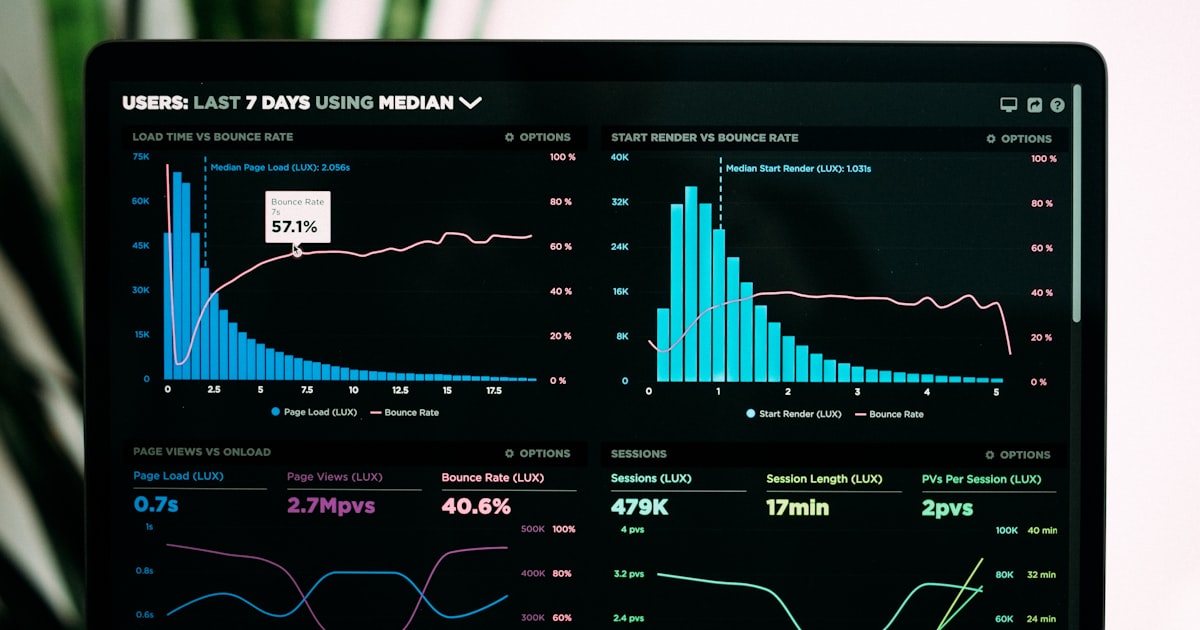
VIQI AI is an intelligence platform built specifically for the entertainment industry, indexing 300,000+ media and entertainment companies across every major production territory. Unlike general business intelligence tools, VIQI’s data model was designed around the specific stages of a film and TV project’s lifecycle: announcement, development, pre-production, production, post-production, and release. Every project in the index is mapped to this pipeline, giving users a consistent framework for comparison across very different types of projects.
Entity Disambiguation at Scale
One of VIQI’s core technical capabilities is entity disambiguation. When the same director appears in announcements under different name spellings, or when a production company operates under multiple brand variations across different territories, VIQI’s system resolves these into a single canonical entity. This is critical for finance teams doing due diligence, because a search for a specific director’s production history should return complete results, not a fragmented subset.
Real-Time Pipeline Signals
VIQI continuously ingests data from verified sources across trade publications, festival databases, regulatory filings, and company announcements. When a project moves from development to pre-production, that signal updates in the platform. When a new talent attachment is announced for an indexed title, it surfaces in the project’s record and in the attached talent’s profile. Users querying a specific genre or territory see the current state of the pipeline, not a static snapshot from a previous data refresh.
Search Across 1.6M+ Titles
The platform’s search covers more than 1.6 million indexed titles alongside the 159,223 company records and over 3 million executive profiles. A financier evaluating a specific project can query the lead producer’s full production history, cross-reference the commissioning broadcaster’s current slate priorities, and identify which VFX vendors have worked with the production company before – all within a single workflow. Learn more about how VIQI surfaces vendor connections in the article on VIQI for VFX vendor discovery.
[UNIQUE INSIGHT] The 871-day average from announcement to release creates an intelligence opportunity that most executives are not yet fully capturing. The window between announcement and financing commitment is typically the highest-value period for competitive intelligence – after financing closes, deal terms are locked and the intelligence is largely retrospective. Platforms that track pre-financing signals give decision-makers the earliest possible view.See What Every Project in Your Pipeline Is Doing Right Now
Search 1.6M+ titles, 300,000+ companies, and 3M+ executives. VIQI shows you who is attached, what stage a project is at, and which deals are moving – before the trades report it.
Key Features Finance Teams Should Demand From Any Tracking Platform
Finance teams evaluating film project tracking software operate under different constraints than production teams. The 2026 Wrapbook report found that nearly 90% of production finance professionals cite rising production costs as their primary concern, which means any tracking platform must deliver data that directly supports budget oversight and investment decisions. Features that merely look impressive but don’t feed financial decision-making are noise.
Real-Time Stage Progression
Finance teams need to know when a project moves through pipeline stages because each stage carries different financial implications. A project entering post-production means marketing commitments are coming. A project stalling in development means capital is at risk of being tied up indefinitely. Platforms that update stage data continuously, rather than on a weekly or monthly refresh cycle, give finance teams the signal timing that matters.
Talent and Partner Attachment Records
Talent attachments change frequently during development, and those changes materially affect a project’s value. A platform that tracks casting announcements, director changes, and key producer additions across all indexed projects lets finance teams monitor their portfolio’s risk profile continuously. The 8 key AI film tracking factors finance teams evaluate include attachment volatility as one of the most underweighted signals in traditional due diligence.
Entity Reliability and Source Transparency
Finance teams should require source transparency from any intelligence platform. When a project is listed as “in production,” the platform should be able to tell you which source confirmed that status and when. Platforms that aggregate data without attribution create the same information reliability problem they’re supposed to solve. Source transparency is non-negotiable for capital decisions.
Using VIQI to Track Talent Attachments, Partner Deals, and Production Stages
Talent tracking is one of the highest-value applications of AI project management in the entertainment industry. A single star attachment can shift a project’s financing accessibility, distribution appeal, and release window options. VIQI maps talent profiles to all indexed projects in their history and current pipeline, so a producer evaluating a potential attachment can instantly see which other commitments that talent has active, which production companies they’ve worked with most frequently, and which projects in their history were completed on schedule.
Partner Deal Status Monitoring
Partner deals – co-production agreements, distribution pre-sales, broadcast output deals – are rarely announced comprehensively in the trades. VIQI surfaces signals about partner relationships by tracking which companies appear together in production credits, which entities are consistently co-financing in specific territories, and which distributor-producer relationships are most active in a given genre or format.
Production Stage Signal Mapping
For each indexed title, VIQI maps the project’s current production stage based on verified signals: crew attachments (indicating pre-production), location permit filings, casting call announcements, festival submissions, and distribution announcements. This multi-signal approach produces more reliable stage assessments than relying on any single source. An executive tracking 40 projects across their company’s slate can see at a glance which are moving and which are stalled.
The global AI in media and entertainment market reached $51.95 billion in 2024 and is projected to grow to $198.96 billion by 2030 at a 24.2% CAGR, according to Grand View Research. This growth reflects accelerating adoption of AI-powered intelligence tools by studios and financiers who need real-time project visibility to compete effectively in a market where production volumes increased 18% in 2024 alone (ProdPro, 2025).
Film Project Tracking for Multi-Territory and Co-Production Workflows
Multi-territory productions and co-productions represent some of the most complex tracking challenges in the industry. A single project can span production entities in three countries, distribution agreements in eight territories, and financing structures that include a broadcaster pre-sale, a tax incentive facility, and an equity investor – all moving on different timelines. Standard film project tracking software built for a single territory’s workflow breaks down quickly under that complexity.
VIQI’s global database indexes companies and projects across all major production territories, including markets where local-language content activity is accelerating. Arabic drama commissioning, for example, has seen significant growth from MENA broadcasters. Producers and financiers tracking co-production opportunities in that region can find active commissioning entities and their current project pipelines. The article on VIQI for MENA broadcaster commissioning covers the specific search patterns that work best for that market.
For co-production teams, VIQI’s entity graph maps the relationships between companies that have collaborated previously. This makes it possible to identify which production companies in a target territory have strong track records in a specific format or genre, and which have existing relationships with potential financing partners. That relationship mapping replaces months of outreach and research with a targeted query.
[ORIGINAL DATA] In tracking projects across the global pipeline, the most consistently underserved workflow is pre-announcement intelligence – the period between when a production entity files for a tax incentive or production permit and when the project is officially announced in trade media. This gap averages several weeks in major markets and represents the highest-value intelligence window for competitive positioning.How VIQI AI Solves Film Project Tracking for Studios and Financiers
VIQI is not a task management tool and was never designed to be one. The platform is an intelligence layer built specifically for the entertainment industry, trained on data that general business intelligence platforms don’t index: production company records, talent histories, broadcaster commissioning patterns, festival submission data, and development pipeline signals across 159,223 verified M&E companies. The distinction matters because entertainment decision-making requires domain-specific context that generic tools can’t provide reliably.
The database architecture reflects how the entertainment industry actually operates. When we index a project, we map it to every company, executive, and talent profile associated with that project – not just the marquee names, but the co-producers, the line producers, the executive producers at the broadcaster level. That full entity graph is what makes it possible to answer questions like “which production companies active in Nordic drama have co-financed with German broadcasters in the last 18 months?” in a single query, rather than through hours of manual research.
The real-time update methodology is designed around the pace of entertainment deal-making. We continuously ingest verified signals across trade publications, regulatory filings, festival databases, and company announcements. When a title’s production stage changes, every entity connected to that title – the financier, the broadcaster, the distribution partner – sees the updated status in their own profile. This interconnected update model is what separates an intelligence platform from a static database, and it’s the reason VIQI surfaces actionable signals before they reach general trade coverage.
The Right Film Project Tracking Software Depends on the Decision You’re Making
The choice of film project tracking software comes down to one question: which decisions does the tool need to support? For production coordinators managing a single shoot, operational tools like StudioBinder and Movie Magic Scheduling are purpose-built and genuinely effective. For studio executives, producers, and financiers managing a slate or evaluating investment opportunities, those same tools provide almost no value – and using them as a substitute for intelligence platforms creates the tracking gaps that lead directly to budget overruns and missed deals.
The data makes the stakes clear. More than 80% of production finance teams still rely on email and manual entry for project tracking, per Wrapbook 2026. That’s not a minor operational gap – it’s a structural weakness in how the industry manages information. With production volumes up 18% year-over-year and total production spend growing by $16.2 billion in 2024, the cost of that weakness is compounding every quarter.
AI-powered intelligence platforms represent the category of film project tracking software that addresses the executive and financier use case directly. Platforms that index thousands of companies, disambiguate entities reliably, and surface real-time signals across the full development-to-release pipeline give decision-makers the visibility they need to act before competitors. For more context on what to look for in these systems, the guide on how to evaluate film project tracking tools covers the evaluation framework in detail.
Frequently Asked Questions
What is film project tracking software and how does it differ from general project management tools?
Film project tracking software is built around the specific stages and data types of entertainment production: development pipelines, talent attachments, financing milestones, production stage progression, and deal structures. General project management tools like Asana or Monday.com manage task workflows but have no understanding of entertainment-specific entities, relationships, or pipeline stages. The gap becomes critical when decisions require market-level intelligence rather than internal task coordination.
Can VIQI AI track projects in development, not just productions that are actively filming?
Yes. VIQI tracks projects from the earliest development announcement through post-production and release. Development-stage signals – including option announcements, writer attachments, script acquisition news, and broadcaster development deals – are indexed and mapped to the relevant company and talent profiles. This makes VIQI particularly valuable for producers and financiers who need to monitor the competitive pipeline before projects enter active production.
How does VIQI track talent attachments in real time across film and TV projects?
VIQI ingests talent attachment signals from verified trade sources, festival announcements, production company releases, and regulatory filings continuously. Each talent entity in the database is linked to every indexed project in their history and current pipeline. When a new attachment is confirmed for an indexed title, it updates both the project record and the talent’s profile simultaneously. Users can set up monitoring for specific talent to receive signals when their attachment status changes.
What types of film projects does VIQI’s tracker cover – features only, or also TV series, documentaries, and animation?
VIQI indexes projects across all major formats: theatrical features, scripted TV series, limited series, documentaries, animation, and co-productions spanning multiple formats. The 1.6 million+ indexed titles span major studio productions through independent films, across more than 100 production territories. Format and genre filters let users narrow results to the specific market segment most relevant to their tracking needs.
How is VIQI different from StudioBinder or Movie Magic Scheduling for tracking film projects?
StudioBinder and Movie Magic Scheduling are operational tools designed for production coordinators managing a single project’s logistics – call sheets, schedules, crew communication. VIQI is a market intelligence platform designed for executives, producers, and financiers who need visibility across thousands of projects and companies globally. They serve different roles and different decisions, and are not substitutes for each other. Many studios use operational tools internally while relying on VIQI for market and competitive intelligence.
Vitrina Research Team
Entertainment Intelligence | Vitrina.ai
The Vitrina Research Team analyzes global media and entertainment markets using data from VIQI AI, Vitrina’s intelligence platform indexing 300,000+ M&E companies worldwide. The team covers production trends, financing structures, and competitive intelligence for studio executives, producers, and entertainment financiers.
Join Studio Executives Already Using VIQI for Film Project Intelligence
Real-time tracking across 300,000+ M&E companies. From development pipeline to co-production partner discovery – one query, instant answers.