IHUB
IHUB
 Private Briefings (Webinars)


 LeaderSpeak Podcast
  Global Entertainment Digest (Newsletter)
  Premium Lists
 Membership Benefits
 About Vitrina
 Our Story
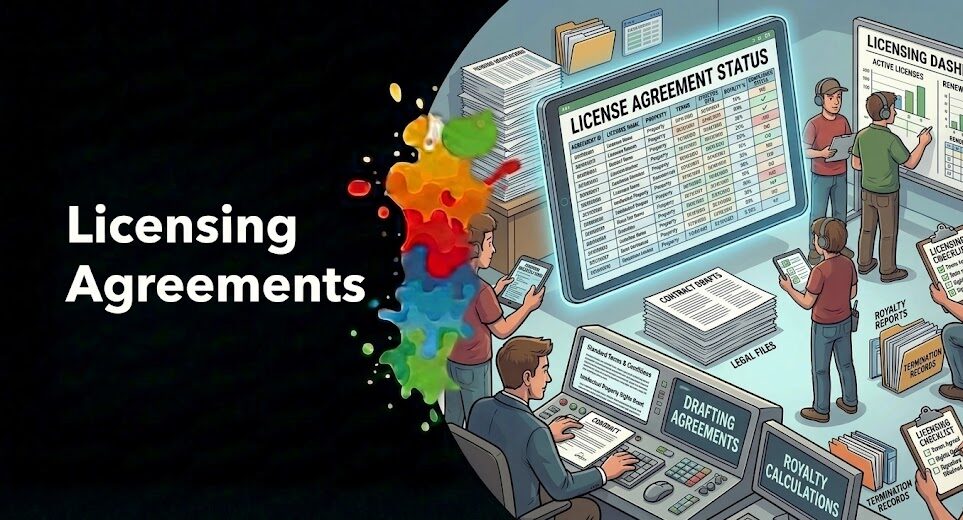
Every time Crunchyroll locks a title and Netflix co-produces another, they’re answering the same strategic question your acquisitions team faces: should we pay for exclusive vs non-exclusive anime licensing agreements, or does spreading the title wider generate more total value? The answer isn’t universal. And the platforms getting it wrong are leaving real money on the table—or burning capital on premium exclusivity that their subscriber base can’t actually justify.
Quick Answer
Exclusive anime licensing gives a single platform broadcast rights in a territory — commanding 40–60% higher per-title fees but limiting revenue to one buyer. Non-exclusive deals spread rights across multiple platforms, maximising total revenue but reducing per-platform value. In 2026, windowed exclusivity — typically 3–6 months exclusive before going broad — is the most common structure for new simulcast titles.
This guide breaks down both structures side by side—how they’re priced, how they behave across territories, what rights holders actually prefer, and which structure wins for your specific situation. Whether you’re a distributor evaluating your next acquisition slate or a platform building your first anime catalog, the decision framework here is built from how these deals actually close in Tokyo, not how they’re described in textbooks.
In This Article
- The Core Difference: What Each License Actually Grants
- The Financial Logic Behind Exclusive Anime Deals
- When Non-Exclusive Licensing Is the Smarter Play
- Side-by-Side Comparison: Exclusive vs Non-Exclusive
- How Japanese Rights Holders Price Both Structures
- Territory Scope—And Why It Changes Everything
- The Hybrid Middle Ground: Windowed Exclusivity
- Which Structure Actually Wins
- FAQ: Exclusive vs Non-Exclusive Anime Licensing Explained
Map Open Anime Licensing Windows Before Your Competitors Do
Vitrina tracks 1.6 million+ projects across the global content market. Know which titles are unlicensed in your territory, which exclusive windows are expiring, and which rights holders are actively seeking distribution partners—right now. Trusted by Netflix, Warner Bros, and Paramount acquisition teams.
200 free credits. No credit card required.
The Core Difference: What Each License Actually Grants
Let’s be precise before the nuance kicks in. An exclusive anime license grants one platform—and only that platform—the right to stream a title within a defined territory and window. No other service can carry the same episodes in the same market during that period, legally. The exclusivity clause is the product. It’s what drives the premium MG.
A non-exclusive anime license grants streaming rights without locking out competitors. The same title can appear on Crunchyroll, Amazon Prime Video, and a regional cable platform simultaneously—each paying a license fee to the same rights holder. There’s no competitive moat. But the economics for the rights holder are often superior: multiple MGs instead of one, across the same territory, for the same content.
That’s the first thing acquirers need to internalize. Rights holders aren’t automatically rooting for exclusivity. They’re optimizing total revenue. If a mid-tier title can be non-exclusively licensed to 4 regional platforms at a combined MG higher than any single exclusive buyer would pay, the rights holder takes that deal every time. The exclusive premium only makes commercial sense when a single buyer is willing to outbid the combined non-exclusive revenue—and commit the P&A spend to market the title aggressively enough that the rights holder benefits from the visibility.
Understanding this dynamic is foundational to your negotiating position. Our broader anime licensing and distribution guide covers the full contractual framework that both structures sit inside.
The Financial Logic Behind Exclusive Anime Deals
Exclusive deals have one job: subscriber acquisition. When Crunchyroll locks a title for North America, the commercial thesis is that viewers who want that show have only one legal option. Subscribe—or miss out. That’s a conversion engine. And it works for titles with pre-existing fanbase awareness: a new season of a beloved franchise, a major manga adaptation with built-in readership, a title that’s been trending on social for months before episode one airs.
The math needs to justify the MG premium. Exclusives typically command 40-80% higher minimum guarantees than non-exclusive deals for the same title in the same territory. For simulcast exclusives on top-tier seasonal titles, that premium can exceed 100%. Your subscriber modeling has to show incremental acquisition—new subscribers who joined specifically because of this title—at a lifetime value that clears the MG hurdle.
Netflix runs a different variant of this calculation. When it co-produces a title with Production I.G or MAPPA—committing production capital in exchange for global streaming rights—the “exclusive” isn’t a licensed window. It’s outright ownership. No MG renewal risk. No competing platform can acquire the title because there’s no acquisition available. That’s the CFO case for co-production over traditional licensing: you’re paying more upfront, but you’re eliminating the recoupment risk of a third party owning your hit.
But exclusivity also carries a real downside that doesn’t get discussed enough. You’re betting capital on a title before audience data exists. And exclusives on titles that underperform are catastrophically inefficient—you’ve blocked competitors, paid the premium, and gotten none of the subscriber lift. The strategic playbook on exclusive anime acquisition covers exactly which signals to model before committing that premium.

Your AI Assistant, Agent, and Analyst for the Business of Entertainment
VIQI AI helps you plan content acquisitions, raise production financing, and find and connect with the right partners worldwide.
- List the top commissioners at the BBC
- List the post-production and VFX decision-makers at Netflix
- List the development leaders at Sony Pictures
- List the scripted programming heads at HBO
- Find active co-producers and financiers for scripted projects
- Find equity and gap financing companies in North America
- Find top film financiers in Europe
- Find production houses that can co-produce or finance unscripted series
- Who is backing animation projects in Europe right now
- Who is Netflix’s top production partners for Sports Docs
- Who is Commissioning factual content in the NORDICS
- Who is acquiring unscripted formats for the North American market
- Show me recent drama projects available for pre-buy
- Show me Japanese Anime Distributors
- Show me true-crime buyers from Asia
- Show me documentary pre-buyers
- I am looking for production partners for a YA drama set in Brazil
- I am looking for producers with proven track record in mid-budget features
- I am looking for Turkish distributors with successful international sales
- I am looking for OTT platforms actively acquiring finished series for the LATAM region
- I am seeking localization companies offer subtitling services in multiple Asian languages
- I am seeking partners in animation production for children's content
- I am seeking USA based post-production companies with sound facilities
- I am seeking VFX partners to composite background images and AI generated content
When Non-Exclusive Licensing Is the Smarter Play
Here’s the thing about non-exclusive deals that platform strategies often miss: they’re not the consolation prize. For catalog-building, library depth, and genre coverage, non-exclusive licensing is frequently the superior ROI play—especially for platforms that aren’t competing on must-watch originals.
Consider a regional streaming platform in Southeast Asia building an anime vertical. Acquiring 200 non-exclusive titles at a blended average MG of $8,000-$15,000 per title gives you a catalog that serves existing anime fans comprehensively. They’re already subscribers. They’re not subscribing because of any one title—they’re staying because your library is complete. Non-exclusive acquisition at scale is how you serve that retention use case without the capital outlay of exclusive deals.
Non-exclusive deals also carry dramatically lower risk on title selection. If a title you licensed non-exclusively underperforms, your exposure is limited to the license fee—not the inflated MG of an exclusive. You’ve paid for access, not competitive moat. And because the rights holder is also licensing to competitors, the title continues to get platform-level marketing support from multiple buyers, which often drives more total audience discovery than a single exclusive would generate.
This is also where the Weaponized Distribution™ dynamic becomes relevant. Some rights holders deliberately license major titles non-exclusively—treating competitors as customers—to maximize total MG revenue across a season slate while maintaining the option to sell exclusivity on their top titles selectively. The WBD/Netflix $72B multi-year licensing deal operates on exactly this logic: HBO content licensed to a competitor accelerates recoupment while filling Netflix’s content gaps. Anime rights holders are now applying the same model at the title level.
Find Titles Available for Exclusive and Non-Exclusive Licensing
Vitrina’s platform shows you which anime titles are available in your territory—and whether exclusivity is on the table. Join 300,000+ companies already using Vitrina to surface acquisition opportunities before they hit the open market.
200 free credits. No credit card required.
Side-by-Side Comparison: Exclusive vs Non-Exclusive
Here’s how the two structures compare across the dimensions that matter most to acquisition teams and platform CFOs:
| Factor | Exclusive License | Non-Exclusive License |
|---|---|---|
| MG Cost | 40–100%+ premium vs. non-exclusive | Lower per-platform MG; rights holder earns across multiple buyers |
| Competitive Moat | High — no competitor can carry the title in your territory | None — competitors may carry identical content |
| Subscriber Conversion Value | High for proven titles; zero if title underperforms | Low per title; retention benefit for catalog breadth |
| Rights Holder Preference | Preferred for marquee titles when one buyer can outbid combined non-exclusive revenue | Preferred for maximizing total MG on mid-tier catalog |
| License Term | Typically 3–7 years; shorter on major IP (rights holders preserve renewal leverage) | Often 1–5 years; more flexible renewal structure |
| Marketing Obligation | Frequently includes P&A minimums—rights holders want their title launched properly | Rarely includes P&A requirements; marketing is the platform’s choice |
| Downside Risk | High — premium MG sunk regardless of performance | Lower — MG exposure is contained; misses on single titles are recoverable |
| Best For | Large platforms competing on must-watch content; subscriber acquisition plays | Catalog-building platforms; regional operators; library depth strategies |
How Japanese Rights Holders Price Both Structures
Pricing isn’t arbitrary—and it’s definitely not just about what the buyer offers. Production committees and their designated international sales agents work from sales estimates built on a combination of title-specific variables and platform-specific data. What you’ve paid before, how well your platform promoted previous titles, whether you have a track record of delivering clean localization on deadline—all of it factors into the MG conversation.
For exclusive deals, the pricing floor is the combined non-exclusive MG the rights holder believes they could collect across the market. If the title could generate $180,000 in total non-exclusive fees from 6 regional platforms, an exclusive buyer needs to clear that threshold to make the rights holder choose one buyer over many. Top-tier simulcast exclusives from Aniplex or Shueisha franchises regularly reach seven-figure MG levels in North America—which is why only Crunchyroll and Netflix consistently compete for those slots.
For non-exclusive deals, pricing is more predictable. Mid-tier titles typically license non-exclusively in the $8,000–$25,000 range per territory depending on the platform’s subscriber base and track record. Catalog titles from completed series can go significantly lower. The key variable is whether the title has streaming data from its original Japanese run—rights holders representing titles with documented viewership numbers negotiate from a position of real leverage, not estimates. As Deadline and Variety have noted, the anime licensing market has professionalized significantly over the past five years, with rights holders increasingly equipped with platform analytics from prior deals that they use to benchmark new MG requests. For a deeper look at how MGs are structured across deal types, our guide to minimum guarantees in distribution deals breaks down the mechanics in full.
Territory Scope—And Why It Changes Everything
The exclusive vs. non-exclusive decision looks very different depending on the territory you’re acquiring. North America and Western Europe—where Crunchyroll’s 145 million registered users create a dominant baseline—are competitive, expensive markets. Exclusives cost more and face higher ROI pressure. Non-exclusive licensing in those markets can still generate healthy subscriber retention, but competing against the market leader on catalog breadth is an uphill fight.
Emerging markets are different. Southeast Asia, Latin America, and MENA are where the Fragmentation Paradox™ creates genuine opportunity. Hundreds of titles remain unlicensed in these territories—not because there’s no demand, but because rights holders haven’t systematically packaged international deals for smaller markets, and platforms in those markets haven’t had reliable intelligence on what’s actually available. An exclusive in a territory where no competitor has licensed the title at all is dramatically cheaper than the same exclusive in North America—and often produces outsized subscriber conversion precisely because it’s the only legal access point. Our analysis of how anime streaming availability varies by region shows just how wide those gaps remain.
And don’t overlook what territory bundling does to negotiation leverage. A platform operating in 12 Southeast Asian markets that can offer the rights holder a multi-territory exclusive package—rather than 12 separate single-territory non-exclusive deals—often ends up paying a combined MG that’s lower than the non-exclusive alternative, precisely because the rights holder values the administrative simplicity and the committed marketing footprint.
The Hybrid Middle Ground: Windowed Exclusivity
The binary of exclusive versus non-exclusive misses what’s becoming the most commercially interesting deal structure in the market: windowed exclusivity. Under this arrangement, a platform holds exclusive rights for a defined period—typically the broadcast season plus a post-season window of 6–18 months—after which the title moves to non-exclusive availability across multiple platforms.
This structure does real work for both sides. The platform gets the subscriber conversion event—the launch window exclusivity that drives acquisition—without locking capital into a multi-year exclusive term. The rights holder gets a premium MG for the exclusive window, then stacks non-exclusive fees on top as the title moves into catalog distribution. It’s a recoupment acceleration mechanism that both sides can justify internally.
Netflix’s library strategy demonstrates a version of this. Titles co-produced exclusively for Netflix have subsequently been licensed to Crunchyroll after their exclusivity windows compress—extracting additional revenue without cannibilizing the original subscriber acquisition play. The commercial logic is clear: own the launch, monetize the long tail. That’s Weaponized Distribution™ applied at the title level, and it’s a deal structure worth modeling into your acquisition framework before you default to a simple exclusive vs. non-exclusive binary. Our analysis of licensing negotiation strategies for 2026 covers how to structure windowed deals in the current market.
Need Help Structuring Your Next Anime Licensing Deal?
Vitrina’s concierge team connects acquirers with Japanese rights holders, identifies whether exclusivity is available in your target territory, and helps you model the MG structure before you enter negotiation. The right deal structure starts with the right intelligence.
Which Structure Actually Wins
The honest answer is: it depends on three variables that no generic guide can resolve for you.
First: your platform’s growth stage. If you’re in subscriber acquisition mode—competing for market share, building the reputation that makes rights holders take your calls—exclusivity on a handful of high-signal titles is a deliberate investment. Not every title. Not even most titles. But one or two per season that your subscriber base will convert on. If you’re in retention mode—a library platform serving an existing base—non-exclusive acquisition at volume typically delivers better EBITDA per dollar spent.
Second: your territory. Exclusivity in a market where competitors haven’t licensed the title anyway isn’t a moat—it’s an overpayment. Map what’s actually available in your territory before you decide the structure. You might find that non-exclusive on a dozen unlicensed titles delivers more audience value than a single exclusive on a title your competitors already carry.
Third: your data on the title. The premium for exclusivity is only justifiable if you have evidence—social traction, pre-production awareness, streaming performance from the Japanese run—that the title will drive subscriber conversion. Without data, the exclusive premium is a bet. And the platforms consistently winning on anime acquisition aren’t running gut-feel bets. They’re using real-time intelligence to de-risk the decision before the MG is committed.
And here’s what the trades won’t tell you straight: the best acquisitions teams use both structures simultaneously—exclusive on their 3–5 anchor titles per season, non-exclusive to fill the catalog around them. It’s not an either/or. It’s a portfolio decision. For a complete breakdown of how the major platforms balance these two approaches, the 2026 genre-specific content rights licensing guide shows how acquisition strategies differ across content categories.
FAQ: Exclusive vs Non-Exclusive Anime Licensing Agreements
What is the difference between exclusive and non-exclusive anime licensing agreements?
An exclusive anime licensing agreement grants one platform sole streaming rights in a defined territory—no competitor can legally carry the title during the exclusivity window. A non-exclusive license grants streaming rights without locking out competitors: the same title can appear on multiple platforms simultaneously in the same market. Exclusives command higher MG premiums; non-exclusives offer lower per-platform cost and broader rights holder revenue across multiple buyers.
How much more expensive is an exclusive anime license versus a non-exclusive deal?
Exclusive anime licenses typically carry MG premiums of 40–100%+ over comparable non-exclusive deals in the same territory. For top-tier simulcast titles from major rights holders like Aniplex or Shueisha franchises, the premium can exceed 100%. The premium reflects the competitive moat—no other platform can carry the title—and the subscriber conversion value that exclusivity enables for proven, high-demand titles.
Do Japanese rights holders prefer exclusive or non-exclusive deals?
Japanese rights holders—typically production committees and their designated international sales agents—prefer whichever structure maximizes total MG revenue. For marquee titles, that’s usually one exclusive deal that outbids combined non-exclusive revenue. For mid-tier catalog titles, non-exclusive licensing to multiple buyers across the same territory frequently generates higher total revenue than any single exclusive buyer would pay. Rights holders are optimizing total income, not deal type.
What is windowed exclusivity in anime licensing?
Windowed exclusivity is a hybrid structure where a platform holds exclusive rights for a defined period—typically the broadcast season plus a post-season window of 6–18 months—after which the title transitions to non-exclusive availability. The platform pays a premium for the launch window that drives subscriber acquisition, while the rights holder then stacks non-exclusive license fees from additional platforms as the title enters library distribution. It’s one of the most commercially effective structures in the current market.
When does a non-exclusive anime license make more sense than an exclusive?
Non-exclusive licensing makes more strategic sense when: your platform is in retention mode rather than subscriber acquisition; your target market has multiple competitors already carrying similar catalog; the title doesn’t have documented pre-production awareness or social traction; or you’re building library breadth across a genre category. Non-exclusive acquisition at volume consistently delivers better EBITDA per dollar spent for catalog-oriented platforms than selective exclusives on titles that may not convert subscribers.
Can a non-exclusive anime license block competitors from carrying the same title?
No. A non-exclusive license grants streaming rights without any competitive protection. Competitors can legally license the same title simultaneously in the same territory—and often do. This is the defining commercial disadvantage of non-exclusive deals: there is no moat, no forced subscriber choice between platforms. The business case rests entirely on catalog value and retention, not exclusive access.
How long do exclusive anime licensing agreements typically last?
Exclusive anime license terms typically run 3–7 years for most mid-tier and established titles. For top-tier IP from major rights holders, terms tend to be shorter—3–5 years—because rights holders want to preserve renewal leverage once the title’s subscriber conversion value is proven by platform data. At renewal, MG levels for proven hits almost always increase significantly above the original deal terms.
Should a platform use both exclusive and non-exclusive anime licenses simultaneously?
Yes—and the platforms winning on anime acquisition do exactly this. The strategic approach is to deploy exclusive licenses on 3–5 high-signal anchor titles per season to drive subscriber acquisition, while using non-exclusive licensing to build catalog breadth and serve existing subscribers across genre categories. It’s a portfolio decision, not an either/or choice. The mistake is defaulting to one structure for all acquisitions regardless of title-level performance data.
The Structure That Wins Is the One You Can Justify With Data
Exclusive vs non-exclusive anime licensing agreements aren’t competing ideologies. They’re tools—and the right tool depends on your platform’s growth stage, the title’s pre-production signal strength, and the competitive landscape in your specific territory. The platforms consistently overpaying for exclusives they can’t monetize have the same problem as the platforms chronically under-investing in exclusive anchors: they’re making structure decisions without title-level data.
The market is sophisticated now. Rights holders have more data than ever. Your negotiating position depends entirely on your intelligence advantage—knowing which titles are available, which exclusivity windows are expiring, and which rights holders are actively looking for international partners before the open bidding cycle begins.
Key Takeaways
- Exclusives aren’t always better for rights holders: Combined non-exclusive revenue across multiple buyers frequently exceeds a single exclusive MG for mid-tier titles—rights holders optimize total income, not deal structure.
- The premium is real and measurable: Exclusive deals command 40–100%+ MG premiums over non-exclusive equivalents. That premium only earns positive ROI when the title demonstrably drives subscriber acquisition.
- Territory changes everything: An exclusive in an underpenetrated market where competitors haven’t licensed the title costs significantly less—and can outperform—a premium exclusive in a saturated market like North America.
- Windowed exclusivity is the highest-value hybrid: Launch-window exclusivity combined with post-window non-exclusive availability serves both subscriber acquisition and recoupment objectives simultaneously.
- Best-in-class platforms use both: Exclusive anchors for seasonal must-watch titles; non-exclusive catalog acquisition for genre breadth and subscriber retention. It’s a portfolio strategy, not a binary choice.
Start Acquiring the Right Titles With the Right Structure
Vitrina’s platform gives you real-time intelligence on 1.6 million+ projects—including which anime titles are available for exclusive vs. non-exclusive licensing in your territory. Start with 200 free credits, no credit card required.
Trusted by Netflix, Warner Bros, Paramount and acquisition teams across 140,000+ companies worldwide.
Get 200 Free Credits →
Ask VIQI About Open Licensing Windows →
Frequently Asked Questions
What is an exclusive anime licensing agreement?
An exclusive anime licensing agreement grants a single platform or distributor the sole right to broadcast or stream a title within a defined territory for a fixed period. The rights holder cannot license the same title to any other platform in that territory during the exclusivity window. Crunchyroll, Netflix, and Disney+ all use exclusive windows as their primary strategy for marquee acquisitions.
What is a non-exclusive anime license and when is it used?
A non-exclusive anime license allows the rights holder to simultaneously license the same title to multiple platforms within the same territory. This structure is common for catalogue titles, older series, and content targeting niche audiences. Non-exclusive deals generate lower per-platform minimums but can exceed exclusive deal totals when five or more platforms each pay a smaller fee.
How does territory windowing work in anime licensing?
Territory windowing divides the world into geographic rights zones — typically Japan, North America, Europe, Southeast Asia, and Rest of World — with each territory licensed separately. A title can be exclusively on Netflix in North America while simultaneously being non-exclusive across Southeast Asian FAST platforms. Understanding windowing is essential for maximising revenue from a single title.
How do Japanese rights holders set prices for anime licensing deals?
Japanese anime rights holders, typically the production committee (seisaku iinkai), set prices based on the title’s domestic broadcast rating, streaming performance on services like dAnime Store and AbemaTV, and the track record of the overseas buyer. Simulcast premiums (releasing globally within 24 hours of Japan broadcast) can add 30–50% to the base licensing fee.
What is windowed exclusivity in anime and why has it become standard?
Windowed exclusivity offers a platform exclusive rights for a defined period (3–12 months), after which the title can be licensed non-exclusively to other platforms. It balances the premium pricing of exclusivity with the broader revenue potential of non-exclusive deals. Funimation’s 2020–2022 strategy and Crunchyroll’s post-merger approach established windowed exclusivity as the dominant structure for mid-tier simulcast titles.