IHUB
IHUB
 Private Briefings (Webinars)


 LeaderSpeak Podcast
  Global Entertainment Digest (Newsletter)
  Premium Lists
 Membership Benefits
 About Vitrina
 Our Story

International co-productions accounted for nearly 30% of all feature films submitted to major film festivals in 2023, according to the European Audiovisual Observatory — a figure that underscores how deeply cross-border collaboration has become embedded in mainstream production strategy. For studios, streamers, and independent production companies, finding the right co-production partners is no longer a networking exercise left to chance. It is a structured intelligence problem, and the cost of getting it wrong — misaligned creative vision, regulatory non-compliance, or a partner that cannot survive a financing shortfall — can derail a project entirely.
Quick Answer
International co-productions accounted for nearly 30% of all feature films submitted to major festivals in 2023. To find and qualify a co-production partner: start with treaty databases (Telefilm Canada, NFDC, Screen Australia), verify their production credits independently, and confirm treaty eligibility with a co-production lawyer before committing. Vitrina AI indexes 300,000+ M&E companies with deal history to accelerate partner discovery.
Key Takeaways
- A strong co-production partner brings financial stability, relevant credits, and treaty eligibility — not just creative alignment.
- Co-production treaties with the UK, Canada, Australia, India, and France each carry specific qualifying criteria that shape partner selection from the outset.
- The qualification process must examine track record, client diversity, delivery history, and financial health before any term sheet is signed.
- Common mistakes — rushing diligence, ignoring regulatory fit, over-relying on reputation alone — account for a significant share of co-production failures.
- Platforms like Vitrina AI surface qualified co-production partners across 100+ countries using verified project data, replacing weeks of manual research with structured intelligence.
What Makes a Good Co-Production Partner: The Three Pillars
According to a 2023 survey by the International Co-Production Association, 67% of co-production deals that collapsed before principal photography cited partner qualification failures as a primary cause — not creative disagreements. The three pillars of a strong co-production partner are financial resilience, creative compatibility, and regulatory eligibility. Financial resilience means a partner can meet capital calls, maintain production insurance, and sustain operations through the inevitable delays of international production. Creative compatibility covers not just tone and genre alignment, but shared expectations around creative control, IP ownership, and decision-making authority. Regulatory eligibility is perhaps the most underestimated pillar: a partner must meet the nationality, spend, and personnel thresholds defined in the relevant bilateral treaty, or the tax and funding benefits that justified the co-production structure in the first place will not materialise.
Producers can also reference our checklist on producer readiness before raising film finance to ensure both partners are equally prepared.
Studios that treat co-production partner selection as a purely relational process — choosing partners based on prior relationships or festival introductions alone — consistently underweight the regulatory and financial dimensions. A partner with excellent creative credits but shallow balance sheets and no prior treaty co-productions is a high-risk proposition regardless of their reputation.
How Co-Production Treaties Work: UK, Canada, Australia, India, and France
The UK has co-production treaties with 45 countries, according to the British Film Institute, making it one of the most treaty-active territories in the world. Each treaty defines minimum qualifying thresholds — typically 20% of the total budget contributed by each party, minimum percentages of creative and technical personnel from each country, and requirements for genuine creative contribution rather than passive financing. The UK–Canada treaty, for instance, requires that the minority co-producer contribute at least 20% of the total budget and that key creative roles reflect the minority country’s contribution proportionately.
For a full overview of financing structures that underpin co-productions, see our guide to debt vs equity in film finance.
Canada’s co-production programme, administered by Telefilm Canada, covers over 50 bilateral treaties and adds a domestic certification layer: both the project and the Canadian co-producer must pass Canadian content certification for the structure to unlock federal and provincial tax credits. Australia’s Screen Australia manages a similarly structured programme, with treaties requiring minimum 20% contributions and genuine creative involvement — a standard that specifically prevents purely financial “co-production” arrangements designed solely to access incentives.
India’s co-production treaties, historically limited, have expanded under the National Film Development Corporation’s international programme, with active agreements covering Italy, Germany, Brazil, Italy, and several others. France operates through the CNC (Centre National du Cinéma), which administers bilateral treaties with more than 40 countries and additionally participates in the Council of Europe’s Eurimages fund — meaning a French co-producer can simultaneously unlock bilateral treaty benefits and Eurimages financing for eligible projects. Understanding which treaty applies to a given project, and which partner structures will satisfy all relevant thresholds, is a prerequisite for any serious co-production conversation.
The Qualification Process: Track Record, Credits, and Financial Stability
Research published by the Producers Guild of America Foundation found that production companies with five or more completed international co-productions had a 40% higher on-time delivery rate than first-time co-producers. Track record is therefore the first and most important qualification filter. A partner’s credit history should be reviewed not just for volume but for relevance: have they produced in the genre, budget range, and territory relevant to your project? Have their previous co-productions involved the same treaty structure you intend to use?
Financial stability assessment should go beyond headline turnover figures. Key indicators include: the ratio of development spend to production revenue (excessive development overhead is a warning sign), the diversity of their revenue streams (a company entirely dependent on one broadcaster relationship carries concentrated risk), their insurance and bonding history, and whether they have outstanding litigation involving previous production partners or financiers. Client diversity matters enormously — a vendor or co-producer whose recent credits are all with a single commissioning entity is exposed if that relationship ends.
Delivery reliability is harder to assess from public records but is critical. Asking for references from previous co-production partners, reviewing festival submission histories against announced production timelines, and checking completion bond records where accessible can provide meaningful signal. The Vitrina AI Project Tracker indexes over 300,000 film and TV projects across 100+ countries, giving buyers a structured view of a partner’s verified production history without relying solely on self-reported credits.
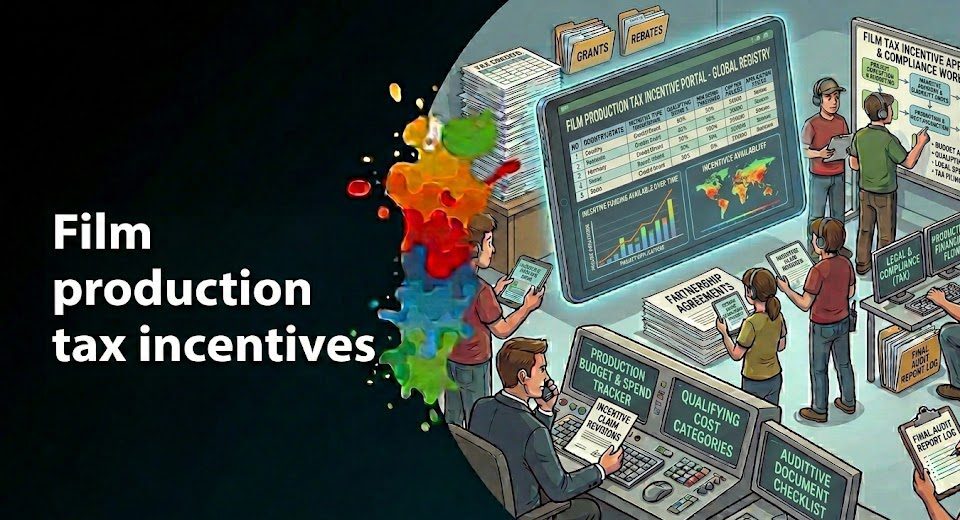
Tax Incentives and How They Shape Partner Selection
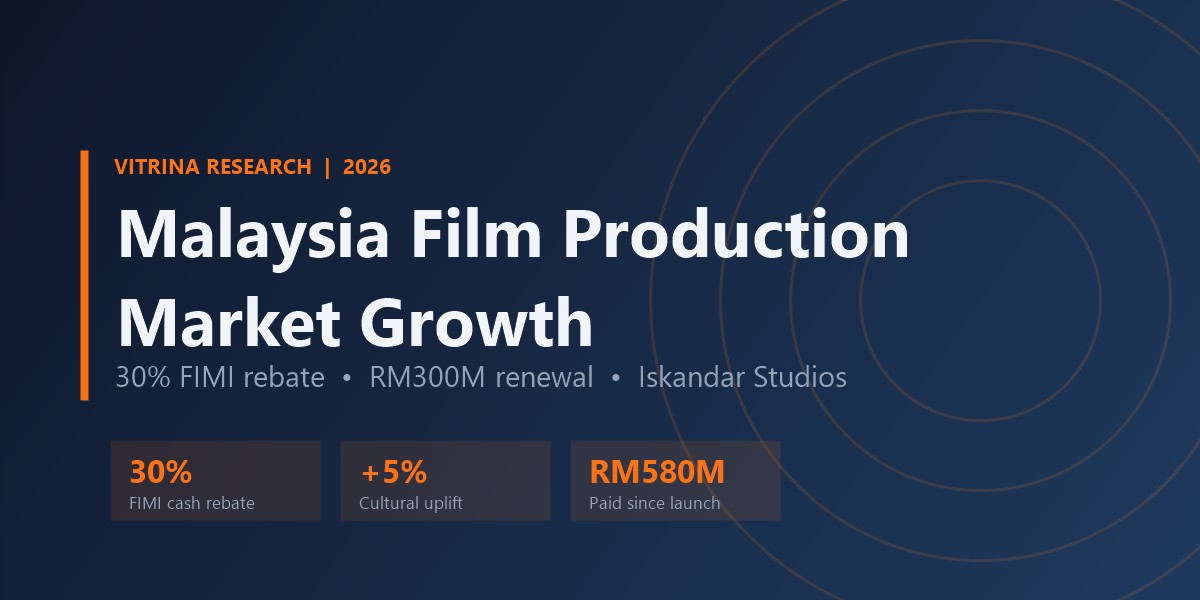
The global film and TV tax incentive landscape now encompasses more than 100 programmes across 40+ countries, according to the Production Incentives Guide published by Entertainment Partners. Tax incentives do not merely reduce production costs — they fundamentally shape the logic of partner selection. When a territory offers a 25–35% cash rebate on qualifying spend, the decision about where to locate key production phases, and therefore which local partners to engage, is driven as much by the incentive structure as by creative considerations.
International filming location decisions and their budget impact are covered in depth in our article on how international filming affects production budgets.
The interaction between bilateral co-production treaties and national incentive programmes creates both opportunities and complexity. In the UK-Australia treaty context, for instance, a majority UK co-producer can access the UK’s High-End Television Tax Credit (now the Audio-Visual Expenditure Credit at up to 34%) while the Australian minority co-producer accesses the Producer Offset — but only if both partners meet their respective qualifying spend thresholds and the project satisfies the cultural test requirements of both programmes simultaneously. Partner selection must therefore begin with a clear incentive map: which combination of territories, spend levels, and partner structures maximises the available incentive stack while remaining creatively and operationally viable?
Studios and streamers increasingly use incentive mapping as the first filter in partner selection — identifying the territory combination that optimises the incentive benefit, then searching for qualified partners in those territories rather than the reverse. This approach requires access to current incentive data (rates change regularly) and real-time intelligence on which local production companies are actively qualifying for the relevant programmes.
Common Mistakes in Co-Production Partner Selection
A 2022 analysis by the European Film Market found that over 40% of co-production projects that entered development never reached production, with partner misalignment cited as the most common single cause. The most frequent mistakes follow recognisable patterns. First, rushing the qualification process under festival or market deadline pressure — a term sheet signed at Cannes without adequate diligence on the partner’s financial position is a significant risk, particularly for projects with budgets above $5 million. Second, treating co-production as a financing mechanism rather than a genuine creative partnership: broadcasters and public funders have become sophisticated at identifying arrangements where the minority co-producer’s “creative contribution” is nominal, and such structures increasingly fail certification review.
Understanding why financing structures fail early is equally critical — see why your film budget kills your financing deal.
Third, over-relying on reputation. A production company with strong festival credits from five years ago may have undergone management changes, lost key personnel, or shifted strategic focus in ways that make them a poor fit for your project today. Fourth, ignoring cultural and operational differences in production practice — different territories have significantly different norms around union agreements, working hours, insurance requirements, and dispute resolution, and partners who have not navigated those differences before will require significant management overhead. Fifth, failing to align on IP ownership and distribution rights from the outset: ambiguity about who controls what rights in which territories is the single most common source of post-production disputes in co-productions.
How Intelligence Platforms Surface Qualified Co-Production Partners
Traditional partner discovery relied on festival networking, trade press, and personal introductions — a process that naturally favoured well-connected incumbents and disadvantaged high-quality producers in emerging markets. Intelligence platforms have fundamentally changed this dynamic. Studios using data-driven partner discovery report reducing their initial partner identification phase from 8–12 weeks to under 2 weeks, according to internal benchmarks cited by several major streamer production executives at the 2024 Realscreen Summit.
Vitrina’s entertainment procurement strategy framework explains how to evaluate and qualify production partners at scale.
Vitrina AI’s solutions platform allows buyers to filter the global production landscape by territory, genre, budget range, treaty eligibility, and verified production history — surfacing qualified co-production partners who meet the specific structural requirements of a given project rather than relying on who happens to be at the right market at the right time. The platform’s VIQI Vendor Intelligence Score adds a quantified quality signal to each producer profile, reflecting track record, client diversity, delivery reliability, and market presence in a single comparable metric. This is particularly valuable when evaluating producers in markets where personal networks do not extend — identifying a qualified co-producer in Poland, South Korea, or Colombia is no longer dependent on knowing the right intermediary.
The practical workflow has changed as a result. Instead of beginning the partner search at a market and then attempting diligence, studios can now build a qualified shortlist before attending any market, arriving with a structured set of conversations rather than an open-ended search. This compresses the timeline from initial concept to signed co-production agreement and significantly reduces the risk of advancing too far with an unsuitable partner.
Structuring the Co-Production Agreement: What to Get Right
According to the British Film Commission, disputes over creative control and distribution rights account for over 60% of co-production legal proceedings that reach formal arbitration. A well-structured co-production agreement covers four areas with particular care. First, creative control provisions: who has final cut, how are editorial disagreements resolved, and what is the process for replacing a key creative if circumstances require it? Second, financing obligations and consequences: what are the capital call timelines, what happens if a party fails to meet a call, and how is a replacement financier introduced without disrupting the treaty structure?
Third, rights allocation: which party controls which rights in which territories, how are streaming and ancillary rights allocated, and what is the process for clearing rights in territories not specifically assigned? A co-production agreement that is silent on SVOD rights — still common in agreements drafted before 2015 — creates significant problems when a streaming deal is the primary monetisation route. Fourth, delivery and completion provisions: who bears responsibility for cost overruns, what are the standards for technical delivery, and how is the completion bond structured relative to both partners’ obligations? Taking time to get these provisions right at the term sheet stage, before significant development spend has been committed, saves substantially greater cost and delay at later stages.
Building a Long-Term Co-Production Strategy
The most productive co-production relationships are not one-off transactions but ongoing strategic partnerships. Research by Variety Intelligence Platform found that production companies with established multi-project co-production relationships completed projects 25% faster on average than those working with new partners on each project — a function of reduced onboarding friction, established trust, and accumulated knowledge of each other’s operational practices.
Building a co-production strategy means mapping the territories and treaty structures most relevant to your content slate over a 3–5 year horizon, identifying the 3–5 partner profiles that best fit that strategy, and then using systematic intelligence — rather than reactive networking — to identify, qualify, and develop relationships with partners who match those profiles. The Vitrina AI Project Tracker supports this approach by providing ongoing visibility into partner activity: new projects in development, new financing relationships, new broadcast deals, and changes in production volume that signal whether a partner’s business is growing, stable, or contracting.
International co-production is one of the most powerful tools available to studios and streamers seeking to expand their global content slate while optimising costs and accessing new markets. The difference between productive and problematic co-productions is almost always traceable to the quality of the partner selection and qualification process — and that process has never been more amenable to systematic, data-driven improvement than it is today.
Frequently Asked Questions
What is the minimum budget threshold for a formal co-production treaty arrangement?
Most bilateral co-production treaties do not specify a formal minimum budget, but the practical economics of treaty co-production — which involves satisfying nationality thresholds for personnel, spend, and creative contribution across two or more territories — mean that projects below approximately $1 million USD rarely find the structural overhead worthwhile. At that budget level, the administrative and legal costs of establishing a compliant treaty co-production typically consume a disproportionate share of the budget. For projects above $3–5 million, the tax credit and public funding access that treaty status unlocks typically justifies the additional complexity. Some territories, such as Canada and Australia, do apply minimum qualifying expenditure thresholds under their domestic incentive programmes, which effectively create a floor for meaningful treaty co-production activity.
How long does the co-production partner qualification process typically take?
Traditional qualification — relying on manual research, reference calls, and festival-circuit networking — typically takes 8–12 weeks to reach a position of sufficient confidence to sign a term sheet for a project above $5 million. Using structured intelligence platforms that provide verified production histories, financial signals, and standardised quality scores, that timeline can compress to 2–3 weeks for the initial qualification phase, with deeper legal and financial diligence taking an additional 3–4 weeks. The key variable is how well the buyer has defined their qualification criteria before starting the search: buyers who begin with a clear partner profile — territory, genre experience, budget range, treaty eligibility — move significantly faster than those conducting an open-ended search.
Can a production company qualify as a co-production partner in multiple territories simultaneously?
Yes, and multi-territory co-productions involving three or more parties are common, particularly for projects accessing the Council of Europe’s Eurimages fund (which requires at least two European co-producers from different member states) or projects structured to access incentives in multiple territories. However, multi-party structures increase administrative complexity significantly — each additional co-producer introduces additional treaty compliance requirements, additional rights allocation complexity, and additional stakeholders in creative and financial decisions. Three-party co-productions are manageable with experienced partners; four or more parties are typically reserved for very large-budget projects where the financial benefits clearly outweigh the operational cost.
What role do broadcasters play in co-production partner selection?
Broadcasters are frequently central to co-production financing structures rather than passive acquirers of completed content. In the European context particularly, public broadcasters such as the BBC, France Télévisions, ZDF, and RAI regularly act as minority co-financiers in international co-productions, contributing pre-sale advances in exchange for territorial broadcast rights. Their involvement often effectively determines the choice of co-production partner in their territory: a broadcaster who has an existing relationship with a specific local production company may condition their investment on that company’s participation as the local co-producer. Studios and streamers pursuing broadcast co-financing should therefore approach broadcaster conversations early in the partner selection process, before committing to a specific local partner, to avoid misalignment between the broadcaster’s preferred partners and the studio’s independently identified candidates.
How does Vitrina AI help studios identify co-production partners in markets where they have no existing network?
Vitrina AI indexes production company data across 100+ countries, including verified project credits, financing relationships, broadcast deals, and quality scoring through the VIQI Vendor Intelligence Score. For a studio seeking a co-production partner in a market where they have no existing relationships — South Korea, Brazil, Poland, or Nigeria, for example — the platform provides a structured starting point: a filterable list of active, qualified production companies with verifiable track records, rather than a blank page or reliance on intermediaries who may have conflicts of interest. The Vitrina AI solutions suite also supports ongoing monitoring of partner activity, allowing studios to track whether a potential partner’s business is growing or contracting before initiating formal conversations.
About the Author
Rutuja is a content writer at Vitrina AI, specialising in the entertainment supply chain and translating complex production-to-distribution workflows into clear, strategic insights for studios, streamers, and vendors operating across global markets.
Frequently Asked Questions
How do I find international co-production partners?
The most effective channels for finding co-production partners are: major film markets (Cannes, Berlin, AFM, Toronto), national film commission partner databases, co-production treaty registries (NFDC for India, Telefilm Canada, Screen Australia), and intelligence platforms like Vitrina AI that index 300,000+ M&E companies with deal history and production track records.
What makes a good international co-production partner?
The three pillars of a qualifying co-production partner are: (1) financial credibility — verified production credits and solvent company structure, (2) territorial complementarity — access to financing, incentives, or distribution your project needs, and (3) creative alignment — a track record in your genre and format. Cultural fit and communication style matter significantly on multi-year productions.
How do co-production treaties affect partner selection?
Co-production treaties between countries unlock specific benefits: access to national incentives in both territories, treaty co-production status (enabling higher tax credit rates), and eligibility for cultural content funds not available to foreign productions. Selecting a partner in a treaty country (UK, Canada, Australia, India, France) versus a non-treaty country can change the effective financing by 15–30%.
What mistakes do producers make when selecting co-production partners?
The most common mistakes are: rushing partner selection to meet a market deadline, not verifying a partner’s financial track record independently, assuming treaty eligibility without legal advice, confusing a distribution deal for a co-production deal, and underestimating the cost and complexity of cross-border production management. Due diligence on a co-production partner should take the same rigour as financial due diligence.
How can an intelligence platform help find co-production partners?
Platforms like Vitrina AI allow producers to filter 300,000+ M&E companies by territory, genre track record, recent deal activity, and co-production history — reducing partner discovery from months to days. Rather than relying on festival networking alone, producers can identify qualified partners with verified production credits before making first contact.