IHUB
IHUB
 Global Content Pulse (Webinars)


 Global Production Financing
(Webinars)
Global Production Financing
(Webinars)  LeaderSpeak Podcast
  Global Entertainment Digest (Newsletter)
  About Vitrina
 About VIQI
 Our Story
 Our Solutions 🔥
 Film+TV Projects Tracker 🚀
 Case Studies
 Our Profile
Quick Answer
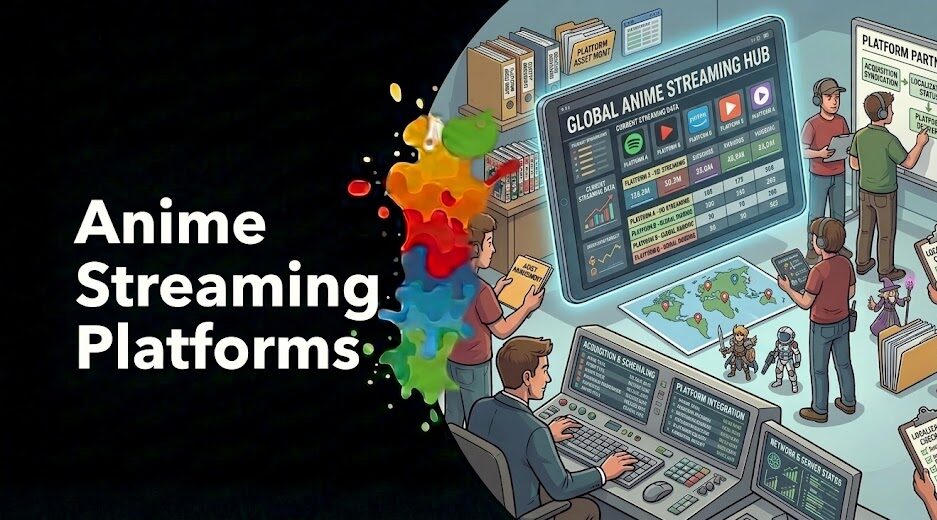
The best anime streaming platforms with licensed content in 2026 are Crunchyroll (simulcasts + catalog depth), Netflix (originals + prestige titles), and HIDIVE (catalog breadth + best value). The right combination depends on whether you prioritise new simulcasts, exclusive originals, or deep back-catalog access.
Last updated: July 20, 2026
Not all anime streaming platforms serve the same viewer — and paying for the wrong combination is a real money problem that most guides dance around instead of addressing directly. Crunchyroll dominates simulcasts. Netflix wins on originals. HIDIVE punches well above its price point for catalog depth. And Amazon keeps landing exclusives while somehow making them frustrating to discover.
This guide cuts through the marketing to give you a clear, honest breakdown of every major platform — what they’re actually good at, what they’re missing, and how to build the right combination for how you actually watch.
Key Takeaways
- Crunchyroll is the undisputed simulcast leader — if new episodes matter to you, it’s non-negotiable
- Netflix produces the highest-profile anime originals and exclusives, but its simulcast catalog is limited
- HIDIVE offers the best catalog-to-price ratio for viewers who prioritise back-catalog depth
- Amazon Prime Video holds key exclusives but buries them — useful only if you’re already a subscriber
- Most serious anime viewers need 2–3 platforms; Crunchyroll plus one is usually the optimal baseline
Table of Contents
- Quick Comparison: Every Major Platform at a Glance
- Anime Library Size Comparison 2026: Every Platform by the Numbers
- Crunchyroll — Best Overall for Simulcasts and Library Depth
- Netflix — Best for Originals and Prestige Titles
- HIDIVE — Best Value for Catalog and Niche Titles
- Amazon Prime Video — Best for Exclusive Titles if You’re Already a Member
- Hulu, Disney+, Tubi, and Pluto TV — Free and Budget Options
- How Licensing Anime for Streaming Works
- Best Apps to Watch Anime in 2026
- Legal Alternatives to hianime, 9anime, and Gogoanime
- Frequently Asked Questions
🔍
Vitrina Intelligence
For acquisition teams: track which anime titles are available by territory — beyond what any consumer platform shows you.
Quick Comparison: Every Major Platform at a Glance
Before we go platform by platform, here’s where each service stands on the metrics that actually move the needle for viewers choosing where to spend their subscription budget in 2026. This covers every tier — from Crunchyroll free tier Tubi HIDIVE Pluto TV anime options to premium paid subscriptions.
Anime Library Size Comparison 2026: Every Platform by the Numbers
When viewers ask which streaming service has the largest anime library in 2026, the honest answer requires actual numbers — not vague claims. Here’s a platform-by-platform breakdown of anime library size based on publicly available and reported figures, so you can compare like-for-like.
The Netflix anime library size vs Crunchyroll 2026 comparison is stark: Netflix has ~200 titles vs Crunchyroll’s 1,500+ series and 45,000+ episodes. For the Crunchyroll vs Netflix anime library size 2026 question, Crunchyroll wins decisively on volume — Netflix wins on production prestige. This is also the core of the anime streaming platforms comparison: volume vs quality are the two axes every platform competes on.
Which streaming service has the largest anime library 2026? Crunchyroll — by a wide margin. Among the best legal anime streaming services 2026, Crunchyroll leads on every volume metric. Key takeaway on library size: Crunchyroll has the largest dedicated legal anime streaming library by episode count (45,000+ episodes across 1,500+ series). HIDIVE actually exceeds Crunchyroll in title count (2,000+) but with shorter, older catalog series averaging fewer episodes. Netflix has the smallest anime library by volume but compensates with production quality — its ~200 titles are predominantly originals or prestige exclusives. The Crunchyroll + HIDIVE combination gives you the broadest possible legal coverage at ~$15/month combined, covering over 3,500 unique titles.
Source: Vitrina AI Platform — tracking 400,000+ active productions and rights transactions globally.
Crunchyroll — The Largest Legal Anime Streaming Library (Best Overall)
Crunchyroll isn’t just the market leader for licensed anime streaming. It’s the entire standard against which every other platform gets measured. After absorbing Funimation’s library in 2022, the catalog now sits at over 1,500 titles and 45,000+ episodes—the largest dedicated anime library available anywhere on the planet. New episodes land within an hour of their Japanese broadcast for most titles. That’s not a marketing claim—it’s operationally the thing that keeps seasonal viewers subscribing year-round even during lighter seasons.
The platform crossed 13 million paid subscribers globally before its merger integration was complete—and that number has continued climbing as it remains the exclusive streaming home for major titles like Solo Leveling, Jujutsu Kaisen, Blue Lock, and Kaiju No. 8. These aren’t titles that drift onto other platforms easily. The rights windows are long, the exclusivity is real, and competitors can’t replicate the catalog without spending years and hundreds of millions of dollars in MG payments they’d struggle to recoup.
The dub situation has improved. Crunchyroll now produces English dubs in-house across a wide range of titles. Sub-only watchers don’t need to care—but if dubs matter to your household, you’ll want the Mega Fan ($9.99/month) or Ultimate Fan ($15.99/month) tier for offline downloads while you wait. The Fan tier at $7.99/month covers ad-free viewing and simulcast access, which is what most subscribers actually need. There’s also a Crunchyroll free tier — ad-supported with episodes delayed by one week — which is a legitimate legal anime streaming service for casual viewers before committing to a paid plan. The Crunchyroll anime library size is unmatched: no other legal platform approaches 1,500+ titles and 45,000+ episodes, making it by far the largest anime streaming library available on any single legal service globally in 2026.
Where Crunchyroll stumbles—and it’s worth being honest about this—is discovery. The interface has improved but still struggles with surfacing catalog depth to new subscribers who don’t already know what they’re looking for. There’s also the territory problem: even with the largest library, some titles have split rights across regions, meaning what’s available in the US isn’t identical to what’s accessible in Europe or Southeast Asia. This isn’t Crunchyroll’s fault—it’s the Fragmentation Paradox built into how anime rights get carved up globally—but it does affect real users.
As the Crunchyroll legal anime streaming service, it operates with rights in place across most major territories — a key differentiator from unlicensed sites like hianime or 9anime. For the Crunchyroll vs Netflix vs HIDIVE vs Amazon Prime Video anime 2026 comparison, Crunchyroll leads on simulcast volume, Netflix on originals, HIDIVE on catalog value, and Amazon on selective exclusives.
The verdict: For most anime fans, Crunchyroll is non-negotiable as a primary service. Start here at Crunchyroll.com →
Ask VIQI: Which Anime Titles Are in Active Acquisition Mode Right Now?
VIQI is Vitrina’s AI assistant—trained on 1.6 million titles, 360,000 companies, and 5 million entertainment professionals. Ask it which platforms are acquiring new anime rights, what deals were announced this quarter, and where the best partnership opportunities are.
✓ Included with 200 free credits | ✓ No credit card needed
Netflix — Best for Originals and Prestige Titles
Netflix‘s anime strategy is deliberate. They don’t try to win on breadth—Crunchyroll already owns that position decisively. Instead, Netflix bets on depth: original productions and exclusive licensed prestige titles that you simply can’t find anywhere else. It’s working. Anime consistently ranks among the top three genres by hours watched on Netflix in markets as diverse as Brazil, France, and the Philippines, according to internal data Netflix has disclosed to the press.
The originals argument is real. Cyberpunk: Edgerunners, Devilman Crybaby, Pluto, Pokémon Concierge—these titles don’t exist on Crunchyroll. Netflix also holds Neon Genesis Evangelion in most territories, which is genuinely a catalog prize. And the spring 2026 season has Netflix splitting One Piece (Elbaph Arc) with Crunchyroll across territories—a deal structure that reflects just how competitive the bidding has gotten for top IP.
But here’s the honest assessment: Netflix doesn’t do simulcasts the way dedicated anime platforms do. If you care about watching seasonal anime the week it airs in Japan, Netflix isn’t your primary service—it’s your supplement. Pricing runs from $7.99/month (with ads) to $24.99/month (4K Premium). The interface is polished and works across every device. And the recommendation engine—whatever you think of its broader content strategy—is genuinely better at surfacing anime a first-time viewer will like than Crunchyroll’s is.
As Variety has reported, Netflix’s investment in original Japanese anime production exceeded $300 million in committed production spending—a number that signals this isn’t a passing trend. It’s a structural bet on anime as a global content pillar for years to come. That investment is showing up in production quality that dedicated platforms struggle to match.
The verdict: Netflix is a mandatory second service for anyone who wants prestige titles. But it’s a second service—not a first. Browse Netflix anime →

Your AI Assistant, Agent, and Analyst for the Business of Entertainment
VIQI AI helps you plan content acquisitions, raise production financing, and find and connect with the right partners worldwide.
- Find active co-producers and financiers for scripted projects
- Find equity and gap financing companies in North America
- Find top film financiers in Europe
- Find production houses that can co-produce or finance unscripted series
- I am looking for production partners for a YA drama set in Brazil
- I am looking for producers with proven track record in mid-budget features
- I am looking for Turkish distributors with successful international sales
- I am looking for OTT platforms actively acquiring finished series for the LATAM region
- I am seeking localization companies offer subtitling services in multiple Asian languages
- I am seeking partners in animation production for children's content
- I am seeking USA based post-production companies with sound facilities
- I am seeking VFX partners to composite background images and AI generated content
- Show me recent drama projects available for pre-buy
- Show me Japanese Anime Distributors
- Show me true-crime buyers from Asia
- Show me documentary pre-buyers
- List the top commissioners at the BBC
- List the post-production and VFX decision-makers at Netflix
- List the development leaders at Sony Pictures
- List the scripted programming heads at HBO
- Who is backing animation projects in Europe right now
- Who is Netflix’s top production partners for Sports Docs
- Who is Commissioning factual content in the NORDICS
- Who is acquiring unscripted formats for the North American market
HIDIVE — Best Value for Catalog and Niche Titles
Don’t sleep on HIDIVE. At $4.99/month, it’s the cheapest dedicated anime platform available — and with over 2,000 anime titles in its library, the HIDIVE anime library size actually exceeds Crunchyroll’s title count (though skewing toward shorter catalog series). That HIDIVE anime library depth and HIDIVE library size (2,000+ titles) at this price point is genuinely remarkable—and it punches significantly above that price in meaningful ways. The catalog skews toward older titles from the 2000s and early 2010s that aren’t available anywhere else: Dororo, Elfen Lied, Made in Abyss, K-On!, Gunbuster. If you’ve been chasing a specific classic that keeps eluding you across Crunchyroll and Netflix, there’s a reasonable chance HIDIVE has it.
The simulcast situation is better than most people realize. HIDIVE picks up 10 to 15 seasonal titles per quarter—not Crunchyroll’s volume, but a consistent slate that includes shows the bigger platforms pass on. That makes HIDIVE a genuine complement service. The combined Crunchyroll + HIDIVE setup, at roughly $15/month total, covers nearly every seasonal simulcast available legally and gives you access to a combined catalog of over 2,000 titles. That’s the practical sweet spot for serious anime fans who don’t want to over-subscribe.
The platform also offers a 30-day free trial—which is long enough to genuinely test whether the catalog has what you need before committing. The app experience is functional but not polished at the Netflix or Crunchyroll level. That’s the honest trade-off. But at $4.99, it’s hard to argue with the math.
The verdict: For catalog hunters and budget-conscious fans, HIDIVE delivers real value. It’s the best secondary pick after Netflix if you’re prioritizing library depth over production prestige. Try HIDIVE free for 30 days →
For a deeper look at how regional licensing affects what each platform can actually offer in your market, see our breakdown of anime streaming availability by region.
Amazon Prime Video — Best for Exclusive Titles if You’re Already a Member
Amazon Prime Video’s anime offering is genuinely good in spots and genuinely frustrating in others. The platform has landed some significant exclusive titles—Vinland Saga, The Faraway Paladin, Dungeon ni Deai, the ongoing Reincarnated as a Sword series—and its production partnerships with Japanese studios have expanded since 2023. Amazon also holds exclusive rights to Hideaki Anno’s Evangelion Rebuild films, including Evangelion 3.0+1.0. These aren’t minor titles. If any of your must-watch shows happen to live here, you’re covered at no additional cost beyond your Prime membership ($9/month standalone or $139/year).
But the discovery problem is real. Amazon’s interface wasn’t built for anime fans, and it shows. Finding titles, tracking seasons, browsing genres—the experience is noticeably worse than any dedicated anime service. There’s also the paywalled layer: some titles require an additional purchase or rental even with a Prime membership, which catches first-time users off guard. Subtitling and dubbing options vary by title in ways that aren’t always clearly communicated before you start watching.
The verdict: If you’re already a Prime member, treat the anime catalog as a bonus. Don’t subscribe specifically for anime. As a standalone pick, the experience doesn’t justify the cost when Crunchyroll and HIDIVE exist.
Hulu, Disney+, Tubi, and Pluto TV — Free and Budget Legal Anime Options
Hulu
Hulu‘s anime credentials come primarily through its partnerships with VIZ Media and Aniplex—which means access to major franchises like Bleach: Thousand-Year Blood War, Spy x Family, and Demon Slayer. The library isn’t as deep as Crunchyroll’s, but the quality tilt toward mainstream hits is real. Starting at $7.99/month with ads, the platform’s real value case is the Disney Bundle: if you’re already paying for Disney+ and ESPN+, the Hulu addition adds a solid anime tier at marginal cost.
As The Hollywood Reporter has noted, Hulu’s anime licensing strategy leans toward known IP with proven international fanbases—a deliberate positioning that makes it useful for mixed households where not everyone is a dedicated anime viewer.
Disney+
Disney+ at $7.99–$13.99/month isn’t a simulcast platform in the traditional sense. In spring 2026 specifically, it’s a complement service—not a primary anime destination. It does well with Ghibli-adjacent content and its Star Wars: Visions anthology series, and international markets get more through the Star content brand. But if you’re subscribing specifically for anime, this isn’t where your money goes first.
Tubi (Free)
Tubi‘s anime offering is free, ad-supported, and better than most people expect. The Tubi anime library size sits at roughly 200+ licensed titles including classics like Naruto, Death Note, Yu Yu Hakusho, InuYasha, and Cardcaptor Sakura. It’s a legitimate entry point for anyone testing the medium before committing to a paid subscription — and for catching up on classics between simulcast seasons. Zero cost, legally licensed, real titles. The Tubi anime library rotates seasonally, so not all titles are available year-round. That’s worth knowing.
Pluto TV (Free FAST Anime Channels)
Pluto TV is a free ad-supported streaming service (FAST) owned by Paramount that operates dedicated linear anime channels — not on-demand libraries. Think of it as a legal version of a curated anime TV channel you tune into, rather than a Netflix-style browse-and-pick experience. The trade-off: you watch what’s on, on Pluto TV’s schedule. The upside: it’s completely free, legally licensed, and runs recognizable classic series continuously. Popular Pluto TV anime channels include dedicated Dragon Ball, Naruto, and classic shonen feeds available 24/7.
For the Crunchyroll free tier vs Tubi vs HIDIVE vs Pluto TV comparison: all four are entry-level legal anime streaming options in 2026, but they serve different viewer types. Crunchyroll’s free tier covers simulcast content (delayed 1 week) with ads. Tubi offers on-demand classic catalog with ads. Pluto TV provides a scheduled linear channel experience with no log-in required. HIDIVE is the paid option among the four at $4.99/mo with full catalog and simulcast access. If you want legal anime at zero cost, the practical play is to run Tubi and Pluto TV alongside each other — they cover different titles with minimal overlap.
Crunchyroll free tier vs Tubi vs HIDIVE vs Pluto TV anime — quick summary for 2026: Crunchyroll free tier gives you simulcasts delayed 1 week with ads; Tubi gives you on-demand classic catalog free; HIDIVE at $4.99 gives you 2,000+ titles with simulcasts; Pluto TV gives you linear free channels. The crunchyroll free tier vs tubi hidive pluto tv anime 2026 decision comes down to whether you need current-season titles (Crunchyroll free tier wins) or classic catalog on-demand (Tubi wins). All four are legal.
Beyond the Consumer Platforms
Vitrina gives acquisition teams the intelligence layer that Crunchyroll, Netflix, and HIDIVE subscriptions can’t provide.
- ✓ Title availability and rights status by territory
- ✓ Which platforms hold which rights — and when they expire
- ✓ Active seller mandates for titles seeking new distribution
$25.1B
Global anime market 2024
200+
Countries with active mandates
How Licensing Anime for Streaming Actually Works
Licensing anime for streaming is more complex than licensing any other content genre because anime production is structurally different from Hollywood. Most anime is produced under a seisaku iinkai (production committee) model where multiple rights holders — the animation studio, the manga publisher, a music label, a merchandise company, and others — jointly own the IP. A streaming platform can’t just sign one deal; it typically negotiates with committee representatives or an international sales agent who holds the streaming mandate.
How Streaming Platforms Acquire Exclusive Anime Titles
Streaming platforms acquiring exclusive anime titles use three primary deal structures:
- Simulcast licensing — rights to stream episodes within hours of Japan broadcast. These are the most expensive rights, often carrying minimum guarantees (MGs) of $50,000–$500,000+ per episode for major titles. Crunchyroll holds the broadest portfolio of simulcast licenses globally.
- Exclusive window licensing — a platform gets exclusive rights in specific territories for a defined period (usually 1–3 years), after which rights revert or are re-licensed. This explains why Beastars was a Netflix exclusive during its original run but is now available on other platforms in some regions.
- Original co-production financing — the platform funds production in exchange for global or regional exclusive rights. Netflix’s $300M+ anime production commitment is the most prominent example of this model; it’s how titles like Cyberpunk: Edgerunners and Pluto were created as Netflix-only properties.
Why the Same Anime Appears on Different Platforms in Different Countries
Anime rights are carved up by territory (country or region), medium (SVOD, AVOD, FAST, EST/download-to-own), and exclusivity window. A production committee typically grants rights to different platforms per territory — Crunchyroll might hold North American SVOD rights while Netflix holds European rights and Amazon holds Southeast Asian rights for the same title. The result is region-specific availability that creates genuine frustration for viewers: a title legal to watch in the US may be unavailable in the UK, or vice versa. This fragmentation is structural to the anime industry, not a technical failure of the platforms. For acquisition teams needing to understand rights status by territory at scale, this is exactly the intelligence layer Vitrina maps.
Region Availability: Key Platforms by US Dub/Sub Access (2026)
| Platform | Sub Available? | Dub Available? | US Region Notes |
|---|---|---|---|
| Crunchyroll | ✓ Extensive | ✓ Mega/Ultimate Fan tiers | Largest simulcast library in US |
| Netflix | ✓ Most titles | ✓ Most originals | Originals/exclusives; some titles vary by region |
| HIDIVE | ✓ Extensive | ✓ Select titles | Strong niche/classic title sub library in US |
| Amazon Prime | ✓ Most titles | Varies by title | Inconsistent; some titles need extra purchase |
| Hulu | ✓ Select titles | ✓ Major franchises | Strong Viz/Aniplex dub library in US |
| Tubi / Pluto TV | ✓ Classic titles | Partial | US-only AVOD/FAST; limited international |
How to Choose the Right Combination for Your Budget
There’s no single platform that wins across every category. But there are clear winning combinations depending on how you actually watch.
For the active seasonal viewer (~$15/month): Crunchyroll Mega Fan + HIDIVE. Together you cover virtually every simulcast and a combined catalog of 2,000+ titles. When a Netflix title you want drops, subscribe for that month and cancel. That’s it.
For the casual viewer who watches on their own schedule (~$8/month): Netflix alone covers a curated library of originals, classics like Beastars and Monster, and an interface that actually recommends things well. Add Tubi (free) for classic fill-ins. Don’t over-subscribe.
For the true catalog completionist (~$25/month): Crunchyroll Ultimate Fan + Netflix Standard + HIDIVE. You’re not missing anything that’s legally streamable in 2026. But be honest with yourself about whether you’ll actually use all of it.
For M&E executives tracking acquisition strategy: The real question isn’t which platform to subscribe to—it’s which platforms are in active acquisition mode, what titles are about to become available, and how to position your content before they close their windows. That’s a market intelligence question, not a subscription question. Vitrina’s Smart Pairing tools answer it directly.
The Fragmentation Paradox is real: the same show can live on different platforms in different territories, with different windows and different localization quality. But it’s navigable once you know the rights map. Our guide to anime licensing and distribution breaks down that rights architecture in full—and our strategic playbook for exclusive anime acquisition shows how leading platforms are winning the rights race before titles become obvious choices.
Best Apps to Watch Anime in 2026: Mobile Experience by Platform
Most anime viewing now happens on mobile. These are the best legal anime apps available in 2026, ranked for Android and iOS performance.
The best anime app for Android in 2026 is Crunchyroll for simulcast access, or Tubi if you want completely free legal content. Netflix leads on iOS with the highest user-rated experience, but the best app to watch anime overall depends on your use case: Crunchyroll for current season, Netflix for originals, Tubi for free classic titles. All three are available on Android and iOS, Fire TV, Apple TV, PlayStation, and Xbox — so device coverage isn’t a meaningful differentiator at this point.
For viewers comparing anime apps specifically on mobile performance, Crunchyroll has historically had app stability complaints but has improved since the 2023 platform unification. Netflix remains the smoothest overall mobile experience in the anime streaming app market thanks to its broader infrastructure investment. HIDIVE’s app is functional but behind the major platforms in polish.
💡
For Buyers and Distributors
Consumer platforms tell you what’s popular. Vitrina tells you what’s available — and how to get a deal done.
If you’re an acquisition executive, distributor, or rights team using this guide, the real question isn’t which platform to subscribe to — it’s which titles have open territory windows in your market and who you need to call.
Vitrina Intelligence Platform
Access the Full Anime Rights Intelligence Layer.
Vitrina maps title availability, territory rights, and active seller mandates across the global anime market — built for acquisition teams, not casual viewers.
No credit card required • Free tier available • Premium plans from day one
Legal Alternatives to hianime, 9anime, Gogoanime, and 4anime
Sites like hianime, 9anime, gogoanime, 4anime, kissassanime, and similar unlicensed platforms operate without authorization from rights holders. They’re popular because they’re free and have broad catalogs — but they expose viewers to malware, intrusive ads, privacy risks, and legal uncertainty. More importantly: they don’t pay the studios and creators who made the content. If you’ve been searching for alternatives to hianime, 9anime alternatives, or free crunchyroll alternatives, here’s a practical legal guide organized by budget:
The legal anime streaming sites and legal anime streaming services 2026 above collectively cover virtually everything on hianime, 9anime, and gogoanime — legally, safely, and at costs that range from zero to $8/month. The most practical step for anyone using illegal anime sites: start with the Crunchyroll free tier and Tubi. Between those two legal platforms alone, you have access to simulcasts, classics, and thousands of episodes at no cost. If you find yourself watching regularly, $7.99/month for Crunchyroll Fan is a genuinely reasonable upgrade that unlocks the full catalog without ads.
Legal anime streaming services have improved dramatically since 2020 — the main reason viewers used illegal sites historically was that legal options were slow, expensive, or region-locked. In 2026, that argument is no longer credible for US viewers. The legal anime streaming services list now covers every major title, genre, and era at multiple price points including free.
What Anime Streaming Data Means for B2B Entertainment Professionals
For content buyers, licensing executives, and distribution partners, the anime streaming landscape isn’t just a consumer market — it’s a signal map. Crunchyroll’s 145-million-strong subscriber base, HIDIVE’s niche positioning, and Netflix’s selective anime commissioning strategy each reveal where acquisition demand is highest, which IP categories command premium licensing fees, and which territories are underserved by existing catalog deals.
B2B entertainment professionals use streaming platform data to benchmark their own content’s licensing potential, identify co-production partners already active in the anime market, and assess which distributors have the territory relationships needed to place a new title effectively. Vitrina AI maps 159,223+ M&E companies — including active anime licensors, co-producers, and distribution partners across 100+ countries.
FOR CONTENT BUYERS & LICENSORS
Find Active Anime Co-Production & Distribution Partners
Search 159,223+ verified M&E companies by territory, genre, and deal type — including anime studios, licensors, and streaming distributors.
Frequently Asked Questions
Which anime streaming platform has the most licensed content in 2026?
Crunchyroll maintains the largest dedicated licensed anime library with over 1,500 titles and 45,000+ episodes. After absorbing Funimation’s catalog in 2022, no other platform is close in terms of sheer volume of legally licensed content. Netflix has a smaller but highly curated library, and HIDIVE covers older catalog titles that Crunchyroll doesn’t always carry.
Is Crunchyroll or Netflix better for anime?
It depends on what you’re looking for. Crunchyroll is the clear winner for simulcasts and library breadth—new episodes land within an hour of Japan broadcast for most titles, and the catalog is by far the largest available. Netflix wins for original productions and prestige exclusives—titles like Cyberpunk: Edgerunners, Pluto, and Pokémon Concierge don’t exist elsewhere. Most dedicated anime fans subscribe to both.
What is the cheapest legal way to stream anime?
The cheapest zero-cost option is Tubi, which streams licensed anime for free with ads—including classics like Naruto, Death Note, and InuYasha. Crunchyroll also offers a free ad-supported tier with episodes delayed by one week. For a paid subscription, HIDIVE at $4.99/month is the lowest-priced premium option with both simulcasts and a deep catalog.
Why is the same anime on multiple streaming platforms?
Anime rights are carved up by territory, medium, and licensing window. A title might have Crunchyroll holding North American streaming rights while Netflix holds European rights and a separate platform covers Southeast Asia. Within a single territory, non-exclusive deals can also allow the same title to appear on multiple services simultaneously—though this is less common for premium titles. The result is the Fragmentation Paradox: more platforms, more territorial splits, more viewer confusion about where to watch.
Which platform is best for dubbed anime in English?
Crunchyroll now produces English dubs in-house across a wide range of titles—a position it consolidated through the Funimation acquisition. Hulu, through its VIZ Media and Aniplex partnerships, also carries well-dubbed versions of major franchise titles. If dubbing quality and library breadth are both priorities, Crunchyroll’s Mega Fan or Ultimate Fan tier is the strongest single-platform answer.
Does Amazon Prime Video have good anime?
Amazon Prime Video holds some genuinely strong exclusive titles—Vinland Saga, The Faraway Paladin, and the Evangelion Rebuild films are real prizes. But the platform isn’t designed for anime discovery. The interface is harder to navigate than any dedicated service, subtitling and dubbing options vary inconsistently, and some titles require additional purchase beyond Prime membership. Worth using if you’re already a Prime member—not worth subscribing to specifically for anime.
Why isn’t Beastars on Crunchyroll?
Beastars is a Netflix exclusive title — Netflix co-produced the series with Orange studio and holds global streaming rights for both seasons. This is the exclusive window licensing model: Netflix committed production financing in exchange for worldwide streaming rights, which means neither Crunchyroll nor HIDIVE can carry it during Netflix’s license term. Beastars isn’t the only case — titles like Cyberpunk: Edgerunners, Pluto, and Pokémon Concierge are similarly locked to Netflix. If a specific title isn’t on Crunchyroll, it almost always means it’s under an exclusive window with Netflix, Amazon, or (less commonly) Hulu.
What are the best free alternatives to Crunchyroll?
The best free Crunchyroll alternatives that are fully legal in 2026 are: Crunchyroll’s own free tier (simulcasts with 1-week delay, ad-supported — often overlooked as an alternative to itself), Tubi (200+ classic titles, on-demand, ad-supported, no sign-up required), and Pluto TV (dedicated anime linear channels, also free). For viewers who want breadth without a subscription, combining Tubi and Pluto TV covers the classic catalog comprehensively. Crunchyroll’s free tier is the best option if current-season titles matter to you.
Which anime streaming service offers the best value for money?
HIDIVE at $4.99/month offers the best pure value in the legal anime streaming market — over 2,000 titles including simulcasts for under $5/month is genuinely hard to beat. For viewers who need simulcast coverage AND catalog depth, Crunchyroll Fan at $7.99/month is the better single-platform pick. The best overall value combination is Crunchyroll + HIDIVE at roughly $13/month combined — that covers virtually every legally streamable anime title in the US across both platforms.
What is the biggest anime streaming platform in 2026?
Crunchyroll is the biggest anime platform and the biggest anime streaming platform by every meaningful metric in 2026: largest dedicated legal anime library (1,500+ series, 45,000+ episodes), highest subscriber count among dedicated anime services, and the broadest simulcast coverage. Sony’s acquisition of Crunchyroll (via the Funimation merger) consolidated what were previously competing libraries into a single dominant platform. No competitor is close in terms of scale or simulcast depth. Netflix is larger as a general streaming service but not as a dedicated anime platform.
Where can I find the best anime subscription for exclusive content?
For exclusive anime content, Netflix is the answer for co-produced originals — titles like Cyberpunk: Edgerunners, Pluto, and Beastars are Netflix-only globally. Amazon Prime Video holds exclusive rights to Vinland Saga, The Faraway Paladin, and the Evangelion Rebuild films in most territories. Crunchyroll holds exclusive simulcast rights to the majority of current-season titles. The right anime subscriptions for exclusive content depend on which specific titles you’re chasing — no single platform holds all exclusive anime rights. Understanding what each anime subscription offers in exclusives is key to avoiding over-subscribing.
The Bottom Line: Pick Your Platforms Based on How You Actually Watch
The best legal anime streaming platforms in 2026 — including the same popular anime streaming platforms 2024 viewers relied on — Crunchyroll, Netflix, HIDIVE, and Tubi — aren’t a mystery—but the right combination for your wallet depends on what you prioritize. Simulcasts and library depth? Crunchyroll, full stop. Originals and prestige productions? Add Netflix. Deep catalog for niche titles at low cost? HIDIVE at $4.99/month fills the gap. Everything else is situational.
And if you’re approaching this from the supply side—thinking about rights acquisition, platform strategy, or where the market for licensed anime is heading—the intelligence picture is more complex than any subscription guide covers. The global anime market hit $28 billion in 2024, and streaming rights represent its fastest-growing revenue slice. Platforms that locked in exclusive libraries three years ago are sitting on subscriber-retention engines competitors can’t replicate cheaply. That’s not an accident. It’s what deliberate acquisition strategy looks like at scale.
Key takeaways:
- Crunchyroll wins on volume—1,500+ titles, 45,000+ episodes, 13M+ subscribers, simulcasts within 1 hour.
- Netflix wins on originals—the only home for Cyberpunk: Edgerunners, Pluto, Pokémon Concierge, and Neon Genesis Evangelion.
- HIDIVE at $4.99/month is the best value anime subscription for catalog depth and niche titles.
- Crunchyroll + HIDIVE (~$15/month) is the practical winning combination for most serious anime fans.
- The Fragmentation Paradox—same title, multiple platforms, different territories—is structural and isn’t going away.

About the Author
Vitrina Editorial
The Vitrina editorial team focuses on the global entertainment ecosystem — turning complex supply-chain dynamics into practical intelligence for buyers, distributors, and production executives worldwide.