Pluto TV & Tubi FAST Channel Distribution Deals: What’s Actually Getting Signed in 2026

Share
Share
Pluto TV Tubi FAST channel

Pluto TV and Tubi are no longer the scrappy underdogs of streaming. Together, they now sit at the center of how major studios, independent distributors, and international content owners are moving catalog—and in some cases, originals—without subscription pressure. If you’re negotiating FAST channel distribution deals in 2026 and still treating these two platforms as an afterthought to your SVOD strategy, you’re probably leaving six-figure annual ad revenue on the table.

Tubi crossed 97 million monthly active users in 2025. Pluto TV—owned by Paramount—operates 300+ FAST channels across more than 30 markets globally. These aren’t niche plays anymore. They’re the primary distribution infrastructure for an enormous chunk of the world’s content catalog, and the deal structures that govern them are getting more sophisticated every quarter.

Here’s the real dynamic: the most interesting action isn’t in the headline platform numbers. It’s in the distribution agreements being structured between content owners and these platforms—the exclusivity terms, territorial carve-outs, data-sharing provisions, and channel-specific revenue arrangements that determine whether a FAST deal generates meaningful income or just modest incremental ad revenue. That’s what this article is actually about.


Which FAST Platforms Are Actively Buying Your Content Category Right Now?

Pluto TV and Tubi acquisition priorities shift quarterly. VIQI surfaces what’s being acquired, in which genres, and at what deal terms—before it hits the trades. Trusted by content teams at Netflix, Warner Bros, and Paramount to track platform acquisition intelligence in real time.

No account required. Ask your first question free.

Ask VIQI About FAST Deals →

How Pluto TV Distribution Deals Actually Work

Pluto TV‘s distribution model runs on two tracks. The first is content licensing—you supply catalog titles, they run them across their on-demand AVOD library or slot them into existing thematic channels. The second, and increasingly common, track is branded channel partnerships—where content owners operate their own named channel inside Pluto’s infrastructure. Think “Classic Western Movies,” “True Crime Files,” or any of the dozens of genre-specific channels running on the platform today.

The financial mechanics differ between the two. Standard content licensing typically returns 40-55% of ad revenue to content owners after Pluto’s platform fee. Branded channel partnerships—where you bring identifiable IP and audience intent—can push that to 60-65%, depending on exclusivity, content volume, and whether you’re providing proprietary metadata that reduces Pluto’s operational overhead.

But here’s what the trades don’t report: the most negotiated element in Pluto TV deals right now isn’t the revenue split. It’s territorial segmentation. Pluto operates across North America, Europe (UK, Germany, Spain, Austria, Italy), and select Latin American markets. A content owner who licenses globally without carving out territory-specific terms is essentially subsidizing Pluto’s expansion with content that could be licensed at higher rates to local FAST players or broadcast partners in those same markets.

The smart approach—and what we’re seeing more producers and distributors execute—is a US-first FAST deal with Pluto, holding European territorial rights separately for dedicated local platform deals. CPMs in the US run 3-5x what you’ll see in most European FAST markets anyway. Protecting that math is basic revenue optimization, not complex negotiation.

For a detailed look at how these territorial structures play out in practice, our breakdown of FAST channel visibility and monetization dynamics covers the distribution mechanics that determine whether your FAST presence generates real revenue or just fills dead air.


Tubi’s Acquisition Strategy: Catalog vs. Originals

Tubi—owned by Fox Corporation—is doing something its competitors aren’t: commissioning originals while simultaneously running one of the deepest AVOD catalog libraries in the US market. That dual strategy tells you a lot about where the platform thinks the long-term economics sit.

The catalog side is straightforward. Tubi licenses library content from studios, independent distributors, and international content owners at terms that vary enormously based on exclusivity and content category. Non-exclusive AVOD rights for older catalog often clear at flat fee arrangements—not revenue share—because the CPM projections on dormant library titles don’t justify the administrative overhead of a split. If your film is 10 years old and you’re not distributing it anywhere, Tubi may offer a one-time license fee for a defined window. It’s clean, it’s fast, and it’s no-commitment revenue on content that was otherwise earning nothing.

The originals side is more interesting. Tubi commissioned four original films from Hartbeat—Kevin Hart’s production company—a deal that signals the platform is investing in IP with built-in audience awareness rather than generic AVOD-first content. That’s a meaningful strategic shift. Our coverage of the Tubi and Hartbeat originals deal covers the deal structure and what it signals for how Tubi is approaching content investment in 2026.

What does this mean for content owners approaching Tubi? Two things. First, if you’re bringing catalog, come with clean rights documentation and defined territorial avails—Tubi moves fast on acquisitions when the paperwork is in order and slow (or not at all) when chain of title is messy. Second, if you’re developing originals with AVOD-first potential—genre content, unscripted, family—Tubi is now a genuine commissioning conversation, not just a licensing destination.

Track Every Pluto TV & Tubi Deal Before It Goes Public

Vitrina indexes 140,000+ companies and 400,000+ projects across the global entertainment supply chain—including active FAST and AVOD platform acquisitions, partnership announcements, and distribution deal activity weeks before public announcement. Teams at Netflix, Warner Bros, and Paramount use it to stay ahead.

Start with 200 free credits. No credit card required.

Get 200 Free Credits →

The Fremantle and Bell Media Deals: Setting the Structural Precedent

Two deals from the past 18 months have become the structural reference points for serious FAST negotiations. Both are worth understanding in detail—because they reveal what sophisticated content owners are actually demanding at the table.

Fremantle × Pluto TV: The Scale Play

Fremantle extended its Pluto TV partnership to launch 25 ad-supported streaming TV channels across 13 new markets, featuring titles including Baywatch and Three’s Company. The economics here aren’t complicated: Fremantle owns IP that recouped production costs decades ago. Every ad impression is near-pure margin. The deal value isn’t in the per-title revenue—it’s in the volume of viewing hours those library brands generate at essentially zero incremental cost.

What makes the Fremantle deal instructive for other distributors is the multi-market rollout structure. Rather than a single global license, Fremantle launched territory by territory—allowing the company to calibrate CPM expectations market by market and protect higher-value territories from being bundled into a global deal at blended (i.e., diluted) rates. That’s the play. Scale and territorial discipline, not one or the other.

Read our full coverage of the Fremantle and Pluto TV FAST channel expansion for the full deal breakdown.

Bell Media × Tubi: The Ad Control Play

Bell Media structured its Tubi deal with a specific objective: retain Canadian digital ad sales control while letting Tubi handle platform distribution. That distinction—between content licensing and ad inventory ownership—is the most financially consequential decision a content owner or broadcaster can make in a FAST negotiation.

Bell’s logic is clean. Tubi gets Canadian distribution scale. Bell gets to sell Canadian advertising against that content through its own sales infrastructure, at local market rates, to advertisers it already has relationships with. The CPM advantage is significant—a Canadian broadcaster with direct advertiser relationships consistently captures higher CPMs than programmatic inventory would generate through Tubi’s own ad stack.

This is the template more regional broadcasters and large distributors are now copying. Our coverage of the Bell Media and Tubi Canadian FAST deal covers the ad control structure in detail.

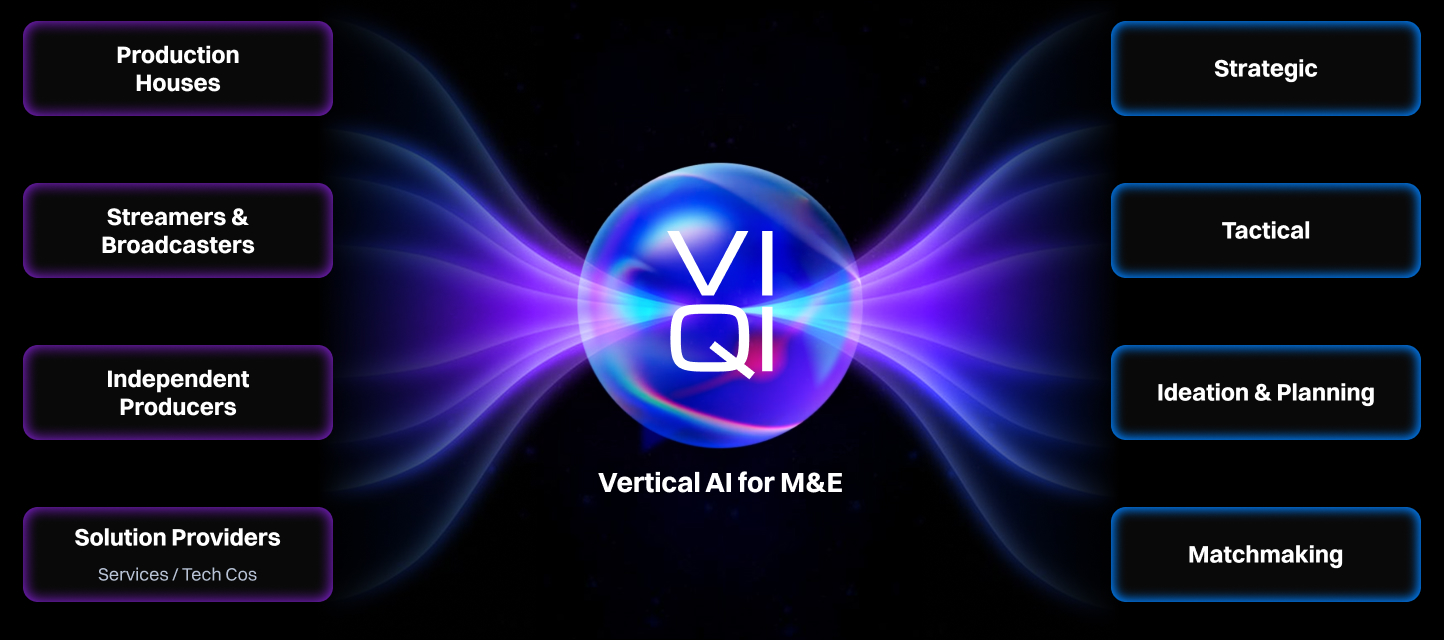
Your AI Assistant, Agent, and Analyst for the Business of Entertainment

VIQI AI helps you plan content acquisitions, raise production financing, and find and connect with the right partners worldwide.


What Gaumont, Banijay, and PBS Are Doing Differently

The Fremantle and Bell Media deals get the press. But some of the more instructive FAST activity is happening among companies with more varied catalog profiles—and more constrained negotiating leverage. How Gaumont, Banijay, Paramount, and PBS are approaching FAST distribution tells you what deal terms look like when you’re not Fremantle.

Gaumont’s approach is genre-specific channel development. Rather than licensing individual titles broadly, Gaumont is clustering IP by genre—crime, thriller, French drama—into themed FAST channel propositions that give platforms a coherent programming block rather than a mixed bag of titles. That coherence matters: it justifies higher CPMs (advertisers pay more to reach known genre audiences) and gives the platform an easier acquisition decision because the programming logic is already done.

Banijay is doing something similar with its unscripted catalog—the deepest in the world, spanning formats and finished content across every major genre. FAST is a natural fit for unscripted: low-risk content for advertisers, strong rewatchability, and format familiarity that drives completion rates. And PBS—with deep documentary and educational programming—has moved FAST catalog into international distribution in ways that were structurally impossible under traditional broadcast licensing. Ad-supported streaming made the rights math work for PBS content in markets where PBS has no broadcast footprint. Our roundup of the Gaumont, Banijay, Paramount, and PBS FAST deals covers the specifics.

Need Help Structuring Your FAST Distribution Strategy?

Vitrina’s concierge team works with distributors and content owners to map Pluto TV and Tubi deal options, model territorial segmentation, and identify the right FAST channel structure for your catalog. The same intelligence that helps Paramount, Warner Bros, and Netflix teams close faster—available with no long-term commitment required.

Talk to a Vitrina Expert →

The Deal Terms That Separate Good FAST Agreements from Bad Ones

Insiders recognize the gap between content owners who negotiate FAST deals and content owners who negotiate good FAST deals. The difference is almost entirely in five contract provisions. Most of the industry is still signing on the first two without adequately protecting the last three.

  • Revenue split percentage. Table stakes. You need at minimum 50/50 on a standard catalog deal, and closer to 65/35 in your favor for branded channel partnerships or exclusive content. If you’re accepting less, you need a compensating advantage elsewhere in the deal—exclusivity premium, minimum guarantee, or promotional commitment.
  • Minimum guarantee or floor revenue. Rare on standard catalog deals, but increasingly negotiable for larger volume partnerships. A floor revenue commitment protects you from the CPM variability that can turn a promising FAST deal into a low-yield licensing arrangement. Push for it—especially in year two and three of multi-year agreements when platform CPMs in newer markets remain unpredictable.
  • Data-sharing provisions. This is where most content owners leave money on the table. Viewership analytics—episode completion rates, demographic breakdowns, viewing frequency—are worth more than a 5-point improvement in your revenue split for the long-term health of your content IP. If you don’t get data, you can’t optimize scheduling, can’t identify your highest-value titles, and can’t enter your next FAST negotiation with anything except a gut feel about performance.
  • Exclusivity windows and scope. Never sign global FAST exclusivity. Territory-specific exclusivity is defensible; global exclusivity is a windowing mistake that blocks higher-CPM regional deals for the duration of your agreement. Define the territory, define the window (12-18 months maximum), and retain the right to negotiate independently in any market where the platform isn’t actively distributing your content.
  • Promotional commitments. Pluto TV and Tubi both offer content partners promotional placement—channel carousels, editorial features, email campaigns. But those commitments are only enforceable if they’re written into the agreement. A verbal assurance of front-page placement is worth nothing six months after you sign.

Why Metadata Decides Whether Your FAST Deal Earns or Disappears

You can negotiate a technically sound FAST deal and still watch your content perform below CPM floor. The most common reason: metadata quality. This isn’t a technical footnote. It’s the operational factor that determines platform discoverability—and in FAST, content that isn’t discoverable doesn’t generate ad impressions, which means it doesn’t generate revenue.

Tim Cutting of Gracenote—whose metadata infrastructure underpins content discovery across Pluto TV, Tubi, and most major FAST platforms—is direct about what separates performing FAST channels from invisible ones. It’s not the content itself. It’s whether platforms can accurately categorize, surface, and promote that content to the right viewer segments. Clean episodic metadata, accurate genre tagging, properly structured series hierarchies, and verified content IDs aren’t optional hygiene for FAST distribution. They’re the mechanism that converts your distribution deal into actual revenue.

Gracenote also plays a central role in how Nielsen and FAST platforms streamline content distribution workflows—reducing the delivery friction that historically delayed content from greenlight to live distribution by weeks. Our coverage of the Nielsen and Gracenote FAST distribution streamlining covers the operational mechanics.

Tim Cutting’s conversation with Vitrina is one of the clearest explanations of FAST channel economics and the metadata infrastructure that determines your CPM ceiling:

Tim Cutting (Gracenote) on FAST channel visibility, content discovery, and monetization strategy — via Vitrina LeaderSpeak.

The practical implication for anyone preparing a FAST distribution deal: do a metadata audit before you start negotiations. Know which titles have complete, platform-compliant metadata and which don’t. The titles with gaps will underperform regardless of deal terms—and a platform that’s seen poor performance from your catalog in year one will negotiate harder in year two.

And if you want to model how AVOD and FAST revenue integrates into broader production financing decisions, our analysis of AVOD and FAST analytics through Whip Media covers the data infrastructure that lets you track performance across multiple platforms simultaneously—and actually optimize your FAST footprint based on evidence rather than platform assurances.

Frequently Asked Questions: Pluto TV & Tubi FAST Channel Distribution

How does Pluto TV structure content distribution deals?

Pluto TV runs two main deal structures: content licensing for AVOD on-demand placement, and branded channel partnerships where content owners operate named FAST channels inside Pluto’s infrastructure. Revenue splits on standard licensing run 40-55% to content owners. Branded channel deals—where the content owner provides coherent genre-specific programming—can push that to 60-65%. Territorial segmentation is the most negotiated element, as Pluto operates across 30+ markets at widely varying CPM levels.

What kind of content does Tubi acquire for FAST distribution?

Tubi acquires both library catalog and originals. Library licensing—particularly for content more than five years old—often clears at flat fee terms rather than revenue share, because CPM projections on dormant titles don’t justify split-agreement overhead. For originals, Tubi has demonstrated appetite for genre content, unscripted, and IP with built-in audience awareness—as seen in its commissioning deal with Hartbeat for four original films. Strong chain of title and clean territorial rights documentation are requirements for any Tubi acquisition conversation.

What revenue split should content owners negotiate for FAST channel deals?

Minimum 50/50 for standard catalog licensing, with 65/35 in the content owner’s favor as the target for branded channel partnerships or exclusive content deals. Beyond the revenue split percentage, data-sharing provisions, minimum guarantee commitments, and territory-specific exclusivity terms are often more financially valuable than a 5-10 point improvement in the headline split. US CPMs run 3-5x international market rates, so global FAST exclusivity without territorial carve-outs consistently undervalues content.

What did the Fremantle and Pluto TV deal involve?

Fremantle extended its Pluto TV partnership to launch 25 ad-supported streaming TV channels across 13 new markets, featuring library titles including Baywatch and Three’s Company. The deal’s financial logic rests on Fremantle’s ownership of IP that recouped production costs decades ago—making every FAST ad impression near-pure margin. The multi-territory rollout structure allowed Fremantle to calibrate CPM expectations market by market rather than accepting a blended global rate.

Why is metadata quality critical for FAST channel performance?

FAST platform discovery is metadata-driven. Content without clean episodic metadata, accurate genre tagging, and verified content IDs doesn’t get surfaced in platform recommendation systems or search results—which means it doesn’t generate viewing hours, which means it doesn’t generate ad impressions or revenue. Gracenote provides the metadata infrastructure for Pluto TV, Tubi, and most major FAST platforms. A metadata audit before starting FAST distribution negotiations is not optional—it directly determines your CPM ceiling and your platform renewal prospects.

How did Bell Media structure its Tubi FAST deal to retain ad control?

Bell Media structured its Tubi deal to retain Canadian digital ad sales control while allowing Tubi to handle platform distribution infrastructure. This means Bell sells Canadian advertising inventory through its own sales channels—at local market rates to advertisers it already has relationships with—rather than running through Tubi’s programmatic ad stack. The CPM advantage is significant: direct advertiser relationships consistently generate higher CPMs than programmatic alternatives, making ad inventory control more valuable than a percentage point improvement in the content revenue split.

How does Vitrina help with FAST platform distribution deals?

Vitrina indexes 140,000+ companies and 400,000+ projects across the global entertainment supply chain, including active acquisition activity at Pluto TV, Tubi, and major FAST platforms. You can track which platforms are buying in your genre and territory, monitor partnership announcements before they’re public, and approach platform acquisition executives with verified market intelligence. Vitrina’s concierge team also works with distributors to map FAST deal options and model territorial segmentation strategies.

The Bottom Line on Pluto TV and Tubi FAST Channel Deals in 2026

Pluto TV and Tubi have matured from catalog dumping grounds into genuine strategic distribution partners—with deal structures sophisticated enough to warrant careful legal and commercial attention before you sign anything. The Fremantle, Bell Media, Gaumont, and Banijay deals are telling you what the ceiling looks like when you negotiate with discipline.

And the Fragmentation Paradox™ applies here too. There are now dozens of FAST platforms actively acquiring content globally—which means more opportunities but also more intelligence required to navigate them strategically. Without real-time visibility into what Pluto TV and Tubi are actually buying this quarter—and at what terms—you’re negotiating in the dark against buyers who know exactly what the market is paying.

Key takeaways for distribution executives approaching FAST deals in 2026:

  • Territory segmentation is your most valuable negotiating lever. Never sign global FAST exclusivity. US CPMs at 3-5x international rates make territorial discipline a revenue-defining decision, not a negotiating nicety.
  • Ad inventory control beats revenue split optimization. The Bell Media/Tubi model demonstrates this. If you have direct advertiser relationships, retaining ad sales control generates more value than fighting for an extra 5 points in your platform revenue share.
  • Branded channel partnerships outperform catalog licensing. Coherent genre-specific channel propositions command better CPMs, better splits, and more promotional support than mixed-catalog licensing. Do the editorial curation work before you negotiate.
  • Metadata quality determines your CPM ceiling. Audit before you negotiate. Clean metadata is not a delivery formality—it’s a revenue multiplier.
  • Data access is non-negotiable. If you can’t see viewership analytics at the title and episode level, you can’t optimize your FAST footprint—and your next deal negotiation will be based on assumptions rather than evidence.

Find Your Next FAST Distribution Partner in 48 Hours

Track which FAST platforms are actively acquiring your content category — by genre, territory, and deal structure — before deals close publicly.

Trusted by teams at Netflix, Warner Bros, and Paramount. 200 free credits. No credit card required.

Get 200 Free Credits →
Talk to a Specialist


Find Film+TV Projects, Partners, and Deals – Fast.

VIQI matches you with the right financiers, producers, streamers, and buyers – globally.

Producers Seeking Financing & Partnerships?

Book Your Free Concierge Outreach Consultation

(To know more about Vitrina Concierge Outreach Solutions click here)

Producers Seeking Financing, Co-Pros, or Pre-Buys?

Vitrina Concierge helps producers reach the right financiers, commissioners, distributors, and co-production partners — with precision outreach, not cold pitching.

Real-Time Intelligence for the Global Film & TV Ecosystem

Vitrina helps studios, streamers, vendors, and financiers track projects, deals, people, and partners—worldwide.

  • Spot in-development and in-production projects early
  • Assess companies with verified profiles and past work

  • Track trends in content, co-pros, and licensing
  • Find key execs, dealmakers, and decision-makers

Who’s Using Vitrina — and How

From studios and streamers to distributors and vendors, see how the industry’s smartest teams use Vitrina to stay ahead.

Find Projects. Secure Partners. Pitch Smart.

  • Track early-stage film & TV projects globally
  • Identify co-producers, financiers, and distributors
  • Use People Intel to outreach decision-makers

Target the Right Projects—Before the Market Does!

  • Spot pre- and post-stage productions across 100+ countries
  • Filter by genre and territory to find relevant leads

  • Outreach to producers, post heads, and studio teams

Uncover Earliest Slate Intel for Competition.

  • Monitor competitor slates, deals, and alliances in real time
  • Track who’s developing what, where, and with whom
  • Receive monthly briefings on trends and strategic shifts