IHUB
IHUB
 Private Briefings (Webinars)


 LeaderSpeak Podcast
  Global Entertainment Digest (Newsletter)
  About Vitrina
 About VIQI
 Our Story
 Our Solutions 🔥
 Film+TV Projects Tracker 🚀
 Case Studies
 Our Profile
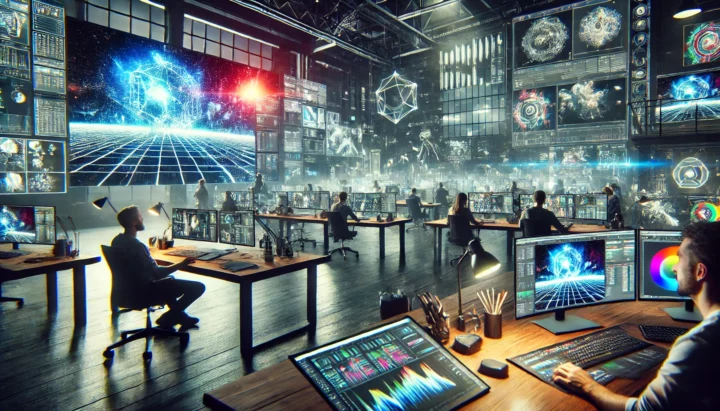
When producers and studio executives talk about Weta Digital visual effects, they’re not just naming a vendor. They’re referencing the studio that redefined what was technically possible — three times over — across the Lord of the Rings trilogy, Avatar, and the Planet of the Apes reboot franchise. Thirty years on from its founding in Wellington, New Zealand, the studio that Peter Jackson built has undergone its most significant structural transformation yet. And for anyone making VFX vendor decisions in 2026, understanding what that transformation actually means — and what’s changed versus what hasn’t — is essential.
Here’s the shift that still confuses many buyers: in 2021, Unity Technologies acquired Weta Digital’s software and tools division for approximately $1.625 billion — one of the largest technology transactions in entertainment history. The tools business — Manuka renderer, Lumberjack pipeline architecture, Gazebo and other proprietary development platforms — moved to Unity.
The VFX production studio itself? It was renamed Weta FX and continues operating as an independent visual effects company out of Wellington. Same talent. Same infrastructure. Same creative heritage. Different name, different ownership structure on the tools side.
Why does that matter for your production? Because the capabilities that made Weta legendary — photorealistic digital characters, environment simulation at scale, performance capture that actually captures performance rather than just geometry — are still there. But the competitive landscape has shifted around them. This is a studio at an inflection point, and producers who understand where Weta FX is positioning in 2026 will negotiate better, plan better, and get better results than those working from a three-year-old mental model.
In This Guide
- Weta Digital’s Legacy and Core Capabilities in 2026
- The Unity Acquisition: What Changed, What Didn’t
- Technology and Innovation That Still Defines the Industry
- Wellington as a Sovereign VFX Hub: The NZ Incentive Advantage
- How to Work with Weta FX: What Producers Need to Know
- Beyond Weta: Navigating the VFX Fragmentation Problem
- Frequently Asked Questions
- Key Takeaways
Find Verified VFX Studios — From Weta-Scale to Boutique — in One Search
Ask VIQI — Vitrina’s AI intelligence layer — to surface verified VFX studios by capability, current capacity, and budget range. Used by Netflix, Warner Bros, and Paramount production teams globally.
✔ 200 free credits | ✔ No credit card required | ✔ 10,000+ verified VFX vendors indexed
Weta Digital’s Legacy and Core Capabilities in 2026
Let’s establish baseline — because “Weta is good at VFX” undersells what’s actually happening in Wellington. The studio has won six Academy Awards for Best Visual Effects, including sweeps for all three Lord of the Rings films. It was Weta’s work on Avatar in 2009 that genuinely shifted the industry’s sense of what photorealistic digital performance capture could deliver. And with the Avatar sequels continuing to push that standard, the benchmark keeps moving.
But Oscar wins are the lagging indicator. What actually defines Weta FX’s capabilities in 2026 are four technical domains where they’ve built genuine depth over decades — and where that depth translates directly to ROI for productions that need those specific capabilities.
Digital Characters at Photoreal Scale
Gollum, Caesar from Planet of the Apes, Thanos, Naavi from Avatar — these aren’t just impressive CGI characters. They’re proof of a pipeline that can take performance capture data, translate it into a digital character with genuine emotional range, and deliver it at feature-film resolution with the lighting integration required to hold up in any shot context. That pipeline — Weta’s MASSIVE crowd simulation system, their proprietary hair and cloth simulation tools, and their performance-driven character systems — remains one of the most sophisticated in the world. No other studio has run that process at equivalent scale for as many consecutive high-profile productions.
Environment and World-Building at Cinematographic Scale
Middle-earth. Pandora. The post-apocalyptic world of Planet of the Apes. What these have in common isn’t just visual ambition — it’s the production reality that Weta built entire environments that a cinematographer could “move through” with the same flexibility as a practical location. Their terrain simulation, atmospheric rendering, and procedural environment tools let directors make creative decisions during post that would have required locked-off pre-visualization in any other pipeline. That flexibility has EBITDA implications: it reduces costly reshoots and lets productions adapt to creative changes without rebuilding from scratch.
Simulation: Fluids, Destruction, and Physics
Ocean simulation. Large-scale destruction. Crowd physics with individual character behavior. These are categories where Weta’s proprietary simulation tools — many of which were spun into Unity’s platform via the 2021 acquisition — set standards that the rest of the industry is still measuring themselves against. The studio spent years building custom solvers for fluid dynamics and rigid-body destruction specifically because commercial off-the-shelf tools couldn’t handle the scale and complexity their productions demanded. That institutional investment doesn’t evaporate when a tools division is acquired.
AI-Integrated VFX Workflows
The conversation that every VFX buyer is having in 2026 — how is AI changing the cost and capability equation? — is one Weta FX has been navigating internally for several years. The studio’s approach isn’t to replace artists with AI tools; it’s to use machine learning to accelerate the technical work that previously required the most person-hours. Automated rotoscoping, AI-assisted match-moving, neural rendering for secondary character work — these aren’t press-release innovations for Weta. They’re production infrastructure. As reported by Variety, leading VFX studios that have integrated AI into their core pipelines are reporting 25-35% reductions in artist hours on repeatable technical tasks — savings that flow directly to production budgets without compromising output quality.

Your AI Assistant, Agent, and Analyst for the Business of Entertainment
VIQI AI helps you plan content acquisitions, raise production financing, and find and connect with the right partners worldwide.
- Find active co-producers and financiers for scripted projects
- Find equity and gap financing companies in North America
- Find top film financiers in Europe
- Find production houses that can co-produce or finance unscripted series
- I am looking for production partners for a YA drama set in Brazil
- I am looking for producers with proven track record in mid-budget features
- I am looking for Turkish distributors with successful international sales
- I am looking for OTT platforms actively acquiring finished series for the LATAM region
- I am seeking localization companies offer subtitling services in multiple Asian languages
- I am seeking partners in animation production for children's content
- I am seeking USA based post-production companies with sound facilities
- I am seeking VFX partners to composite background images and AI generated content
- Show me recent drama projects available for pre-buy
- Show me Japanese Anime Distributors
- Show me true-crime buyers from Asia
- Show me documentary pre-buyers
- List the top commissioners at the BBC
- List the post-production and VFX decision-makers at Netflix
- List the development leaders at Sony Pictures
- List the scripted programming heads at HBO
- Who is backing animation projects in Europe right now
- Who is Netflix’s top production partners for Sports Docs
- Who is Commissioning factual content in the NORDICS
- Who is acquiring unscripted formats for the North American market
The Unity Acquisition: What Changed, What Didn’t
The $1.625 billion Unity-Weta Digital transaction is the most significant event in VFX industry corporate structure since the consolidation wave that saw DNEG, Framestore, and MPC grow into global multi-studio enterprises. But most producers still don’t have a clear picture of what actually transferred — and what didn’t.
What Unity acquired was technology: Weta’s proprietary software tools, rendering systems, and the engineers who built them. The goal from Unity’s side was to democratize access to Weta-grade simulation and rendering capabilities — making tools previously available only to a studio with Weta’s R&D budget accessible to a much wider range of creators through Unity’s platform. For the broader industry, this is genuinely significant. Simulation tools that took Weta years to develop are now being adapted into accessible software frameworks.
What Unity did not acquire was the studio itself. The VFX production company — the artists, supervisors, project managers, and client relationships — became Weta FX, operating independently. So when you’re hiring “Weta” for a blockbuster production, you’re engaging Weta FX, not Unity. The company still occupies its Wellington campus. It still runs the same production pipeline — though it’s now licensing some of its own former toolset back through Unity’s platform rather than maintaining it entirely in-house. It’s a nuanced structural reality that affects how you approach contracting, IP agreements, and long-term vendor relationships.
The practical upshot for producers? Weta FX’s creative output hasn’t skipped a beat. But the corporate context has changed in ways that matter when you’re negotiating multi-picture deals, understanding tool licensing implications, or planning a production that needs to split VFX work across multiple vendors. See our full breakdown of how to evaluate and select top VFX companies for a structured framework on vendor due diligence.
Industry veteran Joseph Bell — who spent two decades at Industrial Light & Magic before leading VFX operations at multiple studios — shares his perspective on how AI, cloud workflows, and studio consolidation are reshaping competitive advantage in the global VFX market:
Benchmark Weta FX Against 10,000+ Verified VFX Studios — Before You Commit
Join 140,000+ entertainment companies on Vitrina. Filter VFX studios by capability tier, current capacity, project history, and budget range — and see which studios match your specific production requirements across 159,223 tracked projects.
✔ 200 free credits | ✔ No credit card required | ✔ Full platform access
Technology and Innovation That Still Defines the Industry
Here’s what sets serious VFX studios apart from the commodity layer of the market: proprietary technology developed specifically to solve problems that commercial software can’t. Weta built its reputation by solving problems no one else could — and then solving them again as the problems got harder. That track record matters in 2026 more than it ever has, because productions are increasingly bifurcating into two categories: high-complexity tentpole work that requires genuine R&D capability, and mid-tier episodic work that can be handled efficiently with proven off-the-shelf pipelines.
The Manuka Renderer — and What Its Transfer Means
Weta’s Manuka renderer was — for years — their secret weapon for photorealistic lighting and shading at render farm scale. It handled spectral rendering, subsurface scattering for skin, and volumetric effects with a fidelity that competing renderers struggled to match on the same hardware. Post-Unity acquisition, Manuka’s development now lives within Unity’s technology roadmap. Weta FX still uses it — but so, increasingly, do other studios and independent creators accessing it through Unity’s platform. The competitive moat narrows. But — and this is the part most commentary misses — the artists who built their careers using Manuka’s specific capabilities are still at Weta FX. Tools are transferable. Institutional knowledge about how to push those tools beyond their design parameters is not.
Real-Time VFX and Virtual Production Integration
The virtual production revolution — LED volume stages, real-time rendering for in-camera VFX, Unreal Engine on set — has changed the relationship between production and post-production. Weta FX’s position here is interesting: their toolset relationships with Unity give them native integration points with Unreal Engine workflows that many legacy VFX studios are still adapting to. For productions planning hybrid traditional/virtual production workflows, that compatibility matters. As The Hollywood Reporter has noted, productions that integrate VFX planning from day one of virtual production design — rather than treating post as a separate phase — are consistently delivering 15-20% better budget outcomes on effects-heavy sequences.
Performance Capture Beyond Motion Capture
Weta’s distinction in performance capture isn’t that they capture motion — it’s that they capture performance. The difference is subtle but consequential. Motion capture records physical movement. Weta’s approach — developed through productions like Avatar and refined through the Apes franchise — captures muscle deformation, micro-expressions, eye movement, and breath in a way that informs the digital character’s emotional performance rather than just its physical articulation. The result is digital characters that audiences accept as real because the performance data driving them was real. That’s not a pipeline you buy off a shelf. It’s a decade of refinement on productions that demanded it.
Wellington as a Sovereign VFX Hub: The New Zealand Incentive Advantage
Wellington isn’t just where Weta FX happens to be located. It’s a Sovereign Content Hub in the truest sense — a city where government policy, world-class infrastructure, and decades of accumulated VFX expertise have created a production ecosystem that can compete with London, Los Angeles, and Vancouver for the most demanding visual effects work in the world. And the financial case for Wellington in 2026 has gotten meaningfully stronger.
New Zealand’s incentive structure for international productions includes a 20% base rebate on qualifying New Zealand production expenditure (QNZPE), with an additional 5% uplift available for productions demonstrating significant economic benefit. Post-production and digital visual effects work qualifies separately under the PDV (Post, Digital, and Visual Effects) incentive. And for productions that hit the threshold for “significant economic benefit” — typically large-scale productions with substantial NZ spend — the combined incentives can meaningfully alter the cost structure of a major VFX project.
But it’s not just the rebate. Wellington’s VFX ecosystem extends well beyond Weta FX. Park Road Post Production, Weta Workshop (the practical effects and design company that also remains independent), and a deep pool of experienced VFX artists and technical directors trained on some of the most complex productions ever made — these constitute a supply chain that can support large productions without the crew-availability constraints you’d encounter in smaller markets. The Fragmentation Paradox is real everywhere in entertainment, but Wellington’s concentration of VFX expertise means a producer working with Vitrina’s intelligence tools can rapidly identify available crew and specialist vendors across the full Wellington ecosystem in ways that aren’t possible in less concentrated markets.
How to Work with Weta FX: What Producers Need to Know Before the Call
You don’t call Weta FX cold. Not because they’re inaccessible — but because arriving at that conversation without understanding their project thresholds, their current slate commitments, and what they’ll need from you in the pre-bid process is a guaranteed way to waste time on both sides.
Weta FX operates most comfortably on productions with VFX budgets north of $30 million, though they do take selective episodic and lower-budget work when it aligns with their creative or technological development interests. But their core business is feature film tentpoles — Marvel, DC, major studio franchise work — where their R&D investment per project can be amortized across the kind of sequel and franchise structures that studios build around IP. If your project is a single-picture $8 million VFX budget, there are excellent studios better positioned to give it the attention it deserves. That’s not a criticism of Weta — it’s an accurate read of where they deliver maximum value.
What does Weta FX need from you at first contact? A real script or locked production design — not a concept deck. A genuine production schedule with realistic VFX pre-production milestones. And a sense of the sequences you’re bringing to them versus the sequences you’re distributing to other VFX vendors. Because most major productions split their VFX work across multiple studios. Weta typically anchors the most complex work — hero digital characters, major destruction sequences, technically innovative shots — while mid-tier episodic VFX, cleanup, and background plates go to complementary vendors.
That multi-vendor coordination is where the intelligence advantage really shows. Knowing which studios have available capacity in your production window, which vendors have compatible pipeline infrastructure with Weta FX’s formats, and which ones have the track record on comparable work — that’s the kind of data that used to require 3-6 months of manual research. Compare Weta FX’s positioning alongside peers like Framestore and DNEG to build a full picture of the Tier 1 VFX market before you go into any vendor conversations.
Beyond Weta: Navigating the VFX Fragmentation Problem
The Fragmentation Paradox hits VFX vendor selection harder than almost any other part of the entertainment supply chain. The global VFX market was valued at approximately $18.7 billion in 2023 and is on track toward $26 billion by 2028. But here’s the operational reality inside that number: there are over 10,000 active VFX companies globally — from Weta-scale studios to 5-person boutiques specializing in a single category of effects work. Most producers know 5-10 of them well. The ones they know may or may not be the best fit for any given production.
That information gap has a direct cost. A producer who defaults to Weta for work that a mid-tier studio could execute just as effectively — because they don’t know which mid-tier studios have proven track records on comparable sequences — is leaving real margin on the table. Our Vitrina data consistently shows a 15-20% margin differential between productions that use verified vendor intelligence versus those that rely on relationship networks alone. That’s not a small number at production scale.
But the fragmentation problem isn’t just about finding cheaper alternatives to Weta. It’s about right-sizing your vendor relationships — knowing which sequences genuinely require Weta-level capability and budget, which ones can be delivered at equivalent quality by verified Tier 2 studios, and which ones can go to specialist boutiques that deliver specific effects categories better than anyone at any price. That’s a strategic VFX procurement decision, not just a cost-cutting exercise. And it requires better information than most productions currently have access to.
Vitrina’s platform maps 10,000+ verified VFX vendors globally — with data on their hero projects, current capacity, specialty capabilities, and production history. VIQI can surface a qualified shortlist for any VFX requirement in minutes, with enough context to walk into a vendor conversation informed. For productions managing complex multi-vendor VFX slates, Vitrina’s Concierge service builds a full vendor matrix against your production requirements — with capacity verification and capability matching done from live production data rather than static directories. See how the full VFX supply chain is shifting in our guide to AI-driven VFX innovation in the global supply chain.
Build Your VFX Vendor Shortlist — With Verified Capacity Data — in 48 Hours
Vitrina’s Concierge team maps your full VFX vendor landscape against production-specific requirements — drawing from live data across 159,223 active productions globally. Trusted by Netflix, Warner Bros, and Paramount procurement teams.
✔ Verified capacity status | ✔ Capability-matched shortlists | ✔ Budget-range filtering
Frequently Asked Questions: Weta Digital Visual Effects 2026
Key Takeaways: Working With Weta FX and the Broader VFX Market in 2026
Weta Digital’s visual effects legacy isn’t a historical footnote — it’s an active competitive advantage that the studio, now operating as Weta FX, continues to build on. The Unity acquisition reshuffled the tools landscape but didn’t change what makes Wellington’s flagship VFX studio exceptional: deep institutional knowledge, proprietary pipeline refinement built across decades of the hardest productions in the industry, and a performance capture and digital character capability that remains unmatched at scale.
But understanding where Weta FX fits in your vendor strategy — and where other studios might deliver equivalent quality at better ROI for specific sequence types — is the intelligence play that separates good VFX procurement from great VFX procurement. And that intelligence is now accessible in ways it simply wasn’t before Vitrina mapped the global supply chain.
Key Takeaways
- Weta Digital is now Weta FX — Unity Technologies acquired the tools division for $1.625B in 2021, but the VFX production studio remains independent and fully operational from Wellington with the same talent and pipeline heritage.
- Six Academy Awards define the track record — but the studio’s competitive advantage in 2026 is in digital character performance capture, environment simulation at scale, and AI-integrated pipeline efficiency rather than awards history alone.
- New Zealand’s incentive structure — 20% base rebate plus 5% uplift for significant economic benefit — makes Wellington one of the most financially competitive Tier 1 VFX destinations globally, not just creatively.
- Weta FX is a Tier 1 anchor vendor, best suited for productions with VFX budgets above $30 million and complex sequence requirements — most major productions should plan to distribute complementary work to Tier 2 and specialist boutique studios for budget optimization.
- The Fragmentation Paradox costs producers 15-20% margin when VFX vendor selection relies on relationships rather than verified intelligence — Vitrina’s platform maps 10,000+ VFX vendors globally with live capacity and capability data that closes that gap.
Start Building Your VFX Vendor Strategy on Real Intelligence
Join Netflix, Warner Bros, and Paramount in using Vitrina to track verified VFX vendors, current capacity, and live production data. Get 200 free credits — no credit card required.
✔ 10,000+ VFX vendors indexed | ✔ 159,223 projects tracked | ✔ No credit card required