IHUB
IHUB
 Global Content Pulse (Webinars)


 Global Production Financing
(Webinars)
Global Production Financing
(Webinars)  LeaderSpeak Podcast
  Global Entertainment Digest (Newsletter)
  About Vitrina
 About VIQI
 Our Story
 Our Solutions 🔥
 Film+TV Projects Tracker 🚀
 Case Studies
 Our Profile
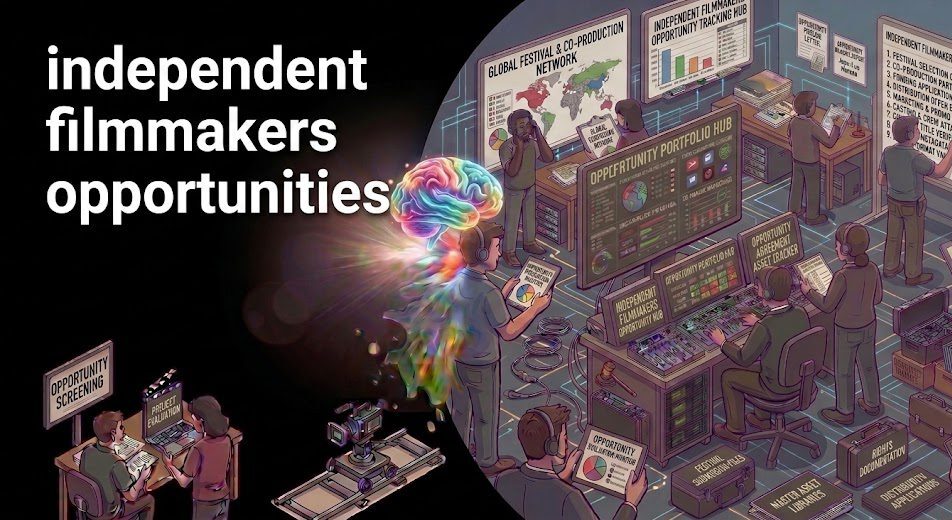
Finding the right platforms for independent filmmakers to license their work isn’t just a distribution question—it’s the strategic decision that determines whether your film earns or disappears. And right now, the landscape has never been more complicated. Revenue windows have collapsed.
Streaming platforms have pulled back on acquisitions. The all-rights distributors who once drove the independent market have run out of runway because their pay-one deals with streamers evaporated.
But here’s the thing: opportunity exists for filmmakers who know where to look. The independent film distribution platforms worth your attention in 2026 fall into distinct categories—B2B intelligence marketplaces, direct aggregator pipelines, arthouse acquisition portals, AVOD platforms actively acquiring, and global content markets. This guide maps all of them, so you can stop pitching blind and start targeting the right platform for your specific film.
Ask VIQI: Which Distributors Are Actively Acquiring Films Like Yours?
VIQI is Vitrina’s AI intelligence assistant—trained on 1.6 million titles, 360,000 companies, and 5 million entertainment professionals. Ask which distributors are acquiring your genre, budget range, and territory right now.
✔ 200 free credits included | ✔ No credit card needed
Why Platform Choice Matters More Than Ever in 2026
Let’s be direct about the market context first. Phil Hunt, Founder & CEO of Head Gear Films—who has financed and produced 550+ films—put it plainly in the Vitrina LeaderSpeak series: revenue windows have collapsed into one. The VHS-to-rental-to-purchase-to-broadcast ladder that generated multiple revenue events per film is gone. Today, a $15/month streaming subscription replaces what once cost consumers $100 in physical media. That’s not just bad for distributors—it’s restructured the entire acquisition logic.
What’s replaced it? A fragmented, platform-specific acquisition landscape where the right match between your film and the right buyer matters enormously. The wrong platform wastes months. The right one closes a deal in 48 hours. As we’ve outlined in our guide to the best platforms for distributing independent films, the platforms that generate real results share one trait: they connect specific film types with buyers who’ve demonstrated appetite for exactly that content.
Here are 12 platforms organized by what they actually do—and which type of independent filmmaker gets the most from each.
Tier 1: B2B Intelligence & Marketplace Platforms
1. Vitrina.ai
Best for: Producers and filmmakers who want to identify and directly reach distributors, sales agents, and acquisition executives before going to market.
Vitrina is the largest entertainment supply chain intelligence platform in the world—140,000+ actively producing companies, 1.6 million tracked titles, 5 million+ industry professionals across 195 countries. But for independent filmmakers specifically, the platform’s value is in collapsing the information asymmetry that costs you deals. The Fragmentation Paradox is real: with 600,000+ companies operating in the global film ecosystem, knowing who’s actively acquiring your genre in your target territory—before you pitch—is the difference between 3-month deal cycles and 48-hour connections.
Vitrina’s VIQI assistant lets you query the platform like an industry insider: “Which distributors acquired MENA-produced thrillers in the last 90 days?” “What companies are seeking documentary content for AVOD?” The platform has delivered warm introductions connecting a LA producer to Netflix UK in 48 hours, and a Korean animation studio directly to Netflix Adult Animation within the first week. Not a list of contacts—verified intelligence on who’s buying right now. Start with 200 free credits, no credit card required, at app.vitrina.ai.
2. FilmFreeway
Best for: Building the festival track record that makes distributors come to you.
FilmFreeway isn’t a distribution platform in the traditional sense—it’s the world’s largest film festival submission marketplace, connecting filmmakers to 10,000+ festivals and film markets globally. But the licensing chain often starts here. Distribution deals don’t fall from the sky; they follow festival premieres. A strong festival run at Sundance, SXSW, or Tribeca puts your film in front of acquisition executives who are specifically attending to buy. FilmFreeway’s submission management tools and analytics help you map your festival strategy with the distribution outcome in mind, not as an afterthought.
Kirsty Bell (Founder & CEO, Goldfinch) discusses how independent filmmakers can build sustainable financing and distribution strategies by leveraging multiple revenue streams—including brand integration, vertical content, and global market relationships:
Tier 2: Aggregator Platforms — Direct Pipeline to Streaming
Aggregators sit between independent filmmakers and streaming platforms. They handle the technical delivery, metadata, and platform relationships so you don’t have to build them yourself. But they’re not all equal—fees, revenue splits, and platform access vary significantly.
3. FilmHub
Best for: AVOD and FAST channel distribution for indie titles with strong genre appeal.
FilmHub is the dominant aggregator for independent film licensing to streaming channels, having absorbed Distribber and Kinonation. The platform connects independent filmmakers directly to 100+ streaming channels including Tubi, Pluto TV, Plex, and Amazon Prime Video. No upfront fees—FilmHub takes a 20% revenue share, keeping your cash flow intact. Their Smart Pairing algorithm matches your title to channels whose audience data shows demonstrated interest in your genre and budget tier. This isn’t random placement—it’s data-driven channel matching that maximizes discovery. For genre films (horror, thriller, action, documentary), FilmHub’s AVOD pipeline is arguably the most accessible B2C licensing path available.
4. Amazon Prime Video Direct
Best for: Direct-to-consumer availability on Amazon’s platform with licensing terms you control.
Amazon Prime Video Direct (PVD) allows independent filmmakers to submit titles directly for consideration on Prime Video. The platform offers both a SVOD licensing model (Amazon licenses your film for inclusion in Prime membership) and a TVOD self-publish model (you set the rental/purchase price, Amazon takes a percentage). The licensing path pays royalties based on hours streamed—typically $0.05–$0.15 per hour depending on territory and exclusivity arrangements. What PVD gives you is direct access to Amazon’s 200M+ global Prime subscribers with no distributor intermediary. The downside: discoverability is competitive, and without a marketing push, new titles can get lost in the catalog. Use PVD in combination with a targeted publicity strategy, not as a standalone plan.
Find the Right Distributor for Your Film Before Your Next Market
Trusted by Netflix, Warner Bros, Paramount, and Google TV. Join 140,000+ companies on Vitrina and track which distributors are actively acquiring your genre, territory, and budget tier right now.
✔ 200 free credits | ✔ No credit card required | ✔ Full platform access
Tier 3: AVOD & FAST Platforms Actively Acquiring Indie Content
Ad-supported platforms have become the most active acquirers of independent film content in 2025–2026. Subscription fatigue has driven audiences back toward free, ad-supported viewing—and platforms like Tubi and Pluto TV need volume to fill their content libraries. That’s your opportunity. According to Variety, Tubi alone streams over 4 billion hours annually to its user base—driven largely by indie and catalog content that never gets a traditional theatrical run.
5. Tubi (Fox Entertainment)
Best for: Horror, thriller, action, and documentary titles seeking mass AVOD distribution.
Tubi is Fox Entertainment’s free streaming platform and the largest AVOD service in the US by content volume—50,000+ titles. They acquire independent films primarily through aggregators (FilmHub being their largest pipeline) but also take direct submissions for specific content categories. Licensing deals are non-exclusive with revenue based on ad impressions against your content. Don’t expect large upfront MGs here—the model is volume-based royalties over time. But Tubi’s scale means genuine audience reach for genre films that streaming platforms with acquisition committees would never prioritize.
6. Pluto TV (Paramount Global)
Best for: Catalog films, niche genre content, and international acquisitions seeking US market entry.
Pluto TV operates on a channel-based FAST model—hundreds of themed channels, each programmed like a traditional TV network. Independent filmmakers can license content either for Pluto’s on-demand catalog or for dedicated genre channels (Pluto TV Horror, Pluto TV Westerns, etc.). Acquisition is primarily through distributors and aggregators rather than direct filmmaker submission, but the platform’s 80+ million monthly active users across 35+ countries make it one of the highest-reach licensing destinations for non-theatrical indie content. If your film fits a Pluto channel’s programming mandate, the licensing conversation moves fast.

Your AI Assistant, Agent, and Analyst for the Business of Entertainment
VIQI AI helps you plan content acquisitions, raise production financing, and find and connect with the right partners worldwide.
- Find active co-producers and financiers for scripted projects
- Find equity and gap financing companies in North America
- Find top film financiers in Europe
- Find production houses that can co-produce or finance unscripted series
- I am looking for production partners for a YA drama set in Brazil
- I am looking for producers with proven track record in mid-budget features
- I am looking for Turkish distributors with successful international sales
- I am looking for OTT platforms actively acquiring finished series for the LATAM region
- I am seeking localization companies offer subtitling services in multiple Asian languages
- I am seeking partners in animation production for children's content
- I am seeking USA based post-production companies with sound facilities
- I am seeking VFX partners to composite background images and AI generated content
- Show me recent drama projects available for pre-buy
- Show me Japanese Anime Distributors
- Show me true-crime buyers from Asia
- Show me documentary pre-buyers
- List the top commissioners at the BBC
- List the post-production and VFX decision-makers at Netflix
- List the development leaders at Sony Pictures
- List the scripted programming heads at HBO
- Who is backing animation projects in Europe right now
- Who is Netflix’s top production partners for Sports Docs
- Who is Commissioning factual content in the NORDICS
- Who is acquiring unscripted formats for the North American market
Tier 4: Arthouse & Curated Acquisition Platforms
Not every independent film belongs on AVOD. If you’ve made something with genuine artistic ambition—a festival premiere, a critical profile, an international co-production—the curated acquisition platforms are where you should focus. The deals are smaller in volume but bigger in per-title revenue and brand value.
7. MUBI
Best for: Arthouse, international, and auteur-driven independent films with a critical reception or festival pedigree.
MUBI is the global arthouse streaming platform and one of the most credible licensing destinations for independent filmmakers with serious cinematic intent. The platform recently received a $100 million investment from Sequoia Capital at a $1 billion valuation—a signal of sustained institutional commitment to the arthouse acquisition model. MUBI programs one new film per day, giving each title genuine editorial focus and subscriber attention that catalog-dumping platforms can’t replicate. Their acquisition team attends Cannes, Berlinale, Venice, and TIFF specifically to identify licensing opportunities. Getting into MUBI’s editorial pipeline requires genuine festival credentials or critical reception, but the platform premium is worth the higher bar.
8. Kino Lorber
Best for: International arthouse films, documentaries, and retrospective titles seeking US theatrical and home video distribution.
Kino Lorber is one of North America’s most respected independent distributors—handling theatrical, home video, and streaming licensing for a curated catalog of international and arthouse titles. Their KL Studio Classics arm handles archive and catalog acquisitions. Unlike pure aggregators, Kino Lorber takes on theatrical releasing for select titles, giving independent filmmakers a genuine P&A campaign alongside the digital distribution footprint. If your film has an international profile or critical credentials, a Kino Lorber licensing deal comes with real distribution infrastructure, not just a catalog slot.
Tier 5: Global Content Markets & Industry-Specific Platforms
The most underused licensing channel for independent filmmakers isn’t a platform at all—it’s the film market circuit. Cannes Marché du Film, AFM, EFM Berlin, and TIFF Industry collectively concentrate more acquisition decision-makers in one place than any digital platform. But the market circuit rewards preparation. Showing up without pre-market intelligence is just expensive networking. Showing up knowing which distributors are actively seeking your genre, your territory, and your budget tier is how deals actually close. As we cover in our guide to leveraging film markets for distribution success, the 2–3 weeks before any major market are when real deals get structured.
9. Cannes Marché du Film
Best for: International presales, territory-by-territory licensing, and connecting with global sales agents.
The Marché du Film is the world’s largest film market—12,000+ industry professionals from 110 countries attending annually in May. For independent filmmakers ready to sell territorial rights, this is the concentrated access point that no digital platform replicates. Minimum guarantee discussions, sales agent agreements, and international co-production frameworks all happen here in concentrated form. Your goal as a filmmaker isn’t to attend as an audience member—it’s to use pre-market intelligence to identify the 10–15 acquisition executives most likely to license your title, and to have meetings booked before the market opens.
10. American Film Market (AFM)
Best for: North American and international distribution deals, gap financing discussions, and genre film acquisitions.
AFM in November (Santa Monica) is the second-largest film market globally—8,000+ professionals, 400+ companies. AFM skews toward commercial genre content more than Cannes does, making it the primary market for action, thriller, horror, and commercial drama acquisitions. Independent filmmakers with finished product can screen for buyers directly; those in development can pitch packages to sales agents who will represent the film at market. The deals struck at AFM are often less glamorous than Cannes but more commercially reliable—buyers here come to close, not to discover.
11. MIPCOM (Cannes, October)
Best for: TV-compatible independent films, documentary series, and content designed for broadcast or streaming licensing.
MIPCOM is the premier television and streaming content market—13,000 delegates from 110 countries. For independent filmmakers whose work fits broadcast or streaming formats (documentary series, limited drama, branded content), MIPCOM is where you find buyers that pure theatrical markets miss. Platforms like OSN, Canal+, and regional broadcasters across Europe, MENA, and APAC actively acquire independent content here. As Rolla Karam, SVP Content Acquisition at OSN, has described in industry discussions, content acquisition decisions at MIPCOM are often made quickly—buyer relationships built before the market opens determine which titles actually get reviewed.
12. Short of the Week / Shorts TV
Best for: Short film creators seeking formal licensing deals and paid exhibition on dedicated short-form platforms.
Short film distribution is its own ecosystem—one that feature filmmakers often overlook. Short of the Week is the most-read editorial platform for short film globally, and its selection triggers real licensing conversations with Amazon Prime Video (which runs short film channels), Apple TV+, and international broadcasters. Shorts TV is the world’s only dedicated short film channel, airing on satellite, cable, and streaming in 100+ territories. For filmmakers building a track record before their first feature, short film licensing on these platforms establishes the distributor relationships that matter for your next project. According to Screen International, short film has seen renewed acquisition interest as platforms seek low-cost content to fill their growing channel inventories.
Need a Warm Introduction to the Right Distributor for Your Film?
Vitrina Concierge is your Virtual Agent. We don’t send you a list—we make direct introductions to the decision-makers actively acquiring films like yours right now.
- LA producer → Netflix UK, Fifth Season, Fox Entertainment (48 hours)
- Korean animation studio → Netflix Adult Animation (week one)
- Middle Eastern studio → Legendary Pictures (direct access)
How to Choose the Right Platform for Your Specific Film
Not all films belong on all platforms. Before you submit anywhere, run this quick diagnostic against your title:
Genre & commercial appeal: High-concept genre films (horror, thriller, action) belong on FilmHub, Tubi, and AFM. Arthouse and international titles belong on MUBI, Kino Lorber, and Cannes Marché. Documentary series belong on MIPCOM. Short films belong on Short of the Week and Shorts TV. Mismatching genre to platform is the most common mistake independent filmmakers make—and it wastes the most time.
Distribution status: If you have no distribution yet, prioritize intelligence platforms (Vitrina, VIQI) and market attendance (AFM, Cannes) to find the right buyer rather than self-publishing on aggregators. If you have territorial rights available, aggregators (FilmHub, Amazon PVD) are your fastest path to revenue. If you’ve exhausted primary distribution windows, AVOD platforms (Tubi, Pluto) are where your catalog earns ongoing royalties.
Budget and production profile: As Kirsty Bell of Goldfinch explains in her Vitrina LeaderSpeak interview, sustainable independent film distribution isn’t about finding one perfect platform—it’s about stacking revenue streams across brand integration, global markets, and multi-territory licensing. The filmmakers earning real money from independent distribution treat each platform as one component of a multi-channel strategy, not a single solution. For a deeper dive into structuring your rights strategy before approaching platforms, our guide to independent film sales and distribution covers the deal structures worth pursuing in each window.
Frequently Asked Questions
What is the best platform for independent filmmakers to license their films?
There’s no single best platform—it depends on your film’s genre, budget, and distribution stage. For genre films (horror, thriller, action), FilmHub gives you the broadest AVOD pipeline with 100+ streaming channel partners and no upfront fees. For arthouse and international titles, MUBI offers editorial credibility and genuine subscriber attention. For market-based licensing, Cannes Marché du Film and AFM concentrate more acquisition decision-makers in one place than any digital platform. And for intelligence on who’s actively buying right now, Vitrina’s platform—used by 140,000+ companies including Netflix and Warner Bros—tells you exactly which distributors to target before you submit anywhere.
How does FilmHub work for independent filmmakers licensing their films?
FilmHub is an aggregator that connects independent films to 100+ streaming channels including Tubi, Pluto TV, Plex, and Amazon Prime Video. The platform takes a 20% revenue share with no upfront submission fees. You upload your film, provide metadata and promotional assets, and FilmHub’s algorithm matches your title to channels with demonstrated audience appetite for your genre. Licensing is non-exclusive—meaning you can simultaneously license through other channels. Revenue is royalty-based from ad impressions and streaming activity, paid quarterly. FilmHub is the most accessible AVOD pipeline for independent filmmakers without existing distribution relationships.
Do independent filmmakers need a distributor to license their film on streaming platforms?
Not always—but you usually need an aggregator. Platforms like Netflix, Amazon, and Apple TV+ don’t accept direct filmmaker submissions for catalog licensing. They acquire through distributors, sales agents, or approved aggregators. Amazon Prime Video Direct is the notable exception, allowing direct filmmaker submissions for both SVOD licensing and TVOD self-publishing. For AVOD platforms like Tubi and Pluto TV, FilmHub gives you the aggregator pipeline without requiring your own distribution deal. The practical rule: self-distribution is possible on AVOD and TVOD platforms; SVOD platforms (Netflix, Apple TV+) require a distributor or established sales agent relationship.
What percentage do distribution platforms take from independent film licensing deals?
It varies significantly by platform type. Aggregators like FilmHub take a 20% revenue share with no upfront fee. Traditional distributors (all-rights buyers) typically charge 20–35% distribution fees off the top, plus P&A recoupment before revenue reaches the film. Amazon Prime Video Direct pays royalties directly at $0.05–$0.15 per streaming hour in the US, retaining a platform percentage. Sales agents charge 10–15% commission on deals they close. AVOD platforms like Tubi pay based on ad revenue share—rates vary by contract and viewership. The most cost-effective path is often a combination: aggregator for AVOD, sales agent for territorial licensing, and direct market relationships (via Vitrina intelligence) for premium acquisitions.
How does MUBI acquire independent films?
MUBI’s acquisition team actively attends major film festivals including Cannes, Berlinale, Venice, and Sundance to identify licensing opportunities. They program one new film per day, giving each title genuine editorial focus. Submissions can come directly via MUBI’s acquisition portal or through a sales agent representing your film. MUBI typically licenses films for a defined exclusive window (often 30 days) in specific territories. The platform received a $100 million Sequoia Capital investment at a $1 billion valuation, signaling sustained commitment to arthouse acquisition. For filmmakers with genuine festival credentials or critical reception, MUBI’s editorial profile and subscriber engagement deliver real audience attention that catalog-focused platforms can’t match.
What platforms offer independent filmmakers opportunities at film markets like Cannes and AFM?
The film markets themselves—Cannes Marché du Film (12,000+ professionals, 110 countries), AFM (8,000+ professionals, 400+ companies), and EFM Berlin (10,000+ participants, 130 countries)—are where territorial licensing deals, minimum guarantee negotiations, and sales agent agreements happen in concentrated form. But the real opportunity is in pre-market intelligence: knowing which acquisition executives are attending, what genres they’re actively seeking, and which deals are already in motion. Vitrina’s platform tracks distributor acquisition activity in real time, so independent filmmakers can arrive at any market with targeted meeting lists rather than cold outreach. The filmmakers who close deals before the market ends are almost always the ones who started their outreach 3–6 weeks in advance.
Conclusion: The Right Platform Starts With the Right Intelligence
The independent film distribution landscape isn’t broken—it’s fragmented. And that fragmentation, as Vitrina’s data across 600,000+ companies shows, costs filmmakers 15–20% in margin erosion and adds months to every deal cycle. But it’s a solvable problem. The filmmakers who consistently license their work to quality distributors aren’t the ones with the most platform accounts—they’re the ones who know exactly which buyer wants exactly their kind of film, and they reach that buyer before everyone else does.
Key Takeaways:
- Match Platform to Film Type: Genre films → FilmHub, Tubi, AFM. Arthouse → MUBI, Kino Lorber, Cannes. Documentary series → MIPCOM. Short films → Short of the Week, Shorts TV.
- Aggregators Remove Friction, Not Strategy: FilmHub’s 20% revenue share and 100+ channel pipeline is the most accessible AVOD path—but it’s not a substitute for targeted distributor relationships.
- AVOD Is the Most Active Acquisition Market Right Now: Tubi streams 4+ billion hours annually. Pluto TV serves 80M+ monthly actives in 35+ countries. AVOD is where indie volume gets licensed and paid.
- Markets Beat Platforms for Premium Deals: The best licensing deals still happen at Cannes, AFM, and TIFF—but only if you arrive with intelligence, not just business cards.
- Intelligence Before Outreach: Knowing who’s actively acquiring your genre in your target territory—before you submit—is what separates fast deals from 6-month silences. That intelligence is what Vitrina was built to provide.
Discover Which Distributors Are Buying Right Now
140,000+ companies. Real-time acquisition data. 200 free credits. No credit card required.
Ask VIQI: Find the Right Platform for Your Film
1.6M titles tracked. Genre, territory, and budget-specific answers in seconds.
Find Film+TV Projects, Partners, and Deals – Fast.
VIQI matches you with the right financiers, producers, streamers, and buyers – globally.
Producers Seeking Financing & Partnerships?
Book Your Free Concierge Outreach Consultation
(To know more about Vitrina Concierge Outreach Solutions click here)
Join Industry Briefings Trusted by Leaders
Unscripted Is Eating the World: The Multi-Billion Reality and Format Boom
Unscripted is the new prestige — inside the $19.8B global format boom reshaping how streaming platforms compete.
Unscripted Is Eating the World: The Multi-Billion Reality and Format Boom
Unscripted is the new prestige — inside the $19.8B global format boom reshaping how streaming platforms compete.
Scripted Without Borders
As global drama evolves, which stories travel, which stay local, and how are they getting financed?
What Film & TV Financiers Actually Want in 2026
What do Film and TV financiers look for before they invest? Join the briefing to understand how capital decisions are changing in 2026.