About Innovation Hub
 Global Content Pulse (Webinars)


 Global Production Financing
(Webinars)
Global Production Financing
(Webinars)  LeaderSpeak Podcast
  Global Entertainment Digest (Newsletter)
  About Vitrina
 About VIQI
 Our Story
 Our Solutions 🔥
 Film+TV Projects Tracker 🚀
 Case Studies
 Our Profile
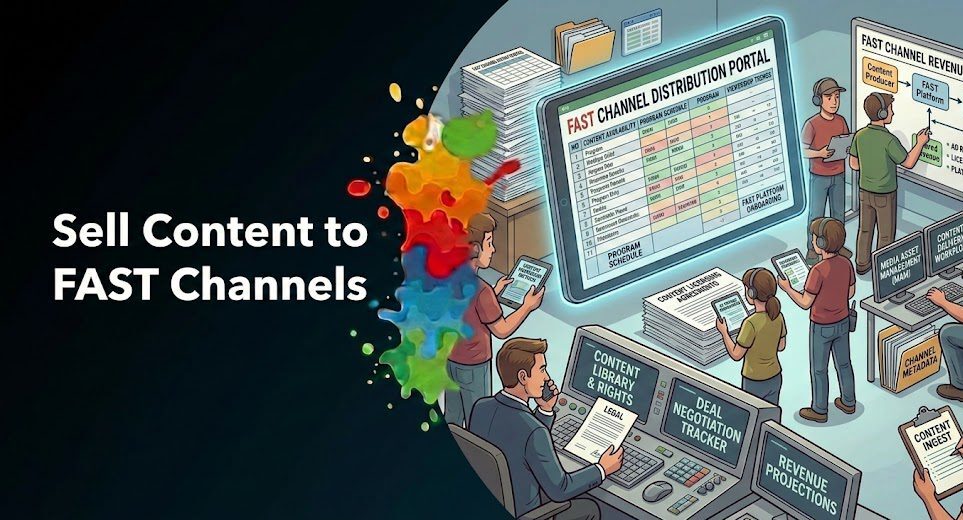
The window to sell content to FAST channels is wide open — but it won’t stay that way. Free ad-supported streaming television has moved from a secondary afterthought to a primary distribution window for hundreds of independent producers, studios, and rights-holders.
Tubi, Pluto TV, Samsung TV Plus, the Roku Channel, LG Channels — these aren’t niche platforms anymore. They’re actively acquiring content at scale, and they need volume to fill thousands of channels running 24 hours a day.
But here’s what most sellers get wrong: they approach FAST buyers the same way they’d approach a streaming acquisition team. That doesn’t work. The economics are different. The pitch is different. And the metadata requirements? Completely different from anything you’ve dealt with in theatrical or SVOD.
This guide walks you through exactly how to position, package, and close FAST channel content deals — from understanding what buyers actually need to structuring your revenue expectations realistically.
Table of Contents
- Why FAST Is Now a Primary Distribution Window
- What FAST Channel Buyers Actually Look For
- How to Package Your Content for FAST Submission
- The FAST Revenue Model: What You’ll Actually Earn
- 7 Steps to Sell Your Content to FAST Channels
- Metadata Is Your Sales Agent
- Common Mistakes Sellers Make
- FAQ
- Conclusion
Ask VIQI: Which FAST Platforms Are Acquiring Content in Your Genre Right Now?
VIQI is Vitrina’s AI assistant — trained on 1.6 million titles, 360,000 companies, and 5 million entertainment professionals. Ask it which FAST channels are actively acquiring, what genres they’re prioritizing, and who the right acquisition contacts are.
✓ Included with 200 free credits | ✓ No credit card needed
Why FAST Is Now a Primary Distribution Window
The numbers tell a clear story. According to Omdia, the global FAST advertising market is on track to exceed $9 billion in annual revenue by the mid-2020s — driven almost entirely by viewer migration to free, ad-supported viewing on connected TVs. That’s not a niche revenue pool. It’s a real business.
And the content appetite reflects that. Tubi — now owned by Fox Corp — serves 80 million monthly active users across more than 200,000 movies and TV episodes. Pluto TV (under Paramount Global) operates over 500+ free FAST channels globally. Samsung TV Plus reaches viewers in 24 countries without a single subscription fee. The platforms are enormous. The content libraries need to match.
Major studios understand this. Fremantle extended its partnership with Pluto TV to launch 25 FAST channels across 13 markets — featuring catalog titles like Baywatch. Banijay, Gaumont, and PBS have all established dedicated FAST channel presences, effectively giving their back catalogs a second monetization life without sacrificing premium window exclusivity.
For independent producers and distributors, this represents something significant — a distribution window with real reach, real advertiser demand, and no subscriber paywall standing between your content and the audience. But you need to approach it correctly.

Your AI Assistant, Agent, and Analyst for the Business of Entertainment
VIQI AI helps you plan content acquisitions, raise production financing, and find and connect with the right partners worldwide.
- Find active co-producers and financiers for scripted projects
- Find equity and gap financing companies in North America
- Find top film financiers in Europe
- Find production houses that can co-produce or finance unscripted series
- I am looking for production partners for a YA drama set in Brazil
- I am looking for producers with proven track record in mid-budget features
- I am looking for Turkish distributors with successful international sales
- I am looking for OTT platforms actively acquiring finished series for the LATAM region
- I am seeking localization companies offer subtitling services in multiple Asian languages
- I am seeking partners in animation production for children's content
- I am seeking USA based post-production companies with sound facilities
- I am seeking VFX partners to composite background images and AI generated content
- Show me recent drama projects available for pre-buy
- Show me Japanese Anime Distributors
- Show me true-crime buyers from Asia
- Show me documentary pre-buyers
- List the top commissioners at the BBC
- List the post-production and VFX decision-makers at Netflix
- List the development leaders at Sony Pictures
- List the scripted programming heads at HBO
- Who is backing animation projects in Europe right now
- Who is Netflix’s top production partners for Sports Docs
- Who is Commissioning factual content in the NORDICS
- Who is acquiring unscripted formats for the North American market
What FAST Channel Buyers Actually Look For
Here’s the real dynamic that most sellers miss: FAST acquisition teams aren’t curators. They’re programmers. They’re building linear-style channels that need to run all day, every day — which means they need volume, consistency of tone, and content that works in a lean-back viewing environment. A single film won’t interest them. A catalog of 40 thematically related episodes? That’s a conversation.
FAST buyers prioritize content based on three factors. First, genre fit — crime procedurals, reality TV, older scripted series, cooking shows, and documentaries perform consistently well in FAST environments because audiences know exactly what they’re getting. Second, episode count — FAST channels thrive on long-form binge able or ambient viewing, which means multi-episode series or strong catalog depth is more attractive than a standalone feature. Third, rights cleanliness — FAST deals move fast (the irony isn’t lost), and buyers won’t slow a deal down chasing chain of title issues.
Insiders recognize that the speed of FAST deals is both an opportunity and a filter. If your rights documentation isn’t clean — music clearances, underlying IP, guild residuals sorted — you’ll lose the deal to another seller who’s ready. That’s not a negotiation point. It’s a prerequisite.
How to Package Your Content for FAST Submission
Packaging for FAST isn’t the same as packaging for a traditional distributor or streamer. You’re not leading with your creative premise. You’re leading with your operational readiness. Before you approach any platform, you need:
- Technical deliverables ready: FAST platforms often specify ProRes or H.264 delivery, closed captions (often FCC-compliant), and promotional assets (key art, thumbnails, episode stills) at spec. Know these before you pitch.
- Full rights documentation: Territory rights, music sync clearances, E&O insurance, and chain of title should be available within 48 hours of request — not 4 weeks.
- Rich metadata: This is non-negotiable (more on this below). Episode titles, descriptions, genre tags, cast lists, and content ratings for every single asset in your catalog.
- A catalog one-sheet: One page showing the number of titles, total hours, genres, key talent, territories available, and contact information. Not a pitch deck — a working document.
- Clean avails: A current availability grid showing which windows are free in which territories. If you don’t have an organized distribution and licensing system, FAST deals will expose that gap immediately.
Don’t underestimate the catalog one-sheet. FAST acquisition teams evaluate dozens of catalogs per month. Yours needs to communicate everything relevant in under 60 seconds of reading. Genre, volume, territory availability, and a clear contact — that’s the whole job.
The FAST Revenue Model: What You’ll Actually Earn
Let’s be direct about the economics. FAST deals are predominantly ad revenue share models — you don’t receive a licensing MG upfront. That distinction matters for your cash flow planning.
The standard structure works like this: the FAST platform sells advertising inventory against your content, then shares a percentage of that revenue with you — typically ranging from 30% to 50% of net ad revenue, depending on the platform and your negotiating leverage. Some platforms (particularly larger ones) will offer a small flat licensing fee per episode or hour of content as a floor guarantee, but this is not universal.
Revenue per hour varies widely depending on genre, audience demographics, and platform. Broadly, FAST channels generate between $2 and $8 CPM (cost per thousand ad impressions), though premium content on platforms with strong advertiser demand can reach higher. The math: a series that drives 1 million hours of viewing at a $4 CPM generates roughly $4,000 in gross ad revenue — your share depends on your deal structure.
That’s not SVOD money. It wasn’t supposed to be. FAST is designed to monetize catalog content that’s already fully amortized — it’s incremental revenue on assets sitting in your library. When you’re comparing it against the alternative (content generating zero revenue while locked in a vault), the math changes considerably. For producers reviewing their content licensing models for 2026, FAST sits firmly in the “low friction, long tail” category.
Find FAST Channel Acquisition Contacts in 48 Hours
Trusted by Netflix, Warner Bros, and Paramount. Join 140,000+ companies using Vitrina to track who’s acquiring, what they’re buying, and when deals close.
✓ 200 free credits | ✓ No credit card required | ✓ Full platform access
7 Steps to Sell Your Content to FAST Channels
Here’s the process that works, based on how the market actually operates in 2026.
Step 1: Audit Your Catalog for FAST Suitability
Not every title in your library is a FAST candidate. Prioritize series with 10+ episodes, completed music clearances, and strong genre definition. Features can work — but episodic content generates more hours and more predictable viewer behavior for FAST programmers. Exclude anything with contested rights or unresolved talent residuals.
Step 2: Resolve Rights Gaps Before Outreach
Check your territory availability against all existing licenses. FAST deals often cover non-exclusive rights in specific territories — meaning you can theoretically place the same title on multiple platforms simultaneously — but only if your existing contracts permit it. Read your existing distribution agreements before assuming anything is free.
Step 3: Build Platform-Specific Pitch Lists
Don’t send a mass email. FAST platforms have distinct audience profiles and programming gaps. Tubi leans toward US audiences with an appetite for crime and reality. Pluto TV has invested heavily in thematic channels. Samsung TV Plus targets global markets with a preference for locally relevant content. Match your catalog to the right platforms before you reach out — surface the opportunity with precision rather than volume.
Step 4: Connect With Acquisition Decision-Makers Directly
Submission portals exist but are slow. The faster path is a direct relationship with an acquisition editor or content partnerships manager. These people move titles from “under consideration” to “contract stage” in weeks rather than months. Warm introductions from a shared contact or a market meeting (MIPCOM, NATPE, ContentAsia) compress the timeline significantly. For producers looking to maximize content value across global distribution windows, building these relationships ahead of time is the structural advantage.
Step 5: Submit a Clean Catalog Package
Your catalog one-sheet, full avails grid, sample episodes (screener links, not downloads), and rights summary go together in a single, organized submission. Acquisition teams that receive messy, incomplete submissions don’t follow up asking for more information — they move to the next catalog in the queue.
Step 6: Negotiate Non-Exclusive Terms Where Possible
FAST platforms frequently request exclusive FAST rights — meaning you can’t place the same title on a competing FAST service. Push back where you can. The FAST market has enough competing platforms that non-exclusive FAST licensing is increasingly common, particularly for catalog content. Exclusive FAST rights might be worth accepting if the revenue guarantee is strong, but don’t give them away by default.
Step 7: Deliver Fast, Report Accurately, Build the Relationship
Your first FAST deal is the foundation for your second and third. Platforms that have a positive delivery experience — assets arriving on spec, on time, with complete metadata — come back with more channel programming needs. Deliver slowly or with errors, and you’re back at the bottom of the acquisition queue. The strategic players understand that FAST is a volume business — you want to be a preferred supplier, not a one-time transactional partner.
Metadata Is Your Sales Agent — Don’t Underestimate It
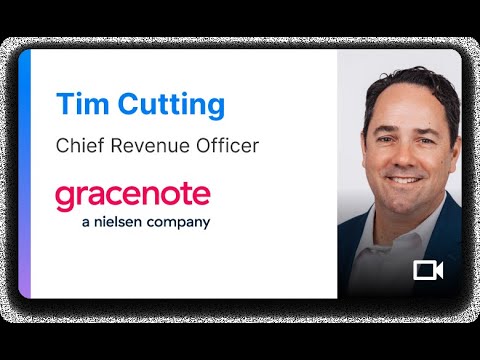
Tim Cutting, who leads strategic revenue initiatives at Gracenote (one of the world’s leading content metadata and discovery platforms), addresses this directly in a Vitrina podcast conversation on FAST channels visibility, consumption, and monetization. His point is blunt: poor metadata is a silent revenue killer.
On a FAST channel, a viewer doesn’t browse the same way they do on Netflix. The lean-back experience means the platform’s recommendation engine is doing the work — and that engine runs on metadata. If your episode descriptions are generic, your genre tags are incomplete, or your content ratings are missing, your title gets deprioritized in the recommendation stack. Less visibility means fewer impressions, which means lower ad revenue, which means your revenue share shrinks.
📺 Expert Insight: Tim Cutting (Gracenote) on FAST Channel Visibility & Monetization
Tim leads strategic revenue initiatives across Gracenote’s global client base — including North America, EMEA, LATAM, and APAC — helping rights-holders optimize content discovery and monetization on FAST platforms.
What this means practically: your metadata isn’t a delivery formality. It’s an active revenue driver. For every title in your FAST submission, you need unique episode descriptions (not duplicated from the series level), accurate genre classifications (FAST platforms use these to build thematic channels), cast lists that are complete and accurate, and ratings verified for each territory. It takes time. It’s worth it. According to The Hollywood Reporter, platforms with strong metadata infrastructure consistently outperform comparable catalogs in FAST revenue generation — sometimes by factors of 2x or more.
Common Mistakes Sellers Make (and How to Avoid Them)
The FAST deals that fall apart tend to fail for the same predictable reasons. Here’s what’s actually happening behind closed doors in acquisition conversations, and how to avoid each trap.
Mispricing the relationship. Some sellers approach FAST platforms expecting SVOD-level licensing fees. That’s not the model. If you go in expecting a minimum guarantee comparable to a Netflix presale, you’ll walk away empty-handed. FAST revenue is real — it just accrues differently. Set expectations accordingly and protect your SVOD/AVOD premium windows separately.
Treating FAST rights as an afterthought in existing deals. If you’ve already licensed content to a broadcaster or SVOD platform, check whether your existing deal inadvertently covers FAST rights — particularly if it uses broad “streaming” or “digital” language. Many producers have discovered their rights were transferred to a FAST competitor without ever knowing, because the contract language was too generic. Nail your windowing language before you sign anything.
Submitting incomplete technical packages. Platforms that receive incomplete deliverables — missing captions, wrong aspect ratios, no promotional assets — deprioritize that seller’s future submissions. Your technical delivery is your professional reputation with an acquisition team. De-risk that outcome by having a clear technical requirements checklist before you begin delivery.
Ignoring residuals and guild obligations. This one surfaces late and hurts badly. Depending on where your content was produced and what guild agreements apply, placing content on FAST platforms may trigger residual payment obligations — particularly for SAG-AFTRA or WGA-covered projects. Know your obligations before you collect your first revenue share payment, not after.
Need Direct Introductions to FAST Channel Acquisition Teams? We’ll Make Them.
Vitrina Concierge is your Virtual Agent. We don’t give you a list — we make warm introductions directly to decision-makers actively acquiring your content type.
- LA producer → Netflix UK, Fifth Season, Fox Entertainment (48 hours)
- Catalog rights-holder → Tubi and Pluto TV acquisition contacts (week one)
- Middle Eastern studio → Legendary Pictures (direct access)
Frequently Asked Questions: Selling Content to FAST Channels
How do I sell content to FAST channels as an independent producer?
Start by auditing your catalog for FAST-suitable titles — ideally multi-episode series with clean rights and completed music clearances. Build a catalog one-sheet and avails grid, then identify the right acquisition contacts at platforms like Tubi, Pluto TV, Samsung TV Plus, and Roku Channel. Direct outreach to acquisition editors beats submission portals for speed. Platforms like Vitrina can help you identify who’s actively buying and surface contacts at the right level. Operational readiness — clean metadata, technical compliance, rights documentation — is what separates sellers who close deals from those who don’t.
How much money can you make selling content to FAST channels?
FAST revenue is ad-share based, not upfront licensing fees. Typical revenue share arrangements range from 30% to 50% of net advertising revenue. CPM rates broadly range from $2 to $8 per thousand ad impressions, depending on the platform, content genre, and audience demographics. The economics are incremental — FAST is best suited to fully-amortized catalog content that would otherwise generate no revenue. A catalog driving 5 million viewing hours annually on a mid-tier platform can generate meaningful ongoing income, but it’s not comparable to SVOD licensing fees.
What content works best on FAST channels?
Catalog series with strong genre identity perform consistently well — crime procedurals, reality TV, cooking shows, travel content, and older scripted drama all have established FAST audiences. High episode counts (10+ per season) are attractive because they allow platforms to build dedicated 24/7 channels. Features can work but drive less predictable viewer behavior than episodic. Content with broad audience appeal and no complex talent or music rights complications is easiest to place quickly.
Should I accept exclusive or non-exclusive FAST rights?
Non-exclusive FAST rights are preferable unless the platform is offering a meaningful financial guarantee in exchange for exclusivity. With over 1,400 FAST channels in the US market alone, the ability to place the same title on multiple platforms simultaneously multiplies your revenue opportunity significantly. Larger platforms like Tubi may push for exclusive FAST rights — assess what you’re getting in return. If the revenue share is materially higher or there’s a guaranteed minimum, it might be worth it for a fixed term (12-24 months) with renegotiation rights.
Which FAST platforms should I approach first?
It depends on your content genre and territory. Tubi (Fox Corp) is the largest US-focused FAST platform with 80 million monthly active users — strong for English-language catalog. Pluto TV (Paramount Global) offers global reach across 500+ channels and actively builds thematic programming. Samsung TV Plus and LG Channels offer strong international distribution without exclusive platform lockouts. Amazon Freevee and the Roku Channel are worth targeting for premium catalog content with established audience recognition. For international and regional plays, research platforms specific to your target markets before submitting.
How important is metadata when selling content to FAST channels?
Metadata is critical — more so than most sellers expect. Tim Cutting from Gracenote has noted that content discoverability on FAST platforms is almost entirely metadata-driven. Poor metadata — generic descriptions, incomplete genre tags, missing content ratings — results in lower algorithmic visibility, fewer impressions, and directly reduced advertising revenue. Each episode needs a unique description, accurate cast list, verified genre classification, and proper content ratings for each territory. Treat metadata investment as part of your delivery budget, not an administrative afterthought.
Can FAST channel rights overlap with my existing streaming deals?
Yes — and this is a significant risk to manage carefully. If your existing distribution agreements use broad “digital” or “streaming” rights language, FAST rights may already be licensed to another party without explicit FAST-specific terms. Review all existing agreements before approaching FAST channel buyers. Conversely, if you’ve licensed to a broadcaster with traditional linear and catch-up rights, FAST rights may still be available — but confirm this in writing. As the FAST market matures, rights carve-outs for FAST are becoming standard in distribution contracts.
How long does it take to close a FAST content deal?
FAST deals are faster than traditional licensing — typically 4 to 12 weeks from initial contact to delivery for straightforward catalog content with clean rights. Direct relationships with acquisition editors compress this timeline. Complications — rights issues, incomplete technical packages, metadata problems — can extend the process significantly or kill the deal entirely. The platforms moving fastest are the ones that have standardized their intake processes; make sure your submission matches their format exactly to avoid administrative delays.
Conclusion: FAST Revenue Is Incremental — Until You Build the Right Relationships
The producers and distributors selling content to FAST channels successfully in 2026 aren’t the ones with the most impressive catalog. They’re the ones who came prepared. Clean rights, strong metadata, operational delivery standards, and direct relationships with acquisition editors — that’s the entire playbook. The platforms are there, the demand is real, and the revenue is accessible. But the Fragmentation Paradox™ works against you here just as it does everywhere else in distribution: there are thousands of content sellers chasing the same acquisition teams, and information asymmetry determines who closes.
Key Takeaways:
- FAST market scale: Global FAST ad revenue is projected to exceed $9 billion — with Tubi, Pluto TV, Samsung TV Plus, and Roku Channel driving the majority of acquisition volume.
- Revenue model reality: FAST deals are ad revenue share at 30–50% of net, not upfront MGs — best suited to fully-amortized catalog content generating zero revenue elsewhere.
- Metadata is revenue: Tim Cutting (Gracenote) documents that metadata quality directly drives discoverability — poor metadata costs you ad impressions and revenue share you’ll never recover.
- Non-exclusive rights strategy: With 1,400+ FAST channels in the US alone, non-exclusive placement across multiple platforms multiplies your revenue without foreclosing other deals.
- Operational readiness closes deals: Technical deliverables, rights documentation, and clean avails grids need to be ready before outreach — not assembled reactively after a buyer expresses interest.
What’s actually happening in the market right now: the sellers building systematic FAST distribution pipelines are compounding revenue quarter over quarter. The ones treating it as a one-time transaction are leaving money on the table — repeatedly. Accelerate your approach before the acquisition teams you need are already fully programmed by sellers who moved first.
Discover Which FAST Channels Are Actively Acquiring Your Genre
Trusted by Netflix, Warner Bros, Paramount, and Google TV. Track 400,000+ projects. Access 3 million verified executives. Ask VIQI strategic questions about your distribution strategy.
✓ 200 free credits | ✓ No credit card required | ✓ Cancel anytime
Need direct introductions to FAST acquisition teams? Explore Concierge Service →
Find Film+TV Projects, Partners, and Deals – Fast.
VIQI matches you with the right financiers, producers, streamers, and buyers – globally.
Producers Seeking Financing, Co-Pros, or Pre-Buys?
Vitrina Concierge helps producers reach the right financiers, commissioners, distributors, and co-production partners — with precision outreach, not cold pitching.
Join Industry Briefings Trusted by Leaders

Micro-Dramas & Mobile-First Storytelling
Micro-dramas are building real audiences and revenue. Understand the platforms, buyers, and economics behind the growth.

Navigating Global Content Licensing Trends
How global content licensing is shifting beyond flat fees to flexible, deal-driven models.
Film & TV Production Financing: 2026 Trends
Production financing conditions are changing quickly. Understanding where money is moving and what buyers are backing is key to getting projects approved and funded in 2026.
Unreleased Film+TV Projects: Opportunities & Showcase
A curated view of unreleased Film and TV projects open for financing and collaboration