IHUB
IHUB
 Private Briefings (Webinars)


 LeaderSpeak Podcast
  Global Entertainment Digest (Newsletter)
  Premium Lists
 Membership Benefits
 About Vitrina
 Our Story

Last Updated: April 2026 | 12 min read | Vitrina Editorial Team
Sourcing the right production vendors — VFX studios, animation houses, talent agencies, and post-production services — is one of the most time-intensive and high-stakes decisions in film and TV production. A wrong vendor choice doesn’t just cost money; it costs schedule, quality, and in some cases the entire project. Yet most productions still rely on personal networks and Google searches to build their vendor shortlists.
This hub covers how professional film and TV production teams source, vet, and select vendors globally: what to look for, how to structure the evaluation, which vendors dominate by category and territory, and how intelligence platforms are changing the procurement process.
Quick Answer
Effective vendor sourcing in film and TV follows a three-stage process: map (identify vendors by category, territory, and specialization), vet (evaluate credits, capacity, security, incentive eligibility), and select (competitive bid or direct negotiation). The biggest mistake productions make is skipping the mapping stage — approaching vendors without knowing whether they have capacity or relevant credits for the specific type of work required.
Key Takeaways
- The vendor landscape is highly fragmented — there are 5,000+ VFX studios globally, ranging from 10-person boutiques to facilities with 2,000+ artists
- Location matters for more than just time zones — tax incentive eligibility can reduce vendor costs by 20–40%
- Talent agency relationships are territory-specific — a LA-based agency may not have representation rights for talent in key overseas markets
- Post-production vendors increasingly specialize — editorial, color, VFX, and sound are often separate facilities
- Vendor capacity fluctuates seasonally — top studios book 6–18 months in advance for major tentpole work
- Vitrina’s database covers 500+ verified vendor profiles across 60+ territories with credits and specialization data
Table of Contents
- VFX Studios: Categories, Tiers, and Selection Criteria
- Animation Houses and Studios
- Talent Agencies: How the Representation Ecosystem Works
- Post-Production Vendors: Editorial, Color, Sound
- Vendor Landscape by Territory
- Tax Incentives and Location-Based Cost Reduction
- How to Vet a Vendor: The 6-Point Framework
- Structuring the RFP and Bid Process
- Frequently Asked Questions
🎬
Vitrina Intelligence
Search, vet, and connect with VFX studios, talent agencies, and production service companies across 60+ territories.
VFX Studios: Categories, Tiers, and Selection Criteria
VFX studios are broadly categorized by scale (tier 1 through tier 3), specialization (creature effects, digital environments, crowd augmentation, compositing, etc.), and territory. Understanding the tier structure and what each level can realistically deliver is the starting point for any VFX vendor search.
| Tier | Artist Count | Typical Budget Range | Example Studios |
|---|---|---|---|
| Tier 1 (Major) | 500–3,000+ | USD 5M–200M+ per project | ILM, DNEG, Framestore, Weta FX, MPC |
| Tier 2 (Mid-Market) | 100–500 | USD 500K–10M per project | Rodeo FX, Crafty Apes, Rising Sun |
| Tier 3 (Boutique) | 10–100 | USD 50K–2M per project | Territory-specific specialists, niche FX houses |
For a comprehensive global vendor selection guide, see: Top VFX Studios Worldwide [2026]: Vendor Selection Guide for Film & TV Production.
For European VFX vendors specifically: Top VFX Studios in Europe. For North American options: Top VFX Studios in New York and California.
Key VFX Selection Criteria
- Credits match: Has the studio done work at comparable scale and complexity in your genre?
- Capacity availability: Can they deliver on your timeline? Top studios book 6–18 months ahead
- Location incentives: Does their territory offer tax credits that reduce your net cost?
- Security protocols: MPAA/TPN certification for high-value IP projects
- Communication infrastructure: Time zone alignment, on-site supervisor support
- Financial stability: Mid-production vendor insolvency is a real production risk
Vendor Intelligence
Find the right VFX studio, animation house, or production service company — with verified credits and capacity data — before the RFP process.
- ✓ Verified credits and specialization data
- ✓ Territory-by-territory vendor profiles
- ✓ Incentive program intelligence by location
500+
Verified vendor profiles
60+
Territories covered
Animation Houses and Studios
Animation vendor selection requires matching the studio’s art style, production pipeline, and technical capabilities to the project’s visual direction. Unlike VFX — where the final output is integrated with live action — animation studios deliver the entire visual product, making creative alignment even more critical.
The animation vendor landscape divides into:
- Full-service studios: Handle concept, character design, storyboard, animation, and post in-house (e.g., Illumination, Pixar, Toei for anime)
- Animation-only studios: Execute animation based on external creative direction (many South Korean and Southeast Asian studios)
- Co-production studios: Partner on IP creation and share production costs and rights
For sourcing animation vendors by category and territory, see: Unveiling the Best Animation Studios: Elevating Film and TV Production.
Talent Agencies: How the Representation Ecosystem Works
Talent agencies operate within tightly defined territory rights structures. An agency that represents an actor in North America may not hold representation rights for the same actor in Europe or Asia — international co-productions must navigate multiple representation contracts per talent.
The Agency Ecosystem by Territory
Understanding which agencies dominate in your production’s key talent territories is essential before starting casting:
- North America: WME, CAA, UTA, ICM/CAA dominate above-the-line; regional boutique agencies handle below-the-line
- UK: Independent agents and the PMA (Personal Managers’ Association) ecosystem
- South Korea: HYBE, SM Entertainment, YG Entertainment, and independent agencies for film/drama talent — see our full guide: South Korean & Asian Talent Agencies [2026]: International Production Sourcing Guide
- Japan: Yoshimoto Kogyo, Stardust Promotion, and talent management companies with exclusive representation structures
- India: KWAN Entertainment, Collective Artists Network, and studio-affiliated management companies
For strategic partnerships with talent agencies across markets, see: Maximizing Success: Strategic Partnerships with Talent Agencies.
Post-Production Vendors: Editorial, Color, Sound
Modern post-production is increasingly split across specialized vendors rather than consolidated at one facility. A typical high-budget film or TV series may use separate facilities for picture editorial, VFX, color grading, and sound design/mix — each requiring its own sourcing and vetting process.
| Post Service | What to Look For | Typical Cost Driver |
|---|---|---|
| Picture Editorial | Editor relationships, cutting room setup, storage infrastructure | Editor rate; facility day rate |
| Color Grading | DI suite calibration, colorist portfolio, HDR/Dolby Vision capability | Colorist rate; suite day rate |
| Sound Design | Foley stage, ADR facility, sound editorial team | Studio day rate; sound designer rate |
| Mix / Dubbing | Atmos-certified mix stage, dubbing language capability | Stage day rate; mixer rate |
For a comprehensive guide to post-production vendor selection: The Top 10 Post-Production Companies Worldwide: A Strategic Vetting Guide.
💡
Smarter Vendor Decisions
Know a vendor’s capacity, credits, and incentive eligibility before you send the RFP — not after a two-week evaluation process.
Vitrina’s vendor database covers VFX studios, animation houses, post-production companies, and talent agencies across 60+ territories — with verified credits, current capacity signals, and tax incentive data.
Vendor Landscape by Territory
Production vendor ecosystems vary significantly by territory. Understanding where the talent concentrations are — and what tax incentives bring productions to each location — is foundational to international production planning.
UK / Ireland
One of the strongest VFX ecosystems globally (Double Negative, Framestore, MPC all have major UK operations). 20–25% tax credit via HETV Production Tax Relief. Strong post-production infrastructure in London and Bristol.
Canada
Vancouver and Toronto are the largest international production hubs outside the US. Provincial tax credits range 25–40% of eligible labour costs. Strong VFX, animation, and production service ecosystems. See: Canada’s Top VFX Studios [2026 Industry Ranking].
Europe (Germany, France, Spain)
Germany offers BKM grants and regional Medienboard funding; France has TRIP + tax rebate (30%); Spain offers 30% tax rebate on eligible production spend. See: Europe’s Top VFX Studios [2025 Power List].
India
Mumbai and Hyderabad have large VFX ecosystems at significantly lower day rates than Western markets. Strong in compositing, digital environments, and animation. See: Mumbai’s Top VFX Studios [2025 Ranking].
Southeast Asia (Malaysia, Philippines)
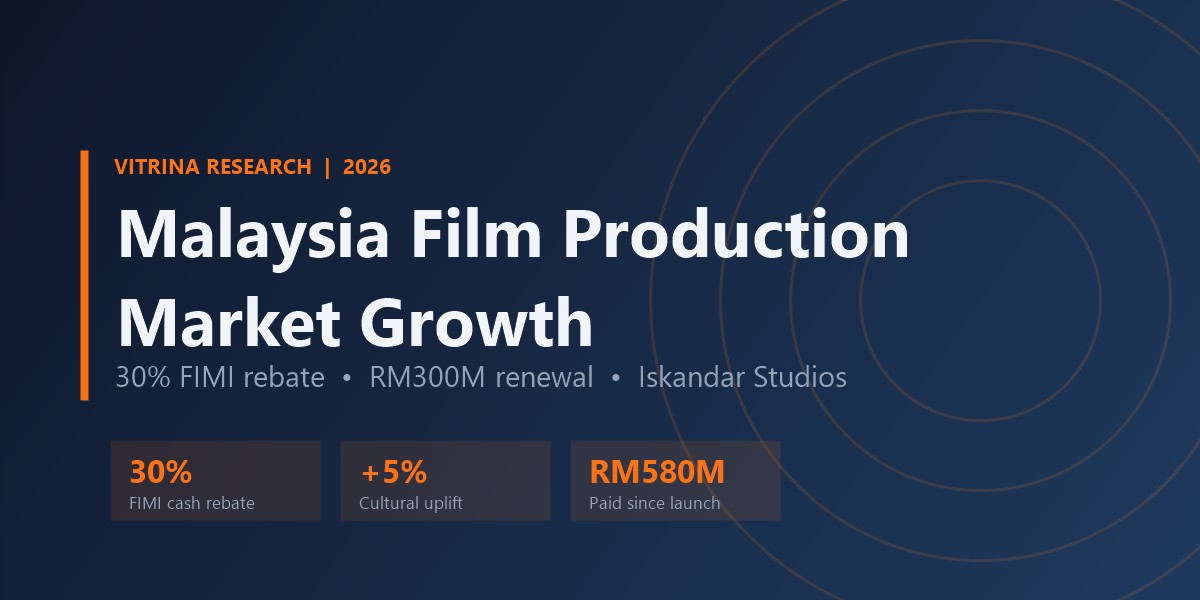
Growing VFX production hubs with competitive incentives and English-language capabilities. See: Malaysia’s Top VFX Studios: An Executive Sourcing Guide.
Tax Incentives and Location-Based Cost Reduction
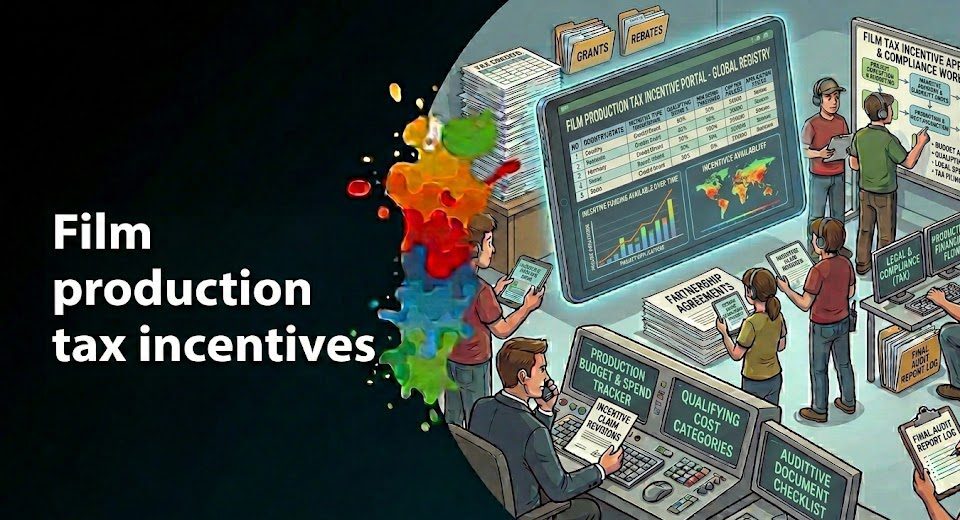
Tax incentives are one of the most significant financial levers in vendor sourcing. Many productions choose a primary VFX territory based not on the studio’s reputation alone, but on the combined effect of studio quality plus incentive value. A 30% tax credit on a USD 10M VFX budget is USD 3M in effective savings.
Key incentive structures:
- Labour rebates: Percentage of qualifying labour spend returned as cash or tax credit (UK, Canada, Australia)
- Production grants: Non-repayable grants tied to minimum local spend (Germany BKM, various EU regional funds)
- Digital media incentives: Some territories offer separate incentives specifically for VFX/animation (India AVGC policy, Malaysia MSC status)
How to Vet a Vendor: The 6-Point Framework
- Credits audit: Request a credits reel specifically for work matching your project’s genre and complexity. A studio’s best reel covers their peak work — ask to see what was delivered under similar budget and time constraints
- Capacity check: What is the studio’s current pipeline? Who is the key creative lead assigned to your project, and what else are they working on?
- Security certification: For major studio projects, TPN (Trusted Partner Network) certification or equivalent is non-negotiable
- Financial health check: Review publicly available financials or request a credit check. Mid-production vendor insolvency disrupts schedules and may trigger force majeure
- Communication evaluation: Run a discovery call to assess responsiveness, time zone accommodation, and technical communication clarity
- Reference check: Contact at least one production that used the vendor for a comparable project in the last 12 months
For a detailed vetting framework applied to VFX specifically, see: The Essential Guide to Vetting the Top VFX Studios.
Structuring the RFP and Bid Process
A well-structured RFP process for production vendors covers five areas:
- Scope definition: Shot count, complexity categories, deliverable specs, and timeline milestones
- Candidate shortlisting: 3–5 vendors per category based on credits, territory, and incentive profile
- Bid package: Provide identical materials to all bidding vendors; hold a bid clarification call
- Evaluation matrix: Score on creative fit, technical capability, capacity, location/incentive, and price
- Negotiation and contract: Frame rate, milestone payments, IP ownership, security obligations, and turnaround terms
About Vitrina Editorial Team
The Vitrina editorial team covers global film and TV supply-chain intelligence, vendor sourcing, and production market analysis. Vitrina’s platform provides searchable profiles for VFX studios, animation houses, talent agencies, and production service companies across 60+ territories.
Vitrina Intelligence Platform
Stop Sourcing Vendors Blind.
Find the Right Partner Faster.
Join the production companies, studios, and procurement teams using Vitrina to find and vet VFX studios, animation houses, talent agencies, and post-production vendors — with verified data, not cold searches.
No credit card required • Free tier available • Premium plans from day one
Frequently Asked Questions
How do film and TV productions source VFX vendors?
Productions source VFX vendors through prior relationships, VFX supervisor recommendations, industry databases, and RFP processes. For mid-to-large budget productions, a shortlist of 3–5 studios is assembled based on specialization, capacity, location incentives, and past credits, then narrowed through competitive bidding or direct negotiation.
What is the difference between a VFX studio and an animation studio?
VFX studios specialize in compositing, CGI integration with live-action footage, and post-production visual work. Animation studios create fully animated content from scratch. Some facilities like ILM and DNEG do both, but most specialize in one or the other.
How do talent agencies work in film and TV production?
Talent agencies represent directors, writers, actors, and crew in negotiations with production companies, earning 10–15% commissions. For international productions, understanding which agencies hold representation rights in target territories is essential for efficient casting and crew assembly.
What should productions look for when vetting international vendors?
When vetting international vendors, evaluate: relevant credit history (genre and budget scale), security protocols (TPN certification for major studio work), communication capabilities, government incentive eligibility, financial stability, and union/guild compliance.
How can productions find vendors in specific territories?
Productions find territory-specific vendors through local film commissions, Vitrina’s vendor database, trade associations (VES for VFX, PACT for UK production), and industry markets like Cannes Marche and AFM. Vitrina provides searchable profiles for 500+ verified vendor companies globally.