About Innovation Hub
 Global Content Pulse (Webinars)


 Global Production Financing
(Webinars)
Global Production Financing
(Webinars)  LeaderSpeak Podcast
  Global Entertainment Digest (Newsletter)
  About Vitrina
 About VIQI
 Our Story
 Our Solutions 🔥
 Film+TV Projects Tracker 🚀
 Case Studies
 Our Profile

Here’s what most international producers overlook when they think about Italian visual effects: Italy’s 30–40% transferable tax credit — bankable through Italian financial institutions — now applies to pure post-production projects with no minimum shooting-day obligation. That’s a structural shift.
It means your VFX-heavy project doesn’t need a single frame shot in Rome or Milan to access one of Europe’s most generous digital post incentives. And as streaming platforms continue to greenlight Italian-origin content at scale, the cluster of VFX companies in Italy surrounding Rome’s Cinecittà complex and the emerging Milan digital hub has moved from regional curiosity to genuine competitive consideration for global producers building their post stack.
But — and this is the part worth understanding before you start making calls — Italy’s VFX supply chain sits squarely inside the Fragmentation Paradox. With 10,000+ VFX and post-production companies operating globally, most producers know fewer than a dozen Italian vendors by name. The rest? Invisible. The result is predictable: margin leakage of 15–20% on post spend, paid to intermediaries who know the market you don’t.
This guide breaks down who’s actually operating in Italy’s VFX sector in 2026, what capabilities they bring, how the incentive math works for international co-productions, and how to stop sourcing Italian VFX vendors the slow way. We’ve also pulled from Vitrina’s European VFX selection framework to structure what actually matters when qualifying studios in this market.
Find Verified Italian VFX Studios Before Your Budget Window Closes
Trusted by Netflix, Warner Bros, and Paramount. Join 140,000+ companies using Vitrina to track the global entertainment supply chain — including VFX vendors, post-production studios, and co-production partners across Italy and Europe.
✔ 200 free credits | ✔ No credit card required | ✔ Full platform access
Why Italy’s VFX Market Matters More Than You Think in 2026
Italy’s screen production sector has experienced a quiet but meaningful transformation over the past four years. Netflix, Sky, and Disney+ have all committed to original Italian-language content — from Suburra and The Young Pope to more recent high-end drama commissions — and every one of those projects requires post-production infrastructure that simply didn’t exist at this scale in Italy a decade ago. The market has responded. Rome’s Cinecittà complex has undergone a major expansion, and an ecosystem of digital effects, color, and VFX boutiques has developed in its orbit.
But the incentive story is what really moves the needle for international producers. Italy’s film tax credit — 40% for Italian productions and 30% for foreign productions spending in Italy — is a transferable credit, which means it can be monetized through Italian banks before your project even completes. That’s a meaningful cash flow advantage during production, and it changes how producers structure their capital stack. According to Screen International, the removal of Italy’s minimum shooting-day requirement for post-production incentive access has opened the door for projects that want Italian digital effects work without committing principal photography to the territory. That’s a fundamentally different conversation than the old model.
Layer in Italy’s participation in the European Convention on Cinematographic Co-Production — covering 43 countries — plus its bilateral treaties with France, Germany, Canada, and Australia, and you’re looking at a territory where co-production incentive stacking can get genuinely interesting. A German-Italian-Canadian tri-lateral co-production, properly structured, can access three separate national incentive regimes simultaneously. The VFX spend becomes part of your Italian contribution — which unlocks the credit — while the broader production benefits from German DFFF funding and Canadian federal and provincial tax credits. That’s CFO-level thinking about your post budget, not just “let’s find a good Italian VFX house.”

Your AI Assistant, Agent, and Analyst for the Business of Entertainment
VIQI AI helps you plan content acquisitions, raise production financing, and find and connect with the right partners worldwide.
- Find active co-producers and financiers for scripted projects
- Find equity and gap financing companies in North America
- Find top film financiers in Europe
- Find production houses that can co-produce or finance unscripted series
- I am looking for production partners for a YA drama set in Brazil
- I am looking for producers with proven track record in mid-budget features
- I am looking for Turkish distributors with successful international sales
- I am looking for OTT platforms actively acquiring finished series for the LATAM region
- I am seeking localization companies offer subtitling services in multiple Asian languages
- I am seeking partners in animation production for children's content
- I am seeking USA based post-production companies with sound facilities
- I am seeking VFX partners to composite background images and AI generated content
- Show me recent drama projects available for pre-buy
- Show me Japanese Anime Distributors
- Show me true-crime buyers from Asia
- Show me documentary pre-buyers
- List the top commissioners at the BBC
- List the post-production and VFX decision-makers at Netflix
- List the development leaders at Sony Pictures
- List the scripted programming heads at HBO
- Who is backing animation projects in Europe right now
- Who is Netflix’s top production partners for Sports Docs
- Who is Commissioning factual content in the NORDICS
- Who is acquiring unscripted formats for the North American market
Cinecittà and the Rome VFX Cluster
You can’t discuss Italian VFX without starting in Rome. Cinecittà, established in 1937 and privatized in 1997, remains the gravitational center of Italy’s production infrastructure — and in 2026, it’s also the anchor of a growing digital post ecosystem. The complex operates its own post-production and visual effects facilities that have supported productions including Mel Gibson’s Hacksaw Ridge, Wolfgang Petersen’s Troy, and multiple high-budget Netflix originals. But what’s changed in recent years is the cluster effect: smaller, specialized VFX boutiques have established operations in Rome partly to benefit from proximity to Cinecittà’s production pipeline and partly to position for Italy’s post incentive.
Rome’s cluster strength is primarily in period drama and creature work — driven by the theatrical tradition that Cinecittà represents — though digital environments and previs have expanded significantly. If your project involves large-scale historical reconstruction, crowd augmentation, or environment extension, Rome’s vendor cluster is particularly well-suited. The city’s production design heritage runs deep, and the VFX artists who’ve worked around that ecosystem have developed corresponding strengths in CG environments and compositing for dramatic content rather than pure action-spectacle VFX.
Cinecittà Studios’ Digital Infrastructure
Cinecittà Studios SpA — the operating entity managing the historic lot — has in recent years expanded its technology offering beyond traditional stage rental. Digital post suites, color grading facilities, and VFX supervision capabilities are now embedded in the campus, positioning Cinecittà not just as a stage provider but as a vertically integrated production campus. This matters for international producers who want to keep their post pipeline geographically consolidated: you can shoot on the lot, finish on the lot, and have your Italian tax credit contribution structured around a single vendor relationship.
The renovation program — backed partly by the Italian government’s cultural investment agenda — added new LED volume stages and updated digital infrastructure that brought the facility closer to parity with Pinewood, Shepperton, and the newer European stage complexes. It’s not ILM-level VFX capability. But for productions that need credible European post infrastructure with Rome’s location and incentive access? It’s a serious option, and the recent commissioning wave from streamers proves the market has validated it.
Joseph Bell (VFX Industry Veteran, formerly Industrial Light & Magic) discusses current VFX market trends, vendor selection frameworks, and where the global VFX landscape is heading — directly relevant for producers evaluating European studio relationships:

Italian VFX Boutiques and Specialist Studios
Beyond Cinecittà’s integrated campus, Italy has a network of independent VFX and digital effects studios worth knowing. These are typically mid-scale boutiques with specialized strengths — not Framestore competitors, but serious partners for specific project needs. And because they’re largely invisible to producers operating outside Italy’s relationship networks, they represent the clearest opportunity to source quality Italian VFX capability without paying the relationship-network premium that intermediaries charge for introductions.
Studio Evil (Bologna)
Studio Evil, headquartered in Bologna, has built a strong reputation in VFX and digital content across feature film, advertising, and broadcast. Their work spans 3D animation, compositing, and environment work — and the studio has developed a particular fluency in the kind of mid-budget VFX that European drama series increasingly require. Bologna’s position as a northern Italian creative hub gives Studio Evil access to a talent pool that skews toward technical rigor and design-led visual problem solving, distinct from the theatrical Hollywood-adjacent sensibility you find in Rome. If your project is a prestige European drama series budgeted in the €5M–€15M per-episode range, they’re a name worth putting in your shortlist alongside UK independents.
The Milan Digital Post Cluster
Milan’s contribution to Italy’s VFX ecosystem is quieter but growing. The city’s advertising and commercial production history — Italy’s fashion and luxury sector generates significant high-end commercial visual effects demand — has produced a cluster of studios with strong compositing, color science, and photorealistic rendering capabilities. What Milan lacks in Cinecittà’s stage infrastructure it partially compensates for with design-led VFX expertise and faster commercial turnaround. For branded entertainment, episodic content with contemporary settings, and projects where photorealistic product or environment integration matters, Milan’s boutique sector is underutilized by international producers who tend to default to Rome or head directly to London and Paris.
Global VFX Houses Active in Italian Co-Productions
It’s worth being clear about one reality: for VFX-intensive projects with budgets above €20M, the most practically relevant “Italian VFX partner” for many international producers isn’t a purely domestic studio — it’s one of the global houses operating as part of an Italian co-production structure. Technicolor, DNEG, and MPC have all delivered VFX work on Italian-flag productions, routing qualifying post spend through Italian entities to access the tax credit. This isn’t unusual — it’s exactly how the UK’s 29.25% VFX uplift (effective April 2025) functions in practice, with major international houses structuring their UK entities to qualify.
The structural point: when you’re building your Italian VFX strategy, you need to think about two separate questions simultaneously. Which Italian studios can genuinely deliver the creative capability your project needs? And which co-production structures allow you to access Italy’s incentive against VFX spend that might be delivered partly or fully outside Italy? Those are different optimizations, and conflating them is how budgets go sideways.
Map Italy’s VFX Supply Chain Across 400,000+ Active Projects
Vitrina’s VIQI AI surfaces verified Italian VFX vendors, their active project credits, current capacity, and incentive-qualification status — all in real time. Stop sourcing Italian VFX partners through cold outreach and relationship guesswork.
Used by Netflix UK to identify co-production partners in 48 hours. No credit card required.
Incentive Stacking: How Italy’s Tax Credit Works With European Co-Production
Let’s get into the actual capital stack mechanics, because this is where Italian VFX stops being just a “nice to have” and starts changing the financial architecture of your project.
Italy’s tax credit for foreign productions investing in Italy runs at 30% of qualified Italian spend. For qualifying Italian productions, it reaches 40%. Both are transferable — you can sell the credit to an Italian bank or financial institution at a discount (typically 85–92 cents on the euro), converting a future government receivable into current production capital. That monetization mechanism is crucial because it de-risks the incentive against the timeline uncertainty that typically surrounds tax credit receipt.
Now layer in the co-production dimension. Italy is party to the European Convention on Cinematographic Co-Production, covering 43 European countries, and maintains bilateral treaties with France, Germany, Canada, Australia, and several others. A project structured as an Italy-France official co-production — administered by Italy’s Directorate General for Cinema and MIC, and France’s CNC — grants national film status in both territories simultaneously. That means your Italian VFX spend qualifies for the Italian credit, while French co-production spend potentially qualifies for France’s 30% international rebate (or 40% if French VFX spend exceeds €2M). You’re stacking two European incentive regimes against a single production budget.
France and Italy also maintain a €1M joint co-production fund administered through their bilateral cultural agreement — an additional financing layer that prestige co-productions between the two countries can access on top of their respective incentive regimes. Andrea Scarso of IPR VC — a London-based equity financing fund with offices in Helsinki and Paris — makes the broader point well: “Co-production opportunities, especially in those territories where you can maximize some of the local incentives, some of the tax credits or local subsidies or local pre-sales, has become crucially more important.” Italy is exactly the territory he’s describing.
For our related breakdown of how to build European co-production capital stacks, see Vitrina’s guide to international co-production strategies.
How to Actually Qualify Italian VFX Vendors for Your Project
Here’s where the Fragmentation Paradox bites hardest. Italy’s VFX sector isn’t opaque because there’s nothing there — it’s opaque because the information infrastructure around it is underdeveloped relative to the UK or German markets. According to Variety, Italy’s production surge driven by Netflix, Sky, and Apple TV+ investment has outpaced the market intelligence infrastructure needed to efficiently source the vendors servicing it. That gap is where producers lose money.
Traditional vendor qualification in Italy goes something like this: You ask festival contacts for introductions. You get two or three names. You request capabilities decks from studios that may or may not have worked on anything comparable to your project. You schedule calls across time zones. Three months pass. Your greenlight window narrows. You default to the UK house you already know and pay 15–20% more than you needed to. Sound familiar? It should — it’s the standard outcome of relationship-dependency in fragmented markets.
What rigorous qualification actually requires: verified hero project credits (not self-reported, but confirmed against production records), current capacity status, software pipeline compatibility with your workflow, financial stability indication, and — critically — confirmation of Italian entity structure for tax credit eligibility. A VFX studio that does beautiful work but isn’t structured to receive the Italian credit as a qualifying entity doesn’t help your capital stack at all.
Vitrina’s platform compresses this process from months to days. For producers who’ve used it — including teams at Netflix, Warner Bros, and Paramount — the ability to query Italian VFX vendors by verified capability, project credit history, and capacity against a specific delivery window eliminates the relationship-dependency trap entirely. It’s not a directory. It’s real-time intelligence on a supply chain that was previously visible only to people deep inside it.
5 Criteria That Actually Matter When Choosing Italian VFX Partners
1. Tax credit entity eligibility. Confirm that the studio is structured as a qualifying Italian production entity under MIC (Ministry of Culture) guidelines. An Italian branch or subsidiary of a foreign company may or may not qualify depending on how it’s incorporated and where its IP and revenue nominally reside. This is a first-pass filter, not a nice-to-have.
2. Hero project verification. Don’t rely on the reel. Request specific project credits with release dates, production company references, and deliverable scope. Italian VFX boutiques, like boutiques everywhere, sometimes present aspirational portfolio work that overstates their typical delivery capacity. The question isn’t “what’s your best work?” — it’s “what’s the highest-budget episodic project you’ve completed in the last 24 months and who can confirm it?”
3. Software and pipeline compatibility. Italy’s VFX sector uses the standard global pipeline — Houdini, Maya, Nuke, DaVinci Resolve — but workflow integration matters when you’re splitting VFX work across multiple vendors or countries under a co-production structure. Confirm versioning, delivery specs, and cloud pipeline compatibility before you’re six weeks into a shoot trying to transfer assets.
4. Current capacity versus projected availability. Italian VFX boutiques tend to run lean. A studio with 20 artists committed to a 12-episode drama series isn’t available for your feature regardless of what their website says. Capacity verification — not just “we’d love to work on your project” — is a non-negotiable qualification step.
5. Monetization relationship for tax credit. If you’re counting on the Italian credit to support your bridge financing structure, confirm that the studio has an existing banking relationship for credit monetization — or that your Italian co-production entity does. The credit itself is valuable. The credit you can access before delivery is the one that actually helps your cashflow during production. These are different things.
De-Risk Your Italian VFX Sourcing With a Dedicated Research Analyst
Vitrina’s Concierge Service gives you a dedicated analyst who maps Italian VFX vendor capabilities, verifies project credits, confirms entity structure for tax credit eligibility, and delivers a qualified shortlist against your project parameters — in days, not months.
Used by 140,000+ companies. No commitment required to start.
The Bottom Line on Italian VFX in 2026
Italy’s VFX sector is underutilized by international producers — and that gap is a competitive advantage for the ones who close it early. The incentive economics are real: a 30–40% transferable, bankable tax credit with no shooting-day minimum for post-only projects is a genuinely compelling proposition. The infrastructure — anchored by Cinecittà’s expanding digital campus in Rome and supplemented by Bologna’s and Milan’s specialist boutiques — is capable, not just willing. And the co-production treaty architecture connecting Italy to France, Germany, Canada, and 40+ European Convention signatories creates incentive stacking opportunities that most producers in these markets haven’t fully mapped.
What’s missing isn’t capability. It’s intelligence. Italy’s VFX vendor landscape sits behind the same information opacity wall that costs producers 15–20% in margin leakage on post spend in every fragmented market. The way through that wall isn’t another conference introduction — it’s verified, real-time data on who’s active, what they’ve delivered, and whether they’re structured to make your incentive work.
For more on how to find and vet the right European VFX partners for your project, Vitrina’s guide to top VFX studios across Europe and the broader executive VFX selection framework cover the strategic sourcing methodology in detail.
Key Takeaways
- Italy’s 30–40% transferable tax credit now applies to pure post-production projects with no minimum shooting day requirement — a structural change that makes Italian VFX spend more accessible to international producers.
- Cinecittà Studios in Rome remains the anchor of Italy’s VFX infrastructure, expanded with LED volume stages and digital post suites that support high-budget streaming originals.
- Italy-France co-production treaty structures allow incentive stacking across both territories, including a dedicated €1M joint fund for qualifying projects.
- Boutique studios in Bologna and Milan offer specialized VFX capability that’s largely invisible to producers operating outside Italy’s relationship networks — the clearest source of margin recovery on Italian post spend.
- Tax credit entity qualification, hero project verification, and capacity confirmation are the three non-negotiable steps before committing Italian VFX spend to any vendor in this market.
Frequently Asked Questions
What are the top VFX companies in Italy for 2026?
Italy’s top VFX ecosystem in 2026 is anchored by Cinecittà Studios in Rome, which has expanded its digital post and VFX infrastructure to support high-budget streaming originals. Studio Evil in Bologna is a well-regarded mid-scale VFX boutique with credits in European drama and digital content. Milan’s commercial advertising sector has also produced a cluster of specialist compositing and photorealistic rendering studios. For large-scale VFX, global houses including Technicolor, DNEG, and MPC deliver VFX on Italian co-productions through local entity structures that qualify for Italy’s transferable tax credit.
What is Italy’s VFX tax incentive and how does it work?
Italy offers a transferable tax credit of 30% for foreign productions and 40% for Italian productions on qualifying Italian spend. The credit is bankable — it can be monetized through Italian financial institutions at approximately 85–92 cents on the euro, converting a future government receivable into current production capital. Critically, Italy removed its minimum shooting-day requirement for post-production incentive access, meaning pure post or VFX projects can qualify without committing principal photography to Italy.
How does Cinecittà Studios support VFX production in Italy?
Cinecittà Studios, established in 1937 and expanded significantly in recent years, provides an integrated production campus in Rome with stage facilities, LED volume stages, digital post suites, color grading infrastructure, and VFX supervision capabilities. Productions including Netflix originals, major European co-productions, and Hollywood studio projects have used Cinecittà’s expanded digital infrastructure. Its ecosystem supports both Italy’s tax credit qualification and proximity to Rome’s broader post-production and VFX supplier network.
Can I stack Italy’s VFX incentive with other European co-production incentives?
Yes. Italy is a signatory to the European Convention on Cinematographic Co-Production, covering 43 countries, and maintains bilateral treaties with France, Germany, Canada, Australia, and others. A properly structured Italy-France official co-production grants national film status in both territories simultaneously, allowing Italian VFX spend to qualify for Italy’s 30-40% credit while French production spend potentially qualifies for France’s 30% international rebate (or 40% if French VFX spend exceeds €2M). Italy and France also maintain a €1M joint co-production fund for qualifying prestige projects.
How do I find and qualify Italian VFX studios for my production?
Effective qualification of Italian VFX studios requires verifying: (1) Italian entity structure for tax credit eligibility under MIC guidelines; (2) confirmed hero project credits from comparable productions with verifiable references; (3) software pipeline compatibility with your workflow; (4) actual current capacity versus projected availability; and (5) existing banking relationships for credit monetization if you’re planning bridge financing against the incentive. Vitrina’s platform provides verified data on Italian VFX vendor capabilities, project history, and capacity status — compressing what is typically a 3–6 month sourcing process to days.
What VFX specializations is Italy’s market strongest in?
Italy’s VFX strengths reflect its production heritage. Rome’s Cinecittà-adjacent cluster excels in period drama, historical environment extension, crowd augmentation, and CG environments built to service large-scale theatrical narratives. Bologna’s boutique studios trend toward technically precise compositing and mid-budget episodic VFX. Milan’s commercially-oriented studios have strong capabilities in photorealistic product integration, beauty and luxury visual effects, and clean compositing work driven by Italy’s fashion and advertising sector. For action-heavy spectacle VFX at tentpole scale, Italy works best as part of a distributed co-production structure rather than a single-territory solution.
Which streaming platforms are investing in Italian VFX-driven content?
Netflix, Sky, and Apple TV+ have all committed to original Italian-language content requiring significant post-production infrastructure. Netflix in particular has used Cinecittà’s expanded campus for several Italian originals and has invested in the Italian market as part of its broader European content mandate. Disney+ has also commissioned Italian drama series. This streaming investment wave has driven the expansion of Italy’s VFX and digital post infrastructure beyond what domestic theatrical production alone would have sustained, and has increased competition for Italian post-production capacity.
How does Vitrina help producers find VFX companies in Italy?
Vitrina’s platform maps 140,000+ active entertainment companies globally, including verified Italian VFX studios, their project credit histories, current capacity, and entity structure details relevant to tax incentive qualification. VIQI, Vitrina’s AI, answers specific queries like “Which Italian VFX studios have delivered episodic VFX in the €3–8M budget range in the past 18 months?” and returns verified results rather than directory listings. Vitrina’s Concierge Service additionally provides dedicated analyst research for producers who need a fully qualified vendor shortlist against specific project parameters. Start with 200 free credits at vitrina.ai — no credit card required.
Stop Overpaying for Italian VFX. Start Using Verified Intelligence.
Join Netflix, Warner Bros, Paramount, and 140,000+ companies already using Vitrina to track the global entertainment supply chain — including every active Italian VFX studio, post-production vendor, and co-production partner worth knowing about in 2026.
✔ 200 free credits | ✔ No credit card required | ✔ Cancel anytime
Find Film+TV Projects, Partners, and Deals – Fast.
VIQI matches you with the right financiers, producers, streamers, and buyers – globally.
Producers Seeking Financing & Partnerships?
Book Your Free Concierge Outreach Consultation
(To know more about Vitrina Concierge Outreach Solutions click here)
Join Industry Briefings Trusted by Leaders
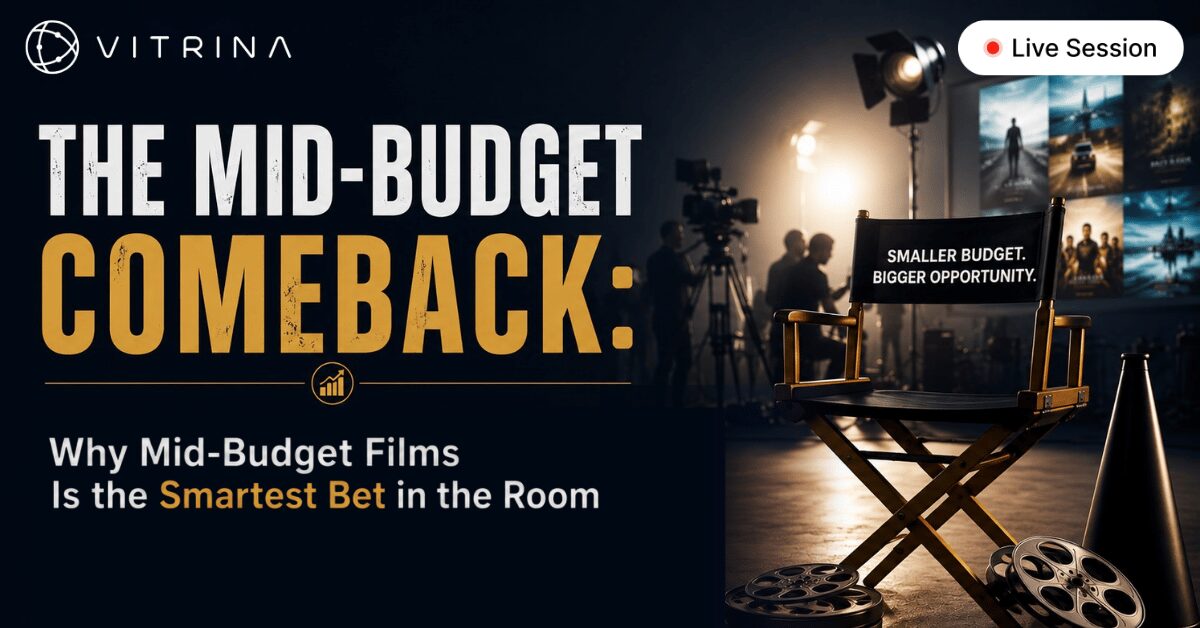
The Mid-Budget Comeback: Why Mid-Budget Films Is the Smartest Bet in the Room
Mid-budget films are attracting new capital. See why this segment is becoming one of the strongest bets in Film today.
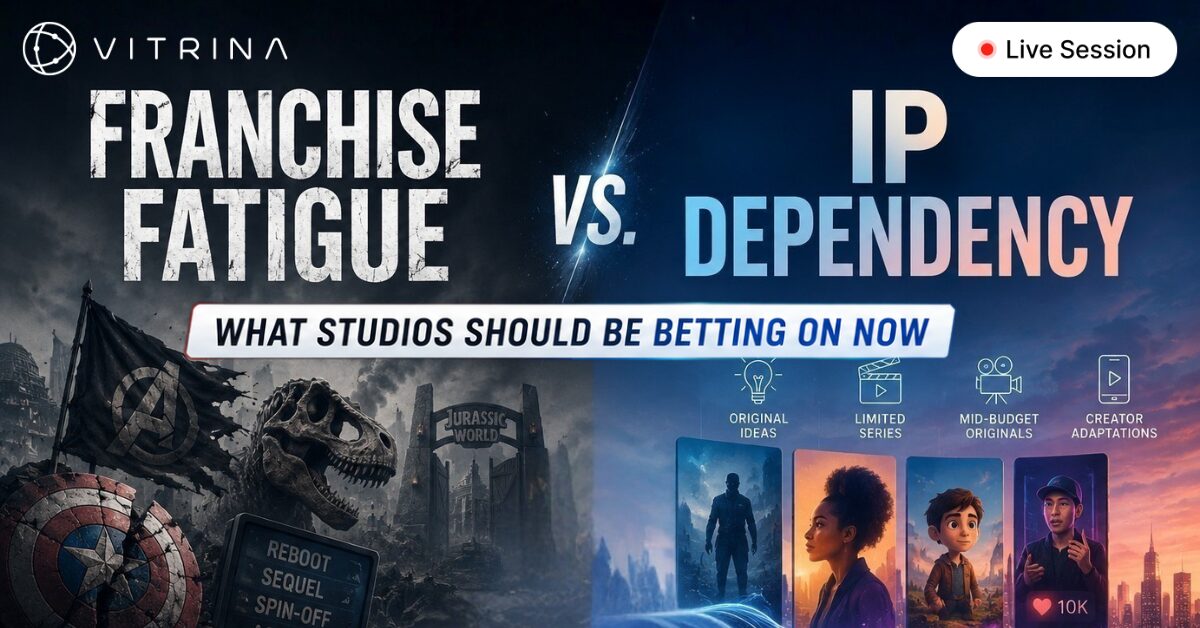
Franchise Fatigue vs. IP Dependency: What Studios Should Be Betting On Now
s franchise performance softens, where will the next generation of valuable IP come from? Join the briefing.

Unscripted Is Eating the World: The Multi-Billion Reality and Format Boom
Unscripted is the new prestige — inside the $19.8B global format boom reshaping how streaming platforms compete.

How Co-Productions and Regional IP Are Reshaping Global Drama
As global drama evolves, which stories travel, which stay local, and how are they getting financed?