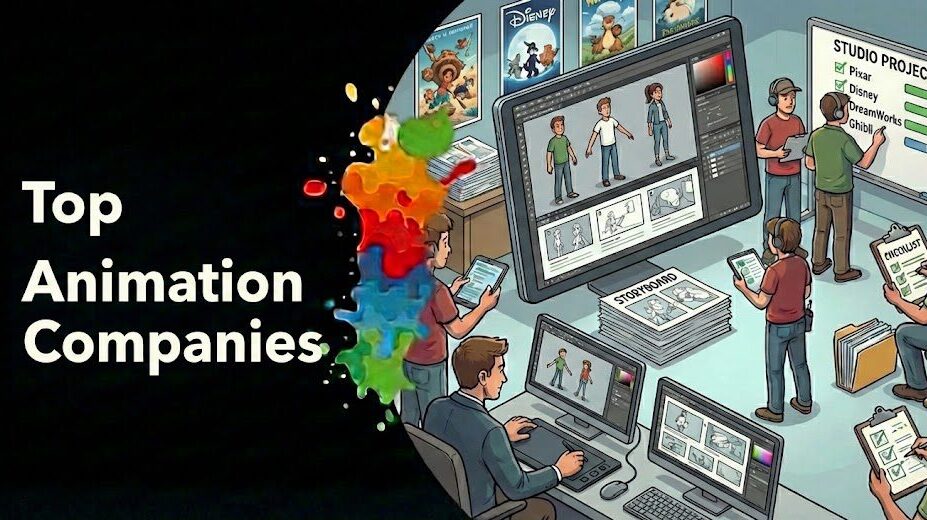
Here’s what most vendor directories won’t tell you: the Philippines has been powering some of the world’s biggest animated franchises for over three decades — and in 2026, it’s doing more of that work at a higher level than ever. Animation studios in the Philippines aren’t just execution houses anymore. They’re creative and technical partners embedded deep in the supply chains of Disney, Netflix, Warner Bros., and Nickelodeon.
But here’s the problem you’re probably running into: the Philippine animation ecosystem is fragmented. 152 verified animation studios operate across the country as of late 2025 — concentrated in Metro Manila, with secondary clusters in Cebu and Davao. That’s a lot of options. Most surface-level directories tell you who exists. What you actually need to know is who’s available, who’s verified, and who’s genuinely equipped to handle your production at scale.
That’s what this guide is built to do. Whether you’re scouting for a 2D episodic outsource partner, a 3D CGI studio for streaming originals, or a boutique house for co-production on OTT content, you’ll find your shortlist here — with verified intel on each studio’s technical capabilities, hero credits, and strategic positioning for 2026.
💡 Vitrina Analyst Note
The Philippines has powered Disney, Nickelodeon, and Warner Bros. pipelines for over three decades. From what we track on Vitrina, 152 verified studios were active as of late 2025, with more than 60% of top tier names already tied to major streamers. The real sourcing challenge here is navigating the fragmentation, not finding the talent.
TABLE OF CONTENTS
- Why the Philippines Dominates Animation Outsourcing
- The Vetting Framework: What to Audit Before You Sign
- Top 10 Animation Studios in the Philippines for 2026
- Metro Manila as an Animation Sovereign Hub
- Cost vs. Quality: What the Numbers Actually Look Like
- The 2026 Co-Production Trend: Beyond Work-for-Hire
- How to Vet a Philippine Animation Partner Using Supply Chain Intelligence
- Frequently Asked Questions
- Conclusion & Key Takeaways
Find Verified Philippine Animation Studios in Minutes
Over 140,000+ companies — including leading Philippines animation vendors — are tracked in real time on Vitrina. Studios like Top Draw and Toon City have verified profiles showing current pipeline capacity, TPN certification status, and recent credits. Ask VIQI to match you with the right partner based on your budget, genre, and timeline — right now.
Trusted by acquisition teams at Netflix, Warner Bros., and Paramount. 200 free credits included. No credit card required.
Why the Philippines Dominates Animation Outsourcing
The Philippines’ animation story starts in 1993. That’s when Toon City Animation landed its first Disney contract — five episodes of Bonkers — and quietly kicked off one of the most durable outsourcing relationships in entertainment history. Three decades on, that same studio has animated credits on Kim Possible, The Mighty B!, Lilo & Stitch 2, and a 2025 Annecy Animation du Monde development award for Sun Chasers.
But Toon City isn’t an anomaly. It’s the prototype. The country has built an entire industry ecosystem around the same model: technically rigorous, English-proficient, cost-effective, and deeply familiar with Western storytelling conventions. By the late 1990s, annual Philippine animation industry revenue was approaching $40 million. Today, the hub supports a workforce of over 10,000 artists, with Metro Manila accounting for nearly 47% of all active studios in the country.
Three structural advantages separate the Philippines from other Southeast Asian animation hubs. First, cultural alignment: Filipino artists have decades of experience interpreting Western creative briefs without the communication overhead that plagues other regional options. Second, pipeline maturity: the country’s top studios have been running high-volume episodic production — sometimes 52 episodes per year — long enough to develop the standardized asset pipelines and middle-management layers that keep quality consistent at scale. Third, English fluency: you’re not losing 15% of your production time to translation friction.
And it’s not just 2D anymore. The hub has meaningfully expanded into Maya and Unreal Engine-based 3D production, VFX compositing, rotoscoping, and clean-up — making it relevant for the streaming-original pipeline that now drives the majority of international animation commissioning. According to industry data tracked by Vitrina, the global episodic streaming content market hit $18.2 billion in 2024, and Philippine studios are embedded in a significant portion of that output.
For content buyers and producers, that’s the strategic picture. The Philippines isn’t a fallback. It’s a first-call hub — especially if you need broadcast or streaming-quality output at 40–60% below Western studio rates. But the Fragmentation Paradox is real here: more than 150 studios means more noise, more opacity, and more risk of ending up with a vendor who can’t actually scale to your needs. That’s the problem we’re solving in this guide.
The Vetting Framework: What to Audit Before You Sign
Don’t hire a Philippine animation studio based on their demo reel alone. That’s how you end up with inconsistent output at episode 18 of a 26-episode series. Here’s the supply chain intelligence framework that acquisition leads actually use when sourcing from this market.
Infrastructure & Technical Audit
Verify their hardware stack and secure data transfer protocols. A studio running Harmony or Toon Boom Animate pipelines for 2D is fundamentally different from one doing Maya or Blender-based 3D work. You need to know which software they’re proficient in — and more importantly, which tools are running on servers robust enough for your project’s asset volume. Don’t assume. Ask for a technical specification sheet before your first call.
TPN Certification Status
Trusted Partner Network (TPN) certification has become a non-negotiable for studios working with major streamers and broadcasters. It signals verified security standards for handling pre-release content. Many of the Philippines’ top-tier studios — particularly those with Disney or Netflix relationships — are TPN-verified. If a studio you’re considering isn’t, that’s a meaningful flag. It doesn’t disqualify them for all work, but it does for anything touching major IP before release.
Pipeline History & Current Capacity
Credit history matters — but current capacity matters more. A studio that delivered 52 quality episodes for Cartoon Network two years ago may be fully overleveraged today. Use platforms like Vitrina’s Southeast Asia supply chain tracker to see verified project pipeline activity in real time. You want to know: are they running at 80% capacity or 110%? That’s not a question demo reels answer.
Top 10 Animation Studios and Companies in the Philippines for 2026
These ten studios represent the verified best-in-class options for international producers, content buyers, and streaming platforms sourcing animation from the Philippines. Selection criteria: verified credits with major broadcasters or streamers, technical specialization depth, pipeline scalability, and strategic positioning for 2026’s co-production market.
1. Toon City Animation — Manila
Specialty: 2D episodic | Traditional & Harmony-based | Disney, Nickelodeon, Warner Bros., HBO
The benchmark for Philippine animation. Founded in 1993 by Colin Baker, Toon City has an unbroken three-decade relationship with Disney — covering nearly every major Disney TV animated series of the past 30 years, including Kim Possible, Brandy & Mr. Whiskers, and multiple DisneyToon Studios direct-to-video features. Their 3,000 m² facility accommodates over 1,000 artists across traditional 2D, Flash, CGI, and paperless Harmony. They expanded to Vancouver under veteran Trevor Bentley (ex-Atomic Cartoons co-founder), adding a North American footprint that enables tighter broadcast timezone collaboration. In 2025, they co-produced Sun Chasers, which took the Annecy Animation du Monde development award.
Verdict: First-call for high-volume Disney-pipeline-quality 2D outsource. TPN-verified. Proven at scale.
2. Top Draw Animation — Pasig City, Manila
Specialty: 2D episodic | Harmony & Animate pipelines | Cartoon Network, Nickelodeon
Over two decades of continuous 2D production, Top Draw Animation has earned a reputation for premium rig-based workflows and hand-drawn animation for Cartoon Network and Nickelodeon. They’re one of the Philippines’ pioneering studios — and unlike many outsource houses, they’ve actively invested in talent development through the Top Draw Academy, a structured mentor-led training program. That internal talent pipeline directly addresses the crew attrition challenge that costs mid-tier studios quality consistency at episode 20+. Their specialization in fully rig-based versus hand-drawn workflows makes them a genuine fit for episodic broadcast-quality briefs.
Verdict: Ideal for Cartoon Network or Nickelodeon-standard 2D series. Proven talent development infrastructure — rare in this market.
3. Puppeteer Studios — Pasig, Manila
Specialty: Full-pipeline 3D | Games, film, TV | AAA game art & cinematics
Puppeteer Studios is the country’s most credible full-pipeline 3D operation — built by award-winning artists and positioned squarely at the intersection of game cinematics and broadcast/film animation. Their capability set covers concept art, storyboarding, 3D character and environment modeling, rigging, animation, VFX, rendering, compositing, and Unreal Engine integration. If you’re sourcing 3D animation for a streaming original or a game cinematic, this is the studio you’d put on a shortlist without hesitation. Their Pasig City base puts them in the Metro Manila cluster, with strong connections into the gaming industry that keeps their 3D pipeline constantly sharp.
Verdict: Best-in-class for 3D animation and game cinematics. Full-pipeline capability from concept through compositing.
4. Synergy88 — Manila
Specialty: Original IP development | Kids animation | Gaming & interactive | Co-production
Synergy88 is the most strategically interesting studio on this list — because they’re not just an outsource house. Through Synergy88 Entertainment Media, they develop original IPs for young audiences and have an existing co-production relationship with Singapore’s August Media Holdings. They’ve worked with Xbox on interactive content, which gives them a cross-platform production sensibility that’s increasingly valuable as entertainment IP migrates across games, animation, and streaming. If your brief involves co-production rather than pure work-for-hire, Synergy88 is the partner to have a more substantive conversation with.
Verdict: Strategic co-production partner. Strong in kids IP development and interactive content. Singapore partnership gives regional scale.
Track Philippine Animation Studios Before Your Competition Does
Acquisition teams at Netflix, Warner Bros., and Paramount use Vitrina to verify studio pipeline availability before approaching a single contact. Access 140,000+ company profiles, real-time project tracking, and verified credits — then start scouting with 200 free credits. No credit card required.
5. Xentrix Studios (Philippines Division) — Manila
Specialty: CGI & 2D hybrid | Major US/EU franchise work | Games
Xentrix Studios operates across Australia, India, the Philippines, and Canada — positioning it as one of the few studios in this market with genuine multi-territory footprint. Their Philippine division contributes to a credit list that includes The Simpsons, Beware the Batman, Shimmer and Shine (Seasons 2–4), Kamp Koral, and the revamped Amazing Adventures of Spider-Man at Universal Studios. That’s a remarkably broad range of franchise work. They’re described by Vitrina’s supply chain data as a name to verify for OTT-ready animation briefs — particularly for content buyers who need franchise-adjacent quality assurance built into the pipeline.
Verdict: Multi-territory studio with proven major franchise credits. Strong for OTT-commissioned animation requiring franchise-grade quality control.
6. BrightBulb Animations — Manila
Specialty: Explainer & marketing animation | Corporate | Educational | Brand content
BrightBulb Animations occupies a different part of the market — and that’s worth being deliberate about. They’re not a broadcast outsourcer; they’re a brand and marketing animation studio that consistently earns strong reviews for flexible turnaround under tight deadlines and quality-to-budget value. Clients have highlighted a project where a 3D animation video generated over 1 million views. For entertainment companies that need marketing content, corporate explainers, or brand animation — rather than episodic broadcast content — BrightBulb is a well-reviewed, client-centric option with genuine storytelling sensibility.
Verdict: Top pick for brand and marketing animation. Not broadcast scale, but excellent for marketing and audience engagement content.
7. CMD Studios — Manila
Specialty: 3D animation | AAA game art | Global brand work
CMD Studios has a client list spanning major AAA game companies and global corporations. Their focus is on building durable client relationships through consistent quality and proactive communication — not just execution. For producers working on game-adjacent animation, AR/VR content, or branded entertainment that needs 3D character and environment work, CMD offers a stable, globally-connected pipeline. Their stated vision — “build with greatness” — isn’t just positioning; their repeat client base backs it up. They’re a secondary but credible option for complex 3D projects that fall outside the pure broadcast pipeline.
Verdict: Reliable for 3D brand and game-adjacent animation. Strong communication track record — important for long-form remote production relationships.
8. Perfect Form — Manila
Specialty: Motion graphics | 3D animation | Premium brand & entertainment content
Perfect Form earns a rare 100% client satisfaction rating on Clutch — and their credits reflect why. An executive producer from Secret Powers has publicly praised their collaboration quality. They specialize in motion graphics and 3D animation for premium clients, consistently delivering ahead of schedule and within budget. For entertainment brands needing promotional content, title sequences, or high-end motion design, Perfect Form operates at a level that punches above its size. Their lead contact, Brad, gets named in multiple client reviews — a signal of the direct-engagement, senior-attention model that makes boutique studios worth considering for premium briefs.
Verdict: Best boutique option for premium motion graphics and 3D. Excellent for entertainment marketing, title design, and brand animation at high quality.
9. Outpost Visual Frontier — Manila
Specialty: Indie & commercial hybrid | Southeast Asian co-production | OTT originals
Outpost Visual Frontier is the emerging name on this list — a rising visual content house that blends indie sensibility with commercial execution. That’s a profile specifically suited for Southeast Asian co-production stories that need authentic regional texture without the production overhead of a legacy studio. Vitrina’s supply chain tracking flags this studio as well-positioned for the growing wave of APAC co-productions targeting regional OTT platforms. Think festival-circuit creative quality with commercial upside. If your brief is for an APAC original with cultural specificity — rather than a service-oriented outsource contract — Outpost is worth a conversation before the market discovers them.
Verdict: Strategic pick for APAC originals and regional co-productions. Early-mover advantage for buyers sourcing culturally-specific Southeast Asian content.
10. AV Animation (Animation Vertigo) — Manila
Specialty: Motion capture | Character animation | Game & film VFX
Animation Vertigo (AV Animation) has established itself as the standard for motion capture outsourcing in the Philippines — a highly specialized capability that few studios in the region can genuinely claim. Motion capture is increasingly central to live-action VFX pipelines, game cinematics, and premium animated features. AV’s ability to deliver mocap services at Philippine price points — while maintaining the quality expectations of global game and film clients — makes them a distinctive option in a market where most studios compete on 2D or standard 3D. For producers building action-heavy animation or game cinematics, they’re a technically differentiated choice.
Verdict: Specialized pick for motion capture work. Rare capability in this market — strong for game cinematics and action-heavy VFX animation.
Metro Manila as an Animation Sovereign Hub
The Sovereign Hub concept — where government-backed capital and infrastructure investment creates a vertically integrated production ecosystem — is most often discussed in the context of Saudi Arabia’s Vision 2030 or India’s enhanced federal incentives. But the Philippines is a different kind of hub. It’s market-built rather than government-built, and its dominance is organic rather than mandated.
Metro Manila accounts for 72 of the country’s 152 verified animation studios — roughly 47% of total market concentration. But the hub is diversifying. Secondary clusters in Cebu and Davao are emerging with specialized capabilities in game asset creation and VFX work, offering even sharper cost advantages than Metro Manila while maintaining adequate technical infrastructure for the right brief types.
What makes this meaningful for a content buyer or producer? The Fragmentation Paradox is visible in this data. A hub with 152 studios, concentrated in one metropolitan area, creates significant information asymmetry. More than 60% of top-tier Filipino studios have existing relationships with major streamers — but knowing which ones are current, which are TPN-verified, and which have available pipeline capacity in the next 6 months isn’t information you’ll find in a standard directory.
That intelligence gap is exactly what costs producers 15–20% in margin — either through overpaying for a studio that’s actually overleveraged, or missing the genuinely available partner who would have been a better fit. Vitrina’s real-time supply chain data directly addresses this. As we’ve covered in our guide to top animation studios across Southeast Asia, the Manila hub sits within a broader APAC ecosystem that’s increasingly interconnected through co-production treaties and streaming platform mandates.
Cost vs. Quality: What the Numbers Actually Look Like
Let’s be direct about this. Philippine animation studios typically deliver at 40–60% below Western studio rates, depending on the complexity of 3D assets, frame rates, and episode count. That’s not a vague “cost-effective” claim — it’s a benchmark producers can actually plan against.
But “cheap” and “value” are different things. Where the Philippines consistently over-delivers relative to its price point is in 2D episodic work at broadcast quality. You’re essentially getting the infrastructure that Disney trusted for 30 years, at rates that let you protect your EBITDA on a fixed-budget series.
Where the cost advantage narrows is in cutting-edge 3D work requiring significant R&D — particularly for visual styles that haven’t been produced in the Philippine market before. Pipeline setup time and specialized software licensing eat into the rate differential. For those briefs, studios like Puppeteer Studios or Xentrix still offer competitive pricing, but the gap versus Los Angeles or London VFX houses is closer to 25–35% rather than 50–60%.
The ROI case for Filipino animation partners is strongest when you’re scaling. Acquisition teams that have reported higher engagement and conversion rates on animated content sourced from the Philippines often cite the combination of quality output and turnaround speed — particularly for marketing animation, where a 48-hour delivery window at broadcast-adjacent quality is a meaningful competitive advantage over Western alternatives.
De-Risk Your Philippine Studio Partnership Before You Commit
Vitrina’s Concierge Service gives you a dedicated research team to verify pipeline availability, TPN status, and recent credits for any animation studio in this guide — or across Vitrina’s full database of 140,000+ companies. Used by acquisition executives at major streamers and broadcasters to accelerate vendor vetting from months to days.
Trusted by teams at Netflix, Paramount, and Google TV.
The 2026 Co-Production Trend: Beyond Work-for-Hire
Something’s shifting in how Philippine studios are positioning themselves — and if you’re a content buyer or producer, you should be paying attention. The traditional model was pure work-for-hire: a Western studio licenses IP, commissions production, Filipino studio executes. Simple. But 2026 is different.
According to Vitrina’s production house tracking data for the Philippine market, studios are actively seeking equity-based co-production models. That’s a meaningful structural shift. Synergy88’s partnership with Singapore’s August Media Holdings is the prototype — a co-production agreement that distributes both creative contribution and IP ownership, rather than a service contract with a flat fee.
The broader 2026 Philippine entertainment context reinforces this. As reported by sources tracking the Philippine production market, Viva Films signed a strategic alliance with South Korea’s Milagro Corporation in July 2025 for cross-border content exchange. ABS-CBN’s landmark re-entry into broadcast through an AMBS licensing deal, effective January 2026, is restructuring the domestic commissioning environment. And original Filipino animated content — shows like Barangay 143 — is starting to earn international recognition beyond the festival circuit.
What does this mean practically? The studios in this guide aren’t just vendors anymore — at least not the best ones. They’re potential creative partners with IP development ambitions. If your acquisition strategy involves securing regional APAC content with authentic cultural specificity, the Philippine animation sector in 2026 is one of the most strategically undervalued sourcing environments in the global supply chain. The Smart Pairing opportunity — matching your distribution assets with a Filipino studio’s local IP and production capability — is genuinely available now, before the market prices it in.
For deeper intelligence on APAC animation financing and co-production structures, our Philippines animation industry deep-dive and the broader Asia animation studios overview provide context that goes well beyond a studio list.
How to Vet a Philippine Animation Partner Using Supply Chain Intelligence
Here’s a concrete process — not a generic checklist. This is what acquisition leads who’ve closed deals with Philippine studios in the past 12 months actually do.
Step 1 — Use Vitrina’s Company Intelligence to pull verified profiles. Don’t start with a studio’s own website. Start with an independent data source that shows their pipeline history, recent credits, and current project load. A studio’s reel tells you their best work. Vitrina’s supply chain data tells you whether they can actually take on yours right now.
Step 2 — Verify TPN certification status directly. Don’t take a studio’s word for it. Cross-reference with the TPN database. If you’re working on pre-release streaming content, this is non-negotiable. Major streamers like Netflix have pulled from Philippine studios that failed TPN audits mid-production — it happens, and the cost is catastrophic.
Step 3 — Request a technical specification sheet before any creative conversation. This reveals their actual software stack — Harmony, Maya, Blender, Unreal — and their hardware infrastructure. It also tells you whether they’ve done work at your asset complexity level or if your project would be their stretch goal.
Step 4 — Run a pipeline capacity check. Ask directly: what’s your current throughput, and what projects are you running through Q3 and Q4? Then cross-reference against Vitrina’s real-time project tracker. Studios that are evasive about capacity are usually at or over capacity.
Step 5 — Start with a paid pilot episode. Every experienced production executive in this space will tell you the same thing: the transition from 26 to 52 episodes is where studios fail. A paid pilot episode — not a free test reel — shows you how they handle feedback, revision cycles, and creative direction. It’s your insurance policy.
Frequently Asked Questions About Animation Studios in the Philippines
Conclusion: Your 2026 Philippines Animation Strategy
The Philippine animation sector in 2026 isn’t simply an outsourcing hub. It’s a mature, globally-connected production ecosystem — one that’s been quietly powering Disney, Nickelodeon, Netflix, and Warner Bros. pipelines for over three decades, and is now beginning to assert its own IP development ambitions. The studios in this guide represent the verified best of a 152-studio market.
But here’s the thing: knowing the names isn’t the advantage. The advantage is knowing which studios have available pipeline capacity right now, which are TPN-verified, and which are actively seeking co-production partners rather than pure service contracts. That’s the intelligence gap the Fragmentation Paradox creates — and it’s the gap Vitrina’s supply chain data resolves.
Key Takeaways
- Scale of opportunity: 152 verified animation studios in the Philippines, with 72 concentrated in Metro Manila — and 60%+ of top-tier studios have existing major streamer relationships.
- Cost advantage: 40–60% below Western studio rates for 2D episodic work; 25–35% for complex 3D. Real numbers, not vague claims.
- Vetting is non-negotiable: TPN certification, pipeline capacity, and technical stack verification must precede any creative conversation. Reel quality alone is not sufficient diligence.
- Co-production is the 2026 signal: Synergy88’s Singapore partnership, Viva’s South Korean alliance, and broader APAC originals investment signal a structural shift from pure work-for-hire toward equity co-production models.
- Intelligence is the edge: The Fragmentation Paradox costs producers 15–20% margin. Vitrina’s real-time supply chain data closes that gap in days, not months.
Start Sourcing Philippine Animation Partners Today
Access verified profiles for all major Philippine animation studios — including TPN status, recent credits, and pipeline availability. Over 140,000+ companies tracked globally. Join acquisition teams from Netflix, Warner Bros., and Paramount who use Vitrina to find partners before they hit the trades. Start with 200 free credits. No credit card required.