About Innovation Hub
 Global Content Pulse (Webinars)


 Global Production Financing
(Webinars)
Global Production Financing
(Webinars)  LeaderSpeak Podcast
  Global Entertainment Digest (Newsletter)
  About Vitrina
 About VIQI
 Our Story
 Our Solutions 🔥
 Film+TV Projects Tracker 🚀
 Case Studies
 Our Profile
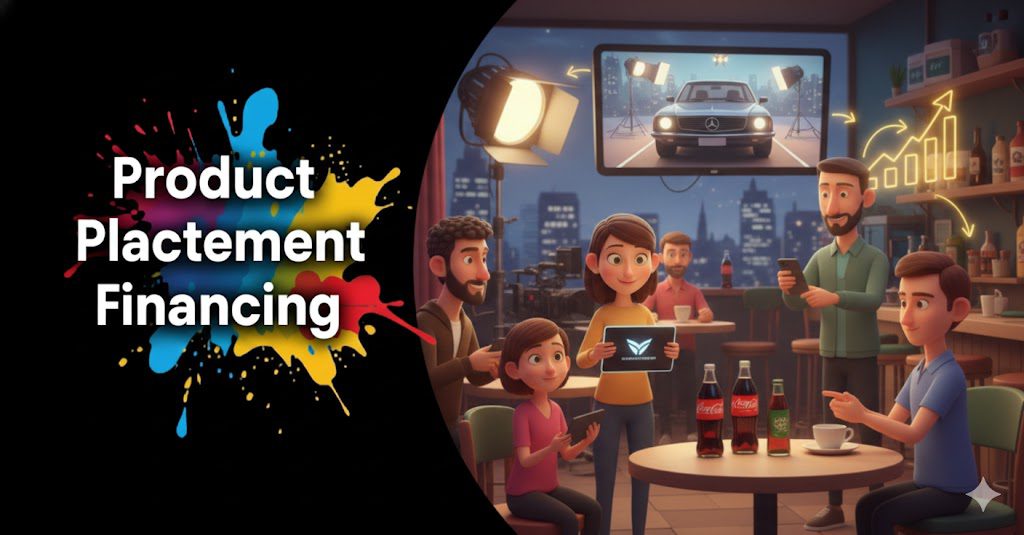
Product placement functions as a strategic financing tool by providing non-dilutive capital and reducing “out-of-pocket” production costs through brand-funded integrations and cross-promotional support.
Unlike traditional equity, brand integration capital does not require producers to surrender IP ownership, making it a critical component of a sustainable “creative financing” stack.
In the current “Weaponized Distribution” era, executives are moving beyond passive prop placement toward deep “Brand Partnerships” that are vetted via supply chain intelligence.
Vitrina AI tracks over 140,000 companies, enabling producers to qualify agencies and brands based on verified track records and specialization.
Strategic Roadmap

Your AI Assistant, Agent, and Analyst for the Business of Entertainment
VIQI AI helps you plan content acquisitions, raise production financing, and find and connect with the right partners worldwide.
- Find active co-producers and financiers for scripted projects
- Find equity and gap financing companies in North America
- Find top film financiers in Europe
- Find production houses that can co-produce or finance unscripted series
- I am looking for production partners for a YA drama set in Brazil
- I am looking for producers with proven track record in mid-budget features
- I am looking for Turkish distributors with successful international sales
- I am looking for OTT platforms actively acquiring finished series for the LATAM region
- I am seeking localization companies offer subtitling services in multiple Asian languages
- I am seeking partners in animation production for children's content
- I am seeking USA based post-production companies with sound facilities
- I am seeking VFX partners to composite background images and AI generated content
- Show me recent drama projects available for pre-buy
- Show me Japanese Anime Distributors
- Show me true-crime buyers from Asia
- Show me documentary pre-buyers
- List the top commissioners at the BBC
- List the post-production and VFX decision-makers at Netflix
- List the development leaders at Sony Pictures
- List the scripted programming heads at HBO
- Who is backing animation projects in Europe right now
- Who is Netflix’s top production partners for Sports Docs
- Who is Commissioning factual content in the NORDICS
- Who is acquiring unscripted formats for the North American market
Key Takeaways for Production Executives
-
Sustainable Capital: Treat brand integration as a dedicated “line item” in the capital stack to reduce the need for high-cost gap debt.
-
Data-Powered Sourcing: Use Vitrina AI to identify integration agencies that have specialized experience in your project’s specific genre or territory.
-
Reputation Over Hype: Map industry relationships to verify if a brand partner has successfully delivered on promotional commitments for past titles.
The Mechanics: How Brand Integration Becomes Production Capital
Product placement has evolved from the simple inclusion of props into a sophisticated financing tool known as “Brand-Funded Content.” In this model, brands provide cash payments, equipment, or marketing support in exchange for narrative integration. For a production executive, this capital is uniquely valuable because it is non-dilutive—it offsets costs without requiring the producer to trade away percentages of the film’s “backend.”
Furthermore, high-level brand integrations can act as “soft collateral.” When a production secures a multi-million dollar commitment from a global electronics or automotive brand, it signals to other financiers that the project has commercial “heat.” This validation often makes it easier to secure traditional production loans and theatrical distribution pledges.
Identify specialized brand integration agencies with VIQI:
Bridging Art and Enterprise: Best Practices for Creative Integration
The greatest risk to product placement financing is “Creative Rejection”—when an integration feels forced or distracts from the narrative. To prevent this, best practices dictate that brand discussions must begin during the development phase, not post-production. This allows the creative team to weave the brand into the “world-building” of the project, ensuring the integration feels organic to the character’s environment.
Executives should also seek brands that offer “Production Infrastructure” support. For example, an integration deal with a luxury hotel chain might provide “in-kind” financing through free location access and crew lodging, effectively removing six-figure costs from the physical production budget.
Industry Insight: Kirsty Bell on Brand Integration in Disciplined Models
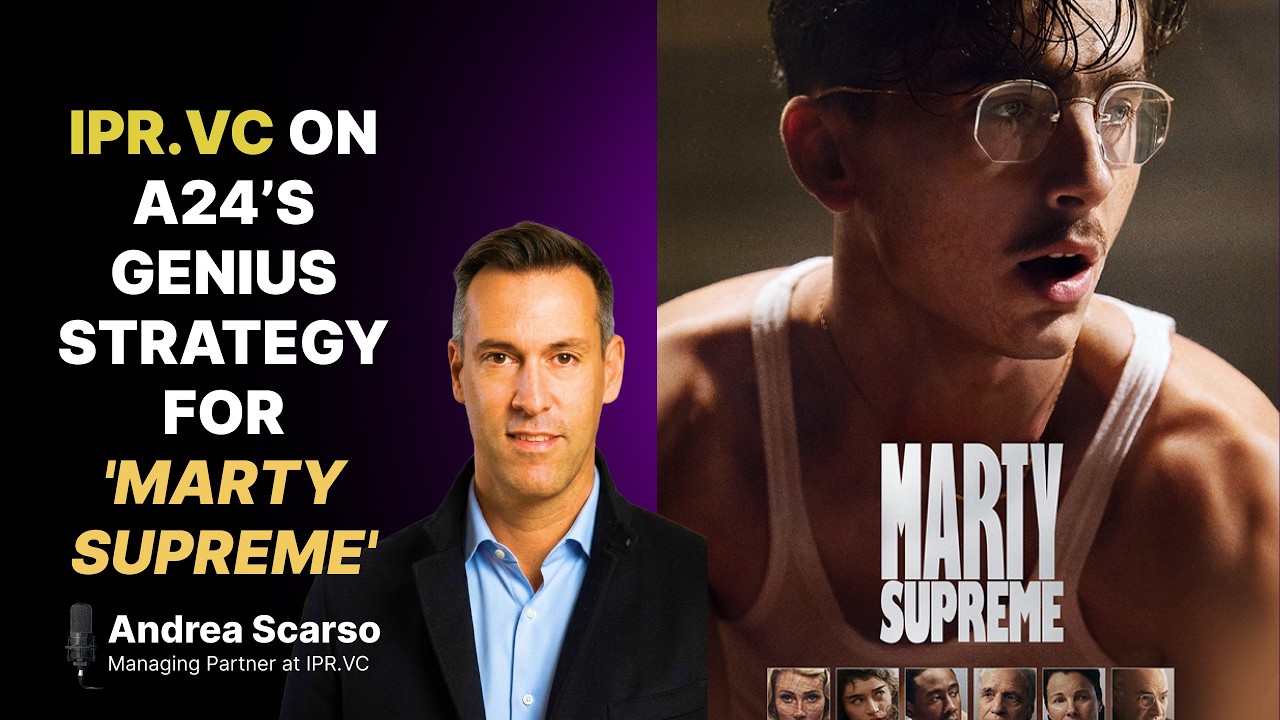
Kirsty Bell, founder and CEO of Goldfinch, explains how her company bridges art and enterprise by leveraging diverse revenue streams—including brand integration—to create financially sustainable independent film models.
Key Synergy
Goldfinch treats brand integration not as an afterthought, but as a core component of a disciplined financial engine. By aligning creative vision with enterprise value, producers can secure capital that supports global scalability.
Mitigating the Trust Deficit: Vetting Global Brand Partners
The entertainment industry is transitioning to a centralized, data-powered framework, yet many executives still rely on fragmented, relationship-based networks to find brand partners. This creates a “data deficit” that leaves projects vulnerable to mismatched expectations. To mitigate this risk, executives are using platforms like Vitrina AI to perform precision outreach.
Vitrina’s **digital lighthouse** function allows producers to qualify agencies based on their reputation scores and deal histories. By mapping 30 million relationships across 140,000+ companies, Vitrina enables producers to verify whether a potential partner has the specialized experience required to execute complex cross-promotional campaigns in specific regions like the Middle East or Asia.
Vet the deal history of potential integration partners:
Moving Forward: Integration as Strategy
The shift from “props” to “partnerships” is a hallmark of the modern entertainment supply chain. Product placement is no longer just about seeing a logo on screen; it is a structural mechanism for funding high-budget content in a hyper-competitive market.
Future Outlook: As “Weaponized Distribution” becomes the industry standard, the ability to secure verified brand capital will be the primary differentiator for independent studios.
Product Placement Financing: Frequently Asked Questions
How much production cost can be covered by product placement?
While it varies, deep brand integration can cover 5-15% of a project’s total production budget through a combination of cash payments and “in-kind” support (equipment, locations, logistics).
What is the difference between product placement and brand-funded content?
Product placement is the inclusion of a brand in an existing narrative. Brand-funded content is when a brand pays for the production of an entire project that aligns with their values, often taking a more direct role in development.
How do producers find brand partners?
Producers typically engage specialized integration agencies. Using platforms like Vitrina AI allows producers to vet these agencies based on their reputation scores and previous project success.
When is the best time to start product placement discussions?
Discussions should ideally begin during the script development or early pre-production phase to ensure the brand is woven naturally into the narrative and world-building.
Does product placement affect creative control?
It can, which is why clearly defined integration agreements are essential. These contracts should specify “creative approval” rights for the producer to ensure narrative integrity.
What are “in-kind” contributions in product placement?
In-kind contributions are non-cash values provided by a brand, such as wardrobe, vehicle fleets, specialized equipment, or catering, which directly reduce line items in the production budget.
Is product placement common in independent film?
Yes, independent producers increasingly use brand capital to bridge funding gaps and add production value that would otherwise be unaffordable on indie budgets.
How does Vitrina AI help with global brand integration?
Vitrina allows producers to identify brand agencies with specialized regional knowledge (e.g., GCC or Southeast Asia), helping to secure partners who understand local audience nuances and brand values.
“The industry’s transition from relationship-driven opaque systems to data-powered centralized frameworks is nowhere more evident than in brand partnerships. Producers who treat integration as a data-driven science are the ones securing the most sustainable creative capital.”
About Vitrina AI
Vitrina AI is the first global supply chain platform for the entertainment industry. Incubated at SRI International, we provide structured, verifiable, real-time intelligence for media professionals. With data on over 140,000 companies and 5 million professionals, Vitrina acts as a digital lighthouse, guiding global players toward the right partners and opportunities. Explore Vitrina.ai.
Find Film+TV Projects, Partners, and Deals – Fast.
VIQI matches you with the right financiers, producers, streamers, and buyers – globally.
Producers Seeking Financing, Co-Pros, or Pre-Buys?
Vitrina Concierge helps producers reach the right financiers, commissioners, distributors, and co-production partners — with precision outreach, not cold pitching.
Join Industry Briefings Trusted by Leaders

Micro-Dramas & Mobile-First Storytelling
Micro-dramas are building real audiences and revenue. Understand the platforms, buyers, and economics behind the growth.

Navigating Global Content Licensing Trends
How global content licensing is shifting beyond flat fees to flexible, deal-driven models.
Film & TV Production Financing: 2026 Trends
Production financing conditions are changing quickly. Understanding where money is moving and what buyers are backing is key to getting projects approved and funded in 2026.
Unreleased Film+TV Projects: Opportunities & Showcase
A curated view of unreleased Film and TV projects open for financing and collaboration