About Innovation Hub
 Global Content Pulse (Webinars)


 Global Production Financing
(Webinars)
Global Production Financing
(Webinars)  LeaderSpeak Podcast
  Global Entertainment Digest (Newsletter)
  About Vitrina
 About VIQI
 Our Story
 Our Solutions 🔥
 Film+TV Projects Tracker 🚀
 Case Studies
 Our Profile
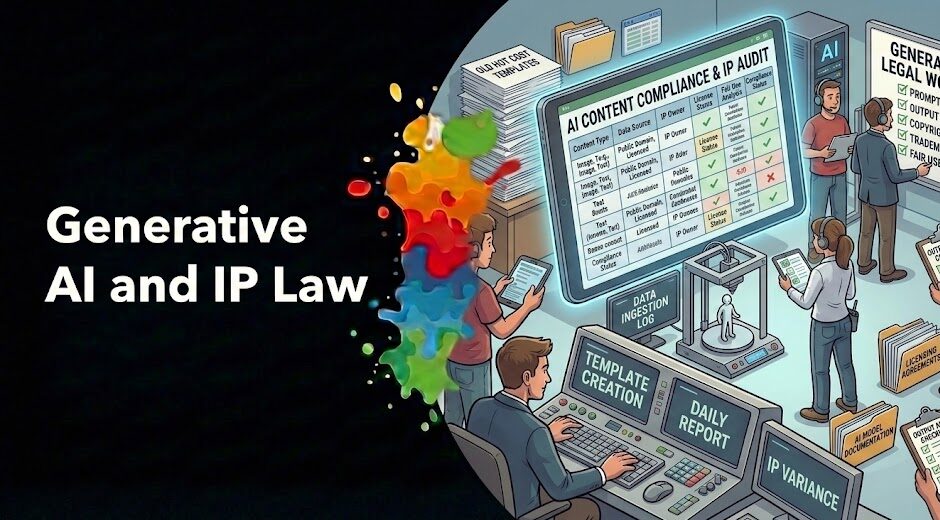
Here’s the thing about generative AI and IP law in film—the conversation isn’t theoretical anymore. It’s showing up in completion bond assessments, distribution deal riders, and E&O insurance rejections. Studios that assumed they could fold AI-generated visuals, dialogue, or score into their productions without clean rights documentation are learning the hard way: the back end is where it bites.
The US Copyright Office has made its position clear. The guild agreements have reshaped what’s permissible on set and in post. And financiers—from independent gap lenders to the major streamers—are adding AI provenance requirements to their standard deal terms. If your project’s capital stack depends on any of those parties, your exposure is real.
But the producers, studios, and rights holders navigating this well aren’t avoiding AI. They’re de-risking it—building Authorized AI™ pipelines, auditing their chain of title, and structuring deals that protect recoupment. This guide covers the seven rules that separate the projects that get financed and delivered from the ones that don’t.
Table of Contents
- Why AI Copyright Is Now a Production Finance Problem
- The Authorized AI™ Framework: What Studios Require in 2026
- Chain of Title in the Age of Generative AI
- Training Data Liability: The Audit Your Legal Team Is Missing
- SAG-AFTRA, WGA, and the New Talent Rights Landscape
- Completion Bonds and AI: How Insurers Have Responded
- Distribution Deals and AI-Generated Content: Platform Rules
- De-Risk Your AI-Exposed Production with Vitrina
- FAQ
- Conclusion
Ask VIQI: Which AI Tools Are Approved for My Distribution Deal?
VIQI is Vitrina’s AI assistant—trained on 1.6 million titles, 360,000 companies, and 5 million entertainment professionals. Get instant intelligence on AI-compliant production partners, rights structures, and platform requirements.
✓ Included with 200 free credits | ✓ No credit card needed
Why AI Copyright Is Now a Production Finance Problem
The legal question used to be: “Can AI-generated content be copyrighted?” The answer—no, if there’s no sufficient human authorship—was settled by the US Copyright Office in its 2023 guidance following the Zarya of the Dawn case. But that ruling created a downstream problem your entertainment attorney may not have fully walked through with you yet.
If your film contains AI-generated sequences without documented human creative input, you may not own those elements. And if you don’t own them, your chain of title is incomplete. And if your chain of title is incomplete, your E&O insurance becomes contingent at best—or void at worst. That’s not an abstract legal risk. That’s a blocked distribution deal.
The capital reality? Financiers don’t fund gaps in ownership. Gap lenders advance against verified receivables. Sales agents presell against clean title. The moment AI-generated material enters your project without a clear rights framework, you’ve introduced an unpriced liability into your capital stack. And that liability compounds—territory by territory, platform by platform—as your project moves through distribution.
What’s actually happening in legal departments right now: studios are adding AI provenance riders to their standard production agreements. As reported by Variety, major distributors began requiring producers to certify AI tool usage—and demonstrate licensing compliance for training data—before greenlighting in late 2024. That certification requirement has since expanded to cover post-production workflows, not just on-set generation.
This isn’t just a Hollywood problem. Productions shooting under international IP rights frameworks across sovereign content hub territories face additional complexity—different jurisdictions handle AI authorship differently, and a project co-produced between the UK and Saudi Arabia may have conflicting IP obligations at each stage of the workflow.

Your AI Assistant, Agent, and Analyst for the Business of Entertainment
VIQI AI helps you plan content acquisitions, raise production financing, and find and connect with the right partners worldwide.
- Find active co-producers and financiers for scripted projects
- Find equity and gap financing companies in North America
- Find top film financiers in Europe
- Find production houses that can co-produce or finance unscripted series
- I am looking for production partners for a YA drama set in Brazil
- I am looking for producers with proven track record in mid-budget features
- I am looking for Turkish distributors with successful international sales
- I am looking for OTT platforms actively acquiring finished series for the LATAM region
- I am seeking localization companies offer subtitling services in multiple Asian languages
- I am seeking partners in animation production for children's content
- I am seeking USA based post-production companies with sound facilities
- I am seeking VFX partners to composite background images and AI generated content
- Show me recent drama projects available for pre-buy
- Show me Japanese Anime Distributors
- Show me true-crime buyers from Asia
- Show me documentary pre-buyers
- List the top commissioners at the BBC
- List the post-production and VFX decision-makers at Netflix
- List the development leaders at Sony Pictures
- List the scripted programming heads at HBO
- Who is backing animation projects in Europe right now
- Who is Netflix’s top production partners for Sports Docs
- Who is Commissioning factual content in the NORDICS
- Who is acquiring unscripted formats for the North American market
The Authorized AI™ Framework: What Studios Require in 2026
Authorized AI™ is the distinction that separates insurable productions from exposed ones. The framework is straightforward in concept—though not always easy to execute. It means every AI tool used in your production was trained exclusively on licensed data, and every output carries explicit rights clearance for commercial exploitation. No scraped datasets. No unauthorized training material. Clean chain of title from generation through delivery.
Disney’s multi-year licensing agreement with OpenAI is the most public example of this shift at scale—a major studio effectively purchasing authorized access to foundational AI capability rather than building on top of tools with opaque training lineage. The deal’s significance isn’t just the dollar amount. It’s the signal: content owners with serious IP portfolios won’t accept liability uncertainty at the production tool level.
For independent producers, the authorized AI checklist looks like this. First, verify your AI tool provider’s training data licensing status before contract. Ask directly—reputable providers will show you. Second, document your human creative contributions at each stage where AI is used (direction, curation, modification). Third, obtain written warranties from your AI tool vendor covering downstream IP exposure. And fourth, disclose AI usage to your completion bond company and E&O insurer before production begins—not after.
The upfront cost of authorized AI pipelines runs higher. That’s true. But the shift to these frameworks eliminates back-end IP exposure that could block your distribution entirely. Run the numbers against a single blocked territory deal—the calculus isn’t close.
Chain of Title in the Age of Generative AI
Chain of title documentation has always been the foundation of any deal. What’s changed is the number of new ownership questions that AI introduces—and how few productions are currently answering them before they need to.
Consider the standard scenario. You’re using an AI tool to generate concept art during development. That concept art influences your production design. Some of those visual elements end up on screen. Who owns them? The answer depends on: the licensing terms of the AI tool, whether sufficient human creative direction was documented, and whether the training data underlying those outputs was itself properly licensed. If any of those three elements is unresolved, you don’t have clean title on those frames.
Now scale that across a full production—AI-assisted scriptwriting, AI-generated VFX elements, AI-composed music cues, AI-localized dubbing in 12 territories. Each application point is a potential ownership gap. Each gap is a potential deal-blocker.
The practical fix is a production AI register. Document every AI tool used, the specific outputs it generated, the human creative decisions that directed and modified those outputs, and the licensing status of the tool. Your entertainment attorney should be reviewing this register before you go into post—not at delivery. By delivery, your options narrow considerably.
For productions using AI in localization—an area growing quickly as platforms demand 20+ language versions at delivery—companies like Respeecher are structuring ethical AI frameworks that build chain-of-title documentation directly into their workflow. That’s the operational model that insurable productions need to follow.
Our guide on production rights in the AI era covers the contract structures that protect producers at each stage of this workflow.
Training Data Liability: The Audit Your Legal Team Is Missing
Here’s what the trades don’t report often enough: your liability isn’t just about what your AI tool generates. It’s also about what it was trained on. And if you’re using a general-purpose generative AI tool without verifying its training data provenance, you may be downstream of someone else’s copyright infringement.
Getty Images’ lawsuit against Stability AI—which alleged that millions of copyrighted images were used to train Stable Diffusion without authorization—established a legal framework that production companies should take seriously. The litigation is ongoing, but the principle it surfaces is directly relevant to film and TV production: if an AI tool’s training data included protected content without license, outputs from that tool may carry embedded infringement risk.
The audit your legal team should run before production begins covers three areas. First, training data provenance—get your AI vendor’s representations in writing, with indemnification. Second, output clearance—confirm whether your license covers commercial exploitation in film and TV contexts specifically. (Many AI tool licenses exclude commercial media use or limit territory rights.) Third, third-party content inclusion—if your AI-generated outputs incorporate identifiable styles, likenesses, or works from specific artists or rights holders, you need a separate clearance assessment.
This is not a one-time exercise. AI tools update their training datasets. Your risk profile changes every time a vendor pushes a model update. Build periodic re-certification into your production legal calendar—at minimum quarterly for any ongoing production or slate with AI in the workflow.
Find AI-Compliant Production Partners in 48 Hours
Trusted by Netflix, Warner Bros, and Paramount. Join 140,000+ companies tracking AI-compliant vendors, rights structures, and global production intelligence on Vitrina.
✓ 200 free credits | ✓ No credit card required | ✓ Full platform access
SAG-AFTRA, WGA, and the New Talent Rights Landscape
The 2023 strikes were partly a referendum on generative AI—and the agreements that ended them rewrote the rules for how you can use AI in productions covered by US guild agreements. If your project involves SAG-AFTRA members or WGA-represented writers, these provisions aren’t optional.
Under the WGA deal, AI-generated material can’t be used to write or rewrite literary material, and AI-generated scripts can’t be used as the basis for production without consent. More importantly, the WGA explicitly preserved the right for writers to negotiate additional compensation if their work is used to train AI systems—a provision with significant future implications as studios’ AI deals expand in scope.
SAG-AFTRA’s provisions cover digital replicas—including AI-generated synthetic performances—requiring informed consent and additional compensation. But the nuances matter. The agreement distinguishes between background performers, principal performers, and posthumous likeness use. Each category carries different consent and compensation requirements. Productions using AI to recreate or extend performances—even in post-production for continuity purposes—need to audit against those distinctions.
And don’t assume non-guild productions are exempt from liability here. The talent rights landscape is shifting globally. As The Hollywood Reporter has covered, performers’ unions in the UK, Australia, and across the EU are implementing parallel AI consent frameworks—meaning international co-productions face multi-jurisdictional compliance requirements that need to be built into deal structures from the start.
Strategic players understand this isn’t just a compliance cost. Productions with clean AI talent rights documentation—where every synthetic performance is covered, every AI usage disclosed, every consent properly documented—move faster through distribution. The paperwork you’re skipping now is the 6-week delivery delay you’re accepting later.
Completion Bonds and AI: How Insurers Have Responded
Bond companies are in the risk business. And generative AI in production workflows introduced risks that most bond agreements weren’t written to address. The industry’s response has been predictable: new disclosure requirements, new exclusions, and for some bond companies, new premium structures tied to AI usage levels.
What you need to disclose to your bond company before production: every AI tool in your pipeline, the certified licensing status of each tool, your chain-of-title documentation plan for AI-generated content, and your contingency if an AI tool’s rights status is challenged mid-production. Bond companies are evaluating whether your AI usage creates delivery risk—not just legal risk.
Leon Silverman, Chair of MovieLabs and former executive at both Disney and Netflix, articulated the framework clearly in Vitrina’s LeaderSpeak series: the industry’s transition to cloud-native, AI-assisted workflows requires standardized documentation practices—not because regulators demand it yet, but because the supply chain can’t function without verifiable provenance at every node. Bond companies are enforcing exactly that logic, one production at a time.
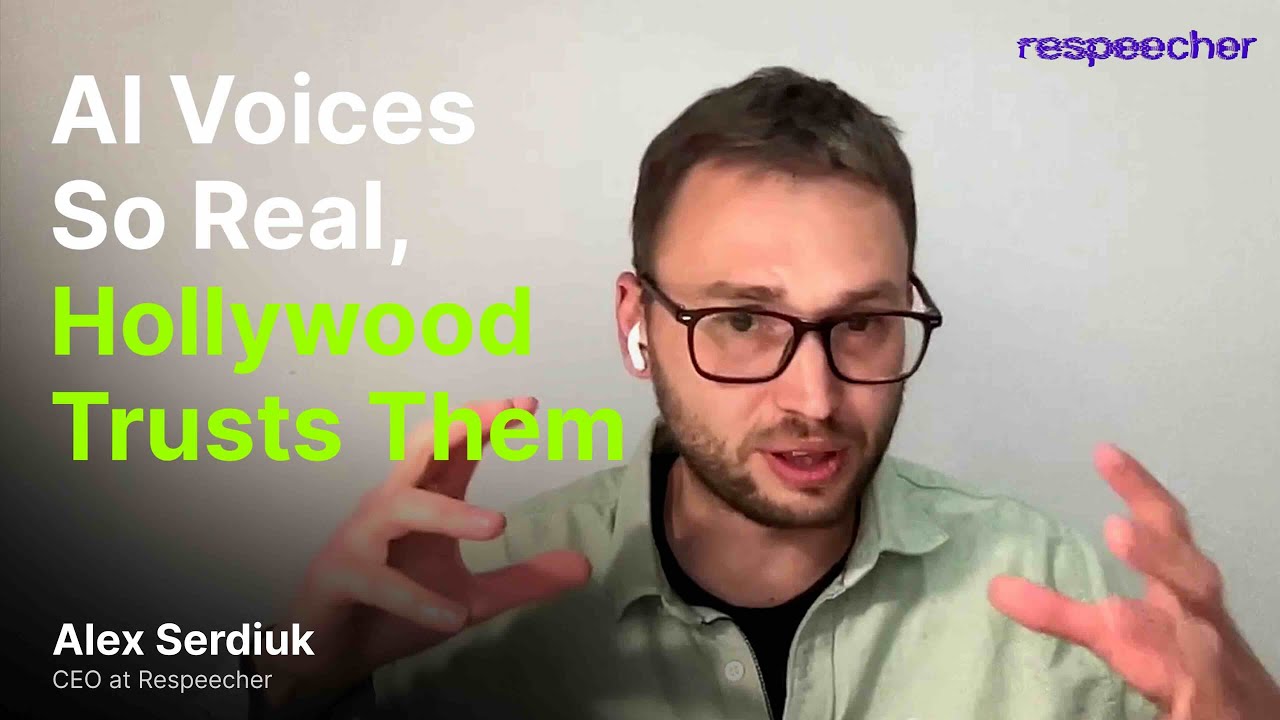
Alex Serdiuk (Co-Founder & CEO, Respeecher) offers a direct window into how responsible AI voice technology handles this in practice. His company’s synthetic voice technology—used in award-winning Hollywood productions—is built around explicit rights documentation and ethical standards that satisfy both guild requirements and insurance underwriting.
Alex Serdiuk (Co-Founder & CEO, Respeecher) discusses how synthetic voice AI can be structured with ethical and rights-compliant frameworks for entertainment production:
The bottom line for your production: disclose early and completely. Bond companies that discover undisclosed AI usage at delivery have grounds to deny coverage. That’s not a scenario any producer wants to navigate—especially not on a production where your gap lender is senior to equity in the waterfall.
Distribution Deals and AI-Generated Content: Platform Rules
Every major platform has now updated its content acquisition standards to address AI-generated material. The policies aren’t uniform—which is part of the problem. What Netflix accepts, Apple TV+ may not. What passes E&O review for a US theatrical release may trigger exclusions in German broadcast deals. Your distribution strategy needs to map AI usage against platform-specific requirements before you’ve locked picture.
Netflix’s approach—consistent with their history of detailed technical and legal delivery specifications—requires producers to certify AI tool usage in acquisition agreements and provide chain-of-title documentation for AI-generated sequences. They’re not refusing AI content outright. But they are requiring proof that the content is insurable and free of third-party IP claims.
The WBD/Netflix $72B multi-year licensing deal is instructive here for a different reason. Warner Bros. Discovery negotiating content licensing with a direct competitor underscores how Weaponized Distribution™ strategy works: clean IP ownership gives you flexibility. You can sell, license, or withhold based on market conditions. Productions with AI-tainted title don’t have that flexibility—they’re structurally limited in where and how they can distribute.
For productions targeting multiple distribution windows—theatrical, SVOD, FAST channels, broadcast—build a territory-by-territory AI rights map during pre-production. Which markets have specific AI disclosure requirements? (Germany, France, and the EU broadly under the AI Act.) Which platforms require pre-clearance for AI-generated voice or visual elements? Which require ongoing certification as model versions update?
The licensing negotiation landscape is shifting fast. Our analysis of 2026 licensing negotiation strategies covers the specific clauses that protect content owners in AI-affected distribution deals.
Need AI-Compliant Co-Production Partners? We’ll Find Them.
Vitrina Concierge connects you directly to production partners, financiers, and rights specialists actively working in your genre and territory—including those with verified Authorized AI™ workflows.
- LA producer → Netflix UK, Fifth Season, Fox Entertainment (48 hours)
- Middle Eastern studio → Legendary Pictures (direct access)
- Korean animation studio → Netflix Adult Animation (week one)
De-Risk Your AI-Exposed Production with Vitrina
The Fragmentation Paradox™ hits AI compliance harder than almost any other production challenge. Over 600,000 companies operate across the global film and TV supply chain—and a meaningful percentage of them are now offering AI-assisted services. But their Authorized AI™ status, their chain-of-title documentation practices, and their E&O-compatible workflows? That’s invisible to you without verified intelligence.
When you’re sourcing AI-assisted VFX, localization, or score services, you’re not just buying creative output. You’re acquiring an IP position. The vendor’s rights framework becomes part of your chain of title. If they’re using unauthorized training data—even unknowingly—that exposure transfers upstream to your production.
Vitrina’s platform maps 140,000+ active production companies with verified capability data, deal history, and—increasingly—AI compliance status. Rather than spending 3–6 months manually vetting vendors through relationship networks, you can surface AI-compliant partners filtered by territory, budget range, and workflow type. That’s not efficiency for its own sake. That’s the difference between a production that closes its gap financing on schedule and one that doesn’t.
For productions where AI use is significant—generative VFX, synthetic voice, AI-assisted localization across multiple territories—Vitrina’s Concierge service provides direct introductions to specialists with documented Authorized AI™ workflows. It’s the intelligence infrastructure that insiders recognize as essential right now, before these standards become legally mandated rather than commercially preferred.
You can also use VIQI, Vitrina’s AI intelligence engine, to interrogate the market in real time: which platforms currently accept AI-assisted content in specific categories, which territories have active legislative requirements, which production service companies have the most active AI compliance certifications. Ask VIQI the questions your legal team is billing you $800 an hour to research.
Frequently Asked Questions
Can AI-generated content in film be protected by copyright?
Purely AI-generated content without sufficient human creative authorship cannot be copyrighted under current US Copyright Office guidance, established by the 2023 Zarya of the Dawn decision. However, human creative input—direction, curation, selection, and modification of AI outputs—can establish authorship. Productions must document that human contribution at each stage where AI is used. Without that documentation, the sequences in question may not be owned, creating chain-of-title defects that block distribution and insurance.
What is the Authorized AI™ framework and why does it matter for my production?
Authorized AI™ refers to production workflows where every AI tool is trained on licensed data and every output carries explicit rights clearance for commercial exploitation. It distinguishes insurable, financeable productions from those carrying embedded IP liability. Studios increasingly require Authorized AI certification before greenlighting—and bond companies are building disclosure requirements around it. Disney’s multi-year licensing deal with OpenAI is the clearest large-scale example of studios operationalizing this framework.
How does generative AI affect chain of title in film and TV?
Chain of title in AI-affected productions requires documentation at every point where AI tools generate content—visual effects, sound design, dialogue, score, and localization. If the AI tool’s training data was unlicensed, or if human creative direction wasn’t documented, those elements may not be owned. Productions should maintain a formal AI usage register throughout production, updated at each stage, and reviewed by entertainment counsel before delivery. This register becomes part of your legal deliverables package.
What do SAG-AFTRA and WGA agreements say about AI in 2026?
Under the WGA agreement, AI cannot write or rewrite literary material, and AI-generated scripts cannot form the basis of production without consent. The SAG-AFTRA AI provisions require informed consent and additional compensation for digital replicas and synthetic performances, with different requirements for background performers, principal performers, and posthumous likeness use. Both agreements include provisions around training data use. For international co-productions, parallel frameworks in the UK, Australia, and EU are expanding these requirements into non-US guild contexts.
Do I need to disclose AI usage to my completion bond company?
Yes—and you should do so before production begins, not at delivery. Completion bond companies are adding AI disclosure requirements to their standard agreements. Undisclosed AI usage discovered at delivery gives bond companies grounds to deny coverage. Disclose all AI tools in your pipeline, their licensed status, and your chain-of-title documentation plan. Some bond companies are now adjusting premiums based on AI usage levels; others have introduced specific exclusions for content generated by tools with unverified training data provenance.
How are major streaming platforms handling AI-generated content in distribution deals?
Netflix, Warner Bros. Discovery, and other major platforms have updated acquisition standards to require AI tool certification and chain-of-title documentation for AI-generated sequences. They’re not refusing AI content—but they are requiring proof it’s insurable and free of third-party IP claims. Policies vary by platform: what passes Netflix’s E&O review may not satisfy Apple TV+ requirements. Productions targeting multiple distribution windows should map AI usage against platform-specific requirements before picture lock.
What is training data liability and how does it affect film productions?
Training data liability refers to the IP exposure that arises when an AI tool was trained on copyrighted content without proper licensing. If you use such a tool in production, you may be downstream of existing infringement—meaning your outputs carry embedded third-party claims. Getty Images’ lawsuit against Stability AI established this framework publicly. Productions should obtain written representations from all AI vendors about training data licensing, with indemnification, and conduct quarterly re-certification as model versions update.
How can Vitrina help productions navigate AI IP compliance?
Vitrina’s platform maps 140,000+ active production companies with verified capability data including AI compliance status. Rather than spending months manually vetting vendors, you can surface AI-compliant partners filtered by territory, budget, and workflow type. VIQI, Vitrina’s AI intelligence engine trained on 1.6 million titles and 360,000 companies, can answer real-time questions about platform AI requirements, territorial legislation, and compliant vendor options. Vitrina Concierge provides direct introductions to specialists with documented Authorized AI™ workflows—including producers connected to Netflix UK in 48 hours.
Conclusion: Your AI Risk Is Already Priced Into Your Deal—Whether You Know It Or Not
The generative AI and IP law questions that feel abstract in development become very concrete at the point of financing, bonding, and distribution. Every party in your capital stack—gap lenders, completion bond companies, E&O insurers, platform acquisition teams—is now evaluating AI exposure as a standard part of their due diligence. The productions that move fast are the ones that built their AI rights documentation before they needed it.
Key Takeaways:
- Copyright Threshold: AI-generated content without documented human authorship cannot be copyrighted under current US law—creating chain-of-title defects that block financing and distribution if left unresolved.
- Authorized AI™ Framework: Productions using only licensed-training-data AI tools, with explicit output rights clearance, can satisfy insurer, platform, and bond company requirements—and command cleaner deals as a result.
- Training Data Audit: Your liability extends to what your AI tools were trained on, not just what they generate. Obtain written indemnification from all AI vendors and re-certify at minimum quarterly for ongoing productions.
- Guild Compliance: WGA prohibitions on AI-written scripts and SAG-AFTRA synthetic performance consent requirements apply to all covered productions—with parallel frameworks expanding globally across the EU, UK, and Australia.
- Vitrina Intelligence: 140,000+ verified companies, platform-specific AI requirement tracking via VIQI, and Concierge introductions to Authorized AI™ compliant partners give your production the supply chain intelligence to de-risk AI usage before it becomes a delivery problem.
The productions getting financed in 2026 are the ones that treat AI rights documentation the same way they treat clearances and E&O—as a production fundamental, not an afterthought. The ones that don’t are discovering those gaps at the delivery table, where fixing them costs far more than preventing them would have.
Surface AI-Compliant Partners and Track Projects Before They Hit the Trades
Trusted by Netflix, Warner Bros, Paramount, and Google TV. Track 400,000+ projects. Access 3 million verified executives. Ask VIQI strategic questions about AI compliance in your market.
✓ 200 free credits | ✓ No credit card required | ✓ Cancel anytime
Need direct introductions to AI-compliant partners? Explore Concierge Service →
Find Film+TV Projects, Partners, and Deals – Fast.
VIQI matches you with the right financiers, producers, streamers, and buyers – globally.
Join Industry Briefings Trusted by Leaders
Film & TV Production Financing: 2026 Trends
Production financing conditions are changing quickly. Understanding where money is moving and what buyers are backing is key to getting projects approved and funded in 2026.
Unreleased Film+TV Projects: Opportunities & Showcase
A curated view of unreleased Film and TV projects open for financing and collaboration

The Mid-Budget Comeback: Why Mid-Budget Films Is the Smartest Bet in the Room
Mid-budget films are attracting new capital. See why this segment is becoming one of the strongest bets in Film today.
Franchise Fatigue vs. IP Dependency: What Studios Should Be Betting On Now
s franchise performance softens, where will the next generation of valuable IP come from? Join the briefing.