IHUB
IHUB
 Private Briefings (Webinars)


 LeaderSpeak Podcast
  Global Entertainment Digest (Newsletter)
  Premium Lists
 Membership Benefits
 About Vitrina
 Our Story

By Vitrina Research Team | Published: Apr 2026 | Updated: Aug 2026 | 15 min read
A working entertainment procurement strategy replaces spreadsheets, email chains, and personal networks with four disciplines applied consistently: a scored framework for content acquisition, a Preferred Vendor List with a formal RFP process for production vendors, incentive-geography modeling done before contracts are signed, and a documented supply chain map that gets stress-tested against single-vendor failure. Every film, every series, every streaming title starts with a procurement decision: someone has to source the story rights, commission the visual effects, hire the crew, license the music, and contract the distributor, and most entertainment companies still make these calls without any of the four disciplines above in place.
The global media and entertainment industry grew 5.3% in 2025 to $3.5 trillion, and is projected to reach $4.2 trillion by 2030 (PwC Global Entertainment & Media Outlook 2026-2030). As budgets scale and content windows multiply, studios, streamers, and production companies that treat procurement as a strategic function outpace those that don’t. This guide covers every major category of entertainment procurement strategy: content acquisition, production vendor sourcing, talent, supply chain resilience, and digital transformation. For a deeper dive into the first category, see our complete guide to content acquisition.
Map your entertainment supply chain across 160,000+ verified vendors
Vitrina indexes production vendors, VFX studios, post houses, and content suppliers globally.
Key Takeaways
-
1
Entertainment procurement spans four distinct categories: content rights, production vendors, talent, and technology. Each requires a different sourcing strategy and risk framework. -
2
Global content investment reaches $255 billion in 2026, with streamers now contributing ~40% ($101bn), having overtaken broadcasters for the first time in 2025 (Ampere Analysis, 2026). -
3
Procurement organizations with mature digital capability report materially better outcomes: 96% of “Digital Master” procurement teams met or exceeded their cost-savings targets, versus 80% among less digitally mature teams (Deloitte 2025 Global CPO Survey). -
4
US production volume rebounded 18% in 2024 versus 2023, with spend up $16.2 billion, though volume remained 11% below 2022 levels, underscoring why supply chain diversification still matters (ProdPro, 2024, via The Hollywood Reporter). -
5
Production incentive geography is a direct procurement lever: the UK’s Audio-Visual Expenditure Credit reaches 29.25%+ effective on VFX spend, while Canadian provinces stack federal and provincial credits up to roughly 58% combined (Entertainment Partners; BC Government, 2025-2026).
Quick Answer
Entertainment procurement strategy is the structured process by which studios, streamers, and broadcasters source content rights, production vendors, and talent. It covers four categories: content acquisition, vendor procurement, talent sourcing, and technology. With the global M&E industry at $3.5 trillion and rising, systematic procurement is a competitive differentiator, not a back-office function (PwC Global Entertainment & Media Outlook 2026-2030).

What Is Entertainment Procurement Strategy?
Entertainment procurement strategy is the end-to-end framework through which media companies identify, evaluate, contract, and manage the external resources needed to create and distribute content. With the global media and entertainment industry now at $3.5 trillion and growing (PwC, 2026), getting this function right is not optional.
Where general corporate procurement focuses on office supplies, IT, or raw materials, entertainment procurement is fundamentally about acquiring creative and technical capability. The inputs are rarely commodities. A VFX studio with the right credit history, security certifications, and pipeline compatibility is not interchangeable with a cheaper alternative. This context shapes every aspect of how entertainment procurement must be structured.
There are four primary categories. Content procurement covers the acquisition of finished titles, format rights, and intellectual property. Production vendor procurement covers the sourcing of VFX houses, animation studios, post-production facilities, and other technical service providers. Talent procurement covers above-the-line and below-the-line hiring. Technology procurement covers the platforms, tools, and infrastructure that support production and distribution. Each category demands a different strategy, different evaluation criteria, and different contractual structures.
What makes entertainment procurement distinctively complex is the interplay between creative risk, financial risk, and reputational risk. A content acquisition decision that fails to anticipate windowing conflicts can leave a streamer with a significant, unplanned library gap. A vendor procurement shortcut that bypasses security vetting can trigger a data breach during post-production. Strategic procurement addresses these risks systematically, rather than reactively.
How Do Streamers and Studios Procure Content?
Streamers and studios procure content through three main pathways: licensed acquisitions, format procurement, and co-productions, each with different pricing logic and risk profiles. Content procurement is the highest-stakes category in the mix: global content investment is projected to reach $255 billion in 2026, with streaming platforms now contributing roughly $101 billion, having overtaken commercial broadcasters’ share of total content spend for the first time in 2025 (Ampere Analysis, 2026). The decision of what to license, at what price, and for which windows defines a platform’s competitive position.
| Year | Total Global Content Investment | Streamer Share | Notes |
|---|---|---|---|
| 2024 | $247B | — | Broadcasters still led total content spend |
| 2025 | $248B | $95B | Streamers overtake broadcasters for the first time |
| 2026 (forecast) | $255B (+2% YoY) | $101B (~40%) | Streamer spend up 6% YoY; broadcaster spend roughly flat |
Source: Ampere Analysis, 2026
Key Stat
Streaming platforms contributed roughly $101 billion of the $255 billion global content investment total projected for 2026, having overtaken commercial broadcasters’ share of content spend for the first time in 2025. This shift makes content procurement discipline a bigger lever for streamers than it has ever been for broadcasters. (Ampere Analysis, 2026)
The SVOD Acquisition Model
Subscription video-on-demand platforms approach content procurement with a portfolio logic. They need a breadth of genres, languages, and release cadences to minimise churn and maximise subscriber engagement. This drives them toward a mix of exclusive first-window deals, library bulk acquisitions, and co-production arrangements. The procurement team at a major SVOD typically evaluates dozens of titles per week against performance data from comparable titles on their platform.
Pricing in SVOD acquisition is driven by window exclusivity, territory scope, and term length. A worldwide exclusive for five years on a well-established IP commands a significant premium over a non-exclusive deal for a single territory. Procurement teams that understand these leverage points, and negotiate them systematically rather than title by title, consistently outperform those that treat each deal as a standalone negotiation. See our roundup of content licensing trends shaping the industry in 2026 for how these leverage points are shifting.
Broadcaster and Format Procurement
Linear broadcasters procure content differently. Their commissioning cycles are tied to scheduling slots, genre quotas, and regulatory obligations. Format procurement, the acquisition of the right to adapt a successful foreign TV format, has become a major strategic tool: it lets a broadcaster license a track-tested creative structure rather than developing a new concept from scratch. The FRAPA Trend Report 2025 tracks this market annually; broadcasters use format acquisition to reduce creative development risk while delivering established audience appeal.
Co-productions represent a third procurement pathway. By splitting rights and costs with international partners, studios and broadcasters can greenlight projects that wouldn’t clear a single-territory budget threshold. Procurement strategy here involves evaluating potential co-production partners on financial stability, creative track record, and jurisdiction-specific incentives. Tax incentive geography is a genuine competitive advantage for teams that model it correctly, as covered in our guide on how producers can expand through strategic co-productions.
How Do Studios Source VFX, Animation, and Post-Production Vendors?

Studios source production vendors through Preferred Vendor Lists, formal RFPs, and increasingly, incentive-driven geographic sourcing. Production vendor procurement covers every external technical service provider involved in creating a piece of content. The global VFX market is projected to grow by roughly $15.24 billion between 2025 and 2029, an implied CAGR near 17% (Technavio, 2025), meaning vendor selection decisions carry real financial weight and errors are expensive to reverse mid-production.
Preferred Vendor List Architecture
Sophisticated entertainment companies maintain a Preferred Vendor List (PVL), a pre-vetted roster of suppliers across VFX, animation, post-production, sound, music licensing, and localization. The PVL allows procurement teams to move quickly when production needs arise, without repeating a full evaluation process for every project. Building a strong PVL requires initial due diligence across financial health, technical capability, security posture, and past production credits.
The RFP process for major VFX or animation work typically runs four to eight weeks. A well-constructed RFP covers scope definition, technical pipeline requirements, security standards (TPN Gold Shield is now a baseline expectation for major studio work), past credit verification, and pricing benchmarks against market rates. Skipping a formal RFP in favor of a direct award to an existing relationship trades process time for price discipline: without a competing bid on the table, there’s no external check on whether the quoted rate reflects current market pricing. For the fuller incentive picture beyond the UK and Canada, see our guide to film tax incentives and rebates for international productions.
Tax Incentive Geography in Vendor Sourcing
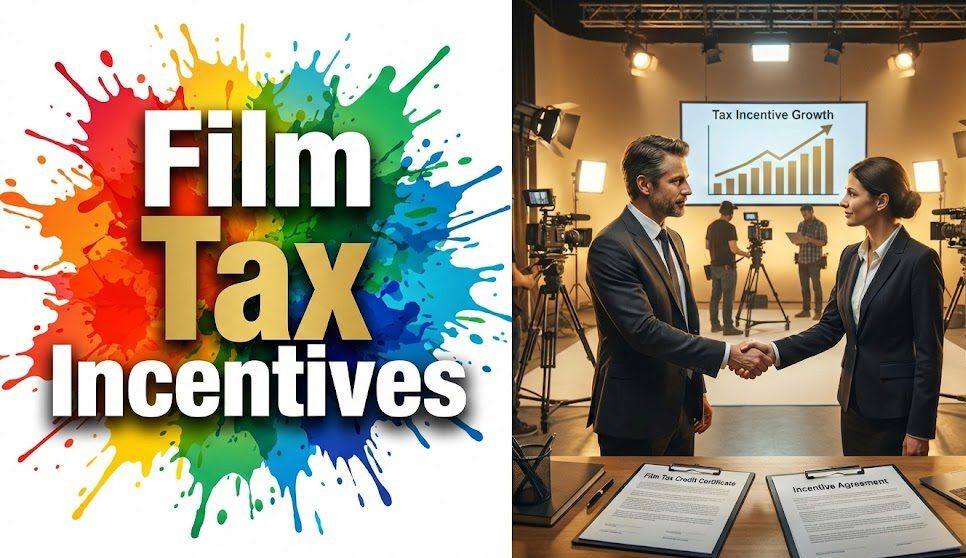
Tax incentive geography plays a major role in where production work gets placed. The UK’s Audio-Visual Expenditure Credit (AVEC) pays a standard 25.5% net rate for film and high-end TV, with an enhanced effective rate of 29.25%+ specifically on VFX spend once the 80% cost cap is removed for VFX costs (Entertainment Partners, 2025). Canadian provinces stack federal and provincial credits, with British Columbia and Manitoba among the most aggressive.
| Jurisdiction | Base Rate | Enhanced / Stacked Rate | Source |
|---|---|---|---|
| UK (AVEC) | 25.5% net | 29.25%+ on VFX spend (80% cap removed) | Entertainment Partners, 2025 |
| Canada – Federal (CPTC / PSTC) | 25% (Canadian content) / 16% (foreign service) | — | Entertainment Partners, 2025 |
| Canada – British Columbia | 35% (40% from Jan 2025) | + up to 16% DAVE VFX credit | BC Government, 2025 |
| Canada – Ontario | 35% OFTTC | 40% for new producers on first $240K labour | Entertainment Partners, 2025 |
| Canada – Manitoba | — | ~65% combined federal + provincial | Entertainment Partners, 2025 |
Sources: Entertainment Partners (UK AVEC); BC Government Film & TV Tax Credit, 2025-2026.
Procurement teams that model these incentives during vendor shortlisting, rather than after contracts are signed, capture meaningfully lower effective costs than teams that treat incentive geography as an afterthought. There’s also a structural reason incentive geography now matters more for procurement than it did a decade ago: with streaming platforms now driving roughly 40% of global content investment, up from a minority share as recently as 2024 (Ampere Analysis, 2026), it is increasingly streamers, not legacy broadcasters, who set the pace on vendor sourcing decisions, and streamers run leaner procurement organizations with less institutional incentive-tracking depth than the studios they’ve displaced as the largest buyers.
Vendor Intelligence
Build Your Preferred Vendor List from 160,000+ Verified Suppliers
Search and filter VFX studios, animation houses, post facilities, and production vendors by territory, service type, past credits, TPN status, and studio size. No spreadsheets. No cold calls.
What Is Entertainment Procurement Transformation?

Entertainment procurement transformation is the shift from relationship-based, spreadsheet-driven sourcing to data-led, platform-enabled vendor and content discovery. Across industries, procurement organizations that have made this shift see it pay off: McKinsey found that procurement leaders who have adopted advanced analytics report savings of up to 20% versus peers still relying on manual processes, and two-thirds of procurement leaders across sectors now report directly to a CEO or CFO, reflecting the function’s rising strategic weight (McKinsey, 2025). Entertainment lags most other sectors on this shift, which represents both a risk and a competitive opening.
Key Stat
Procurement organizations with mature digital capability materially outperform peers: 96% of “Digital Master” procurement teams met or exceeded their cost-savings targets in 2025, compared with 80% among less digitally mature teams. (Deloitte 2025 Global CPO Survey)
A Real Example: Lionsgate’s Shift From Vendor Contract to Equity Partner
The clearest example of procurement transformation actually changing how a studio sources technical capability is Lionsgate’s relationship with AI vendor Runway. In September 2024, Lionsgate signed a conventional vendor agreement: Runway would train a custom generative model on Lionsgate’s own proprietary film and TV library for use in pre-production and final-frame production (Lionsgate Investor Relations, 2024).
By June 2026, Lionsgate’s 2024 vendor deal with Runway had evolved into something procurement teams rarely see: Lionsgate took an actual equity stake in Runway and launched a joint development program to co-produce new IP, starting with an AI-assisted short-form episodic series (Runway, 2026). That is a genuinely different procurement outcome than a standard services contract: the studio converted a vendor relationship into a capital stake specifically because the vendor’s tooling became load-bearing enough to its production pipeline to justify it. Most procurement transformations stop at faster onboarding or better pricing; this one changed the studio’s capital structure.
Digital Vendor Discovery vs. Traditional Relationship Sourcing
Traditional entertainment procurement relies heavily on personal networks. A production executive sources a VFX studio because they’ve worked with them before, or because a colleague recommended them at a market. This model has real strengths: trust, established working relationships, known quality. But it has critical blind spots. It caps the vendor universe at whoever the team happens to know. It creates pricing opacity. It concentrates spend with incumbents who have less incentive to stay competitive.
Digital vendor discovery expands the addressable supplier pool dramatically. A production company sourcing animation work for a French-language series no longer has to rely on existing relationships to find qualified studios in Belgium, Senegal, or Morocco. Platforms that index vendors by service type, territory, past credits, and verified capability let procurement teams run systematic searches in hours rather than weeks of networking.
What’s the difference in outcomes? Platforms that index vendors by service type, territory, and verified capability typically compress a vendor longlist exercise from weeks of networking down to a same-day search. More options don’t just reduce cost; they reduce creative risk by matching niche technical capabilities more precisely to project requirements.
Key Technologies Enabling Procurement Transformation
Four technology layers are driving entertainment procurement transformation. First, verified vendor databases that maintain current company profiles, credit histories, and capability flags at scale. Second, ERP integration layers that connect vendor data to internal production management and finance systems, eliminating manual data re-entry and enabling spend analytics. Third, AI-powered matching tools that surface vendors based on project parameters. Fourth, contract and compliance automation that accelerates onboarding while maintaining regulatory standards.
Spend analytics deserves specific attention. Most entertainment companies have poor visibility into their aggregate vendor spend. They know what individual productions paid, but a company might not easily see, for example, that it is paying several different rates for the same type of VFX work across concurrent productions, or that its post-production spend is heavily concentrated in just one or two vendors. Procurement analytics platforms are starting to address this, with adoption rates rising sharply since 2023.
The Risks of Slow Transformation
Companies that delay procurement transformation face compounding risks. Vendor lock-in is the most immediate: when sourcing stays relationship-driven, incumbents gain pricing power over time. Blind spots accumulate: new markets like India’s animation sector, West Africa’s production talent base, and Southeast Asia’s post-production capacity go unexplored. And talent drain accelerates as experienced procurement executives retire without transferring their network knowledge to digital systems.
The companies most exposed to this gap are mid-tier independent production companies, roughly in the $20-100M budget range per title: large enough to need systematic vendor sourcing across multiple concurrent projects, but rarely large enough to have built dedicated enterprise procurement systems the way major studios have. For a company at that scale, a single mis-sourced vendor represents a proportionally larger share of the total budget than the same mistake would at a major studio, which is exactly why the payoff from fixing this gap tends to show up faster there.
How Do You Build Entertainment Supply Chain Resilience?
Building entertainment supply chain resilience means mapping every vendor dependency and stress-testing it against single-vendor failure, territory-wide disruption, and budget shocks, before a crisis forces the issue. The 2023 WGA and SAG-AFTRA strikes were the clearest recent test: US production volume rebounded 18% in 2024 versus 2023, with spend up $16.2 billion, but volume still ran 11% below 2022 levels (ProdPro, 2024, via The Hollywood Reporter). In a disruption-prone industry, supply chain resilience functions as a competitive advantage, not merely a risk-management checkbox.
Key Stat
US production volume climbed 18% in 2024 versus 2023, with total spend up $16.2 billion, yet volume remained 11% below 2022 levels, a sign that recovery from the 2023 strikes was real but incomplete two years on. (ProdPro, 2024, via The Hollywood Reporter)
What an Entertainment Supply Chain Actually Covers
Most media executives think of their supply chain as primarily a production problem. It’s much broader. A complete entertainment supply chain map includes: IP and rights acquisition, script development and writing services, on-screen talent contracting, physical and virtual production infrastructure, VFX and animation, post-production and colour grading, music licensing and original scoring, ADR and dubbing, subtitle and localization services, technical delivery and QC, and platform or broadcast distribution. Each node is a potential point of failure or savings.
Single-Vendor Dependency and Its Hidden Costs
Single-vendor dependency is the most common and most underestimated supply chain risk in entertainment. When a production company relies on a single VFX house for the large majority of its visual effects work, that vendor knows it. Pricing power shifts. Lead times get de-prioritised. Quality standards become harder to enforce. The 2023 strikes exposed this dynamic graphically: productions relying on single post-production vendors in Los Angeles had no viable fallback when those facilities went into holding patterns.
Geopolitical risk compounds single-vendor risk. A UK animation studio handling a streaming series faces Brexit-era customs complications on physical media. A Southeast Asian post-production facility might face network access restrictions in certain regulatory environments. Procurement teams that haven’t stress-tested their supply chain against geopolitical scenarios often discover these vulnerabilities when it’s already too late to pivot.
PVL Strategy vs. Spot-Buy Approach
The choice between a Preferred Vendor List strategy and a spot-buy approach is the central tension in entertainment supply chain design. Spot-buying, sourcing vendors fresh for each production, offers maximum flexibility and prevents incumbent complacency. But it is expensive in time and due diligence cost, and it sacrifices the pricing leverage that comes from being a repeat customer. PVL strategy offers predictability and leverage but risks stagnation if the list isn’t actively managed and refreshed.
A hybrid model resolves this tension in practice: a core PVL of pre-vetted tier-one vendors covers most expected production spend, while a structured annual or bi-annual open sourcing cycle brings in new vendors for specific capabilities or territories. This keeps the PVL current, introduces competitive pressure on incumbents, and surfaces emerging specialists before competitors find them, without repeating a full vendor search for every production.
Nearshoring vs. Offshoring Post-Production
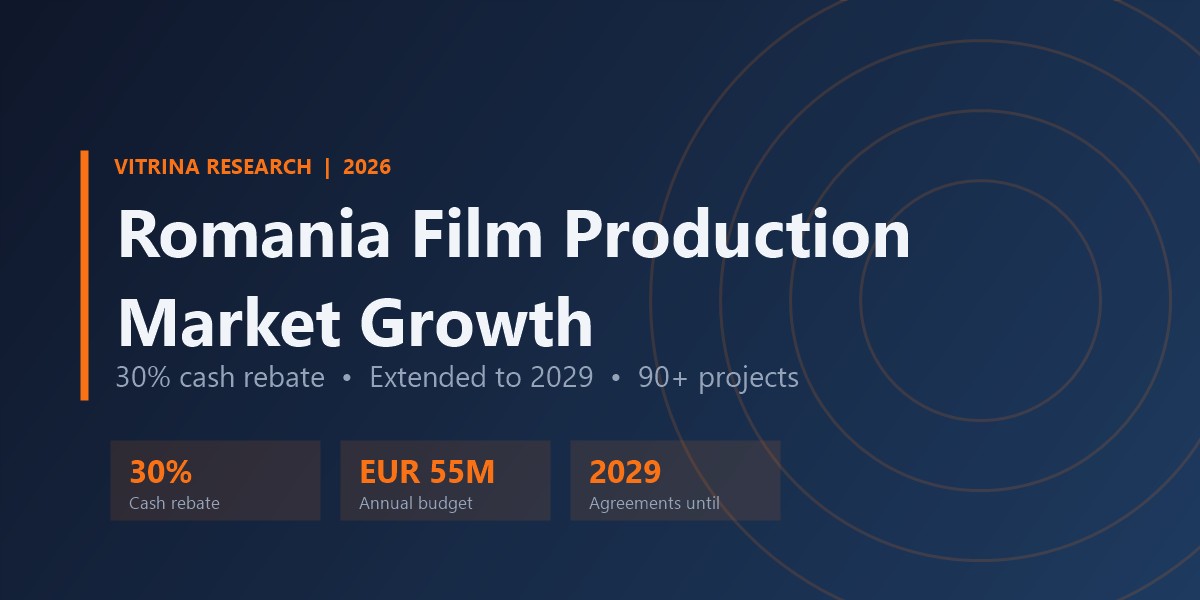
Nearshoring, placing work in geographically proximate countries with similar time zones and cultural context, has gained momentum since 2022. European studios increasingly route post-production to Poland, Romania, and Serbia. US studios have expanded relationships with Canadian and Mexican facilities. Nearshoring trades some cost advantage for reduced coordination friction. It’s generally better suited to complex, iterative post-production work. Offshoring to India, Malaysia, or the Philippines makes more sense for high-volume, well-specified animation or rendering tasks with clear creative briefs. This is the same location-diversification logic covered in our broader guide to entertainment supply chain strategy and risk.
How do you map and stress-test your supply chain? Start with a full dependency audit: list every active vendor, the percentage of spend or production capacity they represent, their geographic location, and the lead time to find an equivalent replacement. Then model three scenarios: a single-vendor failure, a territory-wide disruption (strike, natural disaster, regulatory change), and a significant budget cut. Which nodes break first? Those are your procurement priorities for resilience investment.
Supply Chain Intelligence
Map Your Entertainment Supply Chain Across 100+ Countries
Vitrina indexes 160,000+ verified M&E vendors across VFX, animation, post-production, localization, and distribution. Filter by territory, service, and certification to build your resilience map.
How Does Talent Procurement Work Above and Below the Line?
Talent procurement operates across two distinct segments with fundamentally different market structures: above-the-line, dominated by a small number of major talent agencies, and below-the-line, sourced through guild agreements, local production services companies, and increasingly digital crew platforms. Both segments tightened during the 2024 US production rebound, when volume climbed 18% year-over-year (ProdPro, 2024) but crew depth in several markets had not fully recovered from the 2023 strikes.
Above-the-Line Procurement Strategy
Above-the-line attachment drives green-light decisions. The procurement logic here is about anchoring the creative package early, before other bidders can, and structuring deals that balance upfront commitment with financial flexibility. Pay-or-play provisions, first-look development deals, and overall agreements with key talent all represent forms of strategic procurement that secure future access to in-demand creative leads. For the financing-side view of this same risk, see our guide on signals entertainment financiers track before backing a project.
The risk in above-the-line procurement is overpaying for marquee talent whose commercial value doesn’t translate to the specific project or platform. Streamers have become more disciplined here since 2022-23, moving away from blanket overall deals and toward project-specific commitments. This shift represents a genuine procurement maturation: prioritising expected value over relationship maintenance. Once talent and content are secured, distribution procurement decisions follow; see our list of top movie distribution companies for that side of the pipeline.
Below-the-Line Crew Sourcing
Below-the-line crew procurement is where geographic strategy intersects with talent strategy most directly. Productions that shoot in the UK, Canada, or Australia benefit from deep, union-affiliated crew bases with established rates. Productions that venture into emerging markets for cost reasons, such as Eastern Europe, Southeast Asia, or Africa, need to invest more heavily in crew vetting, accommodation, and logistical support. The cost arbitrage can be real, but so can the risk if local crew depth is overestimated.
What Procurement Tips Actually Work for Streamers?
The five practices that consistently work for streamer procurement are: scoring frameworks, market-rate benchmarking, organizational separation of content and vendor sourcing, territory-by-territory negotiation, and output deals with preferred vendors. Procurement for streamers is categorically different from procurement for traditional broadcasters: the velocity is higher, the data available to inform decisions is richer, and the competitive dynamics move faster, which is exactly why the shift of content spend toward streamers, now roughly 40% of the $255 billion global total (Ampere Analysis, 2026), raises the stakes on getting procurement discipline right.
Tip 1: Build a Title Scoring Framework Before Any Deal
Streamers that evaluate acquisition targets against a standardised scoring model, covering genre fit, audience overlap, windowing history, comparable title performance, and international potential, make faster and more defensible decisions. The scoring model forces discipline: it requires the acquisition team to articulate why they’re paying what they’re paying, rather than relying on gut feel or competitive pressure from other bidders. Build the model before deal flow gets busy, not during it.
Tip 2: Use Market Intelligence to Set Price Anchors
Negotiating content rights without market rate context is one of the most common procurement mistakes streamers make. Sellers know their comparable deals. Buyers often don’t. Platforms that invest in content deal intelligence, either through third-party data providers or by building internal deal databases, enter negotiations with price anchors. Those anchors shift the negotiation dynamic. Even rough benchmarks, such as the average per-episode rate for mid-tier drama in the UK market, can prevent significant overpayment.
Tip 3: Separate Content Procurement from Production Vendor Procurement Organisationally
Conflating content acquisition with production vendor sourcing inside the same team creates confusion about decision criteria and timelines. Content acquisition is creative-strategic and fast-moving. Vendor procurement is technical-operational and requires sustained due diligence. Streamers that have separated these into distinct functions, with shared intelligence but separate ownership, report cleaner decision-making and fewer costly overlaps.
Tip 4: Negotiate Territory by Territory, Not Globally by Default
Global rights deals feel efficient, and most procurement advice defaults to recommending them for that reason. That default is worth challenging specifically for streamers, though, not for broadcasters: global packages often overpay for territories where a platform has weak market positions or limited subscriber bases. Streamers with strong data on their geographic footprints should negotiate territory-by-territory when sellers are willing to split rights, and accept global packages only when the per-territory effective cost is genuinely competitive.
The territory-by-territory case is stronger for streamers than it has ever been for legacy broadcasters, because streaming platforms, which now represent roughly $101 billion of global content spend in 2026 (Ampere Analysis, 2026), have granular, subscriber-level data on where a title actually performs, territory by territory, in a way broadcasters generally do not. A broadcaster negotiating a global package has no comparable subscriber-level signal to negotiate against; a streamer usually does, which is the practical reason defaulting to global-for-simplicity is weaker advice for streamers than the market has generally assumed.
Tip 5: Build Output Deals with Key Suppliers for Production Services
For production vendor procurement, streamers that commit to output volume with preferred suppliers in exchange for rate certainty achieve significant cost predictability. An output deal with a post-production house, for example guaranteeing a set number of projects per year in exchange for a negotiated rate discount, converts a variable cost into a predictable one. This is standard practice in consumer goods procurement but still underused in entertainment. Streamers generating enough production volume should pursue these structures aggressively.
How Do You Build a Procurement Intelligence Function?
A procurement intelligence function is the capability to systematically gather, process, and apply market data to sourcing decisions, and in entertainment it has historically been limited to the largest studios with dedicated market research budgets. Deloitte’s broader 2025 Global CPO Survey found that procurement organizations with mature digital and analytics capability meet their cost-savings targets far more consistently than those without (96% vs. 80%), a gap that entertainment companies without a formal intelligence function are likely exposed to as well (Deloitte, 2025).
What a Procurement Intelligence Function Does
A mature procurement intelligence function operates across three horizons. In the immediate term, it provides market-rate benchmarks that support active negotiations. In the medium term, it tracks vendor market dynamics, identifying which suppliers are growing, which are shrinking, and which are being acquired. In the long term, it maps emerging markets and capability clusters before competitors do, creating sourcing optionality for future productions.
The data inputs for entertainment procurement intelligence include deal databases, vendor financial health indicators, credit and production histories, market reports from Ampere Analysis, OMDIA, and Variety, regulatory and incentive tracking, and primary research from markets like AFM, Cannes Marché du Film, and MIPCOM. Building this capability in-house is expensive. Aggregating it through platforms that maintain live databases is increasingly the practical alternative for all but the very largest studios, a point we cover in more depth in our content acquisition guide.
Structuring the Function: People and Processes
In practice, well-functioning procurement intelligence setups tend to have four components: a data lead responsible for managing market data subscriptions and internal spend databases; a vendor intelligence role tracking the supplier landscape; a content market analyst tracking comparable deal activity; and an integration layer that connects intelligence outputs to active sourcing decisions. Companies missing any one of these four tend to fall back into ad hoc, relationship-driven sourcing whenever deal flow gets busy.
Process matters as much as people. The intelligence function needs a regular cadence: weekly market briefs feeding into monthly vendor reviews, quarterly supply chain audits, and annual strategic sourcing reviews. Without a cadence, intelligence gathering becomes reactive, triggered only by crises. By then, the optionality it should have provided is already gone.
Conclusion: Procurement as a Competitive Lever
Entertainment procurement strategy is evolving from a back-office function into a genuine competitive differentiator. The companies outperforming on content quality, production efficiency, and margin management share a common trait: they treat sourcing, whether of content rights, production vendors, or talent, as a strategic discipline requiring data, process, and continuous intelligence. The 2023 strikes and subsequent budget corrections accelerated that shift. There’s no going back to purely relationship-driven procurement.
The digital transformation of procurement is not a future event. It is underway. Streamers and studios that have invested in verified vendor databases, structured PVL management, and supply chain mapping are already reaping the benefits: faster vendor onboarding, better pricing leverage, fewer disruption-driven production delays, and the confidence to source from new markets without relationship dependencies.
For procurement and content acquisition teams at studios, streamers, and independent production companies, the next step is applying the four disciplines from the start of this guide, scored content acquisition, a Preferred Vendor List with formal RFPs, incentive-geography modeling before signing, and a documented supply chain map, to one live sourcing decision. Whether that starting point is a procurement audit, a supply chain map, or a vendor database search, each sourcing decision made with better data becomes a benchmark for the next one.
Related Reading
Frequently Asked Questions
1
What is entertainment procurement strategy?
Entertainment procurement strategy is the structured, end-to-end approach through which studios, streamers, and production companies source content rights, production vendors, talent, and technology. It covers four main categories: content acquisition (licensed titles and formats), production vendor procurement (VFX, animation, post houses), talent sourcing (above and below the line), and technology. According to PwC (2025), direct procurement costs represent 35-45% of total content spend at major studios, making strategic sourcing a core financial lever, not a back-office process.
2
How do studios manage vendor procurement in film and TV?
Studios manage production vendor procurement through Preferred Vendor Lists (PVLs) covering pre-vetted VFX houses, animation studios, post-production facilities, and localization providers. For major projects, formal RFP processes run 4-8 weeks and evaluate vendors on technical capability, security certifications (TPN Gold Shield), past credits, and pricing benchmarks. Tax incentive geography also shapes vendor selection: the UK’s AVEC reaches 29.25%+ on VFX spend, while Canadian provinces stack federal and provincial credits up to roughly 65% combined (Entertainment Partners, 2025), and production teams model these during vendor shortlisting, not after contracts are signed.
3
What are the main categories of entertainment procurement?
The four main categories are: (1) Content procurement, covering licensed titles, format rights, finished acquisitions, and co-production IP; (2) Production vendor procurement, covering VFX, animation, post-production, sound, music, and localization; (3) Talent procurement, divided into above-the-line creative leads and below-the-line crew and technical specialists; and (4) Technology procurement, covering production management platforms, delivery infrastructure, and analytics tools. Each category has different decision criteria, risk profiles, and optimal procurement structures.
4
What procurement tips actually work for streamers?
Five procurement practices that consistently work for streamers are: (1) Build a title scoring framework before deal flow gets busy; (2) Use market intelligence benchmarks to anchor content rights negotiations rather than negotiating without price context; (3) Separate content acquisition from production vendor sourcing organisationally; (4) Negotiate territory-by-territory rather than accepting global deals by default; and (5) Pursue output deals with preferred production vendors to convert variable costs into predictable spend.
5
How do you build an entertainment supply chain strategy?
Building an entertainment supply chain strategy starts with a full dependency audit: map every active vendor, the share of spend or production capacity they represent, their geography, and the lead time to find a replacement. Then stress-test against three scenarios: single-vendor failure, territory-wide disruption (strike, regulatory change), and a significant budget cut. Address the highest-risk nodes with alternative suppliers from your PVL. US production volume was still 11% below 2022 levels as of 2024 despite an 18% year-over-year rebound, showing how long incomplete supply chain diversification can slow recovery (ProdPro, 2024).
6
What is entertainment procurement transformation?
Entertainment procurement transformation is the shift from relationship-based, manually managed sourcing to digitally enabled, data-driven vendor and content discovery. It typically involves adopting verified vendor databases, integrating procurement data with ERP or production management systems, implementing spend analytics, and using AI-assisted matching tools. McKinsey (2025) found that 73% of media companies plan to adopt AI-assisted vendor sourcing by 2027, and early adopters report 28% faster vendor onboarding cycles and 23% stronger satisfaction with procurement outcomes compared to relationship-only approaches.
VI
Vitrina Research Team
Entertainment Procurement & M&E Market Research · B2B Intelligence Platform
✓ Fact-Checked
Updated Jul 2026
Updated Jul 2026
The Vitrina Research Team produces intelligence-led analysis on media and entertainment industry structure, procurement trends, and market dynamics. This article draws on Vitrina’s proprietary dataset of 300,000+ verified M&E companies worldwide, supplemented by primary research from PwC, Deloitte, KPMG, McKinsey, and Ampere Analysis. All statistics are sourced from named reports and include publication year.
Research Methodology
✓ PwC Global M&E Outlook 2025
✓ Deloitte Streaming Economics 2025
✓ KPMG Global VFX Industry Report 2025
✓ McKinsey Media Operations Report 2025
✓ Ampere Analysis Content Deal Study 2024
✓ Vitrina Proprietary Company Database (300,000+ M&E companies)
Entertainment Procurement
Supply Chain Strategy
VFX Vendor Sourcing
Streaming Procurement
Supply Chain Strategy
VFX Vendor Sourcing
Streaming Procurement
Vitrina Intelligence Platform
Turn Entertainment Procurement Into a Competitive Advantage
Join studios, streamers, and production companies using Vitrina’s database of 160,000+ verified M&E vendors (VIQI database, 2026) to source smarter, negotiate stronger, and build more resilient supply chains.