About Innovation Hub
 Global Content Pulse (Webinars)


 Global Production Financing
(Webinars)
Global Production Financing
(Webinars)  LeaderSpeak Podcast
  Global Entertainment Digest (Newsletter)
  About Vitrina
 About VIQI
 Our Story
 Our Solutions 🔥
 Film+TV Projects Tracker 🚀
 Case Studies
 Our Profile
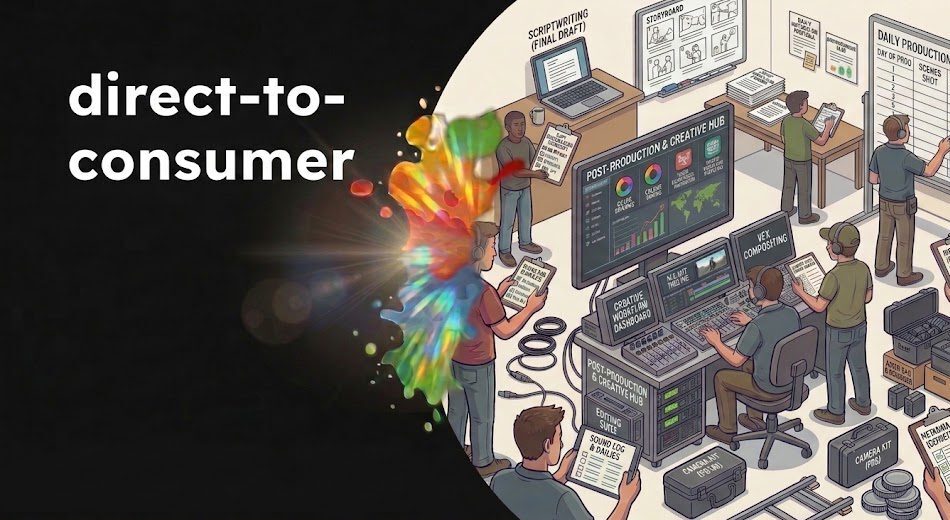
The traditional distribution waterfall—theatrical, then home entertainment, then streaming—is no longer the only viable path for independent filmmakers.
The best platforms for direct-to-consumer film releases in 2026 give producers tools to connect with paying audiences without surrendering recoupment control to intermediaries at every level of the revenue chain. And that shift has real capital implications.
Andrea Scarso, Managing Partner of IPR VC—the equity financing fund whose portfolio includes A24, XYZ Films, and MK2—notes that the most successful film companies in 2026 are the ones that understand the direct-to-audience relationship at its deepest level. “You can see in the example of A24,” Scarso explains, “they understand that direct to audience relationship extremely well.” That’s not an accident of brand strength. It’s a structural decision—built platform by platform, release by release.
This guide covers what those platforms are, how their economics work, and which ones fit which types of release—so you can build a D2C strategy that actually moves the recoupment needle, not just adds a streaming credit to your IMDb page.
In This Guide
- What Direct-to-Consumer Film Distribution Actually Means
- Vimeo OTT — Best for Revenue Retention
- Amazon Prime Video Direct — Best for SVOD/TVOD Scale
- YouTube — Best for AVOD Audience Scale
- Virtual Cinema Platforms — Best for Event Premieres
- TVOD Retail (iTunes, Google Play, Vudu) — Best for Premium Window
- FAST and AVOD Channels — Best for Catalogue Reach
- MUBI — Best for Prestige Positioning
- How to Build a D2C Release Strategy That Accelerates Recoupment
- FAQ: Direct-to-Consumer Film Release Platforms
What Direct-to-Consumer Film Distribution Actually Means
D2C film distribution isn’t just a technical arrangement—it’s a financial philosophy. When you distribute direct-to-consumer, you’re making a deliberate choice to trade audience discovery assistance (which a distributor provides) for margin control (which a distributor takes). The math only works in your favor when you have—or can build—the audience infrastructure that makes discovery happen without a middleman.
But here’s what most producers miss: D2C doesn’t mean choosing one platform and hoping for the best. The most effective D2C strategies in 2026 are multi-window—a premium TVOD window at launch, followed by an SVOD or AVOD window three to six months later, with a FAST channel tail generating long-term CPM revenue. Each window serves a different audience segment at a different price point. Stack them correctly and your recoupment timeline compresses dramatically.
The Fragmentation Paradox complicates this significantly. There are more than 140,000 active film and TV companies globally—including dozens of D2C platforms with different audience demographics, revenue models, and content fit criteria. Knowing which combination works for your specific film—by genre, budget, and existing audience size—is where most independent producers lose time and money. Let’s break down each platform category so you can make that call with real data behind it. See also our full guide to best platforms for distributing independent films for broader context on the landscape.
Ask VIQI: Which D2C Platforms Are Right for My Film’s Genre and Budget?
VIQI is Vitrina’s AI assistant—trained on 1.6 million titles, 360,000 companies, and 5 million entertainment professionals. Get real-time intelligence on the D2C platforms actively acquiring your content type.
✓ 200 free credits included | ✓ No credit card needed
Vimeo OTT — Best for Revenue Retention
Vimeo OTT is the clearest expression of the D2C model: you price your film, you own the storefront, and Vimeo takes a platform fee rather than a distribution percentage. Revenue retention is significantly higher than any aggregator deal—producers typically keep 85–90% of gross revenue after Vimeo’s cut, versus 50–70% through traditional distributor arrangements. That’s a meaningful margin difference on a film generating even modest transaction volume.
You can offer your film as a rental (TVOD), a purchase (EST), a subscription (SVOD for producers with multiple titles), or a combination. Vimeo handles the payment infrastructure, video hosting at broadcast-quality delivery, analytics reporting, and basic audience data. What it doesn’t handle is discovery. Your audience has to find your Vimeo OTT page through marketing, email lists, social channels, or existing fanbases you’ve already built. That dependency is the platform’s primary constraint—and why Vimeo OTT works best as part of a larger D2C strategy, not as a standalone distribution plan.
The ideal Vimeo OTT use case: a filmmaker with an engaged email list or community around a specific subject matter—documentary filmmakers covering niche topics, genre directors with cult followings, or producers whose previous films have retained audience loyalty. If you can drive 1,000 paying rentals at $6.99, that’s nearly $6,000 in filmmaker revenue with no distributor taking a cut. No aggregator deal comes close to that margin on equivalent transaction volume.
Amazon Prime Video Direct — Best for SVOD/TVOD Scale
Amazon Prime Video Direct is the most powerful self-service D2C portal available to independent filmmakers—and the only major SVOD platform that doesn’t require a distributor or sales agent for submission. You’re placing your film in front of 200+ million Amazon Prime subscribers globally through a direct upload portal. That discoverability advantage is impossible to replicate on any indie-built storefront.
The revenue model has two tracks: royalties from Prime Video subscriber streams (paid monthly based on hours watched) and TVOD purchases or rentals when customers buy through Amazon’s digital store. The TVOD split is typically 70% to filmmakers after Amazon’s transaction fees—comparable to iTunes and Google Play—making it a legitimate premium window option even for commercially ambitious indie releases.
But there’s a real distinction between being available on Prime Video and being discovered there. Amazon’s algorithm surfaces content based on viewership data, review scores, and search relevance—not the fact that your film exists in the catalogue. You’ll need an external marketing push to generate the initial watch data that triggers algorithmic promotion. Without it, your film sits in a catalogue of millions of titles. As our guide to navigating film distribution channels details, platform availability and platform visibility are different problems—and solving both requires a coordinated release strategy.
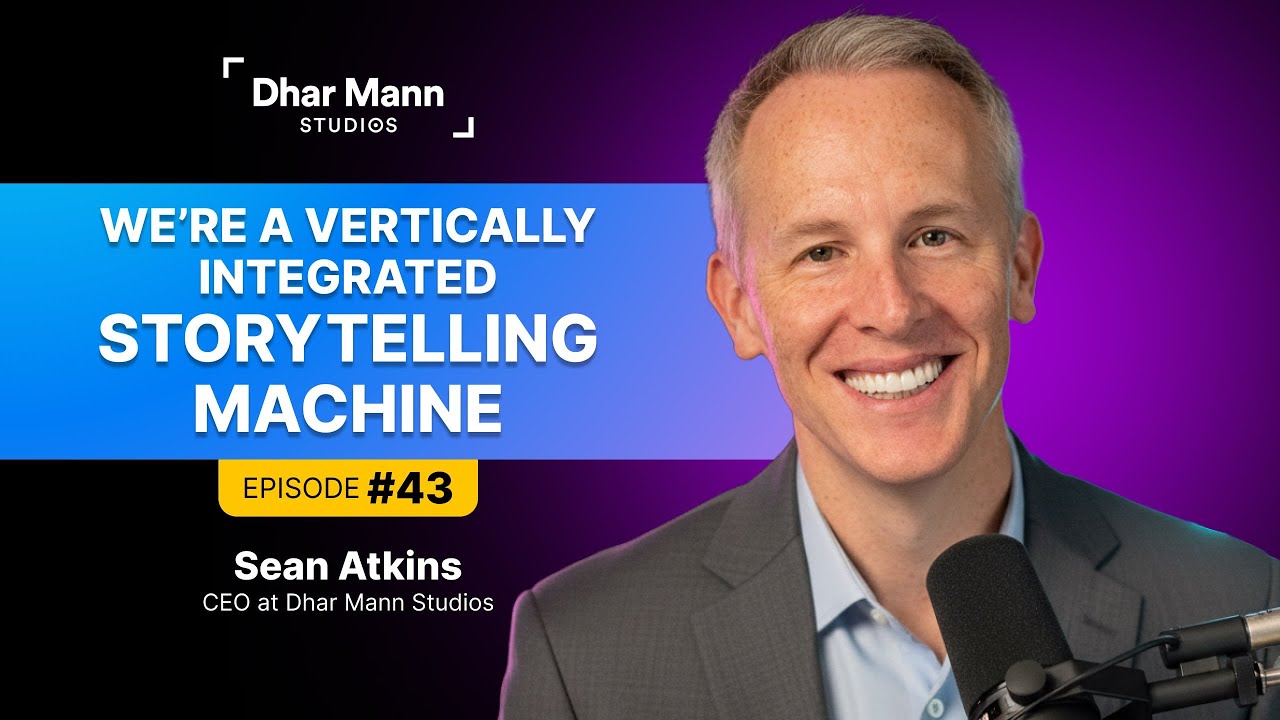
Sean Atkins (CEO, Dhar Mann Studios) on building a billion-monthly-view digital-first studio through AVOD platform strategy—a case study in what direct-to-consumer economics look like at scale:
Track Which D2C Platforms Are Acquiring Independent Films Right Now
Trusted by Netflix, Warner Bros, and Paramount. Join 140,000+ companies using Vitrina to monitor active acquisition mandates and platform deal flow before they hit the trades.
✓ 200 free credits | ✓ No credit card required | ✓ Full platform access
YouTube — Best for AVOD Audience Scale
YouTube’s position in D2C film distribution is misunderstood by most independent producers—written off as a platform for short-form content when it’s actually one of the most powerful AVOD film distribution channels in existence. Dhar Mann Studios, under CEO Sean Atkins, generates more than 1 billion monthly views with scripted content distributed primarily through YouTube’s ad-supported model. That’s not a YouTube exception story. It’s proof of what platform-native content strategy at scale actually delivers when the economics are understood correctly.
For independent feature films, YouTube offers two D2C pathways. The first is free AVOD distribution—uploading your film publicly and enabling monetization through YouTube’s Partner Program. CPM rates for film content run approximately $2–$8 per 1,000 views depending on viewer geography, watch time, and ad category. On a film generating 500,000 views, that’s $1,000–$4,000 in ad revenue—modest, but non-zero, and it builds a searchable audience record. The second pathway is YouTube’s premium TVOD and EST storefront, which allows filmmakers to sell or rent films directly at competitive pricing within YouTube’s discovery ecosystem.
The structural advantage YouTube provides that no other D2C platform matches: searchability. A film with a compelling title and optimized metadata can surface organically in search results years after initial upload. That long-tail discoverability is why YouTube works as a D2C platform even for films without existing audiences—but it requires patience and SEO discipline that most film releases don’t invest in at launch.

Your AI Assistant, Agent, and Analyst for the Business of Entertainment
VIQI AI helps you plan content acquisitions, raise production financing, and find and connect with the right partners worldwide.
- Find active co-producers and financiers for scripted projects
- Find equity and gap financing companies in North America
- Find top film financiers in Europe
- Find production houses that can co-produce or finance unscripted series
- I am looking for production partners for a YA drama set in Brazil
- I am looking for producers with proven track record in mid-budget features
- I am looking for Turkish distributors with successful international sales
- I am looking for OTT platforms actively acquiring finished series for the LATAM region
- I am seeking localization companies offer subtitling services in multiple Asian languages
- I am seeking partners in animation production for children's content
- I am seeking USA based post-production companies with sound facilities
- I am seeking VFX partners to composite background images and AI generated content
- Show me recent drama projects available for pre-buy
- Show me Japanese Anime Distributors
- Show me true-crime buyers from Asia
- Show me documentary pre-buyers
- List the top commissioners at the BBC
- List the post-production and VFX decision-makers at Netflix
- List the development leaders at Sony Pictures
- List the scripted programming heads at HBO
- Who is backing animation projects in Europe right now
- Who is Netflix’s top production partners for Sports Docs
- Who is Commissioning factual content in the NORDICS
- Who is acquiring unscripted formats for the North American market
Virtual Cinema Platforms — Best for Event Premieres
Virtual cinema emerged during the pandemic as a crisis solution. But it’s stayed because it actually works—not as a substitute for theatrical, but as a genuine premiere vehicle for independent films targeting engaged niche audiences. Eventive, Shift72, and Kino Marquee all enable filmmakers and exhibitors to run ticketed virtual screenings with revenue splits that approximate arthouse theatrical deals without the P&A burn.
The appeal is the event dynamic. A virtual cinema premiere creates urgency—limited availability windows, live Q&A sessions, community viewing experiences—that on-demand platforms can’t replicate. And for documentaries, social-issue films, or subject-specific projects with passionate community audiences, that urgency translates to ticket sales at price points that standard VOD never achieves. A niche documentary charging $15–$20 per virtual cinema ticket and selling 2,000 tickets outperforms most aggregator VOD deals on comparable audiences.
Joshua Harris of Peachtree Media Advisors notes that distributors in 2026 are actively looking for films that can combine theatrical and at-home entertainment windows effectively. Virtual cinema is the indie equivalent of that hybrid strategy. Done well, it de-risks the release by validating audience demand before you commit to wider platform deals. Done poorly—with inadequate marketing and no community mobilization behind it—it generates a handful of ticket sales and nothing else. The platform doesn’t generate audiences. Your marketing strategy does.
TVOD Retail (iTunes, Google Play, Vudu) — Best for Premium Window
iTunes (now Apple TV), Google Play Movies, and Vudu are the three dominant TVOD retail storefronts—and for indie films with commercial audience potential, the TVOD window remains the highest per-transaction revenue moment in the release calendar. Rental pricing at $3.99–$6.99 and purchase pricing at $9.99–$14.99 generate filmmaker revenue shares of approximately 70% after platform fees—meaningfully better than subscription-based royalties from any SVOD platform.
Most independent filmmakers access these storefronts through aggregators like FilmHub, Distribber, or Quiver Distribution rather than direct deals—Apple, Google, and Walmart (Vudu’s parent) don’t offer open self-submission portals at the feature film level. Aggregator fees typically run $200–$1,500 upfront plus revenue share, depending on scope of service. For a film generating real TVOD transactions, the aggregator cost is easily justified. For a film generating minimal transaction volume, it’s a sunk cost.
Timing the TVOD window is critical. A 90-day exclusive TVOD window—before SVOD or AVOD availability—protects pricing integrity and trains your audience to pay rather than wait. Release simultaneously on TVOD and SVOD at discounted prices and you’ve permanently diluted your premium transaction opportunity. Protect the window. Price accordingly. And market actively in the first 30 days, when TVOD chart placement and early review velocity determine whether an indie film surfaces organically or gets buried.
FAST and AVOD Channels — Best for Catalogue Reach
FAST channels—Free Ad-Supported Television—are where D2C economics shift from transaction revenue to reach revenue. Tubi (Fox-owned, 70+ million monthly active viewers), Pluto TV (Paramount), and Amazon Freevee pay CPM-based ad revenue for content that attracts viewership—not upfront licensing fees. The per-film revenue is modest. But the audience exposure is massive and free, and it extends your film’s commercial life well beyond the TVOD and SVOD windows that generate most of your initial recoupment.
Tim Cutting of Gracenote—whose metadata and content ID systems power discovery on major FAST platforms globally—notes that FAST channel reach increasingly depends on metadata quality, not just content quality. Films with properly tagged genres, accurate runtime categorization, optimized titles and descriptions, and complete cast/crew metadata surface algorithmically. Films without that discipline get buried regardless of quality. As reported by Variety, FAST channel ad spend is accelerating as cord-cutting creates inventory demand—which means the CPM rates available to indie content are trending upward, not down.
For your D2C strategy, FAST belongs in the final window—after your TVOD premium period, after your SVOD licensing deal, as a long-tail revenue generator and ongoing audience acquisition channel. It doesn’t belong in the launch window unless your film has no realistic TVOD or SVOD commercial path. Don’t shortcut to FAST out of convenience. Sequence it deliberately.
MUBI — Best for Prestige Positioning
MUBI is technically a curated SVOD platform, not a self-service D2C portal. You can’t submit your film and wait for approval. But its role in a D2C release strategy deserves recognition—because MUBI placement generates a specific kind of credibility signal that no other platform delivers. Its $1 billion valuation (backed by Sequoia Capital’s $100 million investment) reflects the premium that institutional money places on curated streaming as a category. Being on MUBI tells future buyers, co-production partners, and financiers that your work has been editorially validated at the highest level of cinephile culture.
The access path is through festival recognition and direct outreach to MUBI’s acquisitions team—not an open submission portal. But once acquired, MUBI typically offers exclusivity terms that pay a flat licensing fee rather than CPM-based revenue sharing. For prestige films with festival credentials, that licensing fee can be meaningful even though MUBI’s subscriber base is smaller than Amazon or Netflix. It’s a brand-building placement as much as a revenue event—and for filmmakers building a career with multiple projects, that brand value compounds over time.
Want Direct Access to the D2C Platforms Acquiring Films Like Yours?
Vitrina Concierge connects you directly to acquisitions decision-makers with warm introductions. Not a database. Active buyers.
- LA producer → Netflix UK, Fifth Season, Fox Entertainment (48 hours)
- Korean animation studio → Netflix Adult Animation (week one)
- Middle Eastern studio → Legendary Pictures (direct access)
How to Build a D2C Release Strategy That Accelerates Recoupment
Here’s the real dynamic that separates producers who build D2C release strategies from those who just pick a platform and upload: recoupment acceleration requires sequencing, not just access. Each platform window serves a different function in the revenue stack. Get the sequencing wrong—launching FAST before TVOD, offering SVOD before you’ve extracted TVOD value—and you permanently compress your revenue ceiling.
The framework that works for most independent feature films in 2026:
- Window 1 (Launch — 30-90 days): TVOD premium window across iTunes/Apple TV, Google Play, and Vudu via aggregator. Price at $5.99–$6.99 rental / $12.99–$14.99 purchase. Market aggressively in the first 30 days. Virtual cinema events run simultaneously for community audiences.
- Window 2 (90–180 days): Vimeo OTT for direct-to-fan ongoing transactions if you have an existing audience. Amazon Prime Video Direct for SVOD subscriber reach. Both can run concurrently if neither requires exclusivity.
- Window 3 (6–18 months): FAST and AVOD channels—Tubi, Pluto TV, Amazon Freevee—through FilmHub aggregator. Enable YouTube monetization. This is the catalogue revenue phase: lower per-view rates, higher total reach.
- Window 4 (Ongoing): MUBI or curated platform licensing if editorial recognition warrants it. Library licensing to broadcasters or international platforms through your sales agent. Long-tail revenue that continues recoupment for years after initial release.
What enables this sequencing is intelligence. You need to know which platforms are actively programming your genre right now, which FAST channels have open inventory for your content category, and which SVOD deals are worth accepting versus walking away from to protect your TVOD window. That intelligence lives in Vitrina—with real-time data on 400,000+ active projects, 140,000+ verified companies, and 3 million+ entertainment executives whose current mandates are tracked before they hit the trades. That’s the Insider Advantage applied to D2C. And it’s what compresses your recoupment from 24–36 months to 12–18 months when the sequencing is right. For a deeper dive on the platforms available, our comparison of film distribution services for independent filmmakers covers the full competitive landscape.
FAQ: Direct-to-Consumer Film Release Platforms
What are the best platforms for direct-to-consumer film releases?
The best D2C film release platforms in 2026 depend on your film’s audience profile and commercial goals. Vimeo OTT offers the highest revenue retention for filmmakers with existing audiences. Amazon Prime Video Direct provides the largest SVOD reach through a self-service portal. iTunes, Google Play, and Vudu offer the strongest TVOD premium window. YouTube is best for AVOD scale and long-tail discoverability. FAST channels like Tubi work best for catalogue reach in the final revenue window.
Do I need a distributor for direct-to-consumer film distribution?
For the most accessible D2C platforms—Vimeo OTT, Amazon Prime Video Direct, and YouTube—you don’t need a traditional distributor. You submit or upload directly. For TVOD retail storefronts like iTunes and Google Play, most filmmakers use an aggregator like FilmHub or Quiver Distribution to handle technical delivery and storefront relationships rather than a full distributor. A distributor becomes valuable when you need marketing support, press strategy, or access to platforms that don’t accept self-submissions.
What percentage of revenue do filmmakers keep on D2C platforms?
Revenue retention varies significantly by platform. Vimeo OTT typically allows filmmakers to keep 85–90% of transaction revenue. TVOD retail (iTunes, Google Play, Vudu) pays approximately 70% after platform fees. Amazon Prime Video Direct pays monthly royalties based on subscriber engagement hours. YouTube AVOD pays CPM-based ad revenue of approximately $2–$8 per 1,000 views. FAST channels pay CPM-based revenue with lower per-view rates. Stacking multiple windows maximizes total recoupment rather than optimizing a single platform’s rate.
What is a TVOD premium window and why does it matter?
A TVOD (Transactional Video on Demand) premium window is an initial exclusive release period—typically 30–90 days—where your film is available for rental or purchase only, not included in any subscription service. This protects pricing integrity: audiences willing to pay for immediate access drive your highest per-transaction revenue. Moving to SVOD or AVOD before extracting TVOD value permanently compresses your revenue ceiling. Sequencing your D2C windows correctly is one of the most important decisions in an independent film release strategy.
How does Vimeo OTT compare to Amazon Prime Video Direct?
Vimeo OTT offers higher revenue retention and full storefront control, but requires you to drive your own audience. Amazon Prime Video Direct offers built-in discoverability to hundreds of millions of Prime subscribers, but pays lower per-view royalties and offers less control over pricing and placement. The optimal strategy uses both: Vimeo OTT for direct-to-fan transactions where you have an existing audience, Amazon for SVOD reach and algorithmic discoverability with the broader Prime membership base.
Are FAST channels worth it for independent film D2C distribution?
Yes—but only as a late-window catalogue revenue strategy, not a launch platform. Tubi with more than 70 million monthly active viewers offers real audience scale and CPM-based revenue sharing. But FAST channels pay modest per-view rates and can dilute your premium window value if you access them too early in the release cycle. Position FAST at 6–18 months post-release as a tail revenue and audience acquisition channel, after TVOD and SVOD windows have been fully exploited.
How do virtual cinema platforms fit into a D2C film release strategy?
Virtual cinema platforms like Eventive and Shift72 create ticketed event screenings that generate higher per-transaction revenue than standard VOD, particularly for films with engaged community audiences. A virtual premiere with a live Q&A charging $15–$20 per ticket to 2,000 attendees outperforms most comparable VOD deals at equivalent audience sizes. They work best as launch event vehicles run simultaneously with TVOD availability, not as standalone distribution strategies.
How does Vitrina help with D2C film distribution strategy?
Vitrina provides real-time intelligence on which platforms are actively programming specific content genres, which FAST channels have open inventory, and which SVOD deals are worth accepting versus protecting your window for better recoupment. With data on 400,000+ active projects and access to 3 million+ verified entertainment executives, Vitrina’s Insider Advantage compresses the research timeline from months to days—and identifies the right platform combination for your specific film’s genre, budget, and commercial profile before you commit to any distribution arrangement.
Conclusion: The D2C Strategy Is a Window Sequence, Not a Platform Choice
Direct-to-consumer film distribution in 2026 isn’t about finding the one right platform and parking your film there. It’s about sequencing windows—TVOD first, SVOD and direct-fan platforms second, FAST and AVOD last—to extract maximum recoupment value from each audience segment at the right price point and the right moment. The platforms exist. What most producers lack is the intelligence to sequence them optimally for their specific film.
Key Takeaways:
- Vimeo OTT maximizes margin for audience-builders: 85–90% revenue retention makes it the highest-ROI D2C platform—but only when you have an existing audience to drive transactions.
- Amazon Prime Video Direct is your SVOD reach lever: The only major SVOD with open self-submission. Royalties are modest, but 200+ million subscribers create discovery opportunities no indie storefront can replicate.
- TVOD window protects your revenue ceiling: Launch on iTunes, Google Play, and Vudu first. Don’t dilute to SVOD or AVOD before the 30–90 day premium window has run.
- YouTube is the long-tail AVOD play: Dhar Mann Studios’ 1 billion+ monthly views proves AVOD economics work at scale. For independent films, it’s a discoverability engine—searchable, long-lived, and CPM-generating years after release.
- FAST belongs in the final window: Tubi’s 70+ million MAUs are real. But CPM-based FAST revenue requires high viewership volume to matter. Sequence it last, after premium windows are exhausted.
- MUBI is a career investment, not just a revenue event: Flat licensing fee, curated credibility, and the institutional validation that compounds across multiple projects.
- Intelligence compresses recoupment: Knowing which platforms are actively acquiring your genre right now—before market season—is what separates 12-month recoupment from 36-month. The Fragmentation Paradox costs producers deals they should have won. Vitrina’s Insider Advantage gives it back.
Find the Right D2C Platform Mix for Your Film — Before You Commit
Trusted by Netflix, Warner Bros, Paramount, and Google TV. Track 400,000+ active projects. Access 3 million+ verified executives. Know which platforms are actively acquiring your genre before you approach them.
✓ 200 free credits | ✓ No credit card required | ✓ Cancel anytime
Need a direct introduction to active buyers? Explore Vitrina Concierge →
Find Film+TV Projects, Partners, and Deals – Fast.
VIQI matches you with the right financiers, producers, streamers, and buyers – globally.
Producers Seeking Financing, Co-Pros, or Pre-Buys?
Vitrina Concierge helps producers reach the right financiers, commissioners, distributors, and co-production partners — with precision outreach, not cold pitching.
Join Industry Briefings Trusted by Leaders

Micro-Dramas & Mobile-First Storytelling
Micro-dramas are building real audiences and revenue. Understand the platforms, buyers, and economics behind the growth.

Navigating Global Content Licensing Trends
How global content licensing is shifting beyond flat fees to flexible, deal-driven models.
Film & TV Production Financing: 2026 Trends
Production financing conditions are changing quickly. Understanding where money is moving and what buyers are backing is key to getting projects approved and funded in 2026.
Unreleased Film+TV Projects: Opportunities & Showcase
A curated view of unreleased Film and TV projects open for financing and collaboration