About Innovation Hub
 Global Content Pulse (Webinars)


 Global Production Financing
(Webinars)
Global Production Financing
(Webinars)  LeaderSpeak Podcast
  Global Entertainment Digest (Newsletter)
  About Vitrina
 About VIQI
 Our Story
 Our Solutions 🔥
 Film+TV Projects Tracker 🚀
 Case Studies
 Our Profile
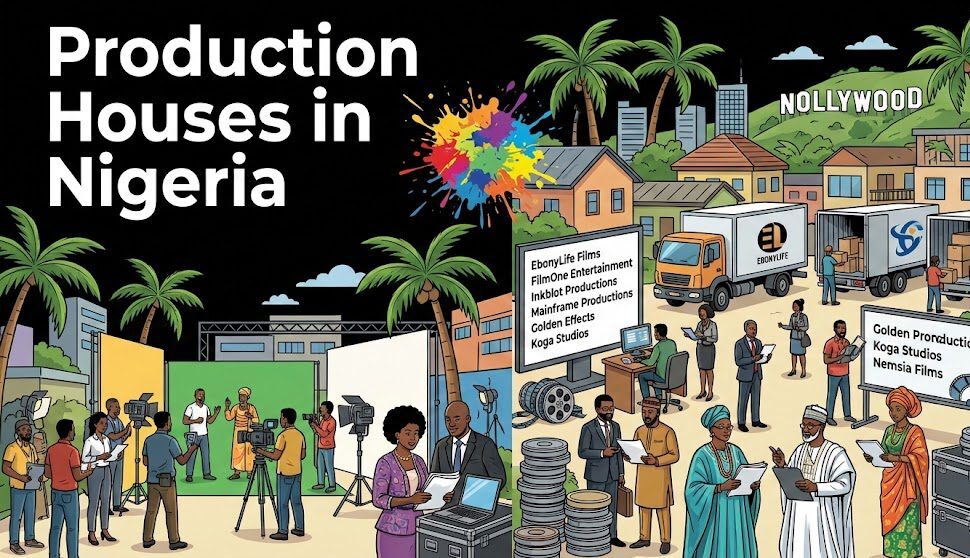
Nollywood doesn’t get nearly enough credit in international co-production conversations. It’s the second-largest film industry in the world by output—producing over 2,500 titles annually, distributing across Africa and into the global diaspora, and catching serious attention from Netflix, Amazon Prime Video, and international distributors who are actively building out African content pipelines.
But here’s the thing most foreign producers miss: Nigeria’s industry isn’t monolithic. There’s a significant gap between the informal, high-volume end of the market and the internationally structured production houses in Nigeria actively seeking co-production partners, capable of delivering to global broadcast standards, and already operating with foreign distribution agreements in place. Knowing which is which is the difference between a smooth international engagement and a very expensive lesson.
This guide maps the top-tier production companies operating in Nigeria today—what they produce, what they’re looking for in partners, and how global executives can engage the market strategically. Whether you’re sourcing content, seeking a local service partner, or evaluating co-production opportunities for African-diaspora storytelling, this is the intelligence you need before your first conversation.
Table of Contents
- Why Nigeria Is an Emerging Global Production Hub
- Top Production Houses in Nigeria for Global Partnerships
- Which Genres Export Best from Nigeria
- How International Co-Production Works with Nigerian Companies
- Infrastructure, Crew, and What to Know Before You Shoot
- The Streaming Opportunity: What Global Platforms Want from Nigeria
- How to Find and Vet the Right Nigerian Production Partner
- FAQ
- Conclusion
Ask VIQI: Which Nigerian Production Companies Are Actively Seeking Co-Production Partners Right Now?
VIQI is Vitrina’s AI assistant—trained on data from 140,000+ active film and TV companies and 400,000+ productions worldwide. Ask about Nigerian studios, deal structures, genre trends, or which Nollywood partners have delivered to international broadcast standards.
✓ 200 free credits included | ✓ No credit card required
Why Nigeria Is an Emerging Global Production Hub
Let’s put some numbers on the table. Nigeria’s film industry generates an estimated $600 million annually in direct economic value and contributes approximately 2.3% of the country’s GDP—making it one of the most significant entertainment economies on the African continent. Production output alone rivals or exceeds most mid-tier European film markets. The scale is real.
But raw output volume is only part of the story. What makes Nigeria genuinely interesting to global buyers and partners in 2026 is a structural shift that’s been building for several years: the top-tier Nigerian production houses are investing heavily in technical infrastructure, international distribution relationships, and above-the-line talent capable of competing with global standards. That investment is changing what Nigerian content looks and sounds like—and it’s changing how international buyers assess the market.
Moses Babatope, co-founder and Managing Director of FilmOne Entertainment—Nigeria’s largest theatrical distribution and production company—has been direct about this trajectory. In his conversation with the Vitrina LeaderSpeak series, Babatope highlighted the export-friendly potential of Nigerian content particularly in epic, drama, and crime genres, and the growing demand for international co-production partnerships that can elevate production quality while retaining authentic Nigerian storytelling.
The diaspora distribution footprint also can’t be ignored. An estimated 17 million Nigerians live outside the country—across the UK, US, Canada, Europe, and the Gulf. That’s a pre-built international audience already consuming Nollywood content, already subscribed to platforms that carry it, and underserved by most Western studios. Producers who tap into Nigerian creative infrastructure aren’t just accessing a production base. They’re accessing a ready-made global audience that most of their competitors don’t know how to reach.
Vitrina’s Sovereign Content Hub framework classifies Nigeria as a Tier 3 Emerging Hub—high output volume, strong cultural export credentials, and growing infrastructure. The informal production infrastructure that characterised earlier Nollywood is giving way to more structured operations with real financing visibility, proper clearances, and delivery pipelines that can satisfy international broadcast requirements. Not everywhere. Not all of them. But enough of the top-tier players that the market has crossed a meaningful threshold for foreign engagement.

Your AI Assistant, Agent, and Analyst for the Business of Entertainment
VIQI AI helps you plan content acquisitions, raise production financing, and find and connect with the right partners worldwide.
- Find active co-producers and financiers for scripted projects
- Find equity and gap financing companies in North America
- Find top film financiers in Europe
- Find production houses that can co-produce or finance unscripted series
- I am looking for production partners for a YA drama set in Brazil
- I am looking for producers with proven track record in mid-budget features
- I am looking for Turkish distributors with successful international sales
- I am looking for OTT platforms actively acquiring finished series for the LATAM region
- I am seeking localization companies offer subtitling services in multiple Asian languages
- I am seeking partners in animation production for children's content
- I am seeking USA based post-production companies with sound facilities
- I am seeking VFX partners to composite background images and AI generated content
- Show me recent drama projects available for pre-buy
- Show me Japanese Anime Distributors
- Show me true-crime buyers from Asia
- Show me documentary pre-buyers
- List the top commissioners at the BBC
- List the post-production and VFX decision-makers at Netflix
- List the development leaders at Sony Pictures
- List the scripted programming heads at HBO
- Who is backing animation projects in Europe right now
- Who is Netflix’s top production partners for Sports Docs
- Who is Commissioning factual content in the NORDICS
- Who is acquiring unscripted formats for the North American market
Top Production Houses in Nigeria for Global Partnerships
These are the Nigerian production companies operating at a level that makes international engagement viable—whether you’re looking for co-production, content acquisition, or local service partnerships.
FilmOne Entertainment
Lagos, Nigeria | Distribution, Production, Exhibition
FilmOne is the dominant force in Nigerian theatrical distribution and one of the country’s most internationally active production companies. Founded by Moses Babatope and Kene Mkparu, the company has built a vertically integrated entertainment platform spanning production, distribution, and cinema exhibition. Their production slate leans toward commercial feature films—romantic dramas, action-comedies, and increasingly ambitious genre titles capable of competing in the international streaming market. FilmOne has a direct track record of delivering content to streaming platforms and has become the go-to conversation partner for international buyers seeking credible Nigerian production relationships. If you’re doing one conversation in the Nigerian market, it starts here.
EbonyLife Films
Lagos, Nigeria | Premium Feature Film Production
Founded by Mo Abudu—widely regarded as Africa’s most powerful woman in entertainment—EbonyLife Films operates at the premium end of the Nigerian market. Their productions are distinguished by high production values, bankable talent, and ambitious storytelling that explicitly targets global streaming audiences. EbonyLife has an existing partnership with Sony Pictures International Productions for co-development of African stories for global release, and their content has appeared on Netflix. Their IP is firmly rooted in Nigerian and broader African cultural heritage, but produced with the technical finish that international co-production requires. This is the conversation for producers who want both authenticity and broadcast-ready quality in the same room.
Inkblot Productions
Lagos, Nigeria | Feature Films, Streaming Originals
Inkblot is the creative production company behind some of the highest-grossing Nollywood theatrical releases of the past five years. Founded by Zulu Obido, Chinaza Onuzo, and Naz Onuzo, the company has built a reputation for tight scripting, well-executed genre content, and consistent commercial performance. Their romantic drama and thriller titles have crossed significant box-office milestones in Nigeria and found international streaming distribution—making them an attractive partner for content looking to build African theatrical performance before global digital rollout. Inkblot’s strength is the marriage of Nigerian cultural authenticity with genuine commercial instinct.
Blue Pictures
Lagos, Nigeria | Feature Films, Television Series
Blue Pictures has emerged as one of the more consistent mid-to-premium tier production houses in Nigeria, with a slate that spans both theatrical features and long-form television. Their work demonstrates a technical quality step up from the informal Nollywood production model—proper pre-production, industry-standard post workflows, and distribution relationships that extend beyond the domestic Nigerian market. For international partners seeking a service production capability that can execute on a brief rather than a creative development partner, Blue Pictures is worth early conversations.
ROK Studios
Lagos, Nigeria / International | Drama Series, SVOD Originals
ROK Studios, founded by Jason Njoku of iROKO Partners, operates at the intersection of Nigerian content production and global streaming distribution. Their output is explicitly designed for digital-first audiences—primarily drama series structured for SVOD consumption across the African continent and diaspora. ROK’s significance for international partners isn’t just the content quality; it’s the distribution infrastructure behind it. iROKO Partners built one of the earliest dedicated African streaming platforms, meaning ROK-produced content arrives with audience data, engagement metrics, and distribution reach that most Nigerian production companies can’t match.
Temple Productions
Lagos, Nigeria | Drama Series, Television Productions
Temple Productions has built its reputation primarily in long-form Nigerian television drama—a segment that operates differently from the feature film market but carries significant reach through broadcast and FAST channels across West Africa. For international partners seeking local production capability for format adaptations, scripted series, or pan-African broadcast content, Temple’s understanding of the Nigerian television audience and distribution landscape makes them a strategic conversation.
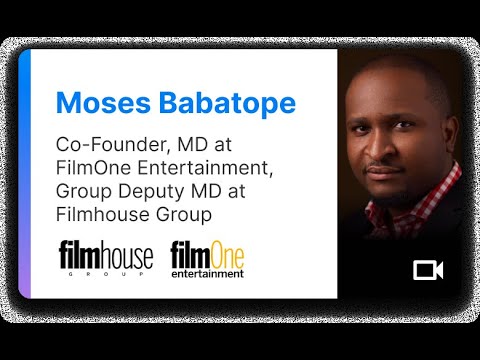
Moses Babatope (Co-Founder & Managing Director, FilmOne Entertainment) discusses Nollywood’s global potential, co-production opportunities, and what international partners need to know about engaging the Nigerian market:
Track Nigerian Production Companies Actively Seeking International Partners
Trusted by Netflix, Warner Bros, and Paramount. Join 140,000+ companies on Vitrina to see which Nigerian studios have open co-production slots, current production pipelines, and verified international delivery capability—across 400,000+ active productions globally.
✓ 200 free credits | ✓ No credit card required | ✓ Full platform access
Which Genres Export Best from Nigeria
Not every Nollywood genre travels equally well in international markets—and being honest about this will save you a development cycle.
Epic and historical drama is the strongest international export genre. Nigerian history is extraordinarily rich—pre-colonial kingdoms, trade empires, resistance narratives, and dynastic stories that have never been told for global audiences at the production scale they deserve. This is the content that gets bought before it’s finished. Babatope’s assessment of FilmOne’s slate explicitly flags epic content as export-priority for exactly this reason.
Crime and thriller is the second-strongest. Lagos crime fiction has a visual and cultural identity that travels—urban, kinetic, morally complex in ways that resonate with audiences who’ve been watching Korean crime dramas and Scandinavian noir. International platforms are actively looking for African crime content because it’s genuinely underrepresented and the demand signal is there.
Romantic comedy and drama performs extraordinarily well within the Nigerian domestic market and the African diaspora, but has had more limited international crossover outside those communities. That’s not a permanent ceiling—it’s a distribution and marketing challenge. But for partners whose priority is global audiences beyond the diaspora, this genre requires more packaging and positioning work to travel.
Faith-based content is massive in Nigeria—some of the country’s highest-grossing films have faith themes—but it has a specific audience that requires targeted distribution rather than general platform placement. Don’t underestimate the commercial scale of this genre if your distribution reach includes African-American, Caribbean, and African religious communities globally. But go in understanding who you’re distributing to.
How International Co-Production Works with Nigerian Companies
Nigeria doesn’t currently have an active bilateral co-production treaty network comparable to Canada or the UK—and that’s an important practical constraint. It means you don’t get automatic access to treaty co-production benefits in partner countries simply by involving a Nigerian company. The financial structure has to work on commercial terms.
That said, international co-productions with Nigerian companies have been structuring successfully on three main models:
The creative co-development model is the most common at the premium tier. A foreign producer brings development capital, the Nigerian company brings IP, local talent, production knowledge, and domestic distribution access. The Nigerian partner’s contribution qualifies the project for local content designation on Nigerian platforms—which matters for streaming platforms with local content commitments in the territory.
The service production model works for international productions wanting to shoot in Nigeria. A foreign producer provides the project and financing, the Nigerian company provides line production capability—crew, locations, logistics, permits. This model is simpler to structure, lower creative risk for the foreign party, but doesn’t generate the authentic Nigerian storytelling that the streaming platforms are actually buying.
The slate financing model is still nascent in Nigeria but growing. A foreign financier or distributor commits financing across multiple projects from a Nigerian production company—providing capital certainty that the Nigerian partner needs to invest in production quality, while the financier gains first-look access to a pipeline of culturally authentic content with built-in distribution reach. This model works best with established companies like EbonyLife or FilmOne that have demonstrated pipeline consistency.
For a deeper breakdown of how co-production structures work across African markets, our guide to top production houses across Africa covers the regional landscape in full.
Infrastructure, Crew, and What to Know Before You Shoot
The honest assessment: Nigeria’s production infrastructure is improving rapidly but unevenly. And you need to go in with accurate expectations rather than assumptions based on either old Nollywood stereotypes or optimistic market hype.
Lagos is the primary production centre—specifically the Victoria Island and Lekki corridors, along with purpose-built studio facilities in Ikeja. The city has experienced, internationally-trained crews capable of executing on international productions. But “capable” is not uniformly distributed. The gap between a top-tier Lagos crew and a mid-tier one is significant, and it matters more for international productions where quality consistency is non-negotiable.
Studio facilities have developed significantly. Nollywood studios including Koga Studios, Nollywood Factory, and several privately operated sound stages now offer production-grade facilities. They’re not Pinewood. But for African-set content that doesn’t need to pretend to be something it isn’t, they’re genuinely capable environments.
Post-production is the area requiring the most scrutiny. Nigeria has solid colour grade and sound mixing capability in Lagos, but VFX and heavy CGI work typically routes through post houses in South Africa, the UK, or India. If your project has significant VFX requirements, build the international post pipeline into your initial structure—don’t assume it can be solved domestically at broadcast quality.
Logistics and production support in Lagos can be genuinely challenging. Traffic, infrastructure unpredictability, and generator dependency for power are real factors that experienced Nigerian production companies know how to manage—but that can derail an international producer working without strong local partnership. This is not a market to approach without a credible local line producer relationship already in place.
The Streaming Opportunity: What Global Platforms Want from Nigeria
Netflix made its commitment to Nollywood explicit when it launched a dedicated Nigerian content hub and began commissioning originals from Lagos-based producers. But what doesn’t make the press releases is the specific acquisition criteria that Netflix, Amazon Prime Video, and other global platforms actually apply when evaluating Nigerian content proposals.
Here’s what they want. Culturally specific, not culturally generic. Platforms aren’t buying Nigerian content because they want a cheaper version of Western content shot in Lagos. They’re buying it because Nigerian stories have a texture, social context, and visual landscape that their subscribers can’t get elsewhere. Productions that lean into that specificity—that trust the Nigerian cultural context rather than smoothing it over for imagined Western sensitivity—are the ones that get greenlit and perform.
Delivery-ready technical packages. This is where a lot of Nigerian productions still fall short. Streaming platforms require delivery packages to specific technical standards—4K finishing, HDR where required, clean chain of title, clearances for all music and archive, proper E&O insurance. These requirements are non-negotiable. Productions that can’t meet them don’t get picked up regardless of creative quality. The top-tier Nigerian production houses now have these workflows in place; many mid-tier companies still don’t.
Pre-existing audience data. In the current platform environment, Nigerian productions with demonstrable streaming performance history—even on regional platforms like iROKO or African Magic—have a significant advantage in greenlight conversations. According to reporting by Deadline, streaming platforms globally have shifted toward data-validated acquisition decisions. Nigerian content with proven viewer engagement in diaspora markets—UK, US, Canada—arrives at that conversation with meaningful leverage.
And the Fragmentation Paradox applies here as much as anywhere in global entertainment. There are thousands of companies operating in the Nigerian production ecosystem, but the number capable of delivering to international streaming standards is a small fraction. Without intelligence on who’s actually delivering at that level right now—verified capability, current capacity, actual streaming credits—you’re spending months on due diligence that should take days. As noted in our breakdown of the Nollywood content landscape, the credibility gap between tier-one and tier-two Nigerian producers is not obvious from the outside without current market data.
How to Find and Vet the Right Nigerian Production Partner
This is where most international producers get it wrong. They show up at AFM or MIPCOM, have a few conversations with Nigerian company representatives, and make a partnership decision on the strength of a deck and a pitch. That works in markets with transparent industry infrastructure. Nigeria doesn’t have that yet—not at the depth that makes cold-relationship vetting reliable.
The questions that actually matter when evaluating Nigerian production partners:
- What’s their actual delivery track record? Not what they’ve released in Nigeria. What have they delivered to international broadcast standards—and who can independently verify it?
- Who are their current distribution relationships? A Nigerian company claiming a Netflix relationship should be able to substantiate it with specific titles currently in the catalogue. Check it before you structure anything around it.
- What does their current pipeline look like? A company in active production with multiple committed projects is a fundamentally different risk profile from one that’s been quiet for 18 months. Capacity and pipeline status aren’t information that tends to get volunteered in pitch conversations.
- Do they have post-production workflow documentation? Ask to see a recent delivery specification package. A company operating at international standards will have this readily available. One that doesn’t is telling you something important about where their technical level actually sits.
- What’s their financial stability? Nigeria’s economic environment has been challenging—naira volatility, inflationary pressure, and the withdrawal of some international financing that entered the market optimistically and retreated. A production partner with financial exposure you don’t understand is a risk that can surface late and badly.
Vitrina’s platform gives you verified intelligence on production company track records, current project pipelines, and delivery capability across the Nigerian market—without the 3–6 month manual verification process that traditional relationship-based sourcing requires. A producer in Lagos used Vitrina’s concierge service to connect directly with an international distributor seeking African content—not a cold introduction, but a warm connection based on verified fit between what the producer had and what the buyer needed. That’s the difference between the Fragmentation Paradox costing you margin and time, and the Insider Advantage working in your favour.
Have Nigerian Content Ready for International Buyers? We’ll Make the Introduction.
Vitrina Concierge connects Nigerian production companies and international co-producers directly to the right buyers—verified decision-makers actively seeking African content.
- LA producer → Netflix UK, Fifth Season, Fox Entertainment (48 hours)
- Korean animation studio → Netflix Adult Animation (week one)
- Middle Eastern studio → Legendary Pictures (direct access)
Frequently Asked Questions
What are the top production houses in Nigeria for global entertainment partnerships?
The leading production houses in Nigeria for international co-production and content acquisition include FilmOne Entertainment (Nigeria’s largest theatrical distributor and production company), EbonyLife Films (premium feature film production with Sony and Netflix relationships), Inkblot Productions (highest-grossing Nollywood features), ROK Studios (SVOD-focused drama series with iROKO distribution infrastructure), and Blue Pictures (mid-to-premium feature and television production). Each operates at a different tier of international readiness.
How large is Nigeria’s Nollywood film industry?
Nollywood is the second-largest film industry in the world by output, producing over 2,500 titles annually. It contributes approximately 2.3% of Nigeria’s GDP and generates an estimated $600 million in annual economic value. The industry’s diaspora reach—an estimated 17 million Nigerians living internationally across the UK, US, Canada, and Europe—gives Nigerian content a built-in global audience that most Western studios underestimate.
Which Nigerian content genres have the strongest international export potential?
Epic and historical drama is the strongest international export genre from Nigeria—pre-colonial kingdoms, trade empire narratives, and dynastic stories that have never been produced at global scale. Crime and thriller is the second-strongest, with Lagos urban crime fiction demonstrating strong international platform appeal. Romantic comedy and drama performs exceptionally within diaspora communities but requires more packaging for broader international audiences. Faith-based content has significant commercial scale within its targeted distribution channels.
Does Nigeria have co-production treaties with other countries?
Nigeria does not currently have an active bilateral co-production treaty network comparable to Canada, the UK, or France. This means international co-productions with Nigerian companies don’t automatically qualify for treaty co-production benefits in partner countries. International co-productions structure commercially, most commonly through creative co-development models (foreign capital + Nigerian IP and distribution), service production arrangements, or slate financing deals with established production companies.
What do Netflix and Amazon look for when acquiring Nigerian content?
Global streaming platforms acquiring Nigerian content prioritise three things: cultural specificity (authentic Nigerian storytelling rather than Western-smoothed content), delivery-ready technical packages meeting international broadcast standards (4K finishing, proper clearances, E&O insurance), and pre-existing audience data demonstrating diaspora or regional streaming performance. Productions that can demonstrate viewer engagement on African platforms like iROKO or African Magic have measurable leverage in streaming acquisition conversations.
What is the production infrastructure like in Nigeria?
Lagos is the primary production hub, with purpose-built studio facilities including Koga Studios and the Nollywood Factory, experienced technical crews, and growing post-production capability including colour grade and sound mixing. Heavy VFX work typically routes through South Africa, the UK, or India. The gap between top-tier and mid-tier Nigerian production capability is significant—experienced local line producers are essential for managing Lagos logistics including traffic, power infrastructure, and location permits reliably.
How can international producers find verified Nigerian production company partners?
Traditional relationship-based sourcing in the Nigerian market takes 3–6 months of manual due diligence—tracking down delivery records, verifying streaming credits, assessing current capacity, and confirming financial stability through word of mouth. Vitrina’s platform provides verified intelligence on Nigerian production company capabilities, current pipelines, and international delivery track records. The Vitrina Concierge service makes warm introductions to verified partners based on confirmed fit—compressing the sourcing cycle from months to days.
Is Nigeria a viable location for international film and TV production shoots?
Yes—for the right projects with the right structure. Nigeria offers genuine location diversity, a large pool of trained actors, competitively priced crews relative to UK or US equivalents, and a production environment that delivers authentic African visual texture that can’t be replicated elsewhere. The key conditions: a credible local production partner is non-negotiable, productions must build international post-production into the initial pipeline plan, and budgets should include appropriate contingency for logistics variables in Lagos.
Conclusion: Nigeria’s Moment in Global Entertainment Is Now
The window for building first-mover relationships with Nigeria’s top production houses is right now—before the major studios fully recognise what the streaming data is already telling them. The diaspora audience is real, the creative talent is exceptional, and the production infrastructure at the top tier has crossed the threshold for international co-production viability.
But this market demands precision over optimism. The gap between the companies that can deliver to international standards and those that can’t isn’t visible from a pitch deck. It requires verified intelligence, current pipeline data, and introductions built on confirmed fit—not hopeful networking.
Key Takeaways:
- Tier-one Nigerian companies are international-ready: FilmOne, EbonyLife, Inkblot, ROK Studios, and Blue Pictures operate at a level that can support global co-production and streaming delivery requirements.
- Epic drama and crime travel furthest: International buyers are actively acquiring in these genres—culturally specific, visually distinctive, commercially proven in diaspora markets.
- No treaty network means commercial structuring: Co-productions work on three models—creative co-development, service production, or slate financing—each with different risk and creative profiles.
- Technical delivery is the gatekeeping criteria: Streaming platforms won’t compromise on 4K finishing, clearances, and E&O insurance—verify delivery capability before you structure anything around it.
- Diaspora reach is the untapped distribution asset: 17 million Nigerians internationally represent a validated global audience for the right content—and most Western distributors don’t know how to reach them.
- Intelligence accelerates the market entry: The Fragmentation Paradox costs 3–6 months and 15–20% margin leakage in opaque markets. Verified partner data compresses that cycle to days and protects your ROI from day one.
Start Tracking Nigerian Production Companies with Verified Global Delivery Credentials
Trusted by Netflix, Warner Bros, and Paramount. Join 140,000+ companies on Vitrina to access real-time production pipelines, partner verification, and buyer activity across 400,000+ active productions worldwide.
✓ 200 free credits | ✓ No credit card required | ✓ Cancel anytime
Have a project ready to pitch to international buyers? Explore Concierge Service →
Find Film+TV Projects, Partners, and Deals – Fast.
VIQI matches you with the right financiers, producers, streamers, and buyers – globally.
Producers Seeking Financing & Partnerships?
Book Your Free Concierge Outreach Consultation
(To know more about Vitrina Concierge Outreach Solutions click here)
Join Industry Briefings Trusted by Leaders
The Mid-Budget Comeback: Why Mid-Budget Films Is the Smartest Bet in the Room
Mid-budget films are attracting new capital. See why this segment is becoming one of the strongest bets in Film today.
Franchise Fatigue vs. IP Dependency: What Studios Should Be Betting On Now
s franchise performance softens, where will the next generation of valuable IP come from? Join the briefing.
Unscripted Is Eating the World: The Multi-Billion Reality and Format Boom
Unscripted is the new prestige — inside the $19.8B global format boom reshaping how streaming platforms compete.
How Co-Productions and Regional IP Are Reshaping Global Drama
As global drama evolves, which stories travel, which stay local, and how are they getting financed?