IHUB
IHUB
 Private Briefings (Webinars)


 LeaderSpeak Podcast
  Global Entertainment Digest (Newsletter)
  Premium Lists
 Membership Benefits
 About Vitrina
 Our Story
Introduction
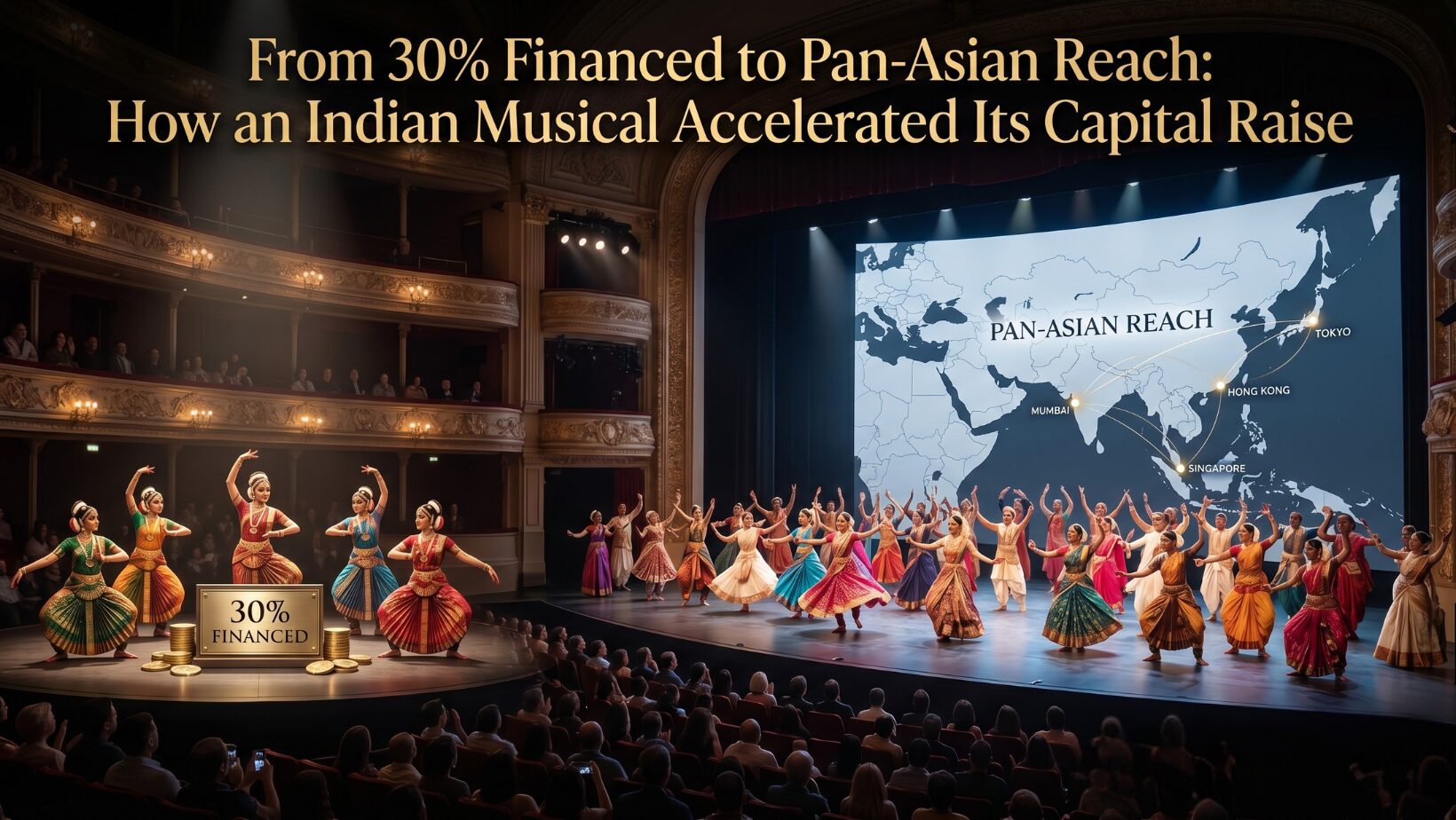
There is a particular kind of pressure that comes when a film project is close but not quite there. The creative package is assembled. Key talent is attached. Tax incentives are secured. A meaningful portion of the financing is already in place. And yet the remaining capital gap means the project cannot greenlight.
This is the capital raise phase, and for many independently financed films, it is the stage that takes longest and costs the most in time, legal fees, and opportunity. Not because the project isn’t fundable, but because finding the right partners — those with both the mandate and the appetite to engage at this specific stage — requires precise intelligence about a market that moves quickly and rarely announces itself.
This is the situation a producer behind a star-studded Indian musical found themselves in. And it’s a situation that Vitrina Concierge was built to resolve.
In This Case Study:
- Introduction: From 30% Financed to Pan-Asian Reach
- The Challenge: Bridging the Capital Gap on a High-Profile Indian Musical
- Why Pan-Asian Distribution Is Strategically Important for Indian Musicals
- The Vitrina Concierge Approach: Mapping Active Buyers for a Specific Genre
- The Result: High-Value Connections That Fast-Tracked Financing Discussions
- What This Case Study Tells Us About Film Financing at the Capital Raise Stage
- About the Companies Named in This Case Study
- About Vitrina Concierge
Financing
Playbook
Download the 2026 LeaderSpeak Financing Playbook
Includes the full 30-point producer self-check, plus direct insight from HeadGear, Peachtree, Myriad, Goldfinch, 91 Film Studios, and Lee & Thompson.
Download the Full Playbook →The Challenge: Bridging the Capital Gap on a High-Profile Indian Musical
The project had significant momentum. It was packaged — meaning it had committed talent, a clear creative direction, and a production structure ready to move. Tax incentives had already been secured, and 30% of the financing was confirmed. The producer was not starting from scratch. They were in the final stretch of a financing round that required specific types of partners: pan-Asian distributors and commissioning entities willing to engage on pre-sales, co-production, or both.
The musical genre is a particular case within Indian entertainment. High-concept musicals with major stars carry genuine commercial appeal across the South and Southeast Asian diaspora — as well as among broader Asian audiences with an established appetite for Indian content. But translating that appeal into structured pre-sales or commissioning agreements requires partners who understand the genre, recognise the distribution opportunity, and have the internal appetite to move.
The challenge was not persuading the market that the project had value. It was finding the specific buyers and financiers in the right territories, with the right mandates, at the right moment in their own acquisition and commissioning cycles and initiating conversations that could move quickly enough to serve the production timeline.
VITRINA CONCIERGE
Understanding the structure is the start. Knowing who to take it to is where it gets harder.
Vitrina Concierge works through that with you, one-to-one — from positioning your project to finding the right financier or commissioner.
Talk to Our Solutions Expert 1:1Why Pan-Asian Distribution Is Strategically Important for Indian Musicals
Indian entertainment has one of the most geographically distributed global audiences of any national cinema. Beyond India’s domestic theatrical market itself, the vast South and Southeast Asian diaspora, concentrated in markets including Malaysia, Singapore, the UAE, the United Kingdom, and the United States, creates sustained international demand for Indian content across both theatrical and streaming windows.
Southeast Asia, in particular, has developed into a significant market for Indian film and television content. Platforms and broadcasters in Malaysia, Indonesia, Thailand, and Singapore actively acquire Indian content to serve diaspora audiences, and some have moved beyond acquisition to commissioning and co-production as their appetite for original and differentiated content has grown.
For a high-concept Indian musical with star casting, this geography represents both a distribution opportunity and a pre-sales opportunity. Regional buyers in Southeast Asia who commit to distribution rights in advance provide the producer with a form of revenue certainty that can be used to unlock further financing. Pre-sales of this kind are a standard component of independent film financing models globally — the challenge, again, is identifying the buyers who are actively in acquisition mode and capable of moving quickly.
Indian musicals also carry a specific cross-market appeal that extends beyond the diaspora. The genre’s combination of spectacle, music, and emotionally driven storytelling has demonstrated appeal in markets that may have limited familiarity with Indian cinema more broadly. This creates the potential for distribution deals that go beyond diaspora-only licensing — something that strengthens the project’s overall financing story.
VITRINA CONCIERGE
Partner-Outreach Managed by Vitrina.
We reach matched contacts every month for your film financing requirements — right company, right decision-maker, right message.
Start with Vitrina ConciergeThe Vitrina Concierge Approach: Mapping Active Buyers for a Specific Genre
When the producer engaged Vitrina’s Concierge team, the focus was on identifying the buyers and financiers in Asia most likely to have an active appetite for high-concept, culturally rooted Indian musicals and then creating a focused outreach strategy to initiate substantive conversations.
This required more than a list of Asian distributors or broadcasters. It required an understanding of which companies were actively acquiring Indian content, at what budget levels and in what formats, and which decision-makers within those organisations had the mandate to engage on a project at this stage of development.
Vitrina’s platform draws on data covering over 400,000 film and television projects and more than 300,000+ companies globally, with real-time signals on acquisition activity, deal history, and commissioning mandates. The Concierge team used this intelligence to build a targeted map of pan-Asian buyers and financiers with a demonstrated appetite for the genre and the geographic profile of the project.
Outreach was tailored to each target. For commissioning partners, the pitch led with the project’s cultural specificity and its potential to serve underserved audience segments in their market. For distribution buyers, the focus was on the commercial track record of comparable Indian musicals in their territory and the project’s packaging strength. The goal was not simply to introduce the project — it was to frame it in terms that aligned with each partner’s specific acquisition or commissioning logic.
The Result: High-Value Connections That Fast-Tracked Financing Discussions
The outreach delivered active conversations with three of the most significant players in pan-Asian content distribution and commissioning:
Banijay Asia is one of the most powerful content companies operating across India and Southeast Asia. Formed as a joint venture between global content giant Banijay and producer Deepak Dhar, Banijay Asia creates and distributes premium content for television, film, and streaming platforms, with an extensive network across the region. Their portfolio includes major format adaptations and original productions across multiple genres. An engagement at this level represents access to a company with both the financial scale and the distribution infrastructure to be a meaningful partner.
Astro Malaysia is Malaysia’s dominant integrated media company, operating pay-television, streaming, radio, and film production and distribution businesses. Astro has a long-standing and strategically significant relationship with Indian entertainment having invested more than US$68 million in Indian channel stakes and more recently partnering with Sun NXT to bring Indian content across six languages to Malaysian audiences. For an Indian musical targeting Southeast Asian distribution, Astro’s combination of reach, audience, and demonstrated commitment to Indian content makes it a high-priority target. Conversations with Astro carry the potential to unlock not just Malaysian distribution but a meaningful pre-sale that validates the project’s regional commercial appeal.
Bomanbridge Media, headquartered in Singapore, is a leading Asian content distribution and co-production company with a catalogue of over 3,000 hours of programming and a track record of closing pan-regional deals across Asia Pacific. The company’s network spans broadcasters, streaming platforms, and production partners across the region, and it regularly facilitates the kind of multi-territory licensing and co-production arrangements that are central to independent film financing models. An introduction at this level, with a company that closes hundreds of hours of deals annually across Asian markets, is precisely the kind of strategic partnership that can accelerate a financing round.
Together, these three introductions represented fast-tracked access to decision-makers at companies that, collectively, touch a significant portion of the Asian content market. Discussions advanced to financing conversations and the exploration of potential regional pre-sales — the concrete commercial steps that move a project from capital raise to greenlight.
What This Case Study Tells Us About Film Financing at the Capital Raise Stage
The situation this producer faced — substantially financed, creatively packaged, strategically ready, but unable to close the remaining capital without the right partners — is one of the most common bottlenecks in independent film production. A few things stand out from how it was resolved.
The capital raise phase requires a different kind of intelligence than development. At development stage, a producer is seeking creative collaborators and early-stage backers. At capital raise stage, they are looking for buyers and financiers who are operating at commercial speed, making acquisition decisions on defined timelines, and allocating capital to projects that fit specific criteria. The intelligence needed to find those partners, current, accurate, and granular enough to identify specific decision-makers, is qualitatively different from what gets a project to this stage.
Genre matters in pan-Asian distribution. Indian musicals are not a generic content category. They carry specific audience appeal, specific platform value, and specific co-production implications that experienced buyers understand and can assess quickly. The ability to identify buyers who have already demonstrated appetite for the genre rather than approaching the market speculatively makes a significant difference to both the efficiency of the process and the quality of the conversations that result.
Pre-sales are still one of the most reliable mechanisms for closing independent film financing. In a global content market where streaming platforms have become more selective about commissioning and co-production, pre-sales to regional broadcasters and distributors remain a viable and important tool for independent producers. The ability to identify which platforms and distributors are actively acquiring, in which territories, and at what price levels is central to making this mechanism work effectively.
Speed of access matters at this stage. When a project is in capital raise, the clock is running. Talent holds expire, tax credit windows have deadlines, and co-producers have competing priorities. The ability to move from a targeted outreach to substantive discussions within a compressed timeframe — rather than months of introductory conversations that go nowhere — is not just operationally useful. It is sometimes the difference between a film getting made and a project losing momentum.
About the Companies Named in This Case Study
Banijay Asia is a content creation and distribution company operating as a joint venture between global content company Banijay and producer Deepak Dhar. Founded in 2018, it produces premium scripted, unscripted, and reality content for television, streaming platforms, and film across India and Southeast Asia, with productions distributed across multiple international markets.
Astro Malaysia is Malaysia’s largest integrated media company, listed on Bursa Malaysia. It operates pay-television services reaching approximately 5.7 million subscribers, alongside digital streaming, radio, and content production and distribution businesses. Astro has a sustained track record of acquiring and commissioning Indian entertainment content, serving Malaysia’s substantial Indian-origin and broader South Asian diaspora audience.
Bomanbridge Media is a Singapore-based content distribution and co-production company with a catalogue of over 3,000 hours of programming. The company distributes content to broadcasters and streaming platforms across Asia Pacific, and regularly facilitates multi-territory licensing arrangements and co-production structures for independent producers seeking regional partners.
Vitrina Concierge is Vitrina’s premium AI-powered business development service for film and television companies. It combines Vitrina’s global entertainment supply chain intelligence — covering more than 1.6 million+ projects and 300,000+ companies — with targeted outreach managed by a specialist team, enabling producers, distributors, and studios to identify and engage the right partners, buyers, and financiers with speed and precision.