Film grants for independent filmmakers are non-dilutive, non-repayable, and don’t require you to give up a single percentage point of your project. That makes them the most cost-effective financing source available—and the most systematically underused.
Most independent filmmakers either don’t know which grants exist, apply to the wrong ones for their project type, or miss deadlines because they’re not tracking the landscape. This guide fixes all three problems.
In 2026, the US grant landscape has shifted. Several major programs have increased their award amounts in response to rising production costs. Diversity and emerging filmmaker programs have expanded. And the documentary grant ecosystem—historically the most robust in terms of accessible funding—has added new cycles. What hasn’t changed: competition is intense, applications require serious preparation, and the filmmakers who win apply strategically rather than broadly.
Below is a curated list of the grants actually worth pursuing in 2026—selected for award amount, realistic accessibility for independent producers, and alignment with the project types most likely to qualify. Application tips, eligibility requirements, and deadline patterns are included for each.
Table of Contents
- How Film Grants Fit Into Your Overall Financing Strategy
- National Endowment for the Arts (NEA) Film Grants
- Sundance Institute Documentary Fund and Feature Film Program
- ITVS (Independent Television Service) Open Call
- Sundance / Skoll Stories of Change and Impact Programs
- Alfred P. Sloan Foundation Film Program
- Diversity, Equity, and Emerging Filmmaker Grants
- State Film Commissions and Regional Arts Funding
- The Vitrina Grant Targeting Framework™
- How to Write a Grant Application That Actually Wins
- Frequently Asked Questions
- Conclusion
Find Grants, Funds, and Financing Partners Alongside Your Grant Search
Trusted by Netflix, Warner Bros, and Paramount. Vitrina maps 140,000+ verified companies in the global entertainment supply chain—including film funds, co-production partners, and financing sources that complement the grant programs below.
✓ 200 free credits | ✓ No credit card required | ✓ Full platform access
How Film Grants Fit Into Your Overall Financing Strategy
Before diving into specific programs, it’s worth being clear about what film grants are—and aren’t—in the broader financing picture. Grants are soft money: non-repayable, non-dilutive capital that doesn’t require you to give up ownership, pay interest, or repay a principal. That makes them extremely valuable as a financing layer, but they’re almost never sufficient on their own for a full production budget. Think of grants as a component of your capital stack, not a replacement for it.
For a $300K documentary, grant funding alone might close the budget—especially with multiple smaller grants stacked. For a $1.5M narrative feature, you’ll typically use grants alongside equity investment, tax incentives, and broadcaster pre-buys to assemble the full budget. The strategic value of grant funding isn’t just the money: it’s the credibility signal. A Sundance Institute grant or an ITVS award tells equity investors and broadcasters that a credible third party has validated the project’s merit and the filmmaker’s capability. That validation often unlocks subsequent financing at better terms.
Two practical rules before you start applying:
Target before you apply. Grant programs are specific about what they fund—project stage, subject matter, filmmaker background, and format. Applying broadly to every available grant is inefficient and usually unsuccessful. Reading the guidelines carefully and only applying to programs where your project is genuinely a strong fit produces far better win rates than volume application strategies.
Track deadlines systematically. Most film grants have one annual cycle with a hard deadline. Missed by a day? Wait 12 months. Setting up a dedicated grant tracking calendar—with application deadlines, results dates, and required materials—is basic grant strategy that many filmmakers don’t implement until after they’ve missed their first cycle.
For a broader view of how soft money including grants fits within a complete independent film financing plan, see our guide to how film financing works for independent filmmakers.
National Endowment for the Arts (NEA) Film Grants
The National Endowment for the Arts is the federal government’s primary arts funding body, and its film-related grants represent among the most prestigious—and most misunderstood—funding available to independent filmmakers in the US. The NEA doesn’t fund films through a single direct application; instead, it distributes funding through a network of state arts agencies and designated organizations, as well as through direct program grants.
Art Works Grants: The NEA’s primary direct grant program supports projects of artistic excellence with “significant national or regional reach.” Film and media arts are eligible. Awards typically range from $10,000 to $100,000, with most independent film projects receiving in the $10,000–$30,000 range. Applications are highly competitive—grant reviewers evaluate artistic excellence, merit of the project plan, and geographic or demographic reach.
Eligibility requirements: US-based nonprofit organizations or fiscally-sponsored projects (using a 501(c)(3) fiscal sponsor). Individual filmmakers apply through fiscal sponsorship, not directly. Projects must demonstrate national or significant regional impact—a locally-focused documentary with no distribution plan is unlikely to qualify.
Deadline pattern: NEA Art Works grants typically have one annual application window, usually in the winter (January–February) for projects beginning later that year. Check the NEA website directly for 2026 cycle dates, as they shift slightly each year.
Practical note: If you don’t have a fiscal sponsor, apply to join one before approaching the NEA. Organizations like Fractured Atlas, Film Independent, and the International Documentary Association (IDA) offer fiscal sponsorship to qualifying projects for a percentage of grant revenue received—typically 5–8%.
Sundance Institute Documentary Fund and Feature Film Program
The Sundance Institute is the most influential non-governmental supporter of independent American cinema, and its grant programs—particularly for documentary—represent some of the highest-value, most credibility-conferring awards available in the US ecosystem.
Documentary Fund
The Sundance Documentary Fund supports feature-length documentary films addressing significant social, cultural, or political issues with the potential for wide impact. Awards range from $20,000 to $100,000+, distributed across development, production, and post-production stages. The fund has historically prioritized work by filmmakers from underrepresented communities and projects with global resonance.
What the fund looks for: Strong journalistic or artistic point of view, access to the story that the filmmaking team uniquely possesses, clear production plan and timeline, evidence of editorial direction, and a distribution-awareness that goes beyond “we’ll figure it out after the festival.”
Eligibility: Feature documentaries (60+ minutes) in development, production, or post-production. US and international projects qualify, but US-based filmmakers or projects with significant US connections receive the majority of awards. Must be fiscally sponsored or organizationally structured.
Deadline pattern: One annual cycle, typically with applications due in late spring (May–June). Results announced in the fall. Check the Sundance Institute website for 2026 specific dates.
Feature Film Program
The Sundance Feature Film Program is primarily a lab program—residency-style development support for narrative features rather than direct cash grants. But lab alumni receive ongoing Institute support including access to the Institute’s network of producers, financiers, and distribution partners, plus direct grant consideration for subsequent projects. For narrative filmmakers, gaining admission to a Sundance lab is often worth more strategically than the direct cash award from most other programs.
ITVS (Independent Television Service) Open Call
ITVS is one of the most significant and underappreciated funders of independent documentary in the US. Funded through a congressional appropriation to PBS, ITVS distributes approximately $6–8 million annually to independent producers, with individual project awards ranging from $75,000 to $650,000—making it one of the largest individual grant opportunities for documentary filmmakers.
The ITVS Open Call funds feature-length documentaries for national broadcast on PBS. It’s not a grant in the pure sense—it’s a co-production investment that comes with a right-of-first-broadcast for the funded project. ITVS takes rights to national PBS broadcast, typically for a defined window (usually 2 years), while the producer retains all other rights including theatrical, international distribution, and streaming outside the PBS ecosystem.
What ITVS funds: Feature documentaries (60+ minutes) that reflect the diversity of American experience, address underreported stories, and have broad appeal to public television audiences. Stories about marginalized communities, civil rights, social justice, environment, and American history consistently perform well. Pure arts documentaries without social context are harder to fund here.
Eligibility: US-based independent producers. Projects must not have been broadcast on national US television prior to the ITVS window. ITVS requires a completed application including a rough cut or substantial production materials—it’s not a development grant, it’s a production completion fund.
Deadline pattern: ITVS Open Call runs on an annual cycle, with applications typically due in late fall (October–November). The review process takes approximately six months. Budget for a significant time investment in the application—ITVS applications are detailed and competitive.
Strategic note: An ITVS co-production award is one of the strongest credibility signals available to a documentary filmmaker. It unlocks subsequent fundraising, attracts international pre-buy interest, and often accelerates completion funding from other sources.
Sundance / Skoll Stories of Change and Social Impact Programs
For documentary filmmakers working on social impact subjects—human rights, environmental justice, democracy, public health—the ecosystem of impact-focused film grants represents a substantial and growing funding pool that many narrative-focused filmmakers don’t know about.
The Skoll Foundation’s Stories of Change program has supported over $30M in documentary investments targeting films that inspire systemic change on urgent global issues. Awards range from $50,000 to $400,000 depending on project stage and impact strategy. The foundation looks for documentaries with serious distribution ambitions and an articulated theory of change—how the film will contribute to measurable real-world impact beyond festival screenings.
Similarly, Fork Films, the Catapult Film Fund, and the Cinereach Foundation collectively represent several million dollars in annual documentary development and production grants—typically in the $10,000–$50,000 range for individual awards, with multi-stage support available for projects that advance through their review processes.
What these funders share: They’re investing in films as tools for change, not just as artistic works. Applications that articulate a clear audience engagement strategy alongside the creative vision—how you’ll reach the communities most affected by your subject, how you’ll move them from viewers to participants—consistently outperform applications that treat impact as an afterthought.
Deadline pattern: Varies significantly by funder. Catapult Film Fund runs two cycles per year (spring and fall). Skoll Foundation has a more selective invitation process. Research each funder’s individual guidelines and deadlines directly.
Ask VIQI: Which Film Funds Are Actively Accepting Applications Right Now?
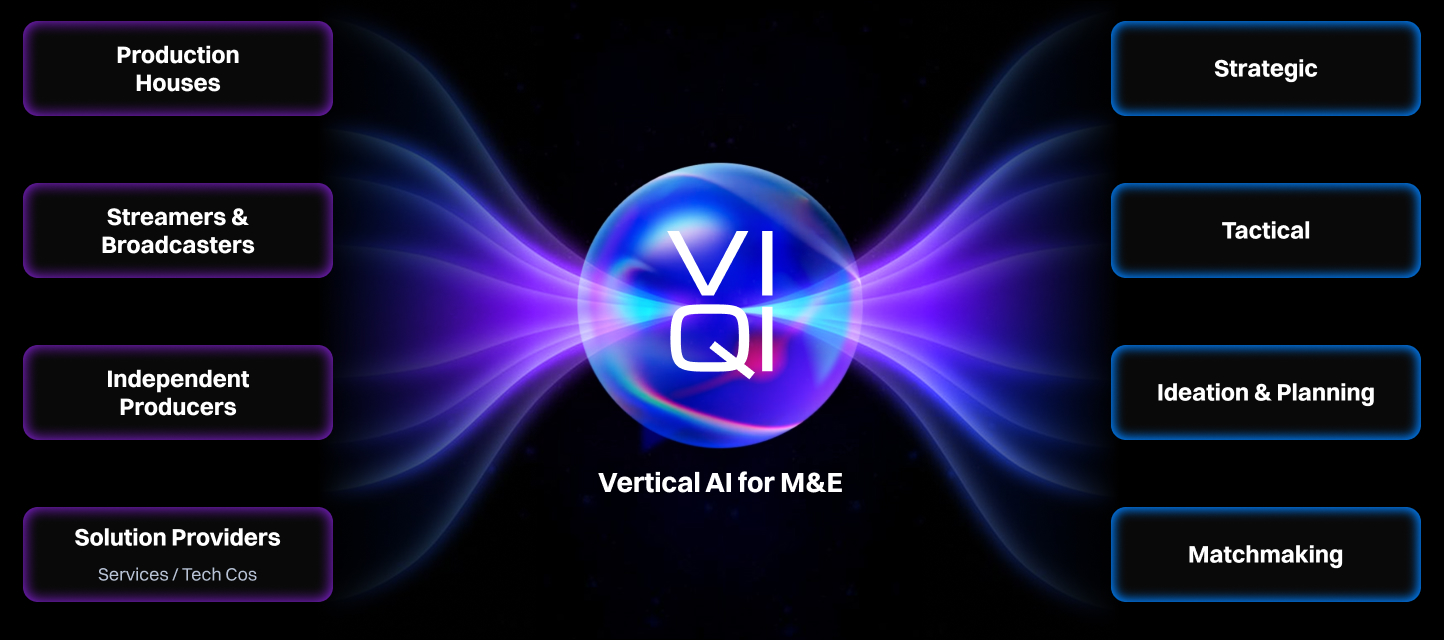
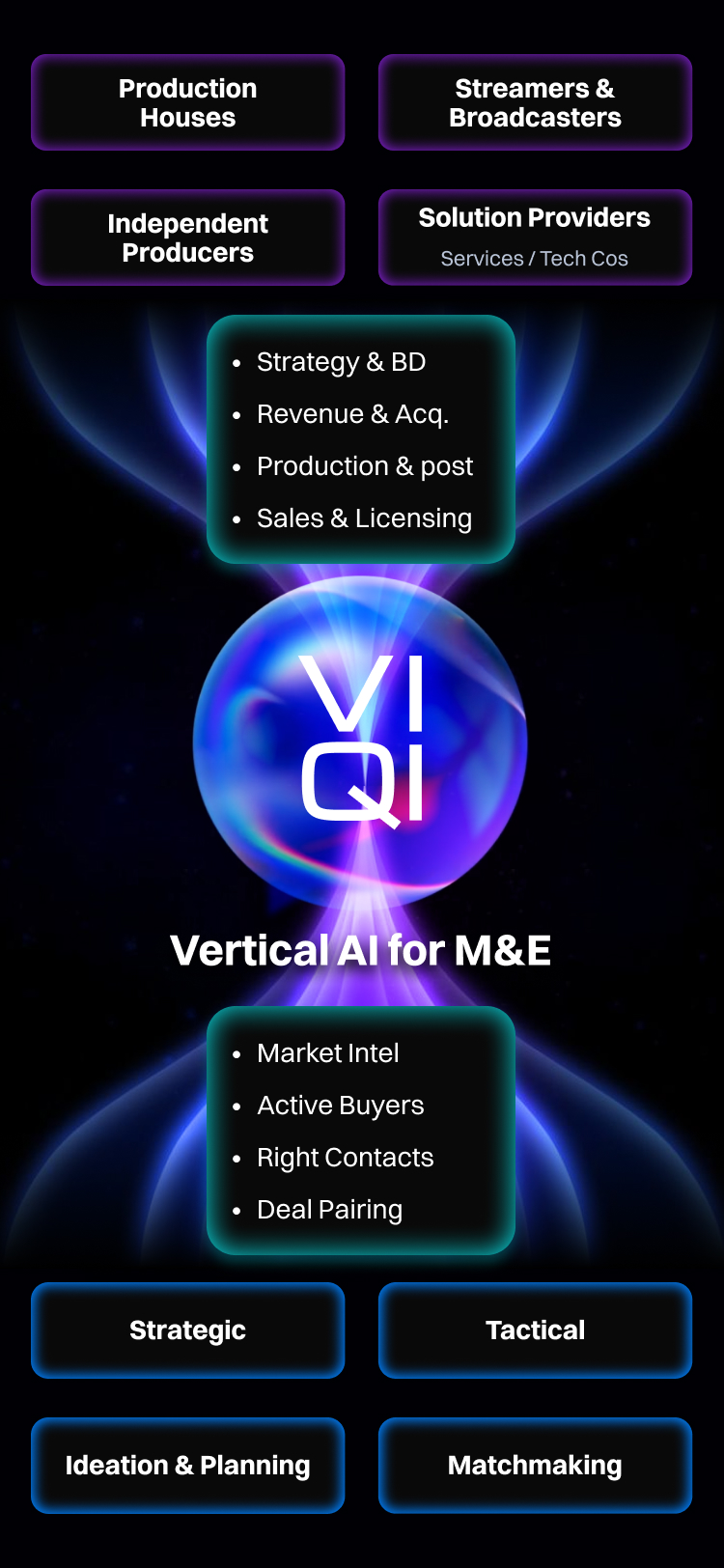
VIQI is Vitrina’s AI research assistant—trained on 1.6 million titles, 360,000 companies, and 5 million entertainment professionals. Ask it to identify current film grant cycles, broadcaster development funds, and co-production partners active in your project’s subject area and budget range.
✓ Included with 200 free credits | ✓ No credit card needed
Alfred P. Sloan Foundation Film Program
The Alfred P. Sloan Foundation Film Program is among the most specific—and therefore most strategically valuable—grant programs available to US independent filmmakers. Sloan funds films that explore science, technology, and economic topics authentically and compellingly. If your project fits that mandate, competition is significantly lower than general arts grants because the pool of qualifying projects is smaller.
The foundation operates through partnerships with leading film organizations and festivals including Sundance, Tribeca, Hamptons International Film Festival, the San Francisco International Film Festival, and others. Each partner organisation administers a separate Sloan Prize for projects in their programs—typically $20,000 to $50,000 per award—and the foundation also provides direct script development grants through partnerships with university film programs.
What qualifies: Feature films (narrative or documentary) in which science, technology, mathematics, economics, or a scientist/engineer character plays a central role. The science must be accurate and substantive—films that include a scientist as a peripheral character or use technology as a backdrop without exploring it meaningfully typically don’t qualify. Films exploring climate science, biotechnology, artificial intelligence, infrastructure, and mathematical concepts have all received Sloan support.
Strategic value: Beyond the direct award, Sloan recognition signals scientific credibility, which matters enormously if you’re seeking distribution to educational platforms, science-adjacent broadcasters (PBS Nova, National Geographic), or public engagement partners. It’s a signal that opens doors well beyond the award amount.
Diversity, Equity, and Emerging Filmmaker Grants
The past five years have seen a significant expansion of grant programs specifically targeting filmmakers from underrepresented backgrounds—BIPOC filmmakers, women directors, LGBTQ+ storytellers, and first-generation immigrants. If you fall into any of these categories, there is a meaningful additional layer of funding accessible to you that majority filmmakers cannot access. Here are the most substantive programs currently active.
Film Independent Grants
Film Independent administers multiple grant programs with a strong focus on diverse voices. The Film Independent Spirit Award Grants provide $10,000–$50,000 in development and production funding. The organization also offers the Fiscal Sponsorship program that opens access to NEA and other government grants. Membership is required and provides access to the full grant ecosystem the organization administers.
Black Public Media (BPM) 360 Incubator
Black Public Media funds documentary projects by Black filmmakers through its 360 Incubator program, with grants ranging from $10,000 to $75,000 across development and production stages. BPM projects are positioned for national public media distribution, and the organization actively supports filmmakers in accessing the PBS ecosystem. This is one of the highest-value programs specifically for Black documentary filmmakers in the US.
Jerome Foundation
The Jerome Foundation funds emerging artists in the early stages of their careers, with a specific geographic focus on artists based in Minnesota and New York City. Film and media projects qualify. Awards range from $5,000 to $40,000. If you’re based in either geography, Jerome is one of the most accessible and least competitive regional grants available to early-career filmmakers.
Cinereach Foundation
Cinereach supports independent films with strong social justice angles and a demonstrated commitment to diverse storytelling. Awards range from $5,000 to $150,000, with the larger awards going to films in production with meaningful distribution prospects. Cinereach also operates a production company arm that co-produces select projects—so a relationship with the organization can yield more than a single grant cycle.
State Film Commissions and Regional Arts Funding
State-level film grants are systematically underused because filmmakers don’t think of their home state as a grant source—they think of it as a location. That’s a missed opportunity. Every state arts council in the US administers some form of arts grant, and many include film and media as eligible disciplines. The competition at the state level is significantly lower than national programs, award amounts are respectable, and residency requirements mean you’re competing against a much smaller field.
New York State Council on the Arts (NYSCA) distributes approximately $100M annually in arts funding across all disciplines, including film and media. Individual project grants typically range from $5,000 to $30,000. Organizations and fiscally-sponsored individuals are eligible. New York-based filmmakers have access to one of the most robust state arts funding ecosystems in the country.
California Arts Council administers multiple grant programs for California-based artists and organizations, with film and media arts included across several program categories. Awards range from $5,000 to $100,000 depending on program and applicant type.
Regional arts organizations—Mid-Atlantic Arts, Western Arts Alliance, New England Foundation for the Arts—also distribute grant funding in the $5,000–$25,000 range for media artists. These are particularly valuable because they’re almost entirely overlooked by filmmakers outside the immediate geographic area.
According to Screen International, state and regional arts funding is among the fastest-growing segment of independent film soft money in the US—driven by increased state arts council budgets and expanding definitions of media eligibility. The time investment per dollar of state grant is often far lower than national competitions.
For more on how regional incentives and state programs fit alongside federal grant sources, see our overview of government film funding programs and their current status.
The Vitrina Grant Targeting Framework™
Applying broadly to every available grant is the strategy of filmmakers who don’t win grants. Applications are time-intensive, each program has specific criteria, and a generic application performs poorly against one tailored to the funder’s stated priorities. The Vitrina Grant Targeting Framework™ is a simple filter to identify the three to five programs most worth your full application effort in any given year.
The Vitrina Grant Targeting Framework™
Targeting rule: Only submit to programs where you can honestly answer yes to all five filters. A project that scores 3/5 on the filters should be held until it’s stronger or a better-fit program opens. Submitting misaligned applications damages your reputation with funders you’ll approach again in future cycles.
How to Write a Grant Application That Actually Wins
Grant reviewers are reading 300 applications in a two-week window. Your application needs to be intelligible on a first read, specific in its claims, and compelling in its narrative without being manipulative. The filmmakers who consistently win grants share several common application characteristics.
Lead with the story, not the filmmaker. Many grant applications open with extensive filmmaker biography before ever describing the project. Reviewers don’t fund filmmakers—they fund projects. The film you’re making and why it matters should be the first thing a reviewer encounters, not your CV. The filmmaker’s credentials are supporting evidence for why this team can execute this specific project, not the reason the project should be made.
Be specific about access and materials. “I have access to extraordinary characters” is a claim any filmmaker can make. “I have been filming with the Martinez family since 2023 and have 80 hours of verité footage across three countries, with their full participation including filming inside their home and workplace” is a statement of a specific competitive advantage. Specificity signals that you’re not projecting—you’re reporting.
Name your distribution path. One of the most common weaknesses in grant applications is vague distribution language: “We hope to premiere at a major festival and find distribution.” Stronger applications name the broadcaster relationships already in development, the festival tier you’re targeting and why your film fits their programming, and the specific audience community you’re building toward. Funders want to know their money will produce a film that people actually see.
Show your budget is realistic. A $2M budget application to a $30,000 grant program signals that the filmmaker doesn’t understand how grants fit into production financing. Present your full budget alongside the grant request, clearly showing how the grant fits within a realistic capital stack and what other funding you’ve confirmed, applied for, or are pursuing. Funders are more comfortable when their grant is one piece of a coherent financing plan rather than a Hail Mary.
According to Variety, the most consistently funded independent filmmakers treat grant applications as a year-round practice rather than a seasonal scramble—maintaining updated materials, tracking funder priorities as they evolve, and building relationships with program officers before applications are due rather than after.
For further reading on how to position grant funding alongside other soft money and tax incentives, see our guide to independent film finance strategy.
Stack Your Grant Funding With Co-Production and Equity Partners
Vitrina Concierge connects independent filmmakers with verified co-production partners, equity funds, and broadcaster pre-buy buyers who complement your grant funding—turning a partial budget into a complete capital stack.
- Documentary filmmaker with ITVS award → matched to international pre-buy buyers to complete budget
- Narrative feature with NEA grant → connected to equity investors seeking co-financed projects
- Emerging filmmaker with Film Independent support → introduced to sales agent with emerging filmmaker track record
Frequently Asked Questions
What are the best film grants for independent filmmakers in the US in 2026?
The most valuable programs for most independent filmmakers are ITVS Open Call (up to $650,000 for documentary), the Sundance Institute Documentary Fund ($20,000–$100,000+), the Alfred P. Sloan Foundation Film Program (for science-themed projects), and the NEA Art Works grants ($10,000–$100,000). For diversity-eligible filmmakers, Black Public Media’s 360 Incubator and Film Independent grants add significant additional funding access. State arts councils provide accessible, lower-competition regional options for any filmmaker based in a qualifying state.
Do film grants require repayment?
No. Grants are non-repayable by definition—that’s what distinguishes them from loans. You don’t give up ownership, pay interest, or return the principal. Some grants come with specific use restrictions (for example, an ITVS award comes with a PBS broadcast right), and most require reporting on how grant funds were spent. But the capital itself is free and non-dilutive. This is why grants are strategically the first financing layer to pursue before approaching equity investors or lenders.
Do I need a nonprofit to apply for film grants?
Many grant programs require applicants to be nonprofit organizations or to work through a fiscal sponsor—an established 501(c)(3) that receives the grant on your behalf and passes the funds through to your project (minus a fee of 5–8% of award value). Organizations like Fractured Atlas, Film Independent, the International Documentary Association, and Firelight Media offer fiscal sponsorship to qualifying film projects. If you don’t have a fiscal sponsor, securing one should be one of your first steps before applying to most major grant programs.
Can I apply for multiple film grants for the same project?
Yes—and you should. Most grant programs explicitly allow, and even expect, that projects are being supported by multiple sources. The key requirement is disclosure: virtually all grant applications ask you to list other funding sources and other pending applications. Be transparent about every grant you’ve applied for and every award you’ve received. Concealing other funding sources is considered misrepresentation and can result in revocation of awards and disqualification from future programs with that funder.
Are film grants available for narrative features or just documentaries?
Both, but the documentary ecosystem has significantly more grant support than narrative features in the US. ITVS, Sundance Documentary Fund, Catapult Film Fund, and most impact funders support documentary exclusively. The NEA Art Works grants support narrative features. The Alfred P. Sloan Foundation supports both. Film Independent and state arts councils support both. For narrative feature filmmakers, the grant landscape is thinner and competition is higher—which makes state-level and subject-specific programs (like Sloan for science themes) proportionally more valuable.
How competitive are major US film grants?
Highly competitive. ITVS receives hundreds of applications per cycle and funds a small fraction. The Sundance Documentary Fund similarly receives thousands of letters of inquiry for a handful of grants. NEA Art Works awards go to well under 10% of applicants in competitive cycles. This is why targeting matters—applying to programs where your project is genuinely a strong fit dramatically outperforms broad applications to every available program. State and regional programs, and subject-specific grants like Sloan, are meaningfully less competitive because the eligible pool is narrower.
What project stage should my film be at before applying for grants?
It depends entirely on the program. Development grants (Sundance labs, Catapult Film Fund development cycle) are designed for early-stage projects with a strong treatment and limited materials. Production grants require a substantially developed project with a team in place. Post-production grants like certain ITVS programs require a rough cut. Before applying, read the submission guidelines carefully and confirm your materials match what’s required—submitting a rough cut to a development grant or a treatment to a post-production program wastes your application and the reviewer’s time.
What’s the biggest mistake filmmakers make when applying for film grants?
The most common mistake is applying broadly to every available grant with a generic application rather than targeting a few programs with tailored materials. Each grant program has specific priorities, language, and evaluation criteria. An application that genuinely speaks to a funder’s stated mission—using their language, addressing their specific interests, demonstrating that you’ve read their guidelines rather than a summary—consistently outperforms well-written generic applications. Quality over quantity is the winning strategy in film grant applications.
Conclusion: Grants Are Free Money—But Winning Them Requires Strategy
The best film grants for independent filmmakers in the US are real, accessible, and awarding substantial funding to projects that apply strategically. ITVS, Sundance, NEA, Sloan, Film Independent, Black Public Media, state arts councils, and impact funders collectively distribute tens of millions of dollars annually to independent film—and most of that money goes to filmmakers who understand how to target, apply, and position their projects correctly.
Key Takeaways:
- Grants are your first financing layer, not your last resort. Apply for grants before approaching equity investors or lenders—the credibility signal a grant award generates is worth as much as the money itself.
- ITVS is the highest-value accessible grant for documentary filmmakers. Awards up to $650,000 with national broadcast rights attached—worth every hour of the application process for qualifying projects.
- Target before you apply. The Vitrina Grant Targeting Framework™ identifies the three to five programs worth your full effort. Applying broadly with generic materials produces poor results and damages funder relationships.
- State and regional programs are undercompetitive. New York, California, and regional arts organizations offer respectable awards to a much smaller pool of applicants than national programs—a higher win-rate opportunity that most filmmakers ignore.
- Stack grants with other financing sources. Grants alone rarely cover a full production budget. Use grant awards as validation that unlocks equity investment, broadcaster pre-buys, and co-production partnerships to complete your capital stack.
Start building your grant calendar now. Identify the two or three programs that most closely match your project’s format, subject, stage, and filmmaker profile. Request their guidelines. Mark their deadlines. And start preparing tailored materials three months before each deadline—not three days.
Complete Your Grant Funding With Co-Production Partners and Financing on Vitrina
Trusted by Netflix, Warner Bros, Paramount, and Google TV. Search 140,000+ verified companies to find co-production partners, equity funds, and broadcaster buyers who can complete your budget alongside your grant funding.
✓ 200 free credits | ✓ No credit card required | ✓ Cancel anytime
Need direct introductions to co-production and equity partners? Explore Concierge Service →