About Innovation Hub
 Global Content Pulse (Webinars)


 Global Production Financing
(Webinars)
Global Production Financing
(Webinars)  LeaderSpeak Podcast
  Global Entertainment Digest (Newsletter)
  About Vitrina
 About VIQI
 Our Story
 Our Solutions 🔥
 Film+TV Projects Tracker 🚀
 Case Studies
 Our Profile
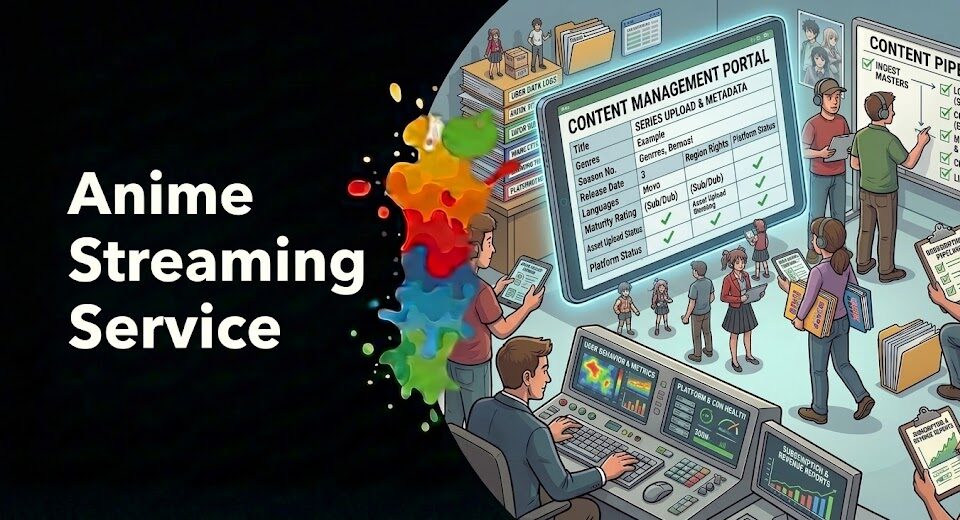
Too many subscriptions. Too many exclusives. Too much confusion. Picking the best anime streaming service in 2026 shouldn’t feel like solving a licensing agreement—but between platform-exclusive simulcasts, library gaps, regional blocks, and wildly different subtitle quality, it kind of does.
Here’s the thing: there isn’t one right answer for everyone. A seinen fan who wants obscure 2000s sleepers needs a completely different service than someone who discovered anime through Demon Slayer and wants whatever’s trending right now. And both of them have different needs from the collector who won’t compromise on uncut dubs with Japanese audio preserved.
So we ranked every platform that matters in 2026 across six criteria: library depth, simulcast speed, subtitle and dub quality, pricing, device support, and genre strength. No hand-wavy verdicts—just a direct answer for your specific taste. Let’s get into it.
In This Article
- How We Ranked These Platforms
- 1 Crunchyroll — Best Overall Anime Streaming Service
- 2 Netflix — Best for Anime Originals
- Prime Video — Best Value Bundle
- HiDive — Best Deep-Catalogue Service
- Disney+ — Best for Studio Ghibli & Family
- Tubi — Best Free Anime Streaming Option
- Genre-by-Genre Match Guide
- What’s Changing in Anime Streaming in 2026
- FAQ: Best Anime Streaming Service
- Conclusion and Key Takeaways
Track Which Platforms Are Acquiring Anime Before Everyone Else Does
Trusted by Netflix, Warner Bros., and Paramount. Join 140,000+ companies using Vitrina to monitor anime rights deals, platform acquisition activity, and content availability across every major market.
✓ 200 free credits | ✓ No credit card required | ✓ Full platform access
How We Ranked These Platforms in 2026
Every platform in this ranking was evaluated against the same six factors—not opinions, measurable criteria. Here’s what we looked at and why each one matters to you as an anime fan.
- Library depth: Total titles available, including older catalogue and franchise completeness
- Simulcast speed: How quickly new episodes appear after Japanese broadcast—hours matter here
- Subtitle and dub quality: Translation accuracy, timing, and availability of dual-audio options
- Pricing and value: Monthly cost per title depth, free tier availability, ad-supported options
- Device and offline support: Smart TV compatibility, mobile downloads, regional access
- Genre strength: Which platforms dominate specific genres—shonen, seinen, isekai, slice of life, horror
One note before we dive in: regional availability changes constantly. Rights deals shift, exclusivity windows expire, and platforms acquire or lose titles on timelines that aren’t publicly announced in advance. We’ll flag the most significant regional gaps where relevant. For the most current data on what’s available where—and which platform is acquiring what—our strategic anime streaming platforms review tracks these shifts in real time.
1 Crunchyroll — Best Overall Anime Streaming Service in 2026
Crunchyroll is the unambiguous king of anime streaming—and it’s not particularly close. Operating under Sony‘s umbrella after the absorption of Funimation, Crunchyroll now offers a catalogue exceeding 1,000 anime series and holds simulcast rights to the overwhelming majority of each new season’s major releases.
The simulcast infrastructure is genuinely impressive. New episodes typically appear on Crunchyroll within one hour of Japanese broadcast—sometimes simultaneously. For fans tracking seasonal anime week-by-week, that speed is irreplaceable. No other platform consistently matches it across this volume of titles.
But Crunchyroll isn’t perfect. The subtitle quality is occasionally inconsistent—translation choices that prioritize speed over nuance occasionally frustrate hardcore fans. And the dub library, while massive post-Funimation integration, still has gaps for mid-tier titles that only ever received Japanese tracks. If you’re primarily a dub watcher, you’ll find roughly 20-25% of seasonal titles ship subtitles-only for weeks before the English cast is recorded and released.
Pricing: Fan tier (ad-supported, no simulcast) free; Mega Fan (all simulcasts, no ads) around $9.99/month; Ultimate Fan (offline, 4K where available) around $14.99/month. Pricing varies by region.
Best for: Seasonal anime followers, shonen fans, isekai lovers, anyone who wants the widest possible library without splitting subscriptions. If you’re only subscribing to one service, this is it.
Weak spot: Catalogue depth for 1990s and early 2000s titles—you’ll still need HiDive or physical media for a lot of the classic era.
2 Netflix — Best Anime Streaming Service for Originals
Netflix isn’t an anime-first platform—but its investment in anime originals over the past five years has been substantial enough to make it a genuine must-have for certain fans. The Netflix anime slate includes titles like Cyberpunk: Edgerunners, Castlevania, Pluto, and the ongoing One Piece live-action adaptation. These aren’t licensed titles with limited windows—Netflix holds international rights in perpetuity, which means they’re not disappearing from the platform.
The localization quality is where Netflix genuinely outperforms Crunchyroll. According to Variety, Netflix has invested heavily in building localization teams with editorial oversight—the result is subtitle quality that reads naturally rather than literal, and dub casts that receive proper recording budgets and direction. For fans who prioritize how the English-language version feels, Netflix originals consistently deliver.
The limitation? Netflix doesn’t simulcast. New seasons of anime drop all-at-once on Netflix’s own timeline—often months after a title’s Japanese premiere. If you’re trying to watch seasonal anime as it airs week-by-week, Netflix is fundamentally the wrong tool. It’s an originals platform with a curated anime layer, not a simulcast service.
Pricing: Standard with ads around $7/month; Standard around $15.49/month; Premium around $22.99/month (4K, multiple streams). Regional pricing varies significantly.
Best for: Fans of prestige anime originals, seinen and mature-themed titles, anyone who prefers binge-watching complete seasons over following week-by-week.
Discover Which Anime Titles Are Coming to Which Platforms—Before They’re Announced
Vitrina tracks 1.6 million titles, 360,000 companies, and 5 million entertainment professionals across the global anime supply chain. Know what’s being acquired before your subscription dollars land on yesterday’s news.
✓ 200 free credits | ✓ No credit card required
3 Amazon Prime Video — Best Value for Casual Anime Fans
Amazon Prime Video is an underrated anime destination for one specific reason: if you already have Prime, you’re already paying for it. The included anime library is substantial—Vinland Saga, Overlord, Dororo, and a growing collection of exclusives produced in partnership with Japanese studios. Amazon has been quietly investing in anime co-production rights since 2020, and those titles—unlike licensed fare—stick around.
The simulcast picture is mixed. Amazon holds simulcast rights for certain titles each season, but the consistency isn’t there—some seasons Prime is on the board with weekly drops, others it’s conspicuously absent from the conversation. You can’t rely on it as your primary simulcast source.
Device support is excellent. 4K HDR where available, offline downloads across mobile platforms, and genuinely good subtitle rendering on most smart TVs. The interface for finding anime within Prime’s wider catalogue is less good—you’re often digging through menus to find what’s actually anime vs. animated content more broadly.
Pricing: Included with Prime membership (around $14.99/month in the US, significantly cheaper in many other regions). Some titles are locked behind Prime Video Channels add-ons.
Best for: Existing Prime subscribers who want to add anime depth without another subscription, fans of historical anime (Vinland Saga) and dark fantasy. Don’t subscribe just for anime—but don’t ignore it if you’re already in.

Your AI Assistant, Agent, and Analyst for the Business of Entertainment
VIQI AI helps you plan content acquisitions, raise production financing, and find and connect with the right partners worldwide.
- Find active co-producers and financiers for scripted projects
- Find equity and gap financing companies in North America
- Find top film financiers in Europe
- Find production houses that can co-produce or finance unscripted series
- I am looking for production partners for a YA drama set in Brazil
- I am looking for producers with proven track record in mid-budget features
- I am looking for Turkish distributors with successful international sales
- I am looking for OTT platforms actively acquiring finished series for the LATAM region
- I am seeking localization companies offer subtitling services in multiple Asian languages
- I am seeking partners in animation production for children's content
- I am seeking USA based post-production companies with sound facilities
- I am seeking VFX partners to composite background images and AI generated content
- Show me recent drama projects available for pre-buy
- Show me Japanese Anime Distributors
- Show me true-crime buyers from Asia
- Show me documentary pre-buyers
- List the top commissioners at the BBC
- List the post-production and VFX decision-makers at Netflix
- List the development leaders at Sony Pictures
- List the scripted programming heads at HBO
- Who is backing animation projects in Europe right now
- Who is Netflix’s top production partners for Sports Docs
- Who is Commissioning factual content in the NORDICS
- Who is acquiring unscripted formats for the North American market
4 HiDive — Best Anime Streaming Service for Deep Catalogue Fans
HiDive is where you go when Crunchyroll doesn’t have what you’re looking for—and that situation comes up more often than Crunchyroll’s reputation suggests. Operating under Sentai Filmworks‘ ownership, HiDive holds a library that skews heavily toward older, niche, and licensor-exclusive titles: think classic Gainax works, a ton of late-90s and early-2000s series, and a meaningful collection of titles that never appeared on Funimation or Crunchyroll during their runs.
But HiDive isn’t just a museum piece. It picks up simulcast rights for 5-10 titles per season—not Crunchyroll volume, but often titles that other platforms passed on. For fans who’ve exhausted the mainstream catalogue and want to go deeper, that’s genuinely valuable.
The interface is functional rather than elegant, and device support lags behind the big three. Smart TV apps are available but not universally stable. That said, at around $4.99/month—making it one of the most affordable paid anime services—HiDive earns its place as a second subscription for dedicated fans rather than a standalone choice.
Best for: Seinen completionists, fans chasing classic titles, and anyone who’s already run out of things to watch on Crunchyroll. Pair it as a secondary subscription—it genuinely fills gaps the bigger platforms don’t.
To understand more about what drives platform acquisition decisions—and which services are most aggressively building catalogue depth—check our breakdown of how streaming platforms acquire exclusive anime titles.
5 Disney+ — Best for Studio Ghibli and Family Anime
Disney+ has one extraordinarily good reason to be on this list: Studio Ghibli. The complete Ghibli catalogue—Spirited Away, My Neighbor Totoro, Princess Mononoke, Howl’s Moving Castle, and the rest—is available across Disney+ in most markets outside North America (where it sits on HBO Max). If Ghibli is important to you and you’re outside the US, Disney+ is non-negotiable.
Beyond Ghibli, the anime library is thin. Disney+ has made selective anime acquisitions through Star and regional content partnerships, but it’s not competing with Crunchyroll or Netflix on volume. The platform’s strength is in bringing anime-adjacent content—Star Wars: Visions, which featured prominent Japanese animation studios—rather than licensed mainstream anime.
Pricing: Around $7.99/month (ad-supported) or $13.99/month (ad-free) in the US. Bundle options with Hulu and ESPN+ available.
Best for: Families introducing younger viewers to anime through Ghibli, fans outside North America who want the complete Ghibli library, anyone already subscribed for Marvel or Star Wars content. Not a standalone anime subscription.
6 Tubi — Best Free Anime Streaming Service
Free is a powerful price point—and Tubi delivers a surprisingly substantial ad-supported anime library at no cost. Owned by Fox, Tubi has been expanding its anime catalogue methodically, with particular strength in older Dragon Ball titles, classic shonen franchises, and a rotating selection of licensed content that changes month to month.
You’re not getting simulcasts on Tubi. The ad breaks are frequent enough to be genuinely disruptive during action sequences. And the catalogue doesn’t reach anything close to Crunchyroll depth. But for fans who want to explore anime without a subscription commitment—or who want to revisit older titles without paying again—Tubi earns a genuine recommendation. The video quality has improved substantially over the past two years, and it’s available across most major devices.
Pricing: Free with ads. No subscription required.
Best for: Budget-conscious anime fans exploring the medium for the first time, anyone who wants free access to classic catalogue without subscription friction. As a supplement to paid services—not a replacement.
Genre-by-Genre: Which Platform Wins for Your Taste?
Not all platforms are created equal across genres. Here’s a direct match between what you love and where to find it.
🥊 Shonen (One Piece, Demon Slayer, Jujutsu Kaisen)
Crunchyroll wins. Simulcasts, complete franchise libraries, and the deepest shonen back-catalogue. It’s not close.
🎭 Seinen (Berserk, Vagabond adaptations, Pluto)
Netflix + Crunchyroll split. Netflix dominates prestige seinen originals; Crunchyroll holds the broader licence catalogue. You probably want both for this genre.
🌎 Isekai (Re:Zero, That Time I Got Reincarnated, Jobless Reincarnation)
Crunchyroll wins. Isekai simulcasts dominate seasonal anime output and Crunchyroll sweeps the category each quarter.
☕ Slice of Life (K-On!, Laid-Back Camp, Fruits Basket)
Crunchyroll + HiDive. Crunchyroll for current-season slice of life; HiDive for the deep classic catalogue.
👻 Horror & Dark Fantasy (Parasyte, Made in Abyss, Chainsaw Man)
Crunchyroll primary, Prime Video for exclusives. Made in Abyss sits on HiDive; Chainsaw Man on Crunchyroll; some horror-adjacent originals land on Prime or Netflix.
🎬 Studio Ghibli Films
Disney+ (outside North America) or HBO Max (North America). No exceptions—streaming rights are exclusive to these platforms by territory.
Tony Abrahams, co-founder and CEO of Ai-Media, discusses how AI-powered live translation and multilingual captioning is transforming streaming accessibility—directly relevant to what separates premium subtitle experiences from mediocre ones across these platforms:

What’s Changing in Anime Streaming in 2026
The platform landscape isn’t static—and 2026 is bringing structural shifts that’ll change which service deserves your subscription dollar. A few things you need to know.
AI dubbing is closing the subtitle/dub gap. As we covered in our analysis of anime licensing and distribution strategy, AI-powered voice localization is dramatically compressing the time between a title’s Japanese premiere and its dubbed release. That’s good news for dub-first fans who’ve historically waited months for English casts to record. Platforms investing in this technology—particularly Netflix with its localization infrastructure—will see this advantage compound over 2026 and beyond.
Exclusive rights battles are intensifying. As Deadline has reported, Japanese studios are increasingly entering co-production deals that grant international platforms long-term or perpetual streaming rights—not just licensing windows. When a platform co-produces rather than licenses, the content won’t migrate to a competitor when the deal expires. More of the prestige catalogue is getting locked up this way.
Regional availability is getting messier, not cleaner. Crunchyroll’s position as a near-global simulcast platform is strong, but rights gaps persist in certain territories—particularly in parts of Asia where local platforms like Bilibili, iQiyi, and Viu hold rights that Crunchyroll can’t. If you’re in Southeast Asia, your streaming landscape looks genuinely different from what this ranking describes. Check our coverage of anime streaming availability by region for territory-specific guidance.
Ask VIQI: Which Anime Titles Are Available on Which Platforms Right Now?
VIQI is Vitrina’s AI assistant—trained on 1.6 million titles, 360,000 companies, and 5 million entertainment professionals. Ask it about platform availability, licensing timelines, and what’s being acquired next.
✓ Included with 200 free credits | ✓ No credit card needed
FAQ: Best Anime Streaming Service in 2026
What is the best anime streaming service for all genres in 2026?
Crunchyroll is the best all-genres anime streaming service in 2026. With over 1,000 series, the fastest simulcast pipeline in the industry, and rights covering every major genre from shonen to slice of life, it’s the only platform that works as a genuine one-stop shop. That said, serious fans should pair it with Netflix for prestige originals and HiDive for classic catalogue depth.
Is Crunchyroll still worth it in 2026?
Yes—it’s still the best dedicated anime streaming service by a wide margin. Post-Funimation integration, Crunchyroll holds the largest anime library available on any single platform and the fastest simulcast turnaround. The price increase since Sony’s acquisition stings, but the depth justifies it for anyone watching more than two or three series per season.
Does Netflix have good anime in 2026?
Yes, for a specific type of fan. Netflix’s anime originals—including Cyberpunk: Edgerunners, Pluto, and Castlevania—are among the best-produced anime available anywhere. But Netflix doesn’t simulcast, meaning you won’t be watching seasonal anime week-by-week. Think of Netflix as the prestige anime originals destination, not your primary seasonal service.
What is the best free anime streaming service?
Tubi is the best free anime streaming option in 2026. It carries a surprisingly deep ad-supported catalogue of classic and mid-tier series at zero cost. Crunchyroll’s ad-supported fan tier is also free but limits simulcast access. For free-to-watch seasonal simulcasts, options are limited—most platforms put new-episode access behind paid tiers.
Which anime streaming service has the best subtitles and dubbing?
Netflix has the highest-quality localization for its original titles—editorial oversight and proper translation budgets produce subtitles that read naturally. Crunchyroll’s subtitle quality is good but inconsistent, sometimes prioritizing speed over nuance. HiDive has strong dub options for its Sentai Filmworks catalogue. For pure subtitle quality on simulcasts, Crunchyroll is the only game in town—but you may notice rough patches on lower-priority titles.
Where can I watch Studio Ghibli films in 2026?
Studio Ghibli streaming rights are split by territory. In North America, Ghibli films are available on Max (HBO Max). In most other markets globally, including Europe, Australia, and Latin America, the complete Ghibli catalogue streams on Disney+. The rights are exclusive by territory—there is no platform that holds global Ghibli streaming rights simultaneously.
Is HiDive worth subscribing to in 2026?
HiDive is worth it as a second subscription at around $4.99/month if you’re a serious anime fan who’s exhausted the mainstream catalogue. Its Sentai Filmworks catalogue covers significant gaps in the 1990s-2000s era that Crunchyroll doesn’t fill, and it picks up 5-10 simulcasts per season that other platforms pass on. It’s not a standalone service—but at that price point, the depth it adds alongside Crunchyroll is real value.
Which anime streaming service is best for isekai fans?
Crunchyroll is the clear answer for isekai fans. The genre dominates seasonal anime output, and Crunchyroll simulcasts the vast majority of new isekai titles each quarter. Series like That Time I Got Reincarnated as a Slime, Mushoku Tensei, and Re:Zero live primarily on Crunchyroll, with some Amazon Prime exclusives like Reincarnated as a Sword adding depth for the most dedicated fans.
Conclusion: The Right Answer Depends on Who You Are
There’s no single best anime streaming service for every fan—but there is a right answer for you. If you’re watching seasonal anime week-by-week and want maximum library depth, Crunchyroll is your primary service, full stop. Add Netflix if you care about prestige originals. Add HiDive if you want to go deep on catalogue. Add nothing else unless a specific exclusive justifies it.
And understand that the landscape keeps shifting. Rights deals expire, new co-productions lock content to specific platforms permanently, and AI-powered localization is compressing the dub gap that used to define which platform fans chose. The services that invested in content ownership—not just licensing—will have increasingly durable advantages through the back half of the decade.
To track what’s being acquired, what’s leaving platforms, and where your next favorite title is landing—the Vitrina platform has the supply chain intelligence to tell you before it becomes public knowledge.
Key Takeaways
- Crunchyroll is the best overall anime streaming service in 2026—unmatched library depth, fastest simulcasts, every major genre covered.
- Netflix wins for prestige anime originals but doesn’t simulcast—it’s the wrong tool for seasonal weekly-episode watching.
- HiDive at ~$4.99/month is the best second subscription for fans who’ve exhausted the mainstream catalogue and want classic-era depth.
- Studio Ghibli rights are split by territory: Max in North America, Disney+ everywhere else—there’s no single global Ghibli platform.
- AI-powered dubbing and co-production rights deals are reshaping which platforms hold content permanently vs. temporarily—subscription value will increasingly correlate with ownership, not licensing volume.
Know What’s Landing on Which Platform—Before Your Subscription Decision
Vitrina tracks real-time anime acquisition activity, rights availability, and platform deals across 140,000+ companies in the global content supply chain. Join industry leaders at Netflix, Warner Bros., and Paramount using Vitrina intelligence to stay ahead.
✓ 200 free credits | ✓ No credit card required
Find Film+TV Projects, Partners, and Deals – Fast.
VIQI matches you with the right financiers, producers, streamers, and buyers – globally.
Join Industry Briefings Trusted by Leaders
Unreleased Film+TV Projects: Opportunities & Showcase
A curated view of unreleased Film and TV projects open for financing and collaboration

The Mid-Budget Comeback: Why Mid-Budget Films Is the Smartest Bet in the Room
Mid-budget films are attracting new capital. See why this segment is becoming one of the strongest bets in Film today.
Franchise Fatigue vs. IP Dependency: What Studios Should Be Betting On Now
s franchise performance softens, where will the next generation of valuable IP come from? Join the briefing.

Unscripted Is Eating the World: The Multi-Billion Reality and Format Boom
Unscripted is the new prestige — inside the $19.8B global format boom reshaping how streaming platforms compete.