About Innovation Hub
 Global Content Pulse (Webinars)


 Global Production Financing
(Webinars)
Global Production Financing
(Webinars)  LeaderSpeak Podcast
  Global Entertainment Digest (Newsletter)
  About Vitrina
 About VIQI
 Our Story
 Our Solutions 🔥
 Film+TV Projects Tracker 🚀
 Case Studies
 Our Profile

Immersive media costs typically range from $2,000 per minute for basic 360-degree video to over $100,000 per minute for high-fidelity interactive VR experiences. Unlike traditional film, these budgets aren’t driven just by “screen time” but by asset complexity, interaction logic, and the degree of freedom (DOF) provided to the user. It’s the difference between filming a scene and building a living world.
If you’re coming from the world of traditional production, the shift to spatial computing can feel like a financial ambush. You’re no longer just paying for crew and cameras; you’re
software development, game engine optimization, and user experience (UX) design. But here’s the thing: while the upfront spend is higher, the “shelf life” and engagement metrics of immersive content often dwarf linear video.
In this guide, we’ll strip away the tech-hype and look at the actual capital reality of building for the next generation of hardware.
Table of Contents
Stop Guessing Who’s Financing. Get Targeted Outreach.
Stop searching and start getting funded. We identify the exact decision-makers currently backing projects like yours, turning raw data into risk-aligned capital partnerships.
Major Studios
Scouting early stage projects, IP, and Regional partners for global studio pipelines.
IP Owners & Leads
Connecting creative leads with qualified financiers and major streaming platforms.
Streamers
Securing high-value pre-buy content and discovering early-stage global IP for platforms.
Indie Producers
Bridging the gap for indie filmmakers to reach executive production partners and capital.
Global Financing Ecosystems
Mapping complex markets and pairing projects with disciplined, risk-aligned capital across global territories worldwide.
The Core Drivers of Immersive Media Costs
Why does one VR project cost $50,000 and another $500,000? It’s rarely about the length of the experience. Behind closed doors, producers recognize that immersive media costs are governed by three primary variables: Visual Fidelity, Interactivity Depth, and Platform Optimization.
When you move from 3 DoF (Degrees of Freedom)—where the user can only look around from a fixed point—to 6 DoF, where they can walk through the environment, your costs don’t just double. They explode. You’re now responsible for 360 degrees of “finish” on every asset. There’s no “off-camera” in VR. Every texture, light source, and sound must be rendered in real-time, often at 90 frames per second per eye. That’s a massive technical hurdle that requires elite (and expensive) Unity or Unreal Engine developers.
Producers looking to benchmark their specific project needs can ask VIQI for custom immersive media cost estimates based on current vendor rates.
Asset Creation vs. Volumetric Capture
Are you building a world from scratch (CGI) or capturing reality? Volumetric capture—filming a real human so they can be viewed from any angle in 3D—is arguably the most striking form of immersive media, but it carries a heavy price tag. You’re paying for specialized stages, massive data processing, and clean-up. However, if your goal is “insider candor” and human connection, it’s often the most effective route.
The Vitrina Immersive Fidelity Matrix™
To help CFOs and Executive Producers navigate the tech-spend, we’ve developed a proprietary framework for assessing the capital efficiency of your project.
The Vitrina Immersive Fidelity Matrix™
Use this matrix to determine where your immersive media costs are being allocated.
| Level | Fidelity | Interactivity | Est. Cost Factor |
|---|---|---|---|
| Tier 1 | Low (Stylized) | Minimal (Look/Gaze) | 1.0x |
| Tier 2 | Photorealistic | Basic (Teleport/Grab) | 2.5x |
| Tier 3 | Hyper-Real | Complex (Physics/Multiplayer) | 5.0x+ |
The real dynamic here? You don’t always need Tier 3. Many corporate training or educational experiences thrive at Tier 1 or 2 by prioritizing clear UX over high-end shaders. Strategic players understand that “over-building” the visual fidelity can actually erode your IRR if it doesn’t serve the core engagement loop.
Real-World VR Production Benchmarks
What’s actually happening on the ground in 2025? While every project is unique, we can categorize immersive media costs into three distinct production buckets.
1. The 360° Video Experience ($20k – $75k)
This is the “entry drug” of immersive media. It uses traditional filmmaking techniques—cameras, lights, actors—but records in 360 degrees. The costs are primarily driven by the “stitch”—joining multiple camera feeds into a seamless sphere. It’s effective for journalism, travelogues, and simple brand storytelling. The capital efficiency is high, but the interactivity is low.
2. Mid-Range Interactive ($150k – $500k)
Here, you move into game engines like Unreal Engine 5. You’re building a 10-20 minute experience where users can move through an environment and interact with objects. This is the sweet spot for high-end brand activations and specialized post-production heavy projects. You’re likely employing a team of 5-10 specialized artists and devs for 3-6 months.
3. High-End Spatial Computing ($1M+)
Think “Apple Vision Pro” launch content. This involves hyper-realistic assets, spatial audio that reacts to your movement, and complex interaction logic. These projects are effectively high-end software development ventures. The recoupment accelerates through multi-platform deployment (Quest 3, Vision Pro, PCVR), but the initial capital deployment is significant.
Phil Hunt, CEO of Head Gear Films, discusses the changing economics of media engagement:
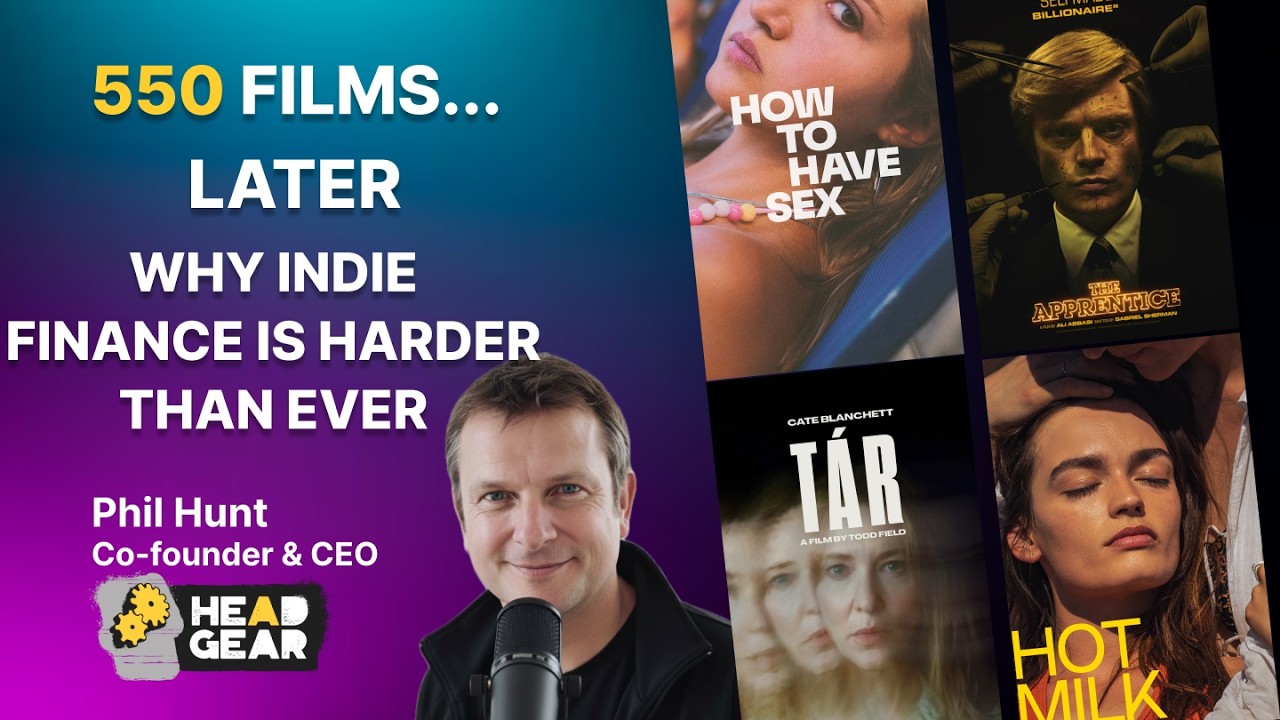
As Hunt notes, the media landscape has shifted dramatically. In a “post-streamer” world, engagement is the only currency that doesn’t devalue. Immersive media, despite the higher upfront costs, offers the deepest engagement available today.
Find the Financiers Backing Your Genre
Stop searching and start getting funded. We identify the exact decision-makers currently backing projects like yours, turning raw data into risk-aligned capital partnerships.
De-risking the Spend: Incentives & Financing
How do you protect your margins when the tech stack is so expensive? You weaponize regional incentives. Strategic producers are increasingly looking at Sovereign Content Hubs™ like Saudi Arabia and the UAE to offset their immersive media costs.
Saudi Arabia’s 40% cash rebate isn’t just for sand and camels. It explicitly covers “Digital Content,” which includes high-end VR and interactive experiences. If you’re spending $1M on production, and $400,000 is coming back as a rebate—assuming you meet local spend requirements—the IRR differential is staggering. It fundamentally de-risks the entire investment thesis.
Furthermore, understanding the production financing landscape is vital. Gap financing for immersive media is emerging, though lenders are still catching up to the valuation models. Lenders are more comfortable when there’s a clear “utility” or enterprise contract attached to the experience.
Producers can explore 140+ tech-savvy financing partners on Vitrina to bridge their budget gaps.
Frequently Asked Questions
What is the biggest hidden cost in immersive media?
Optimization. It’s one thing to make a scene look great on a powerful PC; it’s another to make it run at 90fps on a mobile chipset like the Quest 3. This process, known as “draw call optimization” and “polygon reduction,” can take up to 30% of your total development time. Don’t underestimate the cost of making it run smooth.
How do immersive media costs compare to traditional VFX?
Traditional VFX for film is rendered “offline,” meaning you can spend hours on a single frame. Immersive media is “real-time” VFX. While the tools (Unreal/Unity) are similar, the constraints are tighter. You’re effectively building a video game, so you need developers who understand logic and code, not just lighting and textures. This usually makes the “per-minute” cost higher than mid-tier film VFX.
Can I use film tax credits for VR production?
In many jurisdictions, yes. Regions like Ontario (Canada), the UK, and Saudi Arabia have broadened their definitions of “eligible production” to include interactive digital media. However, the audit process is different—you’ll need to prove the content has a narrative or educational component. Check your local tax incentives guide for specific eligibility requirements.
How much does spatial audio add to the budget?
Spatial audio—sound that moves as the user moves—is about 10-15% of an immersive budget. It’s not just about recording; it’s about “placing” sounds in a 3D coordinate system. If you skimp on this, the experience feels “flat” and the user’s brain will reject the immersion. It’s a non-negotiable cost for high-end work.
How Vitrina Helps with Immersive Media Costs
Navigating the Fragmentation Paradox™ of the tech-media space is exhausting. There are over 600,000 companies in these silos, and finding a VR studio that actually understands the “CFO Strategic Audit” side of production is rare. Vitrina simplifies this search by connecting you with verified vendors who have proven track records in high-stakes interactive content.
- Explore our database of 1,200+ VR and AR specialized vendors.
- Ask VIQI to help you draft a scope of work for interactive media.
- Contact Concierge for hands-on matching with financing partners for tech-heavy slates.
The Bottom Line
Immersive media costs work when the budget is built around Utility, not just Novelty. If the interactivity doesn’t serve the story or the business goal, it’s just expensive friction. But for those who master the “capital stack” of spatial computing—leveraging rebates, optimizing assets, and targeting the right fidelity—the engagement rewards are unparalleled.
Ready to de-risk your next interactive project? Vitrina’s Concierge team can connect you with the right vendors and financing in 48 hours.
Find Film+TV Projects, Partners, and Deals – Fast.
VIQI matches you with the right financiers, producers, streamers, and buyers – globally.
Producers Seeking Financing, Co-Pros, or Pre-Buys?
Vitrina Concierge helps producers reach the right financiers, commissioners, distributors, and co-production partners — with precision outreach, not cold pitching.
Join Industry Briefings Trusted by Leaders

Micro-Dramas & Mobile-First Storytelling
Micro-dramas are building real audiences and revenue. Understand the platforms, buyers, and economics behind the growth.

Navigating Global Content Licensing Trends
How global content licensing is shifting beyond flat fees to flexible, deal-driven models.
Film & TV Production Financing: 2026 Trends
Production financing conditions are changing quickly. Understanding where money is moving and what buyers are backing is key to getting projects approved and funded in 2026.
Unreleased Film+TV Projects: Opportunities & Showcase
A curated view of unreleased Film and TV projects open for financing and collaboration