Your VFX procurement decision is one of the highest-leverage calls on any major production. Get it right and you’ve locked in a partner who accelerates your delivery window and protects your budget. Get it wrong—wrong vendor capacity, wrong jurisdiction, wrong capability match—and you’re staring at a greenlight that could slide six months while you start over.
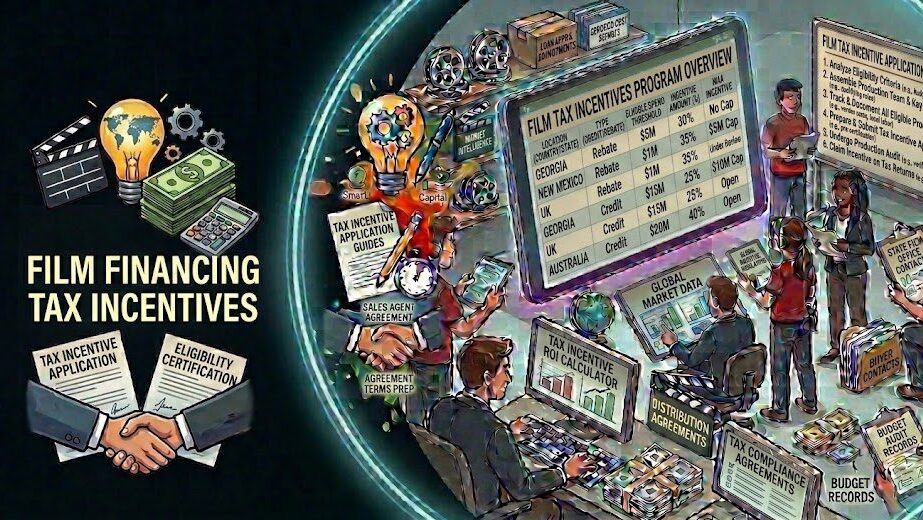
Here’s the thing most procurement guides won’t tell you: the top VFX companies in 2026 aren’t just competing on quality. They’re competing on jurisdiction economics. The UK’s enhanced VFX rebate hit 29.25% in April 2025—and removed the spend cap entirely. France is offering 40% when French VFX costs exceed €2M. Australia’s PDV offset sits at 30%. These aren’t marginal differences. They’re capital-stack decisions in disguise.
But budget optimization without capability alignment is a false economy. This guide does both—giving you a strategic shortlist of the 10 best VFX companies for 2026 procurement, mapped by capability depth, jurisdiction advantage, and the production types where each partner genuinely excels. Not a PR-friendly ranking. A working tool.
💡 Vitrina Analyst Note
What we call the Fragmentation Paradox plays out in VFX procurement constantly. Buyers default to the names they already know and overpay by 30 to 40 percent while comparable studios in India, the UK and Eastern Europe sit underutilized. From what we track on Vitrina, the availability gap is real and the cost savings are there for teams willing to look beyond the first page.
Table of Contents
- Why VFX Procurement Is Harder Than Ever in 2026
- The Strategic Shortlist: 10 Best VFX Companies
- Jurisdiction Economics: Where the Real Savings Live
- The Executive Vetting Framework: Beyond the Showreel
- AI Disruption in VFX: What Procurement Teams Must Know
- VFX Company Comparison: Capabilities at a Glance
- FAQ
- Conclusion
Ask VIQI: Which VFX Studios Are Available and Actively Bidding in Your Genre Right Now?
VIQI is Vitrina’s AI assistant—trained on 1.6 million titles, 360,000 companies, and 5 million entertainment professionals. Ask it which VFX houses have capacity in your budget range, have worked on productions similar to yours, and are actively seeking new mandates.
✓ Included with 200 free credits  | ✓ No credit card needed
Why VFX Procurement Is Harder Than Ever in 2026
Let’s be direct. The VFX market has never been more fragmented—or more economically consequential. There are now more than 10,000 VFX companies globally, but most procurement teams actively know fewer than 10. That’s a 0.1% market visibility rate. And you’re negotiating against vendors who know the full landscape while you don’t.
That’s the Fragmentation Paradox—a dynamic Vitrina’s research has documented extensively across the entertainment supply chain. The information asymmetry is expensive. When you default to the tier-one names you know—paying Weta FX rates when a qualified studio in India, Australia, or the UK could deliver comparable quality for 30–40% less budget—you’re not just overspending. You’re leaving ROI on the table that your CFO will eventually notice.
And in 2026, the stakes have climbed again. Three forces are reshaping VFX procurement simultaneously:
First: Streaming platform capex discipline. After the 2023–2024 contraction, Netflix, Amazon, and Disney+ are demanding tighter post-production budgets without sacrificing quality benchmarks. That squeezes the gap between what you can spend and what you need to deliver.
Second: AI integration at tier-two and tier-three studios. Boutique houses that have weaponized generative AI pipelines are now quoting turnaround times that tier-one firms can’t match. If you’re not evaluating AI-enabled studios in your shortlist, you’re working with a 2023 procurement framework.
Third: Jurisdiction economics—which we cover in detail below—have become a genuine procurement variable, not a postscript. The gap between the best and worst incentive programs has widened significantly since 2024.
Your AI Assistant, Agent, and Analyst for the Business of Entertainment
VIQI AI helps you plan content acquisitions, raise production financing, and find and connect with the right partners worldwide.
- Find active co-producers and financiers for scripted projects
- Find equity and gap financing companies in North America
- Find top film financiers in Europe
- Find production houses that can co-produce or finance unscripted series
- I am looking for production partners for a YA drama set in Brazil
- I am looking for producers with proven track record in mid-budget features
- I am looking for Turkish distributors with successful international sales
- I am looking for OTT platforms actively acquiring finished series for the LATAM region
- I am seeking localization companies offer subtitling services in multiple Asian languages
- I am seeking partners in animation production for children's content
- I am seeking USA based post-production companies with sound facilities
- I am seeking VFX partners to composite background images and AI generated content
- Show me recent drama projects available for pre-buy
- Show me Japanese Anime Distributors
- Show me true-crime buyers from Asia
- Show me documentary pre-buyers
- List the top commissioners at the BBC
- List the post-production and VFX decision-makers at Netflix
- List the development leaders at Sony Pictures
- List the scripted programming heads at HBO
- Who is backing animation projects in Europe right now
- Who is Netflix’s top production partners for Sports Docs
- Who is Commissioning factual content in the NORDICS
- Who is acquiring unscripted formats for the North American market
The Strategic Shortlist: 10 Best VFX Companies for 2026
These aren’t ranked by prestige—they’re mapped by procurement utility. Each entry identifies where a studio genuinely adds value versus where you’re paying for brand premium you don’t need.
1. DNEG (Double Negative Visual Effects)
DNEG has won 6 Academy Awards for Best Visual Effects—more than any other company. Founded in London in 1998, it now operates across 9 studios globally including Mumbai, Vancouver, Los Angeles, and Sydney. DNEG’s recent merger with Brahma (acquiring Metaphysic in 2024) signals its serious commitment to AI-driven content workflows, uniting 800+ experts across its technology stack.
But here’s where procurement gets interesting: DNEG’s London operations qualify for the 29.25% UK enhanced VFX rebate—with the cap removed. For a $20M VFX package routed through the UK, that’s potentially $5.8M in recoupable incentive. That changes the math on your capital stack significantly.
Best for: High-complexity feature VFX, superhero/sci-fi tentpoles, productions where UK incentive optimization is a deliberate financing strategy.
Hero credits: Dune: Part Two, Oppenheimer, Spider-Man: No Way Home, The Dark Knight Rises.
2. Framestore
Framestore was founded in London in 1986 and has built one of the most respected character and creature pipelines in the industry. Their work on Gravity (which required essentially building a new photorealistic space environment pipeline from scratch) and Paddington (photorealistic animated character in live-action) remains benchmarked by procurement teams assessing character VFX complexity.
According to John Kilshaw, Managing Director at Framestore (featured in Vitrina’s industry research), the studio has invested heavily in virtual production capabilities—a growing requirement as more productions integrate LED volume stages into principal photography. That dual competency in both traditional VFX and real-time virtual production is a differentiator that not all tier-one competitors have matched.
Best for: Character VFX, photorealistic creature work, productions requiring integrated virtual production and post-VFX pipelines.
Hero credits: Gravity, Paddington, Guardians of the Galaxy, Doctor Strange.
3. ILM (Industrial Light & Magic)
ILM created the modern VFX industry. Founded by George Lucas in 1975, it’s now a Lucasfilm division under Disney. And yes—it’s still the benchmark for innovation. ILM’s StageCraft technology (the LED volume system used on The Mandalorian) fundamentally changed how large-scale productions approach virtual environments. Since 2021, multiple studios have replicated the StageCraft model, which tells you everything about how quickly ILM’s breakthroughs become industry standard.
ILM London qualifies for UK incentives. ILM Singapore benefits from APAC production growth. The firm operates a genuinely global infrastructure that allows multi-location VFX pipelines for complex productions with cross-territory financing.
Best for: Landmark tentpole productions, virtual production integration, projects with the budget to access elite VFX innovation.
Hero credits: The Mandalorian, Indiana Jones and the Dial of Destiny, Black Panther: Wakanda Forever.
4. Weta FX
Weta FX (formerly Weta Digital, separated from Weta Workshop in 2021 when Unity Technologies acquired the software division for $1.625B) remains the preeminent studio for large-scale digital environments and simulation. Their Massive simulation software—used to generate armies, crowds, and complex creature behaviors—is without equal. No other studio has built comparable battle-scale simulation capabilities.
New Zealand’s incentive structure offers international productions 20% plus an additional 5% for significant economic benefit—and the country’s entire identity as a production destination is built on Weta’s legacy. That gives you negotiating leverage with both the incentive authority and the studio itself. But be clear-eyed: Weta FX costs are premium. You’re paying for genuinely unique capabilities, not just prestige.
Best for: Epic-scale environments, simulation-heavy sequences, productions where no other studio’s simulation tools are technically sufficient.
Hero credits: Avatar: The Way of Water, Planet of the Apes series, The Lord of the Rings trilogy.
5. MPC (Moving Picture Company)
MPC operates as part of Technicolor Creative Studios and has undergone significant restructuring since 2020—moving toward a distributed model with operations in Bangalore, Montreal, Pune, and London. That restructuring has made MPC considerably more cost-competitive on mid-budget productions than its tier-one positioning suggests. Their India operations in particular—eligible for India’s 40% federal production incentive covering VFX—represent genuine procurement value for high-volume episodic work.
MPC’s photo-real animal pipeline remains best-in-class. The Lion King (2019) demonstrated a photorealism benchmark that has defined client expectations ever since—and MPC continues to own that technical category.
Best for: Photo-real animal/creature VFX, high-volume episodic work, productions seeking tier-one quality with cost optimization through India operations.
Hero credits: The Lion King (2019), The Jungle Book, 1917.
Track 10,000+ VFX Studios—Filter by Capability, Budget Range, and Jurisdiction in Seconds
Trusted by Netflix, Warner Bros, and Paramount. Join 140,000+ companies using Vitrina to de-risk vendor selection across the global entertainment supply chain.
✓ 200 free credits  | ✓ No credit card required  | ✓ Full platform access
6. Scanline VFX
Scanline VFX was acquired by Netflix in 2021—a signal that is more strategically significant than it might appear. Netflix doesn’t acquire VFX houses for trophy assets. They acquire capacity. Scanline’s in-house pipeline is now deeply integrated with Netflix original production workflows, which means procurement teams working on Netflix commissions have a built-in first-look advantage. But Scanline also continues to work on third-party productions.
Scanline’s strength is large-scale destruction and fluid simulation—they’ve built a reputation on weather systems, ocean environments, and cityscape destruction that few competitors match technically. Their Vancouver operations benefit from British Columbia’s 33% refundable tax credit on resident labor, making them a competitive jurisdiction play for North American productions.
Best for: Netflix original productions, large-scale environmental VFX, fluid and destruction simulation.
Hero credits: Zack Snyder’s Justice League, Stranger Things, Kingdom of the Planet of the Apes.
7. Rising Sun Pictures
Rising Sun Pictures is Australia’s most decorated independent VFX studio—founded in Adelaide in 1995 and operating for nearly 30 years with a consistent focus on quality over volume. They’re not trying to compete with DNEG on shot count. They specialize in technically complex sequences where precision matters more than scale.
Australia’s PDV (Post, Digital, and Visual Effects) offset is 30%, with regional incentives potentially stacking further (South Australia adds another 10%). For productions routing post-VFX through Australia, Rising Sun combines genuine tier-one capability with meaningful economics. And their size—approximately 250 artists—means you get senior creative attention that larger studios reserve for their marquee clients.
Best for: Mid-budget features seeking tier-one quality with boutique attention, productions leveraging Australian incentive economics.
Hero credits: Thor: Love and Thunder, X-Men: Dark Phoenix, Harry Potter and the Deathly Hallows.
8. Outpost VFX
Outpost VFX is the boutique that punches above its weight in UK episodic television—and for good reason. CEO Duncan McWilliam (featured in Vitrina’s research) has built Outpost’s pipeline specifically around the compressed schedules and high-volume shot requirements of premium streaming drama. With the UK enhanced VFX rebate now at 29.25% and the cap removed, Outpost’s UK positioning has become a stronger commercial argument than it was two years ago.
But here’s what makes Outpost genuinely interesting for 2026 procurement: they’ve invested heavily in real-time and Unreal Engine workflows. Productions that want to integrate game-engine visual pipelines into their VFX delivery—increasingly common as streaming platforms push interactive experiences—will find Outpost ahead of the curve compared to larger studios still running legacy render pipelines.
Best for: Premium streaming drama, UK episodic productions, real-time/Unreal Engine VFX pipelines.
Hero credits: His Dark Materials, Foundation, Peaky Blinders.
9. MARZ (Monsters Aliens Robots Zombies)
MARZ is the most disruptive entry on this list. Founded in Toronto, MARZ is a fully AI-enabled VFX studio that has automated large portions of the labor-intensive work that traditionally drove VFX costs—particularly cleanup, rotoscoping, crowd augmentation, and digital makeup. Their Automated Visual Effects (AVX) platform can turn around shots in a fraction of the time comparable manual pipelines require.
This isn’t an experiment. MARZ has credits on major productions and has secured partnerships with studios specifically because their cost-per-shot economics on semi-automated work is compelling. If your production has a high volume of cleanup, invisible VFX, or digital doubles work—the categories where MARZ’s AI pipeline has the clearest advantage—their quote will be significantly below market rate from manual studios. And the quality holds.
Best for: High-volume invisible VFX, digital makeup, crowd augmentation, productions where AI-pipeline economics can cut budgets without cutting quality.
Hero credits: Andor, Chucky (series), Guillermo del Toro’s Cabinet of Curiosities.
10. Pixomondo
Pixomondo has built a strong reputation in virtual production and LED volume workflows that makes them a strategically important partner for productions with significant virtual environment requirements. Their 10+ global facilities—including locations in Germany, Canada, China, and the United States—mean they can service multi-territory co-productions with on-the-ground presence in each jurisdiction.
Their work on Game of Thrones (winning 3 Emmy Awards for VFX) established them as a premium episodic house, and they’ve continued to invest in virtual production infrastructure as streaming budgets increasingly demand on-set VFX integration rather than purely post-production work. For executives building a virtual production + post-VFX pipeline from scratch, Pixomondo’s integrated offering is worth detailed evaluation.
Best for: Virtual production integration, co-productions requiring multi-jurisdiction VFX presence, premium episodic work.
Hero credits: Game of Thrones (3 Emmy wins), Star Trek: Discovery, Ford v Ferrari.
Neil Hatton (CEO, UK Screen Alliance) breaks down the enhanced UK VFX tax credit, the removal of the spend cap, and what it means for global procurement decisions in 2025–2026:
Jurisdiction Economics: Where the Real Savings Live
VFX procurement in 2026 without a jurisdiction strategy is leaving real money unclaimed. Here’s what the current landscape looks like for the major VFX hubs:
United Kingdom (29.25% VFX rebate, cap removed). This is the single most significant incentive change for VFX procurement in 2024–2025. The UK already had depth—DNEG, Framestore, Outpost, Cinesite—but removing the cap and boosting the VFX-specific rate above the standard 25% production rebate creates real routing logic for high-spend VFX packages. Productions like Jurassic World 4, Mission: Impossible, and Fantastic Four are running through UK pipelines for exactly this reason. Neil Hatton’s overview of these changes (embedded above) is worth watching before your next bid process.
France (40% when French VFX exceeds €2M). France’s 40% international production rebate on VFX is the highest available in any major European market—but it requires meaningful French VFX spend to unlock. For productions that can route €2M+ through French facilities (Mikros Image, Mac Guff, or Mathematic among others), the math is compelling. The 2025 confirmed budget protections for French film subsidies add institutional stability to that calculation.
Australia (30% PDV offset + up to 15% regional). Australia’s PDV offset—covering post-production, digital, and visual effects—at 30% is stackable with regional incentives. South Australia adds 10%. If you can justify routing VFX work through Adelaide (where Rising Sun Pictures is based), you’re potentially accessing 40% combined incentive on qualifying expenditure. That’s material on any VFX budget above $5M.
India (40% federal incentive covering VFX). India’s federal incentive was raised from 30% to 40% in 2024 and explicitly covers VFX and animation. Mumbai and Hyderabad have mature VFX infrastructure—Prime Focus World, DQ Entertainment, Prana Studios—and India’s English-language VFX workforce is large and technically skilled. For episodic productions with high VFX shot counts, India’s economics plus available talent pool create a strong procurement argument. And don’t overlook Netflix’s new creative technology hub in Hyderabad—that investment signals platform-level confidence in the market.
Canada (BC: 33% labor credit). British Columbia’s 33% refundable tax credit on resident labor—stackable with federal incentives—makes Vancouver a competitive VFX hub. Scanline VFX, Rodeo FX, and Image Engine all operate here. If your production has North American routing flexibility, BC’s incentive deserves a dedicated budget line in your analysis. For a more detailed breakdown, Canada’s top VFX studios and incentive structures are covered comprehensively on Vitrina’s platform.
The Executive Vetting Framework: Beyond the Showreel
The showreel is not your vetting tool. It’s their marketing material. Here’s what executive procurement teams actually need to evaluate before awarding a VFX mandate:
1. Capacity verification—not capability verification. The studio’s credits tell you what they can do. You need to know what they can do right now, for your schedule. A studio finishing a 2,000-shot tentpole won’t have senior artists available for your 600-shot drama in the same window. Ask directly about current pipeline load. Any studio unwilling to answer that question clearly is hiding a capacity problem.
2. Financial stability check. The VFX industry has seen a troubling number of studio collapses in the last 3 years—Rhythm & Hues, Fuel VFX, and others have closed mid-production, leaving clients to scramble. Before awarding a significant mandate, verify the studio’s financial health. Vitrina’s vetting framework for VFX service providers includes financial due-diligence steps specifically designed for production executives.
3. Technology stack alignment. If your production is using a specific rendering engine, pipeline software, or virtual production system, confirm your VFX partner’s technology stack matches. Switching costs mid-production—because a studio’s pipeline is incompatible with your on-set capture data—are significant in both time and budget. Ask for a technical capabilities document, not just a demo reel.
4. Hero project verification. Ask for a reference from a production of similar scope—specifically the line producer or VFX supervisor, not the marketing contact. Then call. A five-minute conversation with someone who’s actually delivered a production through that studio will tell you more than 3 hours of pitch presentations.
The traditional approach to VFX vendor discovery—asking your network for referrals and working from a shortlist of 5–10 known names—means you’re evaluating less than 0.1% of the available market. Vitrina’s platform indexes 10,000+ VFX companies with verified credits, jurisdiction data, and capability filters, so your shortlist starts from actual market intelligence rather than relationship bias. Productions tracked on Vitrina have accelerated vendor discovery from a 3–6 month manual process to decisions made in weeks.
AI Disruption in VFX: What Procurement Teams Must Know for 2026
The AI question in VFX isn’t whether it’s coming—it’s already here. The question is which studios have integrated AI in ways that benefit your production versus which studios are marketing AI adoption they haven’t actually implemented at pipeline scale.
Here’s the reality. AI’s practical impact in 2026 is most measurable in four VFX categories:
Rotoscoping and cleanup. What once required dozens of artists working for weeks can now be largely automated. Studios like MARZ have built this into their core pricing model. Traditional studios that haven’t automated these tasks are still pricing rotoscoping at 2022 rates—which means they’re overcharging on a task that no longer requires the labor they’re billing for.
De-aging and digital doubles. The technology has advanced dramatically since Avengers: Endgame. Current AI-assisted de-aging pipelines produce results that used to require full photorealistic character modeling. DNEG’s acquisition of Metaphysic (which specializes in face-swapping and digital human technology) is a direct bet that digital doubles at scale will be a core client demand in the next 3 years.
Crowd augmentation. Extending practical extras into crowd scenes remains one of the most cost-effective AI applications in VFX. A production with 200 practical extras on a battle scene can now extend to the visual appearance of thousands at a fraction of the traditional cost. Studios that have invested in AI crowd pipelines have a measurable per-shot cost advantage.
Generative backgrounds and environments. Still emerging—but watch this space carefully in your 2026 procurement cycle. Generative AI environments are not yet at photorealistic production quality for hero shots. But secondary and background environment generation is becoming commercially viable. Studios piloting this capability are building a cost advantage that will be significant by 2027. You can explore the strategic impact of AI VFX across the global entertainment supply chain in detail via Vitrina’s research.
VFX Company Comparison: Capabilities and Jurisdiction at a Glance
Need Direct Introductions to Qualified VFX Partners? We’ll Make Them.
Vitrina Concierge is your Virtual Agent. We don’t give you a list of names—we make warm introductions directly to VFX decision-makers who are actively seeking your type of production mandate.
- LA producer → Netflix UK, Fifth Season, Fox Entertainment (48 hours)
- Korean animation studio → Netflix Adult Animation (week one)
- Middle Eastern studio → Legendary Pictures (direct access)
Frequently Asked Questions
What is the best VFX company in the world in 2026?
“Best” depends entirely on what you’re making. For large-scale superhero or sci-fi tentpoles, DNEG (6 Academy Awards) and ILM are benchmarks. For photorealistic characters and creatures, Framestore and MPC lead. For epic simulation—armies, oceans, destruction—Weta FX and Scanline VFX are the calls. For AI-enabled high-volume invisible VFX at competitive pricing, MARZ is the most disruptive choice in the market right now. Executive procurement requires matching studio capability to production type, not defaulting to the most famous name.
What is the UK VFX tax credit rate in 2026?
The UK’s enhanced VFX-specific rate is 29.25% as of April 2025—4.25 percentage points above the standard 25% production rebate. Critically, the UK also removed the 80% cap on qualifying VFX expenditures, meaning large VFX packages can now fully benefit from the enhanced rate without a ceiling. This applies to studios like DNEG, Framestore, Outpost, and Cinesite operating within the UK. Neil Hatton, CEO of UK Screen Alliance, has detailed the full scope of these changes in Vitrina’s LeaderSpeak series (embedded above).
How does AI affect VFX procurement decisions in 2026?
AI has materially changed the economics of four VFX categories: rotoscoping and cleanup, digital doubles and de-aging, crowd augmentation, and emerging generative environments. Studios that have automated these processes—particularly MARZ with its AI pipeline—quote significantly below market rates for high-volume work in these categories. Traditional studios still billing at 2022 labor rates for roto work are effectively overcharging for now-automatable tasks. For executive procurement, the key question isn’t just “can you do it?”—it’s “how much of this are you automating, and what does that do to per-shot pricing?”
Which VFX companies are best for Netflix productions specifically?
Scanline VFX was acquired by Netflix in 2021 and is now directly integrated into Netflix original production pipelines—making it the natural first call for Netflix commissions with significant environmental or simulation VFX. Beyond Scanline, DNEG, ILM, and Framestore all have strong Netflix track records. For episodic Netflix drama routed through UK production, Outpost VFX’s compressed-schedule pipeline has proven effective on streaming series. Netflix’s new creative technology hub in Hyderabad also signals growing appetite for India-based VFX on Netflix originals.
How many VFX companies are there globally?
More than 10,000 VFX companies operate globally—but most production teams actively know fewer than 10. That’s the Fragmentation Paradox: a 0.1% market visibility rate means procurement decisions are made with severe information asymmetry. Vitrina’s platform indexes 10,000+ VFX studios with verified credits, jurisdiction data, capability filters, and financial health indicators—turning what is normally a 3-to-6-month vendor discovery process into a decision-ready shortlist generated in hours.
What VFX incentive does Australia offer in 2026?
Australia’s PDV (Post, Digital, and Visual Effects) offset is 30% at the federal level, covering qualifying VFX expenditure. Regional incentives stack on top: South Australia offers an additional 10%, Queensland offers 15%, and New South Wales offers 10%. Rising Sun Pictures in Adelaide is the anchor studio for Australian VFX—their 30-year track record and eligibility for the 30%+10% SA stack make them a compelling procurement choice for mid-to-high budget features. Australia increased its main location offset from 16.5% to 30% in July 2024, signaling strong government commitment to attracting international production spend.
How do I vet a VFX studio before awarding a mandate?
Don’t vet on showreel alone. Four checks matter: (1) Capacity verification—confirm their current pipeline load and senior artist availability for your schedule window. (2) Financial stability—given recent studio collapses, verify financial health before significant commitment. (3) Technology stack alignment—confirm compatibility with your pipeline and capture data. (4) Hero project reference—call a line producer or VFX supervisor who has delivered a production of similar scope through that studio. These four checks catch the problems that showreels never reveal.
Is Weta Digital still operating as an independent studio?
Weta Digital was divided in 2021. Unity Technologies acquired the software and tools division for $1.625B—including proprietary tools like Manuka and Lumberjack. The production-facing VFX studio rebranded as Weta FX and continues as an independent visual effects studio based in Wellington, New Zealand. Weta FX retains the production credits, artist relationships, and simulation capabilities—including Massive and their proprietary fluid simulation tools—and remains the go-to studio for epic-scale environment and simulation work.
Conclusion: De-Risk Your VFX Procurement Before Greenlight
The top VFX companies on this list aren’t interchangeable—and treating them as if they are is how productions end up overpaying for capability they don’t need, or underpreparing for the complexity they do. Match the studio to the shot type, the jurisdiction to the incentive economics, and the capacity to your schedule window. That’s the procurement formula that survives contact with reality.
Key Takeaways:
- Jurisdiction economics are a capital-stack decision: UK’s 29.25% VFX rebate (cap removed), France’s 40% for VFX over €2M, Australia’s 30% PDV offset, and India’s 40% federal incentive have materially changed the ROI on routing VFX through specific markets.
- AI-enabled studios are repricing the market: MARZ and others with genuine AI pipelines quote 30–40% below traditional studios on roto, cleanup, crowds, and digital doubles. If you’re not including them in your bid process, your budget benchmarks are wrong.
- The Fragmentation Paradox is real and expensive: The market has 10,000+ VFX companies but most teams know fewer than 10. That 0.1% visibility means you’re negotiating blind against vendors who know the full landscape.
- Vet beyond the showreel: Capacity verification, financial stability checks, technology stack alignment, and direct references from comparable productions catch the problems that pitch presentations never reveal.
- Streaming platform acquisitions signal capacity concentration: Netflix’s acquisition of Scanline VFX and expanding India infrastructure shows platform-level recognition that VFX supply chain control is a strategic asset—which should influence how you think about vendor relationships.
The executives who close the best VFX mandates in 2026 aren’t the ones with the most famous contacts in the industry. They’re the ones who’ve done the market intelligence work—who know which studios have capacity, which jurisdictions have changed their rebate structures, and which AI-enabled boutiques are delivering tier-one quality at a fraction of the legacy pricing. That intelligence gap is closeable. And closing it is where Vitrina adds the most value in your procurement cycle.
Access the Full Global VFX Studio Database—Filter by Capability, Jurisdiction, and Credits
Trusted by Netflix, Warner Bros, Paramount, and Google TV. Track 400,000+ projects. Access 3 million verified executives. Turn a 6-month VFX vendor search into a decision made in days.
✓ 200 free credits  | ✓ No credit card required  | ✓ Cancel anytime
Need direct introductions to qualified VFX partners? Explore Concierge Service →