IHUB
IHUB
 Private Briefings (Webinars)


 LeaderSpeak Podcast
  Global Entertainment Digest (Newsletter)
  Premium Lists
 Membership Benefits
 About Vitrina
 Our Story
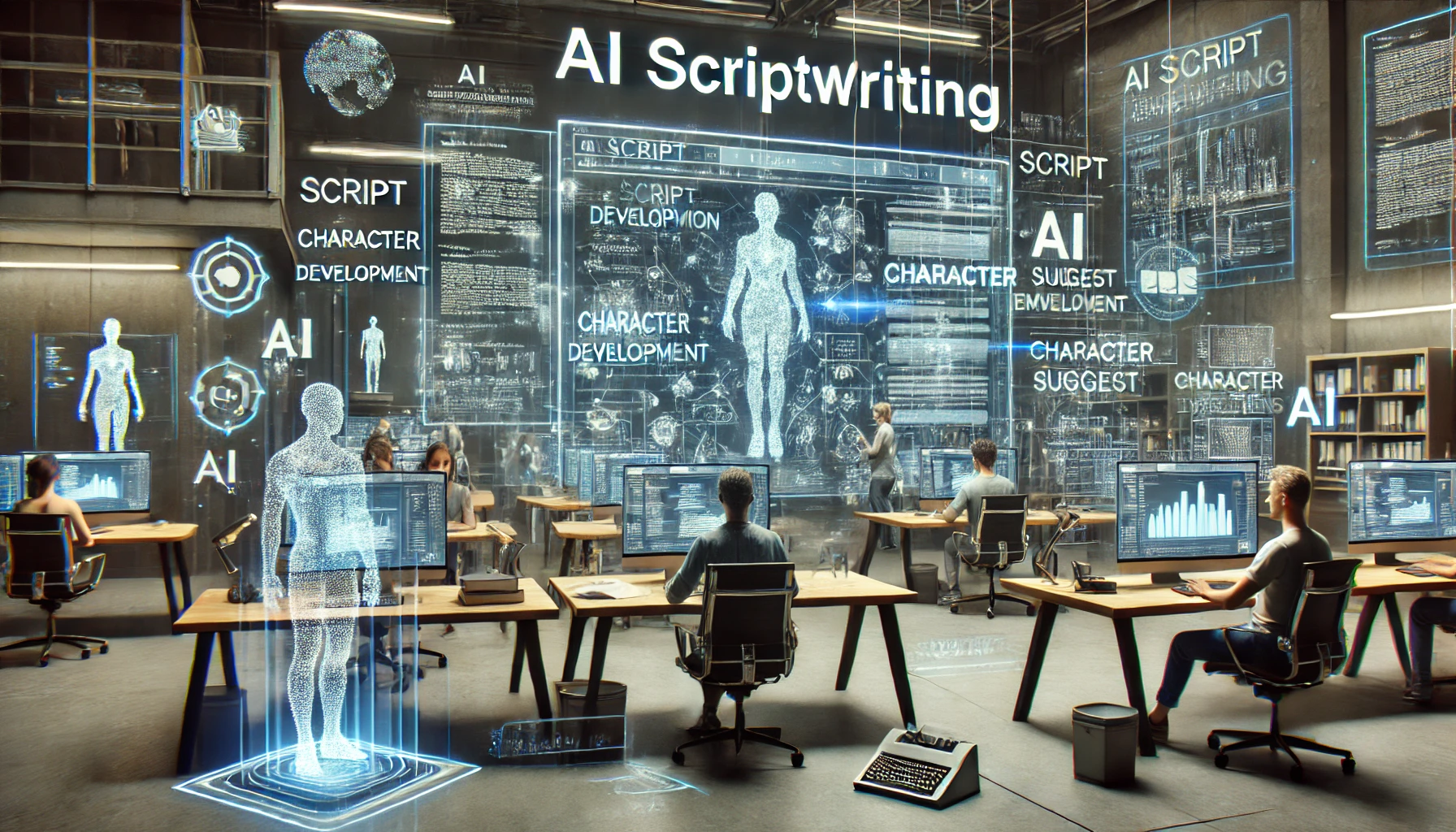
Find AI-assisted script analysis and development tools
Vitrina tracks AI-capable script analysis and development companies by capability and credits.
AI scriptwriting tools now sit alongside traditional coverage and development workflows at studios, production companies, and individual writers’ desks. For a development executive or writer evaluating these tools, the real questions are what AI actually improves about script analysis and drafting, where the WGA’s 2023 AI provisions constrain how you can use it, and how to choose a tool that fits your workflow without creating a credit or rights problem. This guide covers all three.
Key Takeaways
- AI scriptwriting tools are strongest at script analysis, coverage-style feedback, and structural and continuity checks, tasks that are data-driven rather than purely creative.
- The WGA’s 2023 Minimum Basic Agreement sets specific rules on AI in screenwriting: a writer cannot be required to use AI-generated material as source material, and AI-generated text does not qualify for writing credit.
- AI-generated dialogue and scene suggestions tend toward generic, formulaic output unless a writer actively edits and redirects them, which is exactly the risk the WGA provisions were written to manage.
- Any AI tool used on an unreleased script needs a clear answer on data handling: whether your material is stored, and whether it trains the vendor’s model.
- Vitrina lists verified AI-capable script analysis and development companies, filterable by capability and credits.
What AI Scriptwriting Tools Actually Do
AI scriptwriting tools apply natural language processing and machine learning to script text for a specific set of tasks: analyzing structure and pacing, flagging continuity errors and character inconsistencies, generating draft dialogue or scene descriptions from a prompt, and producing coverage-style feedback on a script’s marketability and genre fit. Some tools, like Dramatron, a research system built on large language models, can generate a full outline, characters, and draft scenes from a premise. Others function closer to an editing assistant, reviewing an existing draft rather than generating new material.
The distinction that matters for a buyer is between AI as an analysis tool and AI as a generation tool. Using machine learning to flag a pacing problem or a continuity error is a different risk profile than using AI to generate dialogue that ends up in a shooting script. The first is closer to what a script coordinator or reader has always done, just faster. The second raises the credit and rights questions covered below.
What the WGA’s AI Rules Actually Require
The 2023 WGA Minimum Basic Agreement, negotiated after the strike that year, set specific terms for AI in screenwriting that any studio or production company working with WGA writers needs to follow. A writer cannot be required to use AI-generated material as source material for a project. A company cannot use AI to write or rewrite literary material, and AI-generated text does not qualify for writing credit under the WGA’s credit rules. A writer can choose to use AI tools if they want to, but that choice belongs to the writer, not the studio.
For a development executive, this means the procurement question is not just which AI tool is best. It is whether the tool’s output could be mistaken for, or improperly used as, source material in a way that creates a credit dispute later. Build this into how you brief any AI-assisted development process from the start, not after a script is in production.
VITRINA INTELLIGENCE
See Which Script Analysis Vendors Are Actually Delivering
Vitrina surfaces verified AI-capable script analysis and development companies by capability and credits.
Where AI Helps, and Where It Produces Generic Output
AI is genuinely useful for the mechanical parts of script development: catching a continuity error across 120 pages, flagging a pacing lull against genre norms, or producing a fast first-pass coverage report on a large slate of submissions. These tasks reward consistency and speed, which is what AI does well.
AI-generated dialogue and scene suggestions are a different story. Left unedited, generated text tends toward generic phrasing and predictable plot beats, the kind of formulaic writing a trained reader spots immediately. A writer using AI as a brainstorming tool and then rewriting the output in their own voice gets real value. A production trying to use AI output directly as a script is buying a liability, both creatively and under the WGA rules above.
How to Choose an AI Scriptwriting Tool
- Analysis versus generation. Decide whether you need a tool that reviews existing scripts or one that generates new material, since the risk profile differs significantly between the two.
- Data handling. Get a clear answer on whether your scripts are stored, who can access them, and whether they train the vendor’s model further.
- WGA compliance. If you work with WGA writers, confirm the tool’s use in your workflow does not create a credit or source-material dispute under the current MBA.
- Output quality on your genre. Test the tool against a script in your actual genre and format, not a generic demo, since output quality varies significantly by content type.
- Integration with existing coverage workflow. Confirm the tool fits into how your team already tracks submissions and coverage rather than becoming a separate system.
How to Find and Vet AI Scriptwriting Partners
Vitrina lists verified AI-capable script analysis and development companies, filterable by capability and credits, with direct contact to decision-makers. If your evaluation extends to AI use across the wider production pipeline, Vitrina’s stage-by-stage guide to AI in filmmaking covers the same buyer checklist applied to pre-production, production, and post. For the risk and governance questions that come up once AI touches a unionized production, Vitrina’s guide to AI in filmmaking cost and risk covers labor and rights exposure in more depth.
VITRINA INTELLIGENCE
Shortlist a Script Analysis Partner by Capability
Ask VIQI: “Show me AI-powered script coverage tools built for high-volume submission review.”
Frequently Asked Questions
Is AI scriptwriting replacing human writers?
No. AI tools are strongest at analysis and coverage tasks, not creative generation. AI-generated dialogue and scenes tend toward generic output unless a writer actively edits and redirects them, and the WGA’s 2023 agreement specifically bars AI-generated text from qualifying for writing credit.
What does the WGA’s agreement actually say about AI in scriptwriting?
The 2023 WGA Minimum Basic Agreement says a writer cannot be required to use AI-generated material as source material, a company cannot use AI to write or rewrite literary material, and AI-generated text does not qualify for writing credit. A writer can choose to use AI tools voluntarily, but that choice is the writer’s, not the studio’s.
What can AI scriptwriting tools actually do well right now?
They are strongest at script analysis: flagging continuity errors, pacing issues, and character inconsistencies, and producing fast coverage-style feedback across a large volume of submissions. Full scene or dialogue generation is weaker and tends toward generic, formulaic output without significant human editing.
Is it safe to run an unreleased script through an AI scriptwriting tool?
Ask any vendor directly what happens to scripts you upload, whether they are stored, and whether they are used to train the model further. Get that answer in writing before sharing unreleased material with a new tool.
How do I find and vet an AI scriptwriting or script analysis vendor?
Decide whether you need an analysis tool or a generation tool, confirm data handling and WGA compliance, and test the tool against a script in your actual genre before committing. Vitrina’s verified directory can shortlist vendors against these criteria directly.