IHUB
 Private Briefings (Webinars)


 LeaderSpeak Podcast
 Global Entertainment Digest (Newsletter)
 Premium Lists
 Premium Reports
 Membership Benefits
 About Vitrina
 Our Story

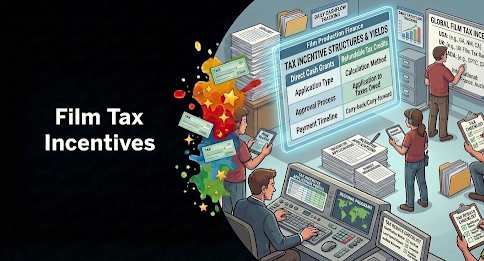
Producers scouting Southeast Asia keep asking the same question: does Vietnam have a film incentive yet? The honest answer is not really — not in the form of a cash rebate or tax credit a production can bank on today. A Vietnam film incentive exists on paper inside the country’s 2022 Law on Cinematography, but that clause points to general tax law rather than a defined rebate percentage, and as of September 2026, no dedicated cash-rebate scheme has been enacted or funded. What has changed is the pace of policy discussion: a draft Law on Cultural Industry Development now under National Assembly review proposes VAT refunds for foreign film crews and a reduced 5% VAT rate for film production, distribution and exhibition.
This guide separates what is actually law in Vietnam today from what is proposed and still moving through the legislature, lays out the filming-permit process that exists right now regardless of incentive status, and benchmarks Vietnam against Thailand, Malaysia and the Philippines — three neighbors that already pay real cash rebates to productions.
Join Vitrina Free
- Confirmed: Vietnam’s 2022 Law on Cinematography includes a tax-incentive clause for foreign productions, but it references general tax law with no fixed rebate rate, spend cap, or application process.
- Confirmed: There is no operational cash rebate or tax credit currently disbursed to foreign film productions in Vietnam.
- Proposed, not yet law: A draft Law on Cultural Industry Development includes VAT refunds for foreign film crews; it was reviewed by the National Assembly’s Committee for Culture and Society in September 2025 and remains under review ahead of a planned October 2026 sitting.
- Proposed, not yet law: A separate draft resolution reviewed in April 2026 proposes a reduced 5% VAT rate for film production, distribution and exhibition.
- Vietnam’s existing filming-permit process (via the Ministry of Culture, Sports and Tourism or the Ministry of Foreign Affairs, depending on format) already functions today, independent of incentive status.
- Thailand, Malaysia and the Philippines already operate funded cash-rebate programs of 20–35% of qualifying local spend, which currently makes them the more bankable regional choices for incentive-driven budgeting.
Vietnam does not currently offer an operational film cash rebate or tax credit. Its 2022 Cinema Law grants a general tax-incentive right to foreign productions without fixed terms, and a 2025–2026 draft law proposing VAT refunds for foreign crews is still pending National Assembly approval. Producers should plan around Vietnam’s existing permit process and monitor — not budget around — incentive legislation.
Where Vietnam’s Film Incentive Framework Stands Today
Vietnam’s Law on Cinematography, issued in 2022, is the legal anchor most trade coverage points to when discussing a “Vietnam film incentive.” The law states that foreign organizations producing films using Vietnamese backgrounds, or using production services from Vietnamese companies, are entitled to tax incentives “in accordance with the tax laws” — but it does not itself define a rebate rate, a qualifying-spend threshold, or an application mechanism. Legal analyses from Lexology and Baker McKenzie’s Connect on Tech both note the same gap: the incentive clause is real, but it is a pointer to other tax statutes rather than a self-executing benefit.
The law also established the Cinematographic Development Support Fund, an off-budget state fund with its own charter capital. In practice this fund is oriented toward developing Vietnam’s domestic cinema sector — training, production support, festival participation — rather than reimbursing spend by incoming foreign productions. It is not a rebate mechanism for international shoots.
The net result, confirmed across multiple 2025–2026 industry sources including Fixers in Vietnam and Hoodlum’s production guides, is that Vietnam currently has no national cash rebate or tax credit in force for foreign film productions — a materially different position from Thailand, Malaysia and the Philippines, all of which run funded, government-administered rebate programs today.
What a Vietnam Film Rebate Would Likely Cover — If Enacted
No qualifying-spend definition exists yet because no rebate has been enacted, so anything below is describing proposed policy direction, not a program producers can apply to. The clearest signal comes from a draft Law on Cultural Industry Development, which proposes VAT refunds for foreign film crews shooting in Vietnam as part of a broader package of six policy groups and six special mechanisms aimed at the cultural industries.
Vietnam’s National Assembly is considering a package of new cultural-industry incentives, including VAT refunds for foreign film crews, as part of a draft Law on Cultural Industry Development reviewed by the Committee for Culture and Society in September 2025. (Source: Vietnam Investment Review, 2025)
Separately, a draft National Assembly resolution reviewed in April 2026 proposes a reduced 5% value-added tax rate applied to film production, distribution and exhibition, grouped alongside sports and performing arts activities. Note the distinction: a VAT refund and a reduced VAT rate are both consumption-tax mechanisms, not a cash rebate on qualifying production spend in the way Thailand or Malaysia structure their programs. Neither proposal, as of this writing, has been passed into enforceable law with a stated effective date, application window, or administering body. Producers should not model a Vietnam shoot’s economics around either mechanism until implementing regulations exist.
Filming Permits: The Process That Already Exists
Regardless of incentive status, Vietnam already has a working filming-permit system that productions use today. Two different ministries handle approvals depending on format: the Ministry of Foreign Affairs typically processes permits for television programs, reality shows, documentaries, commercials and music videos, while the Ministry of Culture, Sports and Tourism (MoCST) — through its Cinema Department — handles feature film permits.
Under current MoCST procedure, the ministry has 20 days from receipt of a valid dossier to issue a filming permit or provide a written reason for refusal; feature productions must submit a Vietnamese-language script alongside a formal request and a production-services agreement. (Source: Fixers in Vietnam / Vietnam Cinema Department guidance, 2025–2026)
In practice, filing at least ten working days ahead is the legal minimum, but production-services guides recommend budgeting three to four weeks for straightforward commercial or documentary work, and considerably longer for feature narratives, sensitive subject matter, national parks, historic relics, or multi-province shoots — since script content deemed sensitive can trigger requested revisions before approval. None of this permit machinery is affected by whether the pending VAT-refund proposal becomes law; it is the baseline cost of doing business in Vietnam today.
Timeline: When Could a Real Incentive Take Effect?
There is no confirmed effective date for a Vietnam cash rebate or VAT refund because neither has cleared the National Assembly as of September 2026. The draft Law on Cultural Industry Development was reviewed by the Committee for Culture and Society in September 2025 with an original expectation of consideration at the National Assembly’s October 2025 sitting; as of this writing it remains in draft, with reporting pointing to a further National Assembly session in October 2026 for continued review.
A draft National Assembly resolution reviewed in April 2026 proposed a 5% VAT rate for film production, distribution and exhibition as part of a broader cultural-development package; as of the most recent reporting, this remained a draft resolution rather than enacted law. (Source: Vietnamese state and trade media reporting, April 2026)
For producers, the practical read is that this is a multi-cycle legislative process, not a single vote. Even once a law passes, implementing regulations (decrees, circulars, and an administering agency with an application process) typically follow months later in Vietnam’s legal system before a mechanism is actually usable by a production. Treat any “Vietnam incentive coming soon” headline as the start of that clock, not the end of it.
Track Incentive Legislation Before Your Competitors Do
Vitrina’s database covers 159,223 M&E companies, including production-services vendors and legal counsel active in emerging APAC markets like Vietnam.
Vietnam vs. Thailand, Malaysia and the Philippines
Vietnam’s neighbors are not waiting on legislation — they already operate funded, published rebate programs. Thailand pays foreign productions a cash rebate of up to 30% of qualifying local spend, with the base rate tiered from 15% to 25% depending on spend level since January 2025, plus uplifts for Thai crew hiring, cultural promotion, regional filming outside Bangkok, and local post-production. Minimum qualifying spend is THB 50 million, and the previous THB 150 million payout cap has been removed, per Mbrella Films’ incentive guide.
Malaysia’s Film in Malaysia Incentive (FIMI), run by FINAS, offers a 30% cash rebate on qualifying Malaysian spend, with an additional 5% available subject to a cultural test — effectively up to 35%. The program was renewed for another five years with a fresh RM300 million (roughly $76 million) allocation, a sign of long-term government commitment, according to The Hollywood Reporter’s Filmart 2026 coverage.
The Philippines’ Film Development Council operates FLIP, a selective cash rebate worth 20% of qualified local spend, rising to 25% with a cultural-merit bonus. Rebates are capped at roughly PHP 25-30 million per project, with minimum spend requirements ranging from PHP 8 million for documentaries to PHP 20 million for features, per NEEDaFIXER’s 2026 country-by-country incentive comparison.
| Market | Rebate status | Headline rate | Administering body |
|---|---|---|---|
| Malaysia | Operational, funded | Up to 30–35% of qualifying spend | FINAS |
| Thailand | Operational, funded | 15–30% tiered, by spend level | Thailand Film Office |
| Philippines | Operational, selective/capped | 20–25% of qualified spend | Film Development Council of the Philippines (FDCP) |
| Vietnam | Proposed / pending — not operational | Not publicly disclosed; no fixed rate exists | None yet designated |
Thailand’s film incentive rebate
film financing companies across Southeast Asia
the Philippines’ FDCP film incentive program
Why Productions Choose Vietnam Even Without a Rebate
Incentive economics are only part of a location decision, and Vietnam continues to attract international shoots on fundamentals that predate any rebate discussion. Locations range from Ha Long Bay’s limestone karsts and the terraced hills of Sa Pa to Ho Chi Minh City’s dense urban texture and the Mekong Delta’s waterways — a visual range few single countries in the region can match within a compact geography.
Below-the-line costs remain competitive relative to Thailand and Malaysia even without a rebate offsetting them, and crew depth has grown substantially as service-production houses have scaled to support commercials, streaming content and international features. For projects where the creative case for Vietnam-specific locations is strong, producers are proceeding on cost and location merit alone, treating any future incentive as upside rather than a prerequisite.
Vietnam’s post-production services
What Producers and Financiers Should Do Now
Given the gap between proposed policy and enacted law, the right posture is to monitor, not to budget. Concretely: build Vietnam location and crew costs into your budget at face value, without assuming a rebate offset; assign someone on your production-legal team to track the Law on Cultural Industry Development’s progress through the National Assembly; and confirm permit timelines with a local production-services partner or fixer well ahead of any script lock, since the 20-day MoCST review window runs from receipt of a complete, valid dossier — not from first submission.
If your project’s greenlight timeline extends 12-18 months out, it may be worth structuring Vietnam as a location option with a contingency clause tied to incentive enactment, rather than either committing fully or ruling the market out. Financiers evaluating co-production or service-production structures in Vietnam should verify vendor and legal-counsel credentials directly rather than relying on incentive marketing claims, since no government agency is yet accepting applications for a Vietnam-specific rebate.
Vet Vietnam’s Production Ecosystem Before You Commit
Search verified production-services vendors, fixers and legal counsel across Southeast Asia inside Vitrina’s 159,223-company database.
How Vitrina Helps Producers Navigate Tax Incentives
Emerging incentive markets like Vietnam move fast once legislation clears, and producers who are already connected to the right local vendors, legal counsel and production-services companies move first when a program launches. Vitrina’s database of 159,223 M&E companies worldwide lets producers and financiers identify verified production-services partners, fixers and entertainment counsel operating in Vietnam and across Southeast Asia today, rather than waiting until an incentive is formally administered to start building relationships.
Beyond vendor discovery, Vitrina helps production and business-affairs teams benchmark markets against each other — comparing crew depth, service-company track records and cost profiles across Vietnam, Thailand, Malaysia and the Philippines in one place, so location decisions aren’t made on marketing claims alone.
For teams tracking policy developments like Vietnam’s draft Law on Cultural Industry Development, Vitrina’s intelligence coverage flags material changes in regional incentive frameworks so producers aren’t relying on scattered trade-press mentions to catch a rebate program the moment it becomes real.
Conclusion
Vietnam does not yet have an operational film production incentive. What exists is a general tax-incentive clause in the 2022 Cinema Law with no defined terms, and a proposed VAT-refund and reduced-VAT-rate package still moving through the National Assembly as of September 2026, with no confirmed passage date or implementing regulations. Producers evaluating Vietnam today should budget the market on its real merits — locations, crew, and cost — use the filming-permit process that already exists, and treat any future rebate as a possible upside rather than a line item. Until an administering agency opens applications with a published rate and cap, Thailand, Malaysia and the Philippines remain the region’s bankable incentive destinations, while Vietnam remains the one to watch.
FAQ
Does Vietnam currently offer a film production cash rebate?
No. As of September 2026, Vietnam has no operational cash rebate or tax credit for foreign film productions. The 2022 Law on Cinematography includes a general tax-incentive clause, but it has no fixed rate, cap, or application process.
What is the proposed Vietnam film incentive that’s been in the news?
Trade press coverage refers to a draft Law on Cultural Industry Development, which proposes VAT refunds for foreign film crews, and a separate draft resolution proposing a reduced 5% VAT rate on film production, distribution and exhibition. Neither has been enacted into law with implementing regulations as of this writing.
When will Vietnam’s film incentive become law?
There is no confirmed date. The draft Law on Cultural Industry Development was reviewed by the National Assembly’s Committee for Culture and Society in September 2025, with continued review expected around an October 2026 sitting. Producers should treat any timeline estimate as provisional until the law passes and an administering agency is named.
How does Vietnam compare to Thailand, Malaysia and the Philippines on film incentives?
Thailand, Malaysia and the Philippines all operate funded, government-administered cash-rebate programs today — roughly 15-30%, up to 30-35%, and 20-25% of qualifying local spend respectively. Vietnam currently has no comparable operational rebate, making it the outlier among these four Southeast Asian markets.
Can foreign productions still film in Vietnam without an incentive?
Yes. Vietnam’s filming-permit process operates independently of incentive status. The Ministry of Culture, Sports and Tourism handles feature-film permits (with a 20-day review window from a valid dossier), while the Ministry of Foreign Affairs typically handles television, documentary, commercial and music-video permits.
Should producers factor a Vietnam rebate into their budget today?
No. Because no rebate program has been enacted or funded, production budgets should not assume any incentive offset for Vietnam shoots. Producers should monitor legislative progress and treat a future incentive as a contingency, not a confirmed cost reduction.
Vitrina’s research team tracks production incentives, market policy and vendor networks across a database of 159,223 media and entertainment companies worldwide, helping producers and financiers make location and financing decisions grounded in verified, current data.
Stay Ahead of Emerging Incentive Markets
Join 159,223 companies’ worth of production intelligence — including Vietnam, Thailand and Malaysia vendor and policy tracking — on Vitrina.