IHUB
IHUB
 Private Briefings (Webinars)


 LeaderSpeak Podcast
  Global Entertainment Digest (Newsletter)
  Premium Lists
 Membership Benefits
 About Vitrina
 Our Story
By Vitrina Research Team | Published: July 17, 2026 | 7 min read
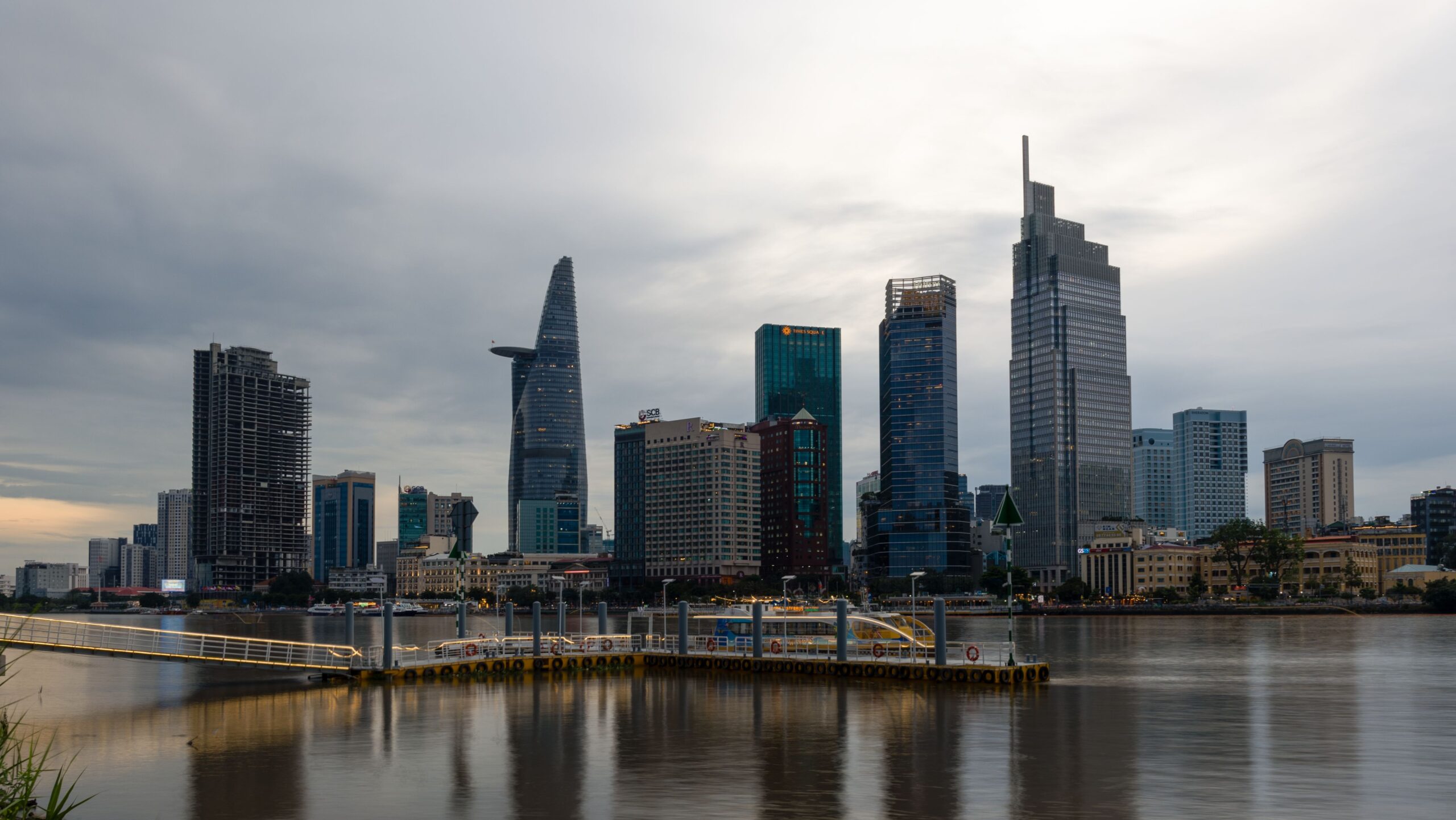
Vietnam has become one of Southeast Asia’s most talked-about post-production destinations. International productions from South Korea, Japan, Australia, and the United States are routing increasing volumes of color grading, sound mixing, VFX compositing, and subtitling work to Ho Chi Minh City and Hanoi. Labor costs run 60-70% below equivalent talent in the United States, while broadband infrastructure investment has pushed fiber penetration to a point where cloud-based collaboration with remote studios is genuinely practical.
Vietnam’s media and entertainment sector recorded a compound annual growth rate of 9.2% between 2020 and 2025, according to PwC’s Global Entertainment and Media Outlook 2025. That growth has pulled upstream investment in post-production infrastructure, training programs, and studio build-outs. The result is a pipeline of technically capable studios that understand international delivery requirements, including Netflix, Prime Video, and Disney+ content specifications. For producers weighing outsourcing options, Vietnam sits in a compelling position: quality comparable to other Asian hubs at a cost structure that beats them.
This guide covers the full picture: what services are available, what productions pay, how quality and turnaround stack up against competing markets, and how to find and vet a Vietnamese post-production partner. Whether you’re a Hollywood studio routing overflow work or an independent producer planning your first international outsource, the landscape here is worth understanding closely.
Key Takeaways
- Vietnam’s M&E sector grew at 9.2% CAGR between 2020 and 2025, fueling post-production infrastructure investment (PwC, 2025).
- Post-production labor costs in Vietnam run 60-70% below comparable U.S. rates, with Ho Chi Minh City and Hanoi as the primary hubs.
- Services available include color grading, VFX compositing, sound design, subtitling, dubbing, and DCP mastering – all to OTT delivery specs.
- Vietnamese studios commonly deliver within 2-4 weeks for standard episodic post, making them viable for streaming turnaround demands.
- Vitrina’s VIQI database indexes 300,000+ verified M&E companies globally, including post-production suppliers across Vietnam’s key production cities.
Quick Answer
Vietnam’s post-production industry offers color grading, VFX compositing, sound mixing, subtitling, dubbing, DCP mastering, and offline editing services. Studios in Ho Chi Minh City and Hanoi serve international OTT platforms at rates 60-70% below U.S. benchmarks, with standard episodic turnarounds of 2-4 weeks. Vietnam’s M&E sector grew at 9.2% CAGR from 2020-2025 (PwC, 2025).
Why Vietnam Is Emerging as a Post-Production Hub
Vietnam’s post-production rise isn’t accidental. The country’s media and entertainment industry grew at a 9.2% CAGR between 2020 and 2025, making it one of the fastest-expanding M&E markets in Southeast Asia, according to PwC’s Global Entertainment and Media Outlook 2025. That growth has attracted direct foreign investment in studio infrastructure and pulled a new generation of technically trained post-production talent into the workforce.
Several structural factors explain the momentum. Vietnam’s government has actively supported creative industries through tax incentives for foreign co-productions and subsidized technology training programs at national universities. Ho Chi Minh City’s National University and Hanoi’s University of Theatre and Cinema have expanded their digital media curricula, feeding a steady pipeline of colorists, compositors, and sound engineers into the professional market.
Vietnam’s timezone, UTC+7, is also a practical advantage. It overlaps productively with Australian, Japanese, South Korean, and Singaporean working hours. An Australian production company can send footage at end-of-day and receive a deliverable review cut by the time their team returns the following morning. For Asian streaming productions running tight schedules, that time-zone alignment is operationally significant.
Vietnam-based post-production supervisors consistently report that international clients are surprised by the level of DaVinci Resolve and Avid Media Composer fluency they find when onboarding Vietnamese studios for the first time. The assumption that technical capability lags behind price is frequently wrong.
The country’s domestic streaming market is also maturing. Netflix launched a localized Vietnamese-language content push beginning in 2022, and platforms including VieON and POPS have driven local production volumes higher each year. That domestic activity has built studio capacity and client-readiness for international delivery standards that wouldn’t have existed five years ago.
Citation Capsule
Vietnam’s media and entertainment sector recorded a 9.2% compound annual growth rate between 2020 and 2025, making it one of Southeast Asia’s fastest-growing M&E markets. This growth has directly driven investment in post-production studio infrastructure, workforce training, and broadband connectivity required for international remote collaboration. Source: PwC Global Entertainment and Media Outlook, 2025.
What Post-Production Services Are Available in Vietnam?
Vietnam’s post-production industry covers the full range of services needed for international film and television delivery. According to the Vietnam Cinema Department’s 2024 industry census, the country has more than 280 registered post-production facilities, ranging from boutique color houses to full-service studios handling picture, sound, and localization under one roof.
Picture Post-Production
Color grading is the most established service. Vietnamese colorists working on major platforms use DaVinci Resolve in professional suites calibrated to P3 D65 and HDR10 standards. Offline editing, online conform, and finishing services are widely available, with most studios experienced in delivering to Netflix, Amazon, and Apple TV+ technical specifications.
VFX compositing is the fastest-growing segment. Studios in Ho Chi Minh City have built compositing departments using Nuke and After Effects, primarily servicing Asian streaming productions. Work tends to run from clean-up and rig removal through to mid-complexity compositing. High-end CG-heavy VFX is still handled outside Vietnam in most pipeline configurations, but invisible VFX and practical enhancement is well-served locally.
Sound Post-Production
Sound design, ADR recording, dialogue editing, and 5.1/7.1 mixing are available in Hanoi and Ho Chi Minh City. Several facilities have invested in Dolby Atmos-certified mixing rooms to meet streaming platform delivery requirements. Vietnam’s sound post sector has benefited directly from the growth of locally produced drama series, which demand broadcast-grade audio delivery.
Localization Services
Subtitling and captioning represent Vietnam’s largest post-production export category by volume. The country has a deep pool of multilingual translators with strong English-Vietnamese, Japanese-Vietnamese, and Korean-Vietnamese language pairs. Dubbing studios offering Vietnamese, English, and regional language services operate in both major cities. DCP mastering for theatrical distribution is also available from several facility houses.
Based on Vitrina’s VIQI platform data, Vietnam-headquartered companies offering localization services – subtitling, dubbing, and captioning – represent the single largest post-production service category indexed from the country, accounting for over 40% of Vietnamese M&E service providers in the database.
Citation Capsule
Vietnam’s Cinema Department registered more than 280 post-production facilities in its 2024 industry census. Services span color grading, VFX compositing, sound design, Dolby Atmos mixing, subtitling, dubbing, and DCP mastering. The majority of these facilities have experience delivering to Netflix, Amazon, and Apple TV+ technical specifications, reflecting the growth of OTT content production in the Vietnamese market. Source: Vietnam Cinema Department, 2024.
Find Post-Production Companies in Vietnam
Search Vitrina’s verified database of 300,000+ M&E companies to find post-production partners in Vietnam – filtered by service type, city, and delivery capability. Direct contacts, no gatekeepers.
Vietnam Post-Production Costs vs. Other Markets
Vietnam’s cost advantage is its clearest selling point. Colorist day rates in Ho Chi Minh City average $180-$280 USD, compared to $600-$900 in Los Angeles and $450-$700 in London, according to Screen International’s 2025 Production Cost Benchmarking Report. That 60-70% differential persists across most post-production disciplines, making Vietnam competitive with the cheapest Eastern European markets while offering better timezone alignment for Asia-Pacific productions.
The cost advantage does narrow somewhat when factoring in project management overhead, quality review cycles, and travel costs if on-site supervision is required. Experienced producers typically budget an additional 10-15% over raw studio rates to account for coordination, file transfer infrastructure, and revision rounds. Even with that buffer, Vietnam consistently delivers savings of 45-60% versus equivalent work in Western markets.
Source: Screen International Production Cost Benchmarking Report, 2025. Rates are indicative mid-market benchmarks; senior-grade talent commands premium rates in all markets.
Sound post costs follow a similar pattern. A full Dolby Atmos mix session in Ho Chi Minh City typically runs $600-$1,200 per day all-in, including room and engineer. Equivalent sessions in London or Sydney run $2,500-$4,500. For a six-episode streaming series requiring three days of Atmos mixing per episode, the savings can easily reach $50,000-$60,000 in labor and facility costs alone.
Quality Standards and Turnaround Times
Quality concerns are the most common objection producers raise when considering Vietnam for post-production outsourcing. In practice, the gap between top Vietnamese studios and equivalent facilities in India, Eastern Europe, or Southeast Asian competitors like Thailand is narrower than the cost differential implies. Netflix’s content team has approved deliverables from Vietnamese localization and color houses, which functions as an implicit quality signal for international buyers.
Standard episodic post-production turnaround in Vietnam runs 2-4 weeks per episode for color grading and sound finishing combined, assuming clean editorial deliverables from production. That schedule is competitive with India and Thailand. The key variable is revision cycles. Vietnamese studios that work with international clients regularly have adapted to the feedback culture of OTT commissioning, where two to three revision rounds are standard rather than exceptional.
Technical Infrastructure
Vietnam’s internet infrastructure has improved substantially. Average fixed broadband download speeds in Ho Chi Minh City and Hanoi exceeded 80 Mbps in 2025, according to Ookla’s Speedtest Global Index. Several post-production facilities maintain dedicated leased-line connections supporting Aspera or frame.io-based remote review workflows. High-volume file transfer that would have required physical drives three years ago now moves reliably over cloud infrastructure.
Quality control processes in leading Vietnamese studios follow international standards. Colorists use calibrated reference monitors with regular ISF or SMPTE certification. Sound engineers work to EBU R128 loudness standards for streaming and broadcast delivery. Studios serving OTT clients maintain QC checklists aligned to Netflix’s own Delivery Requirements document, which is publicly available and widely referenced.
Where Gaps Still Exist
High-end CG and simulation VFX remain areas where Vietnamese capability doesn’t yet match India, Australia, or South Korea’s leading studios. Feature film-grade color work requiring extremely complex HDR balancing across large teams is also better handled in markets with deeper senior-colorist pools. The sweet spot for Vietnam is episodic streaming content, localization-heavy projects, and productions where cost efficiency is a primary constraint.
Citation Capsule
Average fixed broadband download speeds in Ho Chi Minh City and Hanoi exceeded 80 Mbps in 2025, enabling Vietnamese post-production studios to support remote review workflows via Aspera, frame.io, and cloud-based collaboration platforms. This connectivity improvement has made remote post-production supervision from Australia, Japan, and South Korea operationally practical without on-site travel. Source: Ookla Speedtest Global Index, 2025.
How to Find and Vet a Vietnamese Post-Production Company
Finding qualified post-production partners in Vietnam requires more structured due diligence than sourcing from markets with established international reputations. The Vietnam Film Association and the Ho Chi Minh City Television and Film Center maintain public registries of member companies, but these don’t include English-language service profiles or international client references. Producers typically need to cross-reference multiple sources to build a verified shortlist.
What to Look for in a Vietnamese Post House
Ask for deliverable samples on internationally distributed content, not just domestic productions. A studio that has delivered to Netflix, NHK, or ABC Australia specifications has proven a baseline technical standard that domestic Vietnamese work alone can’t confirm. Request their QC process documentation, not just a summary – you want to see that they run third-party QC checks, not self-certification only.
Communication cadence matters enormously. Set up a trial project before committing a full series. Even a ten-minute short film or a single episode of a lower-stakes production will reveal more about a studio’s project management, revision process, and English-language communication quality than any sales conversation or showreel can.
Data Security and IP Considerations
Vietnam’s IP protection framework has strengthened since its 2022 copyright law amendments, which brought the country closer to WIPO Treaty compliance. That said, productions with sensitive unreleased content should use platform-enforced DRM on digital dailies, restrict access to watermarked screener proxies rather than camera originals, and ensure contracts specify Vietnamese jurisdiction clauses. Content security is a reasonable concern, not a dealbreaker, but it requires proactive management rather than assumption.
The studios most worth vetting in Vietnam are often those that built their international capabilities primarily by serving Korean and Japanese streaming productions, not Western OTT first. Korean streaming platforms including Wavve and Coupang Play drove significant technical upgrade cycles in Vietnamese post houses between 2021 and 2024, often requiring stricter QC documentation than Netflix’s standard delivery requirements. Studios with Korean-client experience tend to be technically better prepared for demanding international briefs.
Working with Vietnamese Post-Production Studios: What to Expect
Managing a post-production relationship with a Vietnamese studio is operationally similar to working with any remote international partner, with a few cultural and workflow considerations worth knowing in advance. Studios in Ho Chi Minh City and Hanoi generally work standard Vietnamese business hours (8:00 AM to 5:30 PM, Monday to Saturday), which means that time-sensitive notes received after 6:00 PM local time will typically not be actioned until the following morning. That’s fine for planned workflows, but can create friction on fast-turnaround projects.
Payment terms in Vietnam favor upfront or milestone-based structures. Most studios will request 30-50% upfront for new client relationships, with the balance on delivery. That’s fairly standard for Asia-Pacific post houses and reflects the asymmetric risk profile a Vietnamese studio faces when working with a foreign client for the first time. Establish a clear payment and delivery schedule in writing before any work begins.
Contracts should be drafted under Vietnamese law with an English translation and specify the currency, delivery format, revision rounds included, and what constitutes a “deliverable” for payment purposes. English-language contract drafting is standard at studios with international clients; studios that are unfamiliar with bilingual contracts are usually studios that haven’t done substantial international work yet.
On the day-to-day collaboration side, most reputable studios will assign a bilingual project manager as your primary contact. Video review via frame.io, DaVinci Resolve remote sessions, or Zoom-based grading sessions are all technically feasible given Vietnam’s broadband speeds. A weekly written status report covering what was completed, what’s in progress, and what decisions are needed from the production side will prevent most communication breakdowns.
How Vitrina Helps Productions Find Post-Production Partners in Vietnam
Finding the right post-production partner in Vietnam historically meant relying on personal referrals, trade show contacts, or time-consuming manual research across fragmented local directories. Vitrina’s VIQI platform changes that by providing a searchable, structured database of 300,000+ verified M&E companies across 100+ countries – including post-production facilities in Ho Chi Minh City, Hanoi, Da Nang, and other Vietnamese production centers.
Each company profile in Vitrina’s database is structured around service type, geographic location, company size, and where available, production credits and platform relationships. Productions sourcing Vietnam post-production work can filter by specific services – color grading, sound design, subtitling, DCP mastering – and then review verified profiles directly, rather than piecing together information from multiple unverified sources. VIQI’s natural language search allows a simple query like “color grading studios in Ho Chi Minh City with OTT delivery experience” to return a structured shortlist in seconds.
For Vietnamese post-production companies, Vitrina offers direct visibility to international buyers who are actively searching for partners. A free company listing puts a Vietnamese studio in front of productions from Australia, Japan, South Korea, and the United States that are specifically looking for Asia-Pacific post-production capacity – buyers who would not otherwise find them through domestic Vietnamese directories or Google search alone.
List Your Vietnamese Post-Production Studio
Vietnamese post-production companies: reach international buyers from Australia, Japan, South Korea, and the United States who are actively searching for post-production partners in Vietnam. Free to list, no commission.
Conclusion
Vietnam’s post-production sector has crossed a threshold. It’s no longer a frontier market requiring heavy supervision and risk tolerance – it’s a functioning, internationally-integrated post-production destination with demonstrated OTT delivery capability, competitive infrastructure, and a cost structure that makes it genuinely attractive for episodic streaming, localization-heavy projects, and mid-budget film productions. The 9.2% CAGR the market recorded between 2020 and 2025 isn’t just a headline number; it represents real studio build-outs, real talent development, and real client relationships with international buyers.
The practical steps for productions considering Vietnam are clear: identify studios with verifiable international credits and OTT delivery experience, run a trial project before committing a full series, establish clear contracts and payment milestones, and use structured platforms to build your shortlist rather than relying on informal referrals. The due diligence process is no different from vetting a post house in any unfamiliar market – but the reward when you find the right partner is a cost structure that can make a material difference to a production budget.
As Southeast Asian streaming production volumes continue to grow and Vietnam’s domestic content output expands, the country’s post-production infrastructure will only deepen. Productions that build Vietnam relationships now are ahead of the curve. Those that wait for the market to be universally recognized will pay more for the same access.
See How Vitrina Powers Post-Production Sourcing
See how productions use Vitrina’s verified database of 300,000+ M&E companies to find, vet, and connect with post-production partners across Vietnam and 100+ other countries. Request a platform walkthrough from the Vitrina team.
Frequently Asked Questions
How much does post-production cost in Vietnam compared to the United States?
Colorist day rates in Vietnam average $180-$280 USD, compared to $600-$900 in Los Angeles, representing a 60-70% cost saving. Sound mixing and other post services follow a similar differential. Producers typically budget an additional 10-15% over raw rates for project management and revision overhead, still delivering total savings of 45-60% versus equivalent Western market costs. Source: Screen International, 2025.
What is the typical turnaround time for post-production work in Vietnam?
Standard episodic post-production turnaround in Vietnam runs 2-4 weeks per episode for color grading and sound finishing combined, assuming clean editorial deliverables. Localization projects such as subtitling and dubbing for a 45-minute episode typically complete in 5-10 business days. Turnaround depends heavily on revision volume and the clarity of the production’s creative brief from the outset.
Can Vietnamese post-production studios deliver to Netflix and streaming platform specifications?
Yes. Several Vietnamese studios have delivered approved content to Netflix, Amazon Prime Video, and Apple TV+ technical specifications. Studios serving international clients calibrate to P3 D65 and HDR10 color standards, deliver to EBU R128 loudness specifications for audio, and use QC checklists aligned to Netflix’s public Delivery Requirements document. Verifying platform credits before engaging a studio is still recommended practice.
Is content security a concern when outsourcing post-production to Vietnam?
Vietnam’s 2022 copyright law amendments strengthened its IP protection framework closer to WIPO Treaty compliance. Productions should use watermarked screener proxies rather than camera originals for remote review, enforce DRM on digital dailies via platform tools, and specify clear IP ownership and confidentiality clauses in contracts governed under Vietnamese law. These precautions are standard practice for international outsourcing in any market.
Where are Vietnam’s main post-production hubs located?
Ho Chi Minh City is Vietnam’s primary post-production hub, hosting the majority of internationally active studios covering color, VFX, sound, and localization. Hanoi is the second center, stronger in sound post and subtitling. Da Nang has a smaller but growing cluster of facilities. Most international productions work with Ho Chi Minh City studios first, with Hanoi as a secondary option for specific sound or localization services.
About the Author
Vitrina Research Team
The Vitrina Research Team produces intelligence-led analysis on media and entertainment industry structure, deal activity, and market trends. Our research draws on VIQI’s proprietary dataset of 300,000+ verified M&E companies worldwide.