Everything You Need to Know About Production Companies in the Entertainment Supply Chain

Share
Share
Production Companies

Ask most people what a production company does and you’ll get a version of the same answer: they make films and TV shows. Technically accurate. Operationally incomplete.

In practice, production companies in the entertainment supply chain are the connective tissue between creative ambition and commercial delivery. They package talent. They assemble capital stacks. They coordinate VFX vendors, post-production houses, sales agents, distributors—all while keeping a project on schedule and, ideally, on budget. And in 2025, they’re doing all of that in a market that’s gotten, as Phil Hunt (Founder & CEO of Head Gear Films) put it bluntly in a recent Vitrina LeaderSpeak episode, “much, much harder in terms of getting movies off the ground and getting movies sold.”

This guide maps the full picture—what production companies actually are, where they sit in the supply chain, how they’re structured, and what’s reshaping the model right now. Whether you’re a producer trying to understand the ecosystem around you, an investor assessing where capital flows, or an executive vetting production partners, this is the operational intelligence you need. You can also explore our broader executive guide to the entertainment supply chain for the full context.

What Is a Production Company? A Working Definition

A production company is an entity that develops, finances, and produces film, television, and digital content. Simple enough. But the real definition lives in the details of what “produces” actually requires—and that list has expanded dramatically.

At its core, a production company’s job is to take a project from concept to deliverable screen content. That journey encompasses IP development, talent packaging, financing assembly, physical production management, vendor coordination, and delivery compliance. In the modern supply chain, no single entity does all of this alone. Production companies are simultaneously principals—owning IP, holding rights, carrying creative vision—and orchestrators, coordinating a constellation of service vendors across the global supply chain.

Here’s the thing: the boundary between “production company” and adjacent entities—sales agents, studios, financiers—has blurred substantially. A company like Head Gear Films started as a production outfit, pivoted to structured lending against 550+ films over two decades, and now runs a hybrid model that packages projects on behalf of other producers while maintaining gap and senior equity positions. Is that a production company? A lender? Both. The supply chain doesn’t care about clean labels—it cares about function.

Find Production Company Partners Matched to Your Project

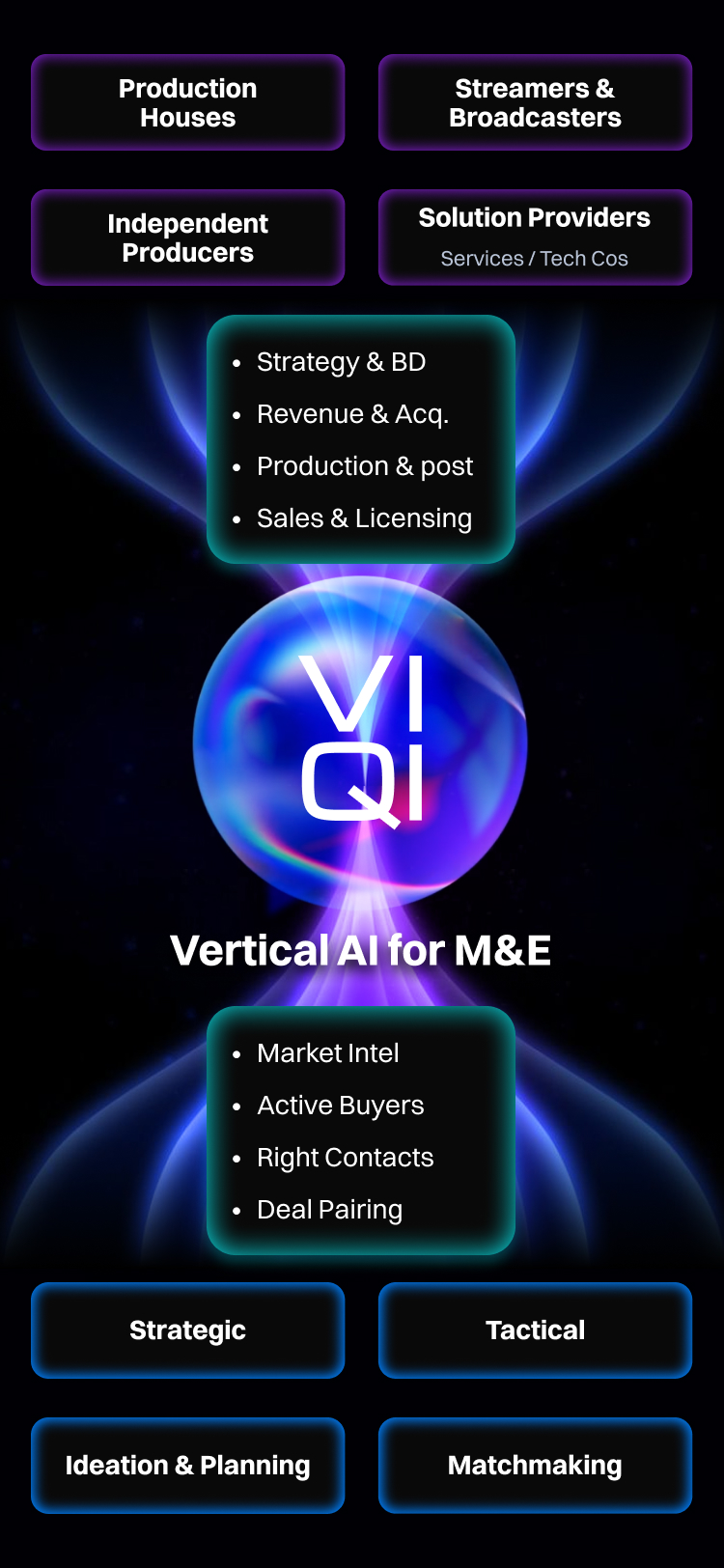
Ask VIQI—Vitrina’s AI assistant—which production companies are actively packaging, co-producing, or seeking projects in your genre and budget range. Trusted by Netflix, Warner Bros, and 140,000+ companies on the platform.

Ask VIQI Now — It’s Free

No credit card required  |  200 free credits included

The 6 Core Types of Production Companies

Not all production companies are built the same—and understanding the differences is essential before you approach one as a partner, investor, or vendor.

1. Major Studio Production Arms

The vertically integrated studios—Warner Bros. Pictures, Universal Pictures, Paramount Pictures, Sony Pictures, Walt Disney Studios—control production, distribution, and increasingly, streaming. They greenlight from internal development slates, fund from studio P&L, and self-distribute. Their production decisions are driven by IP ownership, franchise extensions, and slate-level ROI rather than individual project merit. Getting a project produced here requires either a first-look deal, an existing IP relationship, or an exceptional package that arrives greenlight-ready.

2. Independent Production Companies

Independent production companies operate outside the major studio system—assembling project-by-project financing from presales, equity, tax incentives, and gap loans. They carry more creative freedom and more financial risk simultaneously. Their capital stacks are often assembled deal by deal, market by market. And their ability to survive across multiple projects depends on reputation, sales agent relationships, and the capacity to close complex multi-party financing without studio infrastructure behind them. This is where the vast majority of the global supply chain’s creative output originates.

3. Streamer-Backed Production Companies

Netflix, Amazon MGM Studios, and Apple TV+ all operate internal production arms that commission and co-produce original content globally. But they also fund independent production companies through first-look deals and output agreements. The economic model differs from traditional studio production—streamers pay a license fee that may cover full production costs, eliminating traditional territorial presales but capping backend upside for the producer.

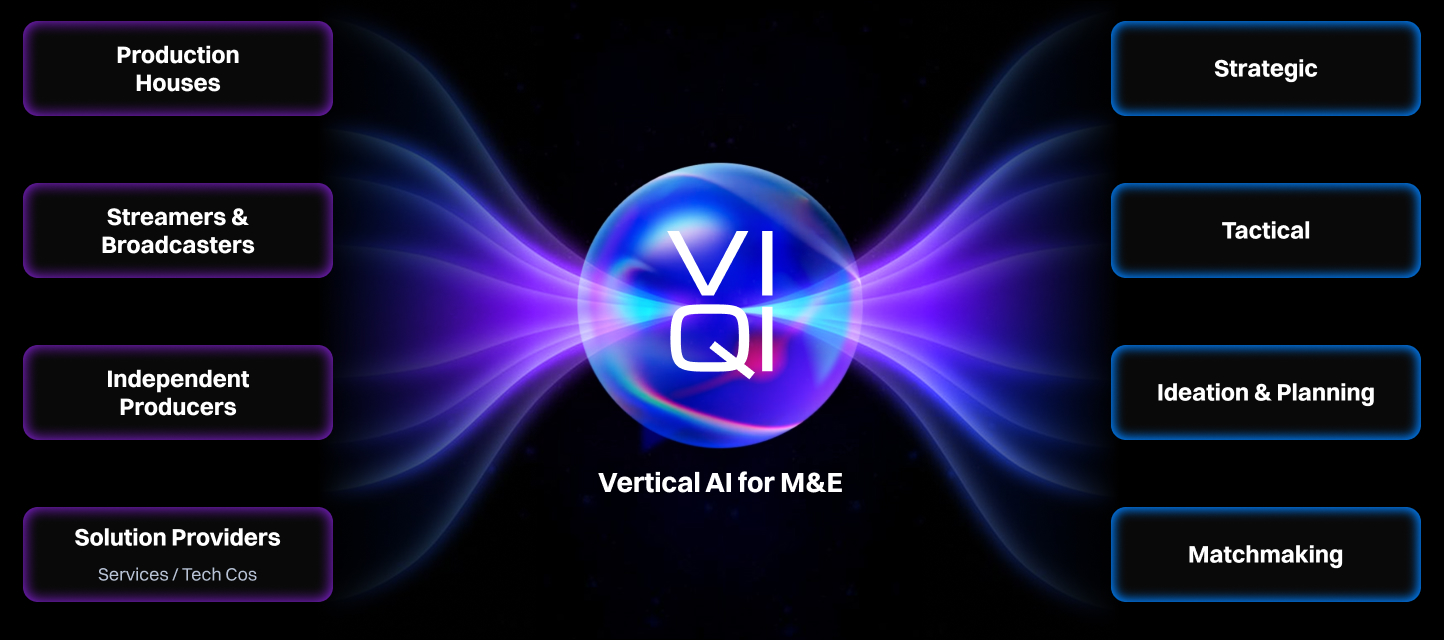
Your AI Assistant, Agent, and Analyst for the Business of Entertainment

VIQI AI helps you plan content acquisitions, raise production financing, and find and connect with the right partners worldwide.

4. Specialist Genre Houses

Genre-specialist production companies—horror houses, documentary labels, animation studios—exist at the intersection of creative focus and commercial predictability. They understand their audience’s appetite, they know which distributors to approach for which markets, and they’ve built production processes optimized for their niche. The efficiency advantages are real: a horror company producing its eighth mid-budget genre title operates with lower per-unit risk than a generalist indie tackling unfamiliar territory.

5. Super-Indie Groups and Multi-Label Models

James Burstall, CEO of the Argonon Group, represents a model that’s reshaping how independent production operates at scale. Argonon runs seven production companies across genres—from high-end documentaries to reality and entertainment formats—with expansion into new territories through labels like Rose Rock Entertainment in Oklahoma. The logic: genre diversification buffers against audience preference shifts, while the group structure creates shared infrastructure without sacrificing individual label identity. According to Variety, this consolidation model among independent production groups has accelerated significantly since 2022 as the cost of maintaining independent infrastructure has climbed.

6. Digital-First and Platform-Native Studios

A genuinely new category. Companies like Dhar Mann Studios produce at volumes traditional studios can’t match—built for AVOD platforms, social distribution, and algorithmic content cycles. With over 1 billion monthly views and content dubbed in seven languages, Dhar Mann operates a production model that decouples content creation from theatrical ambition entirely. These are production companies, but they’ve reinvented almost every assumption about what that means.

James Burstall (CEO, Argonon Group) unpacks how running seven production companies across genres—and expanding into international territories through focused sub-labels—creates resilience and scale that single-entity independents struggle to match:

Where Production Companies Sit in the Entertainment Supply Chain

The entertainment supply chain runs from IP origin to consumer screen—and production companies occupy the middle of that pipeline, coordinating everything upstream and downstream simultaneously. Understanding that positioning is critical for anyone who needs to work with them effectively.

Upstream dependencies include script development, IP acquisition, talent representation, location scouting, and financing. Before a production company can call “action,” it’s already coordinated with writers, agents, rights holders, equity investors, gap lenders, tax incentive advisors, and completion bond companies. That web of relationships has to be active and functional before physical production ever begins.

Downstream dependencies are equally complex. Post-production—VFX houses, sound studios, colorists, editors—follows the shoot. Then delivery to distributors, compliance with technical delivery specifications, execution of presale contracts, and coordination with sales agents managing territory-by-territory licensing. A production company that can’t manage its downstream relationships as effectively as its upstream ones will see its ROI eroded at every handoff.

And that’s before accounting for the lateral relationships—with co-production partners, broadcasters, streaming platforms, and film commissions offering incentives that directly affect the financing structure. Production companies aren’t just making content. They’re navigating 600,000+ companies operating across the global supply chain—most of them without transparent capability data, current pricing, or verified capacity information.

That’s the Fragmentation Paradox in operational form. And it costs producers real money every time they can’t find the right vendor, overpay for an introduction, or miss a financing window because they couldn’t verify a co-production partner’s capacity in time. Our guide to supply chain management and vendor qualification covers exactly how executives are solving this.

Map the Production Company Landscape Before Your Next Deal

Vitrina tracks 140,000+ active entertainment companies—including production companies, co-production partners, and packagers across 100+ countries. Netflix UK was connected in 48 hours. Your next production partnership can move just as fast.

Get 200 Free Credits — No Credit Card Required

How Production Companies Finance Projects

Financing is where production company strategy gets genuinely sophisticated—and where most outside observers misread the mechanics entirely. There’s no single model. There’s a toolkit of instruments that get assembled differently for every project.

Presales and Minimum Guarantees

Presales are distribution commitments made before production—a distributor agrees to pay a Minimum Guarantee (MG) for rights to a specific territory once the film is delivered. That MG contract becomes collateral. Banks will advance 70–90% of the MG’s face value, effectively converting a future payment into production capital today. Cover 50–70% of your budget through presales and incentives, and the remaining gap becomes financeable through more specialized instruments.

Tax Incentives and Soft Money

Jurisdictional incentives—from the UK’s 25% production tax relief to Saudi Arabia’s 40% rebate to various US state incentive programs—represent non-dilutive capital that directly improves a project’s economics. Sophisticated production companies don’t choose locations and then check incentives. They model incentive scenarios first, then align creative and logistical decisions to maximize what the capital stack can support.

Equity Financing

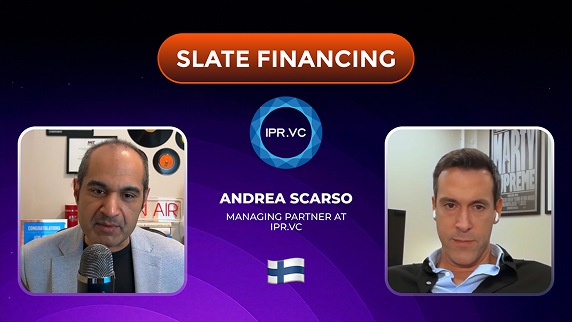
Equity investors—whether angel investors, film funds, family offices, or specialist VC—take ownership stakes in exchange for production capital. They sit junior to debt in the recoupment waterfall, meaning they’re the last to recover after senior loans, gap financing, and distribution fees are satisfied. The risk is real. But so is the upside when a project overperforms. Andrea Scarso, Managing Director at IPR VC, frames it precisely: “When you hit a successful IP, the upside can be greater than the overall risk you’re taking on a portfolio.” IPR VC approaches this through a portfolio model—managing exposure across multiple projects rather than concentrating on any single bet.

Gap Financing

Gap financing bridges the difference between secured capital and total budget—typically covering 10–30% of production costs. It’s secured against a film’s unsold territorial distribution rights and future revenue streams. But gap financing isn’t free: effective annual costs run 8–15%, and lenders require completion bonds, reputable sales agents, and a project package strong enough to support sales estimates at 1.5–2x the gap amount. It’s the most expensive instrument in the stack—which is exactly why you want to use as little of it as possible.

Co-Production Structures

Co-productions access financing from two or more territories simultaneously—often by qualifying for incentives in each jurisdiction and sharing both rights and production costs. Andrea Scarso at IPR VC identifies this as increasingly essential: “looking at co-production opportunities, especially in those territories where you can maximize some of the local incentives, some of the tax credits or local subsidies… has become crucially more important.” The complexity is real—co-production treaties have specific requirements around creative control, crew ratios, and spend allocation. But done right, co-productions de-risk budgets in ways single-territory productions simply can’t.

The Fragmentation Problem Production Companies Face Daily

Here’s the operational reality no one talks about at market panels: production companies are making critical vendor and partner decisions with profoundly incomplete information. Not because they’re careless—because the supply chain is structurally opaque.

The Fragmentation Paradox is this: more than 600,000 companies operate across the global film and TV supply chain, yet the information available on most of them is months out of date, self-reported, or locked behind relationship networks that took years to build. When you need to identify a VFX vendor for a $4M post budget, or find a co-production partner in a specific European territory before a financing window closes, you’re not searching from a position of market intelligence—you’re searching from a position of personal contacts and educated guesswork.

The financial cost is measurable: 15–20% margin leakage from legacy intermediary markup, 3–6 months added to deal cycles, and risk concentration from over-relying on known vendors when better-matched alternatives exist at lower cost. For a production company running a $10M feature with 40% of budget spent on services, that’s a potential $600,000 lost to information asymmetry—before the first frame is shot.

The companies winning in this environment are the ones treating supply chain intelligence as a strategic asset—not an afterthought. That means real-time data on vendor capabilities, capacity, pricing benchmarks, and deal history. Not a six-month-old trade report. Not a LinkedIn search.

Modern Production Company Models That Are Winning

The production company model isn’t collapsing—it’s stratifying. The companies that are building durable businesses in this environment share a set of structural characteristics that go beyond creative quality.

High-volume, deal-structured operators like Head Gear Films—financing 35–40 films per year, more than most studios—operate with the discipline of a lending institution rather than a passion project. They don’t develop creative from scratch. They enter projects after the creative is set, providing packaging, business affairs, legal and financial structuring, and gap or senior equity. As Phil Hunt describes it: they’re “the background machine keeping projects moving.” That volume generates deal flow intelligence that no single-project indie can replicate.

Diversified multi-label groups like Argonon spread risk across genre categories and geographies—seven labels, multiple territories, portfolio-level resilience against any single market shift. James Burstall’s expansion into Oklahoma through Rose Rock Entertainment isn’t a vanity play. It’s market diversification executed through a label model that maintains local identity while accessing group-level infrastructure.

Slate-financed partnerships between production companies and equity funds represent a third model gaining traction. Rather than project-by-project capital assembly, funds like IPR VC invest across slates—multiple projects with a single partner over multiple years. The benefit is mutual: producers get committed capital and financing expertise, investors get diversification and deal flow visibility. “We tend to do it more in collaboration… over a slate, over a number of projects,” Scarso explains, noting that the portfolio approach is explicitly designed to minimize the binary outcomes that have always characterized single-project film investment.

According to The Hollywood Reporter, the consolidation of independent production through multi-label groups and slate financing partnerships now accounts for an increasing share of global content output—as single-entity independents struggle to maintain the infrastructure costs that 2025’s production environment demands.

Need Production Company Introductions Before Your Next Market?

Vitrina’s Concierge Service makes direct introductions to verified production companies—packagers, co-producers, specialist genre houses, and multi-territory operators. Used by producers whose projects have been acquired by Netflix, Warner Bros, and Paramount.

Explore Concierge Service

How to Find and Vet Production Company Partners at Scale

Finding the right production company partner—whether you’re a financier seeking deal flow, a service vendor identifying clients, or a producer seeking a co-production match—is operationally harder than it should be. The Fragmentation Paradox applies here as acutely as anywhere in the supply chain.

Traditional research methods—IMDbPro, trade publications, festival programs—give you credits and announcements. They don’t tell you whether a company has capacity right now, what their active project slate looks like, what territories they’re currently buying into, or whether their deal history with co-producers matches what they’re claiming in a pitch meeting.

Vitrina maps over 140,000 active entertainment companies across the global supply chain—including production companies segmented by type, genre, territory, budget range, and deal activity. You can identify which production companies are actively packaging in your genre, which have recent track records in your target territories, and which are currently seeking co-production partners versus building fully self-financed slates. The complete guide to TV production companies and global partnerships walks through exactly how this research translates into actionable deal sourcing.

And for producers who want to accelerate the vetting process entirely—skip the research phase and move directly to qualified introductions—Vitrina’s Concierge Service delivers exactly that. Start with 200 free credits. No credit card. No commitment.

Frequently Asked Questions

What is a production company in the entertainment supply chain?

A production company is an entity that develops, finances, and produces film, television, or digital content—sitting at the center of the entertainment supply chain between creative IP and final distribution. In practice, production companies coordinate upstream partners (writers, talent, financiers, completion bond companies) and downstream vendors (VFX studios, post-production houses, distributors, sales agents). Their role has expanded significantly with the growth of streaming and global co-production structures.

What are the main types of production companies?

The major categories include: major studio production arms (vertically integrated, self-distributing), independent production companies (project-by-project financing, full creative control), streamer-backed production companies (funded by Netflix, Amazon, Apple), specialist genre houses (horror, documentary, animation), super-indie multi-label groups (diversified across genres and territories), and digital-first or platform-native studios built for AVOD and social distribution models.

How do independent production companies finance their projects?

Independent production companies typically assemble multi-layered capital stacks combining presales (territory distribution commitments used as collateral for bank loans), tax incentives and soft money (non-dilutive government incentives covering 15–40% of qualified spend), equity investment (from funds, family offices, or angel investors), gap financing (mezzanine debt secured against unsold rights, covering 10–30% of budget), and co-production structures that stack incentives across multiple jurisdictions. The optimal stack covers 70%+ of budget before gap financing is introduced.

What is the difference between a production company and a studio?

A major studio is vertically integrated—controlling development, production, distribution, and in most cases, a direct-to-consumer streaming platform. A production company (independent or otherwise) focuses on development and production, typically relying on external distributors and sales agents to bring finished content to market. The distinction has blurred as independent companies have grown in scale and as studios have shifted toward service deal and licensing models for third-party content.

What is a completion bond and why do production companies need one?

A completion bond (or completion guarantee) is a financial instrument that guarantees a film will be delivered on time, on budget, and according to agreed specifications. It’s issued by specialist completion bond companies and typically costs 3–6% of the production budget. Most gap financiers and bank lenders require a completion bond before extending production loans—it reduces lender risk by ensuring a completed, deliverable asset will emerge regardless of production complications.

What is a co-production deal and how does it benefit production companies?

A co-production is a formal partnership between production companies from two or more countries to jointly develop and produce content. Co-productions allow companies to access tax incentives and public funding in multiple jurisdictions simultaneously, share production costs and creative resources, qualify content as a “domestic” production in multiple territories (improving distribution access), and de-risk individual budgets through shared liability. They’re governed by bilateral co-production treaties that specify requirements for creative contribution, crew ratios, and qualified spend allocation.

How has streaming changed the production company business model?

Streaming has fundamentally altered production company economics in several ways. Streamers often buy global or wide-territory rights outright—eliminating traditional territory-by-territory presale structures and capping producer backend upside. The license fee model front-loads producer revenue but removes participation in a title’s long-term financial success. At the same time, streaming platforms’ appetite for content volume has created more commissioning and co-production opportunities than traditional theatrical cycles could support, particularly for mid-budget genres that struggled to find theatrical distribution.

How can Vitrina help me find production company partners?

Vitrina’s platform maps over 140,000 active entertainment companies globally—including production companies segmented by type, genre focus, territory, budget range, and deal history. Producers, investors, and service vendors can use the platform to identify production companies actively packaging in their genre, seeking co-production partners in specific territories, or currently assembling financing for projects within their budget range. VIQI (Vitrina’s AI assistant) answers targeted production company queries in real time. For direct introductions, Vitrina’s Concierge Service connects users with verified production company contacts.

The Bottom Line on Production Companies in the Entertainment Supply Chain

Production companies aren’t just content makers. They’re the operational core of the entertainment supply chain—coordinating capital, talent, technology, and distribution across an increasingly complex global ecosystem. The ones building durable businesses in 2025 share a common trait: they’re treating supply chain intelligence as a strategic advantage, not an operational afterthought.

Whether you need to find the right production partner, structure a co-production financing model, or identify which companies are actively seeking projects in your genre and territory—the intelligence exists. The question is how quickly you can access it.

Key Takeaways:

  • Production companies are supply chain orchestrators, not just content makers — their function spans IP through delivery, coordinating 600,000+ ecosystem participants at every stage.
  • The financing toolkit is multi-layered by design — presales, equity, tax incentives, gap loans, and co-productions work together; no single instrument is sufficient for a well-structured project.
  • High-volume, deal-structured operators are outperforming passion-project models — companies like Head Gear Films (35–40 films/year) demonstrate that discipline and deal flow beat occasional creative bets.
  • Genre diversification through multi-label structures is the emerging resilience model — Argonon’s seven-label approach buffers against audience preference shifts that single-genre companies can’t absorb.
  • Information asymmetry is the single biggest drag on production company margins — resolving the Fragmentation Paradox through real-time supply chain intelligence directly protects EBITDA.

Discover Production Company Partners Across 100+ Countries

Join 140,000+ companies using Vitrina to find production partners, track active projects, and close deals faster. Start with 200 free credits—no credit card, no commitment.

Get 200 Free Credits Now

Or Speak to a Production Specialist →

Trusted by Netflix, Warner Bros, Paramount, and 140,000+ global entertainment companies

Find Film+TV Projects, Partners, and Deals – Fast.

VIQI matches you with the right financiers, producers, streamers, and buyers – globally.

Producers Seeking Financing & Partnerships?

Book Your Free Concierge Outreach Consultation

(To know more about Vitrina Concierge Outreach Solutions click here)

Producers Seeking Financing, Co-Pros, or Pre-Buys?

Vitrina Concierge helps producers reach the right financiers, commissioners, distributors, and co-production partners — with precision outreach, not cold pitching.

Real-Time Intelligence for the Global Film & TV Ecosystem

Vitrina helps studios, streamers, vendors, and financiers track projects, deals, people, and partners—worldwide.

  • Spot in-development and in-production projects early
  • Assess companies with verified profiles and past work

  • Track trends in content, co-pros, and licensing
  • Find key execs, dealmakers, and decision-makers

Who’s Using Vitrina — and How

From studios and streamers to distributors and vendors, see how the industry’s smartest teams use Vitrina to stay ahead.

Find Projects. Secure Partners. Pitch Smart.

  • Track early-stage film & TV projects globally
  • Identify co-producers, financiers, and distributors
  • Use People Intel to outreach decision-makers

Target the Right Projects—Before the Market Does!

  • Spot pre- and post-stage productions across 100+ countries
  • Filter by genre and territory to find relevant leads
  • Outreach to producers, post heads, and studio teams

Uncover Earliest Slate Intel for Competition.

  • Monitor competitor slates, deals, and alliances in real time
  • Track who’s developing what, where, and with whom
  • Receive monthly briefings on trends and strategic shifts