Film Slate Financing in 2026: How Private Equity Deals Are Reshaping Hollywood

Share
Share
Film Slate Financing

Private equity has always had a complicated relationship with Hollywood. There have been waves—slate deals in the mid-2000s that looked brilliant until they didn’t, hedge fund enthusiasm that cooled badly post-2008, and a long stretch where institutional capital essentially stepped back and left the field to the studios and a handful of specialist lenders. But film slate financing in 2026 looks fundamentally different from any of those prior cycles. And for producers, financiers, and independent studios navigating the current market, understanding exactly what’s changed—and why—is the difference between a fully-capitalized slate and a development room full of projects that never reach greenlight.

The structural reality today: commercial banks have retrenched from entertainment lending at precisely the moment content demand has never been higher. That gap—and it’s a significant one—has pulled in a new generation of private equity players, family offices, and hybrid lending vehicles that are now reshaping how film slates get built and financed.

Domain Capital, Redbird Capital, and purpose-built entities like Peachtree Media Partners are all part of this wave. Meanwhile, equity-focused vehicles like IPR VC—which has co-financed projects from A24, MK2, and Red Bull Studios—are running institutional portfolio approaches that would have seemed unusual for content investment a decade ago.

This guide breaks down the mechanics of film slate financing in its current form: how private equity actually structures these deals, what the recoupment waterfall looks like when PE capital sits in it, what investors are genuinely looking for in 2026, and how Sovereign Content Hubs™ are redirecting a portion of this capital away from Hollywood entirely. For a grounding in the underlying capital stack mechanics, the full breakdown of the film capital stack is worth having alongside this.

Ask VIQI Which PE Firms and Private Lenders Are Actively Deploying Into Film Slates Right Now

Stop working from six-month-old intelligence. Query Vitrina’s 400,000+ project database to find active slate financiers, current deal structures, and who’s committing capital in your budget range—before it hits the trades.

✓ 200 free credits  |  ✓ No credit card required  |  ✓ 140,000+ companies tracked

Ask VIQI Now

The Commercial Bank Retreat That Created the Opportunity

Here’s the market dynamic most industry observers have under-indexed: City National Bank—for decades the de facto bank of Hollywood—shifted its identity after its merger with Royal Bank of Canada. What had been a specialist entertainment finance institution that just happened to offer banking products became, in the words of Joshua Harris, President of Peachtree Media Partners, “a bank that just so happens to offer an entertainment solution.”

That’s not a subtle difference. It’s an institutional strategy reset that created what Harris describes as “an enormous gap in the marketplace.”

That gap isn’t theoretical. It’s happening against the backdrop of the most content-hungry distribution environment ever built—streaming platforms with subscriber bases that require constant inventory, devices that never turn off, and audience attention that migrates instantly to the next platform if supply drops. The demand side is structural. The supply of institutional capital to meet it has, if anything, contracted.

Peachtree Media Partners is a joint venture between Harris—who spent the majority of his 26-year financial services career in entertainment lending—and the Peachtree Group, one of the largest private equity firms in the Southeast United States, historically concentrated in real estate. That crossover is deliberate.

As Harris notes, the parallels between real estate lending and film lending are significant: collateralized positions, cash-flow-generating assets, and identifiable security in the underlying IP. You’re seeing this playbook replicated across the industry—Domain Capital brought Domain Entertainment into the production space (visible at the front of major commercial films including Wonka), Redbird Capital has moved into entertainment, and Larry Ellison’s acquisition of Skydance, now paired with Paramount, signals that the largest PE-adjacent capital is taking long-term positions at the studio level itself.

The structural opportunity—commercial institutions retracting while demand escalates—has made film slate financing the most active segment of private capital deployment in entertainment since the mid-2000s slate deals. But the model has changed substantially.

Stop Guessing Who’s Financing. Get Targeted Outreach.

Stop searching and start getting funded. We identify the exact decision-makers currently backing projects like yours, turning raw data into risk-aligned capital partnerships.

Major Studios

Scouting early stage projects, IP, and Regional partners for global studio pipelines.

IP Owners & Leads

Connecting creative leads with qualified financiers and major streaming platforms.

Streamers

Securing high-value pre-buy content and discovering early-stage global IP for platforms.

Indie Producers

Bridging the gap for indie filmmakers to reach executive production partners and capital.

Global Financing Ecosystems

Mapping complex markets and pairing projects with disciplined, risk-aligned capital across global territories worldwide.

How Private Equity Slate Deals Actually Work

The term “slate financing” covers a range of structures that aren’t interchangeable—and conflating them is a common error. Slate financing, in the contemporary private equity context, means deploying capital across a portfolio of projects with a single producer or production company, rather than funding individual films in isolation. The portfolio approach is the point. It’s not just risk diversification—it’s the investment thesis.

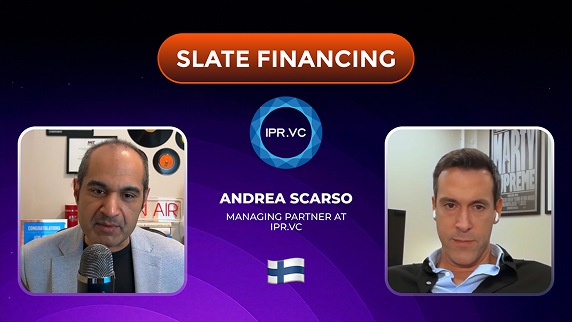
Andrea Scarso, Managing Partner of IPR VC—the Helsinki-founded equity financier that has backed A24, MK2, Red Bull Studios, and XYZ Films—describes the distinction clearly: “What we do with these companies, we call it Slate because we invest in more than one project. But again, it’s forming a strategic relationship, a strategic alliance so that we can collaboratively look at a number of projects over a period of time, knowing that it’s very binary, the results of these projects.”

That binary reality—projects either perform or they don’t, with limited middle ground—is exactly why the portfolio structure exists. Scarso puts it directly: “If you only put all the focus on the single project, you have to be either extremely lucky or extremely good at just picking that one project.”

IPR VC’s own portfolio includes work with A24 on projects like Marty Supreme—a film Scarso notes they could greenlight at a budget level that would have been too aggressive without the slate relationship: “They can take a bigger risk. They can finance something like Marty Supreme which maybe is at the budget level that a couple of years ago, they wouldn’t have done it.”

That’s the strategic value that PE capital genuinely adds to production company slates: not just the check, but the confidence to reach higher.

But here’s what most slate deal structures in 2026 don’t look like: the mid-2000s co-finance arrangements where a PE fund would write a large check to a studio for a proportional share of their entire release slate, accepting whatever came out. Those deals didn’t perform because they relied on studio accounting and had no mechanism for the PE partner to influence project selection, budget discipline, or distribution strategy.

Today’s PE slate deals are more selective, more relationship-driven, and structured with much clearer rights and controls. You can explore the full comparison between these approaches at single-purpose vs. slate equity structures.

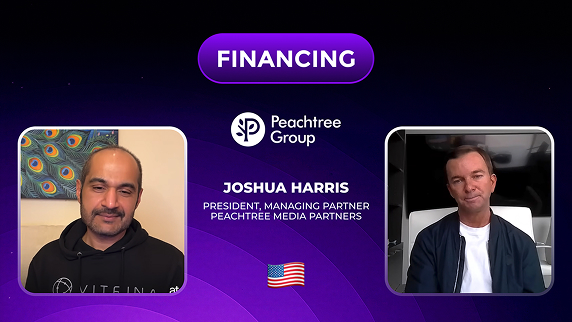
Joshua Harris, President & Managing Partner of Peachtree Media Partners, discusses how private capital is filling the void left by commercial bank retreat from Hollywood—and how collateral-based film lending works in practice.

Source: Vitrina LeaderSpeak Episode 66

Track Active Slate Financing Deals Across 400,000+ Projects Globally

Netflix, Warner Bros, and Paramount use Vitrina to navigate the global entertainment supply chain. Join 140,000+ companies tracking which PE firms are actively deploying into slates, which productions have capital gaps, and where new deal structures are forming.

✓ 200 free credits  |  ✓ No credit card required  |  ✓ Cancel anytime

Get 200 Free Credits

The Capital Stack in 2026: Debt, Equity, and the Leverage Advantage

The capital reality of film slate financing in 2026 is that the stack has gotten more sophisticated—and the leverage dynamics are increasingly attractive to institutional players who understand them. But the fundamentals haven’t changed: a film’s budget is assembled from multiple sources, each sitting in a different risk and return position, and the PE capital that enters that stack does so with specific expectations about where it sits and what it earns.

On a representative $10M independent feature, the stack typically looks like this today:

Typical 2026 Film Capital Stack — $10M Production

  • Tax incentives / soft money: 20% ($2M) — lowest risk, first to recoup
  • Pre-sales (MGs): 45% ($4.5M) — collateral for senior production loan
  • Gap financing: 15% ($1.5M) — mezzanine debt, senior to equity
  • Equity (PE / fund / private): 20% ($2M) — highest risk, highest potential return

What Peachtree’s model adds to this picture is a leverage wrinkle that most producers miss when they think about private capital entering the debt layer. Peachtree doesn’t ask its fund investors to cover the entire loan amount. Instead, as Harris explains, they borrow roughly 80 cents from their commercial bank partner against every dollar they deploy—so a $100M fund effectively spreads across approximately $500M worth of production. The commercial bank applies its own underwriting to every distribution agreement and tax incentive that Peachtree lends against, creating a second layer of due diligence. “Don’t trust me,” Harris tells investors. “Trust us plus our large commercial bank that is taking about zero risk on anything.”

This hybrid model is important because it changes the risk math for the fund’s investors. They’re not financing the full loan amount—they’re financing the margin above what a fully-collateralized commercial bank would lend. That’s a more aggressive position, but it’s also where the return premium lives. And because Peachtree’s sister company Gramercy Park Media is a production company, the lending entity has production-side visibility that a pure financial lender doesn’t have—closing information gaps that otherwise create risk.

On the equity side, the capital stack picture is different. Equity investors—whether PE funds, family offices, or institutional vehicles like IPR VC—sit at the back of the waterfall. They typically target 120-125% of principal as their base return (a 20-25% premium) but the upside scenarios on successful IP are substantially higher. That asymmetry—limited downside if the portfolio is well-constructed, significant upside on the hits—is why Scarso describes IPR VC’s model in explicit VC terms: “Some of the things that we do are in the VC spirit.” It’s a portfolio bet, not a single-project ROI calculation.

Recoupment Waterfall: Where PE Capital Sits and Why It Matters

The waterfall is where theory meets reality—and understanding your position in it is non-negotiable when negotiating with any private capital source. The standard recoupment order in a 2026 film deal runs:

  1. Distribution fees and sales agent commissions (20-35% of revenue off the top)
  2. P&A recoupment (marketing and release costs—often $3-5M+ for wide theatrical)
  3. Senior debt (bank production loans, first priority)
  4. Gap financing (mezzanine debt, repaid before equity)
  5. Tax credit / soft money recoupment
  6. Equity recoupment (PE, family office, private investors)
  7. Deferred fees and net profit participants

The practical implication: equity investors don’t see a dollar of return until everything above them in the waterfall is repaid. On a $10M film with $3M in P&A and distribution fees consuming another $1.5M off the top before costs, you need to generate $7-8M in gross revenue before equity participants recoup their principal—on a film that cost $10M to make. That’s the math that makes single-project equity investment genuinely high-risk and why the portfolio approach is the only rational institutional model.

Insiders recognize that the recoupment timeline adds another layer of complexity. Even on a successful theatrical release, the waterfall pays out over 18-36 months minimum—theatrical window, then home entertainment, then streaming licensing, then ancillary. Investors who need quarterly liquidity have no place in a film’s equity stack. But investors who understand the long-tail IP revenue model—and can build a portfolio where multiple revenue streams are flowing simultaneously—find the return profile attractive relative to the risk. The full mechanics of this are covered in our recoupment waterfall breakdown.

What’s shifted in 2026 is the increasing negotiating sophistication on the equity side. Institutional PE players are negotiating liquidation preferences, preferred returns, and distribution approval rights that weren’t standard in earlier cycles of film equity investment. They’ve learned from the mid-2000s deals. And producers who don’t understand what they’re agreeing to when they accept these terms often find that the upside they thought they were protecting has been materially narrowed by contractual provisions they signed in the term sheet.

Concierge Outreach

Find the Financiers Backing Your Genre

Stop searching and start getting funded. We identify the exact decision-makers currently backing projects like yours, turning raw data into risk-aligned capital partnerships.

Identifying financiers backing your budget & genre
Mapping incentive-driven financing ecosystems
Pairing projects with risk-aligned capital
Helping producers reach verified decision-makers

Sovereign Content Hubs: Where PE Capital Is Flowing Next

The most strategically significant development in film slate financing that most Hollywood-centric analyses miss: a meaningful portion of the private capital entering content production isn’t heading to Los Angeles. It’s flowing toward Sovereign Content Hubs™—the government-backed production centers in MENA and APAC that have restructured the economics of content production at scale.

Saudi Arabia’s Vision 2030 has committed $71.2B to the entertainment sector overall, with over $4B specifically designated for film infrastructure. That’s not marketing—it’s deployed capital: 17 operational studios, Film AlUla’s purpose-built production complex, a 40% cash rebate on qualifying spend, and combined film fund capital of $200M through the Saudi Film Fund and Riviera Content Fund. The UAE offers up to 50% cash rebate in Abu Dhabi, with free zone structures delivering zero corporate tax for 50 years on qualified projects.

For PE capital, the Sovereign Hub model addresses the single biggest risk in film investment: policy uncertainty. These aren’t cyclical government programs subject to annual budget review. They’re 10-30 year strategic commitments backed by sovereign wealth funds with trillion-dollar balance sheets. Government backing reduces completion risk, infrastructure investment is guaranteed, and the incentive regimes are more stable than anything available in traditional Western production markets.

The investment thesis has a demographic dimension, too. Saudi Arabia’s population is more than 60% under 30—a market building a theatrical and streaming culture from scratch, with strong government-mandated content quotas driving domestic demand. That’s not the profile of a mature, saturated market. It’s the profile of a growth market for IP. Private equity capital that understands this is positioning now, before the majority of global institutional players have recalibrated their geographic models. As reported by Deadline, several major international studios have formalized co-financing relationships with Saudi production entities in the past 24 months—a trend that was nearly nonexistent before 2022.

But—and this is where the Fragmentation Paradox™ becomes acutely relevant—the Sovereign Hub opportunity creates a data problem for investors. 600,000+ companies now operate in the global film and TV ecosystem. Sovereign Hubs have added thousands more, across geographies with no standardized reporting. Infrastructure status, crew availability, deal activity, incentive eligibility—this intelligence is scattered, delayed, or locked inside relationship networks that new entrants simply don’t have. The investors moving fastest are those with real-time capability mapping, not those relying on annual market reports or word-of-mouth from the last industry event.

What Private Equity Investors Actually Want From a Slate

Strip away the pitch deck language and the conversation becomes fairly direct. PE investors entering film slate financing in 2026 want a specific set of conditions, and slates that don’t meet them don’t get funded—regardless of how good the individual projects are. Here’s what actually drives capital commitment decisions.

Portfolio construction logic. Institutional investors think in portfolios, not projects. A slate of seven action-thriller features from the same director targeting the same audience segment isn’t a portfolio—it’s concentrated exposure. PE capital wants diversification across genre, budget level, talent package, and distribution window. The portfolio that gets funded is the one that demonstrates conscious risk architecture, not creative enthusiasm for a single type of content.

Incentive stack optimization. As Andrea Scarso of IPR VC notes, co-production structures in incentive-rich territories have become “crucially more important” as a way to keep production values high while managing downside risk. PE investors increasingly expect producers to have already modeled the incentive stack—soft money as a percentage of budget, tax credit confirmation letters in hand, co-production treaty qualification assessed. Coming to a capital conversation without this done signals financial naivety that sophisticated investors read as risk. The full guide to global film financing covers incentive stacking strategy in depth.

Distribution strategy clarity. What’s the path to recoupment? Which territories are presold, at what MG levels? What’s the domestic distribution plan—theatrical, streaming direct, hybrid? PE investors in 2026 are acutely aware of the streaming market’s maturation; the “sell to Netflix for a global deal” exit that felt reliable in 2021 is no longer the default assumption. They want to see a realistic, diversified distribution strategy that doesn’t depend on a single buyer saying yes.

Track record of the management team. Not creative track record—financial track record. Can the producer demonstrate they’ve managed investor relationships cleanly, delivered on time and budget, and navigated the waterfall fairly on prior projects? The capital that matters in this space is relationship-driven. Peachtree’s Harris is direct: his fund raises from “private capital and family offices that are constantly knocking on our doors”—but that trust was built over 350+ films and more than $1B in pictures over a 26-year career. First-time relationships take longer to establish and require more documentation to substitute for reputation.

IP retention strategy. Scarso articulates the upside thesis clearly: “When you hit a successful IP, the upside can be greater than the overall risk you’re taking on a portfolio.” But that upside only exists if the IP is structured to capture it. Slates that sell worldwide rights on all projects before completion—leaving nothing on the table for post-delivery upside—don’t offer the return profile PE capital is looking for. Strategic decisions about which territories to presell versus hold are as important to investor pitch conversations as the creative slate itself. See IP ownership versus profit participation for how to structure this correctly.

Need a Direct Introduction to PE Firms and Private Lenders Active in Film Slate Financing?

Vitrina’s concierge team connects producers and studios with the right capital partner—matched by slate profile, budget range, and current deployment appetite. Used by Oscar-nominated and Emmy-nominated production companies across 100+ countries.

Explore Concierge Service

How to Position Your Slate for PE or Private Capital

The actual mechanics of approaching PE and private lending capital in 2026 are more standardized than most producers expect—and the standards are higher than they were before the 2023 strikes and subsequent market consolidation. Here’s what the preparation actually requires.

Build the Financial Package First

The creative package—scripts, talent attachments, director—isn’t what PE investors evaluate first. They evaluate the financial package: the budget, the confirmed and projected financing by source, the presale status, the incentive eligibility documentation, and the distribution strategy by territory. Showing up with a brilliant creative slate but an unmodeled capital stack is not a fundable position. Get the financing plan built to 60-70% confirmed sources before initiating conversations with PE lenders. Below that threshold, you’re not pitching a film investment—you’re pitching a speculative development project.

Understand Whether You Need Debt or Equity

The distinction matters—both for how you structure the conversation and what you’re actually giving up. Debt against confirmed collateral (presales, tax credits) is less dilutive and doesn’t touch your IP ownership or long-term backend. But it requires confirmed collateral in hand. Equity doesn’t require collateral, but it costs you ownership and sits behind everything else in the waterfall. The hybrid models—like Peachtree’s leveraged lending approach—offer a middle path but come with their own structure requirements. Know which you need before you walk into a room with a capital partner. The guide to hedge fund and modern private finance in film maps the landscape of current capital types in detail.

Surface Incentive Stacking Opportunities Early

Don’t wait until you’re in production to optimize the incentive stack. The most attractive slates for PE capital are those where the soft money component is already confirmed—reducing effective budget by 20-40% before private capital is even needed. That compression of effective budget improves PE return metrics materially. For projects with international components, co-production treaty qualification can stack multiple incentive programs and simultaneously create broadcaster pre-buy access in co-producing territories. Model this at development stage, not during financing.

Find the Right Capital Partner Before the Relationship Is Needed

What’s actually happening in film slate financing is relationship-gated, and the relationships that produce capital commitment are built before a specific project is on the table. But the Fragmentation Paradox™ means that identifying which PE firms and private lenders are actively deploying capital, in what budget ranges, with what structural preferences, is genuinely difficult without live intelligence. By the time a capital commitment appears in Variety or The Hollywood Reporter, the conversation started six to nine months earlier. The producers and studio executives who surface these opportunities first are those working from current deal flow data—not from last season’s markets. As reported by Variety, the acceleration of PE-to-Hollywood relationships in 2025-2026 has been most visible in mid-budget genre production, where private capital has effectively replaced studio specialty division financing that evaporated post-2022.

FAQ: Film Slate Financing in 2026

What is film slate financing and how does it differ from single-project investment?
Film slate financing is the deployment of capital across a portfolio of projects with a single producer or production company, rather than funding individual films. The portfolio approach is the investment thesis—not just risk diversification. Because film results are binary (a project either performs or it doesn’t), institutional investors use the slate structure to replicate the portfolio dynamics of VC or private equity: the hits cover the misses, and the overall fund achieves returns across the portfolio rather than betting on any single outcome.
Why are private equity firms entering film financing now, in 2026?
Two structural forces converged. First, commercial banks—most notably City National after its merger with Royal Bank of Canada—retrenched from specialist entertainment lending, creating a significant capital gap in the mid-market. Second, content demand has never been higher: streaming platforms require constant inventory to retain subscriber bases, and the supply of institutional capital to fund that production hasn’t kept pace. Private capital moved into the gap because the risk/return mathematics—particularly in collateralized lending positions against presales and tax incentives—are attractive relative to other alternative asset classes.
What’s the difference between film equity financing and film debt financing from a PE perspective?
Equity sits at the back of the recoupment waterfall—it only pays out after distribution fees, P&A, senior debt, gap debt, and tax credits are repaid. It carries the highest risk but also the highest potential return, particularly if the IP generates long-tail revenue. Debt—whether senior production loans or gap/mezzanine positions—is collateralized, sits ahead of equity in the waterfall, and has a fixed repayment obligation regardless of film performance. Private lending vehicles like Peachtree operate in the debt layer; equity vehicles like IPR VC operate in the equity layer. Both are “private capital” but they’re taking fundamentally different positions in the same capital stack.
What return does private equity typically target in film slate deals?
On the equity side, institutional investors typically target 120-125% of principal as a base recoupment target—a 20-25% premium—before net profit participation. Successful IP with strong licensing and distribution can generate significantly higher multiples over the long tail. Debt-side investors (gap lenders, private production lenders) target 8-15% annual return plus origination fees, with the premium over commercial bank lending reflecting the additional collateral risk they’re taking. Hybrid vehicles that use commercial back-leverage—like Peachtree’s model—can amplify effective returns on the private capital component substantially.
How are Sovereign Content Hubs changing PE investment in film?
Sovereign Content Hubs—Saudi Arabia, UAE, South Korea, India, and others with government-backed production infrastructure—offer PE investors a risk profile that differs materially from Hollywood investments. Government backing provides policy stability and completion infrastructure guarantees. Incentive rates of 40-50% cash rebate effectively compress effective production budget, improving IRR on capital deployed. And the demographic growth dynamics in these markets—Saudi Arabia is more than 60% under 30, building a theatrical culture from scratch—offer a long-term IP value proposition that mature Western markets don’t. Institutional capital that understands this is repositioning accordingly.
What does a PE investor actually look at when evaluating a film slate?
In order of priority: (1) portfolio construction logic—genre, budget, and audience diversification; (2) the financial package, including confirmed financing sources, incentive documentation, and presale status; (3) the distribution strategy by territory and its plausibility without a single-buyer exit dependency; (4) the financial track record of the producer, not just the creative track record; and (5) IP retention structure and the upside available to capital partners post-recoupment. Creative credentials matter, but institutional capital evaluates the financial architecture first. Slates that haven’t been built with investor alignment in mind from the start—not retrofitted after development—are materially harder to fund.
How much of a film’s budget should typically be secured before approaching PE capital?
For collateralized debt (gap financing, private production lending), the standard threshold is 60-80% of budget confirmed before a lender will engage seriously. Lenders need to assess the remaining gap against confirmed collateral—unsold territories, future distribution value—which requires knowing what’s already locked. For equity capital, the threshold is more flexible, but arriving with less than 40-50% of budget confirmed from other sources signals that the project hasn’t been adequately packaged. The strongest slate presentations have soft money (tax incentives) confirmed, at least one territory presale in hand, and a clear co-production or distribution strategy for major territories.
How do I find PE firms or private lenders actively deploying into film slates right now?
The real challenge is that most active capital deployment happens before it’s publicly visible. By the time a PE commitment appears in a trade announcement, the relationship was established months earlier. The producers who access this capital efficiently are those working from live deal flow intelligence—knowing which firms are actively deploying, in what budget ranges, with what structural preferences, before the conversation is competitive. Vitrina tracks 400,000+ projects and 140,000+ companies in real time, including financing activity across independent productions, to surface these opportunities before they’re broadly visible.

The Bottom Line on Film Slate Financing in 2026

Private equity’s relationship with Hollywood has matured significantly from the undifferentiated studio co-finance deals of the 2000s. Today’s capital is more sophisticated, more specific in what it requires, and—when structured correctly—more aligned with what producers actually need: strategic partnerships that de-risk the downside while preserving meaningful upside on successful IP.

But the environment is more demanding, too. The commercial bank retreat has concentrated the supply of reliable entertainment capital among a smaller group of specialist vehicles. The Sovereign Content Hub opportunity is real and growing—but navigating it requires intelligence that relationship networks alone can’t provide. And the competition for the best PE relationships starts well before any deal is formally in process.

Key Takeaways:

  • Commercial banks have retrenched: City National’s strategic shift and the broader retreat of institutional lenders from entertainment created the vacuum that private capital is now filling—and that dynamic is structural, not cyclical.
  • Equity vs. debt is a real choice: Your position in the waterfall determines what you pay, what you give up, and what timeline you’re on. Know the difference before you’re negotiating the term sheet.
  • Incentive stacking is non-negotiable: PE investors in 2026 expect confirmed soft money to be modeled into the budget before the capital conversation starts—not treated as a bonus after financing closes.
  • Sovereign Content Hubs are a live opportunity: Saudi Arabia, UAE, and APAC hubs offer government-backed capital stability and 40-50% incentive rates that compress effective budget and improve PE return metrics. This is where early-mover advantage is meaningful.
  • Relationships start before deals: The capital commitments that matter in slate financing are built through sustained engagement, not single pitches. Surface the right partners early—before your project is competing for attention in a crowded market.

Track Active PE and Private Capital Deployment in Film—Before It Hits the Trades

Netflix, Warner Bros, Paramount, and Google TV use Vitrina to navigate the global entertainment supply chain. Join 140,000+ companies and get 200 free credits to track who’s deploying capital into film slates right now—no credit card required.


Find Film+TV Projects, Partners, and Deals – Fast.

VIQI matches you with the right financiers, producers, streamers, and buyers – globally.

Producers Seeking Financing & Partnerships?

Book Your Free Concierge Outreach Consultation

(To know more about Vitrina Concierge Outreach Solutions click here)

Producers Seeking Financing, Co-Pros, or Pre-Buys?

Vitrina Concierge helps producers reach the right financiers, commissioners, distributors, and co-production partners — with precision outreach, not cold pitching.

Real-Time Intelligence for the Global Film & TV Ecosystem

Vitrina helps studios, streamers, vendors, and financiers track projects, deals, people, and partners—worldwide.

  • Spot in-development and in-production projects early
  • Assess companies with verified profiles and past work

  • Track trends in content, co-pros, and licensing
  • Find key execs, dealmakers, and decision-makers

Who’s Using Vitrina — and How

From studios and streamers to distributors and vendors, see how the industry’s smartest teams use Vitrina to stay ahead.

Find Projects. Secure Partners. Pitch Smart.

  • Track early-stage film & TV projects globally
  • Identify co-producers, financiers, and distributors
  • Use People Intel to outreach decision-makers

Target the Right Projects—Before the Market Does!

  • Spot pre- and post-stage productions across 100+ countries

  • Filter by genre and territory to find relevant leads
  • Outreach to producers, post heads, and studio teams

Uncover Earliest Slate Intel for Competition.

  • Monitor competitor slates, deals, and alliances in real time
  • Track who’s developing what, where, and with whom
  • Receive monthly briefings on trends and strategic shifts