About Innovation Hub
 Global Content Pulse (Webinars)


 Global Production Financing
(Webinars)
Global Production Financing
(Webinars)  LeaderSpeak Podcast
  Global Entertainment Digest (Newsletter)
  About Vitrina
 About VIQI
 Our Story
 Our Solutions 🔥
 Film+TV Projects Tracker 🚀
 Case Studies
 Our Profile
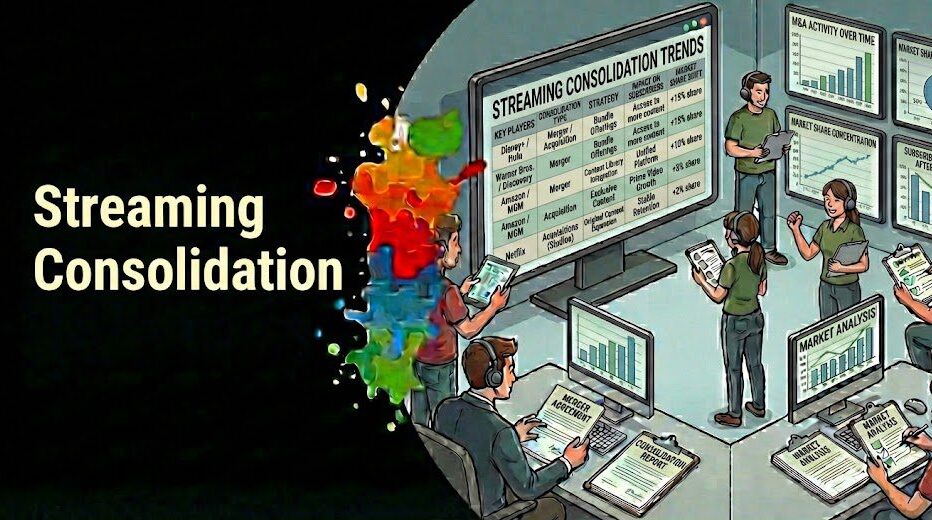
Streaming consolidation is the centralization of content buying power into fewer, larger platforms—a move that has slashed independent production budgets and reduced the number of available licensing “windows.”
As of early 2026, the market is characterized by a retreat from global licensing and a shift toward in-house studio production. For independent producers, this means “walled gardens” are replacing open markets, making strategic co-production and niche genre focus essential for survival.
Let’s be real: the gold rush is over. The “peak TV” era where platforms bought everything in sight to drive subscriber numbers has been replaced by “content austerity.” With the December 2025 Netflix-Warner Bros.
Discovery merger reshaping the entire ecosystem, the buyer pool hasn’t just shrunk—it’s practically solidified. If you’re an independent producer, you aren’t just fighting for eyeballs anymore; you’re fighting for a seat at a table that only has three or four chairs left.
In this guide:
The Vitrina Buyer Chokehold Index™
Behind closed doors, the real dynamic isn’t about “quality”—it’s about leverage. We’ve developed the Vitrina Buyer Chokehold Index™ to measure how consolidated a specific genre or territory has become. When the index is high, producers lose the ability to play buyers against each other for price concessions.
Framework: The Buyer Chokehold Index™
| Consolidation Level | Market Reality | Indie Impact |
|---|---|---|
| Level 1: Fragmented | 10+ Active Buyers | High leverage; healthy bidding wars. |
| Level 2: Strategic | 5-7 Active Buyers | Moderate leverage; niche content thrives. |
| Level 3: Duopoly | 2-3 Dominant Buyers | Low leverage; buyers set terms (Take-it-or-leave-it). |
Strategic players understand that in 2026, most major markets have hit Level 3 due to intensive streaming consolidation.
How 2025 M&A Reshaped Indie Funding
The capital reality is that every merger removes a potential “Yes” from your list. In 2024, if Netflix passed, you could go to Warner Bros. In 2026, after the $82.7 billion deal that saw Netflix absorb WBD’s studios and streaming units, those two doors have become one. Now, if the combined entity passes, you’ve lost a massive chunk of the global licensing market in a single meeting.
But it’s not just about fewer buyers. It’s about Weaponized Distribution™. Platforms are increasingly using their libraries to protect margins rather than licensing them out to competitors. When Disney took full control of Hulu in early 2025, it signaled the end of “content-sharing alliances” that once provided indies with multiple windows. Now, if you sell to a major streamer, they want the rights for every territory, every platform, and every window—forever. (And that’s being generous with the “negotiation” part.)
Producers looking to navigate this new landscape can explore current distribution partners on Vitrina to find remaining independent buyers who still value third-party acquisitions.
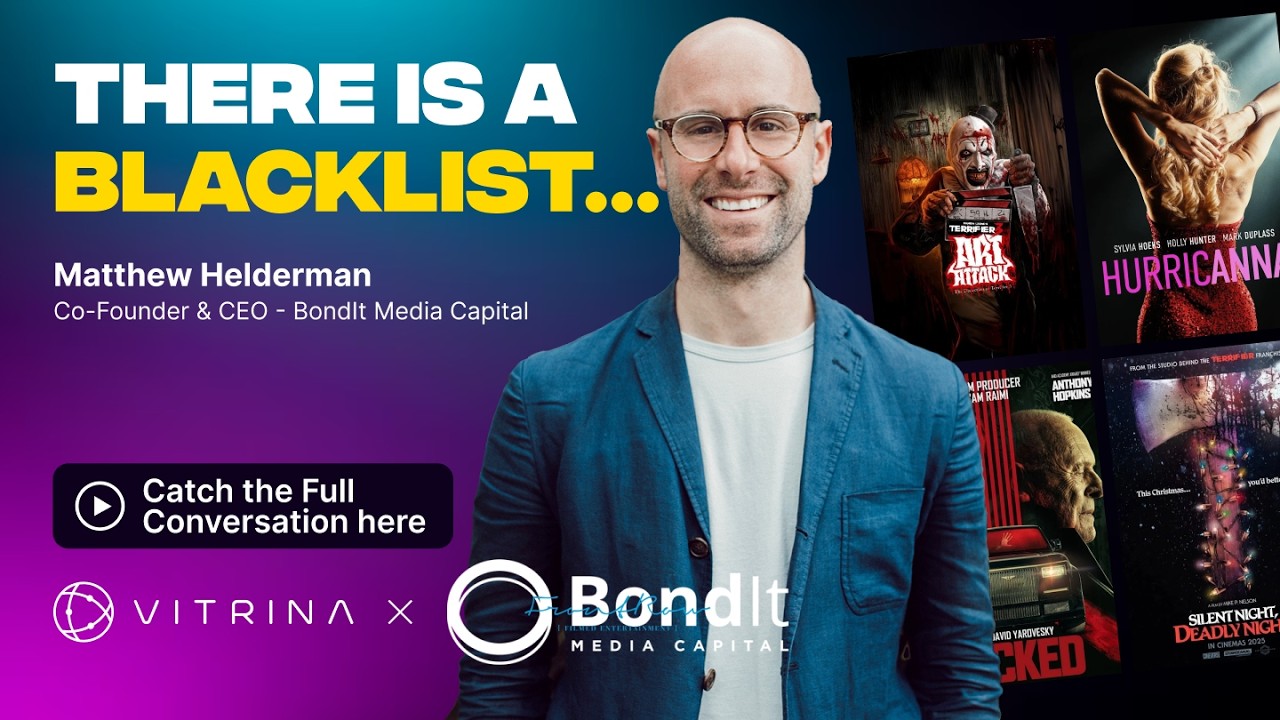
Matthew Helderman, CEO of BondIt Media Capital, discusses the shift in media finance:
Surviving the “Walled Garden” Era: 3 Strategic Moves
What the trades don’t report is how quickly “cost-plus” deals are disappearing. Platforms are moving toward in-house production to control IP and costs. So, how do you stay un-financeable? You don’t. You pivot. Here’s what we’re seeing work in the current streaming consolidation climate:
1. De-Risk Through Sovereign Content Hubs™
Look, if the streamers are cutting budgets, you need to find the money elsewhere. Sovereign Content Hubs™ like Saudi Arabia (with its 40% rebate) or UAE are stepping in to fill the gap. By layering regional incentives with traditional production financing, you can reduce your effective budget to a level where streamers can’t afford to say no.
2. Focus on Niche “Sticky” Content
Quality content matters, but “sticky” content matters more for retention. Major platforms are prioritizing “super-fan” niches over broad blockbusters. According to BDO’s 2025 outlook, streamers are concentrating on cost efficiency and better monetizing their base. If your project has a built-in audience—think horror or hyper-local drama—you have more leverage than a generic high-budget thriller.
3. The Rise of “Co-Exclusive” Licensing
It sounds like a contradiction, but it’s happening. As growth slows, even the giants are becoming open to selling movies to multiple buyers simultaneously for the “pay-one” window. This “garden wall cracking” (as SymphonyAI calls it) allows producers to piece together financing from multiple broadcasters and streamers rather than relying on one big check. It’s more paperwork—a lot more—but it protects your margin.
“The industry is reorganizing under a harsher premise: fewer buyers, fewer viable windows, and less tolerance for anything that doesn’t behave like a franchise asset.” — Industry Analyst Insight, 2025.
Want to know which lenders are still active in the mid-market? Ask VIQI, our AI research assistant, for a list of active financiers by territory.
How Vitrina Helps Navigate Streaming Consolidation
Finding the right buyer isn’t just about who has the most money—it’s about who actually has an acquisition budget left for 2026. Vitrina’s supply chain intelligence maps the shifting relationships and “walled gardens” created by recent M&A.
- Identify Active Buyers: Filter 140+ lenders and thousands of distributors by recent deal activity.
- Map Distribution Rights: See which platforms are “locking in” libraries and where windows are still open.
- Connect Directly: Use our concierge service to get introduced to partners who fit your project’s specific budget and genre.
Frequently Asked Questions
Does streaming consolidation mean the end of independent film?
No, but it means the end of the “easy” sale. Producers must now be more financially sophisticated, using co-production treaties and regional incentives to cover more of the budget before approaching streamers. The “middle market” is being squeezed, but specialty films (like A24 or Mubi titles) are actually seeing increased critical and box office success.
How does the Netflix-WBD merger affect my existing licensing deals?
As of Q1 2026, many existing second-window licenses are being reviewed for “portfolio rationalization.” If your content is on HBO Max, it’s now part of the Netflix ecosystem. This consolidation often leads to lower license renewals as the combined entity has less need to buy outside volume to fill its “walled garden.”
Are streaming platforms still buying independent content in 2026?
Yes, but they’re pivoting from quantity to quality. Major streamers have reduced production of original programming, opting instead for “strategic content acquisitions” of proven or high-quality films. They want the “A-list” or the “sticky niche,” not the generic filler that dominated 2020-2022.
What is “Weaponized Distribution™” in the context of M&A?
This Vitrina concept refers to the strategic use of a platform’s massive library to deny competitors access to popular content. By consolidating WBD and Paramount libraries, giants like Netflix or Disney can effectively starve smaller platforms of the “library fuel” needed to keep subscribers from churning.
The Bottom Line
Streaming consolidation is a structural recalibration, not a temporary dip. As fewer buyers control more of the premium inventory, your leverage as an independent depends on two things: the uniqueness of your IP and the efficiency of your financing. The producers who thrive in 2026 will be the ones who treat distribution as a strategic alliance, not just a sale.
Ready to de-risk your next project? Connect with our Concierge team to find the partners still playing the independent game.
Find Film+TV Projects, Partners, and Deals – Fast.
VIQI matches you with the right financiers, producers, streamers, and buyers – globally.
Producers Seeking Financing, Co-Pros, or Pre-Buys?
Vitrina Concierge helps producers reach the right financiers, commissioners, distributors, and co-production partners — with precision outreach, not cold pitching.
Join Industry Briefings Trusted by Leaders

Micro-Dramas & Mobile-First Storytelling
Micro-dramas are building real audiences and revenue. Understand the platforms, buyers, and economics behind the growth.

Navigating Global Content Licensing Trends
How global content licensing is shifting beyond flat fees to flexible, deal-driven models.
Film & TV Production Financing: 2026 Trends
Production financing conditions are changing quickly. Understanding where money is moving and what buyers are backing is key to getting projects approved and funded in 2026.
Unreleased Film+TV Projects: Opportunities & Showcase
A curated view of unreleased Film and TV projects open for financing and collaboration