About Innovation Hub
 Global Content Pulse (Webinars)


 Global Production Financing
(Webinars)
Global Production Financing
(Webinars)  LeaderSpeak Podcast
  Global Entertainment Digest (Newsletter)
  About Vitrina
 About VIQI
 Our Story
 Our Solutions 🔥
 Film+TV Projects Tracker 🚀
 Case Studies
 Our Profile

Vertical video isn’t just for influencers anymore—it’s a billion-dollar drama industry. To fund short-form series content in 2025, you have to look beyond the traditional studio system. The reality? Funding for microdramas and vertical series comes from a mix of platform-direct investment, digital tax incentives, brand integration, and private “micro-slates.”
The primary way to fund short-form series today is through platform-backed content funds (like those from ReelShort or DramaBox) which offer upfront production capital in exchange for exclusive platform rights. Additionally, producers are leveraging regional digital tax credits and shoppable brand integrations to cover 40-60% of their production spend before the first episode even airs.
With the explosion of “snackable” content, the supply chain has fragmented. We’re no longer talking about $2M pilots; we’re talking about $150K seasons delivered in 100 sixty-second bursts. Here’s how strategic players are actually securing capital in this high-velocity market.
Quick Navigation
Stop Guessing Who’s Financing. Get Targeted Outreach.
Stop searching and start getting funded. We identify the exact decision-makers currently backing projects like yours, turning raw data into risk-aligned capital partnerships.
Major Studios
Scouting early stage projects, IP, and Regional partners for global studio pipelines.
IP Owners & Leads
Connecting creative leads with qualified financiers and major streaming platforms.
Streamers
Securing high-value pre-buy content and discovering early-stage global IP for platforms.
Indie Producers
Bridging the gap for indie filmmakers to reach executive production partners and capital.
Global Financing Ecosystems
Mapping complex markets and pairing projects with disciplined, risk-aligned capital across global territories worldwide.
How Much Does It Actually Cost to Fund a Short-Form Series?
The math for vertical microdrama is brutal but efficient. Unlike traditional TV, you’re looking at “cost-per-minute” rather than “cost-per-episode.” A high-quality microdrama—think professional cast, multiple locations, and decent post-production—typically costs between $1,500 and $4,000 per minute of finished content.
For a standard 100-episode season (each episode being 60-90 seconds), your total funding requirement sits between $150,000 and $400,000. That’s a fraction of a standard Netflix half-hour, but the volume is what creates the risk. Producers often need to ask VIQI about regional spend requirements to see where that capital can be stretched further.
“The economics of vertical drama are about high-speed recoupment. You aren’t waiting for a distribution window; you’re waiting for the next 48 hours of user acquisition data.” — Vitrina Supply Chain Analysis.
1. Platform-Direct Investment (The “Content Fund” Model)
The most direct way to fund short-form series is through the platforms themselves. Companies like ReelShort, DramaBox, and ShortMax are aggressively deploying capital to secure exclusive IP. They don’t just host your content; they often function as the bank.
Here’s the real dynamic: Platforms often offer “Production Advances” that cover the entire budget. The catch? You usually surrender the majority of the IP rights or accept a lower revenue share. It’s essentially a work-for-hire model with a potential upside if the series goes viral.
Phil Hunt, CEO of Head Gear Films, discusses the shift in digital asset financing:

2. Leveraging Digital Tax Credits
Can you use traditional tax incentives for a web series? Absolutely—but only if you structure it right. Many regional bodies in the UK, Australia, and the UAE have updated their tax incentive frameworks to include “digital platform” content.
For example, the Saudi Film Commission’s 40% rebate is remarkably flexible. If your short-form series meets the local spend and cultural criteria, you can de-risk nearly half your budget. The trick is aggregating your series episodes into a single “season” to meet the minimum spend thresholds (often around $200K-$500K depending on the jurisdiction).
The Vitrina Microdrama Monetization Matrix™
Choosing your funding route based on IP retention:
| Model | Funding Source | IP Retention |
|---|---|---|
| Platform Buyout | 100% Upfront Advance | 0-10% (Low) |
| Hybrid Co-Pro | Platform + Tax Credit | 40-50% (Medium) |
| Self-Funded / Brand | Private Equity / Brands | 90-100% (High) |
3. Shoppable Content & Brand Integration
What the trades don’t always report is how much “brand money” is flowing into short-form drama. Unlike a 2-hour feature where product placement feels forced, microdramas are often designed around lifestyle and fashion. In 2025, shoppable video is a massive funding lever.
Brands aren’t just buying ads; they’re commissioning entire series. If you’re looking to find production partners on Vitrina, look for those with established “Branded Content” wings. Funding here often comes from marketing budgets rather than entertainment budgets, which move faster and have different KPIs.
4. Private Equity & “Micro-Slates”
We’re seeing a new class of investors who aren’t interested in a single $10M movie but are very interested in a $1M “micro-slate” of five short-form series. This de-risks their investment thesis. If one series flops, the other four might viralize and carry the portfolio.
Strategic players understand that gap financing isn’t common for microdrama yet—but private debt for slates is. Look for “Media Capital” firms that specialize in high-volume digital production rather than traditional film banks.
Find the Financiers Backing Your Genre
Stop searching and start getting funded. We identify the exact decision-makers currently backing projects like yours, turning raw data into risk-aligned capital partnerships.
How Vitrina Helps You Fund Short-Form Series
The microdrama market is incredibly opaque. Finding which platforms are actively buying in which territories is a full-time job. Vitrina simplifies this by mapping the global supply chain, from vertical video platforms to the production companies that serve them.
- Search 450,000+ companies to find studios experienced in short-form delivery.
- Ask VIQI about latest microdrama platform requirements and territory appetites.
- Contact Concierge to build a verified list of short-form investors and production partners.
Frequently Asked Questions
How much does it cost to produce a vertical drama?
Professional microdramas typically cost between $1,500 and $4,000 per finished minute. A 100-episode season usually requires a budget between $150,000 and $400,000, depending on location and cast attachments.
Can I get tax incentives for a short-form series?
Yes. While “web series” used to be excluded, many regions (like Australia, the UK, and Saudi Arabia) now allow digital-first content to qualify, provided you bundle episodes into a season that meets the minimum spend thresholds.
Do platforms pay upfront or on revenue share?
It depends on the deal. “Platform Originals” often get an upfront production advance (buyout), while licensed content usually follows a revenue-share model based on user coins spent per episode.
The Bottom Line
To fund short-form series content today, you have to be as much of a data scientist as a producer. The money is there—but it flows toward projects that understand vertical-first storytelling and rapid monetization. Don’t wait for a traditional greenlight; the digital supply chain is already moving.
Find Film+TV Projects, Partners, and Deals – Fast.
VIQI matches you with the right financiers, producers, streamers, and buyers – globally.
Producers Seeking Financing & Partnerships?
Book Your Free Concierge Outreach Consultation
(To know more about Vitrina Concierge Outreach Solutions click here)
Join Industry Briefings Trusted by Leaders
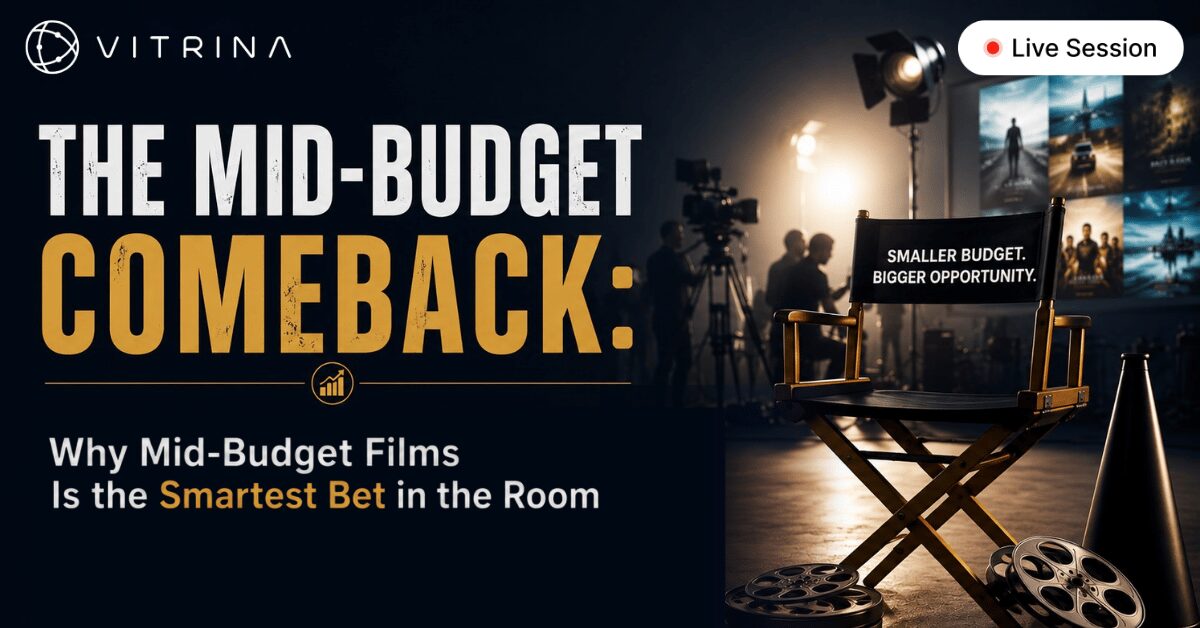
The Mid-Budget Comeback: Why Mid-Budget Films Is the Smartest Bet in the Room
Mid-budget films are attracting new capital. See why this segment is becoming one of the strongest bets in Film today.
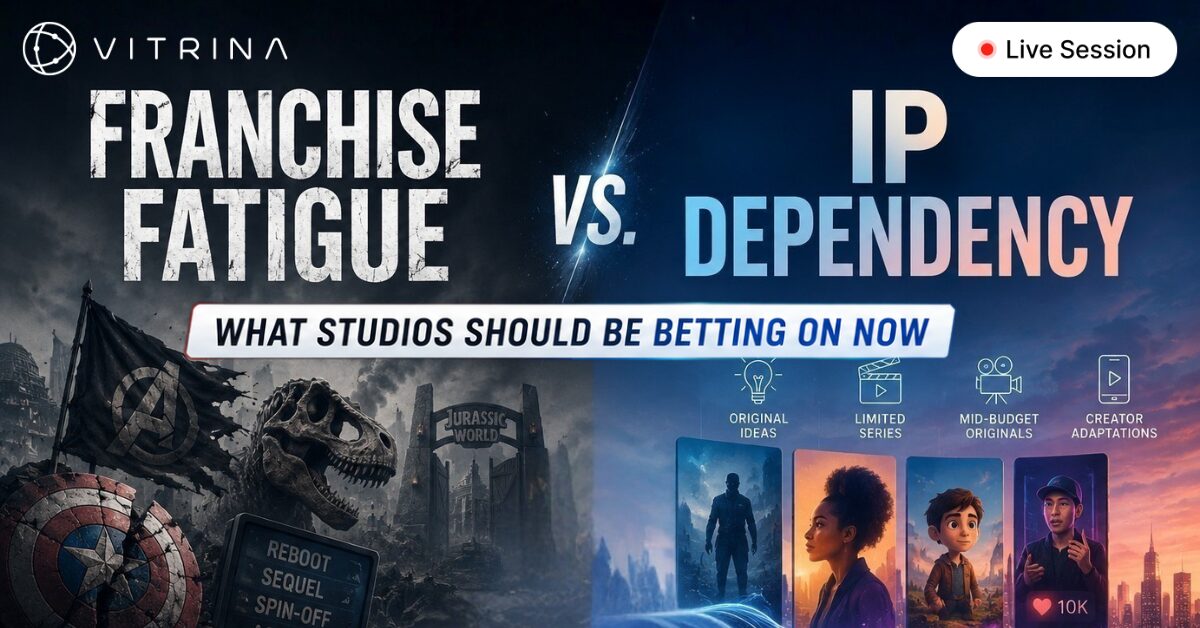
Franchise Fatigue vs. IP Dependency: What Studios Should Be Betting On Now
s franchise performance softens, where will the next generation of valuable IP come from? Join the briefing.
Unscripted Is Eating the World: The Multi-Billion Reality and Format Boom
Unscripted is the new prestige — inside the $19.8B global format boom reshaping how streaming platforms compete.
How Co-Productions and Regional IP Are Reshaping Global Drama
As global drama evolves, which stories travel, which stay local, and how are they getting financed?