IHUB
IHUB
 Private Briefings (Webinars)


 LeaderSpeak Podcast
  Global Entertainment Digest (Newsletter)
  About Vitrina
 About VIQI
 Our Story
 Our Solutions 🔥
 Film+TV Projects Tracker 🚀
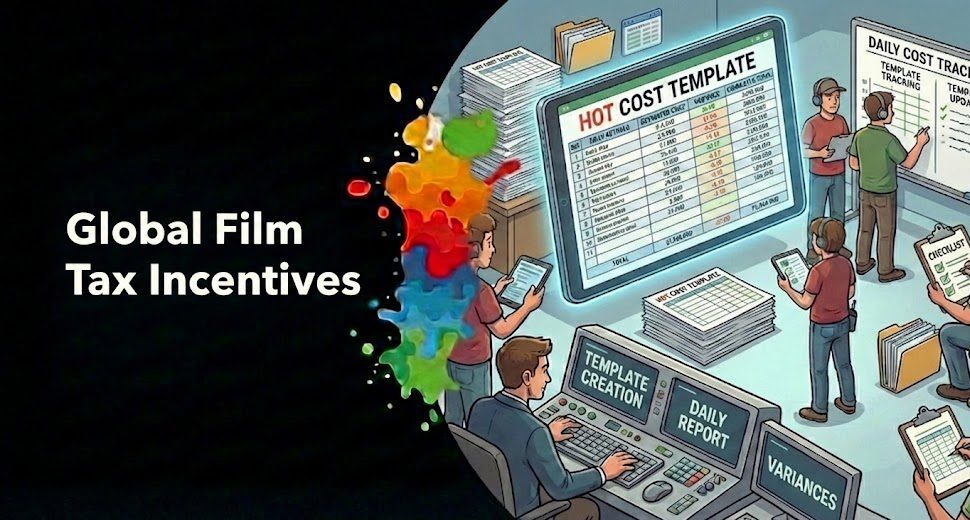
Global film tax incentives are no longer just “budget sweeteners”—they’re the foundation of the modern capital stack.
In 2026, the landscape has shifted from simple tax relief to sophisticated expenditure credits and sovereign rebates that can cover up to 50% of your production spend. Navigating this requires more than a list of rates; it demands a strategic “stackability” mindset to de-risk your investment before the first frame is shot.
If you’re still budgeting based on 2023 rules, you’re likely leaving millions on the table. Between the UK’s final AVEC transition and California doubling its credit cap to $750 million, the math of independent film has fundamentally changed. Here’s what’s actually happening behind closed doors in film finance rooms this year.
Table of Contents
Stop Guessing Who’s Financing. Get Targeted Outreach.
Stop searching and start getting funded. We identify the exact decision-makers currently backing projects like yours, turning raw data into risk-aligned capital partnerships.
Major Studios
Scouting early stage projects, IP, and Regional partners for global studio pipelines.
IP Owners & Leads
Connecting creative leads with qualified financiers and major streaming platforms.
Streamers
Securing high-value pre-buy content and discovering early-stage global IP for platforms.
Indie Producers
Bridging the gap for indie filmmakers to reach executive production partners and capital.
Global Financing Ecosystems
Mapping complex markets and pairing projects with disciplined, risk-aligned capital across global territories worldwide.
The 2026 Incentive Landscape: A Structural Reset
The competition for “Sovereign Content Hub™” status has reached a fever pitch. Jurisdictions aren’t just fighting for local jobs anymore—they’re fighting to anchor global supply chains. For producers, this means more options, but also more complexity in how international filming impacts your net production budget.
Look at the UK. As of April 2026, the legacy Film Tax Relief (FTR) is officially dead, fully replaced by the Audio-Visual Expenditure Credit (AVEC). It’s a cleaner, faster system that treats independent films under £15 million with a staggering 39.75% net credit. For high-end TV and blockbusters, the biggest win is the removal of the 80% cap on VFX costs. You can now claim relief on every single pound of UK VFX spend, making it the undisputed global hub for post-production.
Across the pond, top 10 film tax incentives in 2026 include a revitalized California and an uncapped Georgia. Meanwhile, MENA regions like Saudi Arabia and Abu Dhabi are deployable cash rebates reaching 40-50% for projects that meet local talent quotas. The capital reality? You aren’t just choosing a location; you’re choosing a financial partner.
Phil Hunt, CEO of Head Gear Films, explains why the finance landscape has shifted:

The Vitrina Incentive Stackability Matrix™
Strategic players understand that a single incentive is rarely enough. The goal is “stackability”—layering provincial, federal, and regional uplifts to compress your net spend. We’ve mapped this in the Vitrina Incentive Stackability Matrix™.
The Vitrina Incentive Stackability Matrix™
| Jurisdiction | Primary Rate | Typical Uplifts | Max Net Stack |
|---|---|---|---|
| United Kingdom | 25.5% (AVEC) | VFX Uplift, IFTC | 39.75% |
| Australia | 30% (Location) | Regional 10-15% | 45% |
| Canada (BC) | 35% (Provincial) | 16% Federal | 51% |
| Saudi Arabia | 40% (Base) | Local Talent | Up to 50% |
Understanding soft money and the spend matrix is critical here. It’s not just about where you shoot; it’s about where you spend. If you shoot in the UK but do VFX in Ireland, you’re looking at a different math entirely. Smart producers also leverage official co-production treaties to access bilateral benefits that wouldn’t be available to a single-territory production.
Producers looking to model these stacks can ask VIQI for real-time incentive comparisons based on their specific budget and location plan.
Find the Financiers Backing Your Genre
Stop searching and start getting funded. We identify the exact decision-makers currently backing projects like yours, turning raw data into risk-aligned capital partnerships.
Monetizing Incentives: Turning Paper Into Cash
An incentive is only as good as your ability to monetize it. Waiting 18 months for a government check doesn’t help you pay the crew on Friday. This is where using tax credits as collateral comes in. By partnering with specialized lenders, you can bridge that future rebate into immediate production capital.
However, lenders won’t just take your word for it. They demand an “Incentive Audit Path.” This typically starts with the Auditor’s Opinion Letter—the document that proves your project actually qualifies for the numbers you’ve put in the budget. Without this, your incentive is just a hope, not an asset.
In 2026, we’re seeing more specialized programs, particularly VFX and animation-specific rebates. These often have lower minimum spend thresholds than live-action, making them perfect for smaller, tech-heavy projects. The real question? How does this impact your bottom line? See our analysis on how film tax credits impact net budget with real examples.
Protecting Your Incentives: Risk Management in 2026
Chasing tax credits is a high-stakes game. One misstep in your “Qualified Spend” calculation can disqualify hundreds of thousands of dollars. Whether it’s common risks when chasing incentives or the 7 financial risks every producer should avoid, protection starts in pre-production.
One of the most overlooked areas? VAT recovery for global productions. Producers often focus on the 30% rebate but forget the 20% VAT sitting in foreign bank accounts. Reclaiming these taxes internationally is a specialized skill that requires local knowledge. Similarly, navigate the latest 2026 Film Tax Relief (FTR) changes to ensure you aren’t applying for a sunsetted program.
Andrea Scarso, Investment Director at IPR.VC, discusses the investor view of incentives:
Beyond technical compliance, modern producers must also manage cultural expectations. For example, meeting First Nations participation protocols in Australia or Canada is often a requirement for incentive eligibility. In Europe, the Creative Europe MEDIA Programme offers access to €150M in funding, but it requires a very specific co-production structure.
Frequently Asked Questions
What is the most competitive global film tax incentive in 2026?
The UK’s AVEC system currently leads for major productions due to the 25.5% net rebate and the uncapped VFX uplift. However, for indies, Colombia and Saudi Arabia offer higher percentage rebates (up to 40-50%), though they may have stricter infrastructure or cultural requirements.
Can I stack different tax incentives on one project?
Yes, usually by splitting production phases. A common strategy is to shoot in a high-rebate location like Georgia or Hungary (for 30%+ on photography) and then bring post-production to the UK or Australia to claim their specific 30% post/VFX offsets. The key is ensuring you meet the minimum spend thresholds for both jurisdictions independently.
How long does it take to get a tax incentive payout?
Expect 6–18 months after project completion. Refundable cash rebates (like in the UK or Australia) are generally faster than transferable credits (like in Georgia), which must be sold to a local taxpayer. Producers bridge this gap by borrowing against the credit with specialized media lenders.
How Vitrina Helps with Global Film Tax Incentives
Navigating the 2026 incentive landscape requires more than just data—it requires verified connections to the financiers and experts who actually close these deals. Vitrina’s platform simplifies the search and execution of incentive-driven financing.
- Database Access: Filter 140+ lenders and 15,000+ vendors by territory and incentive expertise.
- VIQI Intelligence: Ask our AI research assistant for current rates, qualification steps, and stackability rules.
- Concierge Support: Get hands-on help matching your project with the right incentive-heavy co-production partners.