About Innovation Hub
 Global Content Pulse (Webinars)


 Global Production Financing
(Webinars)
Global Production Financing
(Webinars)  LeaderSpeak Podcast
  Global Entertainment Digest (Newsletter)
  About Vitrina
 About VIQI
 Our Story
 Our Solutions 🔥
 Film+TV Projects Tracker 🚀
 Case Studies
 Our Profile
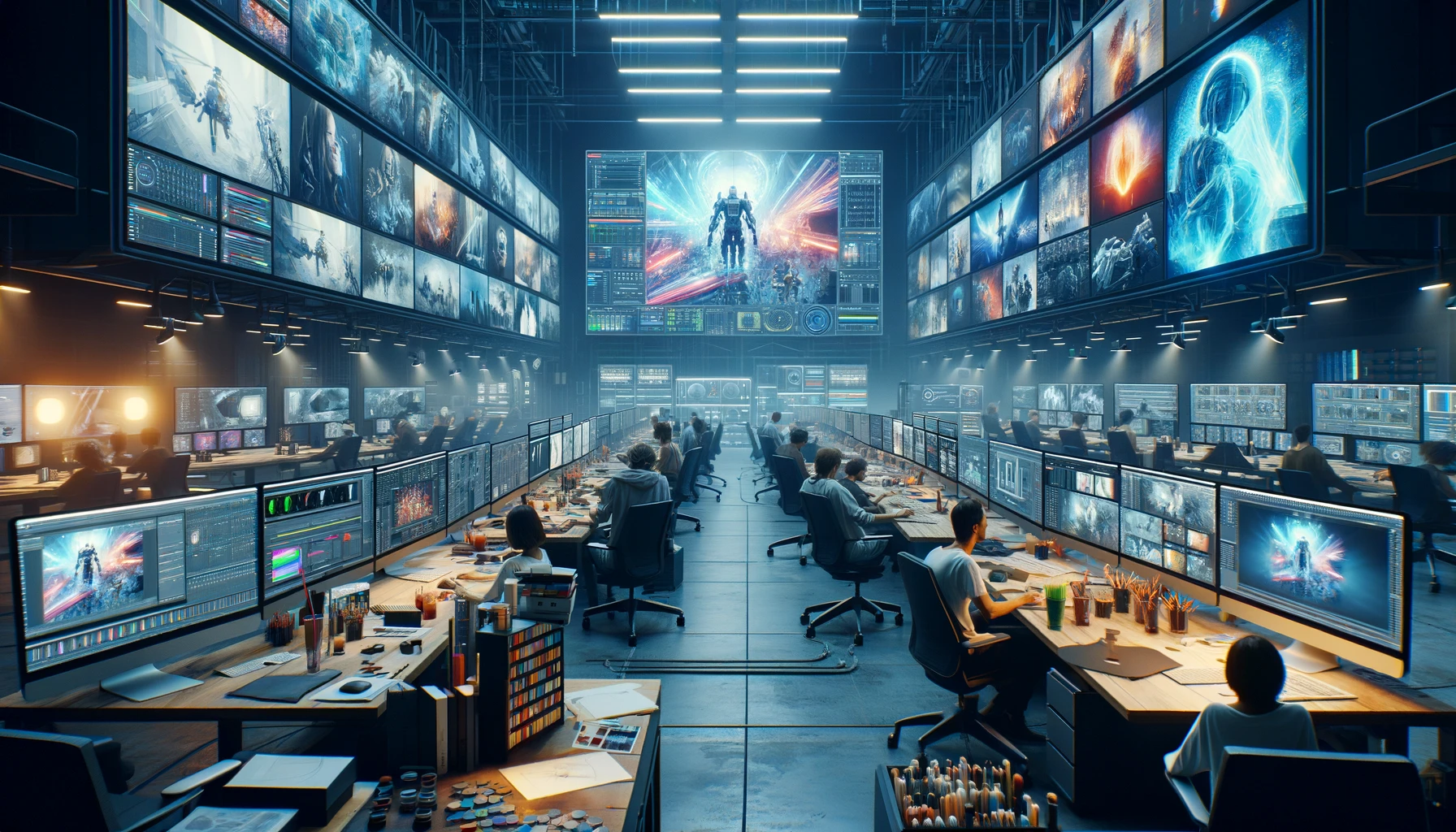
Australia’s top VFX companies are punching well above their weight — and in 2026, the financial logic for routing visual effects work through an Australian studio has never been stronger. A 30% PDV (Post, Digital, and Visual Effects) cash rebate, stackable with state-level incentives that push effective returns past 40-45% in Queensland — combined with a crew base that’s worked on some of the highest-grossing films of the past decade — makes Australia one of the most strategically compelling VFX destinations on the planet.
But here’s what most sourcing executives miss: Australia’s VFX market is not a single homogeneous pool of talent. Sydney, Melbourne, Brisbane, and Adelaide each have distinct studio ecosystems, specialization profiles, and capacity dynamics.
The studio that’s right for your Marvel-scale creature pipeline isn’t necessarily the right fit for a mid-budget TV series requiring invisible effects and tight turnarounds. And with Australia’s Location Offset having nearly doubled — from 16.5% to 30% — in July 2024, the inbound production pipeline has surged, which means premium Australian VFX studios are genuinely capacity-constrained in ways they weren’t two years ago.
This guide maps the real landscape: who the key studios are, what they’re genuinely built for, and how to approach the Australian VFX market intelligently in 2026.
Quick Navigation
Find Vetted Australian VFX Studios in One Search
Search 140,000+ entertainment companies on Vitrina — including Australia’s full VFX ecosystem by city, specialization, and verified project credits. Ask VIQI about any Australian studio’s capacity, recent credits, or incentive eligibility before you make a single call.
Used by Netflix, Warner Bros, and Paramount VFX sourcing teams globally. 200 free credits · No credit card required.
Why Australia for VFX in 2026? The Strategic Case
The PDV Offset is the starting point — but it’s not the whole story. Australia’s 30% cash rebate on qualifying post-production, digital, and visual effects spend is available to both Australian and international productions, paid directly by the Australian government on audited local expenditure. Stack that with Queensland’s additional 15% state incentive, and you’re looking at effective cost recovery approaching 45% of your Australian VFX spend. That’s not emerging-market pricing — that’s world-class economics with world-class output.
But let’s be direct about what’s actually driving the flow. The doubling of the Location Offset to 30% in July 2024 has pulled a significant volume of high-budget international production to Australian stages. And productions that shoot in Australia tend to post in Australia. That means the VFX pipeline feeding into Sydney, Melbourne, and Brisbane has deepened considerably since mid-2024. Studios that were already busy are now operating at genuine capacity — which is relevant if you’re planning a shoot-to-post workflow that needs the same studio environment at both ends.
There’s a second structural advantage that’s easy to overlook: time zones. Australian VFX studios operate in overlapping hours with Asian production markets and offer a clean “follow the sun” workflow with US West Coast teams when deadlines are tight. Studios in Sydney are approximately 15-18 hours ahead of Los Angeles — which means a shot delivered at Australian EOD lands on a VFX supervisor’s desk at the start of their LA morning. For episodic work with weekly turnover schedules, that pipeline architecture genuinely matters.
And then there’s the talent pool. Australia’s VFX crew base isn’t a developing ecosystem — it’s produced Oscar-winning work, staffed tent-pole franchise pipelines, and trained generations of artists who have moved fluidly between Australian studios and the global industry. As explored in our broader guide to Australia’s VFX landscape, the country’s pipeline depth is consistently underestimated by executives sourcing from outside the region.

Your AI Assistant, Agent, and Analyst for the Business of Entertainment
VIQI AI helps you plan content acquisitions, raise production financing, and find and connect with the right partners worldwide.
- Find active co-producers and financiers for scripted projects
- Find equity and gap financing companies in North America
- Find top film financiers in Europe
- Find production houses that can co-produce or finance unscripted series
- I am looking for production partners for a YA drama set in Brazil
- I am looking for producers with proven track record in mid-budget features
- I am looking for Turkish distributors with successful international sales
- I am looking for OTT platforms actively acquiring finished series for the LATAM region
- I am seeking localization companies offer subtitling services in multiple Asian languages
- I am seeking partners in animation production for children's content
- I am seeking USA based post-production companies with sound facilities
- I am seeking VFX partners to composite background images and AI generated content
- Show me recent drama projects available for pre-buy
- Show me Japanese Anime Distributors
- Show me true-crime buyers from Asia
- Show me documentary pre-buyers
- List the top commissioners at the BBC
- List the post-production and VFX decision-makers at Netflix
- List the development leaders at Sony Pictures
- List the scripted programming heads at HBO
- Who is backing animation projects in Europe right now
- Who is Netflix’s top production partners for Sports Docs
- Who is Commissioning factual content in the NORDICS
- Who is acquiring unscripted formats for the North American market
Tier 1: Australia’s Major VFX Studios
1. Animal Logic — Sydney, NSW
Animal Logic is Australia’s most globally recognized VFX and animation studio — and the most strategically significant. Founded in Sydney in 1991, the studio has spent three decades building a pipeline that’s operated at the very top of the industry. Their credits span the full spectrum of what “world-class VFX” actually means in practice: The Matrix (digital effects), Happy Feet (Academy Award, Best Animated Feature), The LEGO Movie and its sequels, Peter Rabbit, and Mortal Engines. The studio has developed its own production management software infrastructure — a genuine differentiator that reduces pipeline friction on complex projects with long shot lists.
What you need to know for sourcing decisions: Animal Logic operates at a scale that positions them for major studio franchise work and feature-length animation pipelines. They’re not the studio you approach for a 200-shot TV episode. But if you’re building a feature animation or a VFX-heavy tentpole and need a partner with proven delivery at that tier — Animal Logic belongs at the top of your shortlist. Their Sydney infrastructure is modern, their artist base is deep, and their track record of on-time delivery on complex productions is one of the best in the region.
2. Rising Sun Pictures — Adelaide, SA
Rising Sun Pictures (RSP) is one of the most consistently impressive studios in Australia — and globally, one of the best-kept secrets outside franchise circles. Based in Adelaide with over 25 years of continuous operation, RSP has worked on more than 200 films and television projects. Their credits include Thor: Love and Thunder, Aquaman, Harry Potter and the Deathly Hallows, multiple X-Men films, Game of Thrones, and The Witcher. Those aren’t B-tier credits — those are first-unit VFX sequences on flagship franchise properties.
RSP’s specializations run deep in photoreal environments, creature work, and complex compositing — the categories that tend to define the visual identity of a production’s most commercially important sequences. Their Adelaide location is strategically significant: South Australia’s incentive stack (federal PDV 30% + state incentives) makes RSP one of the most cost-effective Tier 1 quality options in the country. According to reporting from Variety, Australia’s expanded incentive regime has driven significant new commissions into studios exactly like RSP — experienced, mid-to-large scale, with capacity to absorb international mandates.
Track Australian VFX Studio Availability and Active Projects
Which Australian studios have pipeline capacity right now? What projects are they currently working on? Vitrina tracks 400,000+ active projects globally — including Australian VFX studios’ live production commitments — so you can source intelligently, not reactively.
200 free credits · No credit card required · Trusted by Netflix, Google TV, and leading independent studios
3. Luma Pictures — Melbourne, VIC
Luma Pictures has built one of the most impressive Marvel and Disney track records of any Australian studio — and they’ve done it from Melbourne. Their credits include Ant-Man, Doctor Strange, Avengers: Endgame, Black Widow, Eternals, and Guardians of the Galaxy Vol. 3. That’s not a coincidence — it’s the result of consistent delivery on technically demanding sequences for some of the most quality-scrutinized productions in the industry.
Luma’s strengths sit in creature animation, character effects, and environment work — the categories where the margin for error is smallest and the technical demands are highest. But they’ve built their reputation on something beyond technical capability: their shot-level supervisory approach, which embeds senior creative oversight throughout production rather than just at review gates. For productions where VFX quality directly affects global audience perception — and in franchise IP, it always does — Luma’s model reduces the rework cycle that inflates post-production budgets.
Joseph Bell — VFX industry veteran and former Industrial Light & Magic executive — shares his analysis of how global VFX trends, AI integration, and studio selection criteria are reshaping sourcing decisions for productions at every budget level. Essential watching before you finalize your Australia studio shortlist.

Tier 2: Specialist and Mid-Size Studios Worth Knowing
4. Alt.vfx — Brisbane and Sydney
Alt.vfx has been on a trajectory that warrants more international attention than it typically gets. Operating from Brisbane and Sydney, the studio has developed a reputation for high-quality photoreal work on both theatrical and streaming productions — including work on Thor: Love and Thunder and a growing number of Netflix-commissioned titles. Their dual-city footprint is operationally significant: Queensland’s 15% state incentive stacks with the federal PDV offset to create a highly competitive effective rate for productions routing work through their Brisbane facility.
Alt.vfx sits in a productive sweet spot for episodic streaming content: large enough to handle complex sequences at scale, but structured to provide the shot-level creative attention that larger studios sometimes lose when managing 500+ shots across multiple simultaneous projects. For content heads at streaming platforms sourcing Australian VFX capacity for series work, they deserve a dedicated conversation — not just a slot on a tender list.
5. Cutting Edge — Brisbane, QLD
Cutting Edge is one of Australia’s most established post-production and VFX operations — Brisbane-based, with deep roots in both domestic Australian content and international co-productions. Their integrated post-production model, which combines colour, sound, and VFX under one roof, gives them a structural advantage for productions seeking consolidated delivery. They’ve been active on Australian television drama, feature film work, and commercial VFX — and their Queensland positioning makes them particularly attractive on incentive economics.
Don’t let “post-production” in their positioning mislead you about their VFX capability. Cutting Edge has handled effects-heavy sequences on streaming drama productions and Australian features that required genuine creative and technical VFX work beyond simple cleanup. For mid-budget productions seeking consolidated Australian post with meaningful VFX capacity, they’re often more cost-effective than engaging separate facilities for each department.
6. Fin Design + Effects — Sydney, NSW
Fin Design + Effects has built a reputation as Sydney’s go-to studio for advertising VFX and high-end commercial work — but their film and television capabilities are deeper than their commercial profile suggests. Their work spans photorealistic product visualization, character effects, and environment compositing, with particular strength in invisible effects that make production impossible without VFX but tell no one it was there. That specialization — making VFX genuinely undetectable — is chronically undervalued in sourcing conversations that focus on spectacle sequences while ignoring the hundreds of cleanup and augmentation shots that define a production’s overall visual coherence.
7. DNEG Australia
DNEG — the UK-headquartered global VFX studio that has won multiple Academy Awards for Visual Effects — operates in Australia as part of its global delivery network. For productions seeking a studio with the deepest bench in the world and a local Australian presence, DNEG’s Australian operations offer access to the full DNEG pipeline and supervisory talent while qualifying for Australian incentives on local spend. They’re not a boutique — they’re an enterprise-scale option for productions that need global delivery infrastructure and want to maximize Australian incentive capture simultaneously.
The key sourcing consideration with any global studio’s regional outpost: understand what work physically flows through the Australian office vs. what’s handled elsewhere in the network. For PDV incentive eligibility, qualifying spend must be incurred in Australia. That’s a conversation worth having explicitly before deal structures are finalized. Our guide to mastering the VFX supply chain covers the questions to ask when auditing any studio’s incentive-qualifying spend before engagement.
The Australian VFX Incentive Stack — How to Actually Maximize It
The headline rates are 30% PDV Offset (federal) plus state incentives — but the mechanics matter more than the percentages. Here’s what you need to understand before you structure a deal.
The PDV Offset applies to qualifying Australian post-production, digital, and visual effects expenditure — regardless of where the production was filmed. That’s the key distinction: you don’t need to have shot in Australia to claim Australian PDV incentives on VFX work performed in Australia. This makes it genuinely viable to route VFX from a US, UK, or European production to an Australian studio purely for the incentive economics, without changing your production’s primary filming location.
The Queensland 15% uplift is the most aggressive state-level incentive in Australia and makes Brisbane studios — including Alt.vfx and Cutting Edge — significantly more competitive than their peers on comparable work. Effective combined returns approaching 42-45% on qualifying Queensland VFX expenditure are achievable on qualifying productions, though the state program has specific minimum spend requirements and content criteria that need to be reviewed with a qualified production accountant before budgeting.
New South Wales and Victoria both offer an additional 10% uplift — making Sydney (Animal Logic, Luma, Fin Design) and Melbourne (Luma Pictures) studios competitive at 40% effective recovery. As Deadline has reported, Australia’s incentive restructuring has positioned it as one of the few markets globally where the combination of crew quality, English-language delivery, and financial incentives are all simultaneously at peak levels — making 2026 an unusually favorable window for locking Australian VFX capacity before the surge in inbound production further tightens availability.
One critical timing note: incentive claims are backend-paid, typically 12-18 months after qualifying expenditure is incurred. Budget for the cash flow gap or explore rebate loan structures (Australian banks have become increasingly comfortable with PDV rebate lending) to bridge the timing difference during production.
How to Vet an Australian VFX Studio: The Sourcing Framework
The Fragmentation Paradox hits the Australian VFX market with particular intensity. There are dozens of studios operating across the country — many excellent, some over-claiming their capabilities, and a handful genuinely positioned for the specific work you need. The showreel is the least reliable signal. Here’s a more structured approach, as detailed in Vitrina’s executive vetting framework.
Step 1: Shot-level credit verification. Don’t accept studio-level credits at face value. “We worked on Thor” can mean 3 shots or 300. Request specific sequence credits and verify against IMDB Pro or direct VFX supervisor references. The volume and complexity of specific sequences they’ve led tells you far more than the franchise name on their client list.
Step 2: Current capacity check. With Australian stages filling up post-2024 incentive revision, pipeline capacity is genuinely constrained at several top-tier studios. Ask directly: how many active projects are currently in the pipeline, what’s the shot count, and what’s the artist headcount available for your project by the proposed start date? A studio that can’t answer this specifically is either poorly managed or doesn’t have the capacity they’re implying.
Step 3: Supervisor alignment. The VFX supervisor assigned to your project matters more than the studio’s aggregate track record. Ask who specifically will supervise your production — not who typically does their flagship work. Then verify that person’s individual credits, not the studio’s.
Step 4: Incentive structure due diligence. Which specific spend categories qualify for the PDV offset on your project? Get written confirmation from their production accountant — not their sales team — that the proposed work structure meets Australian Taxation Office criteria. The difference between a qualifying and non-qualifying spend structure can materially change your effective incentive return.
Step 5: Pipeline compatibility. Australian VFX studios primarily work in industry-standard pipelines (Maya, Houdini, Nuke, SideFX) but the specific proprietary tools and render farm architecture vary. If your production uses a studio-specific pipeline from a previous facility, validate compatibility before locking a studio — pipeline migration mid-production is expensive and schedule-threatening in ways that don’t show up on a quote sheet.
Need a Shortlist of Vetted Australian VFX Studios for Your Project?
Vitrina’s concierge team has mapped Australia’s full VFX ecosystem — by specialization, capacity tier, incentive eligibility profile, and verified project credits. Whether you need a major studio for a 2,000-shot feature pipeline or a specialist house for a specific effects category, we’ll deliver a verified shortlist in 48 hours. Trusted by production executives across Netflix, Paramount, and independent studios globally.
Frequently Asked Questions: VFX Companies in Australia
The Bottom Line on Australian VFX in 2026
Australia’s VFX market is at an inflection point. The incentive regime is the best it’s ever been — 30% federal PDV Offset, stackable with state-level programs that push effective returns to 42-45% in Queensland — combined with a crew base and studio infrastructure that’s been battle-tested on some of the most demanding franchise productions in global cinema. That combination doesn’t happen often. And it’s attracting attention that’s compressing the capacity window at the studios you actually want.
Animal Logic, Rising Sun Pictures, and Luma Pictures represent the Tier 1 benchmark. Alt.vfx, Cutting Edge, and Fin Design round out a Tier 2 that consistently delivers Tier 1-quality work at economics that reflect their size rather than their output. And studios like DNEG Australia offer global pipeline access with Australian incentive eligibility for productions that need both.
But the sourcing discipline matters as much as the studio selection. In a market where every studio now claims feature film VFX capability, shot-level verification and capacity due diligence are what separate smart sourcing from expensive surprises. De-risk your Australia VFX strategy the same way you’d de-risk any major production decision — with data, not reputation.
Key Takeaways
- 30% PDV Offset applies to VFX-only work: You don’t need to film in Australia to claim the federal rebate on VFX spend — any production can route visual effects work to an Australian studio and qualify.
- Queensland stacking reaches 42-45%: The federal PDV Offset plus Queensland’s 15% state uplift creates the most financially competitive VFX incentive structure in the country — and one of the strongest globally.
- Capacity is tightening: The 2024 doubling of the Location Offset has driven significant inbound production to Australia. Premium studios are busier than they were — lock capacity earlier than you think you need to.
- Studio selection must be specialization-matched: Animal Logic for feature animation and major pipeline work; Rising Sun and Luma for franchise VFX; Alt.vfx and Cutting Edge for episodic and mid-budget projects.
- Vet at the shot level, not the studio level: The showreel is the worst signal for capability assessment. Verify specific sequence credits, supervisor assignments, and current capacity before committing budget.
Source Australia’s Best VFX Studios With Confidence
Search 140,000+ companies on Vitrina — including Australia’s full VFX ecosystem mapped by city, specialization, incentive profile, and verified credits. Ask VIQI for instant intelligence on any studio. Or let our concierge team build your verified shortlist in 48 hours.
200 free credits · No credit card required · Used by Netflix, Warner Bros, and Paramount
Find Film+TV Projects, Partners, and Deals – Fast.
VIQI matches you with the right financiers, producers, streamers, and buyers – globally.
Join Industry Briefings Trusted by Leaders
Unreleased Film+TV Projects: Opportunities & Showcase
A curated view of unreleased Film and TV projects open for financing and collaboration
The Mid-Budget Comeback: Why Mid-Budget Films Is the Smartest Bet in the Room
Mid-budget films are attracting new capital. See why this segment is becoming one of the strongest bets in Film today.
Franchise Fatigue vs. IP Dependency: What Studios Should Be Betting On Now
s franchise performance softens, where will the next generation of valuable IP come from? Join the briefing.
Unscripted Is Eating the World: The Multi-Billion Reality and Format Boom
Unscripted is the new prestige — inside the $19.8B global format boom reshaping how streaming platforms compete.