IHUB
IHUB
 Private Briefings (Webinars)


 LeaderSpeak Podcast
  Global Entertainment Digest (Newsletter)
  Premium Lists
 Membership Benefits
 About Vitrina
 Our Story
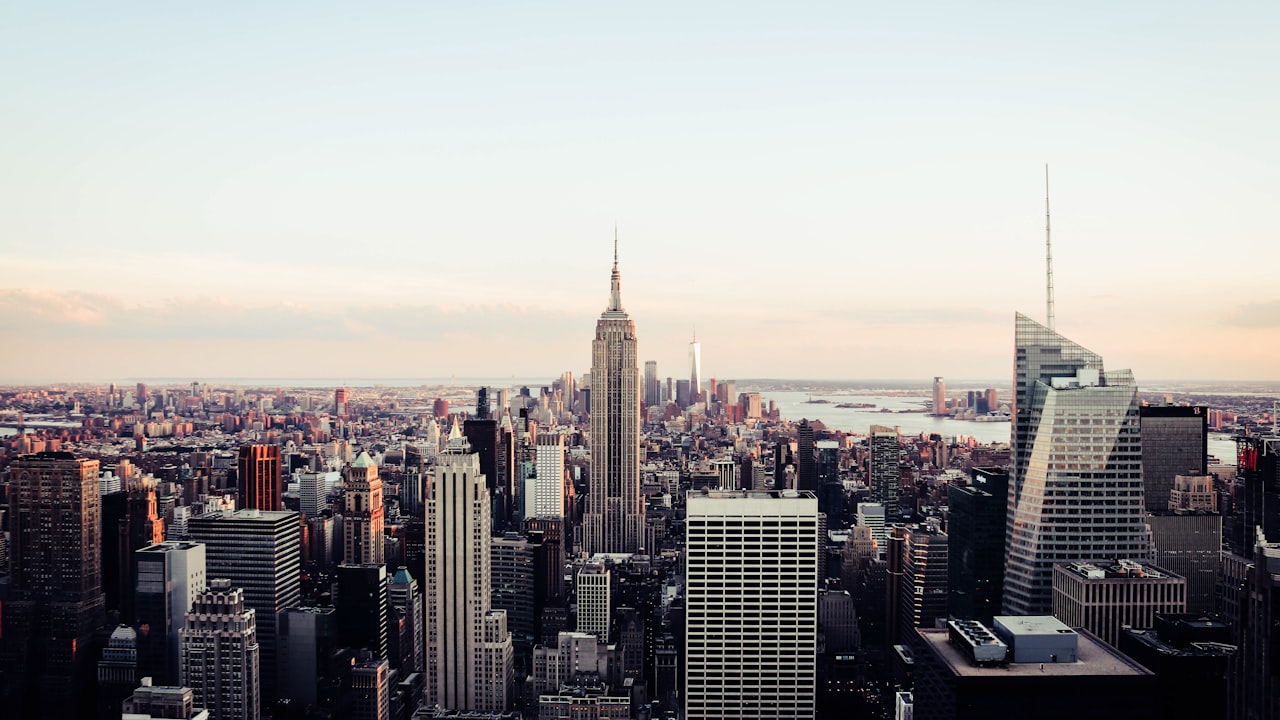
The United States is the world’s undisputed center of visual effects production — birthplace of modern VFX, home to Industrial Light & Magic, Digital Domain, and Sony Pictures Imageworks, and the market that defines the creative and technical benchmarks every other country’s studios aspire to meet. The US VFX and animation services market reached an estimated $8.53 billion in 2025, growing at a 12.4% CAGR toward $15.3 billion by 2030 (IBISWorld / Mordor Intelligence, 2025). State tax incentive programs in Georgia (30–40%), Louisiana (40%), and New Mexico (35%) have expanded the industry well beyond its traditional Los Angeles and San Francisco roots.
This directory lists verified VFX companies headquartered in the United States — spanning compositing, digital characters, creature effects, virtual production, simulation, and real-time rendering. Studios are drawn from Vitrina’s live global entertainment company database and verified for active operations, production credits, and contact accuracy. Use the filters to narrow by service type, city, and studio size, then connect directly with studio decision-makers through Vitrina’s B2B platform. For a broader comparison, see our top VFX companies in India and top VFX companies in Germany directories.
- 1The US VFX and animation market reached an estimated $8.53 billion in 2025, growing at 12.4% CAGR — the world’s single largest VFX production market (IBISWorld / Mordor Intelligence, 2025).
- 2Industrial Light & Magic (San Francisco/Los Angeles), founded by George Lucas in 1975 for Star Wars, has contributed VFX to 325+ films and holds more Academy Award nominations for visual effects than any other studio in history.
- 3The Georgia Entertainment Industry Tax Credit (30% base, up to 40%) has transformed Atlanta into the world’s most filmed location — hosting productions from Avengers: Endgame to Stranger Things and driving a $4.4+ billion annual production economy (Georgia Dept. of Economic Development, 2025).
- 4Los Angeles alone has 500+ active VFX and animation studios; New York adds 100+; Atlanta is the fastest-growing hub. The US has more TPN-certified facilities than any other country.
- 5US VFX artist day rates run $650–$1,200/day in LA and SF — the global benchmark — while Georgia and Louisiana studios offer 40–50% cost savings with state tax credits ranging from 25–40%.
The top VFX companies in the USA include Industrial Light & Magic (San Francisco — Star Wars, Marvel, Indiana Jones), Digital Domain (Los Angeles — Avengers: Infinity War, Top Gun: Maverick), and Sony Pictures Imageworks (Culver City — Spider-Man: Into the Spider-Verse, Doctor Strange). Los Angeles is the global VFX capital with 500+ studios. Georgia’s 30–40% tax credit has made Atlanta the fastest-growing US VFX hub. Vitrina indexes 1,000+ verified US VFX studios with direct contacts, TPN status, and production credits.
Why the USA Leads Global VFX Production
The United States has led global VFX production for five decades — from ILM’s creation of the Death Star trench run in 1977 to the photorealistic digital characters of Avatar: The Way of Water (2022). The US VFX market reached an estimated $8.53 billion in 2025, growing at 12.4% CAGR fueled by record streaming content spend from Netflix, Disney+, and Amazon, IMAX theatrical releases, and the rapid expansion of virtual production stages (IBISWorld, 2025). Three structural advantages keep the US at the top: the concentration of the world’s most experienced VFX talent in Los Angeles and San Francisco; deep integration between major studios and their vendor ecosystems; and state tax incentive programs that keep productions financially competitive with international markets.
Key Stat
Georgia’s Entertainment Industry Investment Act provides a 30% base tax credit (plus 10% Georgia Entertainment Promotion logo bonus) on qualified productions spending $500,000+ in state. The credit is transferable and has driven over $4.4 billion in annual production spend in Georgia, making Atlanta the most filmed location in the world by production volume (Georgia Dept. of Economic Development, 2025).
Industrial Light & Magic — founded in 1975 by George Lucas for Star Wars: A New Hope — remains the world’s most decorated VFX studio after 50 years, with 325+ film credits, 50+ Academy Award nominations, and 16 Oscar wins for Best Visual Effects. ILM pioneered digital compositing (The Abyss, 1989), digital stuntwork (Terminator 2, 1991), digital characters (Jurassic Park, 1993), and performance capture (Pirates of the Caribbean, 2003). For a full breakdown of what Hollywood-grade VFX costs, including studio tier comparisons, see Vitrina’s VFX cost guide.
Top VFX Companies in the USA — Full Directory
The companies below are verified VFX studios and post-production companies headquartered in the United States, sourced live from Vitrina’s global entertainment company database. Filter by service specialty, studio size, and city. Click any company card to view the full profile, contact details, and past production credits. Looking for studios outside the US? Compare our India VFX directory and Germany VFX directory for cost and capability benchmarks.
TransPerfect
New York City, United States of America

Services
3D Animations & Motion Graphics3D Modeling & SimulationAccessibility ServicesAnimationBlu-Ray & 4K Ultra HD Distribution+33 more
Genres
Company 3
Santa Monica, United States of America

Services
ADR MixingAnimationAudio Post-ProductionAudio RestorationAutomated Dialogue Replacement (ADR)+43 more
Genres
Buffalo 8
Santa Monica, United States of America

Services
3D Animations & Motion GraphicsAnimation / Computer Graphics (CGI)Audio Post-ProductionAutomated Dialogue Replacement (ADR)Branded Content+48 more
Genres
Industrial Light & Magic (ILM)
San Francisco, United States of America

Services
3D Content Creation3D Modeling & Simulation3D Texturing (VFX)Aging/De-aging (VFX)AI-aided VFX (AI-enabled)+51 more
Genres
US VFX Hubs: Los Angeles, San Francisco, New York & Atlanta
The US VFX industry is concentrated in four primary hubs, each shaped by different content ecosystems, tax structures, and talent pipelines. Understanding hub specializations is critical for productions selecting a US studio partner — the right city depends entirely on your project’s budget, timeline, and incentive strategy.
Key Stat
The United States has 1,000+ active VFX studios across all four major hubs. Los Angeles leads with 500+ studios and the highest concentration of TPN-certified facilities globally. US VFX artist day rates run approximately $650–$1,200/day in LA and SF — the global benchmark — while Atlanta and Louisiana studios offer 40–50% cost savings before state tax credits are applied (IBISWorld / PayScale, 2025).
Los Angeles is the undisputed global capital of VFX with 500+ studios concentrated in Culver City, Burbank, Hollywood, and Santa Monica. The ecosystem includes ILM’s LA facility, Digital Domain, Sony Pictures Imageworks, Luma Pictures, Zoic Studios, Scanline VFX, and FuseFX. LA studios handle the full spectrum — from $300M+ blockbuster creature and simulation work to broadcast graphics and commercial VFX. The proximity to every major Hollywood studio lot means LA shops often work across multiple simultaneous productions with tighter creative feedback loops. For a detailed look at what Hollywood VFX actually costs, including LA studio tier comparisons, see Vitrina’s VFX cost guide.
San Francisco Bay Area is home to ILM’s global headquarters in the Presidio, Pixar Animation Studios in Emeryville, and technology-driven VFX companies that pioneered digital cinema. ILM’s StageCraft virtual production platform — the LED volume technology behind The Mandalorian — was developed in San Francisco and is now deployed on over a dozen major productions globally. The Bay Area’s deep tech ecosystem (proximity to NVIDIA, Apple, and Silicon Valley gaming studios) makes it the leading hub for AI-driven VFX, real-time rendering, and virtual production R&D.
New York hosts 100+ VFX and animation studios, anchored by Framestore’s NYC office, Phosphene, and a strong commercial and advertising VFX sector. New York’s 25% Post-Production Tax Credit Program (capped at $7 million per project) has drawn major streaming productions to the city. Netflix, HBO, and Amazon Prime Video all maintain significant New York production footprints, feeding local VFX demand.
Atlanta, Georgia has transformed into the world’s highest-volume filming location, driven by Georgia’s 30% base tax credit. Productions including Avengers: Endgame, Black Panther, Stranger Things, and The Walking Dead have all used Georgia extensively. The local VFX ecosystem has grown rapidly around this production volume — with Crafty Apes, FuseFX Atlanta, and a network of boutique studios serving the city’s 400+ annual productions. Artist rates in Atlanta run 30–40% below LA equivalents.
How to Choose the Right VFX Studio in the USA
Selecting a US VFX partner requires evaluating five criteria beyond base cost: state tax incentive eligibility, pipeline compatibility, Hollywood credit history, TPN certification status, and studio capacity relative to your shot count and timeline. The US market is uniquely large — a studio’s credit history and current pipeline load matter as much as technical capabilities, because top US shops are frequently oversubscribed during peak production windows (January–June and September–November). For context on how US costs compare globally, see our complete VFX cost guide.
State tax incentive alignment is often the most financially significant criterion. Georgia’s 30% credit (qualifying spend: $500,000+), Louisiana’s 40% credit (qualifying spend: $300,000+), and New Mexico’s 35% credit can reduce effective VFX costs by more than any negotiated rate discount. For a $3M VFX package, choosing an Atlanta studio over an LA studio can yield $900,000 in transferable tax credits — a saving that dwarfs any rate difference between studios of comparable quality.
Pipeline compatibility is critical for mid-budget and high-budget productions. Top-tier US studios (ILM, Digital Domain, Sony Pictures Imageworks) operate proprietary pipelines (Katana, Premo, Arnold, Houdini-based simulations) that are not easily replicated. Mid-tier LA boutiques (Luma Pictures, Zoic Studios, FuseFX) operate hybrid pipelines (Maya/Houdini/Nuke) accessible to mid-budget productions. Confirm the specific toolstack and pipeline documentation process before shortlisting.
TPN certification is non-negotiable for any production involving unreleased content from Disney, Netflix, Warner Bros., Amazon, or Apple TV+. The Trusted Partner Network (administered by the MPA) assesses facilities annually. US studios are the global leaders in TPN adoption. Request current TPN documentation and verify assessment date before sharing any unfinished content.
TPN Certification & US Tax Incentives: Qualifying Studios
The United States has the world’s highest density of TPN (Trusted Partner Network) certified facilities — a reflection of both the volume of high-value content produced here and the MPA’s US-centric origins. TPN Gold Shield studios are pre-approved to receive unfinished content from all major Hollywood studios and streaming platforms without per-project security reviews, dramatically accelerating production vendor onboarding timelines.
Key Stat
40%
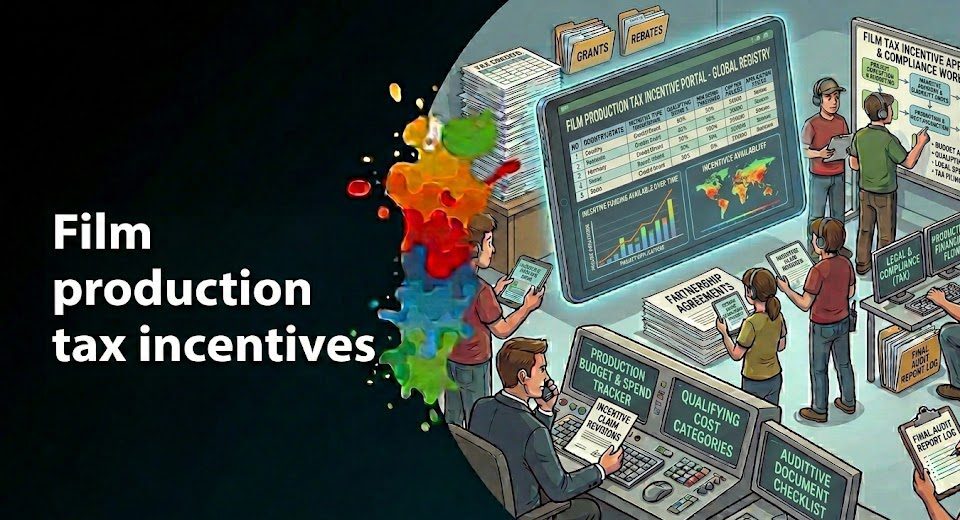
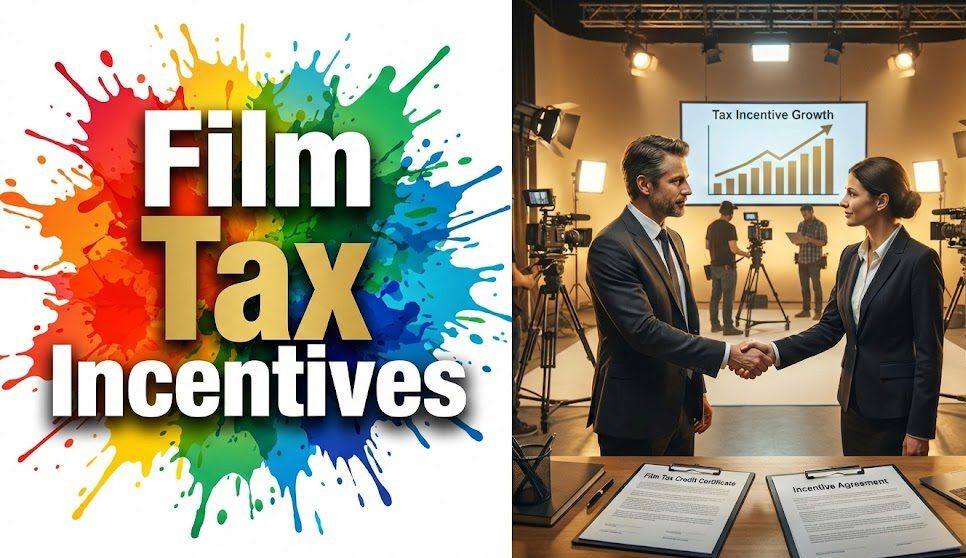
Georgia’s Entertainment Industry Investment Act provides a 30% base transferable tax credit on qualified expenditures, plus an additional 10% for productions displaying the Georgia Entertainment Promotion logo — for a combined 40% maximum credit. The minimum qualifying spend is $500,000 in Georgia. Louisiana’s credit reaches 40% on qualifying spend over $300,000, and New Mexico’s reaches 35% — making the US South and Southwest some of the most competitive incentive markets globally.
Beyond TPN, US studios handling major studio content operate under strict MPAA Content Security Program (CSP) requirements: physical access controls, network segmentation, encrypted asset delivery, and personnel background verification. Request the studio’s most recent TPN assessment report and MPAA CSP compliance documentation before signing any agreement involving unreleased content.
VFX Costs in the USA: What Productions Pay
US VFX costs vary significantly by state and studio tier. Los Angeles and San Francisco command the world’s highest VFX rates — reflective of talent concentration, union agreements (IATSE Local 839 and VES standards), and the premium for working directly with the world’s most experienced VFX supervisors. However, state-level tax incentives in Georgia, Louisiana, and New Mexico fundamentally change the net cost calculation, making US VFX cost-competitive with the UK and Canada. For a full international comparison, see our VFX cost guide.
Georgia’s tax credit fundamentally reshapes the US VFX cost map. A production spending $4M on VFX work in Atlanta receives $1.2M back in transferable state tax credits (30%) — or $1.6M with the Georgia Entertainment Promotion logo (40%). This makes Georgia VFX studios the most cost-effective tier-one VFX market in the English-speaking world, combining Hollywood pipeline quality with net costs comparable to Germany after DFFF rebate or Canada after provincial tax credits.
Conclusion
The United States VFX industry in 2026 is both the world’s largest and its most technically advanced — an $8.53 billion market anchored by ILM, Digital Domain, and Sony Pictures Imageworks, and expanding rapidly into Atlanta, Louisiana, and New Mexico through some of the world’s most generous production tax incentives. The combination of Hollywood-level talent, Oscar-winning pipeline depth, and state-level cost offsets makes the US the baseline against which every other VFX market is measured (Mordor Intelligence, 2025).
For international productions, the question is not whether US VFX quality is worth the investment — it clearly is for premium content. The question is which state, which hub, and which studio tier matches your production’s budget, incentive strategy, and shot complexity. Use the directory above to explore verified options with direct contacts, and compare against our India VFX directory and Germany VFX directory for global benchmarking.
Related Reading
- →VFX Cost Guide 2026: How Much Does VFX Actually Cost?
- →Top VFX Companies in India 2026: Complete Directory
- →Top VFX Companies in Germany 2026: Complete Directory
- →Animation & VFX Production: How to Find the Right Studio
- →Film Production Budget Guide 2026
- →Dune Part Two VFX Breakdown: De-Risking Slates with Vitrina
Frequently Asked Questions
What are the top VFX companies in the USA in 2026?
The top US VFX companies include Industrial Light & Magic (San Francisco/LA — Star Wars, Marvel, Avatar, Indiana Jones), Digital Domain (Los Angeles — Avengers: Infinity War, Top Gun: Maverick), and Sony Pictures Imageworks (Culver City — Spider-Man: Into the Spider-Verse, Doctor Strange). The full verified directory with current contacts is searchable above.
How much do US VFX studios charge per day?
US VFX artist day rates vary by location. Los Angeles and San Francisco studios charge $650–$1,200/day — the global benchmark. New York runs $600–$1,100/day. Atlanta, Georgia studios charge $420–$750/day before the 30–40% Georgia tax credit is applied — making net Georgia costs among the lowest in the English-speaking world for equivalent quality.
What US states offer the best VFX tax incentives?
The top US state VFX incentives are: Georgia (30% base credit + 10% logo bonus = 40% max, qualifying spend $500K+), Louisiana (40% credit, qualifying spend $300K+), New Mexico (35% credit), California (20–25% Film & TV Tax Credit), and New York (25% post-production credit). Georgia and Louisiana offer the highest rates and are the primary drivers of US production volume outside California.
Is ILM (Industrial Light & Magic) the best VFX company in the world?
ILM is the world’s most decorated VFX studio with 325+ film credits, 50+ Academy Award nominations, and 16 Oscar wins for Best Visual Effects — more than any other studio. Founded in 1975 by George Lucas for Star Wars, ILM pioneered digital compositing, digital stuntwork, and performance capture. It remains the benchmark for large-scale blockbuster VFX and virtual production technology.
What is the Georgia Film Tax Credit and how does it apply to VFX?
Georgia’s Entertainment Industry Investment Act provides a 30% base transferable tax credit on qualifying expenditures ($500,000+ in Georgia), plus 10% if the production displays the Georgia Entertainment Promotion logo — for a combined 40% maximum. The credit is transferable and can be sold. It has driven $4.4+ billion in annual Georgia production spend, transforming Atlanta into the world’s highest-volume filming location.
Which US city is best for VFX production?
Los Angeles is the global VFX capital with 500+ studios and the world’s highest concentration of TPN-certified facilities. San Francisco is the hub for ILM, Pixar, and virtual production technology. New York excels in episodic TV and commercial VFX. Atlanta is the fastest-growing US hub — driven by Georgia’s 30–40% tax credit — with 30–40% lower artist rates than Los Angeles.
Do US VFX studios have TPN certification?
Yes. The US has the world’s highest density of TPN-certified VFX studios, including ILM (TPN Gold Shield), Digital Domain, Sony Pictures Imageworks, and Scanline VFX. TPN certification means these studios are pre-approved to receive unfinished content from Disney, Netflix, Warner Bros., Amazon, and Apple TV+ without per-project security reviews.
Who founded Industrial Light & Magic and when?
Industrial Light & Magic (ILM) was founded in 1975 by George Lucas specifically to create the visual effects for Star Wars: A New Hope (1977). Based in San Francisco, ILM is now owned by Lucasfilm/Disney (acquired 2012). ILM has worked on 325+ films and pioneered virtually every major advancement in digital VFX over the past 50 years.
Vitrina Intelligence
USA VFX Market Research · B2B M&E Data Platform
Updated Jul 2026
This directory was compiled by Vitrina’s Americas M&E intelligence team. Every studio is verified from direct submissions, TPN/MPA assessments, production credit databases, and IBISWorld and Mordor Intelligence sector reports. Vitrina covers 1,000+ active VFX facilities across Los Angeles, San Francisco, New York, Atlanta, and beyond.
Research Methodology
✓ IBISWorld US VFX Industry Report 2025
✓ Georgia Dept. of Economic Development 2025
✓ TPN/MPA Assessed Vendor List
✓ Mordor Intelligence VFX Market 2025
✓ Direct studio submissions & verification
✓ Variety / Hollywood Reporter coverage
US M&E Market
Georgia Tax Credit
Hollywood Production