About Innovation Hub
 Global Content Pulse (Webinars)


 Global Production Financing
(Webinars)
Global Production Financing
(Webinars)  LeaderSpeak Podcast
  About Vitrina
 Our Story
 Our Solutions 🔥
 Film+TV Projects Tracker 🚀
 Case Studies
 Our Profile
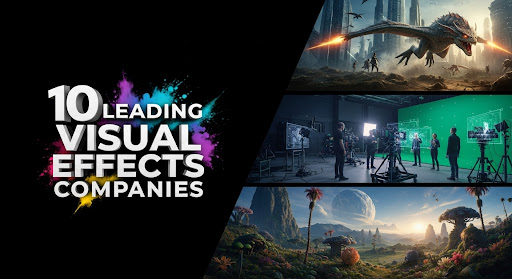
The global VFX market crossed $9.5 billion in 2024—and it’s not slowing down. If you’re a producer, studio exec, or content buyer trying to greenlight projects with serious visual ambition, you already know that choosing the wrong visual effects company doesn’t just eat your budget. It delays delivery, kills distributor confidence, and can bury a title before it even hits the trades. That’s the stakes here.
But here’s the real problem. There are 10,000+ VFX companies operating globally right now, and most producers are negotiating from a mental shortlist of five to ten names—paying premium rates because they simply don’t know what else is available. That’s the Fragmentation Paradox at work, and it costs the industry hundreds of millions in unnecessary markup every year.
This guide cuts through it. You’ll get a clear breakdown of the 10 leading visual effects companies shaping cinema today, what actually differentiates them, and how to de-risk your vendor selection so your next project doesn’t become a cautionary tale.
In This Article
- Why Your VFX Vendor Choice Is a Financial Decision
- Top 10 Leading Visual Effects Companies in 2025
- Industrial Light & Magic (ILM)
- DNEG
- Weta FX
- Framestore
- Moving Picture Company (MPC)
- Scanline VFX
- PhantomFX
- MARZ
- Outpost VFX
- Prime Focus World
- How to Choose the Right VFX Partner for Your Project
- FAQ
- Conclusion
Find Your Ideal VFX Partner in 48 Hours
Stop overpaying premium rates to the five VFX studios you already know. 140,000+ vetted companies—including specialist VFX studios across 130+ countries—are searchable on Vitrina, filtered by budget, territory, and capability. Trusted by Netflix, Warner Bros, and Paramount.
Why Your VFX Vendor Choice Is a Financial Decision
Let’s be direct about something most articles skip. Selecting a visual effects company isn’t just a creative call—it’s a capital stack decision. The wrong vendor means overruns that trigger completion bond clauses. It means delivery delays that blow your recoupment timeline. And it means paying a 30% to 40% premium simply because you defaulted to a recognisable name instead of doing proper market research.
The math is uncomfortable. A producer who knows only three top-tier VFX houses might spend $5 million on work a boutique specialist could deliver for $3.5 million—without any quality difference. That’s $1.5 million in margin erosion on a single project, purely from information asymmetry. And in a market with 10,000+ VFX companies globally, that gap gets wider every year as specialised regional studios build world-class capability outside the established names.
With that context established, here’s a rigorous breakdown of the companies genuinely setting the standard—and what they actually deliver.

Your AI Assistant, Agent, and Analyst for the Business of Entertainment
VIQI AI helps you plan content acquisitions, raise production financing, and find and connect with the right partners worldwide.
- Find active co-producers and financiers for scripted projects
- Find equity and gap financing companies in North America
- Find top film financiers in Europe
- Find production houses that can co-produce or finance unscripted series
- I am looking for production partners for a YA drama set in Brazil
- I am looking for producers with proven track record in mid-budget features
- I am looking for Turkish distributors with successful international sales
- I am looking for OTT platforms actively acquiring finished series for the LATAM region
- I am seeking localization companies offer subtitling services in multiple Asian languages
- I am seeking partners in animation production for children's content
- I am seeking USA based post-production companies with sound facilities
- I am seeking VFX partners to composite background images and AI generated content
- Show me recent drama projects available for pre-buy
- Show me Japanese Anime Distributors
- Show me true-crime buyers from Asia
- Show me documentary pre-buyers
- List the top commissioners at the BBC
- List the post-production and VFX decision-makers at Netflix
- List the development leaders at Sony Pictures
- List the scripted programming heads at HBO
- Who is backing animation projects in Europe right now
- Who is Netflix’s top production partners for Sports Docs
- Who is Commissioning factual content in the NORDICS
- Who is acquiring unscripted formats for the North American market
Top 10 Leading Visual Effects Companies in 2025
1. Industrial Light & Magic (ILM)
Founded by George Lucas in 1975 for the original Star Wars, Industrial Light & Magic is arguably the studio that invented modern VFX as a commercial discipline. ILM holds more than 60 Academy Award nominations for visual effects and has been the technical engine behind the biggest franchise releases of the past five decades—from Jurassic Park to Avengers: Endgame.
Their StageCraft virtual production technology, deployed on The Mandalorian, shifted the entire industry’s conversation about LED volume shooting. But here’s the thing—ILM’s rates reflect their brand positioning. If your project doesn’t have a nine-figure budget and a major studio behind it, you’re probably not their priority client. Know your leverage before you make that call.
2. DNEG
DNEG (Double Negative) has won 5 Academy Awards for Visual Effects—including for Christopher Nolan’s Inception, Interstellar, and Tenet. That’s not a coincidence. Their pipeline is uniquely optimised for complex physics-based effects and large-scale environment work that demands scientific precision alongside visual artistry.
DNEG operates across London, Mumbai, Los Angeles, Vancouver, Chennai, Montréal, and Sydney. The multi-hub structure matters—it means they can leverage tax incentives across multiple jurisdictions simultaneously, which translates to real cost savings for co-productions and tentpole productions managing complex capital structures. As we noted in our analysis, DNEG’s episodic VFX capacity has expanded dramatically since 2021, driven by streaming platform demand.
3. Weta FX
Wellington-based Weta FX (spun out of Weta Digital in 2021 when Unity acquired the software assets) built its reputation on Peter Jackson’s Lord of the Rings trilogy and James Cameron’s Avatar. Their Shire simulation system for fluid, cloth, and crowd dynamics remains among the most sophisticated in the world. Avatar: The Way of Water pushed underwater volumetric rendering to a level no other studio had attempted at scale.
New Zealand’s 40% domestic incentive and strong co-production relationships mean Weta FX can structure productions advantageously for international partners. If your project involves photorealistic digital creatures or large-scale world-building, they’re genuinely peerless. You can explore Weta FX’s full capability profile on Vitrina before approaching them directly.
Industry Insight: VFX Trends from a 20-Year ILM Veteran
Joseph Bell, a VFX veteran with pioneering roles at Industrial Light & Magic, shares unparalleled insight into current VFX trends, how studios are scaling, and where AI is genuinely changing the economics—straight from inside the supply chain.
4. Framestore
Framestore‘s reputation was cemented with Alfonso Cuarón’s Gravity—a film that was roughly 80% digital in its final cut. Since then, they’ve delivered the photorealistic bear in the Paddington franchise, the spectacle of Avengers: Infinity War, and groundbreaking work on Netflix originals including One Piece and Avatar: The Last Airbender.
Framestore’s Creative Director & VFX Supervisor John Kilshaw has spoken candidly about how episodic streaming work has fundamentally changed studio workflows—tighter timelines, iterative feedback loops with showrunners, and the need for real-time pipeline flexibility. They’ve built those muscles. Their London and Montréal operations give producers access to UK and Canadian tax credit structures simultaneously, which is worth real money on the right project. For a deeper dive, read our Framestore capability breakdown.
5. Moving Picture Company (MPC)
The 2019 photo-real The Lion King—virtually the entire film—came out of MPC. So did Jon Favreau’s The Jungle Book before it. When a studio needs photoreal animal and environment simulation at extreme scale, MPC’s pipeline is purpose-built for it.
MPC operates under Technicolor Creative Studios alongside Mill Film, Mikros Animation, and MPC Episodic—giving them scope to handle everything from a single VFX-heavy sequence to a full series slate. Their Montreal and Bangalore operations keep rates competitive against pure US-based vendors. But capacity windows book out fast—you want to be talking to them 6 weeks ahead of when you actually need them, not after you’ve locked picture.
Stop Paying the Premium Penalty
Vitrina’s Smart Pairing engine matches your project’s budget, territory, and VFX spec against 140,000+ verified companies—surfacing qualified vendors you’d never find through your existing network. Netflix, Warner Bros, and Paramount teams already use it to de-risk vendor selection before deals close.
6. Scanline VFX
Scanline VFX built its reputation on destruction and fluid simulation—their Game of Thrones work (specifically Daenerys’s dragon attacks on King’s Landing) became a benchmark for large-scale cinematic destruction. Netflix acquired Scanline in 2022, which changes the conversation significantly. If you’re producing for Netflix, Scanline now operates as an in-house capability. If you’re not, you’re dealing with a studio-owned vendor, and the priority queue reflects that.
Scanline operates hubs in Munich, Vancouver, Los Angeles, and Seoul. Their Flowline proprietary fluid simulation software is 15 years of proprietary R&D that competitors genuinely can’t replicate. And their integration with Netflix’s production pipeline is a real competitive advantage for qualifying projects.
7. PhantomFX
Chennai-based PhantomFX is the name that surprises producers the first time they see the reel—and then becomes a regular vendor relationship. Founded by Bejoy Arputharaj, PhantomFX has delivered VFX for Hollywood productions and major streaming titles including work for Netflix, competing directly with London and LA vendors on quality while offering structurally lower rates thanks to India’s 40% federal production incentive (increased from 30% in 2024).
Their CGI pipeline spans character animation, digital environments, and compositing—and their AI integration strategy is a genuine differentiator. Rather than treating AI as a future roadmap item, PhantomFX has built AI-accelerated workflows into active production. For mid-budget projects with serious visual ambition, they represent exactly the kind of value that the Fragmentation Paradox typically hides from producers who’ve never looked beyond the established Western studios. According to Variety, India’s growing VFX infrastructure is increasingly attracting work that would historically have gone exclusively to UK or US vendors.
8. MARZ (Monsters Aliens Robots Zombies)
MARZ started as a pure-play VFX studio and made a strategic pivot that most traditional houses haven’t had the courage to attempt. Co-founded by Matt Panousis (COO), MARZ layered AI automation on top of their VFX pipeline to accelerate turnaround on high-volume tasks—digital makeup, de-aging, beauty work, and automated dubbing. The result is a studio that can process episodic VFX at a pace and cost structure legacy vendors simply can’t match.
For producers working in the streaming space—especially series with heavy episodic VFX requirements—MARZ’s hybrid VFX-plus-AI model deserves serious consideration. Their Toronto base gives access to Canadian tax credits, and their automation capability means that projects with repetitive VFX tasks (background extension, crowd augmentation, digital makeup across 10 episodes) can get genuinely competitive bids. As Deadline has noted, AI-integrated VFX pipelines are reshaping episodic production economics faster than most studios anticipated.
Need Help Shortlisting the Right VFX Studio for Your Budget?
Vitrina’s Concierge team works directly with producers to identify and validate VFX vendors matched to your specific project—budget, timeline, territory, and technical spec. No cold calls into vendor sales teams. Just Smart Pairing that works.
9. Outpost VFX
Outpost VFX—led by founder and CEO Duncan McWilliam—represents what happens when an independent VFX studio builds a culture-first model and holds to it through market downturns. Based in Bournemouth and operating with remote teams across the UK, Outpost has delivered VFX for prestige television including His Dark Materials, Foundation, and The Witcher.
For mid-budget productions and premium TV, Outpost occupies a genuinely interesting position—big enough to handle complex sequences, focused enough to give your project real senior attention that you won’t always get at the mega-studios. McWilliam has been direct about how AI and macroeconomic pressure are reshaping VFX studio economics. But Outpost’s compounding growth model—built on repeat clients and sustainable margins rather than aggressive expansion—has proved more durable than many London competitors that over-leveraged during the streaming boom.
10. Prime Focus World
Prime Focus World is one of the few VFX companies that can legitimately claim global production infrastructure at scale—with operations spanning London, Los Angeles, Vancouver, Mumbai, and Johannesburg. Their CLEAR cloud media platform, combined with traditional VFX pipelines, gives producers a hybrid workflow option that’s genuinely differentiated.
They’ve delivered work on Avengers: Age of Ultron, multiple Fast & Furious instalments, and a substantial slate of Indian productions including major Bollywood and South Indian studio titles. That cross-market experience matters—if your distribution strategy includes India, a vendor with active relationships in both Western and Indian studio systems is a structural advantage, not a nice-to-have. You can review their full capability profile and recent project history on Vitrina.
How to Choose the Right VFX Partner for Your Project
The list above tells you who the best visual effects companies are. What it can’t tell you is which one is right for your specific project—and that’s where most producers make their most expensive mistake. Defaulting to brand recognition rather than capability matching.
Here’s a practical framework. Start with your deliverable type. Photoreal digital characters? Weta FX and ILM are peer-level options. Large-scale destruction and fluid simulation? Scanline is your benchmark. High-volume episodic VFX on a streaming budget? MARZ or PhantomFX can genuinely compete—and will give your VFX supervisor more senior attention than a boutique project gets at ILM or DNEG.
Then consider your capital structure. If your financing involves UK or Canadian tax credits, your VFX vendor’s geography directly affects what you can claim. DNEG’s multi-jurisdiction footprint, Framestore’s London-Montréal split, and MPC’s Bangalore operations all have real implications for your recoupment timeline. This is a CFO-level conversation, not just a VFX supervisor’s call.
And don’t build your shortlist from your existing network alone. The Vitrina platform has over 140,000 vetted companies searchable by capability, territory, and project history—meaning you can discover qualified vendors you’d never find through traditional referral channels, before your competitor does.
Frequently Asked Questions
What are the top visual effects companies in the world right now?
The most prominent leading visual effects companies globally include ILM, DNEG, Weta FX, Framestore, MPC, Scanline VFX, PhantomFX, MARZ, Outpost VFX, and Prime Focus World. Each specialises in different VFX disciplines—from photoreal creature animation to large-scale destruction simulation—and your choice should depend on your project type, budget, and the tax credit structures available in your production territory.
How do I choose the right visual effects company for my film?
Match your VFX type to vendor specialisation first—creature work, destruction simulation, digital environments, and episodic turnaround all have different studio strengths. Then layer in financial considerations: the vendor’s operating jurisdiction affects what tax credits you can stack into your capital structure. Finally, verify capacity availability before you’re 6 weeks out from your delivery window. Vitrina’s Smart Pairing engine does this matching across 140,000+ verified companies automatically.
Which VFX company has won the most Academy Awards?
Industrial Light & Magic leads with more than 60 Oscar nominations and multiple wins, followed closely by DNEG with 5 Academy Awards for Best Visual Effects—including for Inception, Interstellar, and Tenet. Weta FX and Framestore have also accumulated multiple Oscar wins across their portfolios.
Are there leading visual effects companies outside the US and UK?
Yes—and this is exactly where the Fragmentation Paradox costs producers money. PhantomFX in Chennai and Prime Focus World’s Mumbai operation deliver world-class VFX with access to India’s 40% federal production incentive. New Zealand’s Weta FX benefits from a 40% domestic incentive. There are also strong emerging VFX hubs in South Korea, Australia, and Eastern Europe that offer competitive rates and significant tax credit stacking opportunities.
How is AI changing the visual effects industry?
AI is accelerating specific VFX tasks dramatically—particularly beauty work, de-aging, digital makeup, crowd augmentation, and background extension. Studios like MARZ have built AI-integrated pipelines that reduce episodic VFX turnaround times significantly. ILM’s Virtual Production and Weta FX’s simulation tools also incorporate machine learning. But the narrative that AI will commoditise all VFX is wrong—complex creature animation, physics simulation, and photorealistic environment builds still require deep human expertise and specialised pipelines.
What is the Fragmentation Paradox and how does it affect VFX procurement?
The Fragmentation Paradox describes the gap between market size and producer awareness. There are 10,000+ VFX companies operating globally, but most producers work from a mental shortlist of 5 to 10 vendors—paying premium rates because they don’t know what alternatives exist. Vitrina was built specifically to solve this: its platform maps 140,000+ vetted suppliers, allowing producers to discover qualified VFX vendors they’d never find through traditional referral networks, compressing months of research into days.
Does Netflix have its own VFX studio?
Yes. Netflix acquired Scanline VFX in 2022, giving the streamer an in-house VFX capability for its original productions. Netflix also maintains an approved vendor list that includes studios like DNEG, Framestore, and various international partners. If you’re producing for Netflix, understanding their internal VFX structure—and how it affects third-party vendor selection—is an important part of your production planning.
How much does it cost to hire a top visual effects company?
VFX costs vary enormously by scope, complexity, and vendor tier. Tier-1 studios like ILM or Weta FX typically require project budgets in the eight-figure range and prioritise major studio productions. Mid-tier specialists like Outpost VFX or PhantomFX can deliver premium-quality VFX for mid-budget productions with significantly lower minimums. The critical insight: with Vitrina, you can benchmark your VFX budget against 140,000+ vendors with verified capability, compressing months of manual research into days.
Conclusion
The leading visual effects companies shaping filmmaking in 2025 span three continents and four market tiers—from the franchise-scale capability of ILM and Weta FX, to the episodic efficiency of MARZ and Outpost VFX, to the cost-competitive quality of PhantomFX and Prime Focus World. There’s no universal answer. The right vendor is a function of your project’s visual ambition, your capital structure, your delivery timeline, and your territory strategy.
But what you can control is how well you know the market before you negotiate. And right now, most producers are negotiating blind—paying premium rates to familiar names while 9,990 qualified alternatives sit outside their field of vision.
Key Takeaways:
- Match vendor to deliverable type: ILM and Weta FX for photoreal creatures and worlds; MARZ and PhantomFX for episodic efficiency; Scanline for fluid and destruction simulation.
- VFX vendor geography is a financial decision: DNEG, Framestore, MPC, and Prime Focus World all operate across multiple tax credit jurisdictions—structuring this correctly affects your recoupment timeline.
- AI is reshaping episodic VFX economics: Studios like MARZ with integrated AI pipelines offer structurally different cost profiles for high-volume tasks like de-aging, digital makeup, and crowd augmentation.
- The Fragmentation Paradox costs real money: The gap between your network shortlist and actual market options can represent $1.5M+ per project in avoidable overpayment.
- Start your VFX search earlier than you think: Capacity at tier-1 studios books out fast—if you need them for Q2, you should be talking to them now, not in 6 weeks.
Discover the Right VFX Studio for Your Next Project
Search 140,000+ verified VFX companies on Vitrina—filtered by budget, territory, and technical capability. Trusted by Netflix, Warner Bros, and Paramount teams. Start with 200 free credits. No credit card required.
Find Film+TV Projects, Partners, and Deals – Fast.
VIQI matches you with the right financiers, producers, streamers, and buyers – globally.
Producers Seeking Financing & Partnerships?
Book Your Free Concierge Outreach Consultation
(To know more about Vitrina Concierge Outreach Solutions click here)
Producers Seeking Financing, Co-Pros, or Pre-Buys?
Vitrina Concierge helps producers reach the right financiers, commissioners, distributors, and co-production partners — with precision outreach, not cold pitching.
Join Industry Briefings Trusted by Leaders

Film & TV Financing: Pre-Buys
Learn how pre-buys work in current Film and TV financing, how they differ from pre-sales, and how they are used to close real finance plans.
Streamers – Netflix vs. Amazon – The 2026 Strategy
How Netflix and Amazon’s content and revenue strategies are diverging ahead of 2026.

Format Adaptations: Global Trends
Where formats are traveling, which adaptations are breaking out, and how streamers are backing remakes in 2025–2026.