

 About Innovation Hub
 Global Content Pulse (Webinars)


 Global Production Financing
(Webinars)
Global Production Financing
(Webinars)  LeaderSpeak Podcast
  About Vitrina
 Our Story
 Our Solutions 🔥
 Film+TV Projects Tracker 🚀
 Case Studies
 Our Profile
Deal Overview
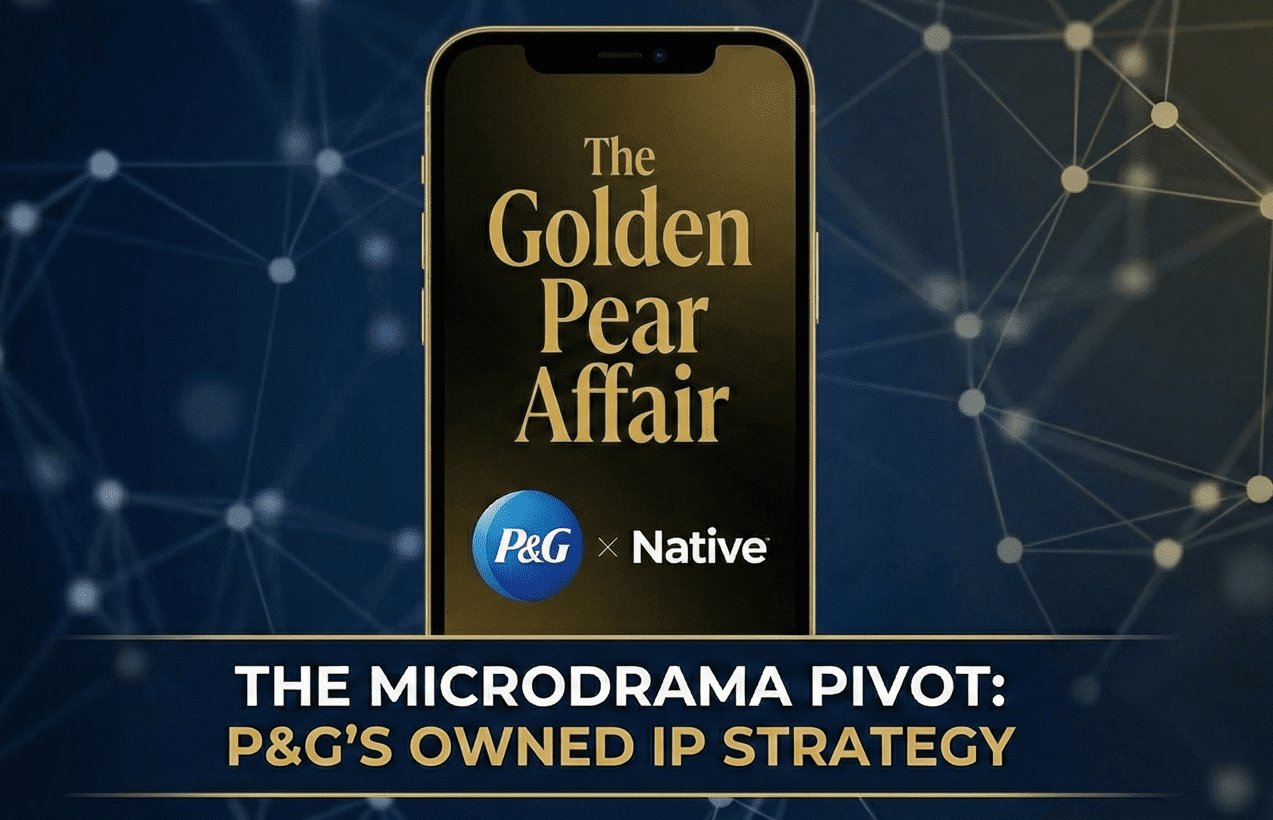
This month’s release of “The Golden Pear Affair” marks P&G Studios’ formal entry into the $11 billion microdrama market. The 50-episode scripted series, developed for the Native personal care brand, is currently rolling out across social platforms (TikTok, Reels) before migrating to a proprietary app. This launch represents a structural shift in branded content: rather than sponsoring a traditional show, P&G has funded a premium microdrama asset where the narrative architecture itself serves as the engagement engine. Produced by vertical-specialist Pixie USA in collaboration with Dentsu Entertainment, the series adopts the high-frequency, cliffhanger-driven format that defines the modern microdrama genre.
Parties & Dealmakers
Anna Saalfeld, Head of P&G Studios, acts as the strategic architect of this microdrama initiative. Her leadership signals a deliberate move to reclaim the “soap opera” heritage by adapting it to the vertical screen. Native (owned by P&G) is the IP holder. Dentsu Entertainment, led by Geneva Wasserman (Global EVP of Entertainment IP Strategy), facilitated the packaging and strategy. Pixie USA, founded by Jonas Barnes, serves as the physical production entity, selected for its specific capability to execute microdrama workflows.
Microdrama: The High-Speed, Low-Cost Advertising Avenue
The microdrama format offers a strategic solution to a critical FMCG problem: the need for premium narrative at social media speed. P&G’s pivot validates microdrama as a highly efficient advertising vehicle compared to traditional film or TV commissioning. Where a standard TV pilot can take months to greenlight and millions to produce, a 50-episode microdrama slate can be turned around in weeks at a fraction of the cost per minute. This agility allows brands to align storylines with current trends or product launches in near real-time, a flexibility impossible with traditional “prestige” TV. By adopting this format, Saalfeld is acknowledging that the “commercial break” is obsolete; the cost-effective nature of the microdrama allows the brand to fund the story itself, ensuring high retention without the bloat of traditional production models.
Supply-Chain Impact
The industrialization of the microdrama creates a new supply chain tier: the Corporate Microdrama Studio. We are witnessing a shift away from generalist ad production toward specialized vendors like Pixie USA that can deliver broadcast-quality vertical narratives at volume. This will drive a sharp increase in demand for vendors and talent who specialize in this unique, high-velocity format. Casting directors must now source “microdrama-native” talent capable of emotional resonance in vertical close-ups, while post-production houses must adopt rapid-fire editing workflows that differ significantly from commercial spots.
Vitrina Perspective
We anticipate a “Microdrama Arms Race” across the FMCG sector later this year. Now that P&G has proven the efficacy of this channel, competitors like Unilever, Nestlé, and L’Oréal will likely follow suit, validating the microdrama as a mandatory line item in media budgets. This will transform the format from a niche entertainment play into a standard avenue for mass-market advertising, favoring brands that can secure production capacity with top-tier vertical studios early.
Find Film+TV Projects, Partners, and Deals – Fast.
VIQI matches you with the right financiers, producers, streamers, and buyers – globally.
Producers Seeking Financing, Co-Pros, or Pre-Buys?
Vitrina Concierge helps producers reach the right financiers, commissioners, distributors, and co-production partners — with precision outreach, not cold pitching.
Join Industry Briefings Trusted by Leaders

Format Adaptations: Global Trends
Where formats are traveling, which adaptations are breaking out, and how streamers are backing remakes in 2025–2026.

Books, Novels & Comics Adaptations: Global Trends
Books, webtoons, and manga driving the next global screen hits. Discover how in this webinar.

Micro-Dramas & Mobile-First Storytelling
Micro-dramas are building real audiences and revenue. Understand the platforms, buyers, and economics behind the growth.

Navigating Global Content Licensing Trends
How global content licensing is shifting beyond flat fees to flexible, deal-driven models.
