About Innovation Hub
 Global Content Pulse (Webinars)


 Global Production Financing
(Webinars)
Global Production Financing
(Webinars)  LeaderSpeak Podcast
  About Vitrina
 Our Story
 Our Solutions 🔥
 Film+TV Projects Tracker 🚀
 Case Studies
 Our Profile
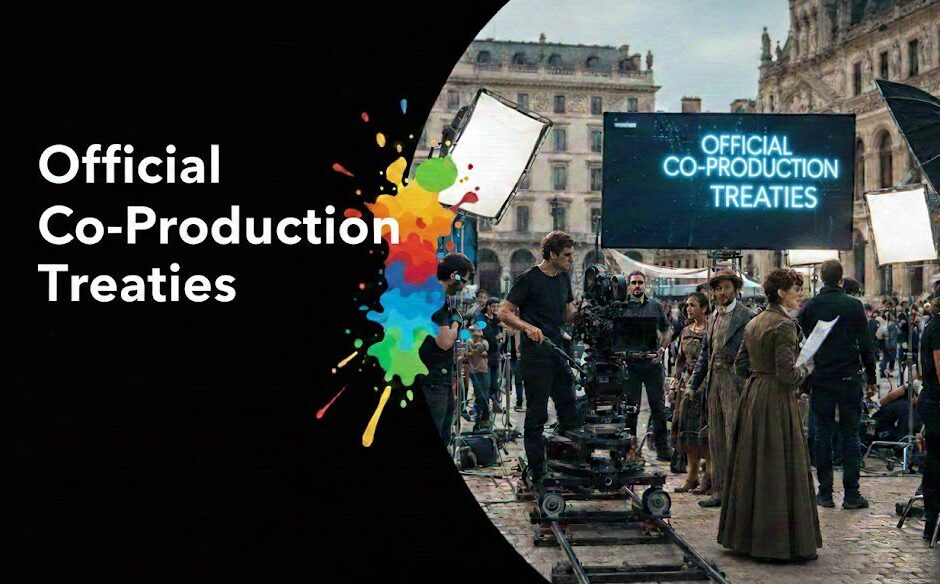
Official co-production treaties are inter-governmental agreements that allow film and TV projects to be recognized as “national” productions in two or more countries simultaneously.
This status is the golden ticket for producers—it unlocks access to domestic tax rebates, government grants, and broadcast quotas in all participating territories. Typically, these treaties require a minority partner to contribute at least 20% of the budget and creative input to qualify.
In today’s “Big Crunch” of independent film finance, relying on a single territory’s incentives often isn’t enough to close a gap. That’s where bilateral treaties come in.
They aren’t just legal paperwork; they’re strategic weapons that de-risk projects by doubling your pool of soft money. But here’s the thing: navigating the requirements—from creative points systems to spend ratios—requires a CFO-level precision that many producers overlook until it’s too late in the cycle.
Table of Contents
Stop Guessing Who’s Financing. Get Targeted Outreach.
Stop searching and start getting funded. We identify the exact decision-makers currently backing projects like yours, turning raw data into risk-aligned capital partnerships.
Major Studios
Scouting early stage projects, IP, and Regional partners for global studio pipelines.
IP Owners & Leads
Connecting creative leads with qualified financiers and major streaming platforms.
Streamers
Securing high-value pre-buy content and discovering early-stage global IP for platforms.
Indie Producers
Bridging the gap for indie filmmakers to reach executive production partners and capital.
Global Financing Ecosystems
Mapping complex markets and pairing projects with disciplined, risk-aligned capital across global territories worldwide.
How Official Co-Production Treaties Work
At its core, a bilateral treaty is a promise between two nations to treat a joint project as if it were a local one. If you’re a UK producer partnering with a Brazilian company under the 2025 UK-Brazil Film Co-production Agreement, your film is legally “British” in London and “Brazilian” in Rio. This isn’t just about pride—it’s about the waterfall.
Most treaties operate on a “points system” or a set of creative and technical requirements. To gain “Approved Co-production Status,” you have to prove that each country is contributing more than just cash. You need a balance of artistic personnel, technical crew, and local spend.
As insiders recognize, the most common pitfall is the “20% rule”—the minimum financial and creative contribution required from the minority partner. Slip below that, and you’re just a service production with no rights to the local rebate.
Phil Hunt, CEO of Head Gear Films, discusses the shifting landscape of global film finance:

Producers looking to bridge their financing gaps can explore 140+ international lenders on Vitrina who specialize in treaty-backed projects.
The Vitrina Treaty Readiness Audit™
Before you sign a co-pro agreement, you need to ensure your project actually fits the treaty’s rigid parameters. We’ve developed a framework to help you assess your project’s eligibility before approaching competent authorities like the BFI, Telefilm Canada, or the CNC.
The Vitrina Treaty Readiness Audit™
| Factor | Requirement | Risk Level |
|---|---|---|
| Minority Spend | Usually 20% – 30% of total budget | High |
| Creative Points | Specific roles (Lead actor, Editor, etc.) | Medium |
| Technical Pass | Spend on local post-production/VFX | Low |
| Third-Party Spend | Limited to 10-25% outside treaty countries | Critical |
*Score each category. If you fail the “Third-Party Spend” check, the treaty may be void for your project.*
Want to know which countries have active treaties with your home territory? Ask VIQI, our AI assistant, for an instant treaty mapping of your target markets.
Financing Benefits: Beyond the Tax Rebate
One of the most powerful benefits of official co-production treaties is the ability to bypass foreign ownership restrictions in broadcast and distribution. In many markets, TV broadcasters are mandated to show a certain percentage of “national” content. By securing treaty status, your international project qualifies as local content—making it significantly more valuable to buyers and streamers in both countries.
Consider the financial implications:
- Dual Incentives: You can stack the UK’s Audio-Visual Expenditure Credit (AVEC) with Canada’s Federal Tax Credit. This often covers 40-50% of the total budget.
- Public Funding Access: Projects qualify for selective grants from the BFI, Telefilm, or Eurimages that are otherwise closed to foreigners.
- Talent Mobility: Treaties typically include “temporary entry” clauses that simplify visas and work permits for cast and crew between the signatory nations.
For producers managing complex production financing, these treaties provide a structured capital stack that senior debt lenders actually trust. Lenders love treaties because the rules are clear—it’s far less risky than a “creative” co-pro based on handshakes and offshore vehicles.
Find the Financiers Backing Your Genre
Stop searching and start getting funded. We identify the exact decision-makers currently backing projects like yours, turning raw data into risk-aligned capital partnerships.
Regional Spotlights: UK, India, and Australia
The treaty landscape is expanding rapidly. In late 2025, we’ve seen a surge in “New World” partnerships that are rewriting the production map. Here’s what’s actually happening on the ground:
The UK-Brazil Treaty (2025)
The long-awaited UK-Brazil treaty is now fully operational. For UK producers, this provides a foothold in the massive Brazilian market while utilizing Brazil’s diverse locations and lower production costs. Minority spend requirements hover around the 20% mark, making it accessible for medium-budget indie features.
Australia-India Co-Production (WAVES 2025)
Following the WAVES Film Bazaar in 2025, Australia and India have accelerated their partnership. Major MoUs were signed for Punjabi feature films with valuations exceeding $7 million USD. These projects leverage Australia’s sophisticated post-production facilities and India’s massive domestic market.
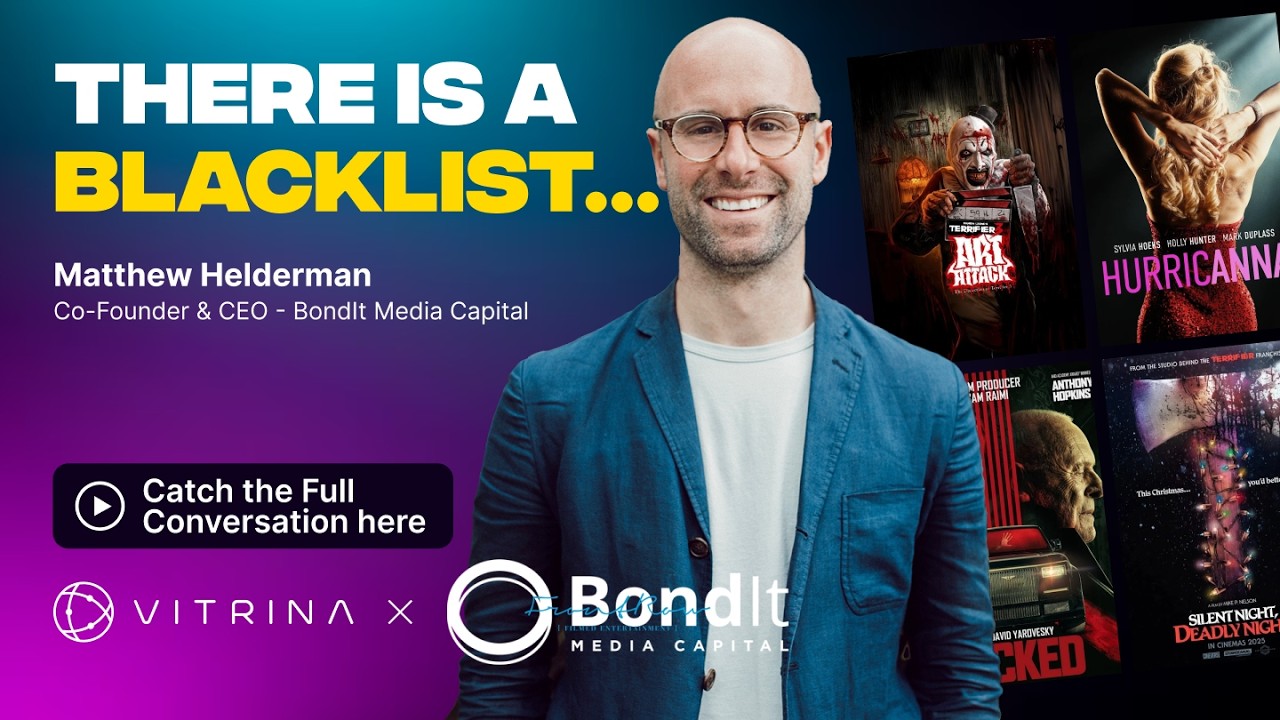
Matthew Helderman, CEO of BondIt Media Capital, discusses navigating a post-streamer world:
How Vitrina Helps with Co-Productions
Finding a co-production partner isn’t just about finding another company; it’s about finding the right financial and creative match that satisfies treaty requirements. Vitrina’s platform is designed to cut through the Fragmentation Paradox™—the thousands of opaque silos that hide perfect partners.
- Partner Discovery: Filter through 600,000+ companies by territory, project history, and verified post-production capabilities.
- Intelligence on Demand: Ask VIQI for the latest updates on tax incentives and treaty statuses in emerging Sovereign Content Hubs™.
- Concierge Support: For active deals, our team provides hands-on matching to ensure your capital stack is optimized for treaty compliance.
Frequently Asked Questions
What is the minimum contribution for a bilateral co-production?
Most official co-production treaties require the minority partner to contribute between 20% and 30% of the total budget. This includes both financial investment and creative/technical participation. Some multilateral agreements (three or more countries) allow the contribution to drop as low as 10% for the smallest partner.
Does treaty status guarantee tax rebates?
No. Approval as an official co-production is the first step, but it doesn’t automatically grant tax relief. You must still meet the specific domestic requirements of each country’s revenue service (like HMRC in the UK or the IRS in the US). However, treaty status is usually a prerequisite for accessing these incentives as a foreign partner.
Can I use a co-production treaty for TV series?
Yes. While many early treaties were film-focused, most modern “Audio-Visual Co-production Agreements” cover feature films, TV series, animation, and even web content. Always check the specific definitions in the treaty text, as some older agreements may exclude purely digital distribution formats.
What happens if the project budget changes during production?
This is a major risk. If a budget overrun occurs and the majority partner pays for it, the minority partner’s percentage could drop below the 20% threshold. This could void the treaty status. Insiders recommend building a “buffer” into the minority partner’s spend to ensure compliance even if the final costs fluctuate.
Are third-country nationals allowed to work on the production?
Most treaties require the “makers” of the film to be citizens or residents of the signatory countries. However, “exceptional circumstances” clauses often allow for A-list talent from third countries (like a US star in a UK-Canada co-pro). This usually requires pre-approval from the competent authorities and may be capped at a specific percentage of the cast.
Do I need a completion bond for a treaty co-production?
While the treaty itself might not mandate it, the national film funds and banks providing the cash-flowed rebates almost certainly will. Completion bonds ensure that the “national status” remains intact by guaranteeing the project is delivered according to the approved specs.
The Bottom Line
Official co-production treaties are the most reliable path to closing complex international budgets. They transform a project from a “foreign import” into a “national asset” in multiple markets. If you’re currently structuring a cross-border deal, the Vitrina platform provides the database and expertise to find your perfect partner and satisfy treaty requirements. Ready to explore your options? Contact our Concierge team today for personalized matching.
Find Film+TV Projects, Partners, and Deals – Fast.
VIQI matches you with the right financiers, producers, streamers, and buyers – globally.
Producers Seeking Financing, Co-Pros, or Pre-Buys?
Vitrina Concierge helps producers reach the right financiers, commissioners, distributors, and co-production partners — with precision outreach, not cold pitching.
Join Industry Briefings Trusted by Leaders

Format Adaptations: Global Trends
Where formats are traveling, which adaptations are breaking out, and how streamers are backing remakes in 2025–2026.

Books, Novels & Comics Adaptations: Global Trends
Books, webtoons, and manga driving the next global screen hits. Discover how in this webinar.

Micro-Dramas & Mobile-First Storytelling
Micro-dramas are building real audiences and revenue. Understand the platforms, buyers, and economics behind the growth.

Navigating Global Content Licensing Trends
How global content licensing is shifting beyond flat fees to flexible, deal-driven models.