IHUB
IHUB
 Private Briefings (Webinars)


 LeaderSpeak Podcast
  Global Entertainment Digest (Newsletter)
  Premium Lists
 Premium Reports
 Membership Benefits
 About Vitrina
 Our Story

Global micro-drama revenues hit $11 billion in 2025 — nearly double the size of the FAST channel market — and the format is still accelerating (Omdia, 2025). What began as a Chinese mobile entertainment phenomenon has become the fastest-growing content format in media and entertainment, now attracting Hollywood studios, PE-backed platforms, and Nollywood producers alike. If you’re a producer, financier, or distributor evaluating this format, this guide covers everything you need: production specs, budget ranges, platform commissioning, and monetization structures — from China to Southeast Asia to the US and Africa.
Key Takeaways
- Global micro-drama revenue reached $11B in 2025, with ex-China markets growing at 28.4% CAGR through 2030 (Omdia/Variety)
- A standard series runs 60–100 episodes at 60–90 seconds each, with full series budgets from $41K (China) to $600K (Western premium)
- ReelShort generated $130M in Q1 2025 alone — proof that coin-unlock monetization scales outside China
- Production costs have fallen 60% in China due to ecosystem maturity; Western markets are catching up fast
- Micro-drama apps now drive 35.7 min/day of US user engagement — surpassing Netflix’s 24.8 min (Sensor Tower)
Quick Answer
Global micro-drama revenue reached $11B in 2025, with ex-China markets growing at 28.4% CAGR through 2030 (Omdia/Variety). A standard series runs 60–100 episodes at 60–90 seconds each, with full series budgets from $41K (China) to $600K (Western premium). ReelShort generated $130M in Q1 2025 alone — proof that coin-unlock monetization scales outside China.
What Is Micro-Drama Production?
Micro-drama production is the creation of short-form serialised dramatic content — typically 60 to 90 seconds per episode, 60 to 100 episodes per series — engineered for vertical (9:16) mobile viewing and monetised through episode-unlock micropayments, subscriptions, or advertising. The format originated in China around 2020, where platforms like Douyin, Kuaishou, and WeChat scaled it to 830 million viewers and a domestic market exceeding $9.4 billion in 2025 (Deadline/MPA, 2025).
What distinguishes micro-drama from other short-form content is its serialised, cliffhanger-driven structure. Each episode ends on an engineered hook, driving viewers to unlock the next episode — generating ARPU ($37–$47 per paying viewer per series) that rivals premium streaming. The production model is also radically compressed: a 100-episode series can shoot in 10 days in China’s mature ecosystem, at a fraction of traditional drama cost.

Global Micro-Drama Market Landscape 2026
The global micro drama production market generated $11 billion in total revenues in 2025, with China contributing 83% ($9.1B) and ex-China markets growing at a 28.4% CAGR, projected to reach $9.5 billion by 2030 (Variety/Owl & Co., 2025). Micro-drama apps now generate 35.7 minutes of daily engagement per US user — surpassing Netflix’s 24.8 minutes — with 2.3 billion global app downloads in 2025 alone.
Key Stat
$11B in global revenues in 2025. China: $9.1B (83%). Ex-China CAGR: 28.4% through 2030. Micro-drama apps: 35.7 min/day US engagement vs Netflix’s 24.8 min. 2.3B global app downloads in 2025 alone.
| Market | 2024 Revenue | 2025 Estimate | Key Dynamic |
|---|---|---|---|
| China | $7.0B | $9.4B | Surpassed domestic theatrical box office; 830M viewers |
| United States | $819M | ~$1.4B | Largest non-China market; MicroCo + GammaTime entering |
| Southeast Asia | $50M | >$100M | Indonesia #2 globally by downloads (50M+); 2.1x growth |
| UK / Europe | Included in ex-China $1.4B | Growing | UK #2 international market; My Drama/Holywater primary vehicle |
| Nigeria / Africa | Nascent | Nascent | South Africa most profitable ($7–15K/week); Nollywood pivoting |
Production Specifications: Format, Length & Crew
Micro-drama has a tightly standardised production format. Deviating from these specs risks rejection by platform content review teams and reduces algorithmic distribution. Here are the non-negotiable technical requirements across all major markets.
Key Stat
Chinese productions deploy 60–90 crew members for a full series. Western independents run leaner — often 15–25 crew — using gimbal cameras, LED volume stages, and AI-generated backgrounds. AI-assisted production now covers 30%+ of Chinese micro-drama budgets.
Core Format Requirements
- Aspect ratio: 9:16 vertical (portrait mode, smartphone-first — non-negotiable)
- Episode length: 60–90 seconds standard; some platforms allow up to 5 minutes (Chinese AVOD), Western platforms cluster at 60–120 seconds
- Episode count: 60–100 episodes per series (some Western premium formats use 20–40)
- Total runtime: 80–120 minutes aggregate — equivalent to one feature film
- Structure: Each episode ends on an engineered cliffhanger; paywall triggers after episode 5–10
- Script pace: 12–13 pages per shooting day (vs. 3–5 pages for traditional drama)
Crew Size
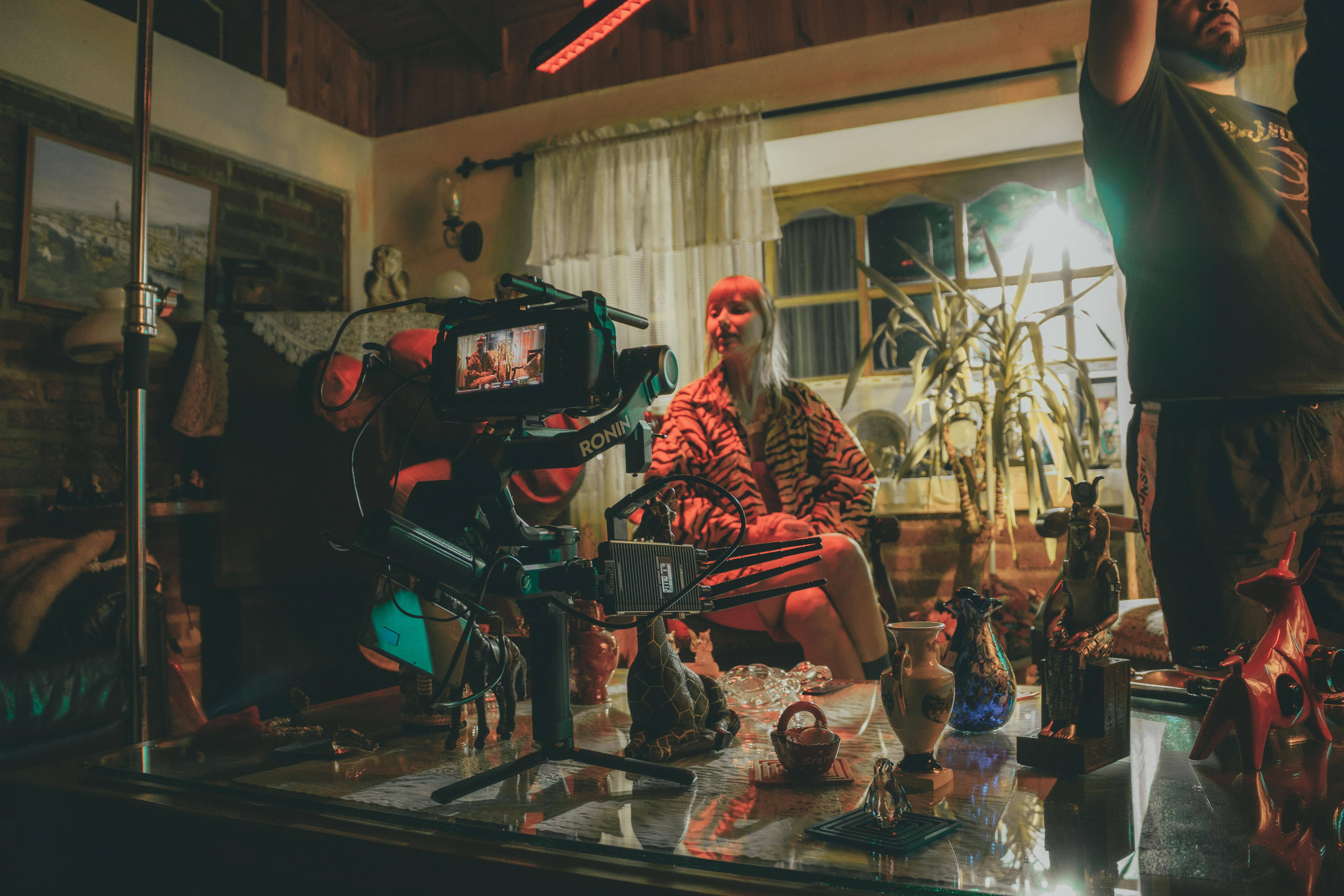
Chinese productions typically deploy 60–90 crew members for a full series. Western independent productions run leaner — often 15–25 crew — using gimbal-mounted cameras, LED volume stages, and AI-generated backgrounds to compress both cost and schedule. AI-assisted production is now used by over 30% of Chinese micro-drama budgets for backgrounds, colour grading, and dubbing localisation.
Step-by-Step Micro-Drama Production Workflow
A micro-drama series moves from greenlight to platform delivery in approximately 60 days in a mature ecosystem. Here is the full workflow broken into five stages.
Key Stat
Production budgets vary dramatically by market. China’s mature ecosystem has driven per-episode costs down 60% since 2022 (Mission Media Asia, 2025). Western markets are still maturing — budgets are higher, but the revenue upside is proportionally larger.
Development & Scripting (Days 1–14)
- Select a genre: romance, revenge, supernatural, CEO/office drama — these four dominate global charts
- Write a series bible and episode-by-episode outline (60–100 episodes); each episode must end on a cliffhanger
- Script total: 12–15 pages per shooting day, budgeted across a 7–10 day shoot
- Confirm platform commissioning or self-fund; get content classification clearance (mandatory in China since 2024)
- Lock financing: brand co-production, pre-sale to platform, or equity from production company
Pre-Production (Days 15–21)
- Cast leads (2–4 principals); micro-drama roles are often filled in 24–48 hours via platform-affiliated talent pools
- Scout locations: interiors dominate (hotel rooms, offices, apartments) — minimises permit complexity and schedule risk
- Prep wardrobe, props, and LED volume panels if using virtual backgrounds
- Schedule shoot: 10–15 episodes per day is standard in mature markets
Production / Principal Photography (Days 22–31)
- Shoot 6–10 days total for a 60–100 episode series
- Camera: gimbal-mounted for smooth vertical movement; avoid handheld for platform quality standards
- Lighting: LED panels preferred; minimal rigging for fast turnaround
- Shoot ratio: 3:1 or 4:1 maximum — over-shooting kills the schedule
Post-Production (Days 32–45)
- Edit each episode individually: tight pacing, no slow scenes, hook in first 3 seconds
- Colour grade for mobile-first viewing (high contrast, vivid palette performs better on OLED screens)
- Add subtitles: burned-in for AVOD; SRT for localisation to secondary markets
- AI dubbing for localisation: now standard for series targeting Southeast Asia, Middle East, and Latin America
- Deliver per-episode in MP4/H.265 at platform-specified bitrates
Platform Delivery & Marketing (Days 46–60)
- Submit content for platform review (5–7 days typical in China; 2–3 days on Western apps)
- Marketing-to-production spend ratio: 9:1 on US platforms like ReelShort — budget accordingly
- Launch strategy: release 5–10 free episodes, then paywall; social clips on TikTok/Reels drive discovery
- Monitor episode-level retention data; underperforming cliffhangers signal edit or re-shoot requirements
Micro-Drama Budget by Market: What Does It Actually Cost?
Production budgets vary dramatically by market. China’s mature production ecosystem has driven per-episode costs down 60% since 2022 (Mission Media Asia, 2025). Western markets are still maturing — budgets are higher, but the revenue upside is proportionally larger.
| Market | Per-Episode Budget | Full Series (80–100 eps) | Notes |
|---|---|---|---|
| China (standard) | $430–$1,200 | $41K–$117K | Hengdian ecosystem; 100 eps in 10 days possible |
| Southeast Asia | ~$625 | ~$50K | Indonesia, Thailand, Malaysia — growing production bases |
| Western (standard) | $1,500–$3,750 | $100K–$300K | ReelShort-spec; MicroCo target budget range |
| Western (S-class) | $4,000–$7,500 | $400K–$600K | GammaTime / premium Western platform originals |
| Africa (Nollywood) | Nascent / variable | $7K–$15K | South Africa most profitable at $7–15K/week revenue; low-cost entry |
Which Platforms Are Commissioning Micro-Dramas in 2026?
The platform landscape has fragmented rapidly. ReelShort’s $490M in cumulative revenue by Q1 2025 proved the model works outside China, triggering a wave of new entrants (Deadline, 2025). Here are the active commissioning platforms worth pitching in 2026.
Global / Western Platforms
- ReelShort (COL Group): Largest US market player; $130M Q1 2025 revenue; 370M+ downloads globally. Pitches: romcom, CEO, revenge genres. Revenue share model for commissioned content.
- GammaTime: Launched October 2025 with $14M backing from Bill Block (ex-Miramax), Kim Kardashian, and Kris Jenner. 22 launch titles; actively acquiring originals with $4K–$7.5K per-episode budgets.
- MicroCo: Lloyd Braun, Jana Winograde, and Susan Rovner; app launch H1 2026; targeting $100K–$200K per series budgets; premium Western format.
- My Drama / Holywater: EU-focused; Fox Entertainment equity stake; committed to 200+ shows over 2 years. Strong UK/European distribution.
- DramaBox: 44M MAU; first profitable short-drama platform in 2024; actively co-producing with international producers.
China Platforms (for co-production or licensing deals)
- Douyin / ByteDance (Hongguo): Dominant domestic platform; established Short-Drama Copyright Centre May 2025; key for any China-market strategy.
- Kuaishou (Xi Fan): One of China’s Big Three; AVOD + coin model; strong rural and tier-2 city penetration.
- WeChat Video Accounts (Tencent): Integrated with WeChat Pay; subscription-first model; best for serialised drama with repeat viewer loyalty.
Monetization Models: How Micro-Dramas Generate Revenue
The micro-drama monetization stack is more sophisticated than it appears. Platforms deploy a waterfall of five models, often simultaneously. Understanding the model that applies to your deal structure determines your revenue projection (Spyro-Soft, 2025).
Distribution & Licensing for Micro-Dramas
Distribution deal structures in micro-drama differ significantly from traditional TV. The three primary structures are platform commission (platform funds production, retains IP), revenue share (producer retains IP, platform takes 30–50% of in-app revenue), and licensing (outright territorial licence fee, typically $5K–$50K per series for secondary markets). International licensing is the fastest-growing deal type as ex-China platforms acquire translated Chinese content for their libraries.
Localisation is the key distribution lever. AI dubbing now enables a Chinese series to launch simultaneously in English, Spanish, Portuguese, and Bahasa within 2 weeks of Chinese delivery. Southeast Asia — led by Indonesia, Thailand, and Malaysia — absorbed over 10% of global in-app micro-drama revenue in 2025, driven almost entirely by translated Chinese content.

How Vitrina Helps Micro Drama Producers & Distributors Navigate the Market
Micro-drama moves fast. By the time a series hits the trades, the commissioning window is closed. Vitrina tracks active micro-drama commissioning across platforms in real time — so every micro drama production company, independent producer, and distributor knows which platforms are acquiring, what genres they’re targeting, and which markets are open before they pitch.
VIQI, Vitrina’s AI query interface, lets you ask natural-language questions across 300,000+ M&E companies and active projects: “Which platforms are commissioning micro-dramas in Southeast Asia with active acquisition mandates?” or “Find me gap financiers active in short-form content in 2026.” The answer comes in seconds — not weeks of cold outreach.
For senior executives who want introductions rather than data, Vitrina Concierge delivers verified connections to platform commissioning heads, gap financiers, and distribution partners — with mandate intelligence confirming they’re actively acquiring in your genre and territory before the first call is made.
Find Micro-Drama Buyers & Financiers on Vitrina
Track active commissioning mandates across ReelShort, GammaTime, DramaBox, and 300,000+ M&E companies worldwide.
Conclusion
Micro-drama is no longer a novelty format — it’s a $11 billion global industry growing at nearly 30% annually outside China. The production model is mature, the monetization stack is proven, and the platform landscape is expanding rapidly across the US, Southeast Asia, and Africa. Producers who understand the format’s technical requirements, budget realities, and commissioning dynamics have a genuine first-mover advantage in markets where the category is still nascent.
The key variables are market selection, platform alignment, and monetization model. A $50K series produced in Southeast Asia with a coin-unlock model on a regional platform can generate returns that dwarf a $300K Western production targeting the wrong audience. The intelligence advantage — knowing which platforms are acquiring, what they want, and when — is what separates producers who close deals from those who pitch into the void.
For M&E executives evaluating the format in 2026, the question is not whether micro-drama is viable — the market has answered that. The question is which market, which platform, and which production model fits your slate and financing structure. That’s the intelligence Vitrina was built to deliver.
Access Real-Time Micro-Drama Intelligence
VIQI gives you instant answers on commissioning mandates, financiers, and distribution partners across 300,000+ M&E companies.
Frequently Asked Questions
Connect with Micro-Drama Buyers via Vitrina Concierge
Verified introductions to commissioning heads, gap financiers, and distribution partners — with mandate intelligence before the first call.
About the Author
Vitrina Research Team
The Vitrina Research Team produces intelligence-led analysis on media and entertainment industry structure, deal activity, and market trends. Our research draws on VIQI’s proprietary dataset of 300,000+ M&E companies worldwide.