IHUB
IHUB
 Private Briefings (Webinars)


 LeaderSpeak Podcast
  Global Entertainment Digest (Newsletter)
  Premium Lists
 Membership Benefits
 About Vitrina
 Our Story

By Vitrina Research Team | Published: September 18, 2026 | 10 min read
Greece film production market growth is no longer a story about scenic backdrops. Between 2018 and 2025, incentive-supported productions generated €928.7 million in gross value added for the Greek economy, a 4.2:1 return on investment, according to a January 2026 study by Olsberg SPI reported by ProtoThema. For producers, financiers, and studio executives, Greece has quietly moved from a location scout’s postcard to a treaty-backed, rebate-driven production territory competing directly with established European hubs.
The signal is not subjective. International production inquiries into the country rose 300% year-over-year, and roughly €120 million was allocated to productions in 2025 alone, a level expected to hold into 2026, per Enterprise Greece. Brad Pitt’s five-week shoot for “The Riders” across five Greek locations, and a Netflix content commitment exceeding €100 million through 2026, are the visible face of a market that has built the incentive infrastructure to sustain far more than one-off location work.
Key Takeaways
- Greece’s audiovisual incentive generated €928.7 million in gross value added between 2018 and 2025, a 4.2:1 ROI (Olsberg SPI, 2026).
- The 40% cash rebate, administered by EKOME (EKOMED), is among Europe’s most competitive, capped at €8 million per work, €10 million for strategic projects.
- International production inquiries grew 300% year-over-year, with roughly €120 million allocated to productions in 2025.
- Brad Pitt’s “The Riders” and a Netflix commitment exceeding €100 million through 2026 mark a shift from location-only shoots to sustained production activity.
- Studio capacity (Kapa Studios’ 10 Athens soundstages) and Eurimages/European Co-Production Convention access give producers and financiers a treaty-backed structure to build deals around.
Why Greece Is Emerging as a Global Film Production Hub
For most of the last two decades, Greece functioned as a location, not a production base. The original “Mamma Mia!” used the island of Skopelos as a backdrop; Richard Linklater shot “Before Midnight” in the Peloponnese. Crews arrived, filmed exteriors, and left, with financing, post-production, and most below-the-line spend happening elsewhere. That pattern has changed. Deadline identified Greece as a genuine production hot spot rather than a scenic extra, and the incentive data since has confirmed the shift.
Greece film production market growth is now underpinned by three reinforcing factors. First, a cash rebate rate that is competitive against Western and Eastern European peers alike. Second, a government apparatus actively coordinating tourism and production policy. Third, a domestic vendor base that has scaled up to service international budgets rather than just second-unit work. That alignment is unusual: the Tourism Ministry, the Greek National Tourism Organization, Netflix, and the Thessaloniki International Film Festival signed a coordinated memorandum of understanding, tying the country’s tourism and production strategy together directly.
For producers and financiers evaluating where to place a project, the practical question is no longer “can we shoot in Greece,” but “does the rebate math, the crew depth, and the co-production access line up for this specific budget and genre.” The table below summarizes the core numbers.
| Metric | Detail | Source |
|---|---|---|
| Cash rebate rate | 40% of eligible Greek spend, up to 80% of total production cost | Hellenic Film Commission (EKOME) |
| Minimum Greek spend | €200,000 (features), €60,000 (documentaries), €35,000/episode (TV), €80,000 (animation) | EKOME / EKOMED |
| Rebate cap | €8 million per work; €10 million for strategic projects | EKOME |
| Cumulative economic impact | €928.7 million gross value added, 2018-2025 (4.2:1 ROI) | Olsberg SPI, Jan 2026 |
| 2025 production funding allocated | Approximately €120 million | Enterprise Greece |
How Big Is Greece’s Film Production Market?
The domestic baseline is modest by design: IBISWorld puts the Greek film, video, and television production industry at €272.9 million in 2026, a segment that actually contracted at a 2.2% CAGR between 2020 and 2025 before the incentive-driven turnaround. That figure captures domestic industry revenue, not the inbound international spend the rebate program was built to attract. From 2019 through mid-2026, more than €300 million in total funding was granted under the incentive framework. Of that, 81% was tied specifically to the cash rebate scheme. That split is a clear indicator: Greece film production market growth is being driven primarily by international productions choosing Greece for the rebate economics, not by organic domestic industry expansion.
Where Greece’s Incentive Funding Goes (2019 – mid-2026)
Source: Enterprise Greece, total incentive funding 2019–mid-2026
The 40% Cash Rebate Program
Greece’s cash rebate returns 40% of eligible Greek production expenditure, capped at 80% of the total production budget, administered by EKOME, rebranded EKOMED, the Hellenic Film and Audiovisual Centre. Minimum Greek spend thresholds are set per category: €200,000 for live-action features, €60,000 for documentaries, €35,000 per episode for TV series, €80,000 for animation features, and €50,000 for video games, according to the Hellenic Film Commission. Rebates are capped at €8 million per work, rising to €10 million for projects designated strategic. Commercials are not eligible. Producers structuring the rebate alongside other financing sources can benchmark it against the instruments covered in Vitrina’s guide to soft money film financing.
Eurimages and Co-Production Treaty Access
Greece has been a member of Eurimages, the Council of Europe’s co-production support fund, since 1989, and Eurimages has backed 51 majority and 55 minority Greek co-productions since then. Multilateral structuring generally runs through the European Convention on Cinematographic Co-Production, which requires at least two independent producers established in different member states. For producers used to navigating bespoke bilateral treaties, the mechanics are comparable to those covered in Vitrina’s breakdown of the UK-Israel co-production treaty, where treaty status determines whether a project qualifies as a domestic production in two territories simultaneously.
Studio and Crew Infrastructure Build-Out
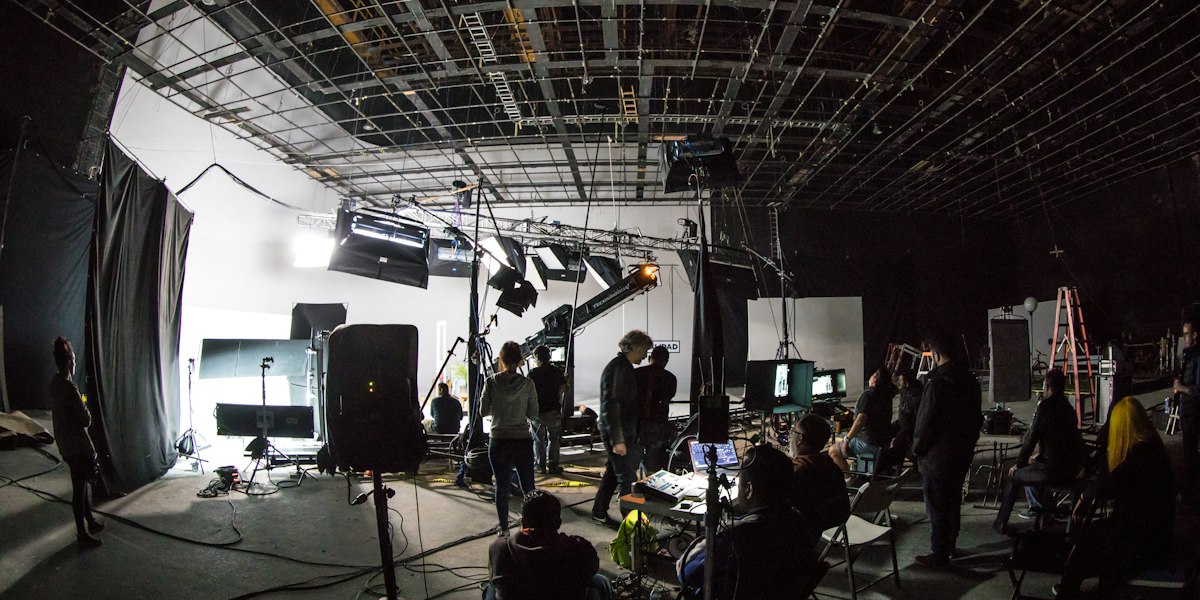
Athens now hosts Kapa Studios, offering 10 soundstages ranging from 400 to 1,600 square metres, alongside a Thessaloniki branch of Nu Boyana Film Studios. Crew depth has grown alongside demand, though it remains the market’s tightest constraint during peak season, a point covered in more detail below. The build-out matters because rebate eligibility and treaty access only convert into completed productions when local capacity, sound stages, grip and lighting houses, post-production facilities, exists to support them.
Why International Producers Are Choosing Greece Now
Brad Pitt’s “The Riders,” directed by Edward Berger and distributed by A24, filmed across five Greek locations over five weeks between February and March 2026, with the shoot on Hydra generating an immediate tourism surge and 100% hotel occupancy weeks before the season, according to GreekReporter. It is the kind of production, A-list cast, prestige director, distributor-backed, that signals a market has moved past festival-circuit co-productions into mainstream studio consideration.
Netflix has committed more than €100 million to Greek content through 2026, formalized through a memorandum of understanding with the Tourism Ministry, the Greek National Tourism Organization, and the Thessaloniki International Film Festival, which marked its 66th edition in 2026. For a streaming platform, that level of commitment only makes sense when the underlying economics, rebate rate, crew cost, currency, and logistics, are already competitive against alternative EU shooting locations.
The rebate economics are the mechanism behind the headlines. A 40% return on eligible local spend, uncapped by the kind of per-project budget ceilings that some U.S. state programs impose, changes the calculus for mid-to-large budget features and high-end series. Producers comparing Greece against non-EU alternatives often benchmark it against programs like the one detailed in Vitrina’s guide to the New York State Film Tax Credit, where credit percentages, caps, and qualifying spend rules follow a similar underlying logic but different numbers entirely.
VITRINA INTELLIGENCE
Who’s Actually Working in Greece Right Now?
Trade headlines show you the Brad Pitts and the Netflix deals. VIQI shows you the verified studios, vendors, and financiers behind them — searchable by capability, budget tier, and deal activity across 159,223 companies, instead of chasing referrals.
How Producers Access Greece’s Incentives and Local Partners
Accessing the rebate is a structured application process, not an automatic entitlement, and producers who treat it as a formality tend to lose weeks in resubmissions.
Applying for the Cash Rebate
Applications go through EKOME before principal photography begins, with the production demonstrating it meets the minimum Greek spend threshold for its category and submitting a detailed budget breakdown of eligible costs. Approval is followed by a post-production audit of actual spend against the application before the rebate is disbursed, standard practice across most European cash rebate systems, but one that requires a local production accountant familiar with EKOME’s specific documentation requirements from day one.
Structuring Co-Productions and Local Crew Requirements
Treaty co-productions require a Greek producer as one of at least two independent producers established in different member states, which in practice means identifying a credible local production services partner early, not after a shoot date is locked. This is also where financing structures intersect with production logistics: rebate cash flow timing, treaty co-production equity splits, and gap financing against the rebate itself all need to be modeled together, a process covered more broadly in Vitrina’s guide to post-production financing options for producers.
What Are the Core Challenges in Producing in Greece?
Greece film production market growth has outpaced some of the infrastructure built to support it, and two operational frictions come up consistently in producer accounts of shooting there.
Seasonal Capacity and Crew Depth
Demand concentrates heavily in the spring-to-autumn window, when weather and daylight hours are most favorable for exterior island shoots. Crew depth has expanded substantially over the past three years, but experienced department heads, particularly in specialized roles like underwater camera or high-end VFX supervision, still get booked out early in peak season. Productions that can shift schedules toward shoulder seasons generally get better access to top-tier local crew.
Bureaucracy and Permit Timelines
Filming near or within archaeological sites, common given Greece’s location appeal, requires separate permits from the Ministry of Culture in addition to standard municipal filming permits. These approvals can take significantly longer than location permitting in less heritage-dense markets, and productions that build in buffer time for multi-agency sign-off avoid the schedule compression that has derailed less-prepared shoots.
Which Regions Within Greece Are Attracting the Most Production?
Production activity is concentrating around three distinct clusters, each serving a different part of the production pipeline.
Athens: Studios and Post-Production Infrastructure
Athens anchors the country’s stage and post-production capacity, led by Kapa Studios’ 10 soundstages, and is where most VFX, sound, and finishing work happens even for productions shot primarily on the islands. It is also the natural base for a production’s core crew and equipment houses.
The Islands: Location Shooting Demand
Hydra, Corfu, Santorini, and Mykonos continue to draw the highest volume of location-driven requests, a legacy of the “Mamma Mia!” franchise reinforced by newer, higher-profile shoots like “The Riders.” Island logistics, ferry-dependent equipment transport, limited accommodation capacity during peak tourist season, are the primary planning constraint for productions based here.
Thessaloniki and the North: Festival and Co-Production Hub
Thessaloniki functions as Greece’s co-production and industry networking center, anchored by the Thessaloniki International Film Festival, and hosts a regional branch of Nu Boyana Film Studios. It is the market’s second production base and the venue where much of the country’s Eurimages-backed co-production activity gets sourced and packaged.
What Makes a Production a Good Fit for Greece?
Not every project benefits equally from Greece’s incentive structure, and evaluating fit before committing to a shoot date avoids costly mid-production surprises.
Budget Tier and Rebate Efficiency
The €8 million rebate cap (€10 million for strategic projects) means the effective rebate percentage declines sharply for the highest-budget tentpoles, since eligible Greek spend well beyond the cap earns nothing further. Mid-budget features and high-end limited series, where Greek spend can realistically sit within the cap, tend to capture the full economic benefit of the 40% rate. Mega-budget productions still shoot in Greece, but usually for creative rather than purely financial reasons.
Genre and Location Fit
Period dramas, prestige thrillers, and travel-adjacent narratives benefit most directly from Greece’s location value, ancient sites, coastal geography, distinctive island architecture, layered on top of the rebate economics. Projects requiring extensive purpose-built sets or heavy soundstage-only shooting see less differentiated value from choosing Greece specifically over other rebate-competitive European markets, since the location premium is what tips the decision.
How Greek Service Vendors and Studios Are Getting Discovered by International Productions
A 300% year-over-year jump in international production inquiries has created a discoverability problem in the opposite direction. Producers scouting Greece for the first time have no reliable, centralized way to identify which local studios, equipment houses, post-production facilities, and fixers are actually equipped to service their specific budget and genre. Trade press coverage and personal referrals still drive most of these introductions, which slows deal formation on both sides.
For Greek studios, equipment vendors, and production service companies, this is a structural business development opportunity. International producers and streaming platform sourcing teams researching the Greek market are actively looking for verified local partners, and being discoverable to that specific audience, rather than relying on inbound referrals alone, is now a measurable competitive advantage as the market scales.
VITRINA INTELLIGENCE
Invisible to the Producers Flooding Into Greece?
International inquiries are up 300% year-over-year, and most of that demand still moves through trade press and personal referrals. List your studio, equipment house, or service company on Vitrina and get found by the producers actively sourcing Greek partners right now.
How Vitrina Helps Producers and Financiers Navigate the Greek Market
Evaluating a market moving as fast as Greece’s requires knowing who is actively producing there, who holds verified local production capacity, and which financiers and co-production partners are already structuring incentive-linked deals. This kind of company-level intelligence has historically been scattered across trade coverage, festival catalogs, and personal networks built up over years of location scouting. VIQI, Vitrina’s M&E intelligence platform, consolidates it into a searchable database of 159,223 verified companies worldwide.
Producers and financiers use VIQI to identify Greek production companies, studios, and service vendors by capability, budget tier, and deal activity, cutting research time from weeks of cold outreach to hours of targeted search. Film commissions and incentive bodies also use the platform to understand who is actively evaluating their territory, closing the loop between policy promotion and the producers actually making location decisions.
For Greek studios and vendors, being listed on VIQI puts their capabilities directly in front of the international producers and streaming platform teams currently driving the market’s 300% growth in inbound inquiries, structured discoverability at exactly the moment demand is accelerating.
VITRINA INTELLIGENCE
Still Finding Greek Partners by Cold Email?
See exactly how producers and financiers use VIQI to go from weeks of cold outreach to a focused, hours-long search — verified studios, vendors, and co-production partners across 159,223 companies.
Conclusion
Greece film production market growth is a structural shift, not a seasonal spike. A 40% cash rebate with real teeth, Eurimages and treaty-backed co-production access, and studio infrastructure that has scaled to match demand have turned a country once known for location cameos into a market attracting A24-backed studio films and nine-figure streaming commitments in the same cycle.
The opportunity now sits at three levels: producers and financiers who can model the rebate cap and treaty structure correctly before committing to a budget tier, film commissions and policy bodies looking to convert incentive spend into durable industry infrastructure, and the Greek studios and vendors positioned to capture a 300% surge in inbound interest, if international buyers can actually find them.
For producers and acquisition executives, the practical challenge is intelligence: who is producing in Greece right now, who holds verified local capacity, and who is actively structuring incentive-linked deals. That is the gap VIQI is built to close. Start your search for Greek production partners today.
Frequently Asked Questions
What is the current cash rebate rate for filming in Greece?
Greece offers a 40% cash rebate on eligible local production spend, capped at 80% of the total production budget, administered by EKOME (EKOMED). Minimum Greek spend thresholds apply by category: €200,000 for live-action features, €60,000 for documentaries, and €35,000 per episode for TV series. Rebates are capped at €8 million per work, rising to €10 million for projects designated strategic.
What is driving Greece’s film production market growth in 2026?
A combination of factors: a January 2026 Olsberg SPI study confirming €928.7 million in cumulative gross value added since 2018 at a 4.2:1 ROI, a 300% year-over-year jump in international production inquiries, high-profile shoots like Brad Pitt’s “The Riders,” and a Netflix content commitment exceeding €100 million through 2026 formalized alongside the Tourism Ministry and the Thessaloniki International Film Festival.
How does Greece’s incentive compare to other co-production destinations?
Greece’s 40% rate is among the more competitive in Europe, though it applies against a lower per-project cap than some larger markets. Producers typically benchmark it against both EU treaty partners, using mechanisms like the European Convention on Cinematographic Co-Production and Eurimages, and non-EU programs such as U.S. state credits, where structures differ significantly in cap size and qualifying spend rules. Vitrina’s country-by-country comparison of film production tax incentives covers how 40+ jurisdictions stack up.
What are the biggest operational challenges of producing in Greece?
Seasonal crew capacity and multi-agency permitting are the two most cited frictions. Demand concentrates in the spring-to-autumn window, straining experienced department heads, while filming near archaeological sites requires separate Ministry of Culture approval on top of standard municipal permits, extending timelines for productions that do not plan for it.
How can Greek studios and vendors get discovered by international productions?
With inbound production inquiries up 300% year-over-year, most Greek studios, equipment houses, and post-production facilities still rely on trade press coverage and personal referrals to reach international producers. Listing on an M&E intelligence platform like Vitrina’s VIQI puts verified capability and contact data directly in front of producers and streaming platforms actively sourcing partners for Greek shoots.
About the Author
Vitrina Research Team
The Vitrina Research Team produces intelligence-led analysis on media and entertainment industry structure, deal activity, and market trends. Our research draws on VIQI’s proprietary dataset of 159,223 M&E companies worldwide.