About Innovation Hub
 Global Content Pulse (Webinars)


 Global Production Financing
(Webinars)
Global Production Financing
(Webinars)  LeaderSpeak Podcast
  About Vitrina
 Our Story
 Our Solutions 🔥
 Film+TV Projects Tracker 🚀
 Case Studies
 Our Profile
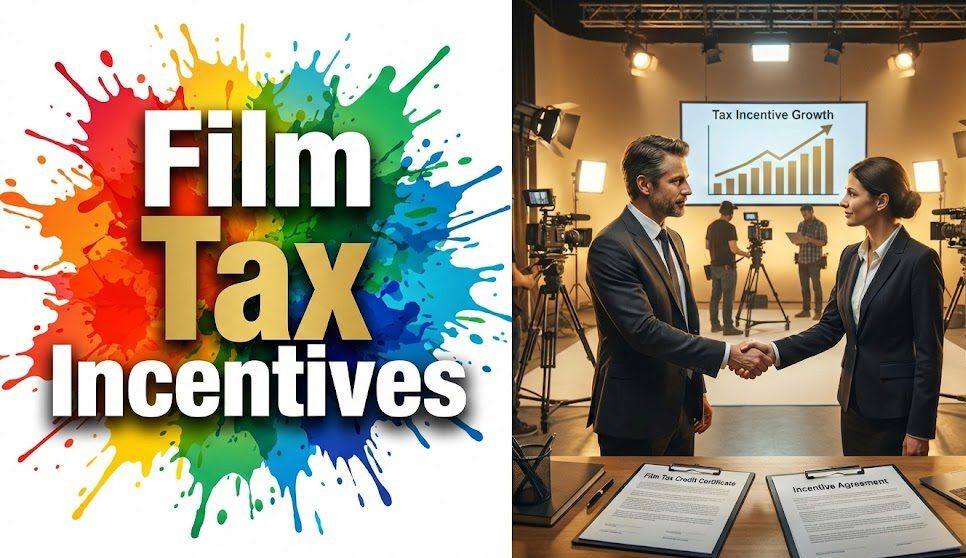
Film tax incentive risks often stem from a fundamental misunderstanding: thinking of rebates as “free money” rather than conditional debt. While incentives can cover 25-40% of a budget, the primary risks include cash flow delays (averaging 12-24 months), strict residency compliance failures, and disqualification during final audits. To avoid these, producers must prioritize pre-certification, maintain audit-ready payroll records, and secure professional bridging loans to manage the liquidity gap.
Let’s be real—the global “arms race” for production spend has created a landscape where a single paperwork slip can vanish millions from your capital stack. Whether you’re eyeing the 40% rebate in Saudi Arabia or the newly increased 30% location offset in Australia, the margin for error is effectively zero. If you aren’t tracking your QAPE (Qualifying Australian Production Expenditure) or local labor spend daily, you’re not just filming; you’re gambling.
Table of Contents
Stop Guessing Who’s Financing. Get Targeted Outreach.
Stop searching and start getting funded. We identify the exact decision-makers currently backing projects like yours, turning raw data into risk-aligned capital partnerships.
Major Studios
Scouting early stage projects, IP, and Regional partners for global studio pipelines.
IP Owners & Leads
Connecting creative leads with qualified financiers and major streaming platforms.
Streamers
Securing high-value pre-buy content and discovering early-stage global IP for platforms.
Indie Producers
Bridging the gap for indie filmmakers to reach executive production partners and capital.
Global Financing Ecosystems
Mapping complex markets and pairing projects with disciplined, risk-aligned capital across global territories worldwide.
1. The Cash Flow Trap: Why Incentives Aren’t Liquid
The most immediate film tax incentive risk is the timeline. Many first-time producers assume that because a jurisdiction promises a 30% rebate, that cash will be available to pay the caterers during production. It won’t. Most incentives are “after-the-fact” payouts, often requiring a final audit and government processing that can take 6 to 18 months after the film wraps.
According to analysis from 2024-2025 production cycles, the effective delay between principal photography and incentive payout in major hubs like Hungary or the UK has stretched to 14 months on average. If you don’t have the cash flow to wait—or the creditworthiness to secure a bridge loan—you’ll burn precious time scrambling for liquidity mid-shoot.
Producers often bridge this gap with specialized lenders, but this comes with its own costs. You’re looking at interest rates of 8-15%, plus legal and origination fees. Suddenly, that “free” 30% rebate looks more like a 22% net benefit after you’ve paid for the privilege of accessing your own money early. Producers should ask VIQI about current bridging rates for specific territories before finalizing their financing plan.
2. The Compliance Minefield: Residency and Spend Thresholds
Compliance isn’t a suggestion; it’s a binary state. You’re either eligible, or you’re not. A common risk involves the “Residency Status” of key crew members. If you fly in a DP from London to shoot in British Columbia, their wages don’t count toward the provincial credit—even if they’ve been living in a hotel there for three months. Auditors verify residency with T4s, utility bills, and driver’s licenses.
The math is equally unforgiving. Many regions have minimum spend thresholds. Australia’s Location Tax Offset, recently increased to 30%, now carries a minimum QAPE threshold of $20 million. If your project spends $19.9 million, you get zero. Not a prorated amount. Zero. This is what insiders call the “Threshold Cliff.”
Strategic players understand that production financing depends on these numbers being bulletproof. If your budget is hovering near the minimum threshold, you need a 10% contingency above that threshold just to account for exchange rate fluctuations or disqualified line items. Don’t cut it close—the government won’t help you bridge a $100,000 shortfall.
3. The Vitrina Incentive Readiness Check™
The Vitrina Incentive Readiness Check™
Before committing to a location based on its rebate, run your project through these five critical signals:
| Signal | Requirement | Risk Level |
|---|---|---|
| 1. Pre-Certification | Application filed before first dollar spent. | HIGH |
| 2. Spend Buffer | Budget is 10%+ above minimum threshold. | MEDIUM |
| 3. Residency Audit | ID/Tax proof collected for 100% of local crew. | CRITICAL |
| 4. Sunset Clause | Legislation is active through project wrap. | MEDIUM |
| 5. Cash Flow Bridge | Signed LOI from a lender to bridge the rebate. | STABLE |
Scores below 4/5 require immediate remedial action before greenlight.
4. Audit Failure: The “Death by a Thousand Receipts”
Every film tax incentive ends at a government auditor’s desk. These auditors aren’t film fans; they’re forensic accountants. A common risk is failing to distinguish between “Qualifying” and “Non-Qualifying” spend. Marketing, P&A, and entertainment expenses almost never count. If you accidentally include your wrap party in your rebate claim, you’re flagging your entire production for a deeper, more aggressive audit.
Furthermore, “inflation of expenditure” is a major red flag for authorities. Recent reports from Screen Daily highlight that HMRC in the UK is actively pursuing producers who inflated connected-party transactions to maximize credits. The repercussions? Criminal charges, heavy fines, and the permanent blacklisting of your production company. It’s simply not worth the gamble.
Look, the goal is to be audit-ready on day one. Use digital payroll systems that automatically tag residency status. Maintain a “Live Audit” folder. As Phil Hunt of Head Gear Films often notes, the strength of your documentation dictates your speed to capital. If you want to accelerate post-production, you can’t have your financing tied up in a three-year audit dispute.
Find the Financiers Backing Your Genre
Stop searching and start getting funded. We identify the exact decision-makers currently backing projects like yours, turning raw data into risk-aligned capital partnerships.
5. Expert Perspectives: Phil Hunt and Andrea Scarso
Based on Vitrina’s analysis of our masterclass interviews, industry leaders see incentives as a foundational but volatile layer of the capital stack. Phil Hunt, who has financed over 550 movies, emphasizes that “Gap is the new equity,” but incentives are the bedrock that makes that gap bridgeable. If the incentive fails, the waterfall collapses.
Phil Hunt, CEO of Head Gear Films, explains the current financing climate:

Andrea Scarso, Managing Partner at IPR.VC, echoes this sentiment regarding concentration risk. He notes that content financing must be executed “responsibly and at scale.” For IPR.VC, which manages a €104m fund, a project’s tax incentive compliance isn’t just a box to tick—it’s a core component of de-risking the entire investment thesis. If you can’t prove your rebate is secure, institutional capital will look elsewhere.
6. How Vitrina Helps with Incentive Compliance
Navigating film tax incentive risks requires more than a spreadsheet; it requires verified intelligence. Vitrina connects producers with the global supply chain, allowing you to filter for partners who have a proven track record in specific incentive jurisdictions. Don’t hire a production accountant who “thinks” they know the Greek 40% rebate—hire one who has successfully audited three projects through it in 2025.
- Lender Discovery: Filter 140+ lenders who specifically cash-flow rebates in your target region.
- Expert Matching: Connect with line producers and accountants verified by Vitrina’s proprietary database.
- VIQI Research: Get instant answers on latest policy shifts, such as the Hungary registration cap or the Saudi cultural test requirements.
Ready to De-Risk Your Financing?
The difference between a successful rebate and a total loss is the team you have in place. Vitrina provides the tools to build that team with confidence.
Frequently Asked Questions
Can I apply for a tax incentive retroactively?
Almost never. Most jurisdictions, like New Jersey or California, require pre-certification or application before principal photography begins. Failing to submit your intent to film can disqualify your entire spend, even if you meet every other requirement. Always apply during pre-production.
What is the most common reason for rebate disqualification?
Residency non-compliance. Producers often assume “local spend” includes anyone working in the region. In reality, it strictly refers to residents who pay taxes in that jurisdiction. If you can’t provide a local driver’s license or tax ID for a crew member, their entire salary is disqualified from the credit.
How much does it cost to bridge a tax incentive?
Interest rates for bridging loans typically range from 8-15% per annum. You should also budget for legal fees ($15k-$25k) and an origination fee (1-2% of the loan). It’s expensive money, so ensure your rebate is large enough to justify the carrying costs.
Do marketing costs count toward the rebate?
No. Tax incentives are designed to stimulate local production activity, not global distribution. Marketing, travel for non-local cast, and entertainment expenses are almost universally excluded from “Qualified Expenditure.” Focus on local labor, equipment rentals, and location fees.
The Bottom Line
Film tax incentive risks are manageable, but they’re not for the disorganized. Treat your compliance as seriously as your creative vision. If you’re building a financing plan today, use Vitrina to vet your partners and secure your capital stack with verified industry intelligence. The “free money” is there—you just have to earn it.
Find Film+TV Projects, Partners, and Deals – Fast.
VIQI matches you with the right financiers, producers, streamers, and buyers – globally.
Producers Seeking Financing, Co-Pros, or Pre-Buys?
Vitrina Concierge helps producers reach the right financiers, commissioners, distributors, and co-production partners — with precision outreach, not cold pitching.
Join Industry Briefings Trusted by Leaders

Format Adaptations: Global Trends
Where formats are traveling, which adaptations are breaking out, and how streamers are backing remakes in 2025–2026.

Books, Novels & Comics Adaptations: Global Trends
Books, webtoons, and manga driving the next global screen hits. Discover how in this webinar.

Micro-Dramas & Mobile-First Storytelling
Micro-dramas are building real audiences and revenue. Understand the platforms, buyers, and economics behind the growth.

Navigating Global Content Licensing Trends
How global content licensing is shifting beyond flat fees to flexible, deal-driven models.