IHUB
IHUB
 Private Briefings (Webinars)


 LeaderSpeak Podcast
  Global Entertainment Digest (Newsletter)
  Premium Lists
 Membership Benefits
 About Vitrina
 Our Story
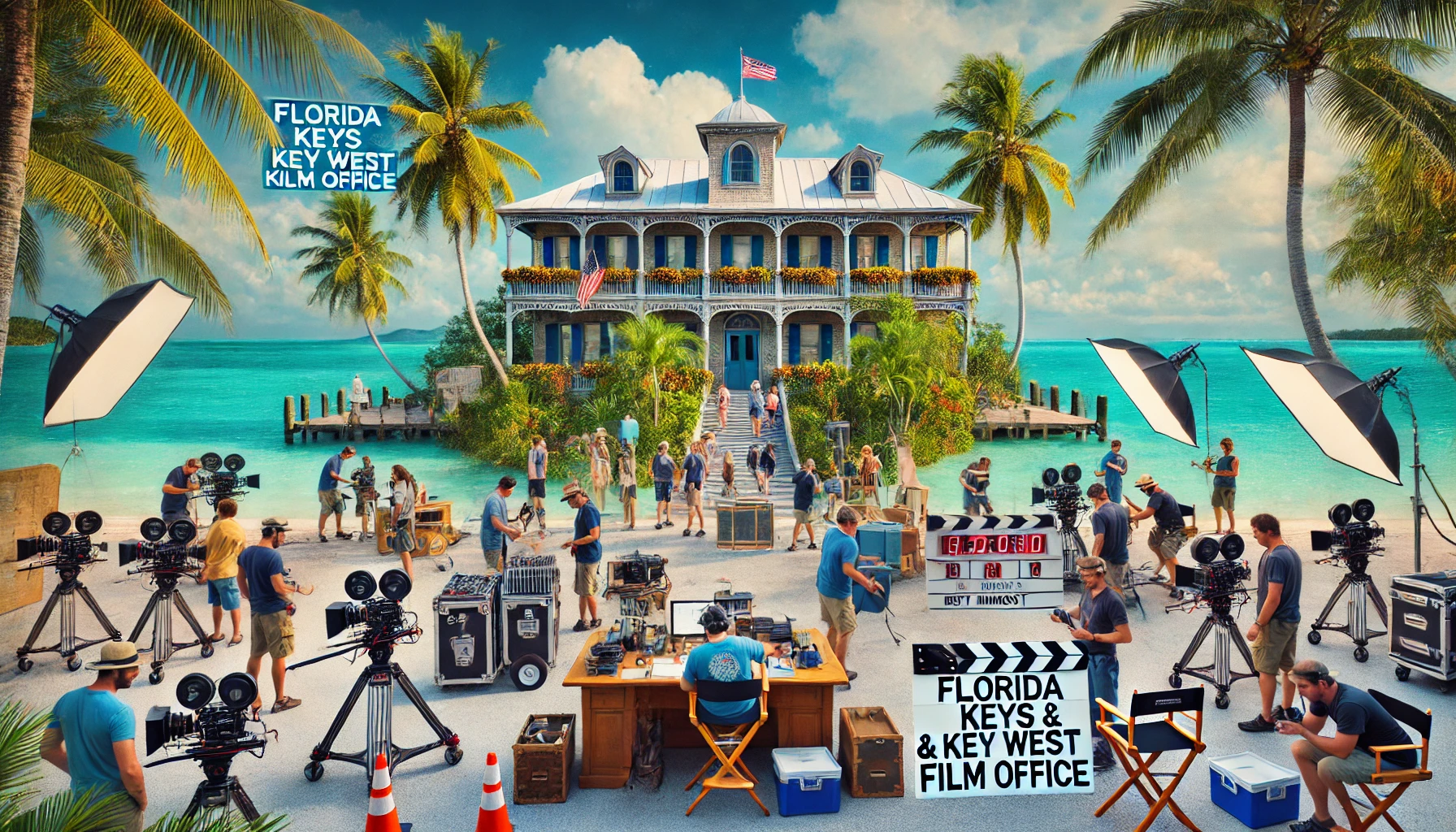
Anyone sourcing film production companies in Florida runs into the same surprise fast: the state has no active film tax credit, and yet Miami, Orlando, and Jacksonville still book thousands of production days a year. For producers and financiers weighing whether Florida belongs in a shoot plan, that contradiction is the entire story. This guide breaks down the real economics behind film production companies in Florida — why the state incentive disappeared in 2016, which counties built rebate programs to fill the gap, which production companies and facilities actually operate on the ground, and how to vet a Florida-based partner before you commit a budget.
None of this is theoretical for a financier building a location strategy. Every dollar of incentive math, every crew-availability assumption, and every insurance line item changes depending on whether a project shoots in Miami-Dade, Broward, or Orange County — or skips Florida altogether for Georgia or Louisiana. Treat this as a sourcing brief, not a tourism pitch: the goal is to know exactly what you’re buying before a location scout ever gets on a plane.
Key Takeaways
- Florida’s state film incentive program expired in 2016 after allocating roughly a decade of tax credits and has not been renewed; Florida is now the only Southeastern state without a statewide credit (Florida Politics, 2026; GreenSlate, 2026).
- Counties have stepped in where the state pulled back: Miami-Dade offers up to a 20% rebate through a $50 million, five-year fund, and Broward County runs seven separate programs paying 15-30% (Miami-Dade County, 2024; Film Lauderdale, 2026).
- Georgia (up to 30%) and Louisiana (up to 40%) still out-discount Florida on paper, but Florida competes on weather, location diversity, and its position as the production hub for U.S. Spanish-language content (Georgia.org, 2026; Opportunity Louisiana, 2026).
- There is no large independent studio campus in Florida comparable to Trilith or EUE/Screen Gems Atlanta — production infrastructure is concentrated around Universal Orlando’s backlot and Miami’s Doral broadcast studios.
- Vetting a Florida partner means verifying county-incentive eligibility, insurance/bonding capacity, and hurricane-season contingency planning before signing — not just checking a reel.
In This Guide
- Does Florida Have a Film Tax Incentive in 2026?
- Which Florida Counties Offer Production Rebates?
- How Does Florida Compare to Georgia and Louisiana on Incentives?
- Why Do Productions Still Choose Florida Without a State Credit?
- Which Production Companies Operate in Florida?
- How Deep Is Florida’s Production Talent and Crew Pool?
- What Studio and Soundstage Infrastructure Exists in Florida?
- Is Florida Likely to Bring Back a State Incentive?
- How Do You Vet a Florida Production Partner?
- What Do Cost and Logistics Actually Look Like on the Ground?
- What’s the Bottom Line on Sourcing Film Production Companies in Florida?
- Frequently Asked Questions
Does Florida Have a Film Tax Incentive in 2026?
No. Florida’s Entertainment Industry Financial Incentive Program ran out of allocated funding in 2016 and has not been replaced by a new statewide film tax credit as of the 2026 legislative session, which adjourned on March 13, 2026 without a dedicated film incentive bill advancing (Florida Politics, 2026; GreenSlate, 2026). Florida Politics reports the state is now the only Southeastern state without a statewide film incentive — a distinction that shapes every budgeting conversation about shooting there.
What does remain is a narrower tool: a statewide entertainment industry sales tax exemption under Florida law, which lets qualifying productions avoid sales tax on production-related purchases and rentals (Film Florida, 2026). That’s meaningfully different from a rebate or transferable tax credit — it lowers procurement costs but does not return a percentage of a production’s total in-state spend the way Georgia’s or Louisiana’s programs do.
For producers building a budget model, the practical implication is straightforward: Florida cannot compete on a state-level cash-back number. Any incentive math for a Florida shoot has to be built from county programs, not a statewide figure, which changes how due diligence needs to work compared to incentive states like Georgia. This is exactly the kind of gap financiers already model when they price in indie film financing structures that assume no guaranteed government backstop.
Which Florida Counties Offer Production Rebates?
Miami-Dade, Broward, Duval (Jacksonville), Orange (Orlando), Hillsborough (Tampa), and Pinellas (St. Petersburg/Clearwater) counties each run their own local rebate or grant programs, ranging from 10% to 30% of qualifying local spend, since the state stopped offering a program in 2016 (Film Florida, 2026; Miami-Dade County, 2024). This patchwork is the real incentive landscape a producer has to navigate in Florida.
Miami-Dade County’s High Impact Film Fund Program (HIFFP), approved in May 2024, commits up to $50 million over five years and pays up to a 20% cash rebate to qualifying productions (Miami-Dade County, 2024). The county also runs a smaller TV, Film & Entertainment Production Incentive Program for projects below HIFFP’s threshold.
Broward County’s Film Lauderdale office is the most aggressive local player, operating seven distinct programs. Its Multiple Project Guarantee pays 30% for studios committing to two projects within three years at a $4 million per-project minimum, while its baseline Film & TV Program pays 20% on a $400,000 minimum spend (Film Lauderdale, 2026).
Compare that structure to how international co-production incentives work: a treaty-based credit is contractual and predictable once a project qualifies, while a Florida county rebate is discretionary, capped, and dependent on annual local budget appropriations. Financiers used to modeling co-production tax breaks as a fixed input need to treat Florida’s county rebates as a variable one — confirm current-year fund availability before locking a budget, since caps like Broward’s $2.5 million Multiple Project Guarantee limit can be reached before a fiscal year ends.
| County | Program | Rebate | Min. Spend | Cap |
|---|---|---|---|---|
| Miami-Dade | High Impact Film Fund | Up to 20% | Not fixed statewide | $50M fund / 5 yrs |
| Broward | Multiple Project Guarantee | 30% | $4M/project | $2.5M/project |
| Broward | Scripted Series | 25% | $12M | $5M |
| Broward | Film & TV | 20% | $400K | $800K |
| Duval (Jacksonville) | Film & TV Tier 2 | 20% | $1M | $400K |
| Orange (Orlando) | TV and Film Incentive | 20% | $400K | $1M |
| Pinellas | Screen Industry Incentive | 10-20% | $100K | $300K |
| Hillsborough (Tampa) | Marketing Grant | Up to 10% | — | $150K |
Orange County, home to Orlando, also approved a new five-year, $25 million incentive commitment in November 2025 ($5 million per year through fiscal year 2030), with a program administrator hired and applications opening in 2026 (CF Public, 2025). That is a meaningful signal that county-level competition for productions is intensifying even as the state stays out of the game.
The takeaway for financiers: incentive stacking in Florida is a county-by-county negotiation, not a single form. Budget models need to name the specific county program a project qualifies for, since minimum spend thresholds and local-hire requirements vary widely between Miami-Dade, Broward, and the smaller programs.
It’s also worth confirming fund availability before finalizing a schedule, not after. County programs operate on annual budget cycles, and a program like Broward’s Multiple Project Guarantee has a hard per-project cap that can be reached before a fiscal year closes. A production locking a shoot date six months out should get written confirmation of remaining fund capacity from the relevant county film office, rather than assuming a published rebate percentage will still be available when principal photography starts.
How Does Florida Compare to Georgia and Louisiana on Incentives?
On paper, Florida cannot match Georgia’s up-to-30% transferable tax credit or Louisiana’s up-to-40% credit — but Florida’s county rebates plus its sales tax exemption still create a workable, if smaller, incentive stack for productions willing to do the county-level paperwork (Georgia.org, 2026; Opportunity Louisiana, 2026).
Georgia’s program pays a 20% base transferable credit with an additional 10% promotional uplift for including the state’s logo, for a maximum 30% rate, no annual program cap, and a $500,000 minimum spend (Georgia.org, 2026). Because the credit is transferable, production companies without enough Georgia tax liability to use it directly can sell it to Georgia taxpayers, typically clearing at a discount to face value. Louisiana pays a 25% base credit with uplifts for in-state screenplays, resident payroll, and visual effects work, capped at 40% of qualified spend, with the program itself limited to $150 million in credits issued per fiscal year (Opportunity Louisiana, 2026).
The practical read for a financing team: Georgia and Louisiana are built for productions large enough to fully absorb a five-to-seven-figure incentive and patient enough to handle credit transfer timelines. Florida’s county rebates, by contrast, are sized for a narrower band of mid-size productions and pay out faster, since they’re structured as direct rebates rather than transferable tax credits requiring a secondary buyer.
| State | Base Rate | Max Rate | Annual Cap | Transferable | Min. Spend |
|---|---|---|---|---|---|
| Florida | 0% (state) | 0% state / 10-30% county | No statewide cap | N/A | Varies by county |
| Georgia | 20% | 30% | No cap | Yes | $500,000 |
| Louisiana | 25% | 40% | $150M/fiscal year | Yes | $300,000 |
For a mid-budget feature or streaming series with flexible location needs, that gap is often decisive — Georgia and Louisiana can return tens of millions more on a large budget than any Florida county program can match. Isn’t the smarter question, then, why any production still picks Florida at all? The next section answers that directly.
Why Do Productions Still Choose Florida Without a State Credit?
Florida wins projects on factors incentives can’t replicate: a long dry season with reliable exterior shooting days, location diversity from Everglades wetlands to Art Deco Miami streetscapes, and an unmatched concentration of Spanish-language content production tied to Telemundo and Univision’s Doral studio campuses (NBCUniversal, 2018; Variety, 2023).
Telemundo’s Miami production hub, which opened in 2018 at a reported build cost of roughly $250 million, was described at launch as the world’s largest Spanish-language television production facility, spanning roughly 570,000 square feet across 13 studios (Hollywood Reporter, 2018). That single fact reframes what “Florida production” means for a lot of buyers — it is less a general-market alternative to Georgia and more the default U.S. base for scripted Spanish-language and Latin American-facing content.
Miami’s role as a Hispanic media hub dates back to the mid-1980s, when a forced sale of a Spanish-language network operator relocated key production infrastructure to the city, reinforced by its international airport access and existing Cuban-American media workforce (Variety, 2023). That history matters for sourcing decisions today: a producer targeting Latin American or U.S. Hispanic distribution should treat Miami less as a cost play and more as a talent-and-language specialization play, the way Atlanta is treated as a general-market volume play.
The dry season, roughly November through April, brings consistent sunshine and lower humidity, which reduces weather-related delay risk on exterior shoots (Moving Picture Company, 2026). That’s a real planning advantage, but it comes with an honest counterweight worth stating plainly: Florida’s hurricane season, June through November, is a genuine production-calendar risk that crews budget contingency time and insurance around — not a footnote to skip past when comparing states (ProductionHub, 2026).
There’s also a currency-and-content angle worth flagging separately from weather. Florida’s proximity to Latin America means talent, financiers, and distributors from the region can move in and out for casting sessions, pitch meetings, and post supervision without the long-haul travel a Los Angeles or Atlanta shoot would require. For a producer weighing where to base a Spanish-language original or a Latin American co-production, that logistics reality can outweigh a 10-point incentive gap on its own.
Real projects illustrate the pattern. Barry Jenkins insisted on filming “Moonlight” on location in Miami’s Liberty City and Virginia Key in 2015, reportedly despite Florida’s lack of a production tax incentive at the time — a case where the story’s authenticity outweighed the incentive math (Beverly Boy Productions). Netflix’s “Bloodline” originally planned to shoot only exteriors in the Florida Keys and move interiors to Georgia for cost reasons, but the production ultimately filmed entirely in Islamorada once the Keys’ waterways and old-Florida architecture proved central to the story (LocationsHub, 2015). Both examples make the same point for a financing team: Florida gets chosen when a location is the story, not when a project is purely optimizing for the lowest per-day cost.
Which Production Companies Operate in Florida?
Florida’s production base splits into two distinct tiers: large-scale broadcast and Spanish-language content operations concentrated in Doral/Miami, and a wider layer of independent full-service production companies spread across Miami, Orlando, Tampa, and Jacksonville handling commercial, corporate, documentary, and digital work.
At the top tier, Telemundo Studios in Doral produces some of the highest-rated Spanish-language scripted series in the U.S., including long-running titles distributed across NBCUniversal’s Telemundo network (NBCUniversal, 2018). Paramount Television International Studios (formerly Viacom International Studios), also based in Doral, produces content for Nickelodeon, MTV, and Comedy Central’s international feeds out of its Miami facility, which opened in 2015 (Miami Today, 2015).
Below that tier sit a range of full-service independent producers: Miami-based shops handling national commercial and branded content work, Orlando- and Tampa-based companies covering corporate and broadcast production statewide, and Jacksonville-based houses with decades of documentary and interactive production history. Boris FX, headquartered in Miami, is a notable exception on the post-production and VFX software side rather than production itself, and is worth knowing if a project needs a Florida-based post partner rather than a shooting crew.
None of this changes the sourcing math: a directory listing tells you a company exists, not whether it can deliver on budget, on schedule, and on a specific county’s incentive-compliance requirements. That’s the gap a verified sourcing platform is built to close, since credit histories and prior project scale matter more than a company’s own self-description — the same discipline producers already apply when checking a talent management agency’s actual roster against its marketing claims.
How Deep Is Florida’s Production Talent and Crew Pool?
Florida’s crew base is organized around two hubs — Miami-Dade/Broward in the south and Orlando in central Florida — with IATSE Local 477 representing statewide feature film, television, and commercial production workers and IATSE Local 500 covering stagehand and audio-visual crews from Key West to Vero Beach (Miami-Dade County Film & Entertainment Office, 2026).
The Miami-Dade County Film & Entertainment Office’s own union directory lists a full production ecosystem operating locally: IATSE Local 161 for script supervisors and production coordinators, Local 600 for cinematographers, Local 631 for stagehands and corporate/industrial work, Local 798 for makeup and hair, Teamsters Local 769 for drivers and location managers, plus active SAG-AFTRA, DGA, and Writers Guild of America East membership (Filmiami.org, 2026). That’s a materially deeper union bench than a state with no production history would have, even without a state incentive drawing volume.
On the training side, Full Sail University runs a Film Production MFA and undergraduate film degrees from its Winter Park campus near Orlando, feeding local crews and post houses with graduates trained on current production and post-production workflows (Full Sail University). Combined with Miami-Dade College’s film program and University of Central Florida’s presence near the Orlando studio corridor, Florida has a real, if smaller, talent pipeline feeding both the Doral broadcast campuses and the state’s independent production companies.
For a producer building crew, the practical question isn’t whether Florida has a labor pool — it does — but whether that pool has the specific specialization a project needs. A Spanish-language scripted series can draw on deep, proven Doral-based crews; a large-format English-language feature with heavy stage work will find a thinner bench than Atlanta or Los Angeles and should budget for some key department heads to travel in.
What Studio and Soundstage Infrastructure Exists in Florida?
Florida has no large independent studio campus comparable to Georgia’s Trilith Studios or Atlanta’s EUE/Screen Gems complex — its production infrastructure is concentrated at Universal Orlando’s backlot and soundstages, plus the Doral broadcast campuses built for Telemundo and Paramount’s international operations.
Universal Studios Florida’s Production Group operates soundstages and backlot locations in Orlando that have hosted network game shows and feature productions over several decades, with facilities available on a 24/7 production schedule (Universal Studios Florida, 2026). Metro Orlando’s broader soundstage footprint is real but modest relative to Georgia’s studio boom of the past decade.
In Miami, the Paramount Television International Studios facility in Doral, built through a public-private partnership with the Miami Omni Community Redevelopment Agency, opened in 2015 with two soundstages built to 40 feet to grid and roughly 88,000 square feet of total production space (Miami Today, 2015). Telemundo’s adjacent Doral campus adds significantly more purpose-built studio capacity, though it is built primarily for that network’s own scripted output rather than third-party rental (NBCUniversal, 2018).
For a producer comparing Florida to Georgia purely on facility depth, the honest read is that Florida is not a soundstage-first market. It’s a locations-and-talent-first market, better suited to projects that need exteriors, water, retro architecture, or Spanish-language production infrastructure than to stage-heavy studio productions. A project that’s genuinely stage-dependent — heavy set-build, greenscreen-intensive, multi-week interior schedules — will usually find better economics and more available capacity in Georgia or Louisiana, even after accounting for Florida’s lower county rebate ceiling.
Is Florida Likely to Bring Back a State Incentive?
Not imminently — the closest 2026 legislative action was a specialty license-plate bill designed to fund a nonprofit filmmaker-support initiative, not a tax credit, and it stalled short of full passage during the session that ended March 13, 2026 (Florida Politics, 2026; GreenSlate, 2026).
State Representative Fabián Basabe introduced a bill that would create a “Florida Film Legacy” specialty license plate, with proceeds funding a nonprofit called Feature Florida Partnerships to support filmmakers, festivals, and workforce development (Florida Politics, 2026). It’s a symbolic step, not a financial one — the bill does not create a rebate, credit, or grant program comparable to what Georgia or Louisiana offer, and it was still moving through the House as part of a broader specialty-plate package as of the 2026 session.
For financiers building multi-year location strategy, the realistic planning assumption is that Florida’s incentive landscape stays county-driven for the foreseeable future. County programs like Miami-Dade’s HIFFP and Orange County’s new $25 million commitment suggest local governments, not Tallahassee, are where the next incentive dollars will come from (Miami-Dade County, 2024; CF Public, 2025). That’s worth building into any multi-year Florida strategy: a project shooting there in 2027 or 2028 should expect a wider set of county options than exists today, not a sudden statewide credit.
How Do You Vet a Florida Production Partner?
Vetting a Florida production company means confirming three things beyond a standard reel review: which specific county incentive program the company has actually delivered projects under, its bonding and insurance capacity for hurricane-season contingency, and whether its crew base has depth for your genre and language requirements.
Start with incentive track record, not eligibility. A company that lists Miami-Dade or Broward incentive experience on paper is different from one that has actually closed a rebate claim — ask for a completed project reference with the specific program name and rebate percentage received. This maps directly to due-diligence practices producers already apply when evaluating gap financing structures or completion bond requirements, where paper eligibility and delivered performance are two different questions entirely.
Second, confirm hurricane-season contingency planning explicitly in any contract covering a June-through-November shoot window — insurance riders, standby days, and force majeure language should all reference named storm risk, not generic weather delay clauses. This is a Florida-specific line item that doesn’t show up in a Georgia or Louisiana contract template.
Third, match crew depth to project type. A company with strong Spanish-language scripted credits in Doral is not automatically the right partner for an English-language indie feature needing Everglades exteriors, and vice versa. Reviewing verified project history — not just a self-reported specialty list — is the fastest way to confirm fit before signing.
Fourth, check union affiliation directly rather than assuming it. Confirm whether a prospective partner’s crew works under IATSE Local 477 or Local 500 agreements, since that affects everything from day rates to overtime rules and turnaround requirements (Filmiami.org, 2026). A non-union shop can be a legitimate choice for a smaller commercial or digital project, but it changes the insurance and completion-bond conversation for anything financed at scale — the same conversation covered in our breakdown of what completion bond guarantors actually require.
Fifth, don’t skip a basic financial-health check on the production company itself. A company that looks active on social media or maintains a polished website isn’t the same as one with verified, financeable delivery history — a distinction that matters just as much when evaluating a Florida partner as it does when a distributor is structuring a licensing deal with an unfamiliar counterpart.
What Do Cost and Logistics Actually Look Like on the Ground?
Without a state rebate, Florida’s cost case rests on non-incentive factors: comparatively lower crew and location fees than California or New York, minimal weather-related exterior delays outside hurricane season, and direct flight access to Latin American markets that shortens travel costs for co-productions and talent (ProductionHub, 2026; Moving Picture Company, 2026).
Miami International Airport’s connectivity to Latin America is a genuine, if under-discussed, logistics advantage for productions casting or co-producing across the region — it reduces travel time and cost for talent, crew, and executives moving between Miami and cities like Mexico City, Bogotá, or São Paulo, compared to routing through Atlanta or Los Angeles. That’s part of why Latin American distribution partners frequently treat Miami as a natural staging market rather than a peripheral one.
Insurance is the other line item that moves meaningfully once hurricane season enters the picture. Productions shooting a June-through-November Florida schedule should expect named-storm riders, standby-day allowances, and evacuation contingency clauses that a Georgia or Louisiana shoot outside hurricane-prone windows wouldn’t need to price in at the same level — a real cost offset against Florida’s lower base crew rates that’s easy to miss in an early budget pass.
Budgeting a Florida shoot realistically means modeling county rebate eligibility as a variable, not a guarantee — a project’s line producer needs to confirm minimum spend thresholds and local-hire percentages against the specific county program before the number goes into a financing model, the same way production budget tiers require verified inputs rather than industry rules of thumb. Compare that to a co-production structure that instead leans on international treaty incentives — reviewed in our guide to co-production tax breaks — where the incentive is contractual rather than county-discretionary.
For music-driven or post-heavy projects, Florida’s cost profile looks different again; production companies handling music production and music video work or animation and VFX in Florida draw on a smaller, more specialized vendor pool than Atlanta or Los Angeles, which can mean faster relationship-building but fewer competing bids on price.
What’s the Bottom Line on Sourcing Film Production Companies in Florida?
Florida is not a default incentive play the way Georgia or Louisiana are — it’s a specialization play, best suited to projects that need Florida’s locations, its Spanish-language production infrastructure, or its Latin America proximity badly enough to accept a smaller, county-by-county rebate stack instead of a state credit.
That framing should drive the sourcing decision more than any single incentive percentage. A production chasing the largest possible rebate on a stage-heavy shoot has clear, well-documented reasons to look at Georgia or Louisiana first. A production that needs the Everglades, Art Deco Miami, the Florida Keys, or a Spanish-language crew fluent in scripted television has equally clear reasons to build its budget around Miami-Dade or Broward’s county programs instead.
Either way, the companies and facilities described in this guide are a starting point, not a finish line. Verifying that a specific production company in Florida has actually delivered a project at your scale, under the specific county program you’re targeting, with the crew depth your genre requires, is the work that separates a workable budget from a costly surprise mid-shoot. That verification is exactly what a structured sourcing platform is built to shortcut, replacing directory guesswork with confirmed project history.
Frequently Asked Questions
Does Florida offer a film tax credit in 2026?
No. Florida’s state-level Entertainment Industry Financial Incentive Program expired in 2016 and has not been replaced by a new statewide tax credit, making Florida the only Southeastern state without one (Florida Politics, 2026).
What is the best Florida county incentive for a mid-budget production?
Broward County’s Film & TV Program offers a 20% rebate on a relatively accessible $400,000 minimum spend, while Miami-Dade’s High Impact Film Fund offers up to 20% for larger projects under its $50 million, five-year commitment (Film Lauderdale, 2026; Miami-Dade County, 2024).
Is Florida cheaper than Georgia for film production?
Not on incentives — Georgia’s up-to-30% transferable credit generally outperforms Florida’s county rebates on large budgets. Florida can still be competitive on crew rates, location diversity, and reduced weather delay risk outside hurricane season (Georgia.org, 2026).
Why does Miami have so much Spanish-language production?
Miami became a hub for Hispanic media in the mid-1980s after a Spanish-language network’s production operations relocated there, reinforced today by Telemundo’s roughly 570,000-square-foot Doral production campus, described at its 2018 opening as the world’s largest Spanish-language TV production facility (Hollywood Reporter, 2018; Variety, 2023).
Are there soundstages in Florida comparable to Atlanta’s studio campuses?
No large independent studio campus in Florida matches the scale of Georgia’s Trilith or Atlanta’s EUE/Screen Gems complex. Florida’s studio capacity is concentrated at Universal Orlando’s backlot and Miami’s Doral broadcast campuses (Universal Studios Florida, 2026).
Could Florida bring back a statewide film incentive?
A 2026 bill focused on a specialty license plate funding filmmaker support programs, not a tax credit, was the closest legislative movement, and it does not replace a rebate or credit program (Florida Politics, 2026).
What should I check before hiring a Florida production company?
Verify the company’s actual delivered incentive claims (not just eligibility), confirm hurricane-season contingency terms in the contract, and check its crew depth against your project’s genre and language requirements before committing a budget.
Vitrina AI — Production Sourcing Intelligence
Find and vet Florida production partners with verified data, not directory guesswork
Search 300,000+ companies, 5 million+ professionals, and 30 million+ mapped relationships across 100+ countries — including verified incentive and project history for U.S. production hubs.