IHUB
IHUB
 Private Briefings (Webinars)


 LeaderSpeak Podcast
  Global Entertainment Digest (Newsletter)
  Premium Lists
 Membership Benefits
 About Vitrina
 Our Story
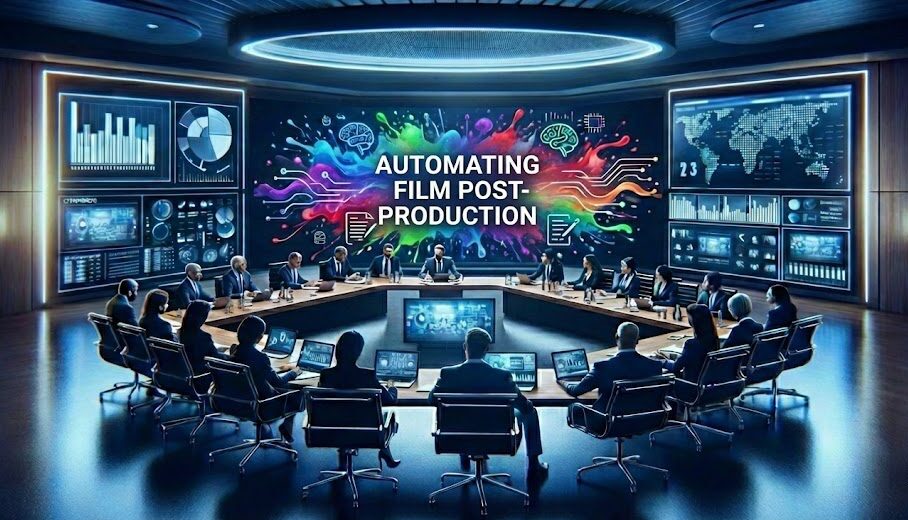
Find active productions before the RFP goes out
Vitrina’s project tracker surfaces productions entering post-production, so service providers can pitch during the active bidding window.
Automating a post-production task is only half the problem for a technical lead or service provider. The other half is finding the productions that actually need that capability, before the RFP goes out and the shortlist is already set. This guide covers both sides: what AI platforms are actually automating in VFX, color, and localization pipelines right now, and how technical leads and service providers use project-level intelligence to find the right productions to pitch.
Key Takeaways
- Vertical AI tools built for a specific task, rotoscoping, shot tracking, color matching, consistently outperform generic AI applied to the same work.
- Studios like PhantomFX and Outpost VFX are integrating AI into CGI, asset management, and lighting-matching pipelines to compress delivery timelines without adding headcount.
- AI localization platforms like DeepDub and Dubformer are compressing the gap between a domestic release and international availability, though premium titles still lean on human performance for the final pass.
- Finding the right automation partner is often the harder problem than automating the task itself. A technical lead who waits for a trade announcement is already behind a competitor who tracked the project earlier.
- Vitrina’s project tracker surfaces productions entering post-production in real time, so service providers can reach decision-makers during the active bidding window.
What Post-Production Automation Actually Means
Post-production automation is the application of AI-driven tools to labor-intensive tasks that traditionally required large teams working manually: rotoscoping, shot tracking, color matching, dialogue cleanup, and localization. The shift is from simple filters to systems that understand scene context well enough to handle a first pass with minimal manual correction. For a technical lead, the practical question is not whether to automate but which specific tasks in your pipeline are mature enough to hand to an AI tool today.
How AI Platforms Automate VFX Tasks
AI platforms automate VFX work by using computer vision and machine learning to analyze pixel data for depth, movement, and lighting. Rotoscoping a complex action sequence that used to take a team weeks can now get an initial mask from a vertical AI model in a fraction of that time, with an artist reviewing and correcting the output rather than tracing from scratch. That shift lets studios put senior talent on creative direction instead of repetitive technical work.
PhantomFX, a VFX house delivering high-volume work for Netflix and Hollywood productions, integrated AI-driven automation into its CGI and asset management pipelines to handle shot tracking and lighting matching at scale. Founder Bejoy Arputharaj has been direct about the implication: the constraint on VFX work is increasingly how fast quality art can reach a global audience, not just the art itself.
Duncan McWilliam, founder of Outpost VFX, discusses in the video above how AI and broader industry shifts are reshaping VFX studio operations, from culture to how a studio scales delivery capacity without scaling headcount at the same rate.
VITRINA INTELLIGENCE
Find Active Episodic Series Entering Post-Production
Ask VIQI which productions are moving into post right now, before the bidding window closes.
Why AI Localization Is Reshaping Global Distribution
AI dubbing and localization platforms including DeepDub and Dubformer use AI voice models to synchronize translated dialogue with picture, moving content from one territory to another in days rather than months. That speed is a big part of how a regional hit becomes a near-simultaneous global release rather than a slow, market-by-market rollout. For the full buyer’s guide to evaluating an AI dubbing vendor, including the rights and consent questions that come with synthetic voice, see Vitrina’s AI dubbing guide for filmmakers.
When to Invest in AI Tool Integration
- The task is repeatable and well-defined. Rotoscoping, color matching, and dialogue cleanup are strong candidates. Creative judgment calls are not.
- Volume justifies the integration cost. A one-off project rarely justifies building a new AI tool into your pipeline. A recurring episodic workload usually does.
- Your team can review the output. Every automated task still needs a human reviewer who can catch and fix what the model gets wrong.
- Data handling is documented. Confirm what happens to your footage or assets once they pass through a third-party AI tool, especially on unreleased material.
How Project Intelligence Powers Vendor Discovery
For a technical lead or service provider, the biggest barrier to winning automation-related work is not the tools. It is finding the right productions to pitch before the shortlist is already decided. Vitrina tracks entertainment companies and productions worldwide, and its project tracker identifies which productions are currently entering post-production, so a service provider can reach decision-makers during the active bidding window instead of waiting for a trade press announcement that lands after vendors are already selected.
How to Find and Vet AI-Capable Post-Production Partners
Vitrina lists verified AI-capable post-production companies, filterable by capability and credits, with direct contact to decision-makers. For the broader discipline-by-discipline breakdown of what AI is automating across editing, VFX, and sound, see Vitrina’s guide to AI in post-production.
VITRINA INTELLIGENCE
Shortlist an AI-Capable Post Partner
Ask VIQI: “Show me AI-capable post-production vendors with proprietary rotoscoping or color-matching pipelines.”
Frequently Asked Questions
Which AI platforms are best for automating VFX tasks?
Vertical AI platforms built for a specific task, such as rotoscoping, shot tracking, or depth mapping, consistently outperform generic AI tools applied to the same work. Studios like PhantomFX and Outpost VFX have integrated this kind of automation directly into their production pipelines.
How does AI automate film color grading?
AI automates color grading by analyzing reference frames and applying consistent color balance across a sequence, holding visual continuity across episodic content while colorists focus on artistic adjustments rather than technical matching between shots.
Can AI automate the editing process for feature films?
AI can automate rough-cut assembly by analyzing dialogue and scene changes, but feature film editing remains a creative discipline. AI is currently strongest at technical prep, such as syncing audio and organizing dailies, which saves an editor time before the creative work starts.
Is AI localization replacing traditional dubbing?
AI localization is augmenting rather than replacing traditional dubbing. It is well suited to high-volume content where traditional dubbing was previously too slow or costly, while premium titles still typically pair AI generation with human performance for the final pass.
How do I find productions that need AI-capable post-production services?
Waiting for a trade press announcement usually means the vendor shortlist is already set. Vitrina’s project tracker identifies productions entering post-production in real time, so a service provider can reach decision-makers during the active bidding window.