


 About Innovation Hub
 Global Content Pulse (Webinars)


 Global Production Financing
(Webinars)
Global Production Financing
(Webinars)  LeaderSpeak Podcast
  About Vitrina
 Our Story
 Our Solutions 🔥
 Film+TV Projects Tracker 🚀
 Case Studies
 Our Profile
Deal Overview
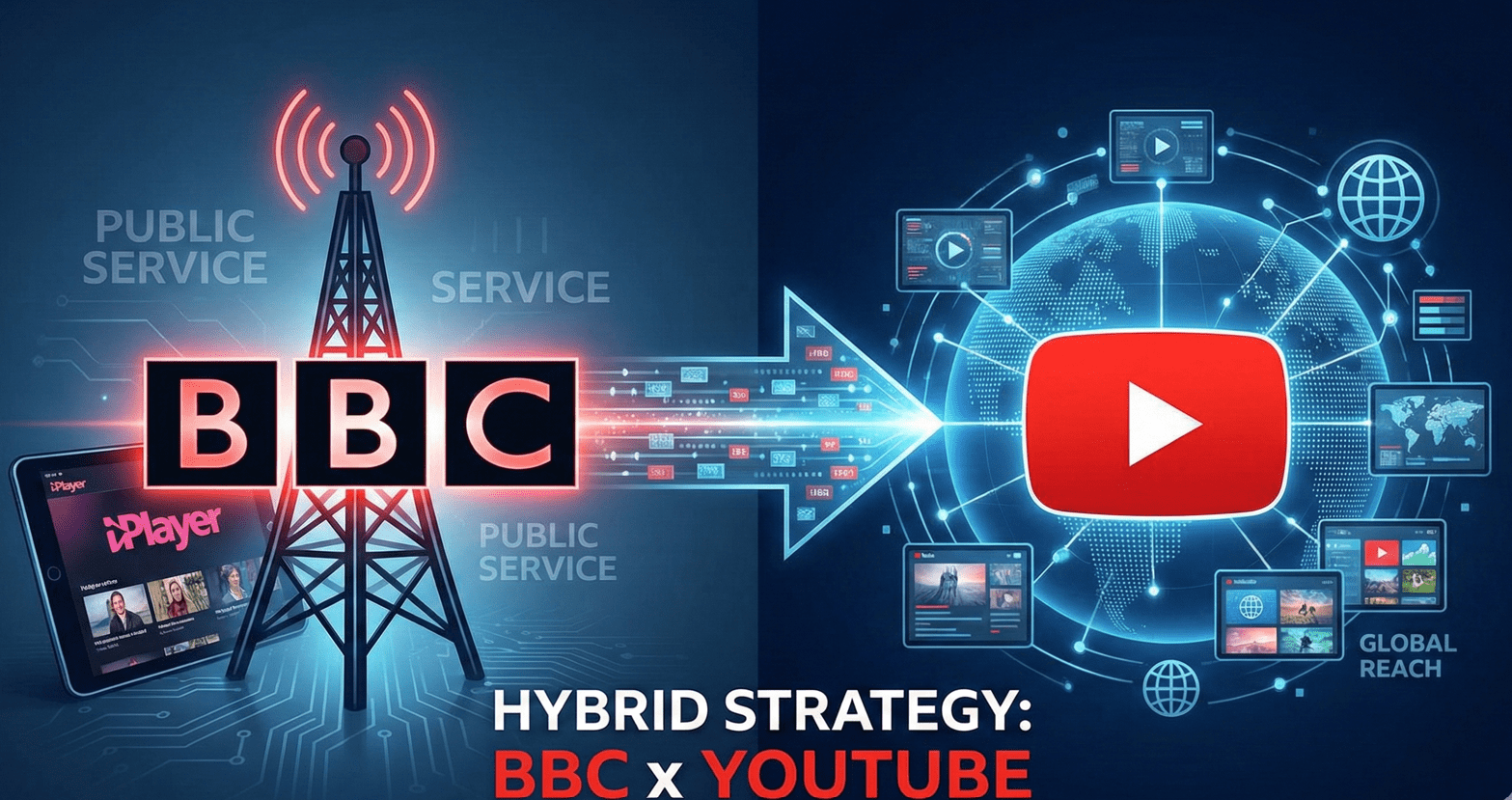
This is a strategic content and distribution partnership shifting the BBC from a platform-agnostic broadcaster to a digital-first creator. The BBC will produce bespoke original content specifically for YouTube, launching approximately 50 new channels over the next 12 months across Entertainment, News, Sport (commencing with the 2026 Winter Olympics), and Children’s. Crucially, the monetization model splits by territory: content remains ad-free in the UK (aligning with the license fee mandate) but carries advertising globally, creating a net-new revenue stream for the corporation. The deal also establishes a “creator skilling” program in partnership with the NFTS to pipeline digital talent into the BBC’s supply chain.
Dealmakers
BBC: Tim Davie, Director General. YouTube: Pedro Pina, VP EMEA.
Hybrid Distribution Strategy
This deal acknowledges a key shift: in December 2025, YouTube’s UK viewership surpassed the BBC’s linear and iPlayer reach combined. The strategic rationale is a proactive expansion of the public service footprint. Critics may flag the risk of iPlayer cannibalization, fearing that exporting IP to YouTube reduces the incentive for users to visit the BBC’s proprietary platforms. However, this view misreads the demographic reality: the BBC is not migrating loyal iPlayer users to YouTube; it is attempting to re-engage a “lost generation” who rarely enter the iPlayer ecosystem at all. By strictly windowing content—keeping long-form drama exclusive to iPlayer while deploying high-volume, short-form factual and entertainment on YouTube—the BBC creates a tiered ecosystem where YouTube serves as the top-of-funnel acquisition channel. The real challenge is attribution erosion: ensuring younger audiences view the BBC as a destination brand, not just a generic supplier within Google’s algorithm. Competitively, this squeezes domestic commercial broadcasters (ITV, Channel 4) who rely on YouTube revenue; if the BBC floods the market with premium, brand-safe inventory, ad yields for rival UK content could soften.
Supply-Chain Impact
The “50 Channel” mandate forces a structural re-engineering of the BBC’s commissioning pipeline. We will see a shift in procurement away from high-gloss, long-lead TV production toward high-volume, rapid-turnaround “digital studio” workflows. This requires the UK production sector—typically tooled for 60-minute broadcast docs or drama—to adopt “always-on” production models. The first evidence of this is the newly released “Perspectives” tender (January 2026), which explicitly seeks two production partners to deliver 60 episodes of “empathy-led” debate for a fixed £2m annual pot. This confirms the new commercial reality: high-volume, mid-budget, data-responsive commissioning is now a primary tier of the BBC supply chain.
Vitrina Perspective
By 2027, this partnership will likely bifurcate the BBC’s brand identity: the “Domestic BBC” remains a premium PSB fortress, while the “Global BBC” evolves into a massive, ad-funded digital publisher rivaling major digital-native outlets. The immediate risk is brand dilution—premium drama sitting next to user-generated content—but the long-term value is data. The BBC will finally gain granular, first-party consumption data on Gen Z audiences that iPlayer has failed to capture. Expect this to trigger a wave of similar “frenemy” deals from other European PSBs (ZDF, France Télévisions) who realize that building proprietary walled gardens for youth audiences is increasingly difficult to sustain in isolation.
Find Film+TV Projects, Partners, and Deals – Fast.
VIQI matches you with the right financiers, producers, streamers, and buyers – globally.
Producers Seeking Financing & Partnerships?
Book Your Free Concierge Outreach Consultation
(To know more about Vitrina Concierge Outreach Solutions click here)
Not a Vitrina Member? Apply Now!
Vitrina tracks global Film & TV projects, partners, and deals—used to find vendors, financiers, commissioners, licensors, and licensees
Join Industry Briefings Trusted by Leaders

White Space Opportunities in Animation
Deep dive into animation market gaps, studios, and commissioners. Use real-world animation case studies to capitalize on emerging business trends.

Deep dive into Co-Pros
Ambitious co-productions are key to global hits, but most deals collapse. This deep-dive briefing is the strategic playbook. We’ll break down the financing models, partnership structures, and market insights behind today’s successful deals.

Film & TV Financing: Tax Credits & Incentives
A focused look at how 2025 tax credits and incentives are reshaping Film & TV financing decisions — and where the real value now sits.

Film & TV Financing: Pre-Buys
Learn how pre-buys work in current Film and TV financing, how they differ from pre-sales, and how they are used to close real finance plans.
Vitrina tracks global Film & TV projects, partners, and deals—used to find vendors, financiers, commissioners, licensors, and licensees
Not a Vitrina Member? Apply Now!
